
EDITORIAL
Wranglings in PDP

The roles of the Peoples Democratic Party [PDP] in the development of Nigeria’s democracy cannot be overstressed. The PDP was in charge of governance of the country from 1999-2015, when the party lost the Presidential election to the All Progressives Congress [APC] led by President Muhamadu Buhari.
Among the party’s numerous achievements were the writing off or Nigeria’s staggering externanal debts through the Paris Club, and bequeathing of a prosperous economy to the nation, with a stable currency.
Since 2015, PDP has been playing the role of an opposition party. With another national election coming up in 2023, questions have been raised about the competence of the current National Chairman, Prince Uche Secondus as under his leadership, no fewer than two governors have left the party for the ruling – All Progressives Congress[ APC]. PDP similarly lost many of its members in the National Assembly to APC. Many members of the party feel Secondu’s leadership was not inspiring enough to lead them to reclaim the governance of the country they lost to APC, which in the eyes of many Nigerians is failing on its electoral promises to the people , especially on the management of the nation’s security and economy. This has fuelled the current agitation in the party for the resignation of Prince Uche Secondus, the current national chairman of the party. The height of the crisis came recently when seven members of the National Executive Committee (NWC) of the Party resigned from their positions. The officials resigned in separate letters to the National Secretary of the party, Umar Tsauri, last Monday.Those who resigned were the Deputy National Financial Secretary, Gerald Irona; Deputy National Organising Secretary, Hassan Yakubu; Deputy National Legal Adviser, Ahmed Liman, and Deputy National Publicity Secretary, Diran Odeyemi.Others are the Deputy National Woman Leader, Hadizat Umoru; Deputy National Auditor, Divine Arong, and another official.
An official who resigned from the Execitive Committee claimed the deputies were fed up with the leadership style of the National Chairman of the party, Uche Secondus.
He said the officials were being marginalised and sidelined by the leadership of the opposition party and that
Mr Secondus was not managing the party in the manner that will lead to victory in 2023. He alleged that the Chairman was just looking for personal gains.
The Peoples Democratic Party (PDP) Governors’ Forum has in tying to douse the crisis appealed to members and ‘stakeholders’ of the party to remain calm over last Tuesday’s resignation of seven national deputy officers of the party, which has rocked the nation’s former ruling -party.
The forum made the call in a statement issued by its Chairman and Governor of Sokoto State, Aminu Tambuwal, in Abuja.
Tambuwal urged all aggrieved members of the party to hold their peace for the party, as efforts were ongoing by members to intervene on the matter. He said the forum received with regrets and sadness the recent rumblings in the PDP.
“We plead with all aggrieved persons and those with the interest of the PDP at heart to keep their gun powder dry.
He said that the PDP, as the only remaining hope of the nation, for good governance must show an example to Nigerians and also take advantage of the current disarray in the APC. The need for the PDP to put its house in order to enable it play its true roles as the opposition party cannot be over stressed. Currently Nigeria is drifting to a one party state even when the APC is failing Nigerians with grinding poverty and general insecurity. With the reversal of fortunes experienced by the party and the resignation of seven members of the party’s Exexutive committee, it is quite clear that Secondus has lost his inspiration as the leader of the party. But that is left for the party hierarchy to decide. Perhaps the nztional convention, which is the supreme organ that can force the Chairman to resign.
The National Chairman may have failed in a number of areas hence the calls by the youths and other stakeholders that he resigned his appointment. Other stakeholders argue that there was no need to ask the Chairman to rwsign since his tenure was due to expire in December, when a national convention would hold to eleft a new national executive. Whatever the positions, we are of the view that the need to make PDP stronger and a more virile party to enable it give voice to the voiceless Nigerians as the Major opposition – party should be upper most in the minds of all patriotic members of the party. The ruling-APC, which is equally going throughits internal crisis should not be allowed to carry on without any checks as that would not help the cause of democracy and good governance.
With this in mind therefore,we urge elders of the party and the various organs to wade into the needless crisis and to ensure sanity returns into the party.
As a major opposition platform, we hold the view that Nigerians need PDP to be strong enough to perform the role required of it in the interest of the nation’s Democracy and good governance.
The divergent interests must understand that the parry is supreme and that no matter how influential and powerful they might be, they remain members of the party and must abide by its constitution. Anything to the contrary is an invitation to anarchy.





District: Kogi West
Party: All Progressive Congress (APC)
Position: Chairman, Senate Services Committee
Motion: Need For The Federal Ministry Of Education And The West African Examination Council To Review Their Policy And Implementation Date On Guidelines For The Change In The Curriculum Of Secondary Schools In Nigeria In Order To Allow Secondary School Pupils Adequate Preparation Before Examination
By Eze Okechukwu
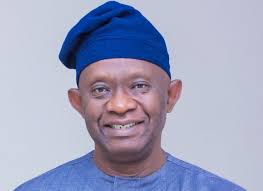
Only few egg heads will dispute the fact that Senator Sunday Steve Karimi is the best dressed senator of the 10th assembly.
But even as at that, the same unimaginable few wouldn’t dispute his cerebral powers and vocal capacity. He wears suits much more than the westerners, yet dresses to kill in Africa traditional attires. He’s one senator that one would mistake for an “ordinary national assembly staff” if you see him on the corridors as he most times walk by without aides. He’s simply a gentleman.Born on March 10th, 1962 in Egbe, Yagba West Local Government Area of Kogi State, he attended both primary and secondary school education in Egbe, before proceeding to study Mechanical and Materials Engineering at Kwara State Polytechnic where he bagged his Higher National Diploma with Distinction.
He would teach Further Mathematics afterwards and work as an Engineer with the Defense Industries Company Nigeria Limited (DICON). After about 9 years, he resigned and established his own Firm known as the Atlantic Drilling Fluids Services Limited, which has become a reputable indigenous company executing several Water projects in Nigeria.
He was elected into the House of Representatives in 2011. Reelected in 2015, making him the first Lawmaker in his Federal Constituency to be so crowned. However, in February 2023, he was elected as the Senator representing Kogi West.
Prior to the motion he raised yesterday at the floor of the senate, bothering on the Nigerian educational system which he contended should review their policy and implementation date on guidelines for the change in the curriculum of secondary schools in Nigeria in order to allow secondary school pupils adequate preparation before examination, Senator Karimi has a track record of legislative and oversight accomplishments with his numerous Bills and Motions which have direct impact on Nigerians.
They range from Education, Security, Agriculture, Rural Development to Youths and Women Empowerment; a feat that has continually endeared him to his constituents and beyond.
However, after laying bare his motion yesterday during plenary, the Senate noted that Section 14(2)(b) of the Constitution of the Federal Republic of Nigeria 1999(As amended) provides that the Security and Welfare of the people, is the primary purpose of government, and to this end, Section 18 of the same constitution provides that Government shall direct its policy towards ensuring that there are equal and adequate educational opportunities at all levels.
The Government of the Federal Republic of Nigeria is required by the ground norm to promote science and technology, strive to eradicate illiteracy and ensure education for all its citizens.
The senate further noted that in line with its constitutional mandate and in tandem with Goal 4 of the United Nations Sustainable Goals, the Federal Republic of Nigeria created the Federal Ministry of Education to pursue educational policies for the Nation and also established the West African Examination Council pursuant to WAEC Act 1973, as the major examination body for Senior Secondary Education in Nigeria.
Aware that pursuant to the statutory mandate of the West African Examination Council in Section 2 of its establishment Act, the Council issued a new guideline for the registration of students for the 2025/2026 Examination.
The guidelines require that all SS3 Students nationwide are required to adopt the new curriculum immediately, despite the fact that the Guidelines was initially scheduled to operate in the next two years, and applicable to pupils who are currently in SS (Senior Secondary Education)1 and who are scheduled to write WAEC SSCE in 2027/2028.
The senate further aware that by virtue of the new Guidelines, subjects such as Computer Studies, Civil Education and ‘’All Previous Trade Subjects’’, have been removed from the WAEC(West African Examination Council’s) Senior Secondary School Certificate Examination, as the courses no longer offered nor to be examined in the Exams slated for May/June 2026, despite years of preparation by Senior Secondary School Pupils in Nigeria.
Worried that with the removal of these three Subjects-(Computer Studies, Civic Education and All Previous Trade Subjects) all pupils across all specializations and combinations (be it sciences, humanities and business courses) are left with maximum of just six courses each, despite the Examination Council’s requirement of a minimum offering of eight (8) and maximum offering of (9) subjects/courses for WAEC Senior Secondary Certificate Registration and Examination. This implies that each pupil will have between two (2) to three (3) courses to be examined upon in May/June next year, despite never offering the courses before and with abysmal preparation.
Cognizant that although the introduction of New Trade Subjects such as Beauty and Cosmetology, Fashion Design and Garment Making, Livestock Farming, Computer Hardware and GSM Repairs, Solar Photovoltaic Installation and maintenance and Horticulture and Crop Production are commendable, insisting that students without prior education on these subjects should be examined thereon in May/June 2026 will have negative implications on the students exams and quality of examination results and standards.
The senate afterwards resolved that the Federal Ministry of Education and the West African Examination Council should exclude the current SS3 Students, who are slated to write Senior Secondary Certificate Examination in May/June 2026 and November/ December 2026 from this Guideline.
That the New Guidelines by West African Examination Council be implemented commencing with the current SS1 Students, who will be scheduled to write WAEC SSCE in 2027/2028 Academic Session to allow for adequate training and preparation in order to preserve/maintain credible educational standards.
For anyone close to events at the 10th assembly, Senator karimi’s Bills and Motions are of great impacts and crucial benefits. Here’s a brief of his earlier Bills and Motions: Dishonoured Cheques Repeal and Re-Enactment Bill 2023, Central Bank of Nigeria (amendment) bill 2023, Penal Code Amendment Bill 2023, Corrupt Practices and Other Related Offences (Amendment) Bill 2023 Electoral Act Amendment Bill 2023, Federal University of Agriculture, Kabba Bill 2024, Federal University Of Medicine And Medical Sciences Bill, Egbe, Kogi State, Constitution Of The Federal Republic Of Nigeria (Alteration Bill) (State Police Bill) 2024, Constitution Of The Federal Republic Of Nigeria (Alteration Bill) (Local Government Autonomy) Bill 2024, Constitution Of The Federal Republic Of Nigeria (Sixth Alteration) Bill 2024, National E-Gaming Bill 2025, National Sports Development Fund Bill 2025, Federal Highways (Amendment) Bill 2025 and Federal Delegated Legislation/Statutory Instruments Bill 2025
Motions:
Motion on Urgent need to prioritize nation building, national unity and development in the 10th national assembly, Motion on urgent need to appraise the condition of Nigerian federal roads and to re-think financing options, Motion on urgent need to investigate the various turnaround maintenance projects of Nigerian refineries in order to uncover waste and forestall further waste of scarce public resources, Motion on urgent need to step up efforts to stem the tide of oil theft in the Niger Delta Region and to better safeguard oil and gas infrastructure in the region, Motion on urgent need to investigate the central bank of Nigeria Naira Redesign Contract, Motion on urgent need to halt the disbursement of $800million dollars subsidy palliative loan and channel it to people centered self-financing developmental capital projects, Motion on urgent need to investigate petroleum subsidy regime from 2011to 2023, Motion on urgent need for the senate (national assembly) to immediately intervene in the bickering crises of pricing and logistics between Dangote refineries limited and stakeholders in the Downstream sector of the Nigerian economy to ensure removal of unnecessary bottlenecks, ensure energy security and fair pricing in the interest of Nigerian citizens, Motion on need to eschew and condemn all forms of violence in the forthcoming Edo and Ondo gubernatorial elections and call for justice for inspector Akor Onu co-sponsored with senator Adams Oshiomole, Motion on the need to address and manage market exploitation of consumables in Nigeria, Motion on need to appraise the current economic improvements and its impacts of prices and necessities in Nigeria.
On the humanitarian angle, Senator Sunday Steve Karimi has added a massive value to members of his senatorial district.
In the Outskirts of Egbe, Yagba West Local Government Area of Kogi State, he built a Forward Operating Base for the military, which he handed over to the Military authorities on the October 14th, 2024. He also purchased 2 Brand new Toyota Hilux Vehicles for Operations for the Base.
He constructed the Pakuta Bridge which links Aiyegunle Gbede-Kiri Road in Ijumu and Kabba Local Government Areas of Kogi State. In October 2024, he launched a Bursary scheme for indigenes of Kogi West in Public Tertiary Institutions in Nigeria. In the first year, almost 1000 indigenous students benefitted with each receiving N100,000.
The Women aren’t left out in his constituency projects as many have benefitted from his empowerment schemes. He has repaired and reconstructed the Lokoja Fish Market as the Kakanda Cottage Hospital and donated a large chunk of money to the victims of Ebbe Boat mishap in Kupa community as well as 1million each to the Central Mosque Kotonkarfe, Felele Mosque, Old Market Central Mosque and Andankolo Central Mosque.
During festivities, Senator karimi gifts Rice and Semo in large quantum to members of his constituents. Insiders say about three trailers carrying those food products have docked in the area, awaiting sharing on December 17th, 2025 as his Christmas and New Year empowerment largesse.
On the strength of his brilliance, which has given birth to those highly impactful bills and motions, his large heart for his people cumulating in the aforementioned personal support schemes, we choose Senator Sunday Steve Karimi as our senator of the Week, hoping the gentleman politician of the 10th senate will keep fulfilling his mandate with fate, until the contract expires.

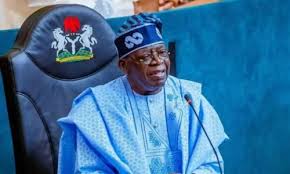
More than two years after terminating the services of all ambassadors, appointed by the previous administration; precisely on September 2, 2023, President Bola Tinubu left Nigerian embassies fallow. It was only a few days ago that he forwarded his list of ambassadorial nominees to the Senate.
The list contains several well-known political figures – some controversial characters.
The list includes; former Chairman of the Independent National Electoral Commission (INEC), Mahmood Yakubu; former Minister of Aviation, Femi Fani-Kayode; former Abia State Governor, Okezie Ikpeazu; and former presidential aide, Reno Omokri. Given the quality and pedigree of some of the ambassadorial nominees, Nigerians have reacted with mixed feelings. Some have pointed out that after the long delay to nominate the ambassadors, the list did not contain personalities worthy of occupying prestigious positions as Nigeria’s representatives in other countries.Nigerians are still wondering why the President did not name ambassadors all this while. Diplomatic posts remained empty or were being filled by acting officials. Consequently, the emergence of the list has even elicited more questions than answers.
One of the questions on the lips of keen watchers is: why the sudden release of the nominees after strong words from United States President, Donald Trump, criticising the growing insecurity in Nigeria? Trump had threatened to send troops to Nigeria to eliminate the terrorists killing Nigerian Christians, if the government did not take action to stop them.
Although the Presidency has not confirmed any link, many Nigerians believe the list was hurriedly compiled in response to the international reactions triggered by Trump’s remarks.
Another question is: how can a country run for over two years without ambassadors when it is facing multi-dimensional challenges? What critical national issues occupied the presidency for so long that he could not appoint ambassadors who should represent Nigeria in different countries of the world? And when he visits a country, who follows up with the bilateral agreements reached?
Tongues are also wagging against the inclusion of the likes of Reno Omokri and Femi Fani-Kayode because of their flippant and skewed stance on some critical national issues that touch on national unity, ethnicity and insecurity. Nominating such people to represent a country that needs unity and peace sends a wrong signal to their host countries.
Again, the inclusion of the former INEC chairman in the list is controversial because of the role he played during the last general elections. He is been accused of mismanaging billions of naira budgeted for instant electronic transmission of previous elections which he blamed on technical “glitches”.
It is neither here nor there why such people should be rewarded with ambassadorial positions in a country where suitably qualified individuals abound.
Diplomats are expected to bridge differences, build trust, and represent the best version of their country. They are often the first impression foreign governments and investors encounter. At a time when Nigeria needs goodwill, stability, and a clear demonstration of unity, it is obvious the president missed an important opportunity to make things happen positively.
The thinking in some quarters is that Tinubu is rewarding political allegiance rather than competence or emotional intelligence. And the fear is that diplomatic missions could turn into extensions of political battlegrounds rather than centres of national service. Diplomacy requires calm judgement, respectful engagement and the ability to build relationships even with critics. The inclusion of individuals known for acidic or divisive language is not in the best interest of Nigeria.
With the emergence of 68 ambassadorial nominees, the president has undoubtedly acknowledged the essence of diplomacy, even though the nomination of certain individuals do not sit well with a good number of Nigerians due to their alleged soiled pedigree and character.
Furthermore, keen watchers see the list of the nominees as a platform for patronage that seems to reward cronies, party and family members and political jobbers because it does not reflect the quality and potentials of Nigerians as a whole.
The final list of 65 nominees raises the total number of ambassadorial candidates before the Senate to 68. Three of them Kayode Are, Aminu Dalhatu, and Ayodele Oke, have already been screened by the Senate Committee on Foreign Affairs.
DAILY ASSET is of opinion that at a critical period like this when Nigeria is at a crossroads with dampened image and low morale, ambassadorial appointments should serve as an opportunity to portray the country in good light. However, its not too late to make amends to the ambassadorial postings, since the president has demonstrated that he listens to the concerns of the Nigerian public.
Pointedly, while calling on the Senate to thoroughly screen all the ambassadorial nominees, we make bold to stress once again that the country is facing deep socioeconomic challenges, insecurity, youth restiveness and increasing ethnic suspicion. Leadership at such a time requires actions that show concern for unity, fairness and competence that should give the citizenry a sense of belonging. The ambassadorial list falls short addressing this pressing need because ambassadors as image-makers of the nation have a vital role to play in this regard.
One of Nigeria’s greatest developmental setbacks is the prolonged abandonment of capital projects scattered across the length and breadth of the country. The abandoned projects in rot are valued at a whopping twenty trillion naira, which has for decades remained a huge embarrassment to the country.
It has defied all solutions and exacerbated the country’s chequered infrastructure development trajectory. Contrary to the lofty promises accompanying most of the abandoned projects, the remains are monuments of shame and wasted resources. This is no doubt an obvious testament to Nigeria’s perennial underdevelopment. The reasons for this monumental setback include, poor project planning, poor budgetary allocation, inefficient legal system, corruption and weak regulatory institutions.A committee set up by former President Goodluck Jonathan in 2011 had revealed that about 63 per cent of the projects initiated after Nigeria’s independence had been abandoned. The committee’s disclosure that the federal government, as at that time, had abandoned 11,866 projects was damning. Today, the ugly trend has moved from bad to worse, thus prompting members of the House of Representatives to constitute an ad hoc committee to look into the matter.The lawmakers’ decision followed the adoption of a motion of urgent national importance sponsored by the Minority Leader, Kingsley Chinda, during plenary session penultimate week. Chinda had explained that the investigation aims to curb further wastage of public resources and facilitate the recovery of valuable national assets. The lawmaker drew the attention of the House to the 11,866 abandoned federal projects nationwide, which he said represents approximately 63 percent of all projects initiated since independence; thus agreeing with the 2011 committee report of the Goodluck Jonathan administration.Among the major abandoned property highlighted by the lawmaker are the Federal Secretariat Complex in Ikoyi, Lagos; the Nigerian International Hotel, Suleja, Niger State; Millennium Tower, Abuja; the Federal Inland Revenue Service (FIRS) Building in Abia state; the National Library Headquarters, Abuja; the Nigerian Newsprint Manufacturing Company, Kaduna; the Kaduna Textile Building; and the Nigerian Aluminium Smelting Company, Delta state; among others.It is noteworthy that federal and state governments have played ignoble roles in turning Nigeria into a graveyard of incomplete roads, bridges, housing projects, white elephant projects, airports, most of which could have contributed immensely to the growth of the nation’s economy. Despite gulping $8 billion, the Ajaokuta Steel Company Limited has been abandoned by successive governments since 1978, thereby truncating the country’s industrialisation. Given this gap, the country spends about $4 billion on steel imports annually.Furthermore, investigations revealed that the Niger Delta Development Commission (NDDC) has terminated or abandoned about 1,587 projects valued at N612.4 billion, a development contrary to the essence of the commission.Again, the 3,050MW Mambilla Power Project, conceived in 1972, is yet to materialise. Many dams that should have bolstered power generation remained either abandoned or underutilised. The Ikere Gorge Dam, with a 565-million-cubic-metre water reservoir, in the Iseyin LGA of Oyo State, has been abandoned. Its turbines, imported during the late Shehu Shagari administration, are rusting away. It is the same story at the 9 MW hydropower station at the Oyan Dam in Ogun State. The three Oyan Dam turbines inaugurated in 1983 have never generated electricity. Meanwhile, according to a July 2020 report from the World Bank, 47 per cent (about 97 million) of Nigerians are entirely cut off from the national power grid.Traveling by road in the country today has become hellish due to a plethora of abandoned road projects. The Lagos-Ibadan Expressway reconstruction has not been completed after 20 years, and the Ibadan-Ife, Ife-Ilesa, Benin-Auchi-Okene-Abuja, and Port-Harcourt-Aba-Owerri- Enugu roads are death traps due to their terrible state of dilapidation. Ditto East-West Road which has suffered consistent neglect. In the South-west successive administrations left behind many abandoned roads and flyovers, making lives unbearable for many Ogun border communities.In May 2023, a Federal High Court ordered the federal government to account for the $460 million spent on the failed Abuja CCTV project. And considering the alarming rate of robberies and the growing spate of kidnappings and banditry in Abuja; the failed Abuja CCTV project could have prevented criminals from carrying out their nefarious activities. But it was abandoned because individuals and officials with itchy fingers connived and diverted the funds earmarked for the project.Again, the abandoned Rivers monorail and the Tinapa free trade zone in Cross River cost Nigeria multi billion naira in losses. The 2019 Global Competitive Index Report ranked Nigeria 130th out of 141 economies surveyed for quality infrastructure facilities. The World Bank reports a massive infrastructure deficit with total infrastructure stock amounting to 30 per cent of GDP. This falls short of the international benchmark of 70 per cent it set.From whichever angle one looks at it, there is a compelling need for the federal government to bring an end to the unending culture of abandoned projects. The government should initiate an intentional review of abandoned projects by tracing them and carrying out comprehensive reassessments to resuscitate viable ones. The contractors behind the abandoned projects should be investigated and prosecuted if found wanting. Money paid for contracts that were not done should be recovered. Infrastructure projects/ contracts should not be politicised to reduce politically induced abandonment. The current situation where the recurrent component of the budget is bigger than the capital votes is unacceptable. The federal government must reduce the cost of governance to free up more funding for capital projects. Civil servants and government officials involved in inflating contracts should henceforth be investigated and brought to book. It is high time for the federal government to revive abandoned projects through Public Private Partnerships (PPP) and other creative infrastructure contract models.However, some government projects face abandonment due to unforeseen environmental and social challenges. Issues such as land disputes, resistance from local communities and ecological concerns can delay or completely halt project implementation. In some cases, inadequate consultation with affected communities leads to conflicts that prevent project completion. Additionally, natural disasters, extreme weather conditions, and changing environmental policies may render some projects impractical to continue.The abandonment of government projects has far-reaching consequences that negatively impact economic development, social welfare and public trust in governance. These consequences manifest in various ways, affecting both the government and the local communities that depend on these projects. When government projects are abandoned, significant amounts of public funds are wasted. Money spent on planning, procurement, and partial implementation yields no tangible benefits, leading to financial losses that could have been allocated to other developmental initiatives.Abandoned projects discourage investor confidence, particularly in the infrastructure sector, where private sector participation is crucial for economic growth.Frequent project abandonment also erodes public trust in government institutions. Communities that repeatedly witness the initiation and subsequent discontinuation of essential projects develop skepticism about the government’s ability to deliver on its promises. This loss of confidence can result in political instability, reduce civic engagement and create youth restiveness.DAILY ASSET strongly believes that bureaucratic inefficiencies and weak regulatory mechanisms contribute in no small measure to project abandonment. This, coupled with inadequate coordination among government agencies are some of the contributing factors to project abandonment in the country. Political factors which give room to the abandonment of government projects should be discouraged. New administrations should not discontinue projects initiated by previous ones due to political differences and personal interests or changes in policy direction.This anomaly is particularly common when governance becomes highly politicized where successive governments fail to uphold continuity of infrastructure policies, programmes and projects as politicians often prioritize projects based on political considerations rather than actual community needs. This leads to the initiation of projects that lack long-term sustainability. By and large, authorities concerned must avoid delays in the release of funds to contractors. The lack of transparency and accountability within public institutions further exacerbates the problem, as project managers and contractors may exploit loopholes for personal gain, leading to project delays or total failure. The time to turn a new leaf is now!


Olam Agri Partners with SCAAD to Empower Women in Benue, Nasarawa
ShareFrom Attah Ede, Makurdi Olam Agri, in partnership with Sustainable Collective Advocacy for Africa Development (SCAAD) Initiative, is to launch...

Security Operatives Arrest 32-yr-old Man for Allegedly Negotiating Ammunition for Bandits in Zamfara
ShareFrom Ifeanyichukwu Nwannah, Gusau A 32-year-old man, Ahmed Abubakar suspected to be armed weapons dealer has been arrested in Abuba,...
Zamfara Charges Corps Members to Live Harmoniously with Host Communities
ShareFrom Ifeanyichukwu Nwannah, Gusau Zamfara State Government has charged Corps members deployed to the State to demonstrate commitment and live...

Ademola Adeleke: Between Dancing Steps and Political Cul-de-sac
Share By Wale Sadeeq Gov. Ademola Adeleke of Osun is known for dancing hysterically at virtually every public occasion, to the...

FG, Partners Champion Women’s Empowerment in Livestock Sector
ShareBy Raphael Atuu, Abuja The Minister of Livestock Development, Idi Mukhtar Maiha, has reaffirmed the Federal Government’s commitment to placing...

Mutfwang Declares ASUP National Delegates Conference Open in Jos
ShareFrom Jude Dangwam, Jos Plateau State Governor, Caleb Mutfwang has declared open the 18th National Delegates Conference of the Academic...


Nigeria’s Gemade Builds Fleet For Saudi’s New National Carrier
ShareBy Mike Odiakose, Abuja When Saudi Arabia’s Crown Prince Mohammed bin Salman personally unveiled the Kingdom’s new National Carrier on...

Tinubu Support Group Appoints Ex Senate President, Lawan Patron
ShareBy Eze Okechukwu, Abuja Tinubu Support Group; House-to-House Network has appointed Ex Senate President, Ahmed Lawan as its national patron,...


Senate Worries over Airfare Hike, Seeks Immediate Suspension of New Price Regime
ShareBy Eze Okechukwu, Abuja The Senate has expressed worries over the recent hike in domestic airfares as one-way ticket costs...
FG Tasks Africans on Sheep, Goat Plague Eradication
ShareThe Federal Government said African countries must shift from reactive, event-driven responses to predictive, risk-based and analytics-driven surveillance to meet...