
Education
Zamfara Flags-off Back-to-School Campaign

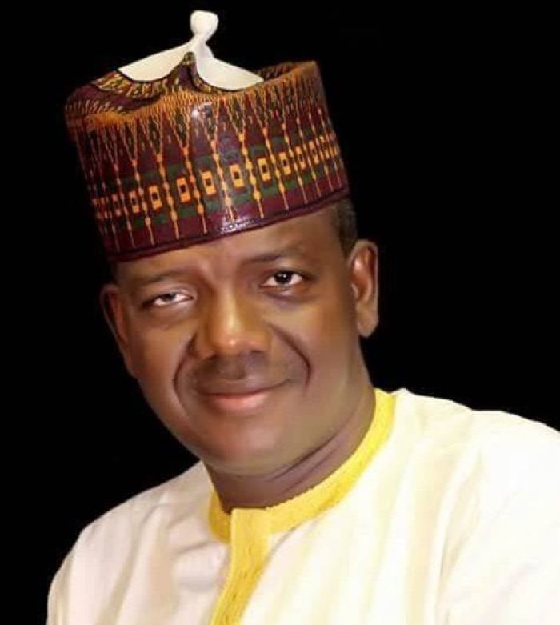
The Zamfara State government, in collaboration with Global Partnership for Education (GPE) and UNICEF, flagged off a Back-to-School and school safety campaign in Gusau yesterday.
The campaign brings to an end the closure of schools in the state because of insecurity and the outbreak of COVID-19.
The campaign flag-off was organised by the Ministry of Education in collaboration with the State Universal Basic Education Board (SUBEB) and UNICEF Nigeria.
GPE and UNICEF are supporting Gender Responsive and Inclusive Enrolment Drive for Back-to-School campaign and Safe School Re-opening in Maradun and Kaura-Namoda Local Government Areas of the state.
Permanent Secretary, Ministry of Education, Alhaji Kabiru Sani, flagged off the campaign on behalf of Gov.
Bello Matawalle.He said the closure of schools was one of the major setbacks to educational programmes in the state.
He said the outbreak of COVID-19 and insecurity disturbed the political, social, economic, religious and financial structures of the state.
“We are all aware of the negative effects that COVID-19 has caused to the education of our children in Zamfara.
“It is in the light of this that we are gathered here today to appreciate the GPE, the Federal Ministry of Education and UNICEF for bringing this laudable intervention to Zamfara.
“It is disturbing, however, that after the COVID-19 lockdown had ended and insecurity issues had abated, children were still not attending school,” Sani said.
UNICEF consultant, Dr Ahmad Hashim, described the flag-off as timely, adding that UNICEF had been supporting Zamfara over the years, especially in the area of girl child education.
“We have been providing financial and technical support to the state; we trained more than 10,000 teachers.
“Millions of naira had been spent by UNICEF as cash transfer to vulnerable children in the state aimed at reducing number of out-of-school children.
“Before our intervention, Zamfara had more than 500,000 out-of-school children, but with government’s efforts and support from partners such as UNICEF, the number has reduced to 300,000,” Hashim said.
He commended Gov. Matawalle for providing counterpart funding to UNICEF.
The News Agency of Nigeria (NAN) reports that various speakers at the event expressed the need for government and all stakeholders to initiate measures to ensure safe return of students to school in the state. (NAN)





The National Board for Technical Education (NBTE), has commenced accreditation exrceise for six new courses at the Federal Polytechnic, Wannue, Tarka Local Government Area of Benue.
Mr Ogah Ngbede, NBTE’s Director of Polytechnics Programmes, disclosed this on Thursday during the ongoing exrceise in the institution.
According to Ngbede, all the courses would be inspected before making a pronouncement.
He said that the exercise would last for two days, after which its decision would be made known.
He added that the institution secured full accreditation for two out of the five courses it presented to NBTE in 2023.
“We are here to look at the claims made by the institution because they have requested to commence some new programmes.
”We are here to ensure that the right thing is done and ensure that this polytechnic is not regarded or treated as a second grade institution,”he said.
The director, who decried poor funding of polytechnic education in Nigeria, called on goverment at all levels to ensure adequate funds were allocated to the education sector.
“The major problem affecting polytechnic education in this country is finance.
”Let me use this opportunity to call on the government at all levels to inject more funds into the polytechnic system.
“Technical education is a low hanging fruit from which this country can use to escape poverty; technical education all over the world has become a major currency with which nations are using to escape poverty.
“When we pay adequate attention to our polytechnics, students that graduate from these institutions can hit the ground running because they have the necessary tools to be job providers and not job seekers”, he said
Earlier, the Rector of the institution, Dr Tyover Ashinya, listed the courses presented for accreditation to include, Business Management, Public Administration, Agricultural Technology, Electrical Engineering, Computer Engineering and Computer Science
He said that the institution has the adequate manpower and infrastructures to effectively run the six new courses.
”We are willing to improve on all necessary areas that need improvement to enable these new courses secure full accreditation,”the Rector said.
Reports says that the institution was established by the Federal Government in December 2020. (NAN)
By Tony Obiechina, Abuja
The Federal Government has announced the ground-breaking ceremony for the building of a 1,600-capacity student hostel in Akwa Ibom State.
This project is part of a N98.2 billion nationwide initiative to enhance educational infrastructure.
The Minister of Finance and Coordinating Minister for the Economy, Wale Edun who disclosed this said the Federal Government, in partnership with states and the private sector, will construct 24 housing facilities across 24 institutions, each with 1,600 bed spaces.
According to a statement by Mohammed Manga, Director of Information & Public Relations, the initiative is aimed at addressing a significant student accommodation deficit, enhancing student performance and well-being.
It is also a testament to the sophistication and depth of our local capital marketsRepresented by the Ministry’s Permanent Secretary Special Duties Mr Okokon Ekanem Udo, the Minister added that
“this initiative invests in our youth and educational infrastructure, ensuring that tomorrow’s leaders have the resources and environment they need to thrive.
“It also demonstrates the private sector’s willingness and capacity to partner with government to deliver critical infrastructure projects across all geopolitical zones, to reduce the housing deficit*, Wale Edun said.
By Eddy Ochigbo, Abuja
In a renewed move to enhance sustainable growth in education, the federal government has concluded plans to embark on 13 new infrastructure projects at the National Mass Literacy and Adult Education Commission (NMEC), Kano Centre, through Public/Private Partnership (PPP).
Minister of State for Education, Dr Yusuf Sununu, disclosed this on Tuesday at a stakeholders’ engagement and sensitisation meeting in Abuja to kick start the proposed land-swap deal for the development of critical infrastructure in Kano.
According to him, the public private partnership project would mark a turning point in literacy education of adults across the country, regretting that it was unfortunate that Nigeria still had a significant number of adults who are either illiterate or have limited literacy skills.
This major challenge, he said hinders the nation’s overall development and progress.“This is another milestone and progress in the ministry, and we will be having it with private public partnership, and this is also part of President Bola Tinubu’s eight-point agenda.Government cannot do it alone and everyone of us needs this as stakeholders to bring development and move the country forward. We have a regulation guiding us which we will use to ensure that the plots that have laid fallow over the years are put to best use in our time,” he said.
While stressing the need to regulate teaching in the country, specifically to guide teaching and teaching practice, Sununu revealed that the 13 new infrastructure projects – semi-detached two and three bedroom bungalows, state-of- the-art classrooms, clinic, library, hostels, a lecture theatre and recreational facilities, among others – would change the fortunes of the National Mass Literacy and Adult Commission, Kano centre, which has been lying fallow in the last 39 years.
“The projects would not only enhance learning at the centre, but would also provide a conducive environment for entrepreneurship in the centre. The Kano Centre of the National Mass Literacy Centre plays a crucial role in addressing this challenge by providing literacy education to adults across the country.
However, to effectively fulfil its mandate and reach more people, it is essential to have the necessary infrastructure and resources in place. This is where the proposed development of 13 critical infrastructures through land swap Public-Private Partnership comes into play. Through this innovative approach, we will be able to leverage the expertise, resources and capabilities of the private sector to create modern and functional learning facilities for the Centre,” Sununu enthused.
On his part, the Executive Secretary, NMEC, Prof. Simon Akpama, expressed confidence that through collective efforts and sustained collaboration between the public and private sector the growth of education would make a significant impact on the lives of a cross section of Nigerians. He said the initiative would also empower youths and adults to contribute their quota to national development.
Meanwhile, DAILY ASSET gathered that MASLAHA Homes and Development Limited, a leading Kano-based Real Estate company, which proposed the land-swap deal, has the capacity to design, finance and build the 13 new critical education infrastructure and assets for the Kano Centre of National Mass Literacy within the scheduled timeframe.

Para Badminton: Bolaji, Chigozie qualify for Paris 2024 Paralympics
ShareThe duo of Mariam Eniola Bolaji and Jeremiah Chigozie have qualified for the Paris 2024 Paralympic Games coming up from...


FCTA Moves to Curb Medical Tourism
ShareBy Laide Akinboade, AbujaFederal capital Territory Administration (FCTA) has pledged to provide the necessary support for the successful completion and...


Ortom, Ode, Asemakaha Felicitates With Alia on 58th Birthday
ShareFrom Attah Ede, Makurdi Former Governor of Benue State, Chief Samuel Ortom, the incumbent Deputy Governor, Barr Sam Ode and...


NAICOM, RMAFC Collaborate on Economic Diversification
ShareBy Tony Obiechina, AbujaThe Commissioner for Insurance/CEO, Mr. Olusegun Ayo Omosehin, and his management team have met with the members...

22,000 Beneficiaries to Get N50,000 Nano Businesses Grant in Kogi
ShareFrom Joseph Amedu, LokojaNo fewer than 22,000 beneficiaries in Kogi will get N50,000 each, under the Presidential Conditional Grant Scheme...


CBN Unveils Strategy to Boost Remittances
ShareBy Tony Obiechina, AbujaThe Central Bank of Nigeria (CBN) has activated plans to double foreign-currency remittance flows through formal channels...


Accountant General Declares N318.5b Revenue Inflow in First Quarter
ShareBy Ubong Ukpong, AbujaThe Accountant General of the Federation, Mrs Oluwatoyin Madein on Wednesday said total revenue inflows to the...

Senate Charges Army, Police to Increase Presence in Uzo-Uwani to Forstall Peace
ShareBy Eze Okechukwu, AbujaThe Senate yesterday charged the Inspector General of Police (IGP) Kayode Egbetokun and Chief of Army Staff...


Ebonyi LG Polls: EBSIEC Gives 3rd June Ultimatum for Political Parties to Conclude Primaries
ShareBy Godwin Okeh, AbakalikiEbonyi State Independent Electoral Commission, EBSIEC, on Wednesday gave 3rd June 2024 ultimatum for all political parties...

Reps Member Calls for Urgent Intervention in Federal Teaching Hospitals
ShareBy David Torough, AbujaThe Chairman, House of Representatives Committee on Health Institutions, Amos Magaji has called for an urgent financial...