
COVER
170,000 Polling Units Results Uploaded on IReV- INEC

The Independent National Electoral Commission (INEC) yesterday said over 170,000 polling unit results of the February 25 presidential and National Assembly elections have been uploaded on its Result Viewing Portal (IReV).
The Commission also said the reconfiguration of the Bimodal Voter Registration Systems (BVAS) would be completed by Tuesday in preparation for the March 18 governorship and state assembly elections.
“As at the last time, over 170,000 of those results have been uploaded,” INEC National Commissioner, Festus Okoye, stated on Channels Television’s Sunday Politics.
“As you are aware, we are reconfiguring the BVAS for purposes of the governorship and state assembly elections, and any BVAS that was used for the presidential and National Assembly elections that do not push to the accreditation backend, the data relating to the conduct of the presidential and National Assembly elections will not be reconfigured.
“In fact, the BVAS will not allow itself to be reconfigured or reset if the entire data is not pushed to the accreditation backend.
“I’m sure that by Tuesday when we hope to complete the resettling of the BVAS for the purposes of the governorship and state assembly elections, the results in all the places where elections were conducted would have been pushed to the accreditation backend.”
Okoye said every Nigerian has the constitutional and legal right to protest. However, he said no political party will be allowed to look into the brain of the BVAS or the biometrics of voters.
He said the court judgement that voters could use their temporary voter cards to vote is not applicable for all Nigerians but for the individuals who went to court.
The INEC commissioner also blamed political parties for making polling units “inaccessible” for voters, leading to low turnout at the last polls.
He said INEC learned some “valuable lessons” in the presidential and National Assembly elections, which would be used in the governorship and state assembly polls.
He said serious efforts are being made to rectify challenges with IReV portal ahead of the March 18 polls, adding that the ICT department of the commission knows what to do if there are issues with the uploading of polling unit results on the IReV portal in March 18 polls.
He said political parties deployed more polling unit agents than the number of officials deployed by the Commission and so they monitored their results per polling units.
The INEC commissioner said, “The Electoral Act 2022 makes it clear that every registered political party in conjunction with their candidates have the right to send agents to every polling units in Nigeria. The PDP as a political party deployed a total of 176,588 polling agents. The Labour Party deployed a total of 134,874 polling agents. The NNPP deployed a total of 176,200 while the APC deployed a total of 176,223.
“The commission deployed to 176,666 polling units. So, the political parties deployed more agents to the polling units than the number of polling units that opened. What that means is that each political party got a copy of Form EC 8 which is the polling unit result sheet which is the result sheet that is uploaded into the IReV portal.”
Political Parties Can’t Regulate INEC
The Independent National Electoral Commission has disclosed that political parties cannot serve as a watchdog to the electoral umpire’s activities.
The INEC National Commissioner and Chairman of Information and Voter Education Committee, Festus Okoye, who said this yesterday’s night, explained that the commission had been created to serve as a regulator for political parties and not the other way round.
Recall that the Labour Party on March 10th, said the electoral umpire deliberately came up with its idea of reconfiguring BIVAS after its presidential candidate, Peter Obi, sought to examine the election materials.
The party also faulted the commission’s claim of backing up the data retrieved from the BVAS without the presence of independent witnesses and representatives of political parties.
Speaking while featuring on Channels TV’s Politics Today, Okoye insisted that the request by the Labour Party to monitor the commission’s process of reconfiguring and backing up results on its Bimodal Voter Accreditation System machines would not be granted.
“On the issue of a political party saying they want to come and look at our cloud, IReV or into the brain of the BIVAS, the commission will not allow that to happen.
“Every political party that deploys polling agents has a copy of the polling units level results and if a political party now says they want to come into the commission to look at the same thing their agents have already, we won’t allow that to happen because the laws do not allow that.
“Look, the commission is the regulator of political parties and the political parties cannot, just because of so many things taking place, come around and wants to regulate the commission. The commission will now allow that to happen,” Okoye said.
He also added that parties and individuals planning to make known their grievances through peaceful protest over the conduct of February 25, 2023 presidential poll will be welcome at the commission’s headquarters.
“In terms of the issue of protest, the commission is a public trust. And as far as the commission is concerned, any Nigerian who has any grievance has the constitutional and legal right to come to the commission to protest.
“The commission will not prevent any individual or group of individuals, any political party or association not to protest because the commission is a public trust and a public institution and we cannot prevent anybody from coming to protest,” he added.






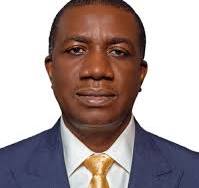
By Tony Obiechina, Abuja
The Development Bank of Nigeria Plc (DBN) has launched DAWN: DBN Action for Women in Nigeria, unveiled its Impact Report and presented MSME Data Assets at the seventh edition of Annual Lecture held in Abuja.
DBN, in a statement on Thursday, said while delivering a welcome address, its Managing Director and Chief Executive Officer, Dr Tony Okpanachi, said the central challenge was no longer reforms themselves but ensuring benefits reach businesses at end of the chain.
He asked how to make sure benefits reach traders in Onitsha, fabricator in Aba, farmer in Kebbi and young founder in Yaba, noting that MSMEs accounted for about half of Nigeria’s GDP and more than eight in every ten jobs, adding that when reform works for MSMEs it works for most Nigerians.
He explained that reform becomes prosperity only when entrepreneurs can act on it whether through long tenor loans to buy equipment, banks willing to take risk or skills and records needed to grow.
He said working through Participating Financial Institutions DBN provides longer term funding, partial credit guarantees through subsidiary Impact Credit Guarantee Limited and capacity building including Entrepreneurship Training Programme.
He disclosed that as at December 2025 DBN had disbursed a cumulative N1.4 trillion to MSMEs through 84 Participating Financial Institutions creating about 1.6 million jobs nationwide.
Under the new five year strategy, the Bank aims to reach more than two million MSMEs with deliberate targets for women led businesses, youth led businesses and underserved states.
On DAWN, Okpanachi said finance alone had not enabled enough women-led businesses to scale.
He said initiative brings together financing, guarantees and credit support, technical assistance, outcome linked grants and market linkages delivered through banks, microfinance institutions, fintechs, aggregators, cooperatives and direct channels.
Its priority sectors are agriculture and exports, healthcare, arts and creatives, technology and green business.
He said DAWN is about moving gender focused lending beyond intention and turning access into opportunity.
On the sidelines of the lecture DBN and African Development Bank held a signing ceremony of AfDB DBN 61 million United States dollars Gender Line of Credit development that reinforces Bank commitment to women led enterprises.
Okpanachi urged Participating Financial Institutions to extend lending into sectors and states where access to finance has been limited, policymakers and regulators to measure reform by what changes for business at end of chain and MSMEs to formalise, keep good records and use support now available.
The Vice President as Special Guest of Honour was represented by Dr Fred Iklaga Senior Technical Adviser in the Office of Special Adviser to the President on Economy.
Keynote speakers were Chief Executive Officer of MTN Nigeria, Dr Karl Toriola, and Chairman of Nigeria Sovereign Investment Authority, Dr Segun Ogunsanya.
Fireside chat featured Chief Executive Officer of Sterling Bank Abubakar Suleiman, manufacturing and trade entrepreneur Mrs Omoyemi Chukwurah and by video Kola Masha of Babban Gona.
The Secretary to the Government of Federation, represented by Augusta Warren Bekaredebo, said 2026 tax reforms would bring relief to many small businesses expressing optimism that a lot of businesses will be smiling by next year because they will be exempted from tax.
By Tambaya Julius, Abuja
The Nigeria Labour Congress (NLC) has threatened possible nationwide industrial action following the failure of talks with the Federal Government over workers’ welfare, petrol prices and other outstanding labour demands.
The warning came after a meeting between the government and organised labour at the Ministry of Labour in Abuja on Thursday, October 22, ended without an agreement.
The congress has given the Federal Government until Tuesday, October 27, to make meaningful progress on the issues, warning that its relevant organs would decide the next line of action if the next meeting fails to produce concrete commitments.
The NLC has also directed its affiliates, state councils and civil society allies to begin mobilising members for possible nationwide action.
In a statement issued after the meeting, the NLC Acting General Secretary, Benson Upah, expressed disappointment over what he described as the government delegation’s lack of preparedness for the negotiations.
According to the congress, organised labour presented its demands in good faith but left the meeting without any concrete commitments from the government.
The demands include a reduction in petrol prices to 2024 levels, renegotiation of the national minimum wage, implementation of agreed tax relief measures and resolution of the terms of settlement involving the Joint Health Sector Unions (JOHESU).
The congress also called for the resolution of issues raised by the Joint Public Service Negotiating Council (JPSNC) over peculiar allowances, wage awards and hazard allowances.
The NLC said the government delegation lacked the necessary authority to engage meaningfully on the issues presented by labour representatives.
“The meeting between the Federal Government and organised labour, convened at the Ministry of Labour in Abuja on 22nd October 2026, has ended without resolution,” the statement said.
It added that the Minister of Labour requested that the meeting be adjourned until October 27 to allow the government to prepare adequately for further discussions.
The preparations, according to the statement, would include bringing relevant ministers and heads of departments and agencies to the negotiating table.
The congress said it remained open to dialogue but would not accept continued delays in addressing workers’ concerns.
“We will report back to our organs, and if no meaningful progress is made on Tuesday, the relevant organs of the NLC will decide the next line of action,” it said.
The labour body urged workers and members of the public to remain calm while the negotiations continue, even as it directed its affiliates and allies to prepare for possible industrial action.
“However, we urge all affiliates of NLC and TUC; all state councils and our civil society allies to be alert and start mobilising for a possible action across the nation while we hope that the tenets of our demands are met by the government,” the statement added.
The October 27 meeting is expected to provide another opportunity for both sides to address the outstanding issues and prevent a possible escalation of the dispute.
However, the NLC’s decision to begin mobilisation suggests that tensions could rise if the next round of talks fails to produce meaningful progress.
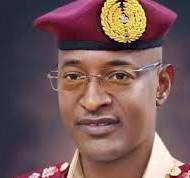
The Federal Road Safety Corps (FRSC) has barred its personnel from escorting politicians during campaigns for the 2027 general elections.
Zonal Commanding Officer, RS6, ACM Abimbola Owolabi, gave the directive during her maiden visit to the Cross River Command in Calabar on Wednesday.
Owolabi said patrol vehicles and sirens must not be used for political activities or private engagements, including weddings and funeral processions.
She directed officers deployed to campaign venues to focus exclusively on traffic management to prevent congestion and road crashes.
The zonal head warned personnel against leading political convoys or providing escorts for politicians, stressing that official vehicles must not be used for unauthorised purposes.



Firm Promises No Storage Charges On Subscribers’ Wallets
ShareBy David Torough, Abuja A telecommunications firm, ESDIAC Global, has said it does not impose storage charges on subscribers’ wallets,...


GIGM Brings hireX, PASS to Abuja Nov 4
ShareBy Tony Obiechina, Abuja Premium vehicle hire and all-in-one travel booking are coming to Nigeria’s capitalGIG Mobility (GIGM) has announced...
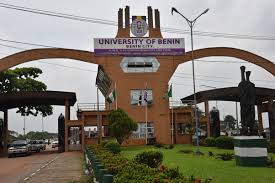

UNIBEN Recruits again after 10-year Employment Freeze
ShareThe Vice-Chancellor of the University of Benin, Prof. Edoba Omoregie, SAN, has said that another set of graduates will be...


Fire Service Responds to Building Collapse, Rescues Five Victims in Osun
ShareFrom Ayinde Akintade, Osogbo The Federal Fire Service, Osun State Command, responded to a distress call on a building collapse...


CAN Raises Concern Over Reported Conviction of Christian Woman in Borno
ShareBy Laide Akinboade, Abuja The Christian Association of Nigeria (CAN), at the weekend has expressed their concern over the reported...

Wike Hails Dunamis Church for Pedestrian Bridge
ShareBy Laide Akinboade, Abuja The Minister of the Federal Capital Territory (FCT), Nyesom Wike, has commended the Dunamis International Gospel...


El Niño: Lagos Urges Residents to Stay Hydrated, Avoid Sunlight
ShareThe Lagos State Government has urged residents to take precautions against possible extreme heat as the dry season approaches and...

INEC Targets Dec 15 for Publication of Final Voters’ Register
ShareThe Independent National Electoral Commission (INEC) has fixed December 15 2026, for final publication of the voters’ register. Professor Joash...

Nigeria, China Sign $30m Deal on Grassroots Development
ShareBy Tony Obiechina, Abuja Nigeria and China have signed a grant agreement worth RMB 200 million (approximately $30 million) to...
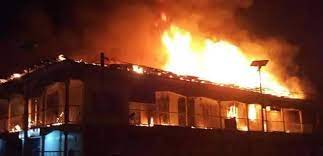

Fire Guts 110 Kano Timber Market Structures, 75 other Buildings
ShareFrom Rabiu Sanusi, Kano A fire outbreak has destroyed at least 110 structures at the Kofar Ruwa Timber Market in...