
economy
2022 Budget: Kaduna Govt spends N181.6bn in 9 Months – Report

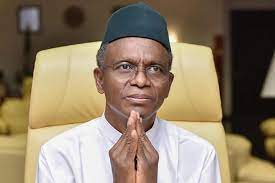
The Kaduna State Government has spent N181.6 billion from January to September, representing 64 per cent budget performance of the N279.6 billion revised budget for 2022.
This is contained in the Third Quarter2022 Budget Performance Report produced by the Office of Accountant-General with support of the Planning and Budget Commission.
The report, obtained by newsmen in Kaduna on Tuesday shows that of the amount, N117.
5 billion was spent on capital projects.This represents 63.5 per cent of the N185.1 billion allocated for capital projects in the 2022 budget, leaving a variance of N67.
6 billion.Similarly, N64.3 billion was spent on recurrent expenditure, representing 67.8 per cent performance of the total N94.5 billion recurrent budget for the year, with a variance of N30.4 billion.
On revenue, the report shows that N188.4 billion was realised as revenue within the period, representing 67.3 per cent revenue performance for the year, leaving a variance of N91.3 billion.
Of the N188.4 billion revenues, N38.9 billion was Internally Generated Revenue (IGR) with N7.4 billion collected in first quarter, N16.7 billion in second quarter and N14.8 billion in third quarter.
The N38.9 billion IGR represents 55.2 per cent of the N70.5 billion IGR target for the year, leaving a variance of N31.6 billion.
The report blamed low IGR collection to non-full implementation of new law on Development Levies, and noncompletion of shops in most of the markets.
It added that there was equally a low collection of tuition fees in the state’s tertiary institutions due to a hike in fees and prolonged strike action by Academic Staff Union of Universities.
It also blamed the low performance on pending approvals for regularisation of several undocumented layouts, and high cost of land re-certification among other economic factors.
Also, a total of N64.2 billion was received as the government share of the Federation Allocation Account Committee, representing 77.1 per cent performance of the N83.2 billion targeted for the year.
A total of N42.6 billion was received as Capital Receipts, representing 51.1 per cent performance of the N83.6 billion target for the years.
The N42.6 billion was made up of N21.9 billion aids and grants, representing 44.7 per cent performance against the 49.1 billion target and N20.7 billion representing 60.3 per cent against the N34.3 billion target.
The report indicates that the low performance resulted from the global economic recession which has affected both external and domestic donor partner funded programmes.
A further analysis of the budget shows that the Ministry for Finance has the highest budget performance of N34.1 billion representing 94 per cent of the n36.3 billion allocated leaving a variance of N2.2 billion.
This was followed by the Ministry for Public Works and Infrastructure which spent N28.1 billion within the period, representing 86.8 per cent of the N32.5 billion total allocation to the sector.
It was followed by the health sector, where a total of N22 billion was spent out of the N38 billion allocated for the year representing 57.8 per cent performance leaving a variance of N16 billion.
Education sector trailed behind with 53.4 per cent performance after spending N35.4 billion of the N66.4 billion allocation, leaving a variance of N30.9 billion.
Commenting on the development, Mr Yusuf Goje, Coalition of Association for Leadership Peace Empowerment and Development (CALPED), observed that most of the revenue targets were lagging the 75 per cent benchmark at the third quarter.
Goje, the Head of Leadership, Governance and Advocacy of the organisation. pointed out that the poor revenue generation has affected both the capital and recurrent expenditure, which stood at 63.5 and 67.8 per cents respectively.
“This brought to the fore the issue of budget realism, which has remained an issue in Kaduna state where the annual budget is always above the recommendation of the Medium-Term Expenditure Framework.
“This is very unfortunate because we are not expecting a dramatic increase in spending in the 4th quarter because of the 2023 political activities that would distract the governance processes.
“This is a cause for concern because if we are not sure of generating the needed revenues to fully implement a N279.6 billion 2022 budget, how do we expect the 2023 budget of N370.3 billion will fare? he asked.
Describing revenues as a “critical component” of the budget circle, Goje advised the government to increase its taxpayers net and find creative ways to increase its revenue performance.
He explained that the government can leverage on the political campaigns and economic activities within this period to increase its revenue generation. (NAN)
The Abuja Electricity Distribution Company (AEDC) says it is committed to settling all legitimate allowances owed staff.
The company’s Managing Director, Mr Chijioke Okwuokenye, said this in a statement in Abuja on Thursday following a threat from the workers to shutdown the operations of the establishment.
The threat notice was given by the two labour unions in electricity supply industry, the National Union of Electricity Employees (NUEE) and the Senior Staff Association of Electricity and Allied Companies (SSAEAC).
The unions had respectively resolved to resume their earlier suspended strike over non-implementation of agreements reached with the AEDC since Nov.
5 and Nov 7, 2024.The unions threatened to resume the suspended action over non-remittance of pension deductions for 16 months, non-implementation of the national minimum wage.
They also cited non-promotion and the continuous stagnation of members of staff for over 10 years, non-confirmation of staff on acting appointment, non-regularisation and proper placement of appointments amongst others.
Okwuokenye said that management had been engaging constructively with the union representatives regarding the notice of industrial action.
”We are committed to ensuring that all legitimate allowances owed to staff are settled promptly, subject to our financial processes and regulatory compliance.
”We have already initiated dialogue with the union leadership to address their concerns transparently and to seek a mutually agreeable resolution.
”We are confident that, through continued negotiation and open communication, we will find a way to avert any disruption to our operations and to uphold our commitment to the welfare of our employees, ”he said.
According to him, employees of AEDC are at the heart of all the company does, and their well-being and welfare are paramount to management.(NAN)
By Tony Obiechina Abuja
The Nigeria Sovereign Investment Authority (NSIA) yesterday disclosed that its net assets grew from N156bn in 2013 to N4.35 trillion in 2024.
Similarly, the Authority has remained profitable for 12 consecutive years, leading to cumulative retained earnings of N3.
74 trillion in 2024.Managing Director and Chief Executive Officer of NSIA, Aminu Umar- Sadiq made these disclosures at a media engagement in Abuja, highlighting its audited financial results for the 2024 fiscal year.
According to him, the results underscored the resilience of the authority’s investment strategy and the strength of its earnings, driven by a well-diversified revenue base and robust risk management practices, despite a challenging global macroeconomic and geopolitical environment.
Total operating profits, excluding share of profits from associates and Joint Venture (JV) entities, increased from N1.17 trillion in 2023 to N1.86 trillion in 2024, driven by the strong performance of
NSIA’s diversified investment portfolio, infrastructure assets, gains from foreign exchange movements, and derivative valuations.
In addition, Total Comprehensive Income (TCI), inclusive of share of profits from associates and JV entities, reached N1.89 trillion in 2024, reflecting a 59 per cent increase from N1.18 trillion in 2023.
Core TCI (excluding foreign exchange and derivative valuation gains) rose by 148 per cent to N407.9 billion in 2024 compared to N164.7 billion in 2023, supported by robust returns on financial assets measured at fair value through profit and loss, including collateralised securities, private equity, hedge funds, and Exchange-Traded Funds (ETFs).
Umar-Sadiq said the authority’s outstanding financial performance in 2024 reflected the “strength of our strategic vision, disciplined execution and unwavering commitment to sustainable socio-economic advancement.”
He said, “By leveraging innovation, strategic partnerships and sound risk management, we have not only delivered strong returns but also created value for our stakeholders
“As we move forward, we remain focused on driving economic transformation, expanding opportunities, scaling transformative impact and ensuring long-term prosperity for current and future generations of Nigerians.”
The CEO reaffirmed the authority’s commitment to managing the country’s SWF, and delivering the mandates enshrined in the NSIA Act.
He said NSIA remained poised to continually create long-term value for its stakeholders by delivering excellent risk-adjusted financial results, developing a healthy and well-diversified portfolio of assets and large-scale infrastructure projects, and enhancing the desired social outcomes.
He noted that NSIA was committed to its mandate of prudent management and investment of Nigeria’s sovereign wealth.
“In adherence to its Establishment Act, NSIA prioritises transparency, disclosure, and effective communication with all stakeholders and counterparties,” he said.
He pointed out that in the year under review, a new board, led by Olusegun Ogunsanya as Chairman, was appointed by President Bola Tinubu, in accordance with the provisions of the NSIA Act.
The new board will provide strategic direction and oversight, in addition to playing a pivotal role in critical decision making.
He remarked that under the guidance of the Board, the Authority will retain focus on its primary mandate of creating shared value for all stakeholders based on its continued adoption of corporate governance practices.
“NSIA prides itself an investment institution of the federation established to manage funds in excess of budgeted oil revenues and its mission is to play a pivotal role in driving sustained economic development for the benefit of all Nigerians through building a savings base for the Nigerian people, enhancing the development of the county’s infrastructure, and providing stabilisation support in times of economic misadventure,” he added.
From Anthony Nwachukwu, Lagos
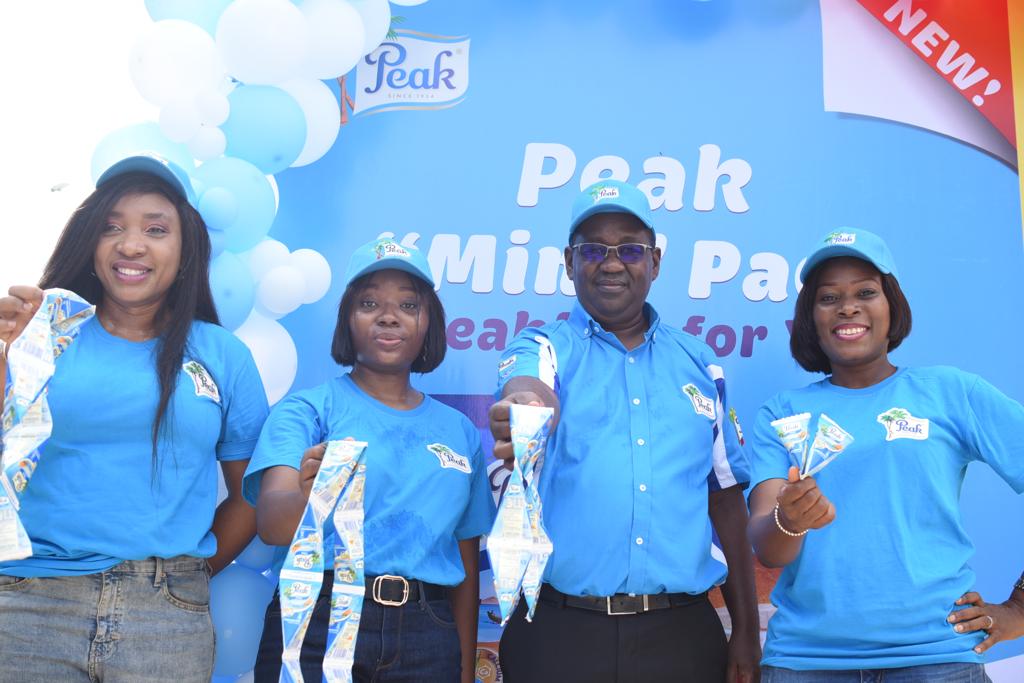
Dairy brand, Peak Milk has boosted Nigerians’ accessibility to its quality dairy nutrition range with the introduction of the budget-friendly Peak Mini – a smaller, more affordable pack from its signature Peak Evaporated Milk.
Unveiling the dairy brand, the producer, FrieslandCampina WAMCO Nigeria PLC, restated its commitment to providing high-quality dairy products to consumers as it has been doing in over 70 years in Nigeria.
According to WAMCO, the Peak Mini evaporated milk will provide affordable breakfast within the reach of every home with a budget-friendly nutritional breakfast with the same rich, creamy taste and high-quality.
Senior Brand Manager of Peak Milk, Moninnuola Kassim, stated that with Peak Mini, the company is “directly addressing the challenges many Nigerians face daily, one of which is affordability.
“Our smaller, affordable Peak Mini packs ensure that quality dairy nutrition remains within reach for everyone, regardless of income level.”
According to her, “many consumers have had to compromise on nutrition when considering costs, but with Peak Mini, that trade-off is no longer necessary.
The brand, Kassim said, maintains the same premium taste and nutritional benefits in a convenient and cost-effective package, and whether for breakfast cereals, tea or other meals, this innovation ensures that consumers no longer need to choose between quality and affordability.
According to her, FrieslandCampina WAMCO believes that every Nigerian deserves access to quality, nutritious dairy products,” and “Peak Mini is another step towards fulfilling that mission by providing a practical solution that meets the needs of everyday consumers.”
 | ReplyReply allForwardAdd reaction |



Nigeria’s Problems Beyond Tinubu, Ask Governors LG Chairmen
ShareBy Tony Bazim Many Nigerians blame President Tinubu for everything happening in the country, but have we taken time to...
Stakeholders Demand Enforcement of Kogi Urban Planning Law
ShareFrom Joseph Amedu, Lokoja Stakeholders in Kogi State’s built environment sector have called on the state Government to urgently enforce the Kogi State Urban and...
Wrestling: Team Nigeria Wins One Silver, Two Bronze in Mongolia
ShareTeam Nigeria wins one silver and two bronze, concluding its competition at the ongoing Ulaanbaatar 2026 United World Wrestling (UWW) 3rd Ranking Series on Saturday...


South Korea Election Chief Offers to Resign over Ballot Shortages
ShareSouth Korea’s National Election Commission (NEC) chairperson, Roh Tae-ak, on Friday offered to resign following a widespread shortage of ballot papers that disrupted voting in Seoul during this week’s...
JAMB Opens Portal for Printing of 2026 Mop-up UTME Slip
ShareThe Joint Admissions and Matriculation Board has announced that candidates scheduled for the 2026 Mop-Up Unified Tertiary Matriculation Examination can now print their examination notification slips ahead...
Dismisses Admission Exclusion Claims
ShareThe Nigerian Defence Academy (NDA) has dismissed reports claiming prospective candidates were excluded from admission into its 78 Regular Course due to portal closure. The Academy described the...


CBN Updates Forex Rules, Approves $50,000 Limit for Travellers
ShareBy Tony Obiechina, Abuja The Central Bank of Nigeria (CBN) has released revised foreign exchange (FX) guidelines, introducing new rules...
NUPRC, NNRA Partner on Compliance Costs, Safety Oversight
ShareBy Tony Obiechina, Abuja Nigeria’s drive to strengthen its petroleum industry received a boost as the Nigerian Upstream Petroleum Regulatory...


Army Rescues 360 Abducted Women, Children in Borno Operation
ShareBy David Torough, Abuja Nigeria’s security forces recorded a significant breakthrough in the fight against terrorism and kidnapping as troops...

Stakeholders Seek Better Healthcare Access for Benue Adolescent Girls
ShareBy Attah Ede, Makurdi Adolescent Girls and Young Women (AGYW) in Benue State have been urged to speak out against...