
POLITICS
2023 Elections in Jeopardy —Falana


Erudite jurist and social justice crusader, Femi Falana has warned that the 2023 general elections could be jeopardized because some parts of the country are experiencing what he described as civil war.
Falana who is also a Senior Advocate of Nigeria (SAN) said this Thursday while speaking at the South-West constitution review public hearing in Lagos.
The human rights lawyer said Nigeria is on the brink of collapse and asked the ruling class to without further delay advise President Muhammadu Buhari on what he must do to “quickly reclaim this country”.
He regretted that Nigeria has been battling a spike in violence in recent months with little or no efforts to put an end to it.
“In the North, residents remain at the mercy of Boko Haram insurgents and bandits while security agencies and government facilities are increasingly becoming targets of attacks by gunmen in the South.
“The offices of the Independent National Electoral Commission (INEC) have not been spared several of them have so far been razed this year.”
According to him, there must be peace and stability in the country for the ongoing constitutional amendment to be meaningful.
“Time is not on the side of the ruling class, as we are gathered here, in some parts of the country — South-East, North-East, North-West — a civil war is going on. In fact, in some parts of the country, the 2023 elections are already in jeopardy.
“INEC offices are being burnt, police stations are being burnt. In that kind of atmosphere, we cannot pretend that there is political stability in our country.
“I, therefore, plead with you when you return to Abuja, invite the President and ask him what we can do very quickly to reclaim this country, which currently is on the verge of collapse.
“For the constitutional amendment to be meaningful, there must be peace and stability, and you can only have peace and stability when you address the problems confronting the people.
“If you don’t want people to break away from Nigeria, you must give them confidence.”
Many stakeholders believe that the seriousness or otherwise that would be attached to the nationwide Public Hearing will go a long way to determine the fate of the country ahead of the 2023 elections.




By Mike Odiakose, Abuja
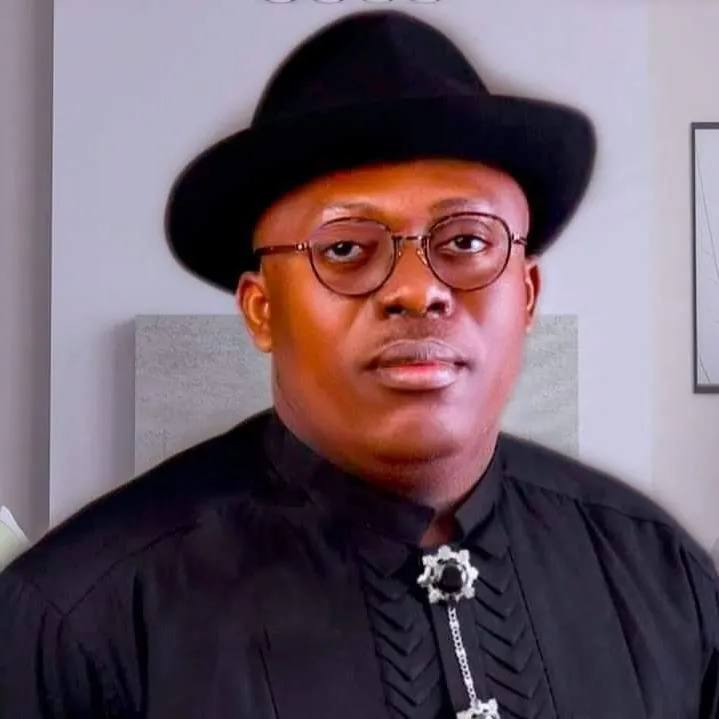
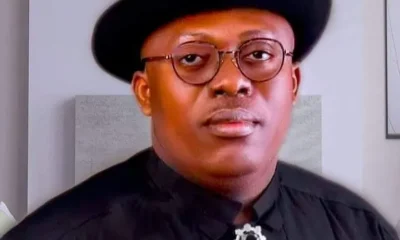
Governor Siminalayi Fubara of Rivers State has withdrawn from the governorship primaries of the All Progressives Congress (APC), slated for Today.
In a statement entitled ‘My decision to withdraw from the Rivers State Gubernatorial Primaries’, which he personally signed on Wednesday night, Fubara stated that he would support whoever emerged as the candidate of the party.
He said: “After deep reflection and extensive consultations with my family, friends, and associates, I have taken the difficult but necessary decision to withdraw from the APC gubernatorial primaries.
I do so with a full heart and with a firm commitment to support whoever emerges as the candidate of our great party.“Leadership is ultimately about sacrifice. There comes a time when personal ambition must yield to the greater good of the people. Rivers State is bigger than any individual, and at this critical moment, the peace, stability, and unity of our dear state must take precedence over every personal interest.
“To my supporters who stood firmly with me throughout this journey who gave their time, resources, prayers, and unwavering hope, I offer my deepest gratitude. I understand the disappointment, the anger, and the pain many of you may feel. Much has indeed been invested and much sacrificed along the way. But please know that your loyalty and trust were never in vain. My silence over this period was deliberate and strategic, guided always by the higher interest of our state and our people.
“As our elders say, not everything a hunter sees in the forest is spoken of in the marketplace. Some truths are best borne quietly, not out of fear, but out of wisdom and restraint for the sake of peace and a greater purpose. It is enough to say that I have faced immense pressures and difficult choices, but my love for Rivers State remains greater than anything else.
“I sincerely thank our great party, the All Progressives Congress, for the platform and support extended to me throughout this process. I also express my profound appreciation to His Excellency, President Bola Ahmed Tinubu, GCFR, for his support and encouragement.
“The APC remains our collective home, and I urge all party faithful and supporters to remain steadfast and committed as we continue to build a stronger and more united future together.
“Let it be clearly understood that I stepped aside from participating in the upcoming River’s state gubernatorial election not out of weakness, fear, or surrender, but out of conviction and sacrifice so that Rivers State may move forward in peace and unity and I remain committed to serving the good people of Rivers state till the end of my term. Thank you, and May God bless Rivers State.” He stated.
By Eze Okechukwu, Abuja
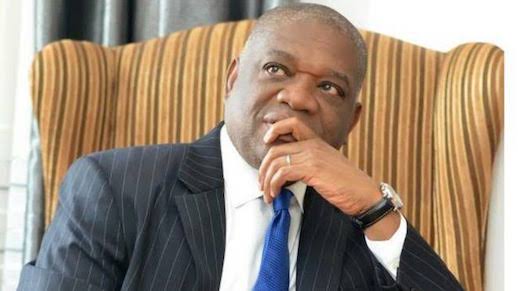
The Senator representing Abia North Senatorial District, Orji Uzor Kalu, has expressed gratitude to President Bola Tinubu, the leadership of the All Progressives Congress (APC), party stakeholders, and the people of Abia North following his victory in the APC senatorial primary election.
He secured the APC ticket for the 2027 National Assembly election after defeating his challenger, Philip Nto, by a massive margin of 63,548 votes recently.
The former Senate Chief Whip polled 65,651 votes against Nto’s 2,103 votes in the direct primary election conducted across the 57 wards of Abia North Senatorial District.Official figures released by the APC Primary Election Committee showed that out of the 72,028 registered voters, 69,441 members were accredited, while a total of 67,854 votes were cast during the exercise.
In a statement issued on Tuesday on his official media platforms after the declaration of the results, Kalu said he was overwhelmed with gratitude to God and the people for the overwhelming support given to him throughout the process while he described the outcome of the exercise as a humbling reaffirmation of the trust and confidence reposed in him by the party and the people.
“Today, I speak with a heart full of gratitude to Almighty God for His grace, mercy, and the privilege of life and service to humanity,” Kalu stated.
“I remain deeply humbled by the confidence reposed in me once again by our great party, the All Progressives Congress (APC), as its candidate for the 2027 Abia North Senatorial election.
“I sincerely appreciate President Bola Ahmed Tinubu, the national leadership of our great party, APC leaders and stakeholders across Abia State and beyond, members of our political family, the OUK Movement and Reality Organisation, party faithful, and supporters for their steadfast loyalty, encouragement, and belief in our shared vision for Abia North.
“Most importantly, I thank my beloved people of Abia North, the good people of Arochukwu, Ohafia, Bende, Isuikwuato, and Umunneochi. Your love, prayers, support, and trust over the years continue to inspire me. I love you all deeply,” he added.
Reflecting on his journey in the Senate since 2019, Kalu said his representation had focused on giving Abia North a stronger voice at the National Assembly while attracting meaningful development projects to communities across the district.
According to him, his legislative contributions include the sponsorship of over 20 bills targeted at improving governance, security, education, infrastructure, industrialisation, and economic growth in Nigeria.
Among the bills listed by the senator are the Coastal and Inland Shipping (Cabotage) Act Amendment Bill, Armed Forces Act Amendment Bill, Compulsory Free Universal Basic Education Act Amendment Bill, Electoral Act Amendment Bill, Administration of Criminal Justice Act Amendment Bill, National Food Bank Establishment Bill, Tax Crime Commission Bill, NESREA Amendment Bill, and the Electric Vehicle Transition and Green Mobility Bill.
He also disclosed that he sponsored constitutional alteration bills aimed at granting concurrent legislative powers on railways and electricity to deepen decentralisation and fast-track national development.
“I have also consistently advocated stronger community policing structures and reforms aimed at improving security and governance at the grassroots level,” Kalu stated.
On infrastructure, the senator said his office had facilitated over 70 road projects spread across the five local government areas of the district through strategic partnerships and effective representation.
Beyond road infrastructure, Kalu highlighted interventions in healthcare, education, youth empowerment, industrialisation, and economic development.
“In the healthcare sector, our mothers, elderly citizens, and vulnerable groups have benefited from free healthcare services through the National Health Insurance Scheme,” he said.
“In education, we embarked on the renovation and construction of over 100 schools, alongside the distribution of desks, instructional materials, free STEM textbooks, school sandals, and uniforms for pupils across communities.”
The former Abia State governor further revealed that foreign scholarship opportunities and overseas training programmes had also been facilitated for youths and women as part of efforts aimed at sustainable human capital development.
According to him, leadership should be measured by its impact on ordinary citizens and future generations.
“For me, leadership must always be about building a stronger tomorrow for our people. It should be about creating opportunities for the child in Isu, Amanagwu Arochukwu, Ndi Ibe Ohafia, Ndi Inyang Abam, Ezeukwu Bende, Nneato Umunneochi, Uturu in Isuikwuato, and every other community in Abia North to have a brighter future,” he said.
Kalu also pointed to ongoing industrial and investment-driven projects in the district, including the completed Cashew Processing Factory in Igbere, as well as the ongoing Solar Panel Factory and Keke Manufacturing Plant projects, which he said were aimed at creating jobs and stimulating economic growth.
He added that thousands of women and youths across the district had benefited from empowerment initiatives involving the distribution of tools, equipment, and support materials to improve livelihoods and encourage self-reliance.
The senator further noted that interventions had equally been carried out in erosion and flood-prone communities within the district to mitigate environmental challenges affecting residents.

From Joseph Amedu, Lokoja
Controversy and protests marred Monday’s All Progressives Congress (APC) senatorial primaries in Kogi State, even as former governor Yahaya Bello and other aspirants claimed victory in their respective districts.
Kogi East: Echocho alleges irregularities, threatens 2027 bid
Tensions flared in Kogi East where incumbent Senator Jibrin Isah, popularly known as Echocho, rejected the conduct of the primary.
In a viral video, the visibly agitated senator alleged that election materials and officials were absent in several wards, including his own, and claimed no proper election took place.Echocho accused party officials of bias and alleged that results were “prepared at the Government House before the commencement of the exercise.”
“That result is a nullity, and cannot even be announced,” he said.
The senator further threatened to challenge Governor Ahmed Usman Ododo in the 2027 governorship race if the senatorial primary outcome did not favor him.
“I am going to contest against you. I have the right. The battle line has been drawn,” Echocho declared.
He maintained that his constituency projects and empowerment programs were meant to strengthen the APC ahead of future elections for President Bola Ahmed Tinubu and Governor Ododo, and accused the governor of turning against him despite his loyalty to both Ododo and former governor Yahaya Bello.
Other complaints in Kogi west
Another aspirant, Ustaz Abubakar Zakari Ola, also raised concerns before voting began. He alleged plans to intimidate his supporters and claimed that voting was disrupted by thugs in centers where he held an advantage.
High turnout in Bello’s hometown
Despite the disputes, turnout was described as massive across the state’s three senatorial districts.
In Agassa, the hometown of former governor and Kogi Central aspirant Yahaya Bello, supporters voted in large numbers. Bello commended delegates for a peaceful process and praised party officials for adhering to guidelines, calling the exercise a reflection of the APC’s capacity to conduct transparent elections.
Also contesting the Kogi Central ticket are APC Diaspora Secretary and businessman Chief Momoh Obaro, and Ibrahim Yakubu Adoke.
Meanwhile Governor Ahmed Usman Ododo participated in the primary at his Upogoro/Odenku Ward polling unit in Okene LGA. The exercise was held under tight security with a large turnout of party members.
Speaking to journalists after voting, Ododo described the process as “peaceful, transparent, and orderly,” saying it reflected the democratic ideals being strengthened within the ruling party.
Official results from the primaries were yet to be announced as of press time. Echocho’s rejection and threats of legal and political action signal potential post-primary battles within Kogi APC ahead of the 2027 general elections.


Organization Raises the Alarm over Rising Insecurity in Kogi East
ShareFrom Joseph Amedu, Lokoja The Ukomu Igala Organization has cried out over the rising cases of insecurity – banditry, kidnapping and brutal killings involving...
Nigeria Intensify Prep Ahead Canada Squash Tourney
ShareThe Nigeria Squash Federation has stepped up preparations ahead of the 2026 World Junior Team Squash Championship scheduled to take place in Ontario, Canada, from...


Ebola Outbreak May be Spreading Faster than First Thought, WHO Doctor Warns
SharePeople living close to the epicentre of an Ebola outbreak which has killed 131 people have expressed their fear, as a World...
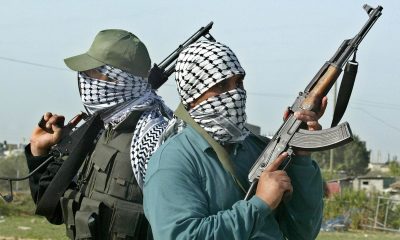

Oyo School Abductions: Time for Concrete Action Against Terrorism
ShareBy Tochukwu Jimo Obi The recent kidnapping of students and teachers in Oriire Local Government Area of Oyo State has once again exposed the...

FG Okays N4bn to Settle Stranded Nigerian Scholars’ Allowances
ShareThe Federal Government has approved N4bn for the payment of allowances to Nigerian students studying abroad under the Bilateral Education Agreement. The approval follows...

CBN Retains Lending Rate at 26.5 Per Cent
ShareBy Tony Obiechina, Abuja Governor of the Central Bank of Nigeria (CBN), Olayemi Cardoso, on Wednesday announced that the Monetary...

2027: Fubara Pulls Out of APC Governorship Primaries
ShareBy Mike Odiakose, Abuja Governor Siminalayi Fubara of Rivers State has withdrawn from the governorship primaries of the All Progressives...

Army Acquires More Drones, Reconfigures Aviation Assets for Combat
ShareBy David Torough, Abuja The Nigerian Army has acquired additional protracted TP-2 drones and reconfigured its aviation assets for combat...
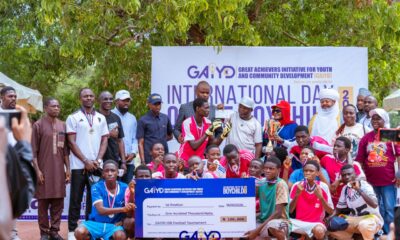

GAIYD, EFCC Task Boy-child on Integrity as World Marks Int’l Day
ShareBy David Torough, Abuja Stakeholders at the commemoration of the International Day of the Boy Child on Saturday in Abuja...
AFCON Qualifiers: Nigeria to Face Madagascar, Tanzania, Guinea-Bissau
ShareNigeria have been drawn in Group L of the 2027 Africa Cup of Nations qualifiers, where they will face Madagascar,...