
Business News
50,000 Farmers Get N70bn Loan From DBN

By Mathew Dadiya, Abuja
The Development Bank of Nigeria (DBN) Monday disclosed that it has given out N70 billion as loans to over 50,000 Micro, Small and Medium Enterprises (MSMEs) within three years.
Chairman of the bank, Dr.
Shehu Yahaya said this at the maiden seminar series of the bank with the theme: Surviving To Thriving: “MSMEs as the key to unlocking inclusive growth in Africa”, held in Abuja.Yahaya said that bank will continue to work in line with its mandate which is to alleviate financing constraints being faced by the Micro, Small and Medium Enterprises (MSMEs) in Nigeria.
He said that it was important that the government sought ways to boost job creation through formal enterprises.
He also observed that poverty and inequality had deepened in the country due to population and economic growth which led to rise in unemployment rate.
Yahaya said that DBN has changed the narrative by providing finance and partial credit guarantees to eligible financial intermediaries based on market conformity as well as full financially sustainability.
In his address, the Managing Director of DBN, Mr. Tony Okpanachi, said as bedrock of economic growth and development, MSMEs could play a critical role in accelerating economic transformation and industrialization.
According to Okpanachi, the lecture series was one of the ways to further strengthen the economy by ensuring that MSMEs were adequately empowered to continually contribute effectively to the Gross Domestic Product (GDP) of the nation.
Citing data from both SMEDAN and National Bureau of Statistics (NBC) which put the number of MSMEs in Nigeria at 41.5million, the Managing Director said that they collectively contribute over 50 per cent of Nigeria’s GDP.
“However, access to finance is still a concern for this critical segment of the economy. The latest figure indicates that at the Micro level, about 90.5% do not have access to credit whilst thefigure for SMEs is put at 67.9%. Other pressing areas which rank high for SMEs are assistance in power and water supply – 83.5% as well as tax rate reduction- 73.1%.”
Underscoring the importance of the event, the Okpanachi said MSMEs are the bedrock of Nigeria’s Industrialization and inclusive economic development noting that as the largest employers in many low-income countries including Nigeria, their viability and growth has been restricted by lack of access to long-term debt capital.
“Our mandate at the Development Bank of Nigeria is to alleviate financing constraints faced by the Micro, Small and Medium Enterprises (MSMEs) in Nigeria through the provision of financing and partial credit guarantees to eligible financial intermediaries on a marketconforming and fully financially sustainable basis and this lecture series is our way of providing a platform for a robust exchange of ideas to tackle the challenges and take advantage of opportunities that exist in the MSME segment of the economy.
“We believe that at the end of today’s interactions we would have a broadened understanding of these challenges and critically examine and act towards practical steps to resolve some of the obstacles that constrain growth within the segment,” he added.
The inaugural Development Bank of Nigeria Plc Annual Lecture Series, is meant to deliberate and forge a sustainable way forward for Micro, Small and Medium Enterprises (MSMEs), not just in Nigeria, but across Africa.
In his keynote address, former President of the African Development Bank (AfDB) Dr. Donald Kaberuka, asserted that unfavorable government policies and bureaucracies rather than lack of access to finance was the major drawback to growth of MSMEs.
“Think of a small car repairer in Kaduna, or a small kiosk owner in Soweto. If electricity is unreliable his small margins are gone even if they had access to finance.
“Think of red tape, and multiple level taxation or inability to access government procurement or not being paid on time.
“But there is also inexperienced management and capacity, and limited access to accounting services,’’ he said.
Kaberuka called on the Nigerian government to intensify efforts to achieve more than six per cent growth if Nigerians were to feel impact of the growing economy.
The maiden edition of the lecture series, was conceived as a thought leadership initiative aimed at providing a platform for a robust exchange of ideas to meet the challenges and opportunities that exist in the MSME segment of the economy.









A graduate of the University of Maiduguri, Shianya Ebwaseh, said the Nigerian Education Loan Fund (NELFUND) helped improve her Grade Point Average (GPA) to 3.50 through financial support that enabled her to concentrate on her studies.
Ebwaseh, who graduated from the Department of Zoology, Faculty of Life Sciences, said this in an interview on Monday in Maiduguri.
She said financial difficulties had previously affected her academic performance, as she struggled to meet her daily needs while pursuing her degree.
The graduate said she resorted to selling fried chips and groundnuts on campus to support herself, sometimes missing lectures because of the time and energy required to run the business.
According to her, the introduction of NELFUND’s student loan scheme relieved her financial burden through tuition support and a monthly N20,000 upkeep allowance.
“Before NELFUND, I struggled with my GPA because of financial challenges. I sometimes missed lectures after spending hours frying and packaging chips for sale.
“But when NELFUND came, I stopped the business and concentrated on my studies. My GPA improved to 3.50, which is Second Class Upper,” she said.
Ebwaseh said the financial support also enabled her to attend lectures regularly, purchase learning materials and prepare adequately for tests and examinations without constant worries about money.
She added that her examination scores improved significantly after she began receiving the support, attributing the change to increased concentration and financial stability.
The graduate, who said she accessed the scheme in her third year, described the application process as simple and encouraged other eligible students to apply.
She also said the programme had helped financially disadvantaged students remain in school, particularly those whose parents could not afford tuition fees and upkeep.
Ebwaseh appealed to the Federal Government to sustain the initiative, emphasising that withdrawing the support could expose many students to financial difficulties and possible dropout.
She said the scheme had given beneficiaries an opportunity to pursue their academic ambitions with fewer financial distractions.(NAN)
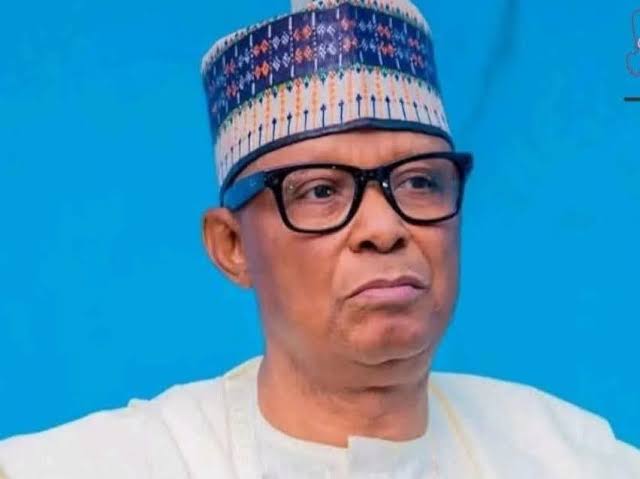
The Minister of Housing and Urban Development, Dr Muttaqha Darma, has called for synergy among government agencies in the housing sector to improve coordination and accelerate housing delivery.
Darma made the call in Abuja on Monday at the stakeholders’ conference on the proposed National Real Estate Regulatory Authority (NRERA).
The conference, themed “One vision, One Ecosystem, One National Housing and Real Estate Plan”, was organised by the Office of the Speaker, House of Representatives, and the House Committee on Housing and Habitat.
The minister said the lack of coordination among government agencies had affected the effective delivery of houses to Nigerians, noting that institutions in the sector operated independently.
“The players within the industry, all of us, operate in silos.
“Federal Housing Authority (FHA) does not even know what the Federal Mortgage Bank of Nigeria (FMBN) is doing. FMBN does not know what the Ministry of Finance Incorporated (MOFI) is doing,” he said.
According to him, the various institutions must work together towards a common goal rather than operate independently.
“Our target is to build houses for Nigerians. We are wasting our time because if we fail, it is us who fail, not the President,” he said.
The minister expressed support for the establishment of NRERA, saying the proposed authority would address the regulatory gaps in the real estate sector.
He said the ministry had reviewed the proposed legislation and recognised its potential to improve the sector.
Darma also disclosed that abandoned housing projects funded by the Federal Mortgage Bank of Nigeria (FMBN) across the country were worth about N38 billion.
He said a survey conducted by the ministry revealed abandoned FMBN-funded housing developments in every state of the federation, including the Federal Capital Territory.
“We realised about N38 billion of contributors’ money, your own money, all the Nigerian workers’ money. N38 billion is wasted,” he said.
He said that the poor management of workers’ contributions could discourage Nigerians from contributing to the National Housing Fund.
The minister urged the committee handling the proposed legislation to ensure that state governments were included in the regulatory framework.
He also called for safeguards to protect homebuyers, tenants, developers and mortgage lenders, including mandatory escrow accounts for buyers and standardised tenancy agreements.
The Managing Director and Chief Executive Officer of the Ministry of Finance Incorporated (MOFI), Dr Armstrong Takang, said effective regulation was necessary to restore investor confidence in Nigeria’s real estate sector.
Takang said the sector contributed 12.71 per cent to Nigeria’s Gross Domestic Product (GDP) as of June 2026, but remained largely unregulated.
He said the absence of a national licensing system had allowed unqualified individuals to operate as estate agents and developers without adequate accountability.
“Anyone can sell land, anyone can collect off-plan payments, run into tens of billions and get away with it. There are very few countries in the world where these are allowed,” he said.
He called for mandatory licensing of real estate operators and the protection of buyers’ funds through designated project accounts.
“An operator must be licensed with the authorities. No one should be operating in the real estate sector without a licence, no matter which part of the value chain they are involved in,” he said.
He added that buyers’ funds should be kept in protected project accounts and released to developers based on evidence of progress on construction.
Takang said effective regulation would attract domestic and foreign investment, protect citizens and support the Federal Government’s one-trillion-dollar economy target.
He urged the National Assembly to ensure the passage of the proposed legislation, describing it as critical to bringing order and transparency to the real estate sector.

From Tony Nwachukwu, Lagos
Fintech company OPay has announced the postponement of its planned public offering on the New York Stock Exchange (NYSE), following careful consideration of an ongoing inquiry by a regulatory authority.
The company said the decision to postpone the offering was taken in the best interests of the business and its customers.
In a statement shared with DAILY ASSET, OPay explained that the ongoing inquiry does not affect the services it provides to customers or how it operates in Nigeria and its other business markets.
The company also reassured customers, merchants, agents and other business partners that its operations would continue as usual, with all services remaining fully available.
“Customers can continue sending and receiving money, making payments and saving without interruption,” the statement noted.
OPay expressed appreciation to its customers, merchants, agents, business partners, employees and other stakeholders for their continued trust and support.
The company also reiterated its commitment to making financial services more inclusive through technology




Actress Ademoye Rejects Apology over Movie Demonetization
ShareNollywood actress and filmmaker, Bimbo Ademoye, has rejected an apology from a man who filed a copyright claim against her...


Army Rescues 21 Kidnap Victims after Gun Battle with Terrorists in Niger
ShareBy David Torough, Abuja Troops of the Nigerian Army’s 18 Brigade have rescued 21 kidnapped victims following a fierce gun...


CBN Digitalises Fiscal Data Reporting Across 36 States, FCT
ShareBy Tony Obiechina, Abuja The Central Bank of Nigeria (CBN) has commenced the digitalisation of sub-national fiscal data reporting across...


NNPC Audit: Kyari Denies N210trn Missing Funds
ShareBy David Torough, Abuja Former Group Chief Executive Officer of the Nigerian National Petroleum Company Limited (NNPCL), Mele Kyari, has...


2027: APC Bets on Reforms, Unveils Tinubu’s Blueprint
ShareBy Eddy Ochigbo, Abuja The All Progressives Congress (APC) has unveiled an ambitious four-pillar manifesto for President Bola Tinubu’s proposed...


Troops Neutralise over 60 Terrorists, Rescue70 Kidnap Victims in One Week
Share By David Torough, Abuja The Armed Forces of Nigeria (AFN) have neutralised more than 60 terrorists and rescued at...


Accident Victims’ Remembrance Day: FRSC Records 7,156 Crashes, 3,445 Deaths
ShareThe Federal Road Safety Corps (FRSC) has recorded 7,156 road traffic crashes, resulting in 3,445 deaths and 22,292 injuries across...


Mutfwang Inaugurates State-owned Security Outfit, Operation Rainbow
ShareFrom Jude Dangwam, Jos Plateau State Governor, Caleb Manasseh Mutfwang, has inaugurated 353 operatives of the state-owned security outfit, Operation...


Otu Woos Investors, Promises Incentives, Support for Businesses in C’River
ShareCross River State Governor, Bassey Otu has called on private-sector investors to invest in the state, with assurances of incentives,...
2027: Tompolo Deploys 50 Vehicles in Enugu, C’River for Tinubu’s Re-election
ShareGrand Patron of the PBAT Door-to-Door Movement, High Chief Oweizidei Government Ekpemupolo, has donated 50 vehicles for President Bola Tinubu’s...