
NEWS
Bauchi Govt Earmarks N4.7bn for Yankari, Tourism Development

The Bauchi state government says it has earmarked N4.7 billion to reinvigorate Yankari Game Reserve and Sumu Wildlife Park, to encourage sustainable tourism development.
The government has allocated the fund in its 2025 budget, to fasttrack infrastructure development in the parks and other tourism sites in the state.
Mr Abdullahi Hassan, Commissioner for Tourism and Culture, said this in an interview with on Tuesday in Bauchi
He said the government was making huge investments to upgrade key tourism facilities, showcasing the state’s rich cultural heritage for pleasure seekers and researchers.
Hassan said that N2.7 billion has been set aside for the rehabilitation and upgrade of the Yankari Game Reserve and Resort.
He said the project included installation of solar power systems to ensure uninterrupted power supply while modern park facilities would be provided at the cost of N1 billion.
The commissioner said the government would expend N1 billion on the upgrade of the Sumu Wildlife Park to attract tourists and boost the state revenue base.
Hassan said that a 13.3 kilometre Kafin Madaki – Sumu Road, an administration block and earth dams would be constructed to support park operations and provide clean water for animals and human consumption.
“Sumu Park, known for its friendly giraffes, zebras and other non-threatening wildlife will see enhancement aimed at preserving its unique features.
“Plans are underway to introduce new species to the park, further enriching the visitor experience,” he said.
Also, Nasiru Yusuf, the General Manager, Bauchi State Tourism Board, reiterated the state government commitment to revitalise the wildlife reserves through an ambitious project tagged: “Wildlife Rejuvenation Programme.”
The programme, he said, is designed to herald habitat restoration and restock endangered species as well as strengthen conservation laws.
“We are focusing on rebuilding the wildlife populations, especially in the Yankari Game Reserve, which has long been a symbol of pride to Bauchi and Nigeria at large.
“Wildlife conservation is not just a government responsibility rather a shared duty for future generations,” he said.
According to Yusuf, the state government is partnering with international bodies, including the Czech Republic, and signed several Memorandums of Understandings (MoUs), to enhance development of key tourism sites.
Similarly, Steven Gassol, a former Head of Forestry Department, said the Bauchi state government was collaborating with the Wildlife Conservation Society (WCS), to innoculate over 12,000 cattle in agro pastoral communities surrounding the Yankari Game Reserve.
According to Cassole, the current state of wildlife in several protected areas across the country remains precarious, largely due to poaching, habitat loss and climate-related pressures.
He, however, said the federal and state governments have initiated a series of interventions to counter the threats.
He said the interventions included the expansion of protected reserves, stricter enforcement of anti poaching laws, and community-based conservation programmes aimed at empowering local communities to take active roles in preserving biodiversity.
This, he said, was being complemented by awareness creation activities to educate the people about the ecological and economic value of wildlife.
Cassole further lauded the synergy between regional bodies towards addressing cross border wildlife trafficking, which has been a major concern of the transnational conservation corridors.
“This collective action represents a promising shift towards sustainable conservation, continued synergy between the stakeholders will ensure long term success
By Tony Obiechina, Abuja
Jaiz bank has denied involvement of alleged N104m fraud in its Jos branch.
In a statement by its Corporate Communications Department in Abuja on Wednesday, the bank said “Jaiz Bank Plc wishes to address recent media reports alleging institutional fraud involving a disputed ₦104 million investment arrangement in Jos, Plateau State”.
According to the statement, following a comprehensive review of transactions involving a former employee and some complainants, Jaiz Bank clarifies that the disputed funds were never received, booked, or registered under any official Jaiz Bank investment product or account.
Continuing, the state that internal records show no evidence of Bank-authorized investments, but rather indicate private transactions between the complainants and the former employee.
“The transaction details provided by the complainants do not align with Jaiz Bank’s established operational, regulatory, or authorization protocols.
“As the matter is pending before the High Court of Justice of Plateau State, Jaiz Bank urges the public and media to avoid drawing premature conclusions based on unverified public narratives.
“Jaiz Bank remains fully committed to ethical, Shari’ah-compliant finance, transparency, and cooperation with regulatory and judicial authorities to ensure a fair resolution”, the statement added.
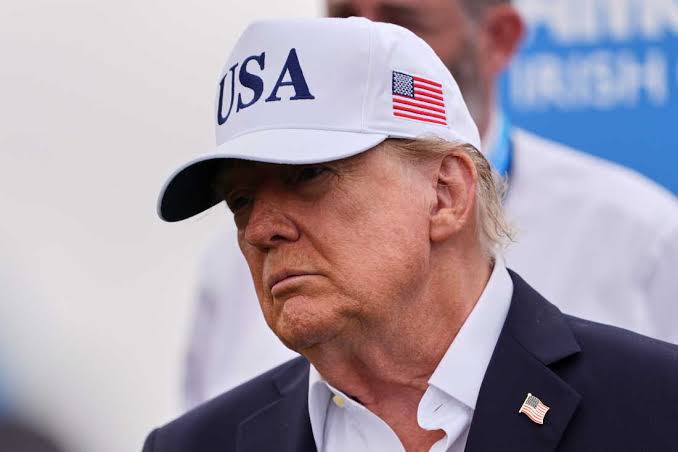
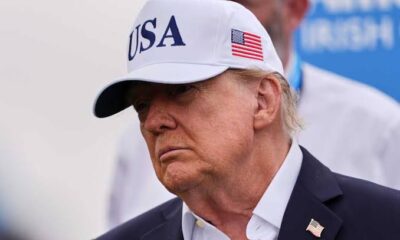
President Donald Trump asked voters to pretend he was on the ballot in the midterm elections and handpicked Republican candidates in some of the country’s most consequential Senate races.
By Tuesday night, voters had rejected them.
Trump-backed candidates in South Carolina, North Carolina, Texas and Michigan all lost, handing Democrats control of the chamber and exposing the limits of Trump’s political power.
Trump has spent more than a decade reshaping the Republican Party around his MAGA movement, dictating primary matchups and pushing aside conservative figures he felt were insufficiently loyal or not aligned with his vision.
Trump repeatedly favored loyalists and ideological allies over more established Republicans with stronger statewide networks and proven electoral track records, betting that his endorsement could overcome their political liabilities.
Tuesday’s results revealed he was unable to persuade the broader electorate to back his choices.
One of the most stunning repudiations came in South Carolina, which had not elected a Democratic senator since 1998 and which Trump won by 18 percentage points in 2024.
Trump backed Darline Graham, the sister of late Republican Senator Lindsey Graham. But Democrat Annie Andrews won the seat in a stunning upset.
In North Carolina, Trump endorsed former national Republican campaign official Michael Whatley, who lost in a rout to former Democratic Governor Roy Cooper.
In Texas, Trump intervened in a messy Republican primary election to promote scandal-plagued Attorney General Ken Paxton over Senator John Cornyn, a Trump ally who some in the party considered a safer pick in the general election.
Democrat James Talarico glided to a victory on Tuesday night, delivering Democrats a seat the party had not won since 1988.
Former U.S. Representative Mike Rogers, Trump’s choice in Michigan, was defeated by Democrat Abdul El-Sayed, who will be the first Muslim to serve in the Senate.
The losses came as Trump’s popularity was lower heading into Tuesday’s vote than in the aftermath of the January 6, 2021, attack on the U.S. Capitol, according to Reuters/Ipsos polls.
That helped fuel concerns among Republicans that the president had become a drag on the party he remade around himself.
“This is a Trump Quake,” said Doug Heye, a veteran Republican strategist, pointing to voter frustration over high prices caused by tariffs and the war in Iran.
“Trump spent the year telling voters what was important to him, not to them.”
Trump struck a defiant tone as election returns arrived.
“I wasn’t on the ballot, and if I was, we would have won in a landslide!” Trump wrote in a Tuesday night social media post.
One White House official, speaking on condition of anonymity, said Trump “did a better job promoting many of the candidates on the ballot than the candidates did themselves.”
A senior White House official, also speaking anonymously, told Reuters the administration had polling data as far back as six weeks ago showing Republicans would lose both the House of Representatives and Senate.
He also told Reuters that Trump embarked on a month-long nationwide campaign to try to salvage Republicans’ prospects.
Some independent analysts said the Senate losses bore Trump’s fingerprints specifically.
Thomas Kahn, a professor at American University, said the president’s intervention in the Texas Republican primary had cost his party a safe seat, arguing that a nomination for Senator John Cornyn “would have been a slam dunk for Republicans to win.”
North Carolina, Kahn said, was another clear case.
Republican incumbent senator Thom Tillis said he would not seek re-election last year after a public split with Trump, who threatened to back a primary challenger against him after Tillis balked at Medicaid cuts in the president’s tax-and-spending bill.
“He essentially gave that seat away to Democrats,” Kahn said. “Roy Cooper would not have run if Thom Tillis had run for re-election.”
Former North Carolina Governor Pat McCrory, a Republican, said Trump’s interventions in his party’s primaries had divided Republicans in state after state.
In South Carolina, McCrory said, the president went against two local congressmen, a fight that “really divided the party” – an example, in his telling, of a president spending his political capital against his own side.
McCrory’s sharpest criticism was aimed at Trump’s connection with the voters who built his coalition.
“I think President Trump’s greatest strength was that he had a common touch with the working-class people,” McCrory said.
“He lost that skill. He better regain that skill for the good of the country.” (NAN)

The Federal High Court in Abuja has fixed Dec. 8 for judgment in a N10 billion rights suit filed by former Gov. Nasir El-Rufai of Kaduna State against the Independent Corrupt Practices and Other Related Offences Commission (ICPC).
El-Rufai also joined ICPC Chairman, Musa Aliyu, SAN, the Attorney-General of the Federation (AGF) in the suit.
He alleged that they prevented him from having access to his wife, Aichatou Asabe; and son, Abba while in custody.
Justice Chigozie Onah fixed the date after the former governor’s counsel, Ubong Akpan; the ICPC’s lawyer, Yetunde Mosunmola, and Maimuna Lami-Shiru, who appeared for the AGF, adopted their processes and presented their arguments for and against the case.
Earlier when the case was called, the judge ordered that the footage of the closed-circuit television (CCTV) cameras at the ICPC’s office be played for 20 minutes each by parties to prove their arguments.
The commission, led by its lawyer, demonstrated some parts of the video clip in the open court.
Parts of the footage played include the incident of July 7 where Asabe, escorted by an officer, came to deliver food to the ex-governor at about 2:37pm, the incident involving Abba and the July 4 incident.
Mosunmola then urged the court to disregard El-Rufai’s claim.
On his part, Akpan, who asked that some parts of the footage of the CCTV earlier demonstrated be replayed, argued that neither Abba (El-Rufai’s son) nor Asabe had breached any security protocol from the video evidence to warrant their denial.
After the video recording was played, the parties adopted their processes.
Adopting his court documents, Akpan said their originating process was dated and filed on Aug. 13.
He said it was supported by an originating motion, an affidavit and an exhibit attached to the eight-paragraph affidavit with a written address.
The lawyer said four additional affidavits were filed in support of their arguments, urging the court to grant all their reliefs.
Akpan, who raised a sole question for determination, prayed the court to determine whether the respondents had been able to place any material fact before the court to prove their decision to bar El-Rufai’s wife access.
He argued that if there must be a denial of access to the detained ex-governor, there must be justification which must be verifiable.
He said for the purpose of the instant case, the denial of access to his relatives would constitute a breach of the law, including the Nelson Mandela Rules.
When the judge asked him if Mandela Rules are enforceable in Nigeria, Akpan responded that it is a standard in which all law enforcement agencies in the world operate.
Mosunmola, however, disagreed with Akpan’s submissions.
She said on behalf of the ICPC and its chairman, they filed three processes in opposing the suit.
She said a 27-paragraph counter affidavit with four exhibits and a written address were filed on Aug. 31.
The lawyer said a further counter affidavit was also filed on Sept. 28, among others.
Mosunmola said they relied on all the paragraphs of the counter affidavits, including the exhibits, in urging the court to dismiss the suit in its entirety.
The lawyer, who stated that El-Rufai was in lawful custody, submitted that access to him must be guided by security protocol within the facility.
She argued that it was glaring from the CCTV footage demonstrated in court that Asabe (El-Rufai’s wife) breached the security protocol on two occasions.
She maintained that Irrespective of how close a relative is to a person in custody, such a person cannot be given unrestricted access to the facility where there are rules that guide custodial access.
She said following Asabe’s alleged security breach, the anti-corruption commission reviewed its security setup.
Mosunmola, who asked if the measures adopted in restricting Asabe was really necessary, answered that the records showed that it was only Asabe that was not allowed access due to her conduct which had been demonstrated in the footage before the court.
She stated that Asabe was smuggled into the premises with the connivance of their officers on duty on July 4.
She said the officers were subjected to disciplinary action and one of them had been dismissed.
Mosunmola, therefore, urged the court to hold that El-Rufai’s rights had not been unlawfully interfered with.
In her submission, Lami-Shiru, Director of Civil Litigation and Public Law, said the AGF, in his opposition to the suit, filed a seven-paragraph affidavit on Sept. 11.
She said they equally filed a written address and a reply on points of law, urging the court to dismiss the suit.
The director submitted that their argument was predicated on the facts that the ICPC and its chairman acted within the confines of the law and that El-Rufai’s wife actually breached the commission’s protocol.
After listening to the parties, Justice Onah adjourned the matter until Dec. 8 for judgment.
The detained governor had instituted the suit against the ICPC, its Chairman, Aliyu, and the AGF as 1st to 3rd respondents respectively.
El-Rufai, in the originating motion, marked: FHC/ABJ/CS/1852/2026 and filed by Akpan on Aug. 13, sought a N10 billion in damages for allegedly preventing him from having access to his wife, Asabe; and son, Abba, while in custody.
The former governor, who alleged that his wife and son were denied to see him, sought nine reliefs.
He prayed the court to declare that his fundamental human rights guaranteed under Part IV of the 1999 Constitution (as amended} remain inviolable and in force notwithstanding his detention by the commission and should be honoured.
Responding in a joint counter affidavit filed by the ICPC and its chairman but deposed to by John Uche, a Chief Anti-Corruption Assistant in the Internal Security Support Unit, they said that many paragraphs in El-Rufai’s affidavit in support of his suit, were false.
Uche averred that the applicant (El-Rufai) was in the lawful custody of the commission by order of the Federal High Court (FHC), Kaduna Judicial Division in charge number: FHC/KD/73C/2025.
He said on July 7, in compliance with the order of the Kaduna FHC, permitting access to El-Rufai’s personal physician, the commission facilitated a medical visit to his personal physician accompanied by their officers and his wife, Asabe.
He said shortly after the hospital visit, the ICPC received a report that the said medical visit was turned into a political meeting in breach of its security protocol demonstrating that the existing access control environment was vulnerable.
He said against this development, the commission adopted a temporary-access control measure temporarily restricting non-essential access to the ex-governor because unrestricted access presented a continuing risk until the vulnerability was understood and adequately mitigated.
The officer said as this was happening on July 7, El-Rufai’s son, Abba, went to their office requesting to see his father and approached him (Uche) at his desk.
He said after he was prevented from gaining entry into the building, Abba lay in the gutter and repeatedly rubbed his leg against the edge of the gutter.
Uche said the commission has CCTV cameras installed at various strategic locations within and around its office premises for security and monitoring purposes, which also record activities and events occurring with their respective fields of view.
He said that the contents of the storage system, including the CCTV recordings, remained accurate and were not altered or tampered with during the material period.
Uche said that following a second security breach on July 7, the ICPC determined that its existing access arrangements were no longer adequate warranting an urgent review.
The officer said during the course of the review, the commission uncovered another security breach involving Asabe.



JAIZ Bank Denies Involvement in N104m Investment Fraud in Jos Branch
ShareBy Tony Obiechina, Abuja Jaiz bank has denied involvement of alleged N104m fraud in its Jos branch. In a statement...

Trump-backed Republican Senate candidates pay the price
SharePresident Donald Trump asked voters to pretend he was on the ballot in the midterm elections and handpicked Republican candidates...

Court to Deliver Judgment in El-Rufai’s N10bn Rights Suit
ShareThe Federal High Court in Abuja has fixed Dec. 8 for judgment in a N10 billion rights suit filed by...
Women and Land: Why Nigeria’s Land Administration Cannot Afford to Leave Half the Nation Behind
ShareThe ongoing conversations on land reform in Nigeria tend to focus on speed, cost and documentation. Seemingly disregarded is the...


Caverton Revenue Rises to N20.74bn
ShareBy Tony Obiechina, Abuja Caverton Offshore Support Group Plc recorded a 1.4 per cent increase in revenue to N20.74bn for...

Tinubu Slashes External Loan Request to $7.7bn, Seeks Senate Nod
ShareBy David Torough, Abuja President Bola Tinubu has revised the Federal Government’s 2026 external borrowing proposal, seeking Senate approval to...


Senate Criminalises Hospitals’ Rejection of Emergency Patients
ShareBy David Torough, Abuja The Senate has advanced a bill seeking to criminalise the rejection or neglect of patients requiring...


Youth and Human Development are my Priorities” – Hon Shekari
ShareHonourable Rijo Shekari is the aspirant contesting for the House of Representatives on the platform of the Peoples Democratic Party...


Oborevwori Calls for Continuous Training to Strengthen Civil Service
ShareFrom Francis Sadhere, Delta Delta State Governor, Rt. Hon. Sheriff Oborevwori, has urged civil service commissions across the country to...
Tuition Fees Review: Kogi Says PAAU VC Acted On Directive
ShareFrom Joseph Amedu, Lokoja The Kogi State Government has defended the recent review of tuition fees at Prince Abubakar Audu...