
NEWS
The Recent Elections in FCT, Kano and Rivers

By Reuben Abati
The elections, held over the weekend, Saturday, 21 February, were interesting for the obvious reason that they were clearly the litmus test cases for the Electoral Act, 2026, which was signed into law by President Bola Ahmed Tinubu on Tuesday, 18 February.
The President had promised last week that we were “all going to see democracy flourish” and Senate President Godswill Akpabio added that the amendments to the Electoral Act 2022 will “enable us to conduct free and fair elections in Nigeria that will be acceptable to the international community and all Nigerians, that will meet the yearnings and aspirations of all Nigerians as democrats.
” The major bone of contention in passing the new law was Section 60 (3), on whether or not the best deal for Nigeria would be the mandatory, real time electronic transmission of results from the polling unit to the INEC Results Viewing Portal (IREV). After much controversy, the National Assembly chose a hybrid format: manual and electronic, which in real terms does not appear new, or revolutionary.The underlying principle remained the same nonetheless: to ensure the integrity, transparency and accountability of the electoral process and rebuild confidence and trust. The test came, just three days after the President gave his assent, in the shape of elections.
In Abuja, the Federal Capital Territory (FCT), elections were held in the six municipal areas to elect six chairmen and 62 councillors. In Rivers State, there were by-elections to fill two vacant seats in the House of Assembly – Ahoada East II and Khana II state constituencies, and in Kano, two more seats also needed to be filled, the previous occupiers having died – Kano Municipal and Ungogo constituencies. Did the elections give the impression of a flourishing democracy? Can the elections be considered acceptable to all Nigerians? Did they meet “the yearnings and aspirations of all Nigerians as democrats?” The obvious answer is in the negative.
The elections have ignited fears and anxieties about what to expect in the general elections of 2027; they have raised questions about the electoral process, in terms of management, and the role of stakeholders – the electoral commission(INEC), state actors, security agencies, political parties and the voting public, as well as the credibility of results. In an earlier commentary in this column titled, “Senate and the Electoral Act amendment”, I concluded by saying that “the best electoral framework can be designed with good intentions; it would take more than an amended Electoral Act to prevent electoral fraud.”
Civil society activists, the opposition, and many Nigerians were not convinced that the Electoral Act 2026 was the best for Nigeria, nor did anyone assume that it would end up as the magic cure for electoral malpractices. The cynics have just been proven right, as it would appear that nothing has changed.
In Abuja, the FCT, the results, as announced, showed the ruling All Progressives Congress (APC) winning in five of the six municipal areas: Abuja Municipal, Bwari, Kwali, Abaji and Kuje.
The Peoples Democratic Party (PDP) won in Gwagwalada. Dr Gbenga Olawepo-Hashim, a PDP chieftain, has said that the PDP’s victory is a clear indication of the party’s resurgence. Others claim that the APC deliberately allowed the PDP to win in at least one area council to give the impression that there was actually a fair competition for the people’s votes.
The truth lies elsewhere. The PDP was able to win in Gwagwalada because the APC candidate who got 17, 788 votes does not have as much local support as the winner, Mohammed Kasim of the PDP. Other political parties performed poorly in all the area councils, because they did not have strong structures on the ground.
The ADC in particular, ran a disorganised, discordant, campaign driven more by the personalities and ambitions of those with an eye on the party’s presidential ticket, rather than a deliberate and organised team work.
The best showing posted by the ADC was in Abuja Municipal with 12,109 votes, less than a third of the APC’s winning votes of 40,295 votes. The party got 1,366 votes in Gwagwalada, 4,254 in Bwari, a mere 37 votes in Abaji, (where there was a large voter turnout), 716 votes in Kuje and 1,073 in Kwali. As expected, there have been disputations about the results across board, with the opposition parties alleging that the votes were rigged.
Even with its 5–1 victory, the ruling APC has complained about the delay of results in two wards in Kuje: Central and Kabi, and also the results from Gudun Karya ward. Dr Moses Paul, the ADC candidate in Abuja Municipal is inconsolable. He alleges that some of his agents were threatened and voters were suppressed in favour of the ruling party. In a statement on Sunday, 22 February, Dr Paul, who has lived in Abuja for 40 years, says, “No force in history has ever defeated an idea whose time has come”.
Even the PDP is complaining. Ini Ememobong, spokesperson of the PDP, says many things went wrong in the FCT elections. The PDP has already set up a legal team led by its National Legal Adviser, Shafi Bara’u, to challenge the results, and asked aggrieved candidates to get ready to go to court. With so much confusion over area council elections in the Federal Capital Territory, it may be said that the battle for the 2027 general elections may have started, and the expectations that the spate of litigations would be reduced may be no more than mere wishful thinking.
Voter turn-out, voter apathy, was an issue in Abuja. Out of a total number of 1,680,315 registered voters, only about 239,000 voters showed up to vote, representing about 15 per cent. The whole idea of democracy is that it would be participatory, inclusive, free, fair and credible. Democracy is also meant to be of the people, by the people, for the people.
When the people refuse to show up on polling day, it means that they have their doubts about the process, they do not trust it, or they are afraid to participate. The Electoral Act 2026 obviously has not built any trust or confidence. Those who argue that the turn out in the FCT shows an improvement compared to the past miss the point: 15 per cent, by all considerations, is a failure rate in simple mathematics; it is not good enough to argue that in the 2022 Area Council elections in Abuja, only 9.4 per cent of registered voters showed up.
It was not only in Abuja that the people failed to turn out in large numbers (except perhaps in Abaji), voter apathy was also recorded in Rivers and Kano states. Political parties, the INEC, and the National Orientation Agency, have a lot to do to educate the voting public and invest more in voter mobilisation.
The elections on 21 February are the second set conducted under Professor Joash Amupitan, the first being the Anambra elections in November 2025, but there are bigger challenges ahead in the Ekiti (20 June), Osun (8 August) gubernatorial elections and the general elections of 2027. For the people’s votes to count, they must come out to vote, and perform their civic duty as responsible citizens.
INEC has been commended for the peaceful conduct of the recent elections but that should not push INEC to become triumphant. There have been reports of voters not finding their names in designated polling units. INEC denies migrating voters from one unit to another but admits that it created split units, which were located a few metres away from the original polling units known to voters, in order to reduce congestion on Election Day.
And that voters were informed accordingly four days before voting day. In Kuje Area Council, election results were not announced until Sunday afternoon, 22 February, due to a “logistical error” involving a collation officer. It was most clever of INEC to have avoided the use of the phrase “technical glitches”, although it talked about “the difficult terrain of Kabi ward, which delayed the final collation of Area Council results.” What kind of difficult terrain, please? In most parts of the FCT, INEC officials arrived early, much earlier than the voters who arrived in trickles or did not even bother to vote in many places. INEC can only count the votes cast, those who stayed away failed to make a statement about their choice, and the naysayers obviously include those who are most vocal on social media and beer parlours, but when it is Election Day, they disappear. Elections are won and lost at polling units, not on social media.
Vote buying was recorded in Abuja. The Economic and Financial Crimes Commission (EFCC) deployed its officers in the FCT, and ended up arresting 20 persons for vote buying and selling. Over ₦17 million was seized. One of the suspects was arrested with ₦13.5 million in his possession. Those who sell and buy votes are saboteurs. They and their sponsors deserve stiff punishment.
The impunity remains because they always get away with it. The EFCC did certainly much better than other security agencies. In one polling unit in Nyanya General Hospital, there is a video in circulation showing persons trying to buy votes, with the police and Civil Defence officers in attendance doing nothing while party agents took up the matter.
In Rivers State, there were two by elections: in Ahoada East to fill the seat vacated by Honourable Edison Ehie, and in Khana Constituency II to replace Honourable Dinebari Lolo who died. The turn-out was low, and the two seats were won by the APC. Governor Simi Fubara described the election as a “family affair” and urged the people in both constituencies to vote for the APC.
Voting materials did not arrive early – a minus for INEC. But the results did not come as a surprise, with Governor Fubara having deported himself from the PDP to the APC, and his godfather, Minister Nyesom Wike breathing down everybody’s neck in Rivers to justify his much-advertised loyalty to the APC and President Bola Tinubu. Rivers State is now a perfect case of state capture!
In Kano, the APC similarly won the House of Assembly by-elections in Kano Municipal and Ungogo. Voter apathy was also a problem. In the 2023 general elections, both constituencies recorded a total turn-out figure of 130,000 viz: Kano Municipal – 60,000 and Ungogo – 70,000, but this time around voter participation was less than 17,000 in both constituencies – less than 15 per cent of the voter turn-out in 2023. The two winners were sons of their predecessors, who both died on 24 December, 2025.
Their sons have now been elected to replace them on the same day, 21 February. There was almost no contest in Kano State. The New Nigeria People’s Party (NNPP) did not participate because the two candidates who defected, along with Governor Abba Kabir Yusuf, to the APC were previously handpicked for the position, out of compassion, by the NNPP leader, Dr Kwankwaso.
The PDP and the ADC also stayed away, citing the Ramadan season and the small scope of the by-elections. Governor Yusuf may celebrate the victory as evidence of his capacity to deliver Kano state to the ruling APC, which he recently joined, but definitely this is not a true test of the future of Kano politics. Kano is a major political battleground where the competition is fierce.
Elections in that state in 2027 would be a tough battle among gladiators, except, of course, the APC manages to capture the entire state politically and completely, but that looks like a very long shot. The same people of Kano who did not show up in these by-elections will troop out en masse in 2027. They have an independent mind of their own.
This is why the APC must moderate its chest-beating. APC Chairman, Professor Nentawe Yiltwada; the Lagos APC; Minister Nyesom Wike; the Southern Governors’ Forum; and other APC chieftains, have attributed their party’s victory this past weekend to its wide acceptance by Nigerians, an endorsement of President Tinubu, and a signal of the APC’s impending victory in the 2027 general elections.
They sound as if their party has already won a second term, but they must be concerned about the challenge of legitimacy, and the crisis of alienation which the low voter turn-out indicates. But by far, the biggest problem, in Rivers State and the FCT, is the role played by Minister Nyesom Wike. The President attributes the party’s success to Wike’s achievements in the FCT.
He might as well add Rivers, with he, Wike, having beaten everybody in that state, including the governor, the youths and those walking stick-swinging elders, into total submission. Wike declared a public holiday ahead of the election in the FCT and imposed a curfew in the city. He has no powers to do so.
On Election Day, he disobeyed his own law by circulating around the city like smallpox, claiming he was monitoring the election. He is not a registered voter in the FCT and he is not an accredited election observer! He has been accused correctly by the ADC of “direct interference” without any constitutional role.
Rather than praise him, the President should call him to order. Nobody is above the law, as we have seen in the examples of the one formerly known as Prince Andrew in the UK, and President Donald Trump in the United States who has just been reminded of the same principle.
Reuben Abati, a former presidential spokesperson, writes from Lagos.

By David Torough, Abuja
The Federal Government has pledged its support for the National Institute for Policy and Strategic Studies (NIPSS) to harness Nigeria’s Orange Economy as a driver of job creation, entrepreneurship, economic diversification and sustainable development.
The Minister of Information and National Orientation, Mohammed Idris, made the commitment on Tuesday in Abuja when the Director-General of NIPSS, Prof.
Ayo Omotayo, led a delegation from the institute on a courtesy visit.The meeting focused on the research being undertaken by participants of NIPSS Senior Executive Course 48 and plans for a National Summit and Exhibition on the Orange Economy.
Idris commended NIPSS for choosing the creative economy as the focus of its research, describing the sector as a significant opportunity to diversify Nigeria’s economy, create jobs for young people and promote sustainable prosperity.
“I want to commend NIPSS for this initiative of examining the Orange Economy and entrepreneurship for sustainable development,” the minister said.
He assured the delegation that the Ministry and its agencies would support both the research and the proposed summit. According to him, effective communication would be essential to ensuring that Nigerians and the international community understand the opportunities available in the creative economy.
“This Ministry is essentially about taking information to the public and taking it back from the public. It is a two-way thing,” Idris said.
The minister also highlighted the role of the National Orientation Agency (NOA), which has a nationwide presence, in gathering feedback on the views, needs and aspirations of Nigerians at the grassroots.
He said President Bola Tinubu’s administration remained committed to listening to citizens and adjusting policies and programmes where necessary in the national interest.
“The first question the President asks whenever I sit with him is: ‘What are Nigerians saying?’” Idris said.
To strengthen coordination, the minister said the Ministry would designate an official to work with NIPSS as preparations for the proposed summit advance.
Omotayo said NIPSS was seeking the Ministry’s partnership in its research and the planned national summit, which is expected to examine how the Orange Economy can contribute to Nigeria’s economic transformation and the administration’s ambition of building a trillion-dollar economy.
He said participants in Senior Executive Course 48 had conducted research visits across Nigeria and to several countries to examine how creative industries are being developed and leveraged for economic growth.
The proposed summit, he added, would bring together government representatives, creatives, entrepreneurs, investors and other stakeholders to explore opportunities across the sector.
“The Orange Economy is a very huge sector. We have identified about 48 subdivisions, and we believe the summit will bring out the potentials in every sector,” Omotayo said.
According to the NIPSS Director-General, Nigeria’s growing creative and digital industries have considerable potential to tackle youth unemployment while creating new avenues for entrepreneurship, investment and wealth creation.
Idris reaffirmed the Ministry’s commitment to working with NIPSS and other strategic institutions to turn research and policy ideas into practical opportunities for Nigerians, particularly young people, while strengthening the country’s position in the global creative economy.
The meeting was attended by senior government officials and representatives of NIPSS and the private sector, including Permanent Secretary of the Federal Ministry of Information and National Orientation, Dr. Binyerem Ukaire; former Minister of Information and Culture, Alhaji Lai Mohammed; and other officials.

First Bank has renewed its partnership with the Calabar Entertainment Conference and Festival (CECF) as the event’s official banking partner for the second consecutive year.
Hit FM, Cross River’s radio station and organiser of the festival, disclosed this in a statement on Tuesday.
According to the statement, the renewal underscores First Bank’s commitment to supporting Nigeria’s creative economy and platforms that promote innovation, entrepreneurship and sustainable economic growth.
The CECF, now in its 10th edition, brings together stakeholders in the creative and entertainment industries, including policymakers, business leaders, investors, artists, media professionals, content creators and young entrepreneurs.
The platform is designed to explore opportunities and challenges shaping the future of Africa’s creative sector.
The statement said First Bank would participate as a Platinum Sponsor of the two-day event through “First@Arts”, its initiative supporting the arts ecosystem in Africa.
It said the initiative provides funding, visibility and capacity-building support to artists, curators, galleries, festivals and cultural institutions.
According to the statement, First@Arts also seeks to preserve African heritage, promote creative enterprise and position the arts as a driver of economic growth and cultural diplomacy.
Patrick Ugbe, Executive Producer of CECF and Chief Executive Officer of Hit FM, described First Bank’s continued partnership as a vote of confidence in the festival’s vision.
“Having First Bank return as our official banking partner for the second consecutive year is both an honour and a vote of confidence in what we are building.
“Beyond sponsorship, this partnership reflects a shared belief that the creative industry is a powerful driver of economic development, job creation, youth empowerment and national growth,” Ugbe said.
He said the organisers were pleased to continue the partnership with the bank, whose legacy spans more than 132 years.
Olayinka Ijabiyi, Group Head, Marketing and Corporate Communications, First Bank, said the renewed partnership aligned with the bank’s strategic focus on supporting the creative economy.
“At First Bank, we remain committed to enabling success and creating value for our customers and the communities we serve.
“Our continued partnership with the Calabar Entertainment Conference and Festival aligns with our strategic focus on supporting the creative economy by providing platforms that inspire innovation, encourage entrepreneurship and unlock opportunities for sustainable growth,” Ijabiyi said.
He said the bank would continue to support the creative arts ecosystem through First@Arts.
The organisers said the two-day festival would feature keynote addresses, masterclasses, panel discussions and networking sessions aimed at strengthening collaboration across the creative value chain.
They added that the event would further promote Cross River as a destination for creative exchange, cultural tourism and entertainment business in Africa. (NAN)
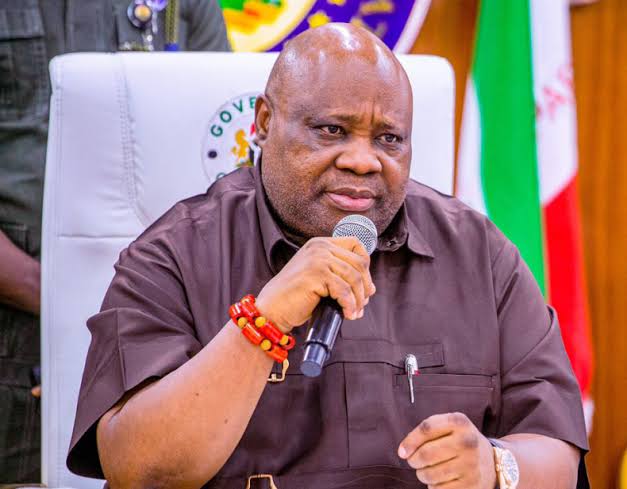
The Osun State Government has urged members of the Osun State University community to refrain from actions capable of creating needless tension in the institution, as the national leadership of the Academic Staff Union of Universities moved against the decision to extend the tenure of the institution’s Vice-Chancellor, Prof.
Clement Adebooye.The government, in a statement signed by the state Commissioner for Information and Public Enlightenment, Kolapo Alimi, obtained in Osogbo on Tuesday, faulted ASUU’s position on the two-year tenure extension recently announced for Adebooye.
ASUU had, in a communiqué issued after an emergency National Executive Council meeting held in Abuja on Saturday, September 5, declared that Adeleke’s extension of Adebooye’s tenure by two years violated the provisions of the university law.
The union subsequently mandated its UNIOSUN branch to mobilise and respond courageously to the alleged “flagrant violation of the Miscellaneous Act as amplified in the 2025 FGN-ASUU Agreement.”
The group also constituted a visitation team to the UNIOSUN branch to interact with the university administration, Governing Council and the Visitor, “in a bid to address the infraction on the two (2) years extension of the tenure of the Vice-Chancellor within two (2) weeks.”
Reacting to ASUU’s move, the government said it respected the right of every recognised staff union of the university to express its views on matters concerning the welfare and administration of the institution.
It, however, stated that the governance of Osun State University was regulated by the law and clearly defined statutory responsibilities of the Visitor, the Governing Council and other organs of the university.
It also said it was necessary to correct the impression that the decision concerning the Vice-Chancellor’s tenure was taken arbitrarily or outside the framework of due process.
“In the first place, the current tenure of the Vice-Chancellor subsists until January 2027, so the government has not taken any retroactive decision with respect to the tenure of the Vice-Chancellor. The decision by His Excellency, Senator Ademola Nurudeen Jackson Adeleke, as Visitor to Osun State University, must be understood within the context of the constitutional and statutory responsibilities of the Visitor and the subsequent legislative intervention by the Osun State House of Assembly.
“Following the Visitor’s decision, the State Legislature commenced the process of amending the Osun State University Establishment Law to provide the necessary statutory framework for the tenure extension. The amendment was subsequently considered and passed by the House of Assembly after legislative consideration of the relevant provisions.
“It is therefore inaccurate to portray the matter as though the Visitor acted in isolation or that the University’s governing framework has been disregarded. The Visitor cannot be said to have acted outside the law where the competent legislative authority has exercised its constitutional legislative function to amend the enabling law,” the statement read.
The government cautioned against attempts to create an unnecessary atmosphere of crisis, illegality or institutional instability around a matter that had been subjected to the appropriate governmental and legislative processes.
“No staff union, including ASUU, has the statutory authority to teach the Visitor or the Governing Council how to exercise powers lawfully vested in them. The University is governed by its enabling law, and not by the unilateral interpretation of any union or pressure group. It is also pertinent to state that the Governing Council remains the appropriate statutory organ for matters within its jurisdiction, just as the Visitor exercises the powers assigned to that office by the enabling framework of the University. Staff unions are important stakeholders, but they are not substitutes for these statutory organs.
“The Governor consequently urges all members of the University community to refrain from actions, statements or mobilisations capable of creating needless tension in an institution that has remained focused on its core mandates of teaching, research, innovation and community service,” the statement further read.




Information Minister Backs NIPSS Plan to Unlock Nigeria’s Orange Economy Potential
ShareBy David Torough, Abuja The Federal Government has pledged its support for the National Institute for Policy and Strategic Studies...


Google Warns against Using AI as Shortcut to Learning
ShareGoogle on Tuesday warned against using Artificial Intelligence (AI) as a shortcut to learning, urging students to harness the technology...


FRSC Records 25 Per Cent Reduction in Road Crashes in Osun
ShareThe Gbongan Unit Command of the Federal Road Safety Corps (FRSC) in Osun recorded a 25 per cent reduction in...

OPEC May Review Members Production Capacity to Arrive At 2027 Output Baseline
ShareThe Organization of Petroleum Exporting Countries (OPEC) may most likely be going to pause its output increases for the fourth...


First Bank Backs 10th Calabar Entertainment Conference, Festival
ShareFirst Bank has renewed its partnership with the Calabar Entertainment Conference and Festival (CECF) as the event’s official banking partner...

FIFA Yet to Decide on NFF Visit to Nigeria
ShareWorld football governing body FIFA said it is yet to reach a decision on the future of the Nigeria Football...

Adeleke, ASUU Differ over Tenure Extension for UNIOSUN VC
ShareThe Osun State Government has urged members of the Osun State University community to refrain from actions capable of creating...

Translate Capital into Productive Investment, Tinubu Urges Banks
SharePresident Bola Tinubu has called on the financial services industry to translate their capital into productive investment and employment opportunities...

Gunmen Launch Attacks on Kaduna Communities, Kill Five, Abduct 27
ShareFrom Agbo Emmanuel, Kaduna Suspected bandits have launched a fresh wave of attacks across parts of Kaduna State, killing at...

Benue Blockade: Obi, Alia Trade Blame over Disrupted Yelewata Visit
ShareFrom Attah Ede, Makurdi A planned visit by the presidential candidate of the Nigeria Democratic Congress (NDC), Peter Obi, to...