
security
Borno Shuts School, Relocates Students after Abduction of 42 Children


From Muhammad Muhammad Al-amin, Maiduguri
The Borno State Government has temporarily closed Government Day Secondary School, Mussa, in Askira/Uba Local Government Area after suspected insurgents abducted 42 children from the community.
The decision was announced by the Commissioner for Education, Science, Technology, and Innovation, Lawan Wakilbe, during a government delegation’s visit to the affected area on Monday.
According to the governor’s spokesperson, Dauda Illiya, the visit was part of ongoing efforts by the state government to respond to the attack and reassure residents of intensified measures aimed at rescuing the abducted students.
Before arriving in Mussa, the delegation paid a courtesy visit to the Emir of Uba, Alhaji Ali Ibn Ismaila Mamza II, at his palace in Uba.
In Mussa, the team met with the Commanding Officer of the 115 Battalion, Askira, Lt. Col. Ishola Olufisola, alongside community leaders and parents of the abducted children.
During an interactive session with families of the victims, Wakilbe conveyed the sympathy of the Borno State Government and assured residents that security agencies were working tirelessly to ensure the safe return of the children.
He reiterated Governor Babagana Umara Zulum’s commitment to protecting students and improving security in schools across the state.
As part of immediate safety measures under the Safe Schools Initiative, the commissioner ordered the temporary closure of Government Day Secondary School, Mussa, and approved the relocation of students to Government Secondary School, Uba, where learning would continue under tighter security.
Speaking on behalf of affected families, Ishaku Jidaye commended the governor for his swift response to the incident but appealed for stronger efforts to secure the release of the abducted children, noting that families were facing emotional and psychological distress.
The delegation also visited Dille and Lassa communities to assess security conditions and evaluate the safety of public schools in the affected areas.
During the inspection, officials directed that all Safe School Initiative measures be fully implemented pending further government directives.
The team also inspected several educational facilities, including the ongoing Government Secondary School project in Uvu, High Islamic College in Uba, the wind-damaged Government Day Secondary School in Rumirgo, and boarding facilities at Government Secondary School, Uba, where relocated students are expected to continue their studies.
The delegation included the Chairman of Askira/Uba Local Government Council, Mada Saidu; Education Secretary of Askira/Uba LGA, Fatsuma Adamu Askira; Education Secretary of Gwoza LGA, Dr. Habila Putaya; Zonal Director of Education, Uba Zone, Tijjani Saleh Chul; and Hon. Luka Apagu.
The abduction occurred on May 16 when suspected Boko Haram terrorists attacked Mussa Primary and Junior Secondary School in Askira/Uba Local Government Area.
According to Senator Ali Ndume, the victims included four secondary school students, 28 primary school pupils, and 10 children taken from nearby homes, bringing the total number of abducted persons to 42.
By Julius Tambaya, Abuja
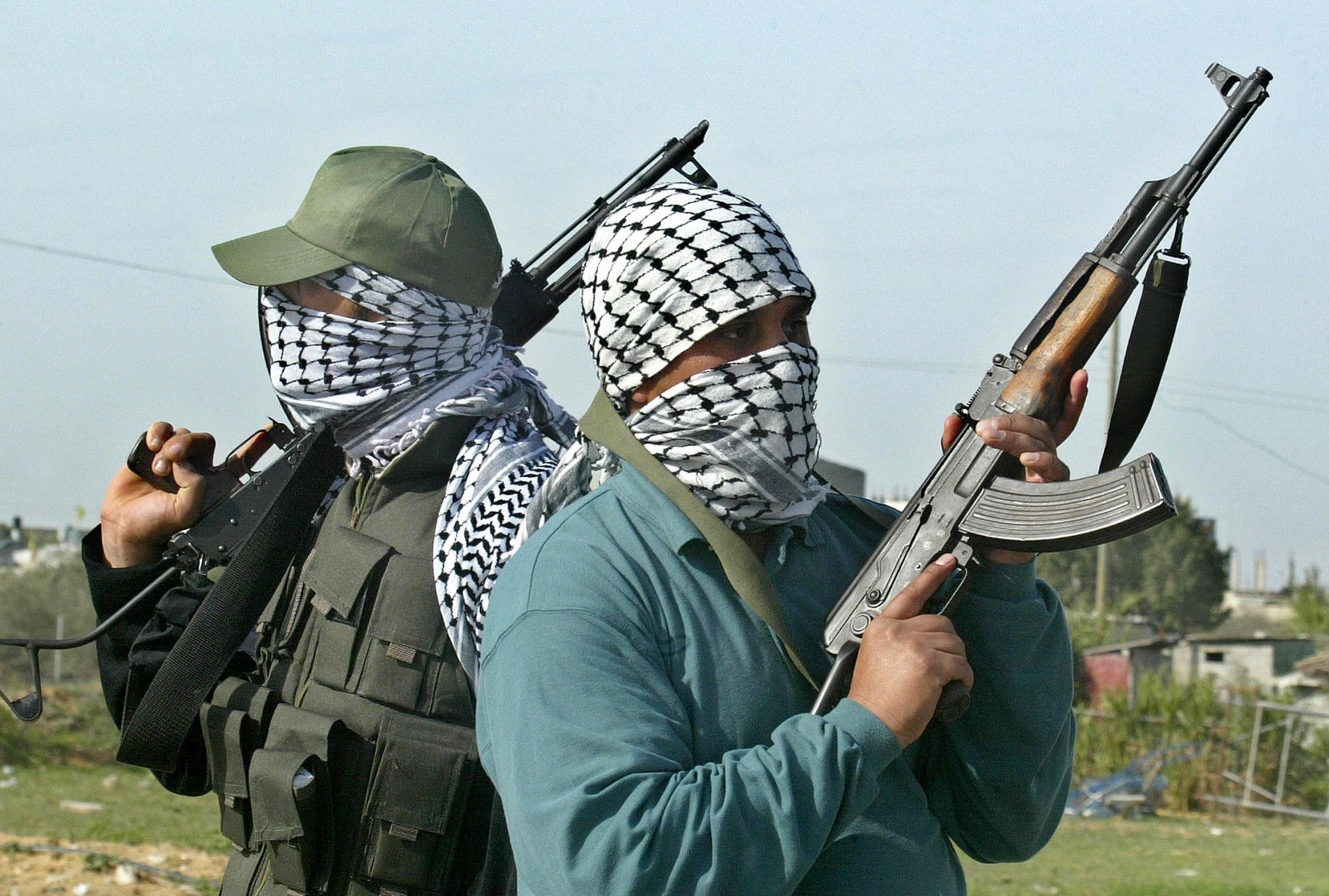
The Kwara State Police Command has confirmed that gunmen have kidnapped 10 people from the Yashikira Emir’s palace in Baruten LGA of the state.
According to a statement on Monday by the spokesperson of the state’s command, Adetoun Ejire-Adeyemi, the gunmen also attacked the Yashikira police station simultaneously around 2am on Monday.
“The armed criminals, in a coordinated and desperate assault at about 0200hrs, simultaneously attacked the Yashikira Police Divisional Headquarters and the Palace of the Emir of Yashikira,” the statement reads.
“During the attack, part of the palace was set ablaze, while ten people were abducted and taken to an unknown destination. However, the attack on the police station was successfully repelled by police operatives on duty.”
Following the incident, the statement added that the Commissioner of Police, Ojo Adekimi, has ordered an intelligence-led tactical operation involving the police, military, forest guards, vigilantes and other security agencies to comb surrounding forests and suspected criminal hideouts in a bid to rescue the victims and apprehend the perpetrators.
The police commissioner assured residents that the command would not succumb to threats or intimidation by criminal elements operating in any part of the state.
“These criminals have declared war against peace-loving citizens, and we are fully prepared to hunt them down relentlessly. We will deploy everything within our operational capacity to smoke them out of hiding, dismantle their networks, rescue all abducted victims and ensure they face the full wrath of the law,” Adekimi said.
The command also assured residents of Yashikira and other parts of Kaiama LGA that security operations had been intensified across vulnerable communities, with surveillance, intelligence gathering and bush-combing operations ongoing.
This latest incident comes after terrorists during church Saturday night vigil killed three persons and abducted 15 worshippers in an attack at Ori-Oke Ajaiye in the outskirts of Ikiran village of Ekiti Local Government Area of Kwara state.
It was gathered that the gruesome attack occurred while the worshippers were observing night vigil at about 20:30hours, thereby causing pandemonium within the surrounding communities.
Meanwhile, the Pentecostal Fellowship of Nigeria (PFN) has urged the Federal Government to demonstrate a firm political commitment to ending insecurity in the country, saying Nigerians can no longer endure the growing wave of violence and hardship.
The appeal was made in Sokoto during a peaceful procession organised by members of the fellowship at the end of a three-day national prayer and fasting programme.
Addressing journalists on behalf of PFN National President, Francis Wale Oke, the Sokoto State Chairman of PFN, Ben Musa, said Christians across the country had united in prayer for peace and divine intervention against insecurity.
“We have called on all PFN members nationwide to stand together in prayer for God to scatter the enemies of Nigeria and restore peace across the country,” Musa said.
Participants at the rally carried placards bearing inscriptions such as “Protect the Innocent,” “Nigeria Must Be Safe,” and “No to Economic Hardship.”
PFN lamented the continued killings, kidnappings, and attacks on innocent citizens, stressing that the government must urgently rise to its constitutional responsibility of safeguarding lives and property.
According to the fellowship, the worsening security situation has become alarming, while many political leaders appear more focused on power and elections than on the protection of citizens.
“Innocent Nigerians are being kidnapped, raped, and killed repeatedly, yet many political elites continue business as usual as though nothing is happening. These are cruel and unacceptable acts of terror,” the group stated.
PFN expressed concern over the activities of bandits, insurgents, and violent herders, saying communities across the country were living in fear.
“We are deeply burdened by the unchecked activities of bandits, murderous herdsmen attacking farmers, and Boko Haram insurgents using religion as a cover to unleash violence on peaceful Nigerians,” the statement added.
The organisation also criticised what it described as a lack of decisive political will to end terrorism and violent attacks nationwide.
“We are saddened by the apparent failure of the government to crush these evils decisively. Empty promises have not helped the situation, while insecurity continues to spread,” PFN said.
The fellowship further faulted the rehabilitation of repentant insurgents, insisting that greater efforts should be directed towards protecting innocent citizens and punishing perpetrators of violence.
“Nigerians are tired of the bloodshed and the seeming focus on politics rather than deploying the full strength of the government to defeat those killing innocent citizens,” it added.
PFN called for immediate and practical measures to halt the killings, warning against allowing insecurity to become normalised in the country.
“The blood of innocent Nigerians demands more than promises. It requires urgent and effective action,” the group declared.
Despite the challenges, PFN expressed confidence that Nigeria would overcome its security crisis through prayer and responsible leadership.
“We believe God is able to break the cycle of violence, secure the release of captives, and restore lasting peace to Nigeria,” the fellowship said.
security
Weaponizing Displacement: How Electoral Manipulation and Abandoned IDP Populations May Be Fueling Insecurity in Nigeria

By Muhammed Gaddafi Yusuf
Institute for Peace and Conflict Resolution
Nigeria’s worsening insecurity crisis may be connected to a deeper and less discussed problem: the alleged political exploitation of vulnerable displaced populations during elections.
Across parts of Northern Nigeria, security concerns continue to grow over the intersection between electoral malpractice, displacement, weak border governance, and armed banditry. While direct evidence remains difficult to establish because of the covert nature of political operations, emerging security debates increasingly suggest that vulnerable migrants and internally displaced persons (IDPs) may sometimes be exploited for political purposes during elections and later abandoned within fragile communities, the implications are significant.Nigeria currently faces one of Africa’s largest displacement crises. Millions of internally displaced persons live in conditions shaped by poverty, unemployment, food insecurity, and weak state protection. In many rural and borderland communities already struggling with insecurity, these vulnerabilities create fertile ground for criminal recruitment and exploitation.
Security analysts have long warned that ungoverned spaces across Northwestern and Northeastern Nigeria provide operational environments for armed bandits, trafficking networks, kidnappers, and extremist groups. Weak state presence, porous borders, and economic desperation have contributed to the expansion of criminal economies across several regions.
What is increasingly attracting attention, however, is the possibility that electoral manipulation may indirectly contribute to these security problems.
Reports and local narratives from some politically contested areas have raised allegations that vulnerable populations are occasionally mobilized through patronage networks during elections, temporarily settled in strategic locations, or politically induced through survival-based incentives. Although such claims remain difficult to verify comprehensively, the broader concern lies in what happens after elections.
When displaced populations are abandoned without reintegration support, livelihoods, or long-term protection, they often remain trapped in fragile settlements characterized by unemployment, social exclusion, and weak governance. These conditions can increase vulnerability to criminal recruitment.
Research on insecurity in Northwestern Nigeria has repeatedly linked armed banditry to poverty, state absence, and socio-economic marginalization. Armed groups frequently exploit vulnerable populations for intelligence gathering, smuggling, trafficking, kidnapping operations, and recruitment.
The challenge therefore extends beyond electoral integrity. electoral malpractice is traditionally viewed as a democratic governance problem. However, its long-term consequences may also represent a national security threat. Weak electoral systems erode public trust, deepen political grievances, and contribute to anti-state sentiments. In conflict-prone regions, such dynamics can intensify instability. Humanitarian experts also warn that prolonged displacement creates severe human security risks. Many internally displaced persons lack stable housing, education, healthcare, and employment opportunities. Without adequate support systems, displaced youth may become susceptible to survival-based criminal economies.
The relationship between displacement and insecurity is therefore multidimensional. Political exploitation, weak governance, humanitarian neglect, and ungoverned territories can interact in ways that reinforce instability. Addressing these challenges requires more than military operations. the electoral institutions, humanitarian agencies, and security organizations must strengthen oversight mechanisms for vulnerable populations during elections. Border governance, reintegration programs, intelligence gathering, and community stabilization initiatives also require significant improvement. Ultimately, the protection of displaced populations should not only be viewed as a humanitarian obligation but also as a strategic national security priority.
1. Introduction
Nigeria’s democratic journey since 1999 has been persistently challenged by electoral violence, vote-buying, political intimidation, and allegations of institutional manipulation. Simultaneously, the country faces one of Africa’s most severe displacement crises driven by insurgency, communal conflicts, farmer-herder violence, and armed banditry. According to the International Organization for Migration (IOM), millions of Nigerians remain internally displaced, particularly across the North-East and North-West regions.
The convergence of political instability and humanitarian vulnerability has generated growing concerns regarding the exploitation of displaced populations during electoral processes. In several politically contested areas, allegations have emerged suggesting that vulnerable migrants and internally displaced persons are sometimes mobilized for political purposes, temporarily resettled in fragile communities, or manipulated through patronage systems linked to elections. Although direct empirical verification remains difficult because of the covert nature of such practices, the security implications of these allegations warrant scholarly attention.
Existing literature has extensively examined electoral malpractice, banditry, and displacement as separate phenomena. However, insufficient attention has been devoted to the possible intersection between politically manipulated displacement and the expansion of insecurity in Nigeria’s borderland and ungoverned territories. This article argues that the alleged political exploitation and subsequent abandonment of vulnerable displaced populations may contribute indirectly to armed recruitment, criminality, and the expansion of banditry. The paper situates electoral malpractice not merely as a democratic governance issue but also as a long-term human security and national security challenge.
Why the Issue Matters
Nigeria’s insecurity crisis is no longer limited to terrorism or rural banditry alone. Increasingly, security analysts are warning about the dangerous overlap between political manipulation, humanitarian vulnerability, and criminal recruitment. For years, elections in parts of Nigeria have been associated with allegations of vote-buying, political patronage, voter intimidation, and the exploitation of vulnerable populations. At the same time, millions of internally displaced persons continue to live in temporary settlements with limited access to jobs, education, healthcare, and state protection.
The concern emerging in security discussions is that when vulnerable populations are politically mobilized and later abandoned without reintegration or economic support, they may become susceptible to recruitment into criminal networks operating across fragile border communities. Although direct evidence of organized political recruitment pipelines remains difficult to verify, the broader security environment makes such fears difficult to ignore.
Across Northwestern Nigeria, armed banditry has expanded rapidly over the last decade. Kidnapping, illegal arms trafficking, cattle rustling, and cross-border criminality continue to threaten rural communities. Security experts frequently link these problems to weak governance, poverty, youth unemployment, and ungoverned territories. This raises an uncomfortable but important national question: what happens when politically vulnerable populations are left behind in exactly these fragile environments?
What Existing Evidence Suggests
Existing research already shows that:
- Electoral fraud weakens trust in democratic institutions;
- Displacement increases economic vulnerability;
- Ungoverned spaces create operational environments for criminal groups; and
- Prolonged marginalization can increase vulnerability to criminal recruitment.
While scholars have studied these issues separately, less attention has been devoted to how they may reinforce one another. Research on banditry in Northwestern Nigeria consistently identifies poverty, weak state presence, and socio-economic frustration as major drivers of insecurity. Humanitarian reports also show that many displaced persons remain trapped in cycles of dependency and exclusion. The danger is that fragile communities can become easy targets for recruitment networks linked to armed banditry, trafficking, and violent criminality.
5. Literature Review
5.1 Electoral Fraud and Democratic Weakness in Nigeria
Electoral fraud has remained a persistent feature of Nigeria’s democratic experience. Scholars have identified vote-buying, falsification of results, voter intimidation, and political violence as major impediments to democratic consolidation. Electoral malpractice undermines public trust, weakens institutional legitimacy, and fuels political instability.
The introduction of biometric technologies such as the Permanent Voter Card (PVC) and the Bimodal Voter Accreditation System (BVAS) represented efforts to reduce multiple voting and voter impersonation. Nevertheless, allegations of political patronage, voter inducement, and institutional compromise continue to shape public perceptions of Nigerian elections.
Daxecker, Di Salvatore, and Ruggeri (2019) argue that perceived electoral fraud contributes significantly to post-election instability and declining confidence in democratic institutions. Similarly, Omotola (2010) notes that electoral irregularities weaken state legitimacy and deepen governance crises.
5.2 Displacement and Human Insecurity
Nigeria hosts one of the largest internally displaced populations in Africa. The Boko Haram insurgency, banditry, communal conflicts, and environmental pressures have displaced millions of individuals across Northern Nigeria.
Human Security Theory emphasizes that security extends beyond military protection to include economic security, food security, health security, and protection from structural violence. IDPs often experience severe livelihood challenges, unemployment, social exclusion, and limited access to healthcare and education.
Prolonged displacement creates vulnerabilities that may increase susceptibility to criminal recruitment, trafficking, or participation in informal survival economies.
5.3 Ungoverned Spaces and Armed Banditry
Research on insecurity in North-western and North east Nigeria identifies weak governance, porous borders, and state absence as major drivers of armed banditry. Ojo (2020) argues that ungoverned spaces create operational environments for criminal networks and violent actors.
Banditry in Nigeria has evolved beyond cattle rustling into a complex security challenge involving kidnapping, extortion, illegal mining, arms trafficking, and cross-border criminality.
Relative Deprivation Theory provides insight into how socio-economic exclusion and frustration may increase the likelihood of participation in violence. Communities experiencing prolonged marginalization and weak state presence often become vulnerable to armed mobilization.
5.4 Political Patronage and Security Governance
Political patronage remains deeply embedded within Nigeria’s political system. Patron-client relationships often shape access to resources, political loyalty, and electoral mobilization.
In fragile environments characterized by displacement and poverty, patronage systems may exploit vulnerable populations through inducement-based mobilization or temporary political support structures. The absence of post-election social reintegration mechanisms can further intensify insecurity.
6. Theoretical Framework
6.1 Fragile State Theory
This study adopts Fragile State Theory as its primary analytical framework. Fragile State Theory explains how weak institutions, corruption, poor governance, and limited territorial control undermine state authority and security provision. In Nigeria, weak border governance, inadequate humanitarian management, and limited state presence within rural communities have contributed significantly to insecurity.
The theory is particularly relevant to this study because it helps explain how governance failures create environments where electoral malpractice, displacement, and criminality intersect. Fragile and poorly governed territories often become operational spaces for armed groups, traffickers, and criminal networks.
Within such contexts, vulnerable displaced populations facing poverty, exclusion, and weak institutional protection may become susceptible to political manipulation and criminal recruitment.
The theory therefore provides a useful framework for understanding how state weakness and governance failures contribute to the relationship between displacement, electoral manipulation, and insecurity in Nigeria.
Security Implications
The security implications of this issue extend beyond elections first, the politicization of vulnerable populations can deepen public distrust in democratic institutions and weaken state legitimacy. Second, abandoned displaced communities often emerge in areas already affected by weak governance, poor infrastructure, and limited security presence. Third, criminal organizations operating within ungoverned territories frequently exploit economic desperation and state absence to recruit vulnerable individuals.
This is particularly concerning in border communities where state authority remains weak and trafficking routes already exist. The intersection between displacement, political patronage, and insecurity therefore represents not just a humanitarian challenge but a long-term national security concern.
8. Findings and Discussion
The study identifies several pathways through which politically manipulated displacement may contribute indirectly to insecurity.
8.1 Politicization of Vulnerable Populations
Vulnerable displaced populations often depend on political actors, humanitarian support systems, or local elites for survival. In fragile contexts, such dependence may create opportunities for political exploitation through inducement-based mobilization.
Allegations of politically motivated relocation, temporary settlements, and electoral patronage networks have emerged in several conflict-prone regions. Although difficult to verify empirically, these allegations reflect broader concerns regarding the vulnerability of displaced populations within politically competitive environments.
8.2 Post-Election Abandonment and Socioeconomic Marginalization
The study finds that prolonged displacement, unemployment, and social exclusion create conditions of frustration and vulnerability. Communities abandoned after political mobilization may experience deteriorating living conditions and weak state support. Relative deprivation and economic desperation increase susceptibility to criminal economies and armed recruitment.
8.3 Ungoverned Spaces and Criminal Recruitment
Weak border governance and ungoverned territories provide safe havens for armed groups and criminal syndicates. Displaced populations concentrated within such environments may become vulnerable to recruitment into:
- armed banditry;
- trafficking networks;
- smuggling operations;
- kidnapping syndicates; and
- violent extremist groups.
The study argues that insecurity within borderland communities is sustained by the interaction between weak governance, poverty, displacement, and criminal opportunity structures.
8.4 Electoral Fraud as a Security Threat
The paper further argues that electoral malpractice should be understood not only as a governance problem but also as a national security threat. Political manipulation weakens institutional legitimacy, erodes public trust, and contributes to anti-state sentiments.The intersection between political patronage, displacement, and insecurity therefore represents a multidimensional governance crisis.
9. Policy Implications
The findings of this study have major implications for electoral governance, border security, humanitarian management, and counter-banditry strategies in Nigeria. First, electoral reform efforts must move beyond technical voting procedures to address the broader political economy of electoral manipulation. Second, humanitarian responses to displacement should incorporate long-term reintegration, livelihood support, and community stabilization mechanisms. Third, security agencies should strengthen intelligence cooperation within border communities and improve monitoring of criminal recruitment networks.
Fourth, governance interventions must prioritize state presence within ungoverned territories through infrastructure development, education, policing, and social protection.
10. Conclusion
This study examined the relationship between electoral manipulation, displacement, and insecurity in Nigeria. It argued that the alleged political exploitation and abandonment of vulnerable displaced populations may contribute indirectly to the expansion of armed banditry and criminality. Although direct empirical evidence remains limited due to the covert and politically sensitive nature of such activities, the convergence of weak governance, socio-economic exclusion, displacement, and insecurity creates conditions conducive to criminal recruitment. The study concludes that electoral fraud should not only be viewed as a democratic governance issue but also as a long-term national security concern with implications for border governance, social cohesion, and human security.
11. Recommendations
- Strengthen biometric voter verification systems and electoral oversight mechanisms.
- Improve border governance and surveillance within fragile communities.
- Establish independent monitoring mechanisms for vulnerable displaced populations.
- Expand livelihood and reintegration programs for internally displaced persons.
- Strengthen intelligence-sharing between electoral institutions and security agencies.
- Enhance community-based early warning systems in borderland regions.
- Increase accountability for political actors involved in electoral manipulation.
- Promote civic education and democratic participation within vulnerable communities.
References
Daxecker, U., Di Salvatore, J., & Ruggeri, A. (2019). Electoral fraud and post-election violence. Journal of Conflict Resolution, 63(9), 2172–2197.
International Organization for Migration. (2024). Nigeria displacement report. Geneva: IOM.
Ojo, J. S. (2020). Governing ungoverned spaces in Nigeria’s Northwest region. African Security Review, 29(3), 1–15.
Omotola, J. S. (2010). Elections and democratic transition in Nigeria under the Fourth Republic. African Affairs, 109(437), 535–553.
United Nations High Commissioner for Refugees. (2024). Nigeria emergency update. Geneva: UNHCR.
World Bank. (2023). Fragility and insecurity in Northern Nigeria. Washington DC: World Bank.
Yusuf, H. (2022). Banditry and insecurity in Northwestern Nigeria. Democracy and Security, 18(4), 320–338.
By Tochukwu Jimo Obi
The recent kidnapping of students and teachers in Oriire Local Government Area of Oyo State has once again exposed the frightening state of insecurity confronting Nigeria. Condemnations have continued to trail Friday’s bandits’ attack on three schools in the area, where an unspecified number of students and teachers were abducted, while two persons were reportedly killed.
The tragedy has left families devastated and communities gripped by fear, as another painful chapter is added to the growing list of violent attacks across the country.The attack, which occurred on May 16, saw armed bandits storm the community and abduct staff, students, and pupils from three schools; Community Grammar School, Baptist Nursery and Primary School, and L.
A. Primary School. Eyewitness accounts revealed that the attackers operated for hours without resistance, moving freely through the area while terrified residents watched helplessly. The incident has raised serious concerns about the safety of schools and the preparedness of security agencies to respond swiftly to emergencies.Worst of all, one of the teachers kidnapped during the attack was reportedly beheaded by the terrorists, a horrifying development that has deepened public outrage. Such brutality underscores the dangerous evolution of criminal activities in Nigeria, where terrorists and bandits now operate with alarming boldness and cruelty. The gruesome killing has further strengthened calls for urgent and decisive action from government authorities at all levels.
This unfortunate incident of school attacks is happening yet again despite repeated assurances from security agencies that schools across the country are safe. Nigerians have continued to hear promises of improved intelligence gathering, stronger patrols, and enhanced protection for vulnerable communities, yet attacks persist with devastating consequences. The contradiction between official assurances and the reality on the ground has weakened public confidence in the nation’s security architecture.
Another disturbing trend is that insecurity is rapidly spreading into the South-West region, an area once considered relatively safer compared to other parts of the country. Reports of Lakurawa terrorists and other armed groups establishing footholds in parts of the region have heightened fears that criminal networks are expanding their operations unchecked. The Oyo school kidnapping has therefore become more than a local tragedy; it is a warning sign that no region in Nigeria can afford to feel immune from terrorism and banditry.
Every now and then, government officials continue to assure citizens that security agencies are on top of the situation, yet many innocent people are still being killed and abducted with little or no arrests made afterward. More troubling is the fact that these attacks reportedly lasted for over two hours without any intervention from security operatives. This glaring security failure leaves Nigerians asking difficult but necessary questions about the nation’s emergency response capabilities.
How could terrorists, moving in large numbers on motorbikes, invade communities, abduct many people, and still escape without being tracked, stopped, or pursued effectively? What then are the military aircraft and advanced security equipment acquired with public funds meant for if they cannot be quickly deployed during emergencies? These are questions that citizens deserve answers to, especially as insecurity continues to consume lives and livelihoods across the country.
The Oyo incident has once again strengthened arguments for the establishment of state police across Nigeria. It is now obvious and evidently clear that the country’s centralized security structure requires urgent decentralization, similar to what operates in many secure nations around the world. State policing, if properly regulated and managed, could improve intelligence gathering, rapid response, and community-based security operations, particularly in rural areas that are often neglected under the current system.
It is no longer enough for leaders to merely condemn these attacks without taking concrete and sustained actions to secure the nation. President Bola Tinubu, as Commander-in-Chief of the Armed Forces, must urgently engage all stakeholders in the security sector, including international partners where necessary, to ensure that these terrorists are decisively defeated.
Government must also ensure that budgeted funds meant for security agencies, especially for the purchase of military hardware and equipment, are fully released and properly utilized. Beyond military action, authorities must intensify efforts to prevent the recruitment of vulnerable youths into criminal and terrorist groups. Nigerians are tired of mourning innocent victims. These killings must stop.
Tochukwu Jimo Obi, a concerned Nigerian writes from Obosi Anambra state.




Eid-el-Kabir: CAN tasked Nigerian leaders to focus on restoring public confidence
ShareBy Laide Akinboade Abuja The Christian Association of Nigeria (CAN) on Wednesday, tasked Nigerians leaders to put aside indifference, blame-shifting...


Hon. Bawa Felicitates Muslim Ummah on Eid-El-Kabir Celebration
ShareBy Tambaya Julius, Abuja The Senior Special Assistant (SSA) on the Greater Karu Development Control Agency (KAPDA) to Governor Engr....


Eid-el-Kabir: Let’s Embrace Peace – Fintiri
ShareAdamawa State Governor, Rt. Hon. Ahmadu Umaru Fintiri, CON, has called on the people of Adamawa to rededicate themselves to...


Africa Gets 14 Olympic Slots in Boxing
ShareAfrica has been allocated only 14 direct qualification spots for the boxing event at the 2028 Los Angeles Olympics, a reduction from the 18...


US Launches New Strikes on Iran, Targets Missile Sites, Boats
ShareThe US said it launched new strikes on southern Iran on Monday, targeting Iranian missile sites and boats attempting to place mines. The strikes were in “self-defence” and designed “to protect our troops from threats posed...

Army, TETFund Deepen Ties on Local Defence Technology
ShareThe Nigerian Army says it will deepen strategic collaboration with the Tertiary Education Trust Fund (TETFund) to boost local production of military hardware. The Chief of Army Staff...
Borno Shuts School, Relocates Students after Abduction of 42 Children
ShareFrom Muhammad Muhammad Al-amin, Maiduguri The Borno State Government has temporarily closed Government Day Secondary School, Mussa, in Askira/Uba Local Government Area after suspected insurgents abducted 42 children from...

NAICOM Licenses First Insurtech Firm under New Reforms
ShareBy Tony Obiechina, Abuja The National Insurance Commission (NAICOM) has formally granted an operational licence to CBI Partnering Insurtech Ltd,...


Eid-el-Kabir: Hope Lies Ahead Hard Times, says Tinubu
ShareBy David Torough, Abuja President Bola Tinubu yesterday declared that the sacrifices Nigerians have endured under his administration’s economic reforms...


Court Clears Jonathan for 2027, Reaffirms INEC Election Powers
ShareBy David Torough, Abuja Two landmark judgments delivered by the Federal High Court in Abuja on Tuesday have reshaped the...