
BUSINESS
FG Demands Equal Access for Women in Green Economy

The Federal Government has called for the removal of structural barriers limiting women’s leadership in the green economy, while calling for more access to capital, technology and markets.
The Minister of Regional Development, Abubakar Momoh, made the call on Tuesday at the Women’s International Green Summit and Exhibition (WIGSE-26) in Lagos.
Momoh, represented by Dr Okodugha Dauda, Vice President, Corporate Services, Nigerian Society of Engineers for the 2026 executive committee term, said women were already driving innovations in renewable energy, climate-smart agriculture, recycling and clean cooking.
He said the government must move beyond inviting women to participate in the green transition and create conditions that would enable them to lead it.
“Our responsibility is not simply to invite women into the green transition. It is to remove the structural barriers that prevent them from leading it,” he said.
The minister said innovation could not thrive without supportive policies, while meaningful inclusion required deliberate institutional action and sustainable impact depended on access to capital.
He said the green economy must create opportunities for women to own enterprises, control productive assets and participate fully in economic development.
According to him, the transition should generate jobs, strengthen food security, expand energy access, improve public health and build resilient communities.
Momoh said the Ministry of Regional Development would promote gender inclusion, environmental sustainability and climate resilience across its programmes.
He said regional development should go beyond roads and physical infrastructure to encompass human resilience, local economies, ecosystems and livelihoods.
The minister cited solar-powered streetlights installed across Niger Delta communities as an example of interventions that had improved mobility, extended commercial activities and enhanced security.
He said the interventions were particularly beneficial to women traders and small businesses whose operations were constrained by inadequate electricity.
Momoh also highlighted programmes supporting women through entrepreneurship, agriculture, international trade, skills development and access to markets.
He said the Niger Delta Agricultural Development Investment Fund could help women transition from subsistence farming to commercially viable, climate-smart value chains.
The minister said regional development commissions were also supporting women and youths through empowerment, agriculture, livelihood restoration and community resilience programmes.
He said the ministry would deepen collaboration with government agencies, financial institutions, development partners, private organisations and civil society to expand opportunities for women.
Momoh said the ministry was ready to work with WIGSE organisers to translate summit resolutions into practical partnerships capable of creating sustainable livelihoods, resilient communities and investable women-led green enterprises.
He cautioned that the green economy must not become another sector where women provide informal labour while ownership, technology and capital remain concentrated elsewhere.
The President of the Women in Renewable Energy Association (WIRE-A), Dr Anita Nana-Okuribido, identified inadequate finance as the biggest barrier to women’s participation in the energy transition.
“Number one barrier is finance. Without finance, honestly, we cannot go into energy transition,” Nana-Okuribido said.
She also identified tradition and weak implementation of policies as major obstacles to women’s participation in the green economy.
Nana-Okuribido urged policymakers to give women a voice in decisions on energy, climate policy and green investment.
“Inclusion is making sure that the woman has a voice in the decision-making of the green space,” she said.
She said solar power could provide sustainable electricity to rural health facilities and support critical services, including medicine storage.
Nana-Okuribido urged stakeholders to extend renewable energy interventions to rural communities where energy poverty remained a major challenge.
She said the summit would position women as leaders, innovators, investors, entrepreneurs, policymakers and solution providers in Africa’s green transition.
The theme of the summit is “Empowering Women to Lead Africa’s Green Transition: Enhanced by Innovation, Inclusion and Impact”, brought together policymakers, investors, entrepreneurs and women leaders.
Also, Sen. Augustine Akobundu, Deputy Chairman, Senate Committee on National Planning and Economic Affairs, described climate change as an economic and national security challenge.
“Climate change is not merely an environmental hazard. It is an economic imperative, a national planning priority, and a security challenge,” Akobundu said.
He said he would advocate greater prioritisation of renewable energy projects in the national budget.
Akobundu said governments needed private-sector investment, innovation and stronger partnerships with organisations promoting renewable energy.
The Governor of Osun, Ademola Adeleke, said women needed access to skills, technology, finance, markets and policy platforms to lead the green transition.
Adeleke, represented by his Director-General and Special Envoy on Climate Change and Renewable Energy, Prof. Chinwe Obuaku, said the state had implemented solar energy, recycling and waste-management initiatives aimed at expanding energy access and creating green jobs.
The summit also featured high-level panel sessions on women’s leadership, green entrepreneurship, investment and sustainable economic growth.
Chairman of the WIGSE-26 Organising Committee, Chioma Aninwe, said the summit sought to make women’s leadership central to Africa’s green transition.
Aninwe said the summit would promote opportunities for women in renewable energy, climate action, sustainable agriculture, green finance and green technology.

By Tony Obiechina, Abuja
Federation Account Allocation Committee (FAAC) has approved the disbursement of a total of ₦3.007 trillion to the Federal Government, the 36 State Governments and the 774 Local Government Councils as revenue for July 2026.
The federal government in a statement by Bawa Mokwa, Director of Press and Public Relations stated that the month’s figures point to a strengthening underlying revenue base.
Gross statutory revenue rose to ₦4.359 trillion in July 2026, up ₦658.087 billion – a 17.8% increase – from ₦3.700 trillion in June 2026.It revealed a reflection of improved collection performance across oil and non-oil statutory sources.
Gross VAT revenue held broadly steady at ₦793.968 billion, a marginal decline of ₦5.778 billion (0.7%) from ₦799.746 billion in June, suggesting consumption-tax receipts remain resilient month-on-month.The Committee noted that sustaining the statutory revenue gains recorded in July 2026 will depend on continued discipline in collection and remittance across Ministries, Departments and Agencies (MDAs), and reiterated its support for reforms aimed at improving the predictability and growth of allocations to all three tiers of government.
According to the statement, FAAC session held in Owerri discussed the state of the economy, fiscal governance, and federal and subnational fiscal fitness. The session set out the scale of the recent revenue windfall and called for deliberate reform to convert it into durable fiscal strength rather than a temporary gain.
The communiqué attributed the month’s gains to broad-based strength across several revenue lines. Petroleum Profit Tax (PPT), Hydrocarbon Tax (HT), Companies Income Tax (CIT), Capital Gains Tax (CGT), Stamp Duty Tax (SDT), Petroleum Royalties, Mineral Royalties, Excise Duty and Gas Flared Penalty all recorded significant increases in July 2026, pointing to firmer compliance and collection efficiency across both oil and non-oil channels.
These gains were partly offset by declines in Value Added Tax (VAT), Import Duty, CET Levies, Rental of Gas Flared Fee and Miscellaneous Oil Revenue, which the Committee will continue to monitor as it works with revenue-generating agencies to close collection gaps and improve remittance discipline.
By Eze Okechukwu, Abuja
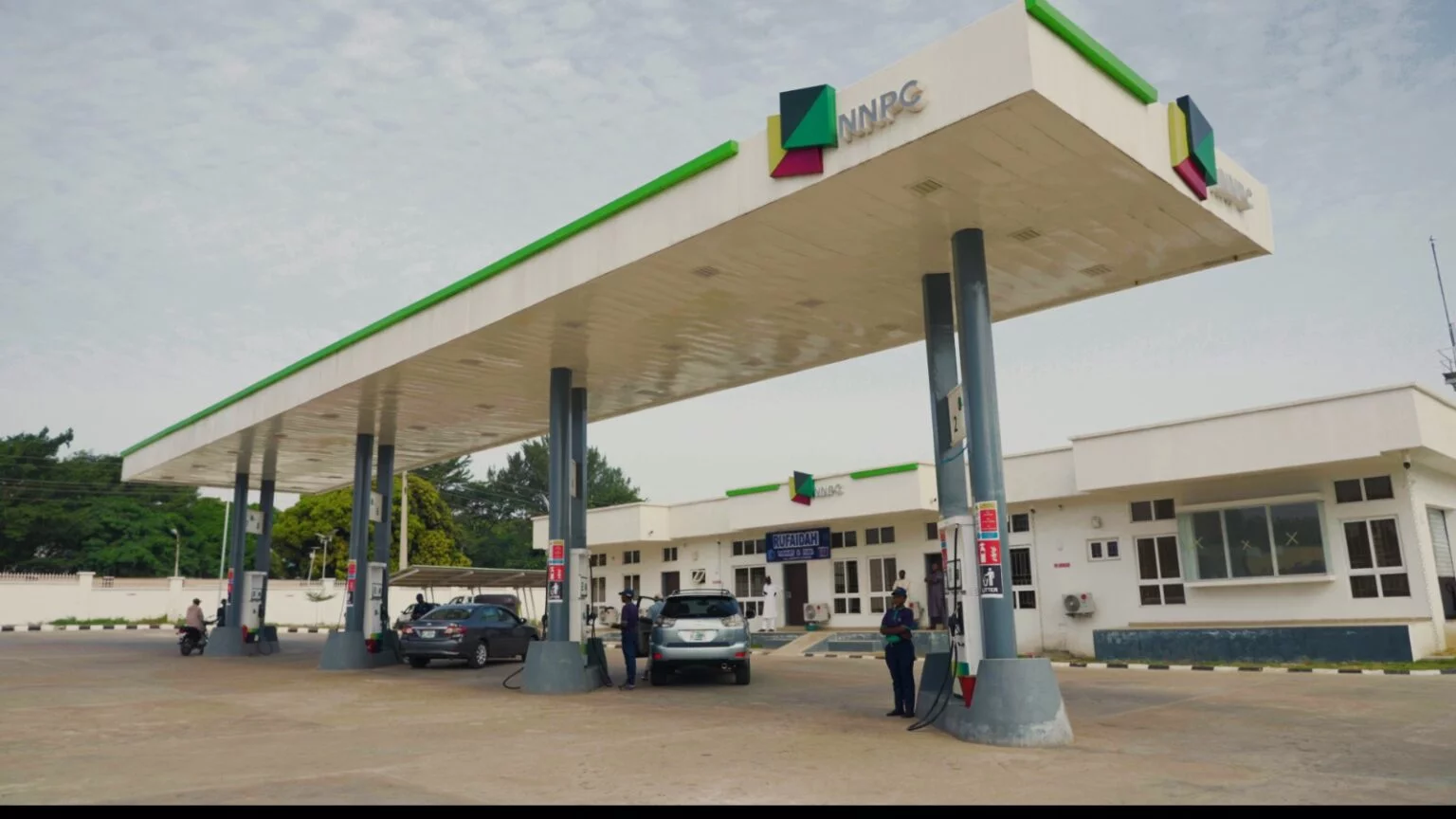
The Federal Ministry of Finance has heaped blames on the Nigerian National Petroleum Company Limited (NNPCL) over its inability to answer queries raised against it in the 2021 to 2023 Oil and Gas Sector Audit report by the Nigeria Extractive Industry Transparency Initiative (NEITI), saying the Oil Company could not make available the necessary financial records it would have used to respond to the queries.
Declaring this yesterday during an interrogation by the Senate Committee on Public Accounts at the National Assembly following several financial infractions raised against the Ministry in the NEITI audit findings, the Permanent Secretary of the Ministry, Raymond Omachi said that if the Nigeria National Petroleum Company Limited (NNPCL) had availed them the documents, he would have been in a better position to answer the questions with ease.
However, one of the infractions contained in the report was the pre – export financing for $3billion loan taken in 2012 to settle subsidy payment which according to NEITI, the recovery of the loan from monthly Federation revenue proceeds under pre -export financing and project eagle agreement remained unclear.
Another query raised against the Ministry by NEITI was that “In 2021, the sum of $722.6 million was paid to NNPC by Nigeria Liquified Natural Gas (NLNG) as dividend and interest earned by the federation but was neither remitted to the federation account nor properly accounted for.
In the report also, NEITI observed that in 2021 none of the refineries was operational despite N200 billion spent on them. The ministry couldn’t answer it and couldn’t also give a clean bill to the $221.283million overhead costs incurred by NAPIMS in 2021.
In his response to the queries , the Permanent Secretary said the Ministry was not directly involved in all the dealings or transactions and that the agencies involved, particularly the NNPCL has refused to cooperate with it in terms of accurate records.
“We don’t have direct involvement in all the issues raised and required provision of financial records from the affected agencies, particularly NNPCL, NUPRC etc but we couldn’t get them.
“In resolving the financial issues, we have engaged a reputable external audit firm; Arthur Andersen LLP, to carry out a forensic audit on all the transactions for the required reconciliation “, he said.
But the Committee chaired by Senator Ibrahim Hassan Dankwabo (Gombe North) took him up on when the report on the forensic audit would be ready after extending it twice; 6 months to one year but he insisted that NNPCL and NUPRC should be made to be at the same session with Ministry of Finance over the issues, to enable all parties chart a common cause in relation to the issue.
“I know you have enormous powers that you can use to compel these agencies to appear before us. We are having challenges bringing them to the table so that we can resolve these issues.
“We in the Federal Ministry of Finance are ready to come and sit with them here, so that you can hear directly from them and obtain the necessary explanations and clarifications”, he stated.
But the Chairman of the Committee told the permanent secretary to arrange the meeting with the affected agencies as issues involved are not only being followed in Nigeria but internationally.
“I will like you to review the internal report and arrange a meeting involving the Ministry of Finance, the NUPRC, NNPC and any other agency whose participation is necessary to resolve the issues we have raised.
“As you are aware, these issues are being followed by the international community. They are not matters confined to Nigeria; they are in the public domain and are being monitored by people across the world.
“Therefore, if there are records or issues that need to be clarified and properly put in order, we should do so in the interest of our country. All of us have no other country except Nigeria”, he said.
Nigeria’s crude oil production fell by four per cent month-on-month in July, but the country still met its Organisation of Petroleum Exporting Countries quota for the third consecutive month, latest data from the Nigerian Upstream Petroleum Regulatory Commission has shown.
The commission’s latest production figures showed that Nigeria pumped an average of 1.
505 million barrels per day of crude oil in July, slightly above its OPEC quota of 1.5 million barrels per day.When condensate production of about 170,000 barrels per day is included, the country’s total crude and condensate output stood at 1.
67 million barrels per day during the month.The July performance, however, represented a decline from the 1.735 million barrels per day recorded in June, translating to a reduction of about 65,000 barrels per day, or 3.75 per cent.
The NUPRC disclosed the figures in a statement issued on Wednesday by its Head of Media and Corporate Communications, Eniola Akinkuotu.
The statement read, “Nigeria has for the third consecutive month met and exceeded its OPEC quota of 1.5mbpd. In the month of July 2026, Nigeria produced 1.505mbpd of crude oil and 0.17mbpd of condensate, bringing the combined daily production to 1.67mbpd.
“Although Nigeria met its OPEC quota in the month of July, the statistics show that on a month-on-month basis, production fell by 4 per cent.”
According to the commission, daily combined crude and condensate production fluctuated between a low of 1.57 million barrels per day and a peak of 1.78 million barrels per day in July.
“Daily average production was 1.67 million barrels per day, comprising both crude oil (1.505 million bopd) and condensate (0.17mbpd),” the commission said.
Despite the July decline, Nigeria has maintained crude production above its 1.5mbpd OPEC quota for three consecutive months.
The country’s combined crude and condensate production has increased since the beginning of the year, according to NUPRC’s month-on-month data.
Production stood at 1.459 million barrels per day in January, before rising to 1.483mbpd in February. It subsequently increased to 1.564mbpd in March, 1.663mbpd in April, 1.701mbpd in May and 1.735mbpd in June.
July therefore marked the first monthly decline after the steady increase recorded in the first half of the year.
Compared with January, however, July’s combined production of 1.67mbpd was about 211,000 barrels per day, or 14.5 per cent, higher.
The NUPRC attributed the July decline principally to operational challenges at the Erha and Akpo fields, which affected production during the month.
“These disruptions constrained production volumes and contributed significantly to the overall reduction in national crude oil output,” the commission said.
It added that production activities at other oil-producing assets remained relatively stable despite the disruptions.
“Despite the challenges encountered, production operations across other producing assets remained relatively stable, with operators implementing measures aimed at maintaining production efficiency and minimising the impact of operational constraints,” the regulator said.
It said routine production and crude evacuation activities were also largely sustained across the industry.
The commission added that operators and other stakeholders were working to resolve the affected production facilities and restore lost capacity.
“Industry stakeholders remain focused on addressing the identified operational issues, restoring affected production capacity and strengthening asset reliability to support improved performance in subsequent months,” it said.
The breakdown of production by terminals and streams showed that Forcados Terminal recorded an average output of 322.34kbpd in July, making it the largest producing stream listed by the commission.
It was followed by Bonny Terminal, which recorded 303.72kbpd.
Qua Iboe Terminal ranked third, with average production of 158.02kbpd of crude oil and condensates, while Escravos Oil Terminal recorded 131.41kbpd.
The Bonga stream ranked fifth among the leading producing terminals, with an average of 100.23kbpd of crude oil.
The Federal Government and NUPRC have identified increased crude oil production as important to government revenue, foreign exchange earnings and investment in the upstream sector.



ICPC Moves to End Workforce Imbalance
ShareThe Independent Corrupt Practices and Other Related Offences Commission (ICPC) is set to address existing workforce imbalances and ensure the...

NLC Demands Immediate Action on Health Workers’ Pay to Avert Strike
ShareThe Nigeria Labour Congress (NLC) has urged the Federal Government to urgently resolve health workers’ salary concerns to avert another...
Customs Zone A Unveils Inaugural Inter-command Games
ShareThe Nigeria Customs Service (NCS), Zone ‘A’, has unveiled its inaugural Inter-Command Games to promote fitness, teamwork and camaraderie among...
USCG Lifts 12-year Security Restriction on Nigerian Vessels
ShareThe Minister of Marine and Blue Economy, Dr Adegboyega Oyetola says the United States Coast Guard (USCG) has lifted the...
FG Demands Equal Access for Women in Green Economy
ShareThe Federal Government has called for the removal of structural barriers limiting women’s leadership in the green economy, while calling...


Ododo Extols Ex-presidential Aide, Akanmode on 76th Birthday Anniversary
ShareKogi State Governor, Ahmed Ododo has felicitated former Secretary to the State Government, Prince Olusola Akanmode, on his 76th birthday...
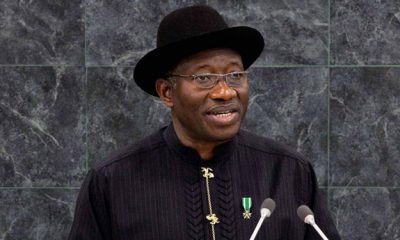

Jonathan Seeks Urgent Intervention in High-profile Interference in Off-cycle Elections
ShareFormer President Goodluck Jonathan has called for an urgent national stakeholders’ engagement to address the emerging trend of serving governors,...
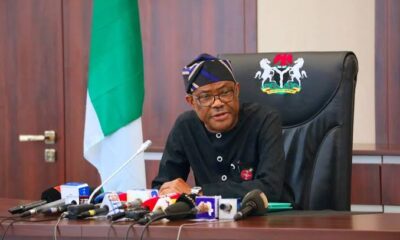

Flood: Wike Orders Demolition of Houses Built on Waterways in Abuja
ShareThe Minister of the Federal Capital Territory (FCT), Nyesom Wike has directed the FCT Department of Development Control to immediately...


FAAC Shares N3.007trn July Revenue to FG, States, LGA
ShareBy Tony Obiechina, Abuja Federation Account Allocation Committee (FAAC) has approved the disbursement of a total of ₦3.007 trillion to...

Fresh Attack on Plateau Community Kills 24, Injures Scores
ShareFrom Jude Dangwam, Jos At least 24 people have reportedly been killed and several others injured after gunmen attacked Bin-Per...