
view point
INEC Guidelines: Necessary Reform or Incomplete Solution?


By Ayodele Babalola
The inclusion of Alternative Dispute Resolution provisions in the Independent National Electoral Commission Regulations and Guidelines for Political Parties 2026 (hereinafter the “2026 Regulations”) represents a significant development in Nigeria’s evolving approach to political party regulation.
Political party disputes have historically constituted one of the greatest sources of electoral instability, particularly disputes arising from party leadership contests, membership issues, candidate selection processes, and party primaries.These disputes have frequently resulted in extensive pre-election litigation, delays in electoral preparations, uncertainty about candidates, and increased pressure on the judiciary.
The introduction of an INEC-supported ADR mechanism reflects an acknowledgement that litigation alone cannot effectively resolve Nigeria’s recurring political party conflicts. ADR offers the possibility of faster, less adversarial, and more relationship-preserving dispute resolution.However, while the framework is a welcome development, its effectiveness will depend on whether it addresses the underlying causes of political party disputes and whether it provides sufficient legal certainty regarding participation, outcomes, and enforcement. This may be INEC’s most elaborate attempt to institutionalize ADR through its Regulations, but it is certainly not its first attempt at entrenching the ADR process.
The Daily Trust (Feb. 9, 2023) reported that 1,241 intra-party pre-election suits were instituted in the 2023 general election cycle, compared with about 809 in the 2019 general election cycle, according to Punch (May 28, 2019). To discourage such suits, the National Assembly enacted Section 83(5) of the Electoral Act 2026, which provides that no court in Nigeria shall exercise jurisdiction over any suit or matter pertaining to the internal affairs of a political party. Where such action is brought in negation of this provision, it further provides in Section 83(6)(b) that the court shall, at the conclusion of the matter, impose costs of not less than N10m on the counsel who filed the action and not less than N10m on the Plaintiff/Applicant, and in addition to payment to the commission of any cost, including solicitors’ fees incurred by it where joined as a party.
However, in its recent decision in Chris Nduka v INEC & Ors, Suit No. FHC/ABJ/CS/721/2026 delivered on the 23rd day of July 2026, the Federal High Court declared that only its Chief Judge is empowered to make rules of court or practice directions governing the award of costs in proceedings before the Federal High Court, such that any legislative attempt by the National Assembly to fix or limit such costs, including Section 83(6)(b) of the Electoral Act 2026 in favour of the INEC (who is entitled to yearly budgetary allocations for all its litigation cases) constitutes an unconstitutional derogation of the Court’s inherent judicial power and is therefore null, void, and of no effect to the extent of its inconsistency.
The court also declared that Section 83(6)(b) unlawfully fetters the discretionary powers of a Judge of the Federal High Court, interferes with the constitutional duty and functions of the judiciary, thereby constitutes an unconstitutional intrusion into judicial proceedings and is contrary to Sections 4, 5 and 6 of the Constitution, which collectively preserve the separation of powers between the legislature, executive, and judiciary.
The ADR provisions in the 2026 regulations, therefore, address a genuine institutional gap by creating a formal mechanism for resolving disputes before they escalate into litigation.
In exercising its powers to monitor and direct the organisation and operation of political parties, the commission established an Alternative Dispute Resolution Mechanism to resolve all internal disputes of political parties in its 2026 Regulations.
According to section 47(1) of the 2026 Regulations, if a political party is unable to resolve any internal dispute through the dispute resolution mechanism provided in its Constitution, the Commission may refer such disputes to its ADR mechanism. A political party or aggrieved member(s) thereof may also, on their own initiative, refer such dispute to the Commission’s ADR Division for Mediation pursuant to section 47(2).
According to section 47(4) & (5), the parties are to agree on a sole Mediator from the list of accredited Mediators accredited by the Commission, and where they fail to do so within two weeks of the reference, the Commission shall appoint one of its accredited Mediators to mediate the dispute. This differs from the previous approach, in which staff of the AEDR unit within the INEC served as a third-party neutral. Also, under section 47(7), any settlement or determination reached at the conclusion of the ADR process shall be in writing, signed by the parties to the dispute, and binding on them.
The bindingness of such a settlement is, however, subject to Section 88(2) of the Electoral Act 2026, which provides that an aspirant who complains that any of the provisions of this Act and the guidelines of a political party have not been complied with in the selection or nomination of a candidate of a political party for election may apply to the Federal High Court for redress.
The ADR process shall be concluded within three (3) months, and the parties shall bear the cost of the mediation in accordance with sections 47(8) & (9) of the 2026 Regulations. They shall also participate in the ADR process in good faith and comply with all procedural directions issued by the Commission under section 47(3).
Despite its advantages, the ADR framework in electoral governance raises important questions regarding its history, the enforceability of settlements reached through mediation, and its scope. INEC introduced ADR in 2008 to resolve electoral disputes and, in 2011, established an AEDR Directorate comprising election officials to implement the project.
According to an IFES, ADR Case Study: Nigeria, and the INEC (2012) draft AEDR guide, the objective was for the staff of this unit within the INEC to “act as a third-party neutral which can confidentially address the resolution of intra-political party disputes, electoral issues before, during and after elections,” and “assist the courts in timely addressing electoral cases … and the public and parties in fact-finding, early warning monitoring and in the mediation of electoral disputes.” The IFES Report notes that the ADR mechanism in INEC remains underused and underfunded. There is also no widely documented, comprehensive INEC database on the effectiveness of its AEDR Directorate or how well the political class utilised it.
Also, a settlement agreement is only effective if the parties comply with it in good faith and voluntarily, or if there are clear legal consequences for non-compliance. A party or faction may participate in mediation as a strategic step while intending to pursue litigation or disregard an unfavourable settlement. Without stronger enforcement mechanisms, ADR risks becoming merely another procedural stage before litigation rather than a genuine dispute resolution mechanism.
The requirement for parties to participate in ADR in good faith under section 47(4) of the 2026 Regulations is appropriate but difficult to enforce. Political disputes are often driven by competing ambitions and strategic calculations. The 2026 Regulations could strengthen this aspect by defining minimum standards of participation, including attendance at mediation sessions, disclosure of relevant information, and genuine engagement with settlement proposals.
This could be clarified in the “procedural directions” alluded to in the 2026 Regulations. Without such safeguards, parties may exploit ADR as a delay tactic rather than a genuine method of dispute resolution, despite the three-month period set out in Section 47(8) of the 2026 Regulations.
The 2026 Regulations also describe the settlements and determinations made at the end of the process as binding but subject them to the rights of political parties and aspirants under Section 88 of the Electoral Act 2026 to litigate certain issues, specifically, the application to the Federal High Court for redress by a political party, or an aspirant who complains that any of the provisions of this Act and the guidelines of a political party have not been complied with in the selection or nomination of a candidate of a political party for election.
This suggests that other settlements arising from internal party disputes are binding, but it also introduces uncertainty. Despite the laudable attempts in the 2026 regulation, clearer guidance is needed on which disputes are suitable for mediation and on the implications of binding settlements.
Certain disputes are naturally appropriate for ADR, including membership disputes; disagreements concerning party administration; leadership conflicts; internal disciplinary matters; and disputes relating to the interpretation of party rules.
Disputes generally involving statutory violations, constitutional questions, or unlawful electoral conduct may, however, require judicial determination. Beyond the Section 88 statutory exception, there should be a clearer distinction between disputes that are suitable for mediation and those that are not.
The ADR provisions in the 2026 regulations represent an important step towards improving political party dispute resolution in Nigeria. They recognise that excessive reliance on litigation has contributed to electoral uncertainty and weakened internal party democracy. However, the framework requires further strengthening.
The legal status and enforceability of ADR settlements should be clarified; the categories of disputes suitable for ADR should be defined more clearly; and mechanisms should be introduced to discourage bad-faith participation. ADR should serve as a complementary mechanism that encourages early dispute resolution and strengthens internal party governance.
Qualified mediators who will earn the confidence and trust of aggrieved parties should be placed on INEC’s accredited mediators list, which should be made public. If properly implemented, the framework can reduce unnecessary litigation, improve political party accountability, and contribute to a more stable and credible electoral system, as we move towards the 2027 general elections.
Finally, as a regulatory provision, the ADR framework falls under the category of transient provisions, with its survival contingent on similar provisions in the next batch of regulations for the 2031 elections. This raises another question: is it not high time for a statutory framework for Alternative Electoral Dispute Resolution?
Ayodele Babalola Babalola is a legal practitioner
By Folasade Akpan
With Nigeria’s imported Bundibugyo Ebola patient now evacuated to Switzerland, the country’s health response has pivoted from active patient care to long-term monitoring, community engagement, and systemic readiness.
Nigeria confirmed its first imported case of Ebola (Bundibugyo strain) from a traveler arriving from Uganda on Oct.
20; the patient was stabilised before the evacuation.It is worth noting that the Nigeria Centre for Disease Control and Prevention (NCDC) says suspected cases reported in Yola, Adamawa, on Oct.
30, turned out negative for EVD after two rounds of testing.In spite of having no active cases left in the country, experts say public health authorities must maintain rigorous contact tracing, evaluate new alerts, and ensure the healthcare network remains equipped to detect any potential infections immediately.
The Coordinating Minister of Health and Social Welfare, Prof. Muhammad Pate, said Nigeria could potentially declare the outbreak over by Dec. 7, provided no further confirmed or probable cases emerge.
He said the date remained provisional, subject to validation of the 42-day countdown by the NCDC and the World Health Organisation (WHO).
“Any further case would require a fresh countdown in accordance with those criteria,” Pate said in a post on his official X handle.
The countdown therefore represents more than a date on the public health calendar.
It places continued contact monitoring, prompt investigation and the ability to detect new cases at the centre of Nigeria’s response.
The WHO Regional Director for Africa, Dr Mohamed Janabi, said Nigeria would continue monitoring 52 contacts, while Switzerland would manage the patient and follow up her husband.
The husband, who travelled with the patient during the medical evacuation, was placed in isolation at University Hospital Zurich, while she received treatment at Geneva University Hospitals.
The transfer followed clinical improvement after Nigerian health workers managed the patient through the acute phase of the illness.
However, the Academy of Medical Sciences of Nigeria (AMedS) cautioned that clinical improvement did not necessarily mean the patient was no longer infectious.
Its President, Prof. Osato Giwa-Osagie, urged the authorities to sustain contact monitoring and complete the prescribed 21-day follow-up for exposed persons, including health workers and domestic staff.
The academy’s position underscores a central feature of infectious disease control: removing a patient from the country does not remove the need to investigate potential exposures.
The NCDC Director-General, Dr Jide Idris, said public health teams had identified people who might have been exposed and monitoring them for 21 days after their last possible exposure.
“Being identified as a contact does not mean that you have Ebola,” Idris said.
The Minister of Information and National Orientation, Alhaji Mohammed Idris, has also directed agencies under his ministry to intensify public education on Ebola.
He said accurate information should reach communities in languages they understood, with clear guidance on transmission, prevention and where to report suspected cases.
The minister directed the National Orientation Agency, Nigerian Television Authority, Federal Radio Corporation of Nigeria, Voice of Nigeria and the News Agency of Nigeria to work with health authorities on public information.
He also urged Nigerians to rely on official information and avoid spreading unverified claims.
“The Federal Government is taking every necessary step to protect Nigerians.
“Accurate and timely information is one of our strongest defences,” the minister said.
Health observers say there is a need for a response system that enables healthcare workers to recognise possible exposure risks, separate suspected cases from other patients, and notify public health authorities without waiting for laboratory confirmation.
To this end, the NCDC has also mobilised Infection Prevention and Control (IPC) professionals and media fellows to support preparedness and improve communication.
Idris stressed the need for active rather than passive containment.
“We want active containment. We don’t want to be passive at all. We want to go at it with all that we have,” he said.
Prof. Sade Ogunsola, Vice-Chancellor of the University of Lagos, said infection prevention needed to remain part of routine healthcare practice rather than an emergency measure.
“IPC is really about the routine, I would say the boring work we do in healthcare facilities every day, where, like soldiers, you prepare for war in peacetime,” she said.
Her observation points to the importance of maintaining trained personnel, protective equipment, safe waste management and functional isolation arrangements before another suspected case arrives.
Medical laboratory expert Stephen Oricha also called for adequate protective equipment in health facilities, including those at the grassroots.
Oricha who is the Deputy Director, Medical Laboratory, University of Abuja Teaching Hospital, warned that healthcare workers could be exposed if protective equipment and infection prevention measures were inadequate.
“As a healthcare worker we must exercise caution when attending to patients, we must ensure that preventive measures are taken,” Oricha said.
He said protective equipment should not be limited to major government hospitals because workers in local facilities also needed protection.
Medical laboratory expert Stephen Oricha also called for adequate protective equipment in health facilities, including those at the grassroots.
Oricha, who is the Deputy Director, Medical Laboratory, University of Abuja Teaching Hospital, warned that healthcare workers could be exposed if protective equipment and infection prevention measures were inadequate.
“As a healthcare worker we must exercise caution when attending to patients, we must ensure that preventive measures are taken,” Oricha said.
Experts say the laboratory system is another part of the response that must remain functional beyond the immediate emergency.
In addition, stakeholders say community-based surveillance may also contribute to early detection.
To buttress this, the Association of Community Pharmacists of Nigeria urged the federal government to adopt a nationwide “Pharmacy First” protocol.
The association’s National Chairman, Mr Ezeh Ambrose, said community pharmacies could help identify suspected cases and refer patients promptly to designated facilities.
“We cannot afford to repeat past missteps where delayed grassroots surveillance allowed outbreaks to spiral out of control,” he said.
The proposal would require clear clinical guidance, referral pathways, surveillance procedures and coordination with public health authorities.
Its effectiveness would depend on how well these arrangements were designed and implemented.
Nigeria’s eventual success depends not just on treating the initial patient, but on maintaining long-term surveillance and reacting swiftly to new data.
While the tentative Dec. 7 countdown sets a timeline, it does not lessen the need for constant alertness.
To retain public trust, health officials must communicate transparently, support monitored individuals, and prove their readiness through action rather than rhetoric.
The imported case tested the nation’s defense; the upcoming challenge is keeping these response systems well-funded, effective, and trusted.
All in all, stakeholders say the patient’s evacuation must signal a shift into tighter containment, not the conclusion of preventive efforts.(NAN)
view point
Attempted Suicide in Nigeria: Legislative Reform, Economic Hardship and the Right to Human Dignity
By Oluwaleye Adedoyin Grace
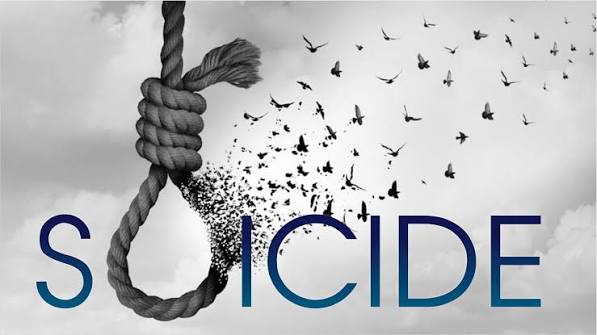
Should a person who survives a suicide attempt be punished or helped? This question challenges Nigeria’s continued criminalization of attempted suicide under section 327 of the Criminal Code Act and section 231 of the applicable Penal Code.
In a society grappling with economic hardship, unemployment, poverty and limited access to mental-health services, the appropriateness of criminal punishment deserves serious reconsideration.
Although these challenges do not explain every suicide attempt, they highlight the need to examine the circumstances in which people experience severe distress.This article argues that Nigeria should replace criminal punishment for attempted suicide with a support-centered approach that prioritizes prevention, medical care and rehabilitation, while maintaining appropriate safeguards and accountability.
THE HUMAN COST OF ECONOMIC HARDSHIP
Behind the debate on attempted suicide lies a painful reality that the law must not ignore: the struggle to survive. Imagine a father who wakes up every morning wanting to provide for his family but has been laid off and can no longer afford their basic needs. Imagine a single mother who spends the entire day selling pepper by the roadside, yet returns home unable to provide enough food for her four children. Imagine a graduate who spent years studying, holding on to the promise of a better future, only to face endless job applications, rejection and uncertainty. Imagine people sleeping under bridges, not because they have chosen such a life, but because they have nowhere else to go.
For some Nigerians, survival has become a daily struggle against hunger, homelessness and hopelessness. Behind closed doors, people carry burdens that are invisible to the public: unpaid bills, empty kitchens, disappointed children and the painful feeling of being unable to provide for those who depend on them. Although economic hardship does not explain every suicide attempt, its possible contribution to severe emotional distress cannot be dismissed.
This raises a fundamental question: when a person reaches a point of despair, should the law respond primarily with punishment, or should it also examine the circumstances in which that person has been struggling to survive? Criminalizing attempted suicide without adequately addressing the need for medical care, psychological support and social protection risks treating the visible crisis while neglecting some of the conditions that may have contributed to it.
A society must ask itself whether it is doing enough to help people survive before it punishes those who have lost the strength to keep fighting. Protecting human life requires more than prohibiting suicide; it requires building a society in which people in distress can access meaningful support, dignity and hope.
LEGAL FRAMEWORK GOVERNING ATTEMPTED SUICIDE IN NIGERIA
Section 327 of the Criminal Code Act criminalizes attempted suicide as a misdemeanor punishable by imprisonment for up to one year. Section 231 of the applicable Penal Code also criminalizes attempted suicide, prescribing imprisonment, a fine, or both.
The Constitution of the Federal Republic of Nigeria 1999, particularly sections 33 and 34, protects the right to life and human dignity. Although these provisions do not automatically invalidate the criminalization of attempted suicide, they are relevant to debates about whether punishing a person in distress is consistent with a humane approach to protecting life.
The National Mental Health Act 2021 provides an important framework for mental-health care in Nigeria. However, its existence does not by itself resolve the conflict between criminal punishment and a healthcare-centered response.
Reforming the law therefore requires reviewing the relevant criminal provisions and strengthening mental-health services, and an improved economic system so that decriminalization is accompanied by practical support.
ECONOMIC HARDSHIP AND THE CIRCUMSTANCES BEHIND SUICIDE ATTEMPTS
Economic hardship, unemployment, homelessness and food insecurity may contribute to severe distress for some individuals. In Nigeria, the rising cost of living has intensified concerns about access to basic necessities, particularly among vulnerable households and children living on the streets.
However, suicide attempts do not have a single cause. Mental-health conditions, personal experiences and social circumstances may also play significant roles. It would therefore be inaccurate to attribute every attempt to poverty or economic hardship.
The important legal question is whether criminal punishment adequately addresses the circumstances surrounding suicidal distress. Where a person needs medical attention, psychological support or social assistance, prosecution alone may fail to address those needs.
Nigeria should consequently consider a broader response that combines appropriate healthcare with effective social protection, while recognizing that each person’s circumstances require individual assessment.
CRIMINAL PUNISHMENT OR MEDICAL INTERVENTION?
Supporters of criminalization may argue that punishment discourages suicide attempts and reinforces the value of human life. However, the effectiveness of imprisonment as a deterrent requires evidence, and protecting life should involve more than prohibiting harmful conduct.
Criminal prosecution may also expose vulnerable individuals to stigma and discourage them from seeking help. These are important concerns when considering whether the criminal justice system is the most appropriate response to a person who survives a suicide attempt.
A healthcare-centered approach would priorities medical assessment, crisis intervention, counselling and rehabilitation according to individual needs. Decriminalization, however, must not mean abandoning people in distress. It should be accompanied by accessible mental-health services and appropriate safeguards for personal liberty and dignity.
Nigeria should therefore reconsider whether criminal punishment achieves its intended purpose more effectively than a properly funded system of prevention and support.
DECRIMINALIZATION AND THE RISK OF ABUSE
One concern about decriminalization is that individuals might attempt to exploit government assistance programmes. However, without reliable evidence, it would be speculative to conclude that removing criminal penalties would encourage suicide attempts for financial gain.
Nigeria can address potential abuse through transparent eligibility criteria, proper verification and accountability in the administration of public assistance. Emergency medical care should remain separate from eligibility for financial benefits, ensuring that people in crisis receive appropriate treatment without automatically qualifying for cash assistance.
The possibility of fraud should not overshadow the need to protect vulnerable individuals. A well-designed system can safeguard public resources while ensuring that people experiencing suicidal distress receive appropriate care and support.
RECOMMENDATIONS AND THE WAY FORWARD
Nigeria should review the Criminal Code Act and the applicable Penal Code provisions to replace criminal punishment for attempted suicide with a support-centered approach.
Government should strengthen mental-health services, emergency care, counselling and social protection for vulnerable individuals. Clear institutional responsibilities, adequate funding and safeguards against the misuse of public resources are also essential.
The government must look beyond criminal punishment and confront the economic conditions that leave many Nigerians struggling to survive. Tackling unemployment, reducing poverty, improving access to affordable food and housing, and creating sustainable employment opportunities should form part of a broader suicide-prevention strategy. A father who has lost his job, a mother struggling to feed her children and a graduate unable to secure employment need more than laws that punish suicidal behavior; they need practical opportunities and support to rebuild their lives.
Finally, reliable research and public awareness should guide policy decisions and help evaluate the effectiveness of suicide-prevention measures. Decriminalization must be accompanied by practical support to ensure that people in distress are not left without assistance.
CONCLUSION
Nigeria should reconsider the criminalization of attempted suicide and priorities prevention, medical care, rehabilitation and improved economic condition over punishment. Although protecting human life remains essential, criminal prosecution alone cannot adequately address the complex circumstances surrounding suicidal distress.
A support-centered approach, backed by accessible mental-health services, effective social protection and appropriate safeguards, would provide a more humane response. Ultimately, protecting life requires not merely punishing those who attempt to end theirs, but ensuring that help is available when they need it most.
Oluwaleye Adedoyin Grace, LLB. (Hons.)Join Rights Groups.
By Chidi Odinkalu
Nearly 20 years ago, while stumping for his party, the Peoples’ Democratic Party, out-going president, Olusegun Obasanjo, decided to confront head-on morbid rumours about the health of his hand-picked successor.
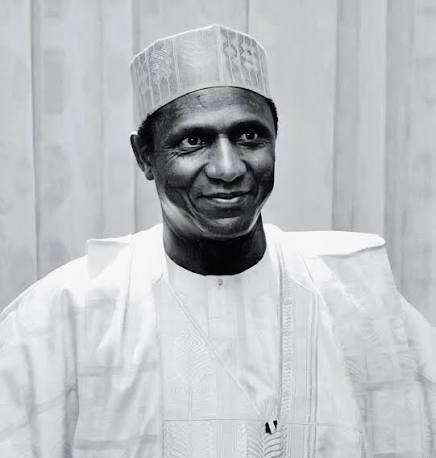
Umaru Musa Yar’Adua, then governor of Katsina State and the president’s man for the job, was said to be stricken in a hospital in Germany. From the podium, Obasanjo dialled before bellowing, “Umoru, are you dead?!” It was obviously not a question for a dead man.Yar’Adua was mercifully alive. He returned in time to be announced winner of a presidential election in 2007 widely described as “a charade”.
His tenure was dogged by concerns about ill-health until his death in May 2010.Presidential infirmity was not unknown to Nigeria.
Ibrahim Babangida was only 46 when he was flown out of the country for medical attention in 1986. The cause, Nigerians were informed, was “Radiculopathy”, a multi-syllabic tongue-twister that sent many newsrooms consulting diagnostic standard manuals.
In November 2009, President Yar’Adua required overseas hospitalization for “Acute Pericarditis.”
In the first 46 months of his first term as civilian president from 2015 to 2019, Muhammadu Buhari spent 407 days outside Nigeria, with about 242 days or nearly 60% of that devoted to health tourism overseas. He was 72 when he was inaugurated as civilian president, an age at which infirmity is not unknown in the ordinary course of human events.
Four things emerge from these instances. First, the wellbeing of a president is a legitimate matter of public and civic concern.
Second, like all human beings, Presidents can and do from time to time take ill. Babangida and Yar’Adua were much younger than President Tinubu is today, whatever his age may be.
Third, there was a time when presidential handlers believed they owed the country the benefit of some disclosure about the wellbeing of the President or lack of it. That, it seems, is history.
Fourth, irrespective of the health status of the president, the country must always avoid a leadership vacuum.
The twin crises of power and succession that accompanied the final months of the Umaru Musa Yar’Adua presidency brought this last point home with urgency.
In response, the National Assembly enacted a constitutional amendment designed to keep the country running when a president needs to take time off for running repairs. All it requires is for the president to temporarily transfer power to his Vice and notify the National Assembly appropriately.
On-going concerns about the health status of the incumbent suggest a presidency deeply enamoured of déjà vu or, as the Punch newspaper says, invested in treating constitutional provisions as an “ornamental” inconvenience.
In office for 41 months so far, President Bola Ahmed Tinubu has spent over 270 days (about 22%) outside the country, including over 100 days spent on 13 different trips of varying descriptions to France alone. The reason for the frequency of his visits to France is credibly suspected to be medical.
Rather than a temporary transfer of power as the constitution allows, it seems he may prefer instead to outsource it. To whom is not clear, but examples from other places could help.
In a study published in 1999, Herbert Abrams, writing about the United States, recounts that “Presidential infirmity, accompanied by a failure to fully inform the public, has been stamped indelibly on our history during the past two hundred years. Fourteen of the eighteen American presidents in the twentieth century had significant illnesses while in office….that were either concealed from the American people or underreported.”
Take for instance the case of Dr. Woodrow Wilson, the Nobel Prize-winning 28th president, who took the United States through the First World War and inspired the League of Nations. Returning home from Europe in July 1919 from signing the Treaty of Versailles which ended World War 1, Wilson preoccupied himself with the ultimately futile effort to persuade his country into the League.
In the middle of this effort, on October 2, 1919, President Wilson suffered a stroke. According to medical records released only in 1991, the stroke was so massive that it would have been “impossible for him ever to achieve more than a minimal state of recovery.”
Yet, as narrated by Christopher Andrew in his 1995 history of U.S. secret intelligence, For the President’s Eyes Only, Wilson’s second wife (the first died in 1914), Edith Galt, helped to “suppress accurate information about his health and to ensure that he continued as president for the remainder of his second term” until 1921.
On the other side of the Atlantic, the health of President Wilson’s contemporary and ideological adversary, Vladimir Ilich Lenin, was the subject of equally intense scheming between a shrewd wife and ruthless usurper. In 1922, Lenin elevated Josef Stalin to the position of General Secretary of the Central Committee of the Communist Party with sweeping powers over party matters. Shortly thereafter, Stalin drew Lenin’s ire when he (and another senior Central Committee member also from Georgia, Sergo Ordzonikidze) annexed Georgia.
Ill-health stayed in the hand of an angry Lenin who was struck down by a massive stroke in December 1922. To preserve the life of the Party’s greatest asset, the Politburo under Stalin’s influence restricted Lenin to working for a mere 10 minutes daily. Upon learning that Lenin was doing more, Stalin accosted Lenin’s wife, Nadezhda Krupskaya, warning her rather darkly, as recounted by Stalin’s biographer, Simon Sebag Montefiore, that if she did not ensure compliance “the Central Committee would appoint someone else as Lenin’s wife.”
In France, President Georges Pompidou repeatedly denied that he had anything less worrisome than a common cold until his death in office of cancer in 1974.
In 1981, Pompidou’s successor, Valéry Gisgard d’Estaing, lost in a close election to the inscrutable Francois Mitterrand. In the same year, President Mitterrand learnt that he had prostate cancer that had metastasized to the bones. Mitterrand promptly declared this a State Secret. Hiding it even from his wife, he ran for and won a second seven-year term in 1988, promising France that he was in robust health. In his debate with Jacques Chirac in 1988, Mitterrand infamously faced a more formidable challenge from an overwrought bladder in desperate need of relief.
As the Washington Post reported in January 1996, “Mitterrand’s cancer reached such a critical state in late 1994 that he was no longer able to carry out his duties and spent most of his time resting in bed.” The week after Mitterrand’s death in January 1996, his doctor, Claude Gubler, published a book, Le Grand Secret, detailing this grand deception. French authorities promptly banned the book because it allegedly breached medical confidentiality.
Closer home, Tunisia’s founding president for 32 years, Habib Bourgiba, chose to stay in office after being diagnosed with arteriosclerosis in 1983. In November 1987, Bourgiba, already enfeebled by dementia, gave his shocked compatriots a prime-time disquisition on the state of his testicles. His once-loyal prime-minister, General Zine Abdine Ben-Ali mercifully moved to confine Bourgiba under medical detention in the appropriately-named Monastir, where he died in 2000.
When he went on trial in 1994, shortly after his overthrow at the end of 31 years as Malawi’s leader, the court ruled Dr. Hastings Banda physically and mentally unfit to attend his own trial. He had in fact been “senile for years”. Yet, for 31 years until his ouster earlier in the same year, Dr. Banda held Malawians in thrall as the all-knowing Ngwazi. Real power had been outsourced to his “Official Hostess”, Mama Cecilia Kadzamira and her uncle, John Tembo.
In Malawi also, a dead president was wilfully mis-represented as merely unwell. After he died on 5 April 2012, Malawi’s presidency contrived to export the dead remains of President Bingu wa Mutharika to South Africa to enable them buy time for an unconstitutional succession by his brother and then foreign minister, Peter Mutharika. They mis-led Malawians with the announcement that the president “had…taken ill and had been flown to South Africa for specialist treatment.”
Whatever the medical dictionaries may say, the lesson of history is quite clear: infirmity can outsource the presidency under cover of “a bodyguard of lies.” Nigeria was supposed to have made this history in 2010, but the lessons do not seem to have been learnt.
A lawyer and a teacher, Odinkalu can be reached at chidi.odinkalu@tufts.edu




2027: Tompolo Deploys 50 Vehicles in Enugu, Cross River for Tinubu’s Re-election
ShareGrand Patron of the PBAT Door-to-Door Movement, High Chief Oweizidei Government Ekpemupolo, has donated 50 vehicles for President Bola Tinubu’s...


Customs Generates N1.4tn Revenue in Two Months
ShareBy Julius Tambaya, Abuja The Nigeria Customs Service (NCS) generated a total of N1.419 trillion in revenue between September and...

Tegbe Assures Nigerians of Swift Restoration of Power Supply
ShareThe Minister of Power, Joseph Tegbe, has assured Nigerians experiencing reduced electricity supply in parts of the country of a...


WAHO Leads Drive to Harmonise Subspecialty Training Across ECOWAS
ShareBy David Torough, Abuja Accredited health professional colleges, training institutions and regulatory bodies across the Economic Community of West African...


Bishop Oyedepo Re-affirms strong support for Pastor Ibiyeomie, Pastor Komaiya’s Ministry
ShareBy David Torough, Abuja The Founder and Presiding Bishop of Living Faith Church Worldwide, Bishop David Oyedepo, has reaffirm strong...


West Africa: How WAHO Successfully Harmonized Procedure Manuals for Health Disciplines and Professions
ShareBy David Torough After three days of serious brain-storming sessions in Abuja, the West African Health Organization (WAHO), has successfully...


2027: CAN Seeks Return of Sacked Traditional Rulers in Kaduna
ShareFrom Shabanyan Kantiok, Kaduna The Christian Association of Nigeria in Chikun Local Government Area of Kaduna State has urged Christian...


OPay Opens New Kano Office, Strengthens Commitment to Nigeria’s Financial Inclusion
ShareOPay, Nigeria’s leading digital bank, has opened a new office in Kano State, strengthening its presence in Nigeria and bringing...

Rigging Years Before Elections: Why Tinubu, Parliament Favours Staggered Balloting
Share Silhouette of Donald Andoor e‐mail; doandoor@gmail.com There is a growing need for Nigerians to look beyond the ballot box and...

Akpabio Congratulates Nigeria’s Golden Girls, Flamingos
ShareThe President of the Senate, Godswill Akpabio has sent a hearty congratulations to the Nigerian Under-17 Women’s National Team on...