
view point
Mass Weddings as Social Policy: What Happens after the Ceremony?

By Ismail Ahmed
In August, the Kano State Government, in northwestern Nigeria, supported 1,500 couples through its Auren Gata mass-wedding programme, with beneficiaries drawn largely from low-income and vulnerable groups, including widows and divorcees.
The support did not end with the solemnisation of the marriages: aside from the mandatory counselling and medical screening, reports indicated that couples received a combination of dowry and business assistance, and household items such as beds and mattresses. The state presented the programme as a social intervention intended to reduce the economic barriers to marriage, restore dignity, and strengthen family stability.The number of couples that are married in social (mis)adventures like this is an output. The number of households that are safe, economically resilient, healthy, and able to educate their children years later is the outcome. The output is easy to measure; the outcome should hold our attention; and uncertainty around outcomes fuels much of the criticism directed at programmes like this one.
Moving Beyond the Wrong Argument
The public debate around mass weddings is often trapped between celebration and condemnation. Beneficiaries (both direct and indirect) and supporters see the programmes as culturally appropriate assistance to people who cannot afford the cost of marriage. Critics see scarce public resources devoted to ceremonies in states facing insecurity, unemployment, poor health outcomes, malnutrition, and large numbers of out-of-school children. For Kano State, in this context, bar the routine deeply endemic phone theft, especially within the city, the state has been relatively safe from major crimes like kidnapping and banditry that have afflicted several other states in northern Nigeria. However, the state has some of the poorest health indices in the country, with maternal mortality, for instance, exceeding 1,000 per 100,000 live births in some of its local government areas. The state also has one of the highest numbers of out-of-school children in the country.
The conversation across most quarters, therefore, has been whether the Kano State government gotten its priorities right.
A more useful policy conversation begins by avoiding an unsupported causal claim: mass weddings do not, by themselves, “create poverty.” Many beneficiaries are selected precisely because they are already experiencing economic vulnerability. Finding that some remain poor after marriage would not prove that the programme made them poor; that would confuse the criteria used to select beneficiaries with the effects of the intervention.
But the opposite assumption is equally weak. A successful ceremony, the distribution of furniture, and even the survival of a marriage do not by themselves prove that the intervention improved family welfare.
The right question is not whether mass weddings are inherently good or bad. It is whether public support changes the trajectory of beneficiary households, and whether it does so more effectively than alternative or complementary forms of social investment.
This is not an argument for abolishing mass weddings. It is an argument for reviewing and enhancing the policy.
More Than a Decade of Weddings Should Produce Evidence
Kano’s modern state-supported programme dates to 2012, when an initial group of 100 widows and divorced women took part in a government-backed mass wedding; subsequently, additional numbers were supported. Larger rounds followed, including 1,500 couples in 2019, about 1,800 in 2023 and another 1,500 in 2026. Whether Kano was literally the first Nigerian state to adopt such a programme matters less than the fact that it has now run for more than a decade. Enough time has passed to move beyond anecdote.
Kano is also not alone. Kebbi sponsored a mass wedding for more than 300 couples in 2024, combining dowry support with health screening and proposed skills training. In April, Zamfara sponsored 100 couples from vulnerable groups, providing dowry payments, household items and small business support. State-backed marriage assistance has become a recognisable form of social intervention across parts of northern Nigeria, strengthening the case for a common evaluation framework.
One of the few published assessments of Kano’s early mass-wedding programme provides an important starting point. A 2015 study by Rohana Yusof and Amina Lawal Mashi surveyed 200 women randomly selected from the first 350 women who had participated in the programme in July 2012 and interviewed six officials of Hisbah Board, a state authority responsible for enforcing morals among residents of Kano State and under whose watch all the mass weddings were organised. The authors reported broad acceptance of the programme and perceived economic benefits.
Notably, 43 per cent of the women surveyed identified their husbands’ abandonment of marital responsibilities – including feeding, shelter and children’s education – as a major factor in marriage breakdown. The Hisbah officials interviewed reportedly regarded “crippling poverty amongst couples” as an important underlying factor in the husbands’ inability to discharge basic responsibilities. The study subsequently recommended greater investment in women’s education and productive skills. Yet the study was an early cross-sectional assessment, not a long-term impact evaluation. More than a decade later, the unanswered question is therefore not whether beneficiaries welcomed the intervention, but what became of the families it helped to establish.
The next generation of evidence must answer harder questions: How many marriages from 2012, 2019 and 2023 cohorts remained intact after one, three and five years? How many remained safe and mutually supportive? Did the businesses financed through the programme survive? Did women retain control over the grants provided to them? Did household income, savings and food security improve? Were children from these marriages registered at birth, immunised, and enrolled in school? If this information has already been collected, it should be published in anonymised form. If it has not, the 2026 cohort offers an opportunity to begin.
Ismail Ahmed is a public health physician and social commentator with decades of experience designing and implementing developmental programmes across Nigeria.
By Uddin Ifeanyi
Against the backdrop provided by the incumbent government’s professed ambitions for the country, the 4.43 per cent by which the economy grew on an annualised basis in the second quarter of this year is far from the kind of high-productivity growth trajectory that the country needs.
As further evidence, though, of the economy’s continued return to normalcy, it is a more than welcome outcome. In this latter sense, it reinforces the messaging from the 3.89 per cent growth recorded in the first three months of this year. And it is also the strongest second quarter performance recorded by the economy in the last three years, up from the 4.23 per cent recorded in the same period, last year.In the last twenty years, the economy has skittered between the low (about 2—3 per cent average annual growth rates) of the last decade, in which growth was too tepid to raise living standards, even as population growth pressures prevailed, and periods before that, when high oil prices and investment booms produced bursts of 6—7 per cent average annual growth rates. The lessons from the limited reforms put in place by the Tinubu administration go beyond the fact that they have been able to nudge the economy towards a semblance of recovery from yesterday’s economic lassitude. These lessons matter more in our present circumstances as an admonitory codicil to the government’s current medium-term aspiration of a 7 per cent trend growth rate for the economy.
While this higher growth rate is necessary if the economy is to get ahead of population growth and raise living standards, our policy establishment cannot forget that successive governments in the country have struggled to convert growth episodes into sustained, productivity-driven expansion. Against The Renewed Hope Development Plan’s (2026—2030) goals of diversification, productivity, human capital, and private sector-led growth, therefore, the most encouraging part of the second quarter 2026 growth numbers is the extent to which the economy has moved beyond crude oil-led growth. The National Bureau of Statistics (NBS) reports that the non-oil economy (up 4.31 per cent in Q2 this year) accounted for 95.84 per cent of real domestic output.
Yet, the fact that the economy is no longer waiting for crude oil production to rescue aggregate output, does not mean that it has been transformed. What to make of the fact that industry growth slipped from 7.46 per cent in the second quarter of last year to 3.96 per cent in the same period this year? Or that manufacturing was up 3.24 per cent in real terms in the second three months of this year, while its share of domestic output fell from 7.81 per cent to 7.72 per cent year-on-year? Or that real electricity, gas, steam output contracted by 10.63 per cent?
There are two possible responses to these questions. The first one invites us to recognise a major dilemma confronting efforts to reform this economy. And that is that an economy cannot sustainably grow at a trend rate of 6—7 per cent annually if one of its fundamental productive inputs — reliable electricity — is shrinking. The second describes the main deliverable of successful reforms to the way this economy is run: if the Nigerian economy is to transit from its current low-income/low-productivity level to the sort of place envisaged by Nigeria Agenda 2050, industry must become the main transmission mechanism between agriculture and the services sector.
Which of these (the dilemma confronting and the goal of reforms) does the decomposition of the growth story told by the Q2 2026 GDP numbers help? Here, if you separated the beautiful parts of the growth narrative, especially telecommunications and information services from the rest, the picture you are left with is more of an economy recuperating across a broad front with a few highly dynamic modern sectors pulling the average up, rather than one going through a dramatic productivity boom.
The fact that despite its impressive growth outcomes in the most recent report on the economy’s performance, a quarter of the economy (in agriculture) continues to produce at relatively low productivity levels, while employing a large proportion of Nigerians is worrisome. To boost per capita income, agricultural output must not only grow faster than 4 per cent annually, but we must also raise agricultural productivity dramatically and move the labour freed up by this process into economic sectors with higher returns to invested funds.
If nothing else, therefore, the domestic output numbers for the second quarter of this year show that the structural transformation problem that the economy has long faced, and which the Nigeria Agenda 2050 pays eloquent lip-service to has not been resolved. Thus, while there are three reasons from the report to remain upbeat about the economy’s trajectory (acceleration of growth, strengthening of the non-oil economy, and oil production recovery), there are four arguably weightier reasons for worry (growth is still beyond the trend rate that we all know is necessary for the economy’s sustainable development, industry is losing momentum, the manufacturing sector’s underperformance is worrying, and we cannot ignore the fact that electricity is shrinking).
All of this leads to the one question that accompanied me through every page of the report: Is Nigeria’s economy now growing faster because the reforms put in place by the incumbent federal government have removed the macroeconomic constraints on growth, or is it growing faster because the economy is recovering from the extraordinary disruption of the Buhari/Emefiele diarchy?
Uddin Ifeanyi, a journalist manqué and retired civil servant, can be reached @IfeanyiUddin.

By Ayodele Babalola
The inclusion of Alternative Dispute Resolution provisions in the Independent National Electoral Commission Regulations and Guidelines for Political Parties 2026 (hereinafter the “2026 Regulations”) represents a significant development in Nigeria’s evolving approach to political party regulation.
Political party disputes have historically constituted one of the greatest sources of electoral instability, particularly disputes arising from party leadership contests, membership issues, candidate selection processes, and party primaries.These disputes have frequently resulted in extensive pre-election litigation, delays in electoral preparations, uncertainty about candidates, and increased pressure on the judiciary.
The introduction of an INEC-supported ADR mechanism reflects an acknowledgement that litigation alone cannot effectively resolve Nigeria’s recurring political party conflicts. ADR offers the possibility of faster, less adversarial, and more relationship-preserving dispute resolution.However, while the framework is a welcome development, its effectiveness will depend on whether it addresses the underlying causes of political party disputes and whether it provides sufficient legal certainty regarding participation, outcomes, and enforcement. This may be INEC’s most elaborate attempt to institutionalize ADR through its Regulations, but it is certainly not its first attempt at entrenching the ADR process.
The Daily Trust (Feb. 9, 2023) reported that 1,241 intra-party pre-election suits were instituted in the 2023 general election cycle, compared with about 809 in the 2019 general election cycle, according to Punch (May 28, 2019). To discourage such suits, the National Assembly enacted Section 83(5) of the Electoral Act 2026, which provides that no court in Nigeria shall exercise jurisdiction over any suit or matter pertaining to the internal affairs of a political party. Where such action is brought in negation of this provision, it further provides in Section 83(6)(b) that the court shall, at the conclusion of the matter, impose costs of not less than N10m on the counsel who filed the action and not less than N10m on the Plaintiff/Applicant, and in addition to payment to the commission of any cost, including solicitors’ fees incurred by it where joined as a party.
However, in its recent decision in Chris Nduka v INEC & Ors, Suit No. FHC/ABJ/CS/721/2026 delivered on the 23rd day of July 2026, the Federal High Court declared that only its Chief Judge is empowered to make rules of court or practice directions governing the award of costs in proceedings before the Federal High Court, such that any legislative attempt by the National Assembly to fix or limit such costs, including Section 83(6)(b) of the Electoral Act 2026 in favour of the INEC (who is entitled to yearly budgetary allocations for all its litigation cases) constitutes an unconstitutional derogation of the Court’s inherent judicial power and is therefore null, void, and of no effect to the extent of its inconsistency.
The court also declared that Section 83(6)(b) unlawfully fetters the discretionary powers of a Judge of the Federal High Court, interferes with the constitutional duty and functions of the judiciary, thereby constitutes an unconstitutional intrusion into judicial proceedings and is contrary to Sections 4, 5 and 6 of the Constitution, which collectively preserve the separation of powers between the legislature, executive, and judiciary.
The ADR provisions in the 2026 regulations, therefore, address a genuine institutional gap by creating a formal mechanism for resolving disputes before they escalate into litigation.
In exercising its powers to monitor and direct the organisation and operation of political parties, the commission established an Alternative Dispute Resolution Mechanism to resolve all internal disputes of political parties in its 2026 Regulations.
According to section 47(1) of the 2026 Regulations, if a political party is unable to resolve any internal dispute through the dispute resolution mechanism provided in its Constitution, the Commission may refer such disputes to its ADR mechanism. A political party or aggrieved member(s) thereof may also, on their own initiative, refer such dispute to the Commission’s ADR Division for Mediation pursuant to section 47(2).
According to section 47(4) & (5), the parties are to agree on a sole Mediator from the list of accredited Mediators accredited by the Commission, and where they fail to do so within two weeks of the reference, the Commission shall appoint one of its accredited Mediators to mediate the dispute. This differs from the previous approach, in which staff of the AEDR unit within the INEC served as a third-party neutral. Also, under section 47(7), any settlement or determination reached at the conclusion of the ADR process shall be in writing, signed by the parties to the dispute, and binding on them.
The bindingness of such a settlement is, however, subject to Section 88(2) of the Electoral Act 2026, which provides that an aspirant who complains that any of the provisions of this Act and the guidelines of a political party have not been complied with in the selection or nomination of a candidate of a political party for election may apply to the Federal High Court for redress.
The ADR process shall be concluded within three (3) months, and the parties shall bear the cost of the mediation in accordance with sections 47(8) & (9) of the 2026 Regulations. They shall also participate in the ADR process in good faith and comply with all procedural directions issued by the Commission under section 47(3).
Despite its advantages, the ADR framework in electoral governance raises important questions regarding its history, the enforceability of settlements reached through mediation, and its scope. INEC introduced ADR in 2008 to resolve electoral disputes and, in 2011, established an AEDR Directorate comprising election officials to implement the project.
According to an IFES, ADR Case Study: Nigeria, and the INEC (2012) draft AEDR guide, the objective was for the staff of this unit within the INEC to “act as a third-party neutral which can confidentially address the resolution of intra-political party disputes, electoral issues before, during and after elections,” and “assist the courts in timely addressing electoral cases … and the public and parties in fact-finding, early warning monitoring and in the mediation of electoral disputes.” The IFES Report notes that the ADR mechanism in INEC remains underused and underfunded. There is also no widely documented, comprehensive INEC database on the effectiveness of its AEDR Directorate or how well the political class utilised it.
Also, a settlement agreement is only effective if the parties comply with it in good faith and voluntarily, or if there are clear legal consequences for non-compliance. A party or faction may participate in mediation as a strategic step while intending to pursue litigation or disregard an unfavourable settlement. Without stronger enforcement mechanisms, ADR risks becoming merely another procedural stage before litigation rather than a genuine dispute resolution mechanism.
The requirement for parties to participate in ADR in good faith under section 47(4) of the 2026 Regulations is appropriate but difficult to enforce. Political disputes are often driven by competing ambitions and strategic calculations. The 2026 Regulations could strengthen this aspect by defining minimum standards of participation, including attendance at mediation sessions, disclosure of relevant information, and genuine engagement with settlement proposals.
This could be clarified in the “procedural directions” alluded to in the 2026 Regulations. Without such safeguards, parties may exploit ADR as a delay tactic rather than a genuine method of dispute resolution, despite the three-month period set out in Section 47(8) of the 2026 Regulations.
The 2026 Regulations also describe the settlements and determinations made at the end of the process as binding but subject them to the rights of political parties and aspirants under Section 88 of the Electoral Act 2026 to litigate certain issues, specifically, the application to the Federal High Court for redress by a political party, or an aspirant who complains that any of the provisions of this Act and the guidelines of a political party have not been complied with in the selection or nomination of a candidate of a political party for election.
This suggests that other settlements arising from internal party disputes are binding, but it also introduces uncertainty. Despite the laudable attempts in the 2026 regulation, clearer guidance is needed on which disputes are suitable for mediation and on the implications of binding settlements.
Certain disputes are naturally appropriate for ADR, including membership disputes; disagreements concerning party administration; leadership conflicts; internal disciplinary matters; and disputes relating to the interpretation of party rules.
Disputes generally involving statutory violations, constitutional questions, or unlawful electoral conduct may, however, require judicial determination. Beyond the Section 88 statutory exception, there should be a clearer distinction between disputes that are suitable for mediation and those that are not.
The ADR provisions in the 2026 regulations represent an important step towards improving political party dispute resolution in Nigeria. They recognise that excessive reliance on litigation has contributed to electoral uncertainty and weakened internal party democracy. However, the framework requires further strengthening.
The legal status and enforceability of ADR settlements should be clarified; the categories of disputes suitable for ADR should be defined more clearly; and mechanisms should be introduced to discourage bad-faith participation. ADR should serve as a complementary mechanism that encourages early dispute resolution and strengthens internal party governance.
Qualified mediators who will earn the confidence and trust of aggrieved parties should be placed on INEC’s accredited mediators list, which should be made public. If properly implemented, the framework can reduce unnecessary litigation, improve political party accountability, and contribute to a more stable and credible electoral system, as we move towards the 2027 general elections.
Finally, as a regulatory provision, the ADR framework falls under the category of transient provisions, with its survival contingent on similar provisions in the next batch of regulations for the 2031 elections. This raises another question: is it not high time for a statutory framework for Alternative Electoral Dispute Resolution?
Ayodele Babalola Babalola is a legal practitioner
By Ken Ekwueme
On Tuesday, September 1, 2026, the world football governing body FIFA formally accepted the resignation of Nigeria Football Federation (NFF) President Ibrahim Musa Gusau and other principal officers of the federation.
FIFA also said it was backing the proposed comprehensive reform roadmap for Nigerian football. The immediate implication of this is that FIFA will not sanction Nigeria on the basis of the induced resignations. But make no mistake about this, Nigeria is still not out of the woods.For while this may have settled some dust arising from the mass resignations occasioned by executive meddlesomeness, it has opened another vista of challenge and test of character for those shaping football in Nigeria.
Football, it must be said, is run on the pedestal of rules, mores and industry-based statutes. Such rules are fashioned to insulate football and its governing bodies at all levels from any form of crude intrusion and impunity.Nigerians strongly believe and agree that NFF and the entire football ecosystem need reforms, especially after missing out from two consecutive World Cup for men, and now the 2027 World Cup for women in Brazil. But they also warn that such reforms must conform with laid down rules in accordance with NFF statutes and in consonance with both CAF and FIFA legal frameworks. The reforms must be anchored on the due process of the laws governing football in Nigeria, Africa (CAF) and globally (FIFA). One of such cardinal norms is that neither CAF nor FIFA should appoint or cause to be appointed a Normalisation Committee until the exhaustion of the NFF statutory process. Both CAF and FIFA are also barred from recognising or negotiating with Nigerian government or any such external body on the way forward for the NFF in moments of crisis such as the recent mass resignations. The NFF statutes have clearly stated the legitimate procedures towards resolving any leadership succession or vacancy crisis.
It bears reaffirming that Nigeria football administration is not anchored on lawlessness. Articles 38 of the NFF statute in keeping with the independence of the NFF states very clearly the steps to be taken in moments of resignations such as we have now. Where such vacancies exist on account of resignations, the law states categorically that such resignation does not amount to dissolution of the NFF. This also does not in any way extend an invitation to the federal government to meddle into the matter by trying to conjure ways of determining how the NFF should be governed. The lines are not blurred. They are defined. The government of any country under FIFA governance code has no locus to assume administrative duty either vicariously or by any direct manipulative process. On this count, the Nigerian government must back off from any intrusion whatsoever.
The question is: Are there vacancies at the football house? The answer is a valid YES! How then should the vacancies be filled? The answer is found in the law, not in any person’s imagination or conjuration. Here, again, we look to what the rule book says. Article 38 of the NFF statute envisaged diverse scenarios and dimensions of vacancies. Article 38(7), for instance, states: “If more than 50 percent of the positions of the Executive Committee become vacant, the General Secretary shall convene an Extraordinary Congress within the prescribed period of time. In the meantime, the remaining members of the Council shall take care of the daily affairs of the NFF until new elections are held.”
But whether more than 50 percent or all of the whole Council resigned, the NFF statute which is the only legitimate legal framework for football administration in Nigeria duly recognises the place of Congress to ensure stability and seamless succession of leadership within the federation.
Since the resignation tsunami that shook the NFF, the National Sports Commission (NSC) has appointed an interim administrative body to oversee the affairs of the federation. Under the circumstance, there should be no rush to set up a Normalisation Committee when immediate and extant procedures for filling vacancies have not been fully exhausted. The NSC must avoid being teleguided by the federal government. It must at this time recognise the legitimate powers vested in the Congress to drive the process of succession. Any procedure outside the Congress runs contrary to the grains of the NFF statutes.
This is even made easy as Congress has not only welcomed the reforms, but has indicated its willingness to work with both CAF, FIFA, and NSC to ensure a seamless transition to stronger and efficient leadership for Nigeria football. What is paramount at the moment is that every reform roadmap, strategy and prescription must have institutional legitimacy. Constituting a Normalisation Committee is not the next chapter in this regard. The most compelling and critical step is to consider the role and place of Congress as enshrined in the NFF statute and equally as is the lawful practice under CAF and FIFA jurisdictions which includes Nigeria.
Yes, there is crisis in Nigeria football. But due process of the law must be followed in the course of resolving the crisis. FIFA and CAF, both of which have bought into the reforms agenda for Nigeria football, should ensure they guide the Nigeria football stakeholders to abide by the statutes and not bow to extraneous influence.
The Congress of the NFF consists of 108 delegates representing various key sectors of Nigeria football. Its composition includes 36 states football associations’ chairmen and secretaries and the Federal Capital Territory; representatives and board members from domestic leagues, including the Nigeria Premier Football League (NPFL), Nigeria National League (NNL), Nigeria Nationwide League One (NLO), and Nigeria Women Football League (NWFL). It also includes members of specialist bodies namely: delegates from the coaches’ association, referees’ association, and the players’ union. This broad-spectrum membership of Congress makes it a veritable stakeholders’ representative body.
It is therefore both absurd and inappropriate to bypass Congress or diminish its legitimate essence in the guise of resolving the crisis. Doing so amounts to a descent into illegality and conscious transgression. It does not enforce the independence of NFF; it impairs it.
Not following the due process of the law exposes Nigeria to sanction by CAF and FIFA, even when they both agree to the reforms. And who knows, resolving the leadership crisis through any illegal means may trigger a trove of litigations. Some aggrieved stakeholders who felt that illegality was introduced in the making of the next Council may drag Nigeria to the Court of Arbitration for Sport (CAS), in Switzerland. That is not the kind of optics that Nigeria football needs at this time.
To avoid such showdown that could further dim whatever is left of Nigeria’s international image, Nigerian authorities, CAF and FIFA, must listen to Congress. A word is enough for the wise!
ekwueme, Sports Aficionado, writes from Abuja.


Mass Weddings as Social Policy: What Happens after the Ceremony?
ShareBy Ismail Ahmed In August, the Kano State Government, in northwestern Nigeria, supported 1,500 couples through its Auren Gata mass-wedding...
Troops Foil Cattle Rustling, Recover 500 Cattle in Kaduna
ShareTroops of Operation Fansan Yamma have foiled a cattle rustling operation and recovered more than 500 cattle in Igabi Local...


Police Rescue Kidnap Victim, Apprehend Suspect in Rivers
ShareThe Police Command in Rivers says it has rescued a kidnapped woman, and apprehended a suspected kidnapper during a raid...
African Air Forces Deepen Cooperation, Target Stronger Continental Security
ShareThe Association of African Air Forces has intensified efforts to deepen cooperation among African air forces and strengthen the continent’s...


Troops Arrest Two Suspected Terrorist Logistics Suppliers in Yobe, Recover Motorcycle Spare Parts
ShareBy David Torough, Abuja Troops of the Joint Task Force (North East), Operation HADIN KAI (OPHK), have arrested two suspected...
NCDC Urges Early Preparedness as Lassa Fever Dry-season Peak Approaches
ShareThe Director-General, Nigeria Centre for Disease Control and Prevention (NCDC), Dr. Jide Idris, has urged Nigerians to begin preparations against...
Why Broadcasters Should Call For Solidarity
ShareBy Isaac Asabor The recent incident involving a media professional and a representative of the Federal Capital Territory administration has...


TikTok Bans Carter Efe’s Account with 5.6 Million Followers
SharePopular Nigerian skit maker and content creator Carter Efe has reportedly lost his official TikTok account with 5.6 million followers...

NAICOM Begins NICON Insurance Liquidation Process, Appoints Receiver
ShareBy Tony Obiechina, Abuja Following the failure of NICON Insurance Limited’s management to raise the minimum capital requirement for the...
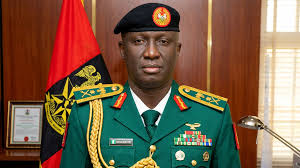

Army Shakes Up Top Command, Names New North-East Theatre Boss
ShareBy David Torough, Abuja The Nigerian Army has announced a major reshuffle of its senior leadership, redeploying generals and brigadier...