
view point
INEC Guidelines: Necessary Reform or Incomplete Solution?


By Ayodele Babalola
The inclusion of Alternative Dispute Resolution provisions in the Independent National Electoral Commission Regulations and Guidelines for Political Parties 2026 (hereinafter the “2026 Regulations”) represents a significant development in Nigeria’s evolving approach to political party regulation.
Political party disputes have historically constituted one of the greatest sources of electoral instability, particularly disputes arising from party leadership contests, membership issues, candidate selection processes, and party primaries.These disputes have frequently resulted in extensive pre-election litigation, delays in electoral preparations, uncertainty about candidates, and increased pressure on the judiciary.
The introduction of an INEC-supported ADR mechanism reflects an acknowledgement that litigation alone cannot effectively resolve Nigeria’s recurring political party conflicts. ADR offers the possibility of faster, less adversarial, and more relationship-preserving dispute resolution.However, while the framework is a welcome development, its effectiveness will depend on whether it addresses the underlying causes of political party disputes and whether it provides sufficient legal certainty regarding participation, outcomes, and enforcement. This may be INEC’s most elaborate attempt to institutionalize ADR through its Regulations, but it is certainly not its first attempt at entrenching the ADR process.
The Daily Trust (Feb. 9, 2023) reported that 1,241 intra-party pre-election suits were instituted in the 2023 general election cycle, compared with about 809 in the 2019 general election cycle, according to Punch (May 28, 2019). To discourage such suits, the National Assembly enacted Section 83(5) of the Electoral Act 2026, which provides that no court in Nigeria shall exercise jurisdiction over any suit or matter pertaining to the internal affairs of a political party. Where such action is brought in negation of this provision, it further provides in Section 83(6)(b) that the court shall, at the conclusion of the matter, impose costs of not less than N10m on the counsel who filed the action and not less than N10m on the Plaintiff/Applicant, and in addition to payment to the commission of any cost, including solicitors’ fees incurred by it where joined as a party.
However, in its recent decision in Chris Nduka v INEC & Ors, Suit No. FHC/ABJ/CS/721/2026 delivered on the 23rd day of July 2026, the Federal High Court declared that only its Chief Judge is empowered to make rules of court or practice directions governing the award of costs in proceedings before the Federal High Court, such that any legislative attempt by the National Assembly to fix or limit such costs, including Section 83(6)(b) of the Electoral Act 2026 in favour of the INEC (who is entitled to yearly budgetary allocations for all its litigation cases) constitutes an unconstitutional derogation of the Court’s inherent judicial power and is therefore null, void, and of no effect to the extent of its inconsistency.
The court also declared that Section 83(6)(b) unlawfully fetters the discretionary powers of a Judge of the Federal High Court, interferes with the constitutional duty and functions of the judiciary, thereby constitutes an unconstitutional intrusion into judicial proceedings and is contrary to Sections 4, 5 and 6 of the Constitution, which collectively preserve the separation of powers between the legislature, executive, and judiciary.
The ADR provisions in the 2026 regulations, therefore, address a genuine institutional gap by creating a formal mechanism for resolving disputes before they escalate into litigation.
In exercising its powers to monitor and direct the organisation and operation of political parties, the commission established an Alternative Dispute Resolution Mechanism to resolve all internal disputes of political parties in its 2026 Regulations.
According to section 47(1) of the 2026 Regulations, if a political party is unable to resolve any internal dispute through the dispute resolution mechanism provided in its Constitution, the Commission may refer such disputes to its ADR mechanism. A political party or aggrieved member(s) thereof may also, on their own initiative, refer such dispute to the Commission’s ADR Division for Mediation pursuant to section 47(2).
According to section 47(4) & (5), the parties are to agree on a sole Mediator from the list of accredited Mediators accredited by the Commission, and where they fail to do so within two weeks of the reference, the Commission shall appoint one of its accredited Mediators to mediate the dispute. This differs from the previous approach, in which staff of the AEDR unit within the INEC served as a third-party neutral. Also, under section 47(7), any settlement or determination reached at the conclusion of the ADR process shall be in writing, signed by the parties to the dispute, and binding on them.
The bindingness of such a settlement is, however, subject to Section 88(2) of the Electoral Act 2026, which provides that an aspirant who complains that any of the provisions of this Act and the guidelines of a political party have not been complied with in the selection or nomination of a candidate of a political party for election may apply to the Federal High Court for redress.
The ADR process shall be concluded within three (3) months, and the parties shall bear the cost of the mediation in accordance with sections 47(8) & (9) of the 2026 Regulations. They shall also participate in the ADR process in good faith and comply with all procedural directions issued by the Commission under section 47(3).
Despite its advantages, the ADR framework in electoral governance raises important questions regarding its history, the enforceability of settlements reached through mediation, and its scope. INEC introduced ADR in 2008 to resolve electoral disputes and, in 2011, established an AEDR Directorate comprising election officials to implement the project.
According to an IFES, ADR Case Study: Nigeria, and the INEC (2012) draft AEDR guide, the objective was for the staff of this unit within the INEC to “act as a third-party neutral which can confidentially address the resolution of intra-political party disputes, electoral issues before, during and after elections,” and “assist the courts in timely addressing electoral cases … and the public and parties in fact-finding, early warning monitoring and in the mediation of electoral disputes.” The IFES Report notes that the ADR mechanism in INEC remains underused and underfunded. There is also no widely documented, comprehensive INEC database on the effectiveness of its AEDR Directorate or how well the political class utilised it.
Also, a settlement agreement is only effective if the parties comply with it in good faith and voluntarily, or if there are clear legal consequences for non-compliance. A party or faction may participate in mediation as a strategic step while intending to pursue litigation or disregard an unfavourable settlement. Without stronger enforcement mechanisms, ADR risks becoming merely another procedural stage before litigation rather than a genuine dispute resolution mechanism.
The requirement for parties to participate in ADR in good faith under section 47(4) of the 2026 Regulations is appropriate but difficult to enforce. Political disputes are often driven by competing ambitions and strategic calculations. The 2026 Regulations could strengthen this aspect by defining minimum standards of participation, including attendance at mediation sessions, disclosure of relevant information, and genuine engagement with settlement proposals.
This could be clarified in the “procedural directions” alluded to in the 2026 Regulations. Without such safeguards, parties may exploit ADR as a delay tactic rather than a genuine method of dispute resolution, despite the three-month period set out in Section 47(8) of the 2026 Regulations.
The 2026 Regulations also describe the settlements and determinations made at the end of the process as binding but subject them to the rights of political parties and aspirants under Section 88 of the Electoral Act 2026 to litigate certain issues, specifically, the application to the Federal High Court for redress by a political party, or an aspirant who complains that any of the provisions of this Act and the guidelines of a political party have not been complied with in the selection or nomination of a candidate of a political party for election.
This suggests that other settlements arising from internal party disputes are binding, but it also introduces uncertainty. Despite the laudable attempts in the 2026 regulation, clearer guidance is needed on which disputes are suitable for mediation and on the implications of binding settlements.
Certain disputes are naturally appropriate for ADR, including membership disputes; disagreements concerning party administration; leadership conflicts; internal disciplinary matters; and disputes relating to the interpretation of party rules.
Disputes generally involving statutory violations, constitutional questions, or unlawful electoral conduct may, however, require judicial determination. Beyond the Section 88 statutory exception, there should be a clearer distinction between disputes that are suitable for mediation and those that are not.
The ADR provisions in the 2026 regulations represent an important step towards improving political party dispute resolution in Nigeria. They recognise that excessive reliance on litigation has contributed to electoral uncertainty and weakened internal party democracy. However, the framework requires further strengthening.
The legal status and enforceability of ADR settlements should be clarified; the categories of disputes suitable for ADR should be defined more clearly; and mechanisms should be introduced to discourage bad-faith participation. ADR should serve as a complementary mechanism that encourages early dispute resolution and strengthens internal party governance.
Qualified mediators who will earn the confidence and trust of aggrieved parties should be placed on INEC’s accredited mediators list, which should be made public. If properly implemented, the framework can reduce unnecessary litigation, improve political party accountability, and contribute to a more stable and credible electoral system, as we move towards the 2027 general elections.
Finally, as a regulatory provision, the ADR framework falls under the category of transient provisions, with its survival contingent on similar provisions in the next batch of regulations for the 2031 elections. This raises another question: is it not high time for a statutory framework for Alternative Electoral Dispute Resolution?
Ayodele Babalola Babalola is a legal practitioner
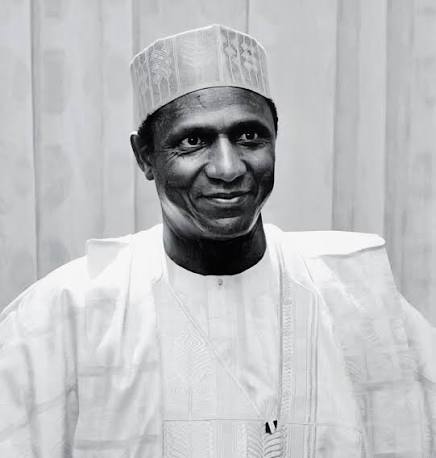
By Chidi Odinkalu
Nearly 20 years ago, while stumping for his party, the Peoples’ Democratic Party, out-going president, Olusegun Obasanjo, decided to confront head-on morbid rumours about the health of his hand-picked successor.
Umaru Musa Yar’Adua, then governor of Katsina State and the president’s man for the job, was said to be stricken in a hospital in Germany. From the podium, Obasanjo dialled before bellowing, “Umoru, are you dead?!” It was obviously not a question for a dead man.Yar’Adua was mercifully alive. He returned in time to be announced winner of a presidential election in 2007 widely described as “a charade”.
His tenure was dogged by concerns about ill-health until his death in May 2010.Presidential infirmity was not unknown to Nigeria.
Ibrahim Babangida was only 46 when he was flown out of the country for medical attention in 1986. The cause, Nigerians were informed, was “Radiculopathy”, a multi-syllabic tongue-twister that sent many newsrooms consulting diagnostic standard manuals.
In November 2009, President Yar’Adua required overseas hospitalization for “Acute Pericarditis.”
In the first 46 months of his first term as civilian president from 2015 to 2019, Muhammadu Buhari spent 407 days outside Nigeria, with about 242 days or nearly 60% of that devoted to health tourism overseas. He was 72 when he was inaugurated as civilian president, an age at which infirmity is not unknown in the ordinary course of human events.
Four things emerge from these instances. First, the wellbeing of a president is a legitimate matter of public and civic concern.
Second, like all human beings, Presidents can and do from time to time take ill. Babangida and Yar’Adua were much younger than President Tinubu is today, whatever his age may be.
Third, there was a time when presidential handlers believed they owed the country the benefit of some disclosure about the wellbeing of the President or lack of it. That, it seems, is history.
Fourth, irrespective of the health status of the president, the country must always avoid a leadership vacuum.
The twin crises of power and succession that accompanied the final months of the Umaru Musa Yar’Adua presidency brought this last point home with urgency.
In response, the National Assembly enacted a constitutional amendment designed to keep the country running when a president needs to take time off for running repairs. All it requires is for the president to temporarily transfer power to his Vice and notify the National Assembly appropriately.
On-going concerns about the health status of the incumbent suggest a presidency deeply enamoured of déjà vu or, as the Punch newspaper says, invested in treating constitutional provisions as an “ornamental” inconvenience.
In office for 41 months so far, President Bola Ahmed Tinubu has spent over 270 days (about 22%) outside the country, including over 100 days spent on 13 different trips of varying descriptions to France alone. The reason for the frequency of his visits to France is credibly suspected to be medical.
Rather than a temporary transfer of power as the constitution allows, it seems he may prefer instead to outsource it. To whom is not clear, but examples from other places could help.
In a study published in 1999, Herbert Abrams, writing about the United States, recounts that “Presidential infirmity, accompanied by a failure to fully inform the public, has been stamped indelibly on our history during the past two hundred years. Fourteen of the eighteen American presidents in the twentieth century had significant illnesses while in office….that were either concealed from the American people or underreported.”
Take for instance the case of Dr. Woodrow Wilson, the Nobel Prize-winning 28th president, who took the United States through the First World War and inspired the League of Nations. Returning home from Europe in July 1919 from signing the Treaty of Versailles which ended World War 1, Wilson preoccupied himself with the ultimately futile effort to persuade his country into the League.
In the middle of this effort, on October 2, 1919, President Wilson suffered a stroke. According to medical records released only in 1991, the stroke was so massive that it would have been “impossible for him ever to achieve more than a minimal state of recovery.”
Yet, as narrated by Christopher Andrew in his 1995 history of U.S. secret intelligence, For the President’s Eyes Only, Wilson’s second wife (the first died in 1914), Edith Galt, helped to “suppress accurate information about his health and to ensure that he continued as president for the remainder of his second term” until 1921.
On the other side of the Atlantic, the health of President Wilson’s contemporary and ideological adversary, Vladimir Ilich Lenin, was the subject of equally intense scheming between a shrewd wife and ruthless usurper. In 1922, Lenin elevated Josef Stalin to the position of General Secretary of the Central Committee of the Communist Party with sweeping powers over party matters. Shortly thereafter, Stalin drew Lenin’s ire when he (and another senior Central Committee member also from Georgia, Sergo Ordzonikidze) annexed Georgia.
Ill-health stayed in the hand of an angry Lenin who was struck down by a massive stroke in December 1922. To preserve the life of the Party’s greatest asset, the Politburo under Stalin’s influence restricted Lenin to working for a mere 10 minutes daily. Upon learning that Lenin was doing more, Stalin accosted Lenin’s wife, Nadezhda Krupskaya, warning her rather darkly, as recounted by Stalin’s biographer, Simon Sebag Montefiore, that if she did not ensure compliance “the Central Committee would appoint someone else as Lenin’s wife.”
In France, President Georges Pompidou repeatedly denied that he had anything less worrisome than a common cold until his death in office of cancer in 1974.
In 1981, Pompidou’s successor, Valéry Gisgard d’Estaing, lost in a close election to the inscrutable Francois Mitterrand. In the same year, President Mitterrand learnt that he had prostate cancer that had metastasized to the bones. Mitterrand promptly declared this a State Secret. Hiding it even from his wife, he ran for and won a second seven-year term in 1988, promising France that he was in robust health. In his debate with Jacques Chirac in 1988, Mitterrand infamously faced a more formidable challenge from an overwrought bladder in desperate need of relief.
As the Washington Post reported in January 1996, “Mitterrand’s cancer reached such a critical state in late 1994 that he was no longer able to carry out his duties and spent most of his time resting in bed.” The week after Mitterrand’s death in January 1996, his doctor, Claude Gubler, published a book, Le Grand Secret, detailing this grand deception. French authorities promptly banned the book because it allegedly breached medical confidentiality.
Closer home, Tunisia’s founding president for 32 years, Habib Bourgiba, chose to stay in office after being diagnosed with arteriosclerosis in 1983. In November 1987, Bourgiba, already enfeebled by dementia, gave his shocked compatriots a prime-time disquisition on the state of his testicles. His once-loyal prime-minister, General Zine Abdine Ben-Ali mercifully moved to confine Bourgiba under medical detention in the appropriately-named Monastir, where he died in 2000.
When he went on trial in 1994, shortly after his overthrow at the end of 31 years as Malawi’s leader, the court ruled Dr. Hastings Banda physically and mentally unfit to attend his own trial. He had in fact been “senile for years”. Yet, for 31 years until his ouster earlier in the same year, Dr. Banda held Malawians in thrall as the all-knowing Ngwazi. Real power had been outsourced to his “Official Hostess”, Mama Cecilia Kadzamira and her uncle, John Tembo.
In Malawi also, a dead president was wilfully mis-represented as merely unwell. After he died on 5 April 2012, Malawi’s presidency contrived to export the dead remains of President Bingu wa Mutharika to South Africa to enable them buy time for an unconstitutional succession by his brother and then foreign minister, Peter Mutharika. They mis-led Malawians with the announcement that the president “had…taken ill and had been flown to South Africa for specialist treatment.”
Whatever the medical dictionaries may say, the lesson of history is quite clear: infirmity can outsource the presidency under cover of “a bodyguard of lies.” Nigeria was supposed to have made this history in 2010, but the lessons do not seem to have been learnt.
A lawyer and a teacher, Odinkalu can be reached at chidi.odinkalu@tufts.edu

By Jibrin Ibrahim
As the countdown to the 2027 elections reached 100 days this week Tuesday, Joash Amupitan, chairman of the Independent National Electoral Commission (INEC), called a press conference to brief the Nation on their preparedness for the rapidly approaching polls.
His big story was that the commission will deploy artificial intelligence (AI) tools for result verification and to strengthen cybersecurity ahead of the 2027 elections.He announced the establishment of a dedicated AI division within its information and communication technology (ICT) department which will enable automated AI auditing tools that are integrated into the commission’s result verification process under a five-pillar AI governance framework.
He added that the use of AI would be subjected to mandatory human oversight and that the commission is working with international technology leaders and partners to integrate AI-driven anomaly detection tools into its systems.
He said the tools would be used to monitor database traffic and protect the commission’s systems against cyber intrusions and unauthorised alterations. Given current universal concerns over AI enabled abuses, I doubt that his words were very reassuring given the trust deficit Nigerians already have about INEC. Everything else he said was about their excellent state of preparedness for the elections.
There have been widespread concerns on Professor Amupitan’s political neutrality and the onus is on him to prove his credibility. As elections in the Fourth Republic roll by, Nigerians have become increasingly concerned about the decline of the electoral system as an institution that could guarantee the rights of citizens to freely choose those who exercise power on their behalf.
Since assuming office, the new Chairman of INEC has expressed commitment and readiness to rewrite Nigeria’s electoral history by ensuring the integrity of the 2027 elections surpasses previous elections. I definitely hope and pray that he is truthful.
The legitimacy of elections is derived from the existence of a level playing ground for competition and contestation. Where competition is eliminated or restricted, elections lose their democratic ingredient. One of the most profound threats to the 2027 elections is the systematic erosion of political competition through induced defections from political parties and the incremental decimation of opposition parties. This distortion of the political landscape could disincentive public participation in the 2027 elections, as voters will have limited political choices.
Constricting the political space and the gradual descent towards a one-party state threaten Nigeria’s democratic trajectory ahead of the 2027 elections. When political pluralism is overtly or covertly removed from electoral politics, authoritarianism creeps in, and it diminishes the legitimacy of electoral outcomes. My greatest fear for the 2027 elections is the growing concern of Nigerians that their votes may not count. The fear is that three major institutions: security agencies, INEC, and the judiciary might compromise the electoral process.
The widespread insecurity and escalating tensions in the country is not new but poses directly the question whether insurgency, banditry, communal conflicts, separatist agitations, and organised criminal violence could continue to overstretch Nigeria’s security architecture and create conditions to explain away State complicity in compromising the elections.
This expanded geography of insecurity undermines the likelihood of a safe and peaceful environment for elections. INEC may be constrained to organise elections in volatile and ungoverned spaces, while voters in conflict zones may be disenfranchised. Where insecurity impedes the deployment of election personnel, materials, and security assets, the credibility and inclusiveness of the electoral process are fundamentally compromised.
The increasingly prominent role of the judiciary in determining electoral outcomes is another facet of the problem. If INEC decides to go rogue, it could do a lot of damage. It would be recalled that in 2023 Justice Inyang Okoro led Supreme Court Presidential Petition Panel said that INEC is at liberty to prescribe the mode of collating results during an election and that IReV is not a collation centre and shouldn’t be a reason to invalidate the results of an election.
More recently, the Supreme Court has also affirmed the right of INEC to prescribe guidelines that affect political party primaries and membership. We recall that in June 2002, INEC rejected the registration applications of over 24 political associations.
It was the Supreme Court that declared its action void and ordered the registration of the associations. That judgment became a precedent that once an association had met the constitutional requirements, INEC was bound to comply with its registration in line with the decision of INEC v. Balarabe Musa (2003) 3 NWLR (Pt. 806). In 2007, INEC arbitrarily disqualified Atiku Abubakar from contesting the 2007 election because he had been indicted by a tribunal, even without conviction. It was still the same Supreme Court that restricted their powers and held that INEC had no power to disqualify a candidate from contesting the election.
Since then, almost all judgments seem to favour the administrative actions of INEC, even when they are a clog in the wheels of democracy. The fear now is that on-going attempts to block major opposition candidates.
In his address at the press conference on Tuesday, the INEC Chairman confirmed receipt of the Certified True Copy (CTC) of the Supreme Court judgment on the validity of key provisions of the Electoral Act 2026 following a legal challenge by the Zenith Labour Party (ZLP) affirming the constitutionality of some sections of the Electoral Act 2026.
The Supreme Court judgment concerns Sections 77(5), 77(6), 77(7) and 84(2) of the Electoral Act 2026, which regulate political parties’ membership registers and the nomination of candidates for elective positions.
The court, in a unanimous judgment delivered on 24 September 2026, restored the four provisions after the Court of Appeal had earlier voided them. The court ruled that section 77(5) provides that only members whose names appear on a political party’s membership register submitted to INEC at least 21 days before a primary, congress or convention can participate in the exercise. Section 77(6) requires political parties to use the membership register submitted to INEC for their primaries, congresses and conventions, while Section 77(7) provides that a party that fails to submit its register within the stipulated period cannot field a candidate in an election.
Section 84(2) provides that political parties shall nominate candidates for elective positions through direct primaries or consensus. The Supreme Court held that the provisions were consistent with the Nigerian Constitution and consequently restored the judgment of the Federal High Court, which had earlier dismissed the legal challenge to the provisions. INEC now has the tools to mess up opposition candidates if it decides to do so.
A professor of Political Science and development consultant/expert, Jibrin Ibrahim is a Senior Fellow of the Centre for Democracy and Development, and Chair of the Editorial Board of PREMIUM TIMES.
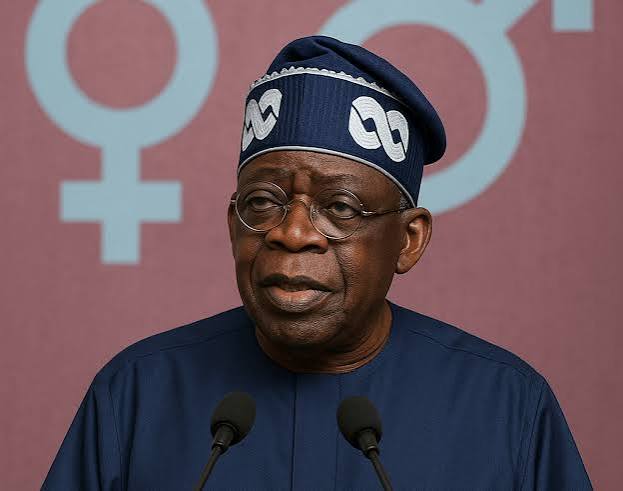
By Hajia Hadiza Mohammed
For some time now the hottest issue of debate in the Nigeria media space has been the proposed release of the American FBI files on Asiwaju Bola Tinubu, with Tinubu fighting and lobbying intensely against the release of the said files that allegedly had criminal contents.
While the debate on the issue rages, Tinubu jetted out of the country on three-week vacation in France, refusing to attend the 81st United Nations General Assembly (UNGA) event in New-York, something his critics attributed to fear of arrest by the American authorities over his involvement in narcotics trafficking in the past.Then came the news shortly after that a person close to Tinubu offered a bribe of $3 million to Dr. Karl Von Batten, the founder of Von Batten-Montague-York, L.C., a Washington, D.C.-based lobbying firm working for the release of the Tinubu FBI files.
Then suddenly a few days ago the news came that the government of Nigeria and the United States has signed have signed an agreement to attract American investment into Nigeria’s solid minerals sector and unlock an estimated $700 billion in mineral resources; strategic framework agreement to boost American investment in Nigeria’s solid minerals sector, raising suspicions about the purpose of the said deal and the intention of Tinubu to accent to the deal. Yes the timing, the circumstances are fueling speculations that Tinubu is trading off Nigerians common wealth for his personal protection and inordinate ambition.
The framework, signed in New York on Wednesday September 24, 2026 at Nigeria’s Mission House in New York by Nigeria’s Minister of Solid Minerals Development, Dele Alake, and US Deputy Secretary of State Christopher Landau, is said to target cooperation in mineral exploration, development, processing, infrastructure and technical capacity.
Speaking at the occasion Alake said among other things that: “Our goal is to turn potential into lasting value at home through stronger local processing, new skills, quality jobs, and new opportunities for Nigerian businesses”.
If the agreement was borne out of genuine desire by the Federal Government to attract investment into Nigeria’s mining industry, diversify government revenue and reduce dependence on oil through the development of the country’s solid mineral resources I have no problem with it in any way, but the timing and the manner of execution of the pact without due process leaves much to be desired.
First, we need to understand that this is not a $700 billion investment by the US in Nigeria. The $700 billion figure is the estimated value of Nigeria’s mineral resources. The agreement is expected to provide a framework for US-backed investment and partnership across Nigeria’s mining value chain. Alake’s words that the two countries would identify viable projects, mobilize investments and develop commercial partnerships capable of delivering measurable benefits indicates that the said deal was hurriedly packaged without the necessary technical details. How then did they come about the $700 billion value of the deal?
Many critics and concerned Nigerians have raised questions about the relevance of the deal, the purpose and detail taking into consideration Tinubu’s penchant for taking arbitrary decisions on things that are of general concern.
The cases of Tinubu’s unilateral decision and use of our common resources is endless: from the off-budget expenditure, to awarding contract without due process, using our public funds to lobby for image laundry, bribery, diverting public funds from source without passing through the federation account, arbitrary siting of government projects in a particular, lopsided appointments and uncontrolled borrowing and wasteful spending.
One of the major problems of Nigeria is the attitude of those in power over the use of public wealth. Some have wrong notions about governance and representation. Some think that they own the people and that the people should serve them instead of serving the people. Some people in power erroneously think that they are the state.
All the resources of the state are for them to use as it pleases them; to deploy at will. They forgot that they are only a temporary caretaker. They are wielding power in trust for the people. It is absolutely wrong to deploy resources for personal reasons. It is an abuse of office.
Our natural resources are public assets and our collective wealth and not the private property of the president or government officials and so any deal involving our common wealth must be properly handled transparently for the general good. The issues are that Nigerians need to know what we are committed to in this mineral resources deal with America.
What minerals are covered by the agreement? How is our national interest protected under the agreement? What binding provisions guarantee Nigerian jobs, local content, technology transfer and value addition? How will disputes be settled? Has the NASS that has the regulatory approval for such international pact been formally informed?
The truth is that the Nigerian public is skeptical about this deal. The suspicion is that Tinubu has mortgaged our common wealth for his freedom and his personal ambition. Yes Nigeria wants the exploration and utilization of our abundant mineral resources to reduce dependence on oil. But the exploitation should be for the benefit of Nigerians.
It should not be mortgaged to pursue personal ambition. I recommend total investigation and review of the deal. Let due process be observed. If there is any breach anywhere, the deal should be terminated.
Hajia Hadiza Mohammed, Hajiahadizamohammed@gmail.com An actress, a social activist, politician, London, UK




UBA Wins N156bn Debt Recovery Case Against Stallion Group
ShareThe Court on Friday ruled in the Bank’s favour on all issues and granted all its prayers. United Bank for...

Senator Abba Moro: It is Time to Go Home
ShareBy Cleopas Agada For seven years in the National Assembly, what has Benue South actually felt? For a man who...


NCDs Fastest-growing Disease Burden in Nigeria — Pate
ShareThe Coordinating Minister of Health and Social Welfare, Prof. Muhammad Pate, said Non-Communicable Diseases (NCDs) have become one of the...

2027: Adeleke Inaugurates Aare Asejere’s Campaign Council
ShareFrom Ayinde Akintade, Osogbo The Governor of Osun State, Senator Ademola Adeleke, yesterday charged newly inaugurated members of the Osun...

INEC Seeks Stakeholders’ Collaboration for Credible, Peaceful Elections
ShareThe Independent National Electoral Commission (INEC) has reaffirmed its commitment to strengthen collaboration with the National Orientation Agency (NOA), security...

Reps Reject Child Marriage, Demand Protection of Girl Child
ShareBy Ubong Ukpong, Abuja The House of Representatives on Thursday unanimously called for urgent and coordinated actions to protect Nigerian...


Court Awards N125, 000 Cost against Odumodublvck
ShareAn Abuja High Court on Wednesday awarded N125, 000 against a rapper, Tochukwu Ojogwu, popularly known as “Odumodublvck”, for asking...


Hunger Changed My Mind, Timini Egbuson on Embracing YouTube movies
ShareNollywood actor Timini Egbuson has reflected on his changing perception of YouTube movies, joking that he might have struggled financially...


Peller Announces Livestream with Peter Obi
SharePopular Nigerian TikTok streamer, Hamzat Adelaja, popularly known as Peller, has announced an upcoming livestream with the presidential candidate of...

Nigeria’s inflation drops from 15.39 Per Cent to 14.63 Per Cent in September
ShareBy Tony Obiechina, Abuja The National Bureau of Statistics (NBS) on Thursday disclosed that Nigeria’s inflation has eased from 15.39...