
Health
Enugu Govt. Celebrates Survivors of COVID-19


Enugu State Government on Wednesday launched the ‘COVID-19 Heroes and Heroins Campaign’ to celebrate survivors of the Coronavirus (COVID-19) pandemic in the state.The News Agency of Nigeria (NAN) reports that the celebration followed by the statThe Deputy Governor, Mrs Cecelia Ezeilo, said that the event was to bring to the fore the dangers of contracting the virus and to reinforce the call for strict adherence to the safety protocols.
Ezeilo said that out of the 2, 287 confirmed cases in the state, 1, 923 patients had recovered and discharged with 285 cases still active.“Unfortunately, we have lost 29 patients as a result of complications of COVID-19. However, before us are survivors of the pandemic,” she said.The deputy governor said that the survivors were able to pull through in spite of the rumours and misinformation surrounding the scourge and the general hardship in the country.She said that the survivors comprised citizens from different walks of life who were either treated at home or at the isolation centre by experienced physicians.Ezeilo appealed to residents of the state to continue to adhere to the preventive measures put in place to check the spread of the virus.Earlier, the Permanent Secretary, Enugu State Ministry of Health, Dr Ifeanyi Akujiobi, said that the survivors needed to be celebrated to prove that contracting the virus was not a death sentence.Akujiobi praised the survivors for using the public health facilities and isolation centres in the state even amidst stigmatisation.He commended the state government for its efforts at ensuring that health facilities were on ground for the treatment of the virus and thanked the medical experts for their selfless services.The Coordinator, Park Lane Isolation Centre, Enugu State University of Science and Technology Teaching Hospital, Dr Okechukwu Ogbodo encouraged residents of the state to get vaccinated.The representative of World Health Organisation (WHO), Dr Ada Erinne, said that over 127 million cases had been confirmed globally as at March 30, 2021.Erinne said that 2.7 million deaths had been reported to the WHO while 520 million doses of COVID-19 vaccines had been administered globally within the same time. (NAN)



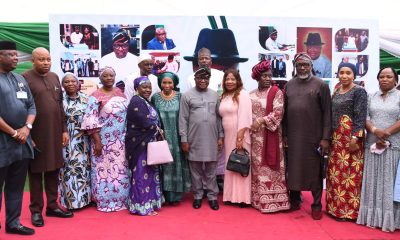




By Laide Akinboade, Abuja
The Benue State House of Assembly has passed into law a landmark legislation aimed at eliminating tuberculosis (TB) and protecting persons affected by the disease from discrimination and human-rights violations.
The legislation, known as the Tuberculosis Elimination, Human Rights Protection and Anti-Discrimination Law of Benue State, 2026, was passed into Law during Thursday plenary presided over by Speaker, Rt.
Hon.Berger Alfred Emberga, MNIQS, RQS, following consideration of the report of the House Standing Committee on Health and Human Services.The committee, chaired by Hon. Matthew Damkor, Ph.D., said the legislation was necessary to provide a comprehensive legal framework for tuberculosis prevention, diagnosis, treatment, care and control across the state.
The law also seeks to safeguard the rights of persons affected by Tuberculosis (TB), including their rights to dignity, healthcare, privacy, information, employment, education and social protection.
In its report, the committee identified several areas of the original Bill that required amendment, particularly provisions relating to federal laws and institutions, implementation responsibilities, screening and isolation, enforcement mechanisms, offences and penalties.
The committee recommended the removal of provisions purporting to amend federal legislation, particularly the Employees’ Compensation Act, 2010, noting that such amendments were inappropriate for state legislation.
It also recommended that references to federal institutions as implementing authorities be replaced with relevant Benue State institutions, while allowing for lawful collaboration with federal authorities.
The committee further recommended that the Commissioner for Health and Human Services, through the Ministry of Health and relevant state agencies, be clearly designated to coordinate the implementation of the law.
On the protection of fundamental rights, the House called for clearer safeguards in provisions dealing with TB screening, isolation and restriction of movement, including informed consent, confidentiality, medical necessity, proportionality and the use of the least restrictive measures.
It also recommended the establishment of an accessible mechanism for receiving complaints, addressing discrimination and providing remedies to persons whose rights may have been violated under the law.
The House further urged relevant agencies to ensure that offences and penalties under the legislation are clearly defined, proportionate and enforceable.
After considering and adopting the committee’s recommendations clause-by-clause, the bill was read for the third time and subsequently passed into law by the Speaker, Rt. Hon. Emberga following a unanimous consideration and adoption by members.
The Tuberculosis Law which was sponsored by Hon. Dr. Simon Gabo of Mata State Constituency and others, is expected to strengthen Benue State’s response to tuberculosis and provide a stronger legal framework for protecting persons affected by the disease from stigmatization, discrimination and other rights violations.
Meanwhile, Civil Society Organisations, Lawyers Alert and Media Health and Rights Initiative of Nigeria, MHR, have commended the Benue State House of Assembly for taking steps to strengthen the state’s response to tuberculosis, and protect the rights of persons affected by the disease.
In a joint statement, the President of Lawyers Alert, Rommy Mom and the Executive of MHR, Alu Azege said the Bill brings health and human rights dimensions of TB into legislative conversation in the state.
The Niger State Private Health Facilities Agency (NiSPHFA) has sealed 12 unregistered Islamic medicine stores in Minna and a health facility in Katcha Local Government Area (LGA).
The Executive Chairman of NiSPHFA, Dr.
Abdullahi Suleiman, disclosed this while receiving members of the Islamic and Prophetic Medicine Practitioners’ Association of Nigeria (IPMPAN) in Minna.The enforcement is part of the agency’s renewed efforts to protect residents from unsafe healthcare practices and ensure compliance with minimum standards.
Suleiman said the facilities were sealed over alleged non-compliance with regulatory standards.
According to him, the enforcement is not aimed at persecuting healthcare providers but at ensuring residents have access to safe, quality, and standard-compliant healthcare services.
“Our responsibility is to protect the people by ensuring that anyone providing healthcare services operates within the required standards,” he said.
He urged genuine alternative medicine practitioners to register with NiSPHFA, saying registration would enable the agency to identify operators, monitor their activities, and protect residents from unsafe products and practices.
Suleiman also announced plans to organise a trade fair for verified alternative medicine practitioners to promote legitimate practices and improve public confidence in alternative healthcare.
He emphasised the need for practitioners to maintain minimum standards of hygiene, sanitation, safe preparation and storage of medicines, proper packaging, and infection prevention.
“Practitioners should refer patients whose conditions are beyond their capacity to appropriate health facilities. Such referrals will help reduce avoidable health risks,” he said.
The chairman said sustained enforcement, stakeholder collaboration, and improved compliance would enable NiSPHFA to safeguard residents and promote a safer, more accountable, and quality-driven healthcare system across the state.
He said the NiSPHFA enforcement team inspected 10 health facilities in Katcha local government and identified various irregularities requiring improvement.
Suleiman said the affected facilities were issued 21-day notices to correct the identified deficiencies.
“One of the facilities inspected was sealed for non-compliance with established standards,” he said.
He added that the agency also secured the support of the local government area in identifying and addressing facilities operating with irregularities.
IPMPAN Chairman, Abdullahi Haske, commended the state government for establishing NiSPHFA.
He pledged the association’s cooperation in ensuring that its members complied with regulatory requirements.
Stakeholders have called for improved implementation, tracking and accountability of health sector budgets to strengthen healthcare delivery and advance Universal Health Coverage (UHC) in Kaduna State.
They made the call during an engagement on strengthening participatory budget processes, health budget tracking and advocacy on Saturday in Kaduna, with emphasis on the 2027 budget process and implementation of the Annual Operational Plan (AOP) for the health sector.
Seth Luke, a Civil Society Coach on strengthening participatory budget processes under the Open Government Partnership (OGP) Kaduna, said the engagement was aimed at strengthening the capacity of OGP Technical Working Groups and state and local government accountability mechanisms to effectively participate in budget processes and advocacy.
Seth said the engagement was particularly focused on the health sector, including tracking the implementation of the Annual Operational Plan as the state commenced preparations for the 2027 budget.
“We want to see how we can track the implementation of the Annual Operational Plan for the health sector and, from our findings, bring out recommendations around improving funding and other areas that require attention,” he said.
He said the government needed to prioritise health financing beyond budgetary allocation by ensuring effective implementation of approved programmes and projects.
According to him, budget allocation represents government plans based on expected revenue, but available resources should be prioritised toward activities capable of improving healthcare and service delivery at the grassroots.
Seth urged participants to use the knowledge and findings from the engagement to engage relevant government stakeholders on improving health financing and budget implementation.
He also encouraged them to extend the knowledge gained to other sectors and continuously engage government on budgeting, accountability and service delivery.
Similarly, Garba Mohammed, Co-Chair of the Kaduna Maternal Accountability Mechanism (KADMAM), said the engagement was aimed at reviewing health budget performance against key indicators linked to maternal mortality reduction and child survival.
Mohammed said participants examined first and second quarter performance, particularly in areas such as family planning, Maternal, Newborn and Child Health (MNCAH), nutrition, malaria, immunisation and essential medicines.
He said family planning interventions largely involved commodities at the primary healthcare level, while MNCAH activities remained largely donor-dependent.
Mohammed commended the Kaduna State Government for meeting the Abuja Declaration benchmark of allocating at least 15 per cent of its annual budget to health.
He, however, expressed concern over gaps in the implementation of some critical health budget lines, stressing that allocation alone was not enough to improve health outcomes.
“We have looked at the budget allocation, and Kaduna State has met the 15 per cent Abuja Declaration benchmark. We commend the state for that. However, there are still issues around budget performance in critical health indicators,” he said.
He said the findings would be used to identify advocacy priorities and engage key government decision-makers, including the Ministry of Health, Planning and Budget Commission, Ministry of Finance and other relevant authorities.
Mohammed said participants were expected to understand the relevant health budget lines and their implementation status and use the knowledge to undertake evidence-based advocacy in their respective organisations.
Meanwhile, Yusuf Guje, Executive Director, Civic Impact for Sustainable Development Foundation (CISDF), and a participant at the programme, told the News Agency of Nigeria (NAN) that the engagement was timely in strengthening the capacity of civil society and accountability mechanisms.
Guje said the programme would deepen participants’ capacity in budget tracking, project monitoring and social auditing, particularly within the health sector.
He described the health sector as a critical pillar of development, saying civil society organisations had an important role to play in complementing government efforts through effective monitoring and accountability.
He said CSOs needed to strengthen their ability to analyse budgets, track expenditure and visit healthcare facilities to determine whether appropriated and released funds were being properly utilised.
“Civil society needs to really improve on how effectively we analyse the budget, how we track the spending, and go down to the various facilities to see how well the money appropriated and released is being utilised,” Guje said.
He said effective monitoring would help determine the extent to which communities benefited from government investments in healthcare.
According to him, Kaduna State’s commitment to Universal Health Coverage could only be strengthened through sustainable health financing and effective accountability mechanisms.
Guje described CSOs as representatives of communities that often lacked the knowledge, skills and platforms required to engage government on public policies and resource allocation.
He therefore urged civil society actors to continuously strengthen their capacity to represent citizens effectively, particularly in health financing advocacy and accountability.
“As civil society, we need to remain committed to holding the government accountable where necessary and tracking the entire health financing process,” he said.
Guje said the ultimate objective of budget tracking and social accountability was to ensure value for money in public expenditure on health.
He added that effective monitoring of public finances would contribute to improved healthcare delivery and better health outcomes at the grassroots. (NAN)



Pope Leo to Have Surgery after Lump Found on Lung
SharePope Leo XIV has announced he will be operated “in the coming days” after a nodule was found on his...


Motorists Express Worry over Non-access to NNPC Petrol Discount
ShareMany motorists said in spite of the discount in pump price of petrol at the Nigerian National Petroleum Company Ltd...


Tuberculosis: Benue Assembly Passes Law, to Protect Patients from Discrimination
ShareBy Laide Akinboade, Abuja The Benue State House of Assembly has passed into law a landmark legislation aimed at eliminating...
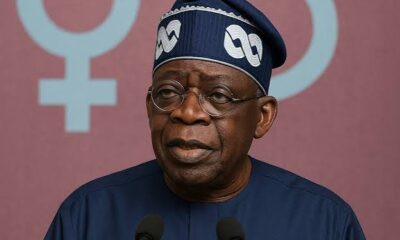

President Tinubu’s 30-Day Fuel “Discount” Cannot Repair the Damage of Subsidy Removal
ShareBy Daniel Nduka Okonkwo The Federal Government has issued a stark warning: restoring petrol subsidies could push the exchange rate...


Troops Neutralize Explosive Devices planted in Zamfara Community
ShareFrom Ifeanyichukwu Nwannah, Gusau The troops of Operation Fansan Yamma (OPFY) have neutralised Explosive Devices Planted along Magami–Hannutara–Dansadau road, Maru,...


Mbah Reaffirms Enugu’s Commitment to Trade, Investment, Industrial Growth
ShareFrom Sylvia Udegbunam, Enugu Enugu State Governor, Dr. Peter Mbah, has reaffirmed his administration’s commitment to creating an enabling environment...


Concerns About the 2027 General Elections
ShareBy Jibrin Ibrahim As the countdown to the 2027 elections reached 100 days this week Tuesday, Joash Amupitan, chairman of...
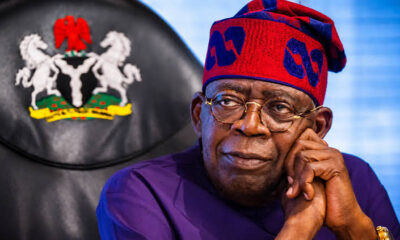

World Bank Report Confirms Economic Reforms Yielding Results – Tinubu
SharePresident Bola Tinubu said the World Bank’s October 2026 Nigeria Development Update confirms his administration’s economic reforms are yielding results...
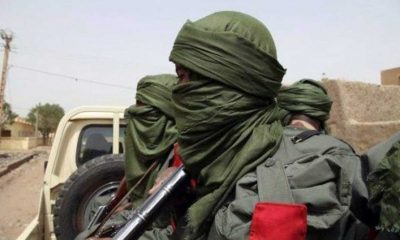

Bandits Burn Houses, Business Premises in Niger Border Community
ShareFrom Dan Amasingha, Minna Suspected bandits have attacked Kigbera village in Konkoso Ward, Borgu Local Government Area of Niger State,...


Fuel Price Discount and Monetary Policy Recalibration: Communicating Policy Change Without Undermining Reform Credibility
ShareBy Uche Joe Uwaleke Economic reforms are rarely judged solely by their immediate outcomes. They are also assessed by the...