
Agriculture
Nigeria Ranks 3rd in Global Production of Ginger – Agro-Corp Boss

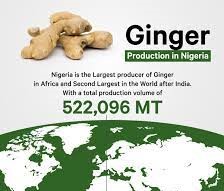
Mr Kenneth Obiajulu, an agro-exporter, has called for more investment in the ginger production value chain, as the country ranks 3rd in global production of the commodity.
Obiajulu, the Chief Executive Officer of AgroCorp International Development Limited, made the assertion at a virtual press launch of the company on Thursday in Lagos.
The agroprenuer noted that it was time to make Nigeria earn her place in the global export market of ginger, as he called for more investment in the sector.
“When thinking of ginger, many people automatically think of India and China, the two powerhouses of ginger production and consumption Globally, but what many do not know is that the second largest Producer of ginger is located right in the heart of Africa.
“This country is responsible for 16% of global production, but only accounts for 3.5% of global export market share.
“Nigeria ranks third in the production of ginger in the world, which is about 16.5% production in the world but we can barely account for less than 3%of the export market share.
“And that gives us the opportunity to begin to question some things such as what are the issues behind most of challenges in exporting the produce,” the agroprenuer said.
Obiajulu, however, highlighted the potentials of the ginger as well as some bottlenecks on its exports.
He also called for strict adherence to international best practices in the production, processing and packaging of the produce in order to gain international relevance.
“We have realized that Ginger is one of the crops with international export appeal.
“However, the challenges with the international market buyers are lack of local processing capacity to meet international quality, consistency in supplies and trust related issues.
“Agricorp International Development Limited has developed a workable System to solve these problems.
“The first thing we discovered was that the Production is good but the quality of materials being used need to meet the adequate standardization.
“What we try to do is to test our models to see if we have the capacity to process these produce and meet up with international standards,” Obiajulu said.
The expert noted that owing to increased demand for Nigerian ginger and trusted spices, there is the potential of doing more, if we want to truly be a Pan-African business giant.
“It is not a crowd-funding venture, this is core agriculture, we are focused on that activity of cultivating, processing, packaging and exporting finished spiced goods out of the country.
“This is core agriculture and not just about raising money, we were able to raise capital internally to start the business and debt notes for procurement of raw materials and operations.
“This fund raising bid is our first quest for external investment for institutional partners.
“About 80 to 90 per cent of the products we process are exported to South Africa, Morocco, UAE, India and some parts of Europe,” the expert said. (NAN)









The Smallholder Women Farmers Organisation in Nigeria (SWOFON), Oyo State chapter, has said that the lack of irrigation facilities had become a major obstacle to dry season farming in the state.
The Chairperson of SWOFON in Oyo State, Atinuke Akinbade, said this in an interview in Ibadan on Monday.
Akinbade, who shared the experiences of women farmers in the state during the 2025 dry season, said that inadequate access to water for irrigation significantly affected the performance of many farmers during the period.
“It hindered many older farmers from participating in dry season farming and also prevented younger farmers from doing as much as they could in cultivating large acres of land,” she said.
Akinbade explained that farmers who managed to plant during the season struggled to access sufficient water to irrigate their farms, a situation worsened by the effects of climate change.
“Many farmers who depended on streams and wells to water their crops suffered major setbacks because those sources could not provide enough water for irrigation.
“Some farmers had to resort to buying water from commercial water tankers, which increased the cost of production, while at times it was even difficult to get water from the tankers,” she said.
The SWOFON chairperson warned that failure to address the problem could worsen food insecurity in the coming months.
“Even now, rainy season farming has not fully commenced because of the irregular rainfall pattern.
“This is a double burden, and if nothing is done, it may lead to serious hunger later,” she said.
Akinbade, however, acknowledged that the government had organised training for members of the association on home gardening.
She, however, said that little support was provided to address the challenges of dry season farming.
The chairman said that the home garden support package given to members consisted mainly of seedlings and one sprayer.
“They gave us two packs each of maize and pepper seeds, with six seeds in each pack, as well as one sprayer, so that we can grow food for household consumption,” she said.
Earlier, Oluwatoyin Oyedeji, SWOFON Coordinator in Oyo East, explained the severe hardship members of the organisation experienced in sourcing water for irrigation.
“Many farmers are already counting their losses because water was not available to irrigate their farms.
“Those who depended on streams and brooks were badly affected because many of them dried up, while the few that still had water had so little that farmers had to dig deeper into the ground in search of more,” Oyedeji said.
In the same vein, the Women Leader for farmers in Saki East, Musiliu Ashiru, said the absence of irrigation facilities also hampered dry season farming in her area.
According to her, many farmers still engaged in dry season farming have had to pay for water to keep their crops alive.
“Many of them buy water from the dam here to irrigate their crops. It has not been easy for them this year,” Ashiru said.
Nigeria’s agricultural sector has seen a significant surge in investment, rising 224 percent in one year amid escalating insecurity in the country.
Data from the National Bureau of Statistics (NBS) capital importation report showed that foreign direct investment (FDI) in the agric sector hit $167.
3 million in 2025, up 224 percent from $51. 7 million in 2024.On a quarter-on-quarter basis, investment into the sector surged 216 percent to $51.
2 million in the fourth quarter of 2025 from $16.2 million in the corresponding period of 2024.Prior to 2022, investments in the sector had grown consistently at an annual average of 82 percent since 2016, but then reversed in 2022 and continued to decline through 2024, before rebounding in 2025, according to BusinessDay’s analysis.
Experts in the sector attributed the surge to renewed investor interest amid favourable government policies, including importation waivers.
“The economic reforms that restored investors’ confidence and the government’s continuous support to the sector are major drivers of these investments,” said AfricanFarmer Mogaji, chief executive officer, Agbado Value-Chain Ltd
“Also, the country’s growing population always makes the industry attractive for investors, as people must eat. This increased the number of investors, domestically and foreign, who invested in the industry,” Mogaji said.
Nigeria’s agricultural industry experienced several shocks in 2025 that disrupted the food systems and hampered productivity.
High insecurity has significantly impacted farming activities in the country, with the situation intensifying in 2025, forcing many farmers to abandon their farmlands.
Prices of key inputs such as seeds, herbicides, pesticides, fertilisers, and agro machinery tripled in 2025 due to the naira devaluation and spikes in headline inflation.
The surge in production costs, combined with low food prices, eroded farmers’ ability to recover investments made during the 2025 season, leaving many with huge financial losses.
Similarly, the increasing impact of climate change on communities disrupted farming activities during the year. While no country is immune to the impacts of climate change, Nigeria is among the countries that are most vulnerable and least able to cope with the impacts of a changing climate.
The fishing industry, which is one of the sub-sectors of the agricultural industry, attracted a $5.1 million investment in 2025 from zero investments in 2024.
The sector grew by 2.92 percent in 2025 as its performance was significantly impacted by increased youth participation and rising investment in mechanised farming.
The All Farmers Association of Nigeria (AFAN), Lagos State Chapter, has lauded the Federal Government’s approval of 57 crop varieties to strengthen agricultural productivity in the country.
The Lagos State AFAN Chairman, Sakin Agbayewa, disclosed this in an interview yesterday in Lagos.
The Nigerian Federal Government approved 57 new improved crop varieties to boost food security, improve nutrition, and strengthen agricultural productivity.
The crops, selected for early maturity, higher yields, and resistance to pests and diseases, include 14 different types of staples, with notable advancements in rice, maize, yam, soybean, and plantain.
Agbayewa noted that the approval of the crop varieties would help improve the yields of farmers in the state.
“We are excited to hear about the 57 new varieties of crops recently approved.
“What we desire currently in crop farming is not just about planting, it is about increased yield.
“A farmer can have a plot of land and have a high yield and another can have big plots of land and have a low yield.
“So, if we are talking about food security, it starts from the varieties you are planting and it starts from the seedlings.
“Improved seed varieties as well as improved seedlings will always give you higher yield on minimal land.
“You can barely imagine the higher yield farmers with larger land size will get with improved seedling varieties,” Agbayewa said.
He described the introduction of the crops as a new development for crop cultivation.
“So, for us as an association, the introduction of the 57 crop is a good development for crop cultivation.
“It will help to curb the food insecurity we are talking about and shortage of food in the near future. It is a good one.
“This newly approved 57 crop varieties should however be popularised among local farmers because not everyone is aware of this latest development.
“There are a lot of issues currently affecting the cultivation of crops and the development of improved crop varieties will help the farmer’s productivity.
“Issues such as climate change effects, inconsistent rainfall patterns and weather clash among others are affecting farmers’ yield.
“So, what we want now is to have improved crop varieties that will give us higher yield,” he said.
Agbayewa said there should be massive advocacy of the approved crop varieties across the board for farmers.
“There should be a massive advocacy of the approved crop varieties across the board so that our farmers will be able to eat from their sweat and at the same time save the nation.
“We are excited that this new crop variety was done in Nigeria and not by foreigners. It shows that our researchers are now waking up.
“The government is now waking up to their responsibility.
“So, we are now growing our own and eating our own varieties, which is good. And we are calling for more research like this to be done.
“With more researches done,



Nigeria’s Hidden Killings: One-Man Rule Looms – Adebayo
ShareIn a searing and emotionally charged interview, a presidential aspirant and leader of the Social Democratic Party recounts his harrowing...
Heading Towards Elections with Democracy on Crutches
ShareBy Chidi Amuta Nigerian politicians have once again carried out another successful coup against the people. They have fired up...

2027: Ahmadiyya Leader Sees Hope in Adewole Adebayo if Youths Organise
ShareBy Mike Odiakose, Abuja The Amir and National Head of the Ahmadiyya Muslim Jama’at of Nigeria, Alatoye Abdulazeez, has urged...


OGD 2027 : Why Ogun East Must Produce a Ranking Senator
ShareBy Prince Taiwo Nodiru All over the world, especially in the nations where democracy thrive, the legislative assignments are germane...


Nigeria To Host 5th High Level Ministerial Meeting On AMR
ShareBy Laide Akinboade, Abuja Nigeria said it has concluded arrangement to host the 5th high level ministerial meeting on Antimicrobial...


Sule Inaugurates N2.8bn Loko Township Roads
ShareNasarawa State Governor, Abdullahi Sule has inaugurated a 3.2-kilometre Loko Link and Township Roads project worth N2.8 billion in Nasarawa...


2026 Unity Cup: Don’t Exclude NPFL Players from Eagles, Ekpo Tells Chelle
ShareFormer Nigerian international Friday Ekpo has advised Super Eagles head coach Eric Chelle not to exclude players from the Nigeria...


Cameroon Separatists Pause Fighting Ahead Pope Visit
ShareAnglophone separatists in Cameroon have announced a period of “safe travel passage” and halted fighting ahead of Pope Leo XIV’s visit to the conflict‑hit region this week. Leaders...


Over 2,000 PhD Candidates Jostle for PTDF Overseas Scholarship
ShareThe Petroleum Technology Development Fund (PTDF) has commenced the second phase of interviews for the 2026/2027 PhD award under its...
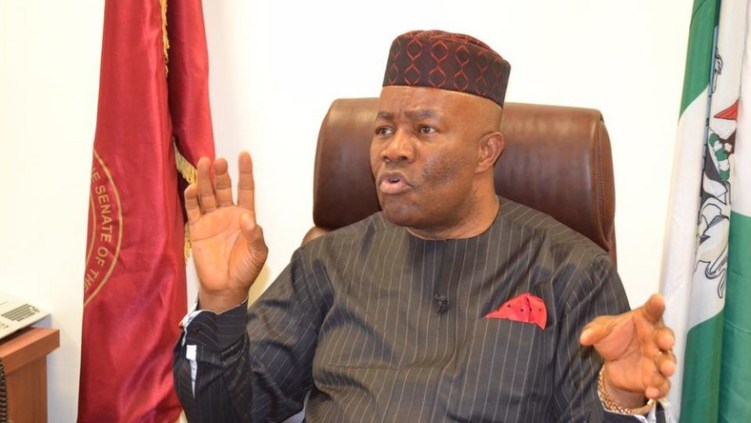
Akpabio Ties Worsening Insecurity to Gang up Against Tinubu
ShareBy Eze Okechukwu, Abuja The Senate President, Godswill Akpabio has linked the worsening insecurity across the country to a gang up by opposition politicians,...