
OPINION
Time for INEC Chairman, Mahmud Yakubu, to Resign

By Femi Aribisala
Having been caught in lies upon lies, Mahmood Yakubu should do the honourable thing for a change. It is not realistic to insist that President Buhari should fire him. That is unlikely to happen since he is working to protect the president’s interests. But there is one road still open to Yakubu. He should resign without further delay. He has done enough damage already.
The logic is simple. The 2019 presidential election in Nigeria cannot be, by all accounts, the worst election in the history of Nigeria without the corresponding chairman of the Independent National Electoral Commission (INEC) being, at the same time, the worst INEC chairman in the history of Nigeria.
INEC chairman, Mahmood Yakubu, presided over an atrocious and fraudulent election that is now being fiercely contested in the courts. He can no longer remain as INEC chairman.INEC is supposed to be an impartial umpire in elections in Nigeria. However, it is now obvious that Mahmood Yakubu’s INEC operated essentially as an arm of the ruling All Progressives Congress (APC). The evidence is overwhelming that Yakubu’s INEC massively rigged the election in favour of the government. If integrity and impartiality is to be restored to INEC, Yakubu must leave immediately. If the confidence of Nigerians is to be restored in INEC, then the country deserves a complete overhaul of the organisation.
INEC Shenanigans
INEC, under Mahmood Yakubu, has lost all credibility. It is now practically impossible to believe anything that comes from the organization. The election results it declared defied commonsense. The figures did not add up. The election was not even rigged intelligently. It was rigged on the presumption of impunity.
In many cases, no voters were accredited, nevertheless fictitious returns were made. In others, total votes cast far exceeded the registered voters. In Borno, for example, only 372,347 votes were cast. However, 919,786 votes were declared; an inflation of 547,439 votes. The printing of election materials was contracted to the company of a member of the APC, who was also one of the party’s senatorial candidates.
Before the election, the use of card readers was declared to be mandatory. It was affirmed that the vote would be declared null and void where the card reader was not used. Nevertheless, in most areas of the North, the card reader was not used. The votes were simply inflated and deflated at INEC’s discretion.
In areas of the opposition People Democratic Party (PDP)’s strength, elections were strategically cancelled and supplementary elections scheduled. This ultimately enabled INEC to declare losers as winner and to convert winners into losers; as it happened, for example, in Kano.
But what has proved to be the most indicting of INEC has been the question of the central server. Having somehow obtained the result posted on the INEC central server, Atiku has demonstrated that it is completely different from the result INEC declared publicly. On the INEC server, Atiku prevailed over Buhari by a plurality of 1.6 million votes, while INEC publicly declared that Buhari won the election by nearly four million votes.
Atiku Must Be Stopped
When the APC discovered, to its dismay, that Atiku had access to the INEC central server and had somehow obtained the real and authentic results of the 2019 presidential election, it went into panic mode. The party’s first knee-jerk response was to petition the police to arrest Atiku for hacking into the INEC server. But if Atiku did in fact hack into the server, what does that mean for the results he found there? The afterthought was to insist that Atiku posted fake results into the server.
However, APC kingpins realized there would be trouble ahead if Atiku went public with his findings. The man had to be stopped; otherwise the victory they were celebrating would be in jeopardy. Therefore, they opted for the anomaly whereby, although Buhari himself lost the presidential election of three previous occasions and took the matter to court every time, they became determined that Atiku must be dissuaded from taking the matter to court.
Emissaries, friends, some members of the National Peace Committee, some Northern elites and powers close to Atiku were sent to dissuade him from challenging the election at the Tribunal, fearful that Buhari’s pyrrhic victory would be scuttled if he did so. When that did not work, Lai Mohammed accused Atiku of treasonable felony and conspiracy against the federal government. So doing, it was felt that Atiku would be forced to plea bargain and part of the deal would be that his petition be cancelled.
It has now come to light that hundreds of fake Facebook pages were created to sell propaganda against Atiku. These were discovered and Facebook has already closed them. They were designed to sell the lie that Atiku is corrupt and that he is a wanted felon in the United States. But all that collapsed when Atiku visited the United States in 2018, demonstrating once and for all that the insinuations that he could not go there without being arrested were all lies.
The same APC pretending to be holier-than-thou has ended up electing Femi Gbajabiamila as the new speaker of the House of Representatives, in spite of the fact that it is on record that he was convicted for professional misconduct by the Supreme Court of Georgia, U.S.A. for defrauding a client. It has also elected Ovie Omo Agege as deputy Senate president, despite the fact that he was also convicted of a felony while practicing law in the United States.
Servers Don’t Exist
Against all their pleas and arm-twisting, the shoe finally dropped when Atiku filed his petition. He posted for all to see that the result on the INEC server shows he won the election; and he authenticated this by quoting the serial numbers unique to the INEC server.
On this issue, the word from INEC has turned out to be lies upon lies. INEC’s first gambit was to declare to an incredulous public that it has no central electronic servers. Only God knows how it expected to get away with this lie. INEC officials had spent the better part of the campaign season boasting that their central server would make rigging elections obsolete in Nigeria. That, they had set up servers in each of the 36 states of Nigeria and in Abuja.
So, how could INEC now say it does not have a server? Where are the data of the 80 million registered voters stored if not in an electronic server? How does the card reader authenticate a voter’s PVC card without an electronic server? INEC conveniently forgot that it admitted publicly that it used its servers to collate results in the previous Ekiti and Osun elections. So, how did these servers suddenly disappear?
Servers Were Not Used
It soon became apparent that the lie that there are no servers could not be sustained, so INEC tried another gambit. It then said an INEC central server actually exists, but it was not used for the election. It was only used for rehearsals and dummy runs.
So, how are we to explain the situation where INEC collected over N1 billion to upgrade the existing server against the 2019 elections, only to now shamelessly tell Nigerians that it only used it for experiments? What then was the point of the upgrade? Did rehearsals not already take place during the Ekiti and Osun elections.
Why did Mahmood Yakubu boast before the election that: “we are pioneering and deploying in 2019 general elections, a new platform for the electronic collation and transmission of results.”
Clearly, another better lie became necessary again. So INEC tried this one for size. It said it could not have engaged in electronic collation of results because the Electoral Act intended to validate the process was not signed into law by the president. But this is simply not going to wash because INEC does not need the president’s permission in order to engage in the electronic collation of results.
Section 160 of the 1999 Nigerian Constitution states categorically that: “in the case of the Independent National Electoral Commission, its powers to make its own rules or otherwise regulate its own procedure shall not be subject to the approval or control of the president”.
Servers Were Used
But now the matter has been taken out of INEC’s hands. INEC has turned on itself. No less than 20 officials deployed during the election as electoral officers have now come forward to say that they transmitted results electronically to a central server, using their smart card readers during the 2019 presidential election. In effect, the cat is now out of the bag. INEC and Mahmood Yakubu need to go back to their factory and manufacture other lies about the server.
The question now is how did INEC think it could get away with all these lies, with so many people involved? Why was it necessary for INEC to tell all these lies? It can only be because it was fraudulent with the election. It can only be because it is trying to hide the truth that the result it declared to Nigerians claiming Buhari won the election is a lie. The true result must be the one in its server, which it is trying to say does not exist.
Servers Out of Bounds
So, INEC had to change its line of defence yet again. Atiku wants the court to give him permission to inspect the INEC server. Even if the results posted there have been deleted, they can still be retrieved by forensic experts. What is INEC’s response to this? It does not want Atiku to see its non-existent server that has now resurrected from the dead. It does not want its server released to Atiku, in spite of saying it was not used to collate the result. If it was not used, why not confidently submit it for inspection, knowing nothing would be found there?
The long and short of this is that Mahmood Yakubu’s INEC can no longer be believed. By the earlier denial of not owning any servers, INEC is already guilty of evidence tampering, whether or not the servers contain the results as claimed by Atiku. Not wanting to release the server for inspection shows INEC has something to hide. It shows there is information in the server which it does not want to reveal to Atiku’s legal team and Nigerians.
What all this conveys is that Atiku actually won the election, but INEC manipulated the results against him.
Having been caught in lies upon lies, Mahmood Yakubu should do the honourable thing for a change. It is not realistic to insist that President Buhari should fire him. That is unlikely to happen since he is working to protect the president’s interests. But there is one road still open to Yakubu. He should resign without further delay. He has done enough damage already.
With regard to the presidency, this is no longer a question of nullifying the election. The only option left is to declare Atiku Abubakar as the elected president of Nigeria outrightly.





FEATURES
Victor Okoli: The Young Nigerian Tech Founder Building Digital Bridge Between Africa and America

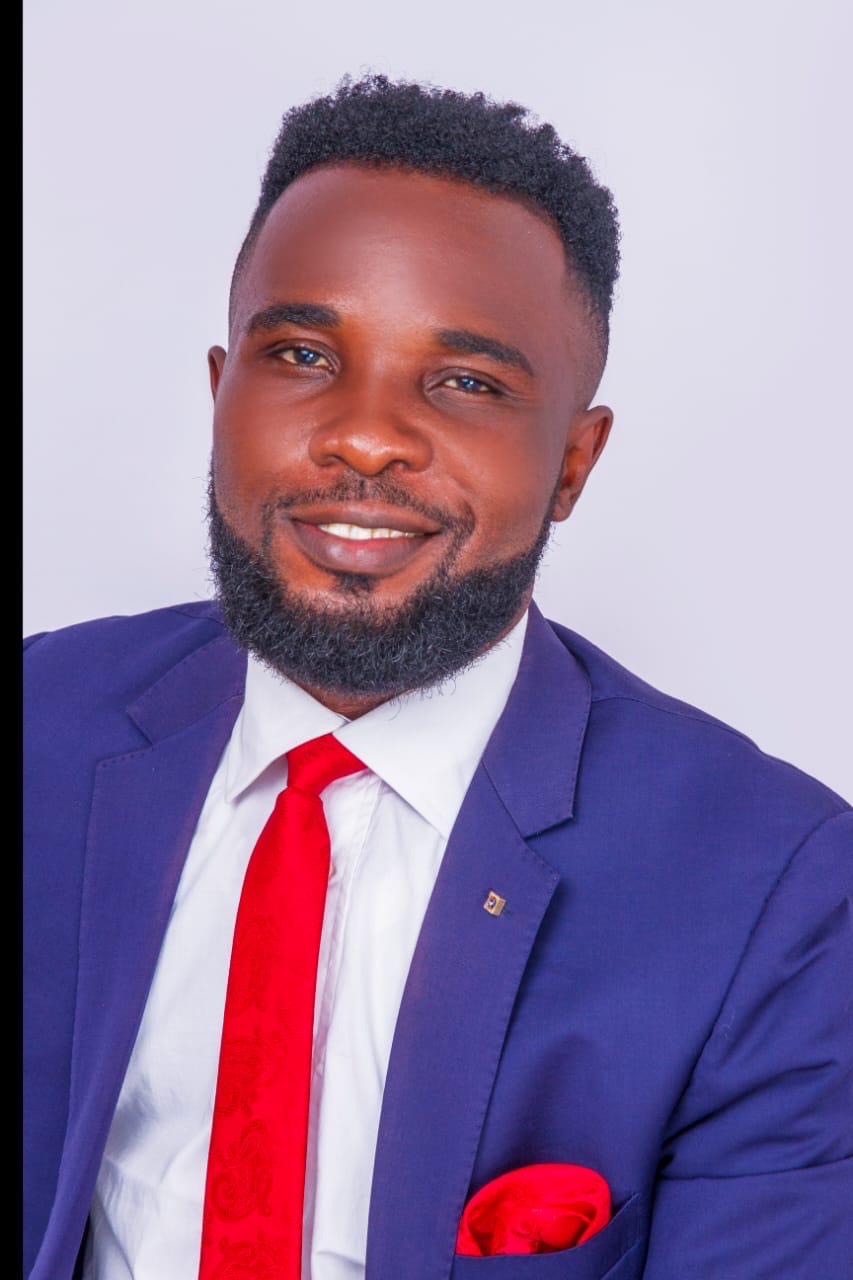
Victor Chukwunonso Okoli, founder of Vnox Technology Inc. (USA) and Vnox Limited (Nigeria), is steadily emerging as one of the most promising new voices in global travel-tech. His mission is clear: bridge the technological gap between Africa and the United States, redefine global travel systems, and empower a new generation of skilled youths through innovation-driven opportunities.
In a statement issued in Onitsha, Anambra State, by Vnox Limited (Nigeria), the company emphasized Okoli’s growing influence as a Nigerian international graduate student contributing meaningfully to U.
S. innovation. His rising travel-technology platform, FlyVnox, currently valued at an estimated $1.7 million, is positioning itself as a competitive player in the global travel ecosystem.Okoli explained that Vnox Technology was founded to “train, empower more youths, create global employment opportunities, and drive business growth through our coming B2B portal inside the FlyVnox app.” The platform’s new B2B system aims to support travel agencies, entrepreneurs, and businesses across Africa and the diaspora—giving them access to modern tools, previously inaccessible technologies, and global opportunities.
Several young men and women are already employed under the expanding Vnox group, with more expected to join as the brand grows internationally.
Born and raised in Eastern Nigeria, Okoli’s early life exposed him to the realities and frustrations faced by international travelers and diaspora communities. After moving to the United States for graduate studies, he transformed those experiences into a bold technological vision—building systems that connect continents and create seamless mobility for users worldwide.
At the center of that vision is the FlyVnox app, a modern airline-ticketing platform built with global users in mind. Combining American engineering precision with African mobility realities, FlyVnox offers international flight search, multi-currency support, secure payments, transparent pricing, and a clean, intuitive interface.
Beyond FlyVnox, Okoli has built a growing tech ecosystem under Vnox Technology Inc., which oversees several innovative ventures, including: Vnox TravelTech Solutions LLC (FlyVnox App), VnoxPay (fintech), VnoxShop / Zyrlia (e-commerce)
VnoxID / Nexora (digital identity and smart business card solutions)
Vnox Limited (Nigeria) anchors African operations, media services, and talent development—ensuring the brand remains rooted in its home continent even as it grows globally.
Okoli’s work has broad significance for both Africa and the United States. He represents the powerful impact of immigrant entrepreneurship on global competitiveness—creating new jobs, driving innovation, strengthening U.S.–Africa commercial ties, and contributing to the development of practical, scalable technologies.
The statement concludes that Vnox Technology is a brand to watch. As FlyVnox gains international traction and the Vnox group expands its footprint, Victor Okoli stands as a symbol of a rising generation: African-born, globally minded, and building technologies that connect and serve the world.

By Sunday Ayami
Nigeria, Africa’s most populous nation and largest economy, in Africa continues to face complex security challenges. These issues threaten national stability, economic growth, and the wellbeing of its citizens. The security landscape is shaped by a combination of terrorism, banditry, separatist agitations, communal conflicts, and organized crime.
The Boko Haram insurgency, active since 2009, remains a significant threat, mainly in Borno, Yobe, and Adamawa states.
Although the group has suffered territorial losses, its splinter faction, the Islamic State West Africa Province (ISWAP), remains potent. Frequent attacks target both civilians and security personnel. The humanitarian crisis continues, with millions displaced and persistent food insecurity.Armed bandit groups operate extensively in Zamfara, Kaduna, Katsina, Niger, and Sokoto states. These groups engage in mass abductions, cattle rustling, and extortion. Kidnappings for ransom have become commonplace, affecting schoolchildren, commuters, and even local officials. The government has launched multiple military operations, but violence persists.
Competition over land and water resources between sedentary farmers and nomadic herders has intensified, especially in Benue, Plateau, and Nasarawa states. These clashes often escalate along ethnic and religious lines, resulting in hundreds of deaths and displacement.
Although major militant activities in the Niger Delta have subsided since the 2016/17 resurgence, oil theft, pipeline vandalism, and environmental degradation continue to undermine the economy and fuel local grievances.
The Indigenous People of Biafra (IPOB) continue to agitate for independence, often clashing with security forces. Their armed wing, the Eastern Security Network (ESN), has been implicated in attacks on government facilities and security checkpoints. The region continues to experience periodic unrest and enforced sit-at-home orders.
Urban centers grapple with armed robbery, cult violence, and organized crimes, while piracy and maritime crime remain concerns in the Gulf of Guinea, threatening maritime trade.
The Nigerian government has adopted a multi-pronged approach to tackle security issues, including: Multiple campaigns such as “Operation Hadin Kai” in the Northeast and “Operation Whirl Punch” in the North-central target insurgent and criminal groups. Attempts at police reform and increased funding for security agencies have been implemented with mixed results.Efforts to negotiate with some groups or offer amnesty, particularly in the Niger Delta. Partner within ECOWAS and with Western countries enhance intelligence sharing and maritime security operations.
Despite these efforts, challenges remain: underfunding, corruption, interagency rivalry, inadequate equipment, and low public trust hamper effectiveness.
Over 3 million internally displaced persons (IDP).
By Chidi Amuta
Recent trends in our national life have forced Nigerians to abandon the virtue of incurable optimism and unconditional hope in the nation as a perpetual reality. It used to be that in all circumstances, Nigerians would never believe that the nation is under any terminal threat.
But in recent times, the percentage of Nigerians awaiting the imminent collapse of the nation has now far outnumbered the minority still hoping that the country will survive its present travails. It seems that we are fast approaching that slippery joint where it is hard to find any believers in the survival and meaning of Nigeria. Instead, throughout the length and breadth of this vast land, a new and unhappy consensus has emerged: Nigeria is dying!The usual refrain of “God is in control” or “This, too, shall pass” in difficult times has given way to a silent indignation and resignation.
A silent poor woman who used to be a trader in trivia at the roadside has nothing left to sell and no money to buy what she needs. She raises her open palms skywards in speechless supplication as tears stream down her cheeks. She has become for me an embodiment of the tragedy of the times in which we now live.By a curious irony with a tinge of tragicomedy, the Tinubu government is trumpeting ‘hope’ as its most important offering. The regime has adopted what it calls “the Renewed Hope Agenda” as its mantra and unique caption of the -mandate of this presidency. In a note of tragic irony bordering on self -deprecation and mockery, each appearance of the President at a public forum (including gatherings of judges!), a new regime anthem titled “On Your Mandate, We shall stand” has become informally mandatory. It sometimes precedes the old resurrected National Anthem. It sounds more like a comic choir rented to laugh at a nation in the throes of death.
Suddenly, we seem to have arrived at this unhappy consensus: Nigeria is dying! This existential admission of the imminent death of our nation is the unfolding legacy of our endangered democracy. Our elections lack credibility or popular following. In recent elections in Ondo, Edo and Anambra states, the consistent average voter turnout has been below 35%. People register to vote but find nothing worth voting for. They are taking stock of previous years of this ritual of voting and find nothing cheery. They just stay home instead of being counted as part of the statistics of deceit and betrayal.
As it turns out, the greater percentage of this miserable recent turnout are even transactional votes. On the election days, partisan buyers and sellers of votes mount point of sale checkpoints at most polling booths. Your voters’ card entitles you to a miserable cash handout: N2000-N5000. T could be higher depending on the cash power of the contestants. The votes that show up at INEC’s voter machines represent the balance sheet of total sales and purchases made at all the polling stations at the election.
Other aspects of our democracy are equally in disarray. The party system is shattered. The ruling party has become a power monopoly intent on swallowing other parties. The major opposition party, the PDP, has a resident destabilizer with a single mandate: to kill the party and ensure that it is its carcass that walks into the next general election. The rest of the opposition platform has been frightened into disarray by sundry agents of the state and party in power. The various alliances and rumours of alliances are merely scare crows manipulated by agents of the ruling party.
In itself, the ruling party is saddled with hand -picked officials who make no distinction between the party as an institution of democracy and the government in power or indeed between the political party and the state. A democracy in which there is no distinction between the party in power and the party in government leads to a degrading usurpation of the state by the political elite of the ruling party. A factional elite cannot govern a state without wholly appropriating the machinery of the state to its individual and collective advantage. State capture is complete when the leading lights of the ruling hegemonic party become also the leading lights of the nation. The likes of Wike, Umahi and Akpabio become the faces of the nation. These constantly nattering Nabobs of current power negativity have been elevated to the status of arbiters of values for the nation. They brandish their wealth and false identities to frighten ordinary citizens.
In itself, the business of governance under Mr. Tinubu has become a humdrum ritual of boring reflexes. Great national happenings are marked by high school grade routine statements from the pinnacle of power. No actions are initiated. Once a presidential pronouncement is signed off, the leadership moves on to await the next tragic checkpoint. The life of the nation progresses from one tragedy as preparation for the next. No action plan follows the train of tragedies and failures. Just move on in the hope that tomorrow will be a better day, without bad news and disheartening occurrences. But bad news has become our new normal.
Whatever happens to the nation, one sector never sleeps. Politics of anyhow and anything remains in business. Politicians keep decamping from other parties or no parties to the ruling party in droves. No need to state why people are decamping. The parties they are coming from or the one they are migrating to stand for nothing. No ideology. No core beliefs. Nothing. And in any case, there are no consequences for changing parties like filthy underpants. So the beat goes on: breakfast in Labour Party. Lunch in PDP. Dinner in APC. Even those in the ruling party either as cabinet members or legislators do nothing in particular to justify their large charges on the public treasury. In return for doing practically nothing, a bunch of jobless politicians earn an entitlement to costly SUVs, free housing, large entourages of domestic and official minions and vast troves of cash in all currencies as kickbacks and contractors’ gift packs. There is delight in chasing off road users with limitless motorcades of official nonentities escorted by authorized state hooligans in uniform.
While politicians luxuriate in plenty, the daily life of our citizenry is mirred in want and penury. Recent policy measures have further eroded the living standards of the ordinary Nigerian. An endless litany of taxes, levies and tolls has rendered every item of living cost unaffordable. Prices of everything ranging from gasoline to cooking gas, school fees to transport fares, basic medication to hospital bills and building materials have shot through the roof. Even if these were elements of economic management, nothing has been put in place to indicate that the state has a compassionate aspect. Instead, there is an unhidden hand of cruelty in new policies. A few days ago, the government expressed an intention to impose a 15% surcharge on the already astronomical prices of gasoline. Only the fear of mass protests as in Kenya, Tanzania and Algeria frightened the government into pulling back on this tax on an existing tax regime on gasoline!
While the public keeps expecting the government of the day to alleviate mass suffering, the very essence of our national existence is eroded by the day. The most elementary obligation of the state, the protection of life and property, is everywhere in peril. People are now dying daily on an industrial scale. Terrorists, jihadists, bandits, gangsters, casual criminals compete with each other as to how many they kill, abduct, dispossess or cause to disappear.
Those paid by the state to protect the rest of us look on in indifference or manifest the most embarrassing incompetence in the discharge of the duties. At best, none performing or delinquent security officials are fired in droves with no explanations to the public. The other day, the DSS sacked over 100 officers with no public explanation. These hounds have been unleashed into the amorphous public space to heighten an insecurity that has defied decades of tepid government effort. These are officers who are trained in weapon handling and other skills that they will easily deploy to increase our insecurity.
A state that cannot guarantee basic security of life and limbs of citizens has of course failed to protect and guarantee its territorial integrity. Nigerians no longer know where Nigeria stops and bandit territory begins. Every other forest, savannah stretch and unoccupied building in Nigeria is now an ungoverned space literally owned and inhabited by non- state actors. The possession of arms and weapons of war used to be the exclusive preserve of the state. Guns and uniforms used to frighten ordinary people off government. Not anymore. Now, the most sophisticated weapons of war are in the hands of terrorists, bandits and sundry criminals. The most garish uniforms are now worn by non-state organized squads. Jihadists in rags now outgun our best kitted military units. Literally, the Nigerian state has been outgunned by the forces of those that do not wish us well and the government of the day looks on in sheepish incompetence. In some states, elected governors’ stage ‘peace’ meetings with bandit leaders and their armed cohorts while the police and military provide “security” in full view of television cameras. So, whose nation is this anyway?
Only recently, a symbolic drama was staged on the streets of Abuja. In a motor park -like encounter, FCT minister, Nyesom Wike was engaged by a mid -level Naval officer in an encounter over landed property. Instructively, the military high command sided unanimously with the naval officer. In this symbolic scuffle between the military and political wings of the ruling elite, the military asserted itself stiffly as a contender in the game of political supremacy. In an atmosphere where a rumoured coup is being investigated, wise politicians have since sided with the military in this land grab encounter. Wike, a noisy political jackal with scant common sense has been stripped naked and left sulking alone.
The justice system is not left out of the hopelessness. Even in cases where the law is challenged to defend and protect the rights of individuals or track and punish violators of the law, the Nigerian judiciary has been consistently wanting. Judges deliver judgments to fit their bills. Material appeasement of the highest echelons of the judiciary in the form of cash, automobiles, free houses and unaccounted vacations have blurred the boundaries between justice and injustice. The rights of citizens now have a price tag.
The agencies of public accountability only exist to hound those whom the state does not like. The police arrests and detains those it adjudges state adversaries while authorized criminals roam and wax freely. Public protest against misrule and injustice is rewarded with tear gas and bullets and prolonged incarceration without charges or trial. A nation in which the Accountant General can steal most of the funds in the treasury without setting off any audit alarm is at best a rogues’ piggy bank guarded by squads of pick pockets.
Our general perception in the world outside our borders has tumbled to an all-time low. From being the voice of African strength, we have degenerated to a sorry state. Our foreign policy exertions have sunk to a diplomacy of the beggarly. Imagine the recent Threat by Donald Trump in the days of Murtala Mohammed and Obasanjo either as military leader or elected president.
Against the foregoing backdrop, citizen loyalty and confidence in the state has dropped to near zero. The common man in the streets who used to be proud of his nation in spite of its faults has withdrawn to his or her tent. People are more concerned about surviving to the next day than bother about the niceties of national survival and community. At best, people are now cursing and abusing Nigeria. Many now wish they were never born here. Our passport and identity have become badges of shame abroad. Most significantly, a nation that used to believe that God will ultimately rescue the nation has lost that last anchor of hope in divine provenance and providence. Citizens have begun to doubt the efficacy of divine solution that will save the nation as it is today.
While a general disillusionment has eroded hope and confidence in the nation, the government of the day cannot find the courage to compare itself to any of its predecessors. But governments do not exist in isolation. They derive their credibility from fitting themselves into a historical spectrum provided by their predecessors.
It is not for us to pronounce judgment on the Tinubu government in terms of its record of performance. From the return of democracy in 1999 to the present, citizens can now pick and choose when they last had a good meal, affordable life or peace of mind from insecurity. We miss Obasanjo’s banking reforms and liberalization of the stock market. We miss his initiative in opening up the telecommunications market. We miss the introduction of debit and credit cards and cashless platforms in the economy. We miss the Jonathan era before he found himself in the midst of Boko Haram. Looking back now, who will not prefer the Naira at 175 to the dollar and multiple access to credit for consumption and business? Or a bag of cement at a little over N2,000? Even Buhari’s N400-N500 to the dollar cannot be compared to today’s hellish N1,500 to the dollar. Or gasoline at N185 a liter compared to today’s N1,000 average for a liter at the pump.
Obasanjo was feared as a strong willed warrior, respected as a nationalist elder statesman and accepted by all as a detribalized national leader. Yar’dua was admired as a man of Spartan discipline and honest patriotism. Jonathan never pretended to be what he is not. He said he would not make too many promises for fear of failing to deliver on any. Buhari was a patent ethnicist, religious fanatic and unrepentant autocrat but he would rather borrow to keep his rusty government going than impose further suffering on the ordinary people.
Against the record of his predecessors since 1999, Tinubu will bear the burden of self -assessment at the end of his remaining two years. Put simply, Tinubu will judge Tinubu. Whether his eventual assessment will be confirmed or repudiated by the electoral outcome of the 2027 election is a puzzle that Nigerian democracy will have to unravel in the years ahead.
The questions are simple: Will Nigerians renew the mandate of a leader who is subjecting them to such harrowing hardship? Will the majority of Nigerians vote again for a party that has been responsible for such ruinous misrule of the nation for over a decade?
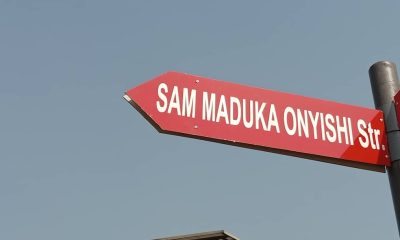

Street Named After Business Mogul, Sam Maduka Onyishi Unveiled in Asokoro
ShareBy David Torough, Abuja Authorities in the Federal Capital Territory on Saturday honoured renowned entrepreneur and philanthropist, Chief Dr. Sam...
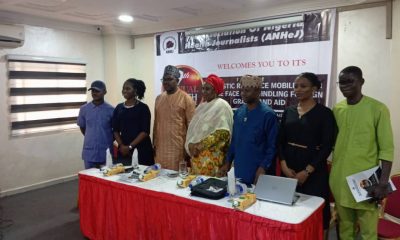

Experts Task Government on Increase in Domestic Funding
ShareBy Laide Akinboade, Abuja Experts in the health sector, at the weekend agreed that even though foreign grants and aid...
BBNaija’s Queen Mercy Confirms crash of Her One-year Marriage
ShareBig Brother Naija reality show star, Queen Mercy Atang, has finally confirmed the crash of her one-year marriage. The single...
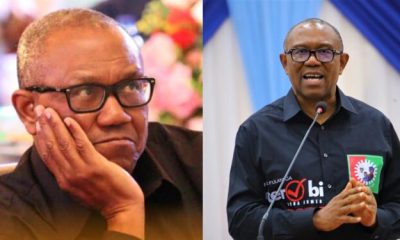

Obi, TCM Condemn Tinubu’s Distribution of Vehicles to Renewed Hope Ambassadors
ShareBy Mike Odiakose Abuja Presidential Candidate of the Labour Party, Peter Obi and a socio-political organisation, The Collective Movement (TCM),...

Bayelsa Urges NDDC to Complete Abandoned Akenfa Bridge Project
ShareFrom Mike Tayese, Yenagoa The Bayelsa State Government has called on the Niger Delta Development Commission (NDDC) to resume and...


Road Accident Claims Six Lives in Kogi
ShareFrom Joseph Amedu, Lokoja The Kogi State Government has expressed sadness over a tragic accident involving a bus conveying some...
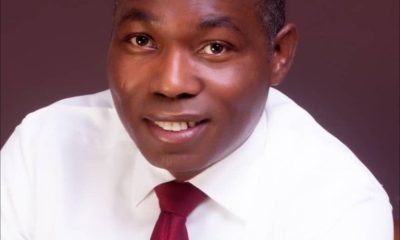

Adebayo at 53 Young Enough to Lead Nigeria – Ighodalo
ShareBy Mike Odiakose, Abuja Pastor in charge of Trinity House, a non-denominational, Christian fellowship centre and founder, African Leadership Group...

Four Dies as Bandits Launches Attack in Kogi Community
ShareFrom Joseph Amedu, Lokoja Four persons were reportedly dead on Wednesday when suspected bandits launched an attack on Irunda Ile...

Musa Takes Oath, Vows United Front against Insecurity
ShareBy David Torough, Abuja President Bola Tinubu yesterday swore in former Chief of Defense Staff, General Christopher Musa (rtd), as...


OPay Secures Double Honors at Tech Innovation Awards
ShareIn a major recognition of its innovation and security leadership, OPay, Nigeria’s premier financial technology company, has been named Fintech...