
Foreign News
500,000 People to Benefit from UN Support in N/East Nigeria

No fewer than 500,000 conflict-affected people from North-east Nigeria will benefit from a new humanitarian and development package launched by two UN agencies on Thursday.
The Resilience and Social Cohesion project, launched by the UN Children’s Fund (UNICEF) and World Food Programme (WFP), is aimed at enhancing peace and increase livelihood opportunities in Borno and Yobe States.
It is also aimed at providing education, health, nutrition, child protection, and sanitation support to strengthen the resilience of vulnerable populations in the two states.
“This is a pathway to peace and sustainable development,’’ the UNICEF Representative in Nigeria, Peter Hawkins, said.
Funded to the tune of 40 million euro from the German Government, the three-year humanitarian package targets children from birth up to two years of age, pregnant women, school-age children, adolescent girls, female-headed households and people with disabilities.
While leveraging ongoing humanitarian support in Bade Local Government Area of Yobe and Shani LGA of Borno, the UN lead agencies would also provide interventions to address drivers of conflict and fragility throughout various sectors.
The project would help to strengthen local governance, promote community-based social cohesion and build government partnerships.
“Children and other vulnerable groups will have a lifeline, and an opportunity to survive and thrive in communities where livelihood and peace building activities are present,” the UNICEF Representative said.
Now in its 13th year, armed conflict in the volatile North-east Nigeria – where the extremist militant group Boko Haram first surfaced – has levelled communities, destroyed livelihoods, and disrupted essential services for children and adults.
Also, protracted insecurity, high food prices and COVID-19 lockdowns have left more than four million people in need of food assistance.
The accompanying impact of violence and unrest has fuelled mental health, nutrition, education and child protection concerns.
According to the UN agencies, 1.14 million children across the region are acutely malnourished, on a scale not seen since 2018.
“Conflict in any region is potential instability in the rest of the world,’’ Hawkins said.
“UNICEF is grateful to the German Government for supporting pathways to child survival and peace in North-east Nigeria”.
With a focus on building peace, strengthening governance, restoring infrastructures and providing life-saving services, it is hoped that close to 157,000 people will benefit directly and over 362,000 indirectly, across both LGAs.
Giving thanks for the “timely and generous support” from Germany, the WFP Deputy Country Director in Nigeria, Ms Simone Parchment, hailed the value of the project for those “facing the peril of conflict and hunger in North-east Nigeria.
“In these affected states, persistent conflict, climate shocks, high food prices and reduced household purchasing power undermine people’s ability to feed themselves and sustain their livelihoods,” she said. (NAN)





Republicans in the US Senate have said they will spare the US-backed HIV/Aids programme Pepfar from cuts, amid a larger effort to reduce government spending.
Senators said they would end a plan to cut $400m (£300m) from the President’s Emergency Plan for Aids Relief programme, leaving total proposed cuts at $9bn.
The proposition was made in a Senate amendment to a rescissions package – meaning a bill that allows lawmakers to cancel previous funding approved by Congress.
The planned cancellations also include funds for international aid and public broadcasting.If the Pepfar amendment is approved, the bill will go back to the House of Representatives for another vote ahead of a Friday deadline.
Multiple senators from both parties had expressed concern with cuts to Pepfar, which was launched under President George W Bush and has been credited with saving tens of millions of lives around the world.
The Republican-controlled Senate can only afford a few defectors, assuming all Democrats vote in opposition. John Thune, the Republican Senate majority leader, said there had been a “lot of interest” in keeping the Pepfar funding intact.
Senator Susan Collins, a Republican from Maine, told reporters after a White House lunch on Tuesday that she was “very pleased” that the cuts would be removed.
Prior to the amendment, Collins had been vocal against the bill. She has not said whether the changes are enough to secure her support.
Office of Management and Budget (OMB) Director Russell Vought told reporters that the White House was on board with the Senate amendment, meaning that in its current form President Donald Trump would be willing to sign it.
In his second presidency, Trump has turbo-charged an effort to reduce government spending. Most of the cuts in the rescission bill are aimed at clawing back money that was previously earmarked for the American government’s main humanitarian assistance body, USAID, which recently announced its formal closure under Trump.
Trump’s moves have led to drastic reductions in HIV/Aids clinics in South Africa and other countries, precipitating a shortage of life-saving medicine and care.
Other cuts in the rescission bill are aimed at the funding for public broadcasters NPR and PBS.

The World Health Organization (WHO) has validated Senegal’s elimination of trachoma as a public health problem, making it the ninth country in WHO’s African Region to have achieved the feat.
WHO Director-General Tedros Ghebreyesus, in a statement, lauded the country for freeing its population of the disease.
“This milestone is yet another sign of the remarkable progress being made against neglected tropical diseases globally, and offers hope to other countries still working to eliminate trachoma.
”Trachoma has been known in Senegal since the early 1900s and was confirmed as a major cause of blindness through surveys in the 1980s and 1990s.
Senegal joined the WHO Alliance for the Global Elimination of Trachoma in 1998, conducted its first national survey in 2000, and completed full disease mapping by 2017 with support from the Global Trachoma Mapping Project and Tropical Data.
Trachoma control was consistently integrated into national eye health programmes – first under the National Programme for Blindness Prevention (PNLC) and later through the National Programme for the Promotion of Eye Health (PNPSO).
The country’s consistent integration of trachoma control into its national eye health programmes positioned it to significantly maintain its commitment to the elimination of the disease.
“Today we celebrate our victory against trachoma, 21 years after the one against dracunculiasis”, Dr Ibrahima Sy, Senegal’s Minister of Health and Social Action, said.
“This new milestone reminds us that our overarching goal remains a Senegal free from neglected tropical diseases.
“We are fully committed to this, and we are making good progress, notably against human African trypanosomiasis (sleeping sickness) and onchocerciasis”.
Senegal implemented the WHO-recommended SAFE strategy to eliminate trachoma with the support of partners, reaching 2.8 million people who needed them across 24 districts.
These activities included the provision of surgery to treat the late blinding stage of the disease and conducting antibiotic mass drug administration of azithromycin donated by Pfizer through the International Trachoma Initiative.
Similarly, public awareness campaigns were carried out to promote facial cleanliness and improvement in access to water supply and sanitation.
Trachoma is the second neglected tropical disease to be eliminated in Senegal. In 2004, the country was certified free of dracunculiasis (Guinea-worm disease) transmission.
Senegal now joins 24 other countries that have been validated by WHO for eliminating trachoma.
The 24 countries are Benin, Burundi, Cambodia, China, Gambia, Islamic Republic of Iran, Lao People’s Democratic Republic, Ghana, India, Iraq, Malawi, and Mali.
The others are Mauritania, Mexico, Morocco, Myanmar, Nepal, Oman, Pakistan, Papua New Guinea, Saudi Arabia, Togo, Vanuatu, and Vietnam.
These countries are part of a wider group of 57 countries that have eliminated one or more neglected tropical diseases.
WHO is supporting Senegal’s health authorities to closely monitor communities in which trachoma was previously endemic, to ensure there is no resurgence of the disease.
“Trachoma has cast a shadow over communities in Senegal for more than a century.
“This long-awaited validation is not only a milestone for public health but a powerful tribute to the tireless dedication of frontline health workers, communities, government leaders, and partners who never gave up,” Dr. Jean-Marie Vianny Yameogo, WHO Representative in Senegal, said.
“Today, we close a chapter that began over a hundred years ago, united with pride, gratitude and resolve. WHO remains committed to supporting Senegal as the country continues to lead in sustaining this hard-earned achievement.”
Trachoma remains a public health problem in 32 countries, with an estimated 103 million people living in areas requiring interventions against the disease.
Trachoma is found mainly in the poorest and most rural areas of Africa, Central and South America, Asia, the Western Pacific and the Middle East.
WHO’s African Region is disproportionately affected by trachoma, with 93 million people living in at-risk areas in April 2024, representing 90% of the global trachoma burden.
Significant progress has been made in the fight against trachoma over the past few years, and the number of people requiring antibiotic treatment for trachoma in the African Region fell by 96 million from 189 million in 2014 to 93 million as of April 2024, representing a 51 percent reduction.
There are currently 20 countries in WHO’s African Region that are known to require intervention for trachoma elimination.
They are Algeria, Angola, Burkina Faso, Cameroon, Central Africa Republic, Chad, Côte d’Ivoire, Democratic Republic of the Congo, Eritrea, Ethiopia, and Guinea.
The others are Kenya, Mozambique, Niger, Nigeria, South Sudan, the United Republic of Tanzania, Uganda, Zambia, and Zimbabwe.
A further 3 countries in the Region (Botswana, Guinea-Bissau and Namibia) claim to have achieved the prevalence targets for elimination.

Torough David, Abuja
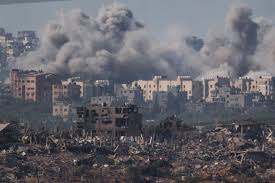
Israel says it has bombed Syrian government forces around Suweida, as they entered the predominantly Druze city following two days of deadly sectarian clashes.
About 100 people have reportedly been killed since the fighting between Druze militias and Bedouin tribes erupted on Sunday.
Syria’s defence minister announced a ceasefire in Suweida on Tuesday morning, saying an agreement had been reached with local dignitaries for security forces to deploy there.
However, one Druze spiritual leader urged local fighters to resist.Later, Israel’s prime minister said he had ordered strikes on forces and weapons in the Suweida area because the government “intended to use [them] against the Druze”.
Benjamin Netanyahu said he was committed to preventing harm to the Druze in Syria because of their deep ties to those living in Israel and the Israeli-occupied Golan Heights.
This is the first time that Syrian government forces have been deployed to Suweida since Islamist-led rebels overthrew President Bashar al-Assad in December.
Minority communities are suspicious of interim President Ahmed al-Sharaa’s government despite his pledges to protect them, and until now the province of Suweida had remained largely under the control of Druze militias which resisted calls to join the security forces.
The fighting between Bedouin tribes and Druze militias in Suweida was reportedly sparked by the robbery and abduction of a Druze merchant on the highway to Damascus last Friday.
On Sunday, armed Druze fighters reportedly encircled and later seized the city’s al-Maqwas neighbourhood, which is inhabited by Bedouin.
The clashes soon spread into other parts of Suweida province, with tribesmen reportedly launching attacks on Druze towns and villages on the city’s outskirts.
As the death toll reached 30, Syria’s interior ministry announced that its forces and those of the defence ministry would intervene and impose order, saying the “dangerous escalation comes in light of the absence of relevant official institutions”.
There was a brief period of calm on Sunday night, after mediation between Bedouin and Druze leaders resulted in the release of people kidnapped by both sides, according to activist-run news outlet Suwayda 24.
But on Monday, it said the fighting had resumed in the countryside west of the city after drones attacked villages at the same time as government forces deployed in nearby areas of eastern Deraa province.
Later, Suwayda 24 reported that villages in the area were also hit by mortar fire and that dozens of dead and wounded had been brought to local hospitals.
Meanwhile, the Israeli military said it had struck several government tanks to prevent them advancing towards Suweida city. Israeli Defence Minister Israel Katz said the strikes were a “clear warning to the Syrian regime”.
On Monday evening, the Syrian Observatory for Human Rights, a UK-based monitoring group, reported that 99 people had been killed, including 60 Druze, including four civilians, 18 Bedouin fighters, 14 security forces personnel.
The defence ministry said 18 security personnel had been killed during attacks on military points by what it called “outlaw groups”.
On Tuesday morning, the Druze spiritual leadership said they had agreed to allow government forces to enter Suweida province in order to end the bloodshed. They also called on all armed groups there to co-operate and hand over their weapons.
But hours later, influential Druze Sheikh Hikmat al-Hajri posted a video calling on Druze fighters to “resis[t] this brutal campaign by all available means”, accusing government forces of bombarding Suweida city in violation of a ceasefire agreement.
As security forces entered the city, Defence Minister Maj Gen Murhaf Abu Qasra announced a “complete ceasefire”, saying an agreement had been reached with “notables and dignitaries”.
“Suweida neighbourhoods will be under the control of Internal Security Forces as soon as combing operations are completed in order to control the chaos, secure return of residents to their houses,” he added.
Early on Tuesday afternoon, Israeli Prime Minister Benjamin Netanyahu and Defence Minister Israel Katz said they had directed the Israeli military to immediately attack Syrian forces and weaponry sent to the Suweida area “that the regime intended to use against the Druze”.
They accused the Syrian government of contravening “the demilitarisation policy they decided on” and of endangering Israel by deploying forces there.
“Israel is committed to preventing harm being inflicted on the Druze in Syria, owing to the deep covenant of blood with our Druze citizens in Israel and their historical and familial link to the Druze in Syria,” they added.
The Syrian Observatory shared a video that it said showed at least one member of the security forces who was killed in an Israeli strike on a convoy.
There was no immediate response from the Syrian government.
Earlier this year, Netanyahu warned that he would not “tolerate any threat” to Syria’s Druze and demanded the complete demilitarisation of Suweida and two other southern provinces,
He said Israel saw interim President Sharaa’s Sunni Islamist group, Hayat Tahrir al-Sham (HTS), as a threat. HTS is a former al-Qaeda affiliate that is still designated as a terrorist organisation by the UN and UK, but no longer the US.
The Israeli military has already carried out hundreds of strikes across Syria to destroy the country’s military assets since the fall of the Assad regime.
And it has sent troops into the UN-monitored demilitarised buffer zone between the occupied Golan Heights and Syria, as well as several adjoining areas and the summit of Mount Hermon.



Anambra: INEC Registers 96,085 New Voters, Extends CVR by Three Days
ShareThe Independent National Electoral Commission (INEC) said it has registered 96,085 new voters in nine days and extended the exercise...


Tinubu Honors Buhari, Renames University of Maiduguri after Late President
ShareBy David Torough, Abuja President Bola Tinubu has approved the renaming of the University of Maiduguri, Borno State as Muhammadu...
C’River First Female NUJ Chairman Describes Tenure as Trial Period
ShareThe first female Chairman of the Nigeria Union of Journalists (NUJ) in Cross River, Archibong Bassey has said that her...


Gov Makinde Confered With Prestigious Chieftaincy Title of Aare Omoluabi of Akure Land by Akure Kingdom
ShareThe Akure Kingdom will today bestow a prestigious chieftaincy title, Aare Omoluabi of Akure Land, meaning President of the Respectable...


PDP Stakeholders Olorunda Pass Vote of Confidence on Gov Adeleke
ShareFrom Ayinde Akintade, Osogbo The Olorunda Peoples’ Democratic Party, PDP, Stakeholders has passed vote of confidence on Governor Ademola Adeleke...


Town Planners Task Benue Govt on Regional Devt, Master Plans
ShareBy David Torough, Abuja The President, Nigerian Institute of Town Planners (NITP), Dr. Chime Ogbonna, has urged the Benue State...


Illegal Detention: Court Awards Bauchi Accountant General N100m
ShareBy David Torough, Abuja In a decisive rebuke of official impunity, the Federal High Court sitting in Bauchi has declared...

Military Cracks Down on Terror Collaborators, Exposes Arms Trafficking by Transport Union Members
ShareBy David Torough, Abuja The Defence Headquarters (DHQ) has announced multiple breakthroughs in its ongoing counter-terrorism operations, revealing that Nigerian...
Peace, Order Return to Niger LG after Series of Banditry Attacks
ShareFrom Dan Amasingha, Minna Rijau Local Government Area, one of the Frontline Councils under sustained banditry attack is now heaving...

LG Pensions/Gratuities: Bayelsa Warns Principal Officers Against Sabotage of Quick Payment Policy
ShareFrom Mike Tayese, Yenagoa Bayelsa State Government has warned principal officers of local government councils in the state to desist...
 Arabic
 Chinese (Simplified)
 Dutch
Dutch English
 French
 German
 Italian
 Portuguese
 Russian
 Spanish