
Metro
Abuja Natives Seek Improve Budget Implementation in FCT

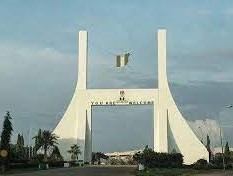
Abuja Indigenous Civil Society Organisation, under the auspices of Abuja Grassroots Advocacy Projects, has emphasised the need for improved budget implementation in the FCT to ensure completion of major projects in Abuja.
Coordinator of the group, Mr Yunusa Yusuf, made the call at a news conference on Tuesday in Abuja.
Yusuf also stressed the need for the FCT Minister, Malam Muhammad Bello, to evolve strategies that will ensure effective implementation of the budget for nation’s capital in the interest of the people.
Yusuf also advised the FCT Minister to ensure timely presentation of the nation’s capital annual budget, adding that early passage of the budget would facilitate economic growth and sustainable development in the territory.
“On behalf of the leadership of the Abuja Indigenous Civil Society Organisation, under the auspices of Abuja Grassroots Advocacy Projects, I want to use this medium to advice the FCT Minister, Malam Muhammad Bello, to come up with strategies that will improve budget implementation in the FCT.
“Effective budget implementation will stimulate economic activities, strengthen security and promote good governance in the territory.
“We are increasingly worried about the rate of insecurity in the FCT which is getting worst on daily basis and nobody is safe again. As we are all aware, some professors at the University of Abuja and their children have been kidnapped.
“If you pass through Area one Roundabout, you will discover that all the street lights are dead, therefore encouraging daily criminal activities in the area and other places with the same issues. (NAN)







Motorists and commuters across Lagos are facing rising transportation costs following another increase in the pump price of petrol, which now sells for between N1,250 and N1,350 per litre at filling stations.
A survey on Sunday showed growing concern among road users as the increase, driven largely by global supply pressures and domestic price adjustments, continues to influence transportation expenses.
The latest increase follows another upward review of petrol prices by the Dangote Petroleum Refinery, which raised the gantry price of Premium Motor Spirit (PMS), commonly known as petrol, to N1,175 per litre from N995 earlier in the week.
The adjustment represents an increase of N180, about 18.1 per cent within three days, marking the refinery’s third price review within the week and prompting swift adjustments across the downstream market.
Industry sources attribute the rise partly to heightened geopolitical tensions in the Middle East, particularly the escalating standoff between Israel and Iran, as well as attacks linked to Yemen’s Houthi movement in the Red Sea corridor.
The instability has forced many oil tankers to reroute from traditional shipping lanes, pushing global freight costs up by roughly 40 per cent, according to market data from the Baltic Exchange.
At the same time, international oil prices have risen, with Brent crude approaching 99 dollars per barrel, while the Nigerian currency trades at about N1,650 to the dollar, factors analysts say are contributing to higher domestic fuel prices.
However, with the emergence of the Dangote refinery, Nigeria continues to rely significantly on imported refined petroleum products.
The spokesperson for the refinery, Anthony Echiejina, said the price adjustment reflects rising feedstock and logistics costs associated with developments in the global energy market.
Checks revealed that retail prices have increased across several outlets in Lagos, with petrol selling between N1,200 and N1,350 per litre depending on location.
Major marketers have also adjusted their pump prices. MRS Oil Nigeria Plc and Matrix Energy Group sell petrol at about N1,250 per litre, while outlets of Ardova Plc (formerly AP) retail the product at around N1,300 per litre.
Some independent stations charge slightly higher prices.
A NorthWest outlet in the Gbagada area dispensed petrol at about N1,250 per litre, while several other stations across the metropolis sold the product close to the N1,200 mark.
At a Mobil Station along the LASU–Isheri Road corridor, petrol was sold at N1,250 per litre, while Petrocam Station nearby dispensed fuel at the same price.
Similarly, MRS stations in parts of Alimosho sold petrol at about N1,250 per litre, while Mobil outlets in Alaguntan and Iyana Ipaja recorded prices of N1,250 and N1,350 per litre respectively.
Other stations, including Heyden outlets in Iyana Ipaja and along the Oshodi–Abeokuta Expressway, also sold petrol at about N1,250 per litre, reflecting a broad market trend.
Meanwhile, market insiders have said pricing differences were increasingly influenced by variations in product sourcing, particularly between coastal marine lifting arrangements and gantry loading operations.
The increase in fuel prices has already led to higher transportation fares across Lagos, with commuters reporting increases of more than 30 per cent on several routes.
Commercial driver, Sodiq Olarenwaju, said the rising cost of petrol had made daily operations more demanding.
“We are the ones passengers blame for increasing fares, but they don’t realise how much we now spend on petrol.
“If we buy fuel at over N1,000 per litre, we have no option but to adjust fares,” he said.
Another motorist, Funke Oladipo, described the experience of searching for fuel as stressful.
“I have been driving around since morning with my jerry can looking for petrol. Some stations that opened earlier have already shut their gates,” she said.
A private car owner, Dr Adewale Suleiman, said fuel price increases often had wider economic implications.
“When fuel goes up, transport fares rise and the prices of goods follow immediately,” he said.
Chief Executive Officer of the Centre for the Promotion of Private Enterprise (CPPE), Dr Muda Yusuf, said geopolitical tensions in the Middle East often lead to volatility in global oil markets.
According to him, disruptions in the Strait of Hormuz, through which roughly 20 per cent of global crude oil shipments pass daily, can quickly push up oil prices, shipping costs and insurance premiums worldwide.
He noted that higher fuel prices could affect multiple sectors of the economy, particularly industries that rely heavily on energy and transportation.
“For manufacturers, the consequences can be significant, as many factories rely on diesel-powered generators due to electricity supply challenges,” Yusuf said.
The CPPE boss explained that rising fuel prices might increase costs of logistics; transporting raw materials and finished goods, potentially adding to inflationary pressures.
“As manufacturers absorb higher energy and logistics costs, firms may adjust pricing structures or production levels,” Yusuf said.
He also noted that Nigeria might not fully benefit from higher oil prices because crude production remains below capacity, fluctuating between about 1.4 million and 1.6 million barrels per day.
The organisation recommended measures such as strengthening crude production, building fiscal buffers from higher oil revenues and expanding domestic refining capacity.
It also emphasised the importance of sustained foreign exchange reforms, targeted support for vulnerable households and continued economic diversification.
“The evolving situation in the global energy market presents both opportunities and challenges for Nigeria,” Yusuf said.

From Aliyu Askira, Kano
The National Industrial Court, sitting in Kano, has ordered the Kano State Government to pay a total of N1m as costs in a legal dispute involving former commissioners over the official vehicles given to them while in office.
The court, presided over by Justice Mahmood Abba Namtari, gave the order yesterday after the state government asked for more time to prepare its defence in the case.
The case, filed by five former commissioners, is praying the court to stop the Kano State Government from retrieving the official vehicles they used during their time in office.
During the hearing, defence counsel to the Kano State Government, S.
U. Jibril, requested for an adjournment because he was not ready to continue with the case, owing to the fact that he was only informed about the matter the previous day and had not had enough time to prepare the necessary documents.“We were briefed yesterday around 2:30 p.m. by the office of the first defendant. We tried to get our papers ready but could not complete them. We are asking for another date,” he informed the court.
However, counsel to the applicants, Suraj Sa’ed (SAN), did not oppose the request for an adjournment but instead asked the court to award costs to his clients, recalling the government had already received the court documents earlier and should have prepared its response.
Sa’ed requested for N1m in costs for each case, arguing that the delay had caused inconveniences to the claimants.
In response, Jibril opposed the request. He argued that the government was still within the legal time allowed to submit its documents. “My lord, we should not be asked to pay costs. All the respondents were served on March 3, and we are still within time to file our papers,” he argued.
But Justice Namtari noted that court records showed the defendants were actually served earlier, on February 26, and ordered the respondents to pay N200,000 in costs to each of the five applicants, bringing the total to N1 million.
The court then adjourned the case to April 28, 2026, for further hearing.
The former commissioners who filed the suit include Dr. Yusuf Ibrahim K/Mata, AVM Ibrahim Umar (Rtd), Nasir Sule Garo, Adamu Aliyu Kibiya, and Mustapha Rabi’u.
They asked the court to stop the Kano State Government from collecting the official vehicles given to them during their tenure.
The defendants in the case are the Attorney General of Kano State, the Governor of Kano State, and the Kano State Public Complaints and Anti-Corruption Commission.
The court had earlier rejected a request by the former commissioners for an urgent order to restrain the government from retrieving the vehicles but ruled that both sides must first present their arguments before any temporary order could be granted.
From Ene Asuquo, Calabar
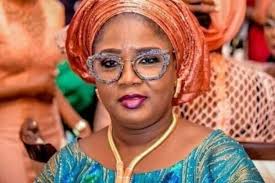
Mujidat Folashade Tinubu-Ojo, the Iyaloja-General of Nigeria, has unveiled a scholarship scheme for over 1,000 indigent students seeking admission into Havilla University, Ikom local government area of Cross River state for 2025/2026 academic session.
The tuition-free award valued at N400,000 is in commemoration of her second anniversary as the Pro-Chancellor and Chairman of the Governing Council of Havilla University.
Confirming the scholarship award in a telephone conversation shortly after marking the two- year anniversary ceremony in office as the institution Pro-chancellor, the Iyaloja- General of Nigeria stated that the initiative reflects her commitment to youth empowerment and educational advancement.
She described education as “the only level between the rich and the poor in society.” Emphasizing that every Nigerian youth deserves access to quality education to ensure a brighter future for the nation.
The Iyaloja-General expressed gratitude to the Governing Council of Havilla University, led by the Chancellor, Hon Jones Tangban, a former member representing the Ikom/Boki federal constituency, for their exceptional leadership, which has ranked Havilla University among Africa’s leading institutions.
In his remarks, Tangban thanked Iyaloja-General for her generosity, noting that her gesture aligns with the Renewed Hope Agenda of President Tinubu’s administration, even though the scholarships are personally funded.
The scholarship program adds to her extensive record of educational support, with thousands of beneficiaries across institutions such as Philomath University, GrandPlus College of Education, Kwara State, and Foreign Link Academy campuses nationwide.
Iyaloja-General had earlier commissioned the Folasade Tinubu-Ojo Complex of the institution and later laid the foundation for the Folasade Tinubu-Ojo Centre for Vocational Studies at the University grounds to further strengthen her legacy in educational development.
In her closing remarks, Iyaloja-General urged prospective beneficiaries to embrace the opportunity with all seriousness now and in the near future.


Kano Gov’t Says Emir Sanusi will Lead Sallah Durbar
ShareBy Aliyu Askira, Kano The Kano State Government has finally announced that the Emir of Kano, Muhammadu Lamido Sanusi II, will lead this year’s Eid-el-Fitr Durbar,...

Labour Party Fixes May 23 for Presidential Primary
ShareThe National Executive Council (NEC) of the Labour Party has fixed May 23 for its presidential primary. Senior Special Adviser (Media) to the Interim National Chairman,...


FG Seeks Partnerships to Transform Correctional Farms Into Productive Agricultural Hubs
ShareThe Federal Government has called for more partnerships with private sector operators in the transformation of the Correctional Farm Centres into highly productive agricultural hubs. Minister of Interior Dr. Olubunmi...
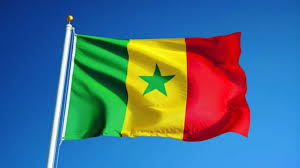

Senegal Government Alleges corruption over Afcon CAF Ruling as Morrocco Celebrates
ShareThe Senegalese government has called for an “independent international investigation” into “suspected corruption” at African football’s governing body after it stripped Senegal of the...
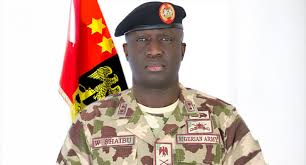

Service Chiefs Storm Maiduguri as Tinubu Orders Crackdown on Renewed Insurgency
ShareFrom Muhammad Muhammad Al-amin, Maiduguri The Chief of Defence Staff (CDS), General O.O. Oluyede, alongside the Chief of Army Staff (COAS), Lieutenant General Waidi...

FG Secures Coventry University Deal to Deliver UK Degrees in Nigeria
ShareThe Federal Government has secured a partnership deal with Coventry University under a Transnational Education (TNE) arrangement to establish a...
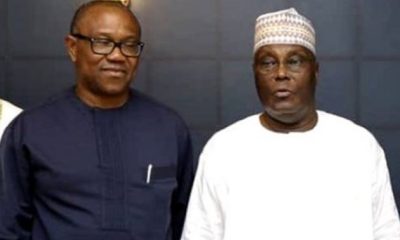

Malami Regains Freedom, Salutes Atiku, Obi, El Rufai, Tambuwal, Others
ShareFormer Attorney-general of the Federation (AGF) and Minister of Justice, Abubakar Malami who has been granted bail after meeting bail...
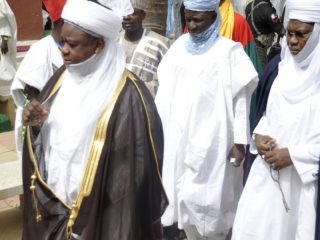
Sultan Announces Friday, Eid-el-Fitr as FG Declares Two- day Holidays
ShareThe Sultanate Council of Sokoto has declared Friday, March 20, 2026, as the first day of Shawwal 1447AH, marking the...


U.S./Israel-Iran War: Lessons for Nigeria from Gulf War Oil Windfall
ShareBy Emmanuella Anokam During the Gulf War which took place between Aug. 2, 1990 and Feb. 28, 1991, Nigeria reportedly...


Safeguarding Nigerians against AI Fakes and Digital Fraud
ShareBy Tolu Aiyegbusi As Artificial Intelligence (AI) continues to advance, creating highly realistic voices, faces, and even emotions, Nigerians are...