
Uncategorized
Access Bank Appoints Uche Orji as Non-Executive Director


Access Holdings Plc has announced the appointment of Mr Uche Orji, as an Independent Non-Executive Director of its subsidiary, Access Bank Plc.
A statement on Saturday night by the bank says the appointment took effect from Jan.
7, following the approval of the Central Bank of Nigeria (CBN).The statement said the appointment reflected the bank’s commitment to enhancing governance practices and ensuring a diverse and experienced board.
Orji is a renowned investment banking professional, information technology entrepreneur, and finance expert, with three decades of professional and board experience.
He is the Co-founder and Partner of Titangate Capital Management, an equity firm, that invests in deep-tech, enterprise software, semi-conductors, hardware, and artificial intelligence companies.
He is also the Founder and Director of Vitesse Africa Limited, an investment advisory firm, focused on African energy, technology and infrastructure sectors.
He serves as an Executive Board member and investor in Ultrasafe AI, an artificial intelligence/IT development firm, that maintains strategic collaborations with leading technology companies.
He also sits on the Board of Private Infrastructure Development Group, London, and chairs the Risk Committee.
Previously, Orji served as the founding Managing Director and Chief Executive Officer of Nigeria Sovereign Investment Authority.
He held positions as Managing Director and Senior Analyst at UBS Securities Limited New York and Managing Director and Head of European Technology/Semiconductor Equity Research at JP Morgan Securities, London.
He also served as Executive Director/Portfolio Manager at Goldman Sachs Asset Management, London.
Earlier in his career, he was an Acting Financial Controller at Diamond Bank Limited and an Audit Trainee at Arthur Andersen and Co.
He holds a Bachelor of Engineering Degree in Chemical Engineering from the University of Port-Harcourt and a Master of Business Administration from Harvard Business School.
Commenting on the appointment, Mr Paul Usoro, the Chairman of the Bank, said Orji was appointed based on his exceptionally rich professional, academic, and corporate board experience.
He said the qualities would be invaluable to the bank as it continued to pursue its strategic objectives.
“We are confident that his addition to the Board would further enrich the quality of our decision-making process, enabling us to deliver even greater value to our customers and stakeholders,” he said.
Usoro said the appointment was made in accordance with the bank’s internal policies, which had been communicated to all relevant regulatory authorities due to its commitment to upholding highest standards of corporate governance.
He welcomed Orji to the board and expressed optimism that he would contribute to ensuring that the bank becomes one of the top five African banks in the shortest possible time. (NAN)
By Tochukwu Jimo Obi
Sixty six years after independence, Nigeria should be asking itself a question that can no longer be postponed: what exactly has become of the great promise of our nation? A country blessed with enormous human and natural resources should not, at this stage of its journey, still be struggling with problems that ought to have become distant memories.
As we mark 66 years of independence, this should be more than another occasion for colourful ceremonies, patriotic speeches and celebrations. It is a time for sober reflection as a people, to examine where we are, where we ought to be and, most importantly, how best to move Nigeria forward.Undoubtedly, Nigeria is not where it used to be. There have been significant developments in different sectors of the economy and society, and successive administrations have introduced policies and programmes aimed at addressing the country’s challenges. However, we must also acknowledge that we are certainly not where we ought to be, considering the enormous human and natural resources available to us. A nation blessed with abundant natural resources, a large youthful population and considerable human capital should be able to provide a higher standard of living for its citizens.
At 66, Nigeria should have no reason to still be battling with inadequate power supply, dilapidated roads, massive unemployment and widespread hunger. These are challenges that have persisted for decades, despite the huge resources committed to addressing them. While some of our past and present leaders may have done, or may still be doing, their best, the reality remains that their efforts alone have not been enough to solve the numerous problems bedevilling the nation. What Nigeria requires is sustained commitment, effective institutions, accountability and policies that go beyond individual administrations.
Corruption and insecurity also continue to pose serious challenges to national development. Resources that should be channelled towards infrastructure, education, healthcare, job creation and other essential services can be undermined by corruption and poor accountability. Similarly, insecurity discourages investment, disrupts economic activities and threatens the lives and livelihoods of citizens. We cannot continue like this as a nation. There must be a collective determination to strengthen institutions, uphold the rule of law and confront the factors that continue to undermine national development.
Unfortunately, the people themselves appear to have become accustomed to many of these perennial problems. This has contributed to a situation where some citizens fail to demand accountability from leaders or make effective use of their democratic power during elections. Democracy gives citizens the opportunity to choose their representatives and to replace those whose performance does not meet their expectations. Elections should therefore be about competence, integrity, policies and the ability to serve the public interest, rather than personal loyalty or temporary benefits.
Sycophancy has also become increasingly visible in our political space. Some people praise leaders excessively for personal gain, defend actions they would ordinarily condemn and, in some cases, sell their votes during elections, only to complain about bad leadership afterwards. Citizens must understand that leadership and followership are interconnected. When voters trade their electoral power for immediate personal benefits, they may be contributing to a system that makes it more difficult to demand responsible governance later. The ballot should be treated as an important instrument for shaping the future of the country.
As Nigeria marks this 66th anniversary, our leaders at all levels must put the interest of the nation at the centre of their decisions and actions. Religious, political and ethnic considerations should not be allowed to take precedence over the collective interest of Nigeria. Diversity should be a source of strength rather than a reason for division. Those entrusted with public office must remember that political positions are temporary, while the consequences of decisions taken in office can affect generations yet unborn.
The people also have an important role to play in moving Nigeria forward. Citizens must obey the law, reject corruption, participate responsibly in elections, demand accountability and contribute positively to their communities. Professionals must give their best in their respective fields, young people must be encouraged to pursue productive opportunities, and the private sector must continue to contribute to economic development. Nation building cannot be left entirely to government. Every Nigerian has a responsibility to contribute to the Nigeria we desire.
At 66, the question, therefore, is not simply which way Nigeria, but what kind of Nigeria do we want to leave for the next generation? The answer lies in our collective willingness to change the things that have held us back, strengthen the institutions that sustain democracy and development, and place national interest above personal, political, religious and ethnic considerations. Nigeria has the resources, talent and potential to achieve greatness. What is required is the collective will to translate that potential into reality. As we celebrate 66 years of independence, let us renew our commitment to building a peaceful, prosperous and united nation. Nigeria shall be great again.
Tochukwu Jimo Obi, Obosi Anambra state.

By Tambaya Julius, Abuja
The Nigeria Customs Service (NCS) has concluded the final phase of its 2025 recruitment exercise, with nearly 3,000 shortlisted candidates undergoing screening in an exercise the Service said recorded improved coordination and efficiency.
The two-week exercise, held at the Training and Doctrine Command (TRADOC), Gwagwalada, Abuja, commenced on September 7 and ended on September 19, 2026.
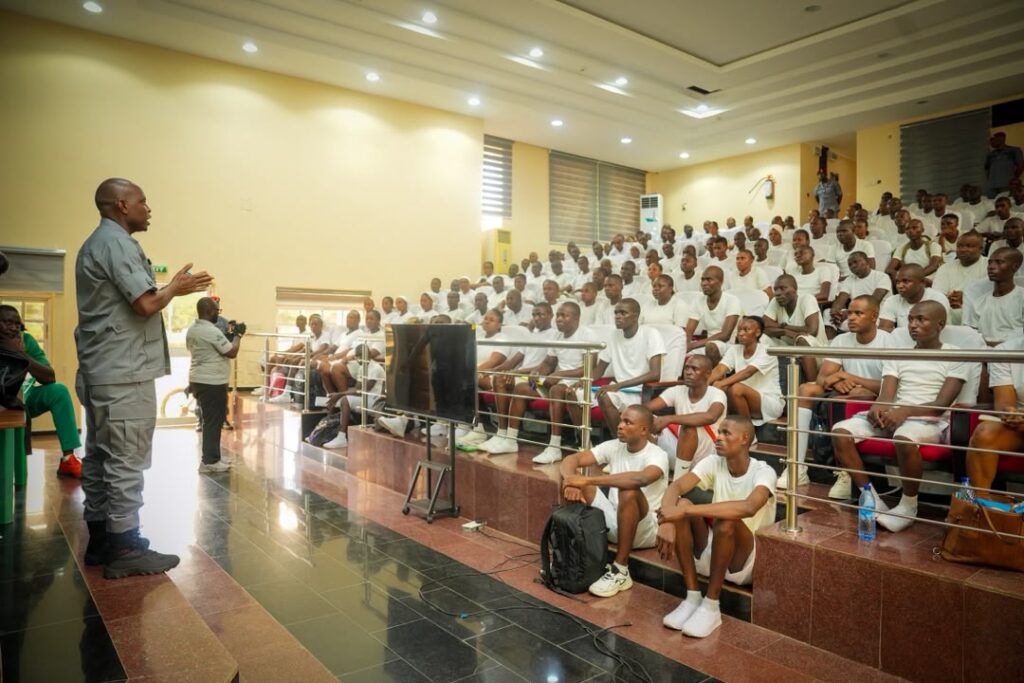
Candidates shortlisted for the Assistant Superintendent of Customs II (ASCII), Inspectorate and Customs Assistant cadres underwent documentation, physical fitness assessments and medical screening as part of the final stages of the recruitment process.
The exercise was conducted in batches, a measure introduced by the Service to reduce congestion and ensure smoother movement of candidates through the various screening points.
Speaking on the exercise, the Assistant Comptroller-General of Customs in charge of Human Resource Development, Frank Onyeka, said the Service had addressed challenges identified during the earlier phase of the recruitment process.
According to him, measures were introduced to improve coordination and reduce congestion at the screening centres.
“We have put measures in place to reduce congestion and ensure a smoother process this week. The gaps identified last week have been addressed, and we do not expect them to recur this week,” Onyeka said.
He urged candidates to remain disciplined and comply with the procedures established for the exercise.
The Service also introduced personalised screening forms as part of efforts to strengthen verification and minimise discrepancies in candidates’ records.
The Deputy Comptroller of Customs and member of the recruitment coordinating team, Adamu Musa, said each shortlisted candidate was provided with a form containing personal information and details required for the various stages of the screening.
He said the approach represented a departure from the previous system in which candidates received forms at the screening venue.
“Any candidate that has been shortlisted has a form designed especially for him, unlike in the past where you come, they issue you a form, and then some people along the way go and even change some of the records,” Musa explained.
According to him, the forms contained candidates’ names and other details covering sports, medical assessment, documentation and related requirements.
“So, once the candidate comes, you just verify what you already have from the system,” he added.
Musa said the new arrangement had made it easier for officials to authenticate candidates’ information while reducing opportunities for alterations and discrepancies.
The recruitment team also assessed candidates against established requirements, including age, physical fitness and drug screening.
Musa disclosed that candidates who test positive for hard drugs, exceed the stipulated age requirement or are found to have physical conditions that could affect their ability to perform their duties may be disqualified, subject to the final decision of the Service’s management.
He also stressed the importance of continuous recruitment and manpower development, noting that the expanding responsibilities of the Customs Service require personnel capable of responding to emerging challenges.
According to him, a well-trained workforce remains important to the Service’s responsibilities in national security, border protection, revenue collection and trade facilitation.
The Service also warned candidates and members of the public against relying on unverified information about the recruitment exercise.
Musa urged applicants to obtain recruitment updates only through the official communication channels of the Nigeria Customs Service, including its official website and verified social media platforms.
He warned that fraudsters could exploit the recruitment process by circulating fake announcements, misleading applicants or making unauthorised demands.
The warning comes as the Service moves towards the next stages of the recruitment process following the completion of the final screening exercise.
With the introduction of personalised forms, batch screening and tighter verification procedures, the NCS said it had strengthened the process to improve efficiency, reduce congestion and protect the integrity of the recruitment exercise.

Post Recapitulation: NAICOM Holds First Quarterly Staff Meeting
By Tony Obiechina, Abuja
The Commissioner for Insurance, Olusegun Ayo Omosehin, at the weekend presided over the Quarterly Staff General Meeting of the National Insurance Commission (NAICOM), the first such gathering since the successful conclusion of the insurance industry’s recapitalization exercise.
The meeting brought together management and staff to review the achievements recorded during the recapitalization programme and to align on the Commission’s strategic direction for the period ahead.
Participants also used the occasion to discuss issues bordering on staff welfare, institutional effectiveness, and the overall growth of the organization.
In their deliberations, the Commission reaffirmed its commitment to stronger regulation and supervision of the insurance sector, continuous capacity building for staff, and sustained operational excellence.
NAICOM said in a statement on Saturday that the resolutions reached at the meeting would help drive the emergence of a more resilient, competitive, and trusted insurance industry in the country.




11-year-old Girl Found Dead in Suleja Well, Church Guard Arrested
ShareFrom Dan Amasingha, Minna The disappearance of 11-year-old Christabel Albert after she left home for a birthday celebration has ended...

Jonathan Receives Bayelsa East APC Candidates
ShareFrom Mike Tayese, Yenagoa Former President of Nigeria, His Excellency, Dr. Goodluck Ebele Jonathan, has commended the quality, experience and...


2027: Delta APC Inaugurates Support Groups for Tinubu, Oborevwori
ShareFrom Francis Sadhere, Delta The Delta State chapter of the All Progressives Congress (APC) has inaugurated two political support groups...

‘Transformative Agenda to Critical Sectors are My Rescue Mission’ – Dauda
ShareFrom Ifeanyichukwu Nwannah, Gusau. Governor Dauda Lawal of Zamfara State, Dauda Lawal has declared that his administration’s rescue mission is...

Yari Urges Northerners to Honour Power Rotation, Back Tinubu’s Eight-Years Presidency
ShareFrom Rabiu Sanusi Kano Former Zamfara State Governor and Director-General of the All Progressives Congress (APC) Presidential Campaign Council, Senator...
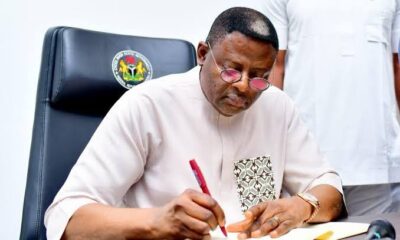

Otu Reinstates 3,000 Sacked LG Workers
ShareFrom Ene Asuquo, Calabar Cross River State Governor, Senator Prince Bassey Edet Otu, has approved the restoration of about 3,000...


First Lady Mobilises Women for Tinubu’s Re-election
ShareNigeria’s First Lady, Sen. Oluremi Tinubu, is set to host more than 20,000 women stakeholders in Abuja today as part...
NAFDAC Seeks International Support to Revive Vaccine Manufacturing in Nigeria
ShareThe National Agency for Food and Drug Administration and Control (NAFDAC) has solicited international partners’ support for establishing vaccine manufacturing...


IOM Empowers IDPs with Skills, Cash in Zamfara
ShareFrom Ifeanyichukwu Nwannah, Gusau Over one hundred residents, persons with disabilities, Internally Displaced Persons (IDPs), and other vulnerable groups in...
Diagnosis at 66: Nigeria’s Healthcare Landscape
ShareBy Racheal Abujah When Nigeria gained independence on Oct. 1, 1960, it held immense promise. Sixty-six years later, healthcare delivery...