
NEWS
ACCI Reiterates Commitment to Partnering FG, Stakeholders to Support SMEs Partnership


The Abuja Chamber of Commerce and Industry (ACCI) has reaffirmed its commitment to partnering with government and other relevant stakeholders to refine policies that support Small and Medium Enterprises (SMEs).Mr Agabaidu Jideani, Director-General of the ACCI disclosed this in an interview in Abuja on Monday.
Jideani said that the collaboration would enhance the SMEs by providing financial support through loans or grants, adding that such efforts can help them overcome financial challenges. He said that the partnership would expand businesses, thereby helping in refining policies that could support economic growth.“Abuja remains a vibrant hub and the ACCI is committed to partnering with the government to refine policies, support SMEs and drive inclusive growth.“Supporting the SMEs will help them expand into new markets and offer them valuable expertise and guidance to improve their operations.“By partnering with government and other relevant stakeholders, business can help refine policies that support economic growth, innovation and development,”he said.Jideani said that the partnership would also ensure that policies were practical, effective and beneficial to all stakeholders.Jideani said that the ACCI had strengthened its advocacy initiative driven by the chambers’ National Policy and Advocacy Centre (NPAC) through strategic partnership with various local and international organisations.He listed the organisations to include European Union, (EU) United Nations Development Programmes (UNDP), Small and Medium Enterprise Development Agency (SMEDAN), and the Ministry of Industry, Trade and Investments.He said that the partnership had advanced data protection and creative industry growth, thereby, safeguarding sensitive information from unauthorised access, and expanding and developing industries that focus on creative expression, innovation, and intellectual property.The director-general said that the chamber”s focus on SME insurance and gender-inclusive policies underscores it’s commitment to ensuring strong development.He said that the “SME Insurance” was insurance products and services designed specifically SMEs.“These insurance policies help SMEs to manage various risks, such as insurance coverage for losses due to business disruptions and protection against claims for damages or injuries,” he said.While assessing President Bola Tinubu’s two years administration on government policies and their impact on businesses and economic growth, Jideani said that the administration pursued ambitious reforms with positive intentions.He said that the administration, anchored on the “Renewed Hope” agenda, had addressed structural inefficiencies, boost private sector growth, and positioned Nigeria as a competitive economy.According to him, the policies have, however, produced mixed results, with notable achievements tempered by significant implementation challenges.“The administration’s policies have been driven by a commitment to fiscal discipline, market liberalisation, and infrastructure development. The reforms have delivered measurable gains,” he said. (NAN)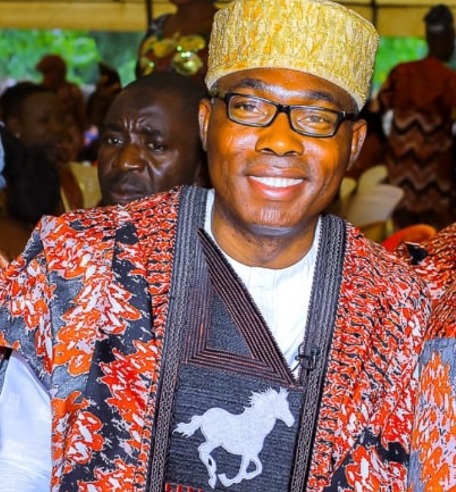
In a searing and emotionally charged interview, a presidential aspirant and leader of the Social Democratic Party recounts his harrowing visit to crisis-ravaged communities in Plateau State, where families were slaughtered and survivors left feeling abandoned by the nation meant to protect them. He condemns what he calls a shocking failure of leadership at the highest level, reveals the disturbing spread of “silent killings” across Nigeria, and issues a stark warning: the country is not drifting toward a one-party state—but something far more dangerous.
Mike Odiakose reports that as he confirms his 2027 presidential ambition, he positions himself not just as a politician, but as a witness to a nation on edge—and a voice demanding urgent change. Excerpts:You have been travelling round the country. You visited Jos. What were you hoping to find out when you visited Plateau State?
I visited Plateau to find out the plight, particularly of the people of Angua and Rubuka, who were meted out with the worst kind of humanitarian crisis you can think of. For invaders to visit a community like that and, in a flash, render many families bereaved, kill many people, disturb the peace of the community, injure many people, and traumatise the entire community — it was devastating.
So, I thought that we needed to go there and restore the hope of the people in the country, for them not to lose hope, as they were already feeling like stateless people — people unprotected by any government. People were beginning to question the humanity of fellow human beings. They were wondering if they were left alone, and I thought it was good to be with them, to restore their faith and confidence in Nigeria — to know that Nigeria is an ongoing project that has good prospects, as it is the greatest country anybody can be born in.
Despite all the problems we are facing, the failure of our government does not mean the bankruptcy of the country as a whole, and I think we did a bit of that.
I also wanted to know from the first responders, the security personnel, if they thought they could deal with these issues — if they were abreast of them. I wanted to know why they couldn’t respond to the killings and disaster, and what they were doing to engage with the community and the youths; what they thought could have been done differently, and their views about law enforcement.
I met with the community leaders and heard their views and perceptions about government, both at the state and federal levels. I then met with families of the victims. Since leaving the town, other people have been calling and mentioning their own issues.
I essentially learnt that, apart from the publicly known, notorious, and sensational killings, there are several low-key killings going on in every part of the country that people have taken for granted. They feel: “What’s the point of talking? Let’s find local solutions, as nobody will listen to us.” So they have been calling us and giving different instances that can make one ashamed.
Is this act of yours for optics, especially for the office you want to contest in 2027, or just as an ordinary Nigerian?
Politics is not on my mind at this stage; it’s just about the survival of the country. I was thoroughly embarrassed that the president failed in his leadership by going to the airport and complaining that there was no electricity, looking at his watch as if it was an ordeal, instead of taking the 18-minute drive to the epicentre and using that opportunity to talk to the families one-on-one and survey the area where the people are living.
I thought we needed to show the people that we are not all like that. Not only did I go there, I spoke with many of the faith leaders and realised that people are beginning to lose that sense of solidarity.
The opportunity afforded me a way to see how to be a better commander-in-chief — to know how to gather intelligence, how to work with communities, and to realise that Nigerians can actually live up to their responsibilities if they have just a little support.
Speaking with the law enforcement agents there, I gained more knowledge and more confidence in them, even as I sympathised with them that they are under poor leadership. You could see the governor, who appears not to be part of the community in a way.
If he were to be a good commander-in-chief whose priority is the safety and protection of communities, our law enforcement agents have the capacity to do it. Unfortunately, they are not being supported.
When I went there, even after the event had occurred, I first understood why the police station in Agbarukuba couldn’t respond — nobody could respond in the kind of situation they found themselves in. Since then, not much has been done to increase capacity. I see that the intelligence is there; however, I don’t know why it failed. I think we need to take advantage of these experiences to craft our community protection system, and I have learnt a lot from that.
Are you running for president in 2027?
Yes, of course. But you can be a politician and still be a decent human being who genuinely wants to mourn with those who are mourning. You can be a politician and be a decent Christian and family member.
I went there as a brother to the community. That, of course, is not the loudest podium for politicians at that time, but I needed to be with them. That job has been done, and I will continue to be with them even behind the cameras.
The point is, it is a political season, and I am running for president under the SDP. I ran last time with the slogan “Farewell to poverty and insecurity.” It is all linked together. Poverty has increased and insecurity has worsened.
One must speak about it from time to time, develop better solutions than those presently available, and get the community to buy into those solutions.
The opposition parties appear to be in shambles, especially with the crisis rocking the ADC, where different factions have emerged.
I am a politician, but primarily I am a lawyer. As a lawyer, I have professional ethics. When a matter is before the court, whether it affects my party, my interest, or other people, I usually pay attention to what goes on in court, because when you get newspaper reports or third-party renditions, they often do not align with what actually happens in court.
What I understand in the case of the ADC is that they changed leadership, and there is a tussle as to who is the leader or whether the leadership was properly transitioned, and the matter is in court. INEC is a party to the suit, and INEC has an interpretation of the court order that says they should observe the status quo.
It is legitimate for leaders of the ADC to disagree with INEC’s interpretation. It is their right to protest, but in reality, it is much easier if all the parties go back to court and clarify the actual meaning of ante bellum.
In politics, you don’t teach the other person how to play politics. If the matter is in court, and INEC is a party to the proceedings, and the ADC — including Nafiu Bala — is part of the same proceedings before a judge, then if the interpretation of the order is the only issue, that can be resolved in court.
However, it does not mean that leaders of the ADC do not have the right to express their frustration. If they think INEC is their problem, they can go there to protest, but in reality, until the matter is defined by the court, none of the parties can claim finality.
With what is happening, people think Nigeria may not have a formidable opposition in the country.
All of these concerns are valid. You can address the overbearing nature of the government and the fact that it is using its incumbency to gain advantage over other contestants in an electoral situation. You can see how they misuse their majority to pass unpopular, unfair, and restrictive electoral acts.
You can also be concerned about political parties taking care of their internal systems. People join political parties knowing they are in opposition, so they should try as much as possible to minimise errors, reduce internal wrangling, and remain united.
Every party has one or two elements that act like saboteurs, but with wisdom and proper management, these issues can be controlled. If you don’t have internal crises, it is easier to stand and challenge effectively.
There is also a misconception people often express — the fear that Nigeria is moving towards a one-party state under the APC. In my candid observation, based on evidence, Nigeria is not moving towards a one-party state.
What Nigeria is at risk of is one-man rule. If anyone in the APC thinks that Bola Ahmed Tinubu is trying to build a dominant one-party state, that is not the agenda. The real danger is a concentration of power in one individual.
The first victim of such a system would be the APC itself, because as they get used to not having internal democracy and being dictated to by their leader — who is the president — they will lose institutional strength. They will not be like parties such as the ANC, where internal processes are strong and members are stronger than those in government.
So, the APC itself becomes the first casualty. It is not going to be a one-party state, but rather a one-man rule, and the APC will struggle to function properly under such a system.
Looking at the 2023 elections, none of the presidential candidates secured a dominant share of the vote. Out of about 89 million registered voters, the largest bloc did not vote at all. This shows that our politics has become that of a self-interested elite, leaving the electorate behind.
No country can continue holding presidential elections with such low turnout and remain satisfied. It shows that the issues dominating media narratives and political agendas are not addressing the real concerns of the people. That is why people are effectively boycotting the process.
Nigerians should not abandon democracy to politicians or the ruling party. Democracy remains the best means to ensure that issues like security, social welfare, infrastructure, employment, rule of law, and accountability are addressed. Citizens must remain active — watching those in power, holding them accountable, rewarding good performance, and voting out failure. If the electorate withdraws and focuses only on personal survival, then the system deteriorates further. We need a reset. More people must join politics with better character, and those who cannot change will eventually be pushed out.
Talking about one-man rule, cross-carpeting in this republic is quite rampant. This is a big challenge. Why is the judiciary always the solution to party internal wrangling?
I think it is about leadership recruitment. The difference between now and the past is that we used to have politicians in politics. As Aminu Kano noted during the transition to the Second Republic, we began to see businessmen entering politics.
During military rule, contractors, apologists, and agents of the military realised that politics had become the most profitable business, so they entered it. That is how money politics took over.
Today, many politicians behave like merchants. There is no ideology or guiding principle. Like traders, they go where the price is lowest to buy and where it is highest to sell. There is no principle involved anymore.
The mistake people make is assuming that anyone who dresses like a politician is actually one. That is not the case. We need to reinvent the political class.
Today, many in the political class are not leaders. They do not represent anyone, they are not leading anyone, and they have no direction. They simply struggle for positions.
If the system does not change, whenever power shifts, the same people will migrate to the new ruling party. Those who followed previous leaders now follow Bola Ahmed Tinubu. Tomorrow, they will follow someone else.
Even if — hypothetically — a deeply unfit person comes to power but controls resources, contracts, and patronage, people will still align with that person. That is the reality. What we need to do is return to the people and build a new political class. The current one is unlikely to change.
In light of the recent killings in some states, do you think the state police initiative can address insecurity?
Anything that is sincerely implemented will work. Even the current system can work if there is sincere leadership — a good commander-in-chief and security officers who are not motivated by money or politics.
State police can also work, but only if the same principles are applied. If state police operates under the same style of leadership we currently see in some states, it will fail.
The problem is not the structure — it is leadership. There is a leadership deficit at the federal, state, and local government levels, and even at the community level, leaders lack support.
If you change the system, you must also change the leadership. Otherwise, nothing will improve.
End
By Chidi Amuta
Nigerian politicians have once again carried out another successful coup against the people. They have fired up a nationwide frenzy about the 2027 general elections just as the democratic space in which those elections will take place is dying.
Those yearning for paradise had better hang their hopes up in the air. Paradise is hereby postponed till after the elections.There is no point complaining about hunger in the land when abundant food is promised as a reward for the forthcoming elections. No point weeping over the cost of electricity, basic drugs, transport fares or even mundane things like house rents and school fees. Let us just focus on the forthcoming election.
After the elections, we will arrive at a place to find paradise waiting. It does not matter what promises were made by the ruling party on 2o22/23. Those ones have expired.
Even more pointedly, the entire rhetoric about the 2027 elections has been narrowed even further. It is now mostly about the political plight of President Tinubu. Specifically, it is all about whether Mr. Tinubu will be returned to power for a second term.
The plight of democracy and the future of Nigeria’s democracy has now been made synonymous with the fate of Tinubu’s troubled mandate. Along with this second term narrative matter is the continued hegemony of the ruling APC. The ruling party has metamorphosed into a political behemoth. It is poised to impose a partisan monolith on the nation. It is now a political sin to challenge or criticize the excesses of the APC in its hardly hidden aspiration to go into the 2027 elections as a virtual one-party contestant.
The APC has gobbled literally all the state governors and their retinue of political attachees. It has stationed hatchet men in virtually all the other parties to ensure they remain in endless crisis while creating a façade of a multi -party democracy. In the interim, there seems to be a concerted operation to continuously weaken the other parties to a point where they can at best only put up a weak appearance during the election. Yet, a cardinal tenet of democracy is the existence of viable credible parties. A landscape in which rival parties are deliberately weakened by the party in power is an affront on democracy.
On their part, the opposition platforms are in a desperate struggle for survival. Easily the most credible group, the ADC, has been struck a lethal blow with its registration literally held in abeyance by an unholy alliance of the judiciary and the almighty INEC. Before it can behave like an opposition party, the ADC has now to return to court to fight for its very legal existence. You cannot oppose a ruling party politically when your party leadership is of questionable pedigree.
In all the raging brickbat about the 2027 elections, neither the government nor those politically opposed to it have spared a thought about the plight of democracy itself. The critical question, to my mind, is this: Can you have credible, reliable elections when the major markers of democracy are in deficit? Yes and no.
The ideal of liberal democracy presupposes the existence of a society in which the ideals of a safe society, existence of authentic parties, freedom of expression through a free media, equitable judiciary, a credible electoral umpire and a definable civil society are present to a reasonable extent.
In recent years, a strange definition of democracy has emerged as authoritarian leaders hustle to be accommodated in the bandwagon of democracy. Something called “illiberal democracy” has emerged in places like Hungary, Russia and Turkey to an extent. In illiberal democracies, elections can be held as a seasonal ritual of democratic appearance. No need worrying about media freedom, partisan competition, citizens rights or the credibility of the electoral process and the agency that referees elections. All that is important is the fact of a scheduled election and the reality of a pre-determined outcome usually in favour of an authoritarian incumbent.
We are looking at Russian elections under the endless reign of Vladimir Putin. Opposition parties exist only in name. Opposition figures are hounded down, arrested, jailed and eliminated in prison. Vocal opponents are chased away or hounded into exile where state sponsored goons go after them with vials of poisonous substances.
Vocal and influential journalists and opinion leaders are gunned down in broad daylight in public spaces to further traumatize and frighten the public.
On result day, everybody already knows the outcome of the “election”! Democracy is alive. To every nation its own form of democracy-“appropriate democracy”. African has in recent times displayed its versions of this Russian template perhaps with less bloody sophistication.Uganda, Cameroun, Congo Brazaville …
In today’s Nigeria, there is a creeping rehearsal of the curtailment of democracy as a concept and a culture. We may be hurtling towards an untidy African variant of illiberal democracy. Citizens freedom of movement throughout the length and breadth of the federation has been severely curtailed by a crippling insecurity.
Major highways in the top half of the country are under the control of bandit squads, terrorist gangs and all manner of gun-wielding alternate power contestants. As we write this, the unrelenting insurgency of Boko Haram and its affiliates has struck again, claiming the lives of many armed forces personnel including a general.
In some parts of the country, even elected government officials at state level are openly denying fellow Nigerians freedom of access to and movement in their states for reasons of partisan political differences.
Freedom of expression and the very existence of an independent media is constantly under threat as officials at different levels of government. Federal Capital Territory Minister, Nyesom Wike, has openly threatened to shoot a television journalist if he could.
The Governor of Niger State, Umar Bago, has found a hobby in routinely harassing media houses, ordering the arrest and indefinite detention of journalists in his state. Between 2024 and 2026, he is on record to have shut down Badeggi FM, a private radio station, and openly threatened heavy reprisals against journalists who report facts about insecurity in parts of the state. In parts of the country, open media criticism of government officials has become an offence punishable with unwarranted indiscriminate police arrests and detentions.
A democracy with a doubtful electoral umpire is a joke. The reputation of INEC as an electoral umpire remains in tatters. The public hardly believes that INEC could ever be credible or independent. In fact, there is a street side belief that those who go out to vote are merely fulfilling a seasonal ritual because INEC would end up announcing whatever results its paymasters want.
As we write, INEC is embroiled in needless controversy over the registration of the ADC, the umbrella platform of credible opposition politicians. INEC has been accused of relying on a suit filed by a party official who had long resigned to discredit the leadership of the APC and therefore deny the party registration.
As things stand, the ADC cannot proceed with its congresses leading to a convention because its registration is now subject to an unwarranted litigation. Depending on the outcome of the judicial process, the fate of the ADC remains up in the air even as the ruling APC soars into uncontested dominance as the virtual single party for the 2027 contest. What is in the making is more like democracy by exclusion.
Most ordinary Nigerians hardly spare a thought about the judiciary. The common conception is that our judiciary is an instrument in the hands of the political class. More often than not, judgments on political cases are often determined in favour of incumbent powers in return for tenure, cash or material favours.
While the judiciary is meant to maintain a certain independence, judges depend on the executive for their appointments, promotions and general welfare budget. In recent times, the executive has resorted to material blackmail of judges to keep their allegiance. Luxury quarters, expensive SUVs and lavish vacations are provided for judges without questioning.
In the end, cases brought against incumbent executives tend to be predetermined in the courts of a badly compromised judiciary at federal and state levels. The widespread understanding in Nigeria is that whoever pays the judge owns the judgment.
Above all requirements, the existence of a democracy largely depends on the popularity of the sovereign’s mandate. The leader of a democracy derives his mandate from the populace. Therefore, the best democracies are those in which the leader is immersed among the people.
In a republican sense, the leader is seen as one with the people. He actively and positively identifies with the lowest common denominator of the populace. He is seen to identify with the people in their moments of grief and elation. A sovereign that sees himself as above the people belongs more to an authoritarian realm than a democracy.
An alienated and distant sovereign is one sign that a democracy is dying. Barely a fortnight ago, there was an orgy of killings in Jos, Plateau state. Over fifty lives were lost in an assault by bandits in an eruption that is a mere repeat of what has become a regular feature of the mid -section of the country. President Tinubu was naturally expected to visit Jos to empathize with the bereaved and the injured.
Reportedly, the President travelled to Jos but arrived just in time for the airport to be closed for lack of runway lighting. He therefore took the most curious decision of a leader. He ordered that representatives of the affected community should meet and greet him at the airport lounge! What ensued was a show of shame.
Yet presidential spokespersons paid with public funds have stepped forward to justify and rationalize this affront on public sensibility. Leadership devoid of genuine compassion is an insult to the democratic ethos. On a number of previous occasions, Tinubu has had to be reminded during some of his numerous junkets abroad that he should at least respect the dead and the injured by either rushing back home or visiting on his return. These appeals have often fallen on deaf ears in utter disregard and disrespect for lives lost, injuries sustained or livelihoods erased by our all too frequent and uncontrolled violent eruptions of insecurity.
The usual knee jerk executive response has often been a presidential directive for the relevant service chiefs to relocate to the theatre of current tragedy. No one knows the efficacy of these reflex orders as the mayhem and killings repeat ever so often in the same places where service chiefs and commanders have been known to be ordered to relocate to! Both the insurgents and the victim public hardly take these presidential directives seriously. Nor does the larger public take threats to bring trouble makers to book.
Soon after the threats, the killers and insurgents return with even greater ferocity and unleash more mayhem and spill more blood. So much for rituals of ineffectual power and presidential insensitivity backed by braggadocio.
What has emerged in Nigeria’s recent encounter with democracy is a curious situation. The rituals of electioneering have proceeded for years without attention to the evolution of a democratic society or its underlying culture. In that sense, Tinubu is merely continuing and deepening an inherited tradition. An election will be held in 2027. But the outcome will be a disservice to democracy properly understood.
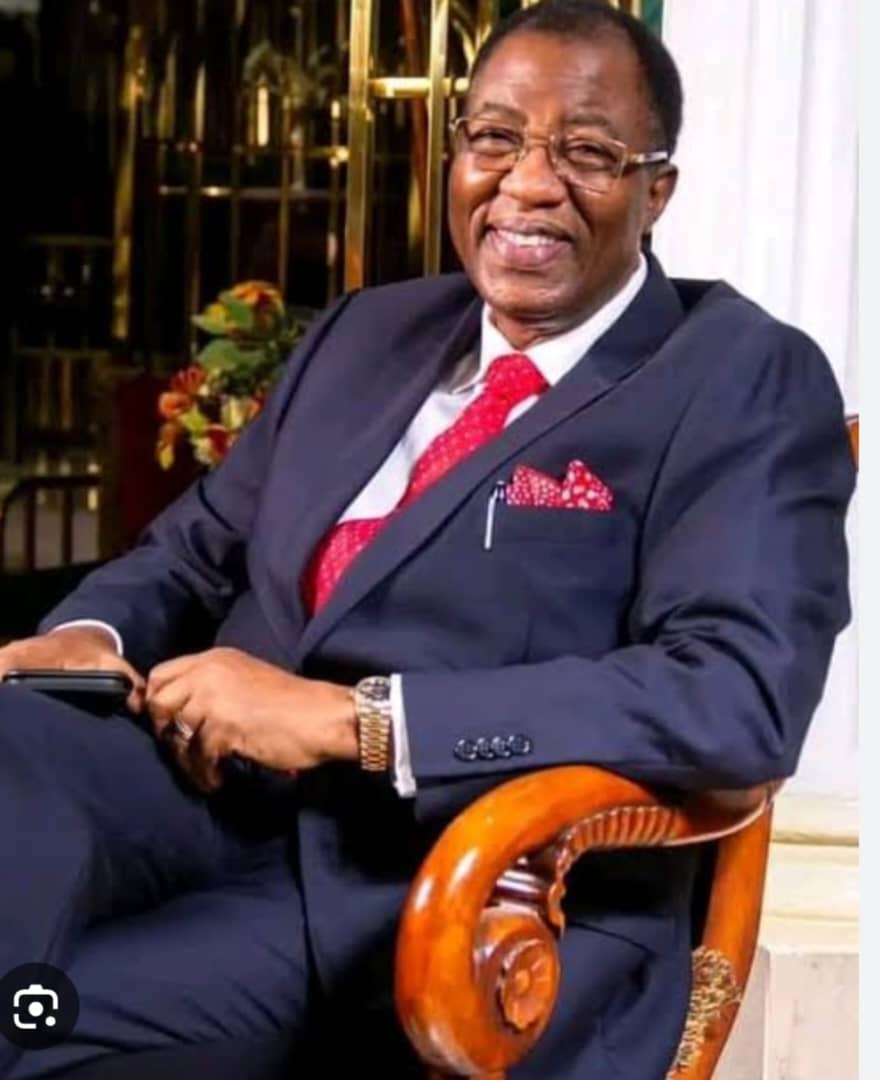
By Prince Taiwo Nodiru
All over the world, especially in the nations where democracy thrive, the legislative assignments are germane and always taken very serious because a functional legislative arm is always the bedrock of an enduring democracy.
Legislative assignments are always reserved for the well meaning, well to do professionals and individuals with proven integrity, unblemished academic records, law abiding and unquestionable characters.
Ogun east senatorial district has for a long time produced many seasoned and professional personality that earned and commanded public trusts such as Senators Abraham Adesanya (a renowned lawyer) Gbenga Kaka, Jubril Martins Kuye (a renowned industrialist /economist), Olabiyi Durojaye, Olalekan Mustapha,Tokunbo Ogunbanjo to mention but a few.
The coming on board of His Excellency, Senator (Egnr) Otunba Gbenga Daniel (OGD) a renowned/seasoned/professional Engineer in 2023 as the distinguished Senator representing Ogun east in the Red chamber of the National Assembly as ever being a blessing to the good people of Ijebu/Remo divisions of Ogun state.
Within three years or thereabout, Ogun east senatorial district has benefitted lots of dividends of democracy as a result of good, proper and quality representation displayed by Senator Daniel.
.The numbers of bills sponsored by Senator Daniel so far remain super and unprecedented as OGD was rated among the ten best performing Senators in Nigeria.
The numbers of constituency projects that Senator Daniel has so far attracted to the length and breath of Ogun east are also super, fantastic and commendable.
As I write, there is an ongoing construction of a world class Naval Base in Ogun waterside. This Naval Base when completed will host various institutions such primary, secondary cum tertiary schools, standard Naval hospital, Stadium, Naval college, market etc while enhancing all improved security of life and properties of the people of Ogun waterside.
Senator Daniel was the lead Senator that moved /sponsored the motion for the creation of the South West Development Commission (SWDC).
It’s no longer a news that South West Development Commission has fully taken off with lots of benefit coming the ways of the south westerners.
Also few months ago, the good people of Ogun east woke up to receive the good news about the National Assembly approval of the establishment of a Federal Medical Center (FMC) in Ijebu Ode the traditional capital of Ijebuland. Interestingly, the bill for the creation of a federal medical center in Ijebu Ode was solely sponsored by Senator Daniel. The approved bill is awaiting presidential assent which will come up any moment from now by God grace.
Creation of a new state out of the present Ogun state. Senator Daniel is making a very good move and frantic efforts towards ensuring that a new state (Ijebu/Remo) is created out the present Ogun state. We could all recall that the old Ijebu province was the only province that is yet to become a full state of its own.
The aged long dream of the people of Ijebu and Remo divisions of having a state that they can call their own is about to be matialised courtesy of the wonderful efforts of Senator Gbenga Daniel – OGD.
By the time that this anticipated new state is materialized, history/posterity will be kind to Otunba Gbenga Daniel.
Senator Daniel has intervened in many public projects such as road rehabilitations /constructions, water projects, schools rehabilitations, various trainings /empowerments programmes, constructions of drainages, bridges, markets, solar street lights, free medical services, interest free loans to market men/women, scholarship awards, free laptop computers for Teachers and students etc All these Senator Daniel wonderful interventions are still ongoing for the benefits of the good people of Ogun east.
The benefit of having a ranking Senator are enormous. A ranking Senator is one who has spent more than a term in the national assembly.
The constitution of the federal republic of Nigeria did not limit the number of terms that any federal lawmaker can stay bearing in mind the importance of experience. An old lawmaker is like an old wine which always taste better than new.
A ranking senator at any point in time due to experiences always know what to do, how to do, where to go and who to meet for him to easily facilitate projects to his constituency unlike a JJC who will still be busy learning the ABC of the legislative processes while perambulating and beating about the bush.
A ranking Senator with a robust and positive working relationship with his other colleagues will always find it easier to maneuver his ways for the betterment of his constituent.
It’s only a ranking Senator that can have an opportunity to become a principal officer of the national assembly. It’s a known fact that any district that is able to produce a principal officer in the national assembly will definitely have much more assess to power while facilitating more dividends of democracy in multiple folds to his constituent compare to a first timer (JJC) who knows next to nothing and with few benefits.
I therefore want to make a very passionate appeal to all of us, the good people of Ogun east senatorial district that the best we can do in 2027 is for all of us to ensure that we return Senator Otunba Gbenga Daniel (OGD)to the red chamber of the national assembly for him to continue /complete his good jobs that he has started and for the benefits of all of us.
We can’t afford to trade competency and experience for ineptitude and ingnorance.
We can’t afford to risk our future by putting our destinies in the hand of an individual with questionable /doubtful academic records/status.
We should not engage in “try by error” by pushing forward an unpopular candidate who always looses his home and away matches.
The antecedents of Senator Otunba Gbenga Daniel are evergreen, super, unprecedented, unparallel and verifiable.
The Tai Solarin Federal University of Education Ijagun, Abraham Adesayan Polytechnic Ijebu Igbo, the Gateway Polytechnic Sapade, NYSC permanent orientation camp Sagamu, Dipo Dina Intl stadium Ijebu Ode, Gateway Intl stadium Sagamu, Gateway Trailer park Ogere, Sagamu Intl market, Igode Intl market via Ogijo, TRACE, Gateway Inst.of Oil&Gas Ogun waterside etc are some of the beautiful efforts of Senator Daniel towards the growth and development of Ogun east.
All hands must be on deck to ensure that Senator Daniel is returned for his second term in the Senate for the continuous benefits of all and sundry.
OGD second term in office will give us more opportunities for more federal precence /projects, more federal employment opportunities for our young graduates, more empowerments programmes and supports for artisans, farmers and market men and women, more scholarship awards for indigent students and many more lots of benefit for all of us.
The much anticipated Ijebu/Remo state can only be achieved by Senator Gbenga Daniel who moved the motion for it’s creation in the first instance. Any other person can’t be trusted on this very serious matter.
Ko si eni to Le mo pon bi olomo
OGD is tested and trusted
Ogun East 2027 : Forward Ever, Backward Never.
…Prince Taiwo Nodiru
Ago-Iwoye, Ijebu


Nigeria’s Hidden Killings: One-Man Rule Looms – Adebayo
ShareIn a searing and emotionally charged interview, a presidential aspirant and leader of the Social Democratic Party recounts his harrowing...
Heading Towards Elections with Democracy on Crutches
ShareBy Chidi Amuta Nigerian politicians have once again carried out another successful coup against the people. They have fired up...

2027: Ahmadiyya Leader Sees Hope in Adewole Adebayo if Youths Organise
ShareBy Mike Odiakose, Abuja The Amir and National Head of the Ahmadiyya Muslim Jama’at of Nigeria, Alatoye Abdulazeez, has urged...

OGD 2027 : Why Ogun East Must Produce a Ranking Senator
ShareBy Prince Taiwo Nodiru All over the world, especially in the nations where democracy thrive, the legislative assignments are germane...


Nigeria To Host 5th High Level Ministerial Meeting On AMR
ShareBy Laide Akinboade, Abuja Nigeria said it has concluded arrangement to host the 5th high level ministerial meeting on Antimicrobial...

Sule Inaugurates N2.8bn Loko Township Roads
ShareNasarawa State Governor, Abdullahi Sule has inaugurated a 3.2-kilometre Loko Link and Township Roads project worth N2.8 billion in Nasarawa...


2026 Unity Cup: Don’t Exclude NPFL Players from Eagles, Ekpo Tells Chelle
ShareFormer Nigerian international Friday Ekpo has advised Super Eagles head coach Eric Chelle not to exclude players from the Nigeria...

Cameroon Separatists Pause Fighting Ahead Pope Visit
ShareAnglophone separatists in Cameroon have announced a period of “safe travel passage” and halted fighting ahead of Pope Leo XIV’s visit to the conflict‑hit region this week. Leaders...


Over 2,000 PhD Candidates Jostle for PTDF Overseas Scholarship
ShareThe Petroleum Technology Development Fund (PTDF) has commenced the second phase of interviews for the 2026/2027 PhD award under its...
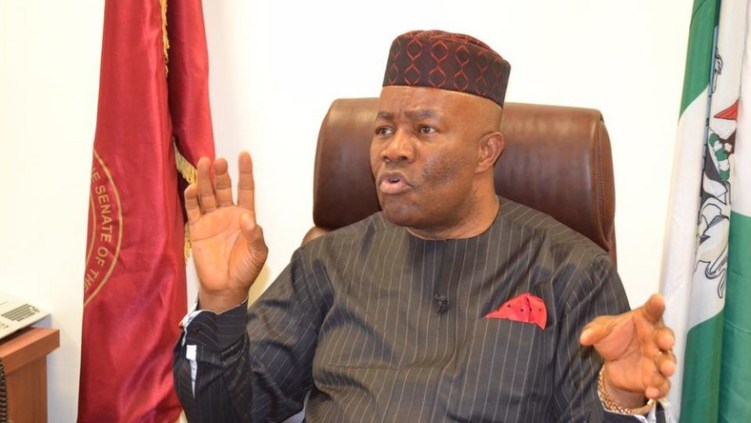
Akpabio Ties Worsening Insecurity to Gang up Against Tinubu
ShareBy Eze Okechukwu, Abuja The Senate President, Godswill Akpabio has linked the worsening insecurity across the country to a gang up by opposition politicians,...