
POLITICS
Address Agitations for Restructuring, Secession—Oyegun tells Buhari, APC

By Jude Opara, Abuja
A former National Chairman of the All Progressives Congress (APC) Chief John Oyegun, has urged President Muhammadu Buhari and the APC to immediately address the agitations for restructuring as well as calls for secession.
Oyegun said APC the government of the federation must not continue to give the impression that only military governments can fine tune the basic structure of the country.
The former governor of Edo State who spoke at the public presentation of a book titled “APC’s Litmus Tests” written by the director general of the Progressive Governors Forum (PGD) Mallam Salihu Moh.
Lukman, Oyegun advised that the earlier those agitations are addressed will prove how proactive the APC government is.“We are in charge today, a progressive government, a progressive regime and I think it is proper that we show to the nation that when the people want some degree of change we should be responsive to it, we should address it. Compromises have to be made, there’s no question about that. The report itself is not final. It still has to go through the litmus test of compromises. The ideas of people from different parts of the country will be different up to the extent they want to go with the proposals in the document, but it is necessary. It is vital that it is in fact, mandatory in the interest of the survival of our nation, that these issues be addressed. We cannot continue to allow the subject to become something that threatens our nation at any turn.
“So, the earlier we address it, the earlier we show that as a party we are responsive to the feelings of the people, the desires of the people and the wants of the people. It becomes easier then to diffuse the kind of stresses that the nation is passing through today. Look at what is happening. Well, it is recommended there should be State Police. Today we are having all sorts of organizations cropping out with all sorts of names, we haven’t defined their operational status, we haven’t defined their relativity properly with the establish security agents and the rest. But sitting down together we can work out so that we know the relativities between the existing structures and the existing institutions.”
On the call by some stakeholders for the APC to be reorganized using the bottom-top approach, Oyegun cautioned against bending the party’s rules to suit some interests.
“You can stretch the rule. Never break it. Secondly, it is very fundamental that in all we do, the ranks-and-file members of the party and of parties generally, are able to see that even when they lose, they have been treated fairly, they have been treated decently.”
In his remarks, Chairman of the Progressive Governors Forum (PGF) and governor of Kebbi state, Atiku Bagudu said the ruling-APC is knows that there are fundamental challenges that need immediate attention and they will rise to occasion and provide leadership.
“The party is not shy to acknowledge that our constitution is not perfect and again under John Oyegun, the El-Rufai Committee on True Federalism was created to look at those issues that we should do better about. APC believe is; let us amend the constitution because society is dynamic not because somebody has been wronged and cheated. I believe the proposal which have been submitted to the National Assembly will help to produce amended Constitution that will meet most of the aspirations.”
Also speaking, former Nigerian envoy and mother of the day, Fatima Balla Abubakar, said APC’s popularity can be attributed, significantly, to President Muhammadu Buhari, even as she called on the government to quickly address the growing social unrest in order for the party to regain its confidence among Nigerians.
“As the party in power which also has control of both the House of Representatives and the Senate, the APC must redouble its efforts to regain public confidence and trust which have been eroded in these deeply trying times. We cannot regain public confidence in our party as well as the government if we do not seriously address the growing social unrest due to growing mistrust between citizens mainly induced by poverty, lack of jobs and livelihood. It is only when trust is rebuilt that we can restore peace.”
The author of the book and the Director General of the PGF, Salihu Moh. Lukman while appreciating the party for the opportunity given to him assured that the APC leaders have been working to address some of the foundational issues of democracy and that the book is his modest contribution to support initiatives of the government.
Lukman also warned that the party must never allow the noise of selfish political entrepreneurs to hoodwink Nigerians into believing that the APC and governments it produced have failed.
“It will be a mockery of our political history to allow any narrative in the public space, which suggest that comparative to previous administrations since 1999, APC controlled administration led by President Muhammadu Buhari has failed. Like President Buhari himself has acknowledged, there are no doubt challenges facing the country, but no administration since 1999 has succeeded in completing projects, whether initiated by previous or current governments,” he concluded.



By Tony Obiechina, Abuja
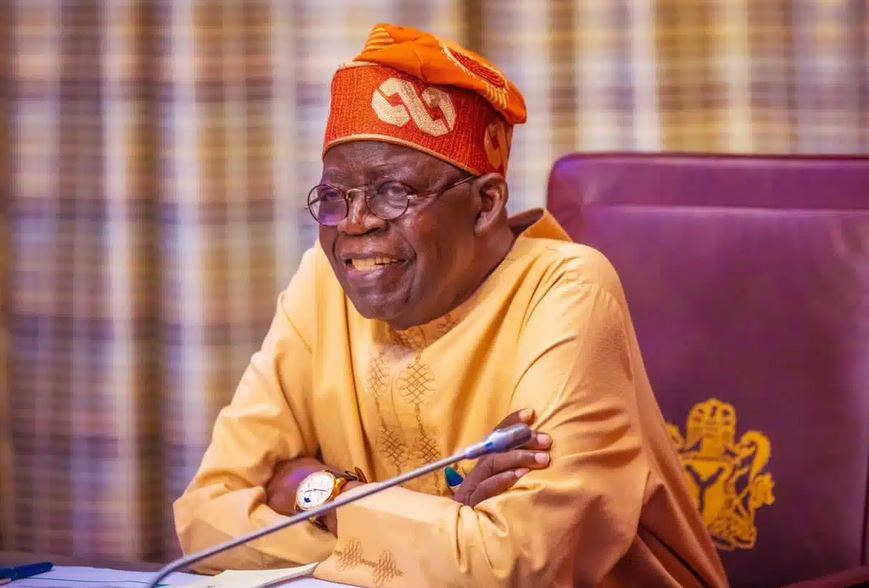
President Bola Tinubu yesterday, unveiled a $3.05 billion package of World Bank-supported programmes designed to accelerate poverty reduction, strengthen community resilience and expand investments in healthcare, education and governance across Nigeria.
The five programmes, launched at the Presidential Villa in Abuja, comprise the Nigeria Community Action for Resilience and Economic Stimulus Additional Financing (NG-CARES AF), Solutions for Internally Displaced Persons and Host Communities (SOLID), and the three Human Capital Opportunities for Prosperity and Equity (HOPE) initiatives—HOPE-GOV, HOPE-PHC and HOPE-EDU.
Speaking through the Minister of Finance and Coordinating Minister of the Economy, Wale Edun, President Tinubu described the interventions as a coordinated national strategy aimed at ensuring that the gains from ongoing economic reforms translate into tangible improvements in the lives of ordinary Nigerians.
“Today, we act on the pledge of protecting the vulnerable, empowering communities and building the human capital that will carry Nigeria forward,” the President said.
He noted that the reforms were already yielding positive outcomes, including stronger economic growth, rising investor confidence, improved foreign reserves and moderating inflation, but stressed that the benefits must be felt in every household.
“Real prosperity means no Nigerian is left behind on our journey to a $1 trillion economy by 2030,” he said.
Tinubu explained that NG-CARES would receive an additional $1.25 billion in World Bank financing to support smallholder farmers, small businesses and vulnerable households, while the $300 million SOLID programme would help internally displaced persons and host communities rebuild livelihoods, infrastructure and essential services.
He added that the $1.5 billion HOPE package would strengthen primary healthcare, improve foundational learning in public schools, support teachers and enhance governance at the grassroots.
“These programmes are not separate efforts; they are one coordinated national strategy for poverty reduction, human capital development and community resilience. Livelihoods, healthcare, education, social protection and support for displaced communities reinforce one another where it matters most—at the grassroots,” he said.
The President said the initiatives would be implemented through a ward-centric approach that aligns the efforts of the federal, state and local governments to improve service delivery and development outcomes across the country.
He also disclosed that the Federal Government’s expanded cash transfer programme had already reached 15 million vulnerable households.
Calling for effective implementation, Tinubu urged all stakeholders to uphold transparency, accountability and prudent financial management.
“We are building a Nigeria where extreme poverty is banished, where every child has access to quality education and healthcare, and where every community can withstand adversity and recover faster and stronger,” he said.
Minister of Budget and Economic Planning, Senator Abubakar Atiku Bagudu, said the programmes represented an integrated response to poverty, vulnerability and the cost-of-living crisis.
According to him, NG-CARES will strengthen resilience and institutions, SOLID will restore dignity and opportunities for displaced persons and host communities, while the HOPE initiatives will build the human capital needed for long-term economic prosperity.
“Together, they form an integrated framework for tackling poverty and vulnerability while creating opportunities for sustainable development. They translate the Renewed Hope Agenda into measurable results that directly improve the lives of poor and vulnerable Nigerians,” Bagudu said.
He stressed that the success of the programmes would depend on strong coordination, accountability and collaboration among the federal, state and local governments, implementing agencies and development partners.
Providing further details, the Coordinating Minister of Health and Social Welfare, Prof. Muhammad Ali Pate, said the $570 million HOPE-PHC programme would improve access to quality primary healthcare for about 40 million Nigerians, particularly women, children and adolescents.
He said the intervention would reduce maternal and under-five mortality, strengthen primary healthcare facilities and improve service delivery through performance-based financing.
Minister of Education, Dr. Tunji Alausa, disclosed that the $562 million HOPE-EDU programme would benefit nearly 30 million pupils, support about 500,000 teachers and strengthen over 65,000 public schools nationwide.
The World Bank Country Director for Nigeria, Dr. Matthew Verghis, said the programmes were designed to cushion the impact of the global cost-of-living crisis while strengthening social protection, expanding economic opportunities and improving human capital outcomes.
He noted that Nigeria’s macroeconomic reforms had created additional fiscal space for social investments but said external support remained necessary to accelerate poverty reduction and protect vulnerable populations.
“The programmes demonstrate that Nigeria’s greatest asset is its people, and the World Bank remains committed to supporting reforms that improve education, healthcare, livelihoods and social protection,” he said.
Minister of Humanitarian Affairs and Poverty Reduction, Professor Nentawe Yilwatda, said the interventions would help vulnerable Nigerians and displaced communities transition from humanitarian relief to resilience and sustainable livelihoods.
Governors under the Nigeria Governors’ Forum, members of the National Assembly, development partners and other stakeholders pledged support for the successful implementation of the programmes.

By David Torough, Abuja
The Court of Appeal in Abuja has restored the Independent National Electoral Commission’s (INEC) revised timetable and guidelines for the 2027 general elections, setting aside the Federal High Court judgment that nullified key aspects of the electoral body’s schedule.
In a unanimous judgment delivered on Thursday, by a three-member panel, the appellate court upheld INEC’s appeal and overturned the May 20 decision of the Federal High Court, which had invalidated portions of the commission’s revised timetable, including deadlines for party primaries, submission of membership registers, and nomination of candidates.
Delivering the lead judgment prepared by Justice Adebukola Banjoko, Justice Okon Abang held that the trial court erred by interfering with INEC’s administrative discretion, stressing that the Constitution and the Electoral Act empower the commission to regulate the conduct of elections.
The appellate court further ruled that INEC’s revised timetable constitutes subsidiary legislation under the Electoral Act 2026 and therefore carries the same force of law as the Act itself. It held that all the deadlines contained in the timetable fall within the ambit of the Electoral Act and that the commission acted within its statutory powers.
The court also held that the Youth Party (YP), which instituted the suit against INEC, lacked the locus standi (legal standing) to challenge the commission’s guidelines, noting that the party failed to demonstrate how the timetable or guidelines adversely affected its rights or its participation in the electoral process.
According to the court, there was no evidence that the party was prevented or threatened from conducting its primaries, adding that judicial intervention is only warranted where there is a genuine threat to a party’s participation in an election.
The appellate court concluded that the declaratory reliefs granted by the trial court were wrongly issued and consequently set them aside.
INEC had appealed the Federal High Court judgment through its lead counsel, Alex Izinyon, arguing that the lower court erred by failing to determine its preliminary objection that the suit was hypothetical and academic, thereby denying the commission a fair hearing.
The commission also maintained that the judgment was against the weight of evidence and urged the Court of Appeal to strike out the suit for lack of jurisdiction on the grounds that the Youth Party lacked the legal capacity to institute the action.
The dispute arose after the Youth Party challenged INEC’s directive requiring political parties to submit their membership registers and databases by May 10 as a condition for participation in the 2027 general elections.
In its May 20 judgment, the Federal High Court had held that INEC could not lawfully shorten timelines prescribed under the Electoral Act 2026, ruling that the commission lacked the power to impose earlier deadlines for party primaries, submission and substitution of candidates, and publication of the final list of candidates.
However, the Court of Appeal found that the trial court failed to apply binding legal precedents and wrongly invalidated INEC’s timetable, thereby restoring the commission’s guidelines and timelines for the conduct of the 2027 general elections.
Meanwhile, the Independent National Electoral Commission is considering conducting a comprehensive audit of its electoral technology systems and a mock presidential election ahead of the 2027 general election to test the reliability of its processes and technology.
INEC Chairman, Prof. Joash Amupitan, disclosed this on Thursday while receiving the British High Commissioner to Nigeria, Dr Richard Montgomery, on a courtesy visit to the commission’s headquarters in Abuja.
According to a statement posted on INEC’s official X page, the proposals were under consideration by the commission and were informed by concerns arising from the 2023 general election, particularly regarding the reliability of election technology.
“The INEC Chairman said the proposals, which were under consideration by the commission that same day, were informed by concerns arising from the 2023 general election, particularly regarding the reliability of election technology.
“According to him, the commission was looking at the possibility of auditing all its systems ahead of the 2027 election, as well as conducting a mock presidential election, to test the readiness of its processes and technology before the actual polls,” the post read.
He noted that the proposed exercises were not originally captured in the commission’s budget but said INEC would explore ways to implement them if necessary, given their potential to strengthen the credibility of the general election.
The INEC chairman linked the proposals to the commission’s broader efforts to improve technological reliability, including the continued deployment of the Bimodal Voter Accreditation System and the INEC Result Viewing Portal.
He added that the commission was also reviewing its cyber-security architecture, covering system redundancy, penetration testing and disaster recovery mechanisms.
The statement noted that Montgomery said the UK had been closely following INEC’s preparations for the 2027 general election, including recent off-cycle elections in Ekiti, the Federal Capital Territory and Anambra, as well as preparations for the Osun State governorship election.
The envoy, who said he would conclude his tenure in about six weeks, assured the commission of the UK’s continued support, expressing confidence that his successor would sustain the partnership with INEC ahead of the 2027 general election.
From Ayinde Akintade, Osogbo
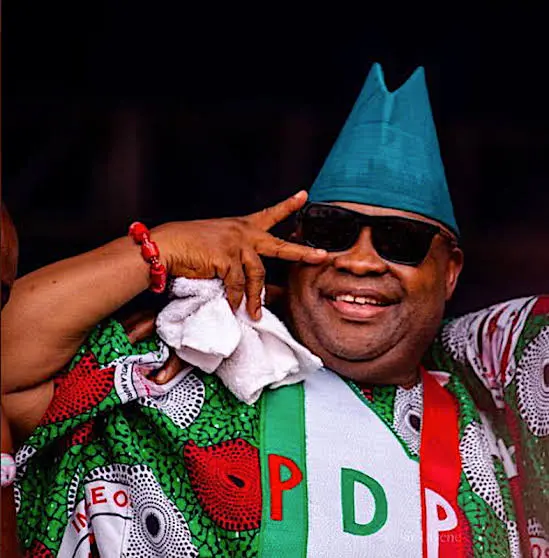
The governorship candidate of the All Progressives Congress (APC) in the forthcoming gubernatorial election in Osun state, Asiwaju Munirudeen Bola Oyebamiji, has described a call by Governor Ademola Adeleke that Britain should impose economic sanctions and visa ban on the big wigs of the APC in the state over fabricated accusations of promotion of political violence as spurious, unfounded and a joke of the century
Oyebamiji made the statement while playing host to the British delegation, in Osogbo, the Osun State capital.
He maintained that if any political party had any reason to make such a request, it would more logically have been his party not the ruling Accord in the state as evident in the alleged unruly activities credited to the incumbent government and its functionaries.
Oyebamiji recalled the alleged gruesome killings of several loyalists of his party prior to the 2022 governorship election and 2023 presidential election in the state, saying the killings in Ilesa, Ile-Ife, Osogbo, Ikirun, Ikire, Ede and several other communities were duly reported to the Nigeria Police Force.
“Permit me to also address recent media reports alleging that foreign missions, including the British High Commission, were urged to deny entry visas to members of our party. I regard such reports as entirely unfounded and frankly, the joke of the century” he added.
“If any political party had any reason to make such a request, it would more logically have been our party, the APC.
“You will recall that, prior to the current administration taking office in the state, many of our members were painfully killed during the 2022 election period.
“The incidents in Ilesa, Ile-Ife, Osogbo, Ikirun, Ikire, Ede and several other communities were duly reported to the Nigeria Police Force.
“Although we were the governing party at the time, we neither sought to politicise the incidents nor level baseless accusations.
Instead, we cooperate fully with the security agencies, allowing them to carry out their constitutional responsibilities. Today, several of those cases are before the courts.
“Sadly, in the last two years, a number of our members have also lost their lives under tragic situations.
“In my own Irewole Local Government; Council Area, the Executive Chairman, Hon. Remi Abbas, was killed within the premises of the local government secretariat.
“That unfortunate incident is only one among several others that have been well documented.
“Our approach has remained consistent. We believe in allowing the law enforcement agencies to investigate such matters professionally rather than attempting to mislead the public or the international community with unsubstantiated allegations.
“In this regard, I wish to commend the Inspector-General of Police and the officers and men of the Nigeria Police Force for their professionalism and restraint in the face of provocation and misinformation.
“We will continue to support and co-operate with all the security agencies in the discharge of their constitutional responsibilities because peace and security remain indispensable to the democratic process”, Oyebamiji added.
AMBO reaffirmed his confidence in the electoral umpire saying “as a political party, we also have confidence in the ability of the Independent National Electoral Commission (INEC) to conduct a credible, free, fair and peaceful governorship election on the 15th of August, 2026.
“Our only appeal is that the commission should continue to provide a level playing field for all the political parties, thereby allowing the electorate to freely determine the outcome of the election”.
Oyebamiji acknowledged the longstanding bilateral relationship between Nigeria and Britain, adding that “over the years, our bilateral relationship has remained mutually beneficial, fostering co-operation in democracy, governance, trade, education, security and development.
“Without presuming to speak on behalf of the Federal Government of Nigeria, I wish, as a proud Nigerian, to acknowledge your role and respectfully solicit your continued support and co-operation with our administration when, by the grace of God and the will of the people, it is inaugurated in November this year”, Oyebamiji affirmed.
The British delegation led by the Senior Political Advisor, Wale Adebajo, said the meeting was on peace-building ahead of the August 15 governorship election in the state.



NEPC Seeks Funding for ECOWAS Trade Promotion Network
ShareThe Chief Executive Officer of the Nigerian Export Promotion Council (NEPC), Nonye Ayeni, has urged members of the ECOWAS Trade...
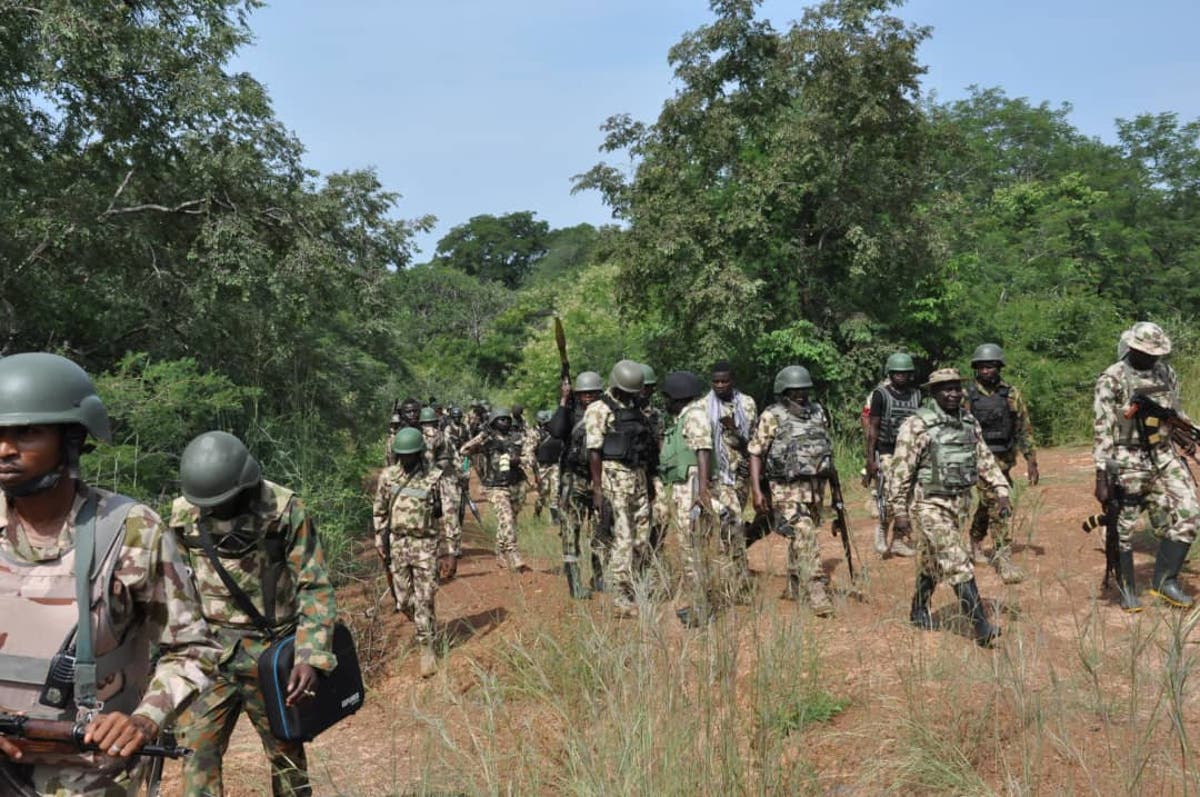
Troops Apprehend Terrorist Informants, Logistics Suppliers in Borno
ShareTroops of Operation HADIN KAI (OPHK) have apprehended suspected terrorist informants and logistics suppliers, received the surrender of an ISWAP...


Troops Rescue 13 Kidnapped Victims, Foil Terrorist Operations in Zamfara Communities
ShareFrom Ifeanyichukwu Nwannah, Gusau Troops of Joint Task Force, North West Operation Fansan Yamma (JTF NW OPFY) have rescued 13...


Wizkid Headline US Summer Festivals
ShareNigerian music superstar, Ayodeji Balogun, popularly known as Wizkid, is set to perform at the BlastFest and the Trillville summer...


Singer Asake Announces ‘In God We Trust’ World Tour
ShareAfrobeats sensation, Ahmed Ololade, aka Asake, is set to embark on a world tour ‘In God We Trust’, a global...


Food Insecurity: Governance, Incompetence and Compromise
ShareBy Akpoturu Best Of all the vulnerabilities that can compromise a sovereign state, the inability to feed its own populace...

Wole Soyinka at 92: Nigeria’s Literary Titan, Africa’s Conscience and Global Intellectual Powerhouse
ShareBy Ehi Braimah There are writers, there are intellectuals, and there are moral giants whose influence transcends literature to shape...


BBNaija: Winner of Season 11 to Get Record N160m Grand Prize
ShareMultiChoice Nigeria has announced that season 11 of the Big Brother Naija (BBNaija) reality TV show will premiere on July...

Diaspora Remittances Hit $1bn Monthly – CBN
Share By Tony Obiechina, Abuja Central Bank of Nigeria (CBN) Governor, Olayemi Cardoso, said diaspora remittances are projected to rise...


Tinubu Launches $3.05bn Social Investment Programmes
ShareBy Tony Obiechina, Abuja President Bola Tinubu yesterday, unveiled a $3.05 billion package of World Bank-supported programmes designed to accelerate...