
BUSINESS
Afreximbank Closes $282m India-Focused Club Deal


By Tony Obiechina, Abuja
The African Export-Import Bank (Afreximbank) has announced the successful completion of a first-of-its-kind India-focussed club deal for US$282.00 million.
Initiated for the exclusive participation of Indian lenders, and arranged by Bank of Africa UK PLC, the primary syndicated club deal saw participation from Indian lenders through their overseas branches and subsidiaries in the Dubai International Financial Centre in the United Arab Emirates, Singapore and Mauritius.
The facility, which was backed by six participating banks and financial institutions, including five that joined as first-time lenders to Afreximbank, helping the Bank achieve its objective of diversifying its funding sources, carries a three-year tenor.
At a commemorative event held in Dubai, U.A.E., to mark the conclusion of the deal, Haytham ElMaayergi, Executive Vice President at Afreximbank, said that the conclusion of the initiative represented a major milestone for the Bank as it sought to fulfil the key objectives of its funding programme.
Highlighting the importance of investing in, and for, Africa, Mr. ElMaayergi said: “this facility will help Afreximbank to continue to play a major role in the development of intra-African trade and trade between Africa and the rest of the world, particularly with India.
It is a testament to the rapid growth in Africa’s economic relationship with India and is evidence of Afreximbank’s growing ability to harness resources into Africa and to fund trade finance related investments that would have a positive impact on trade between Africa and India.”
Chandi Mwenebungu, Director and Group Treasurer of Afreximbank, reviewing the Bank’s vision for Africa, said that its funding objectives included achieving the diversification of its liability book by geography, investor type and tenor.
Also addressing guests at the event were Said Adren, CEO of Bank of Africa UK PLC, who thanked the lenders for their participation, and Zineb Tamtaoui, General Manager of Bank of Africa, Dubai Branch, who expressed appreciation for the opportunity to put together “a landmark deal that would be a stepping stone to many India-focused club deals going forward.”

The International Monetary Fund (IMF) has projected that global economic growth will slow to 3.0 per cent in 2026 before recovering to 3.4 per cent in 2027.
The IMF made the projection in its July World Economic Outlook (WEO) Update, released on Wednesday and titled “Global Economy in Crosscurrents of War and Technology.
”According to the report, the global outlook remains uneven, with the ongoing war in the Middle East weighing heavily on energy-importing and vulnerable economies.
It, however, said that Artificial Intelligence (AI)-driven demand was lifting countries integrated into the global technology value chain.
“The impact varies widely based on countries’ exposure to the war and position in the technology value chain.
“Energy exporters outside the conflict zone benefit from favourable terms of trade, whereas economies plugged into the technology-led upturn experience stronger activity even if they are energy importers.”
It said that economic activities would weaken in energy-importing countries with limited participation in the technology value chain, a group that includes many low-income economies.
The IMF also projected global headline inflation to increase from an estimated 4.1 per cent in 2025 to 4.7 per cent in 2026 before declining to 3.9 per cent in 2027.
According to the fund, the projections, which were revised slightly upward from the April outlook, suggest that the disinflation trend observed since early 2024 has stalled.
“For Sub-Saharan Africa, growth is expected to remain stable at 4.3 per cent in 2026 before rising to 4.5 per cent in 2027.
“However, the regional outlook masks significant differences across countries due to varying policy space, reform implementation and exposure to external shocks,” it said.
The report said that oil-importing, non-resource-intensive economies would be more adversely affected by higher energy and food prices.
It said that some larger economies would continue to benefit from earlier stabilisation and reform efforts despite remaining largely outside the AI-driven technology upswing and facing reduced official development assistance.
For Nigeria, the IMF projected economic growth of 4.1 per cent in 2026, and rising to 4.3 per cent in 2027.
“Nigeria is supported by improved macroeconomic stability and favourable terms-of-trade effects, though higher prices for essentials are expected to further aggravate poverty and food insecurity,” it said.
The report said among advanced economies, growth was projected at 1.7 per cent in 2026 and 1.8 per cent in 2027.
For emerging markets and developing economies, it projected growth to slow to 3.8 per cent in 2026 before recovering to 4.5 per cent in 2027.
The IMF projected growth in the Middle East and Central Asia to decline sharply to 0.7 per cent in 2026 before rebounding to 6.5 per cent in 2027.
It projected that growth in Latin America and the Caribbean would remain stable at 2.4 per cent in 2026 before rising modestly to 2.7 per cent in 2027.
It said that growth in emerging and developing Europe would remain restrained at about 2.0 per cent.
According to the IMF, risks to the global outlook are more balanced than in April but remain tilted to the downside.
It warned that renewed conflict in the Middle East could prolong commodity price volatility, further disrupt supply chains, raise prices and tighten global financial conditions.
The report also identified trade fragmentation, possible corrections in technology-driven market expectations and eroded policy buffers as additional downside risks.
On the upside, the IMF said faster-than-expected normalisation in energy markets, stronger technology investment, renewed international cooperation to reduce trade barriers and structural reforms could improve medium-term growth prospects.
It urged policymakers to maintain price stability, supported by clear communication, central bank independence and strong financial supervision.
It also recommended rebuilding fiscal buffers while limiting fiscal support to temporary and targeted measures that preserve market price signals.

By David Torough, Abuja
The Nigerian National Petroleum Company Limited (NNPC) said it saved $3.4bn through contract restructuring and optimisation over the past year, while increasing its contribution to government revenue to N19.
5tn and boosting crude oil and gas production.Group Chief Executive Officer, Bayo Ojulari, disclosed the figures on Tuesday while presenting the company’s one-year performance scorecard at the opening of the 25th NOG Energy Week in Abuja.
According to Ojulari, the contract optimisation programme reduced operating costs by $3.
4bn without disrupting operations, strengthening commercial efficiency and improving the competitiveness of Nigeria’s oil and gas industry.The scorecard showed that crude oil production rose by six per cent year-on-year to 569.7 million barrels, while gas production increased by 8.1 per cent to 2,576 billion standard cubic feet. NNPC’s contribution to government revenue also climbed by 21.8 per cent to N19.5tn.
Ojulari said Nigeria’s crude oil production has reached about 1.71 million barrels per day, the highest level in five years, while NNPC Exploration and Production Limited achieved a record output of 365,000 barrels per day.
He said the company aims to increase crude oil production to two million barrels per day by 2027 and three million barrels per day by 2030. Gas production is projected to rise from 7.62 billion cubic feet per day this year to 10 billion cubic feet per day in 2027 and 12 billion cubic feet per day by 2030.
The NNPC boss also reported significant improvements in export infrastructure, noting that crude export terminals recorded an average 98 per cent recovery factor between April 2025 and May 2026. He added that major evacuation pipelines, including the Trans Niger, Trans Escravos, Trans Ramos, Trans Forcados and Oando-Brass lines, are operating at 100 per cent availability.
Ojulari further disclosed that NNPC maintained 100 per cent compliance with its Joint Venture cash-call obligations throughout 2025 and into June 2026, although some partners remained in default, increasing the company’s funding responsibilities.
On the commercial front, he said NNPC signed gas sale and purchase agreements covering 1.29 billion standard cubic feet per day for long-term LNG feed gas and 750 million standard cubic feet per day for domestic industrial gas supply to DFL FZE and Dangote Refinery. The agreements are expected to attract more than $20bn in investments, with seven additional transactions under negotiation.
He also highlighted governance reforms, including the resumption of monthly remittances to the Federation Account in July 2025, the restoration of monthly business performance reporting and the company’s first earnings call in November 2025.
Ojulari urged governments, investors, regulators and operators across Africa to strengthen collaboration, arguing that strategic partnerships would be critical to unlocking the continent’s energy potential and attracting greater investment.
From Attah Ede, Makurdi
Benue State Government through the Benue Investment and Property Company Limited (BIPC) has worked out modalities to commence immediate revival of the long-abandoned Taraku Mills Limited, with plans to begin rehabilitation work on the facility next week.
The facility located at Gwer East Local Government Area of the State which has remained functional since 2009, is expected to create over 2,000 direct jobs and strengthen agricultural value chains across the state if revived.
Managing Director of the Benue Investment and Property Company (BIPC), Dr.
Raymond Asemakaha, announced this during an inspection visit to the facility.Dr. Asemakaha maintained that the company is valued at over $50 million (about N70 billion) and was designed to process maize, animal feed and soybean products.
He described it as a strategic asset capable of driving industrialisation and economic growth in Benue State, stating that the government was committed to restoring the factory to full operation, as eviving existing assets is more cost-effective than constructing new facilities.
According to Asemakaha, “despite years of inactivity, most of the equipment remains intact and in near-new condition due to the vigilance of the host community and security personnel who protected the facility from vandalism.”
He explained that an ongoing asset audit would determine the exact condition of the plant and the level of investment required for operations to resume saying “former technical personnel with institutional knowledge of the facility will conduct assessments and dry-run tests.”
Asemakaha said the government had learnt lessons from previous attempts to lease public assets to operators without the capacity to manage them effectively, stressing that “the revitalisation of Taraku Mills would create markets for farmers and stimulate economic activities in transportation and other sectors.”
He projected that the facility would directly employ at least 2,000 youths while generating thousands of indirect jobs.
The GMD announced the immediate payment of five months’ outstanding allowances owed to security personnel at the plant.
He commended the host community for safeguarding the facility over the years, noting that despite the prolonged shutdown, no cables or major components had been vandalized.
Dr. Asemakaha further emphasized that the revitalization of the mill would create a ready market for agricultural produce and improve the livelihoods of farmers across the state through value addition and industrial processing.
A pioneer engineer at the factory, James Ikuve, said Taraku Mills was established as an integrated agro-processing company with maize and feed milling, as well as oil processing divisions.
Ikuve said the maize processing plant has an installed capacity of 120,000 tonnes annually, while the feed mill can produce 172,300 tonnes of animal feed yearly. He added that the soybean processing units can handle hundreds of tonnes daily, with the refinery capable of processing 100 tonnes per day.
According to Ikuve, the factory previously operated at about 75 percent of its installed capacity, with its last production run carried out in 2013 under Growrich Resort Limited.
Chairman of Gwer East Local Government Area, Timothy Adi, Civil Protection Guard Commander Joseph Sough and Assistant Director at the Ministry of Industry, Trade and Investment, Emmanuel Atsia, commended Governor Hyacinth Alia for the initiative, expressing optimism that the revival of the facility would create jobs, support soybean farmers and restore economic benefits to the community




NEPC Seeks Funding for ECOWAS Trade Promotion Network
ShareThe Chief Executive Officer of the Nigerian Export Promotion Council (NEPC), Nonye Ayeni, has urged members of the ECOWAS Trade...

Troops Apprehend Terrorist Informants, Logistics Suppliers in Borno
ShareTroops of Operation HADIN KAI (OPHK) have apprehended suspected terrorist informants and logistics suppliers, received the surrender of an ISWAP...


Troops Rescue 13 Kidnapped Victims, Foil Terrorist Operations in Zamfara Communities
ShareFrom Ifeanyichukwu Nwannah, Gusau Troops of Joint Task Force, North West Operation Fansan Yamma (JTF NW OPFY) have rescued 13...


Wizkid Headline US Summer Festivals
ShareNigerian music superstar, Ayodeji Balogun, popularly known as Wizkid, is set to perform at the BlastFest and the Trillville summer...


Singer Asake Announces ‘In God We Trust’ World Tour
ShareAfrobeats sensation, Ahmed Ololade, aka Asake, is set to embark on a world tour ‘In God We Trust’, a global...
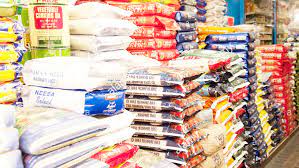

Food Insecurity: Governance, Incompetence and Compromise
ShareBy Akpoturu Best Of all the vulnerabilities that can compromise a sovereign state, the inability to feed its own populace...


Wole Soyinka at 92: Nigeria’s Literary Titan, Africa’s Conscience and Global Intellectual Powerhouse
ShareBy Ehi Braimah There are writers, there are intellectuals, and there are moral giants whose influence transcends literature to shape...


BBNaija: Winner of Season 11 to Get Record N160m Grand Prize
ShareMultiChoice Nigeria has announced that season 11 of the Big Brother Naija (BBNaija) reality TV show will premiere on July...


Diaspora Remittances Hit $1bn Monthly – CBN
Share By Tony Obiechina, Abuja Central Bank of Nigeria (CBN) Governor, Olayemi Cardoso, said diaspora remittances are projected to rise...


Tinubu Launches $3.05bn Social Investment Programmes
ShareBy Tony Obiechina, Abuja President Bola Tinubu yesterday, unveiled a $3.05 billion package of World Bank-supported programmes designed to accelerate...