
COVER
Akpabio: 10th Senate’ll Not be Executive Rubber Stamp

By Eze Okechukwu & Ubong Ukpong, Abuja
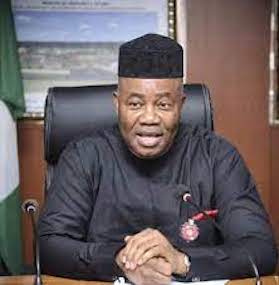
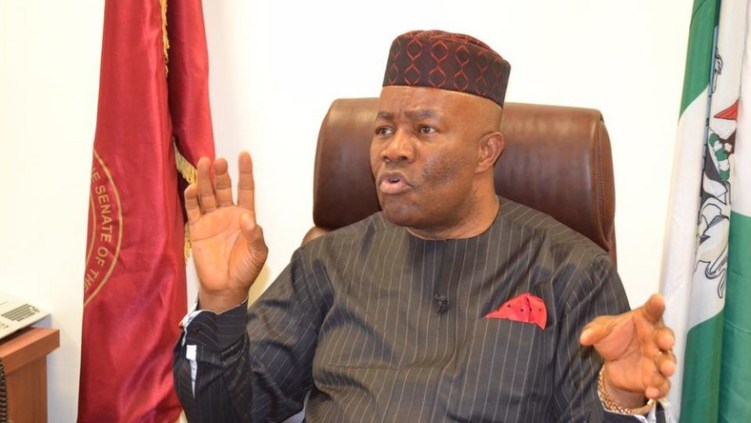
Despite his endorsement for Senate presidency by President Tinubu and the All Progressives Congress (APC), Senate President, Godswill Akpabio, yesterday said the red chamber will maintain its independence and will not serve as a rubber stamp to the executive.
Speaking on the independence of the legislature, Akpabio said the 10th assembly is all about Nigeria and Nigerians.
Akpabio said the National Assembly under his leadership will give all necessary legislative backing to the removal of petrol subsidy by President Bola Tinubu.
Akpabio was yesterday elected Senate President after polling 63 votes, with Yari, his challenger, scoring 46 votes.
Speaking during his acceptance speech, Akpabio said the 10th assembly will be “forward-looking” and ensure that legislative backing is given to policies and programmes of the president.
“We shall have a seriously forward-looking senate that will emphasise economic viability, social acceptability, tackle environmental issues and bring about sustainable growth.
“We must provide the required legislative framework and legal environment for President Tinubu to anchor the policies and programmes that he espouses for the country.
“I want to offer special commendation to the president for the bold step he has so far taken, particularly on the issue of petrol subsidy.
“If it requires legislative backing, we shall give. We must begin to produce our own fuel in Nigeria. We must begin to encourage the production of diesel and other products in this country.
“I want to assure the president that no matter when the legislature is called, the senate will be here to do their national duties. This senate is about Nigeria and Nigerians,” he said.
Akpabio was yesterday elected President of the 10th Senate, after defeating Senator Abdul’aziz Yari (APC, Zamfara) 63-46 votes in the election conducted at the Red Chamber.
Meanwhile, Tajudeen Abbas, representing Zaria Constituency of Kaduna State, was elected Speaker of the House of Representatives.
Also in the Senate, Senator Jibrin Barau emerged unopposed as the Deputy President of the Senate, after being nominated by Senator David Umahi (APC, Ebonyi South).
Out of the 109 Senators, who assembled for the inauguration of the 10th Senate, 108 cast their votes properly while one person wrote Akpabio at the back of his ballot paper. That counted for Akpabio though.
The process leading to the inauguration of the 10th Senate commenced at about 8:00 am at the National Assembly Complex, with Godswill Akpabio, standing in contest for the position of the President of the apex legislative Assembly.
Also standing for the same election was the former Governor of Zamfara State, Abdul’aziz Yari, whose nomination met brief opposition from some Senators-elect, who were obviously supporting Akpabio.
Two other major contenders for the number three highest political office in the country – Orji Uzor Kalu and Osita Izunaso were not in the race, as they were not nominated for the election as required by law.
Abbas Becomes Reps Speaker, Kalu Deputy
Newly elected Speaker of the House of Representatives, Rt Hon Tajudeen Abbas, yesterday assured that the House of Representatives under his leadership will champion legislations that will uplift the lives of Nigerians, promote social justice, and drive sustainable development.
Abbas, who stated this in his acceptance speech after his election, said the doors of the House leadership will be open for members of APC, PDP, Labour Party, NNPP, APGA, SDP, ADC and YPP as part of efforts to build a strong and viable nation.
Abbas, from Zaria Federal Constituency of Kaduna State, yesterday emerged winner of the Speakership contest of the 10th House of Representatives.
He polled 353 votes, representing over two third majority votes from the 359 Members-elect on the floor of the House, to defeat 9th House of Representatives Deputy Speaker, Ahmed Idris Wase and Aminu Jaji, who got three votes each.
The processes commenced before 10am as the Deputy Clerk of the National Assembly, joined by the Clerk of the House presided over the session.
The DCNA took the roll call for all 359 Members-elect after which he called for nomination of candidates for the position of Speaker of the 10th House.
First Ado Doguwa nominated Tajudeen Abbas, while another lawmaker from Kwara state nominated Ahmed Idris and Hon Doro nominated Aminu Jaji fort the position of Speaker.
The three contestants accepted the nomination, after which the DCNA closed nomination and proceeded to conduct the election which he said would be open ballot according to the amended House rule.
The House adopted the open ballot system as enshrined in its amended rule, which states that when there are more than two nominations each member-elect shall openly declare his/her candidates of choice for the position of Speaker.
As the Deputy Clerk of the National Assembly, Kamoru Ogunlami, called the Members-elect begining from Abia state, Tajudeen Abbas began to lead.
The states, starting with Abia, Adamawa, Akwa Ibom, Anambra, Bayelsa, Bauchi, Benue, Borno, Cross River, Delta, Ebonyi, Edo, Enugu, Ekiti, Gombe, Imo, Jigawa, Katsina, Kaduna, Kebbi, Kano, Kogi, Kwara, Lagos, Nasarawa, Niger, Ondo, Ogun, Osun, Oyo, Plateau, Rivers, Sokoto, Zamfara, states and the Federal Capital Territory all voted Tajudeen Abbas for speaker of the 10th House.
However, four members joined those that dared to go against the party’s choice of Abbas, as they two votes each to Idris Wase and Aminu Jaji respectively, making them the six members that refused to support the APC and Abbas.
In a related development, Hon Benjamin Kalu also emerged as the Deputy Speaker, having been returned unopposed.
Kalu, a Member-elect for Bende federal constituency of Abia State, was nominated by a Lagos lawmaker-elect, Babajimi, and seconded by a female Member-elect from Lagos State.
After accepting his nomination and in the absence of counter nomination, the Clerk to the National Assembly (CNA), Magaji Tambuwal, closed further nomination at exactly 12.06 noon.
Consequently, Kalu was declared Deputy Speaker and thereafter administered oaths of office and that of the membership of the National Assembly.
In his inaugural address, the Speaker, Tajudeen Abbass, said he would not take his mandate for granted.
He appreciated his colleagues for finding him worthy to lead.
“I wish to sincerely thank you all for finding me worthy of being your Speaker, out of the 360 of us, who are all equals. I also thank Almighty Allah for making this journey possible. To the President of the Federal Republic of Nigeria and my party, the APC, I say a big thank you for finding me competent to be nominated to serve in this position for the Nigerian people. I thank every other person who has directly or indirectly contributed to this journey,” Abass said.
He said that the victory is not just about him but about all coming together as a united House to serve the Nigerian people diligently.
“It is about honouring the trust that has been placed on us and working tirelessly to deliver on our promises of good governance and effective representation. It is worthy to note that speakership campaign witnessed in the past few months was democracy at play. But today, all of that has come to pass, and it is time to forge ahead and work together for our people for our common good. I do not take this mandate bestowed on me as the Nigerian Speaker for granted.
“I want to assure you today that I shall be just and fair to every one of you irrespective of our perceived differences. I shall operate a House that you all will be proud of. I shall be guided by the Constitution of the Federal Republic of Nigeria and the House Rules. Our doors will be open for members of APC, PDP, Labour Party, NNPP, APGA, SDP, ADC and YPP as we strongly believe nation building is a Joint Task,” he said.
The Speaker also said that under his watch, the 10th House shall sustain and even surpass the gains of the 9th House.
“That is my prayer. We shall carry out the TASK before us JOINTLY. We shall introduce reforms and innovations for the benefit of Nigerians. In a few weeks, we shall be reeling out the legislative agenda that will shape the 10th House of Representatives. We shall work closely and inter-dependently with the Executive and Judiciary to give Nigerians the good governance they deserve. We stand at a crucial juncture in our nation’s history, where challenges abound, but so do opportunities. We will champion legislations that will uplift the lives of our fellow citizens, promote social justice, and drive sustainable development,” he added.
He noted that the tenth assembly will focus on strengthening the security apparatus, collaborating with relevant stakeholders to combat insurgency, terrorism, and all forms of criminalities.
“We aim to help create a safe and secure environment that fosters economic growth and social stability.
Through legislations, the 10th House will promote entrepreneurship and support small and medium-scale enterprises. We shall diversify our economy and provide sustainable employment opportunities for our youth. We are aware of the challenges in our education, healthcare, and infrastructure sectors amongst other.” The speaker said.
He promised to work in harmony with the executive arm, while upholding principles of checks and balances.
“Our collaboration will be anchored on the principles of transparency, accountability, and respect for the rule of law.. Honourable Colleagues, may I remind all of us that we hold our respective offices in trust for the Nigerian people. We MUST, therefore, justify the confidence reposed in us by our constituents to represent their interests and work committedly for our dear nation” He said.
He stressed that working closely with his deputy, Hon. Benjamin Kalu, they shall provide purposeful leadership in the 10th House of Representatives.
Tinubu Meets Jonathan, Akpabio, Governors
President Bola Tinubu met with former President Goodluck Jonathan yesterday at the presidential villa, Abuja.
The purpose of the meeting was not known as at press time.
After the meeting with Jonathan ended, the president received some government officials, including the newly inaugurated Senate President Godswill Akpabio.
Hope Uzodimma, Imo state governor, was also at the presidential villa to meet with Tinubu.
He was accompanied by Babajide Sanwo-Olu, governor of Lagos state, and Abdullahi Ganduje, former governor of Kano.
The group chief executive officer (GCEO) of the Nigerian National Petroleum Company (NNPC) Limited, Mele Kyari, also met with the president.
The president’s meetings took place after elections were held for the presiding offices of the 10th national assembly.
Akpabio, senator representing Akwa Ibom north-west, was elected senate president.
He defeated Abdulaziz Yari, senator representing Zamfara central, to win the poll.
Akpabio secured 63 votes while Yari scored 46 votes.
Senator Barau Jibrin from Kano state was elected deputy senate president.
In the House of Representatives, Tajudeen Abbas won the speakership election while Benjamin Kalu was named his deputy.
PROFILES
AKPABIO:
Godswill Akpabio is the son of Chief Obot Akpabio and Madam Lucy Obot Akpabio (née Inyangetor) of Ukana, Ikot Ntuen in Essien Udim Local Government Area. He was born on 9 December 1962. He lost his father early in life and was raised by his mother.
Akpabio was educated at Methodist Primary School, Ukana, Essien Udim LGA, Akwa Ibom State; the Federal Government College, Port Harcourt, Rivers State; and the University of Calabar, Cross River State, where he obtained a Degree in Law.
While at the Federal Government College, Port Harcourt, he was appointed the Senior Prefect. In the University of Calabar, Akpabio was elected as the speaker of the parliamentary year.
Akpabio’s grandfather, Okuku Udo Akpabio, was the Warrant Chief in Ikot Ekpene province. His uncle, Dr. I. U. Akpabio, was the Minister of Education/Internal Affairs in the then Eastern Nigeria. Justice Nsima Akpabio, his cousin, was a senator in the Second Nigerian Republic.
Akpabio is a Christian of the Catholic faith. Akpabio is married to Ekaette Unoma Akpabio, the founder of Family Life Enhancement Initiative (FLEI), a non-governmental organization providing a platform for redirecting the focus of development efforts on the family as a strategy for achieving the Millennium Development Goals (MDGs).
Akpabio and his wife have four daughters and a son.
Akpabio had a brief stint as a teacher and as an associate partner with Paul Usoro and Co., a law firm in Nigeria.
He also worked with EMIS Telecoms Limited, a wireless telecommunications company in Lagos, Nigeria. In 2002, he rose to the position of the Managing Director/Chief Executive Officer of the company. In this position, he helped in shaping the future of the burgeoning telecoms industry. He had earlier served as the National Publicity Secretary of the Association of Telecommunication Companies in Nigeria, (ATCOM), while a director of EMIS.
In 2002, he was appointed Honourable Commissioner for Petroleum and Natural Resources by the then Governor Obong Victor Attah in Akwa Ibom State. Between 2002 and 2006, he served as a Commissioner in three key ministries: Petroleum and Natural Resources, Local Government and Chieftaincy Affairs, as well as Lands and Housing.
In 2006, he aspired for the governorship of Akwa Ibom State in a contested primary election and defeated 57 other aspirants to emerge the candidate of the Peoples Democratic Party (PDP). His campaign with the slogan, “let God’s will be done” received mass support and was elected Governor in 2007. He was re-elected for a second term in office as Governor of Akwa Ibom State in 2011.
In 2013, he was elected Chairman of the newly formed PDP Governors Forum.
In 2015, he contested and won the Senate seat of the Akwa Ibom North-West Senatorial District (Ikot Ekpene) to represent the district in the Senate of the Federal Republic of Nigeria. Running under the platform of the People’s Democratic Party (PDP), he polled 422,009 of the 439,449 to defeat Chief Inibehe Okorie of the All Progressives Congress (APC) who recorded 15,152 votes to be declared elected by the Independent National Electoral Commission (INEC).
Akpabio was nominated for the position of the Senate Minority Leader by the South-South caucus of the Peoples Democratic Party (PDP), ratified by the caucus of the PDP in the Senate and announced by the Senate President as Senate Minority Leader on 28 July 2015. The PDP lost the majority to the All Progressives Congress (APC), in the 2015 general elections.
In August 2018, he resigned as the Senate Minority Leader, after he had announced his defection to the All Progressives Congress. His defection was marked by Political rally in his hometown at the Ikot Ekpene township stadium, Akwa Ibom State.
In July 2019, he was nominated by President Muhammadu Buhari and screened by the Nigerian Senate for a Ministerial appointment.[33] On 21 August 2019, he was sworn in as Minister for Niger Delta Affairs.
In June 2022, Akpabio resigned from his position as minister for Niger Delta Affairs to contest in the presidential primaries of the ruling All Progressives Congress (APC) but stepped down on the night of the primaries for the eventual winner Bola Tinubu. A few days after the presidential primaries, he emerged as the Senatorial candidate for Akwa Ibom North-West Senatorial District. However, it was fraught with accusations of foul play by stakeholders of the party in the State. He went on to defeat his closest rival Emmanuel Enoidem of the Peoples Democratic Party to become the senator-elect in the 2023 general elections polling 115,401 votes, against Enoidem’s 69,838 votes.[36] He was elected President of the Senate of Nigeria on 13 June 2023.
ABBAS:
Abbas was born three years after Nigeria gained independence on October 1, 1963, into a ruling family in the Zazzau Emirate nestled in the ancient city of Zaria, Zaria LGA of Kaduna state.
He holds the traditional title of Iyan Zazzau. His great-grandfather was an Emir in the Zazzau Emirate. He comes from the Mallawa dynasty of the emirate. Meanwhile, his mother hails from Dutsen Kura in Malumfashi LGA of Katsina State.
By the dictates of the longstanding tradition, Abbas finds himself within the sacred order of succession. He is in line to ascend the illustrious throne as the Emir of Zazzau.
From tender years, little Abbas radiated an aura of exceptional greatness, embodying the rare qualities of a child predestined for the zenith.
Abbas was enrolled at the LEA Primary School, Lemu, Zaria, where he obtained his first school leaving certificate (FSLC). Continuing in his pursuit of knowledge, he went to the Government Secondary School in Makarfi, where he acquired the West African Examination Certificate (WAEC) in 1978.
With an insatiable hunger for academic excellence, he obtained a Grade I certificate at Kaduna Teacher’s College in 1981. Abbas then proceeded to Ahmadu Bello University in Zaria where he studied accounting and bagged a diploma in 1984.
His academic odyssey continued unabated as he obtained a B.Sc in business administration from Ahmadu Bello University in 1988. He bagged an M.Sc in business administration from the same institution in 1993. Abbas went further to get a PhD from Usman Dan Fodio University in Sokoto.
He also obtained another B.Sc in Business Administration Management from Usman Dan Fodio University.
Abbas’ journey is a captivating tale that saw him blossom from the position of a primary school teacher to an esteemed senior lecturer at the university.
Abbas was a primary school teacher from 1981 to 1988. In June 1998, Abbas decided to temporarily veer away from the familiar path of civil service. He delved into the private sector, joining the Nigerian Tobacco Company (NTC) Plc in Jos. For three years and three months, he held the esteemed position of a general manager, navigating through the complexities of the industry.
Abbas later joined the Nuhu Bamalli Polytechnic in September 2001, where he lectured until June 2005.
A month after, Abbas embarked on a new chapter at the Kaduna State University. With determination and dedication, he ascended the ranks, reaching the pinnacle of a senior lecturer, a testament to his profound knowledge and commitment.
Yet, just when his academic career seemed to have reached its zenith, the allure of politics beckoned. In 2010, Abbas made the audacious leap into the unpredictable murky waters of politics, bidding farewell to the halls of academia.
Abbas was first elected to the federal House of Representatives on the platform of the now-defunct Congress for Progressive Change (CPC) in 2011.
In a stunning display of support, he triumphed once again in the 2015 elections, this time on the platform of the All Progressive Congress (APC). Abbas took on multiple roles as a member of various committees within the hallowed green chamber.
He was the deputy chairman of the house committee on legislative compliance between 2011 and 2015. Following the inauguration of the house in 2019, he was appointed to chair the committee on land transport.
Tajudeen was also saddled with other legislative ad hoc assignments in the lower legislative chamber. In 2019, he was appointed as the treasurer of the Commonwealth Parliamentary Association (African chapter).
He was a member of the governing council of the Nigerian Institute of Legislative and Democratic Studies (NILDS) where he represented the north-west geo-political zone from 2019 to 2023.
Abbas was the APC Kaduna caucus leader in the House of Representatives, a position he held since 2019. In 2021, he was appointed the chairman of the House of Representatives sub-committee on the constitutional review conference for the north-central.
Despite the numerous roles he handled, Abbas did not take a back seat in delivering his core constitutional mandate of lawmaking. He sponsored several bills and motions. The lawmaker is described by his colleagues as a “silent achiever”.
During his four years stint in the 9th lower legislative chamber, he sponsored 74 bills; out of this extraordinary tally, over 18 received presidential assent.
Until recently, many Nigerians were oblivious of his remarkable achievements as Abbas humbly shied away from the limelight.
In recognition of his exceptional legislative achievement, OrderPaper Nigeria, a news media organisation dedicated to reporting parliamentary affairs, recently bestowed upon Abbas an award for being among the top performers in the 9th national assembly.
Abbas was the pioneer head of the Department of Accounting and Finance, Nuhu Bamalli Polytechnic, Zaria. He also pioneered the Department of Business Administration at the same institution. He was also the pioneer head of the Department of Accounting at Kaduna State University.


By Laide Akinboade, Abuja
As part of efforts to reposition the newspaper for optimum corporate performance, the management of Asset Newspapers Limited, Publishers of DAILY ASSET, has announced the appointment of David Torough as the Editor of the Abuja-based national daily.
A statement by the management said the appointments were part of the company’s new strategy to further penetrate the various states in the country and raise its readership and patronage.
“DAILY ASSET is widely acceptable across the country and to maintain our leadership position, we need to increase management presence, hence the need to create new Bureau offices in some locations outside Abuja and Lagos,” the statement quoted the Publisher/ Editor-in-Chief, Dr Cletus Akwaya to have said.
In a statement yesterday, Publisher and Editor-in-Chief of the fast-growing daily, Dr. Cletus Akwaya said the appointment was part of the new strategy to properly situate the paper for better productivity.
“DAILY ASSET has a commitment with the Nigerian people. We are determined to weather the storm and give Nigerian readers a Newspaper that satisfies their yearnings and reading pleasure and we can only do that with the right set of professionals,” the statement said.
Akwaya, a former Commissioner of Information from Benue State said the difficult times being faced by Nigerians posed a great challenge to the media as the people deserved credible information with which to make choices.
“We have a bond with the people, to offer credible information at all times in the best tradition of the Nigerian Press and on this scale of objectivity, truth and fairness, we pledge to remain steadfast no matter the challenges,” Akwaya was quoted to have said.
He said the newspaper will maiantin its daily print run and circulation to all states of the federation and urged advertisers to take advantage of the deep penetration of the Daily Asset brand to send their messages.
Torough, the new Editor has had a steady rise in the Newspaper in the last five years.
A graduate of Mass communication of the Benue State University, Makurdi, Torough joined the company in 2022 as Benue State Correspondent. He was spotted for his brilliance and redeployed to Abuja the following year and promoted to Deputy News Editor. He was subswuently named Deputy Editor of the paper, a position he held until the recent appointment.
Torough has attended several journalistic workshops and trainings to properly equip himself for the task ahead.
The statement also said the Management named Eze Okechukwu as Deputy Editor.
Before his elevation as Deputy Editor, Eze has been Deputy Politics Editor and DAILY ASSET Newspaper correspondent covering the Senate, having joined the organization in 2021.
Born on March 10, 1975, Eze holds a Masters Degree in Mass Communication from the Enugu State University of Science and Technology.
Eze began his journalism career with Daily Star, Enugu and later worked with Daily Trust Newspaper, Abuja as sports reporter.
Aside from his journalistic excellence, he has a great deal of passion for sports.

From Ngutor Dekera, Kaduna and Aliyu Askira, Kano
Northern governors and traditional rulers yesterday called for the suspension of mining activities across the region for six months, blaming illegal mining for worsening insecurity in many states.
The resolution was contained in a communiqué issued after a joint meeting of the Northern States Governors’ Forum and the Northern Traditional Rulers’ Council held at the Sir Kashim Ibrahim House, Kaduna. The meeting, chaired by the Gombe State Governor and NSGF Chairman, Muhammadu Yahaya, had in attendance the 19 northern governors and chairmen of the 19 states’ traditional councils.The Forum expressed concern over the escalating violence in parts of the North, including the killings and abductions recently recorded in Kebbi, Kwara, Kogi, Niger, Sokoto, Jigawa and Kano states, as well as renewed Boko Haram attacks in Borno and Yobe.“The Forum extends its deepest condolences and solidarity to the governments and good people of the affected states,” the communiqué said, noting that the attacks on schoolchildren and other citizens had become “unacceptable tragedies” that required urgent collective action.It commended President Bola Tinubu for what it described as the Federal Government’s “firm response” to recent abductions and insurgency threats, especially the rescue of some abducted pupils.The governors also saluted security agencies for their sacrifices on the frontlines.“We resolved to renew our support for every step taken by the President and Commander-in-Chief to take the fight to insurgents’ enclaves in order to end the criminality,” the Forum stated.A major highlight of the meeting was the North’s renewed push for the establishment of state police, with governors and traditional rulers insisting that decentralised policing had become inevitable.“The Forum reaffirms its wholehearted support and commitment to the establishment of state police,” the communiqué added, urging federal and state lawmakers from the region to “expedite action for its actualisation.”On illegal mining, the governors said criminal mining networks were fuelling violence and providing resources for armed groups.As a corrective measure, they asked Tinubu to direct the Minister of Solid Minerals to impose a six-month suspension of mining activities in order to allow for a full audit and revalidation of licences.“The Forum observed that illegal mining has become a major contributory factor to the security crises in Northern Nigeria. “We strongly recommend a suspension of mining exploration for six months to allow proper audit and to arrest the menace of artisanal illegal mining,” it said.To strengthen the fight against insecurity, the governors also announced the creation of a regional Security Trust Fund.Under the proposed arrangement, each state and its local governments will contribute ₦1bn monthly, to be deducted at source under an agreed framework.They said the fund would help provide sustainable financing for joint operations, intelligence-driven interventions and coordinated security responses across the region.At the end of the meeting, the Forum reaffirmed its commitment to unity and collective responsibility.“Only through unity, peer review and cooperation can we overcome the pressing challenges before us,” it declared.The Forum agreed to reconvene on a date to be announced.Meanwhile, Nigeria’s worsening security crisis took a grim turn on Monday as bandits launched fresh attacks in Kano State, abducting 25 villagers, even as the Federal Government raced to secure the release of more than 300 Catholic school children kidnapped in Niger State.In the early hours of Monday, armed bandits invaded Unguwar Tsamiya—popularly called Dabawa—in Shanono Local Government Area of Kano State, whisking away nine men and two women after shooting into the air and assaulting residents. The attackers also rustled two cows.A resident lamented the community’s helplessness: “We cannot do otherwise; most of us cannot leave because we have nowhere to go. This is our place, our land and everything is here.”The assault came less than 24 hours after a similar attack on Yan Kamaye in Tsanyawa LGA, a community along the volatile Katsina border.In Niger State, National Security Adviser Nuhu Ribadu has assured distraught families of St. Mary’s Co-Education School, Kontagora that the more than 300 students and staff abducted on November 21 will return home “soon.” Ribadu, who led a high-level federal delegation to the school on Monday, said the abductees are safe, though he offered no specifics on their location or the status of rescue operations.According to Daniel Atori, spokesman for the Catholic bishop overseeing the school, the NSA reassured officials: “The children are where they are and will come back safely.”The St. Mary’s attack is part of a worrying resurgence of mass kidnappings reminiscent of the 2014 Chibok schoolgirls’ abduction. Security analysts warn that banditry has evolved into a “structured, profit-seeking industry,” with hundreds of Nigerians abducted in November alone.The Kontagora school abduction occurred the same week 25 girls were kidnapped in Kebbi State—victims who authorities say have since been rescued through “non-kinetic” means. About 50 of the St. Mary’s hostages have also managed to escape.Ribadu’s delegation, which included the Minister of Humanitarian Affairs and the Director-General of the Department of State Services (DSS), reaffirmed the government’s commitment to securing the freedom of all abducted citizens.As communities from Kano to Niger continue to bear the brunt of these violent incursions, the escalating spate of kidnappings underscores the urgent national demand for a more decisive and coordinated security response.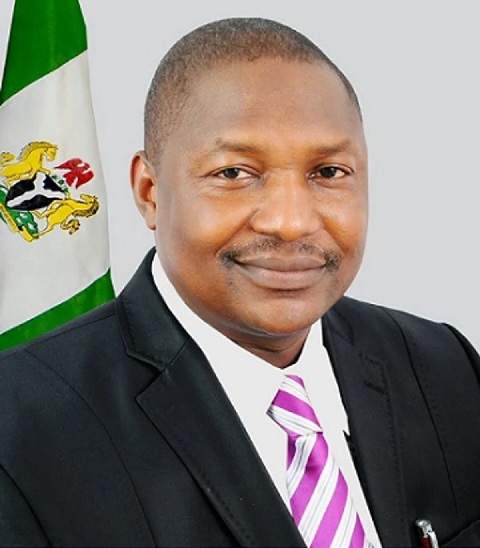
By David Torough, Abuja
The Economic and Financial Crimes Commission (EFCC) said former Attorney‑General of the Federation and Minister of Justice, Abubakar Malami, will face a team of interrogators at its office daily throughout December.
A credible source in the EFCC said on Monday that the daily appearance was part of an ongoing investigation into the whereabouts of an alleged 490 million dollars Abacha loot secured through a Mutual Legal Assistance (MLAT) request. The source said that Malami, who was summoned for interrogation by the EFCC on Saturday, was barred from leaving Nigeria for the next one month.According to the source, one of the conditions for his release on Saturday was that he should report daily to the EFCC Headquarters in Abuja for further interrogation.The source said Malami would have to appear daily at the anti-graft office due to the volume of the investigation and the seriousness of the charges against him.”We seized his passport, it is the normal routine during investigation, but he has to report at the EFCC headquarters in Abuja every day for the next month.”He will be reporting for further investigation throughout December.”He will be reporting every day, starting from Dec. 1st to Dec. 31st.He will appear before the team of investigators for the entire month of December.”He will be reporting to EFCC for investigation for the period because of the volume of the investigation and the seriousness of the charges against him,” the source added.According to the source, a fact sheet on the former minister revealed that Malami had several issues to clarify with the EFCC within the coming weeks.“We have asked him to explain the whereabouts of the $490 million Abacha loot secured through MLAT.“We didn’t say he stole money, but he should account for the loot. This is one of the issues he will clarify to our investigators.”The commission cited the large volume of documents he must review and the need for extensive interviews as reasons for seizing his passport.The source said EFCC would not engage in a war of words but would release its findings after a thorough investigation.Malami, in a statement by his media aide, Mohammed Doka, on Monday in Abuja, however, described the EFCC investigation as a political witch‑hunt.He confirmed he honored an EFCC invitation on Nov. 28, describing the engagement as fruitful and expressing confidence that the probe would vindicate him.Malami described the EFCC’s allegations as baseless, illogical and devoid of substance, insisting they collapse under factual scrutiny.


Ihuezeofia Leadership Tussle: No Bias, Govt Took Action in Overriding Public Interest – Commissioner Egumgbe
ShareFrom Sylvia Udegbunam, Enugu The Commissioner for chieftaincy affairs Enugu State, Chief Charles Egumgbe have said that Enugu State government...

Troops Rescue 359 Victims, Arrest Terror Suspects, Destroy Oil Theft Networks Nationwide – DHQ
ShareBy David Torough, Abuja The Defence Headquarters (DHQ) has announced significant operational gains by the Armed Forces of Nigeria (AFN)...

UNICEF Support Benue Govt With 400 School-in-a-Box Kits For BRACE-UP Project.
ShareFrom Attah Ede, Makurdi The United Nations Children Fund, UNICEF with funding from Swedish International Development Cooperation Agency(SIDA), has supported...

Nigeria, Benin Republic Collaborate on Regional Security
ShareBy Tony Obiechina, Abuja The Minister of Defence, General Christopher Gwabin Musa has successfully concluded a strategic three-day working visit...

Nigerian Army Expands Combat Capability, Tasks Newly Trained Troops on Professionalism
ShareBy David Torough, Abuja The Nigerian Army has intensified efforts to strengthen its operational capability with the graduation of soldiers...

RMAFC Set to Enforce Oil Host Community Accountability
ShareBy Tony Obiechina, Abuja The Revenue Mobilisation Allocation and Fiscal Commission (RMAFC) has given the Nigerian Upstream Petroleum Regulatory Commission...

UNICEF Renovates Classrooms, Donates Educational Materials to IDPs Children in Benue
ShareFrom Attah Ede, Makurdi The United Nations Children’s Fund (UNICEF) with support from Swedish International Development Agency (Sida) has renovated...


NAMA Demands 56 Per Cent Share, Aviation Varsity 10 Per Cent of Aviation Statutory Charges
ShareBy Ubong Ukpong, Abuja The Nigerian Airspace Management Agency (NAMA) on Thursday, asked the National Assembly to increase its share...
FCT Closes Unregulated Motor Parks as New Bus Terminals Become Operational
ShareBy Laide Akinboade, Abuja The Federal Capital Territory (FCT) Administration (FCTA), on Thursday, said it has concluded arrangements to clamp...
Mahmoud Urges MAN to Embrace Smart Technology, Capital Restructuring For Growth
ShareBy Laide Akinboade, Abuja The Minister of State, Federal Capital Territory (FCT), Dr. Mariya Mahmoud, has called on manufacturers to...