
POLITICS
APC Senate Primary: Protest mars Electoral Process in Nasarawa-West

A violent protest disrupted the All Progressive Congress (APC) Nasarawa-West senatorial primary election that was held on Sunday to elect a candidate for the 2023 elections.
The News Agency of Nigeria (NAN) reports that youths at the venue of the election in Keffi Local Government Area of the state broke through security barriers on Sunday night and attacked electoral officials.
The youths, NAN gathered, were infuriated at the alleged alterations to the delegates list by party officials.
The delegates were expected to vote for one of the two aspirants seeking the party’s ticket.
NAN reports that some of the youths, who were supporting Mr Labaran Magaji against his opponent, Mr Shehu Tukur, began to raise objections over delegates being accredited at 6 p.m.
As their objections were ignored, the angry youths managed to breach the security arrangement by until 9:55 p.m. to confront the electoral officials.
During the confrontation, the youths became violent, a development that made the security operatives to fire tear gas canisters and gun shots in the air to disperse them and protect the electoral officials and aspirants at the venue.
Speaking on the development, Magaji blamed the incident on the alteration of the original delegates list.
He said that he had advised the electoral officials to suspend the polls, an advice which was turned down and which prompted the angry youths to violently breach the security arrangement.
He advised his supporters to remain calm while legal means would be employed to resolve the matter.
NAN reports that during the melee, security operatives managed to evacuate the electoral officials and journalists from the venue. (NAN) (nannews.ng)
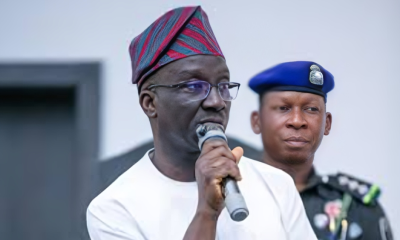


The Inspector-General of Police, Olatunji Disu, has cautioned Nigerian youths against being used for political violence, misinformation and digital intimidation ahead of the 2027 general elections across the country.
Disu gave the warning on Thursday in Abuja during the National Youth Leadership and Security Dialogue organised by the Nigeria Police Force to commemorate the 2026 International Youth Day celebration.
According to him, as we approach the 2027 electoral cycle, I urge you to remember a very simple, but profound reality that politicians contest elections, but you leave with consequences thereafter.
”He said that political actors often reconciled after elections, in spite of fierce campaigns, and might later become allies and guests of one another when political disagreements were resolved amicably over time.
Disu said the Nigeria Police Force recognised and respected the rights of youths to participate in politics, support parties, express opinions and campaign freely for candidates of their choice.
“Our responsibility is to create a security environment in which these democratic rights can be experienced freely and safely.
“We will protect citizens, facilitate peaceful campaigns, secure candidates, campaign venues and public spaces within the law.
“We will protect the integrity of the electoral environment, but will not protect violence, tolerate the recruitment or mobilisation of young Nigerians for political violence.
“I therefore appeal to everybody to be cautious as we approach the 2027 electoral process,” Disu said, urging collective responsibility in safeguarding peace and democratic values across Nigeria.
The police chief also urged youths to become drivers of national transformation rather than instruments of destruction through the spread of false information and harmful online content.
According to him, every young Nigerian using a smartphone should recognise that digital activities leave permanent records that could influence opportunities and shape future prospects significantly.
“You know now, the moment you go to the embassies for your visa, they are checking you on social media to see what and what you are doing.
“So, your footprints are very important, so before you forward a message, verify it and before you publish or circulate, establish the facts,” he advised youths nationwide.
The Broadcasting Organisation of Nigeria (BON) has called for immediate prosecution of all those found to have committed electoral crimes during last Saturday’s Osun governorship election.
The organisation, in a statement by its Executive Secretary, Dr Yemisi Bamgbose in Abuja on Thursday, said that the prosecution would serve as a deterrent to others.
Bamgbose also congratulated the Independent National Electoral Commission (INEC) for the conduct of a transparent, free, fair and credible governorship election in the state.
According to him, INEC, under Prof.
Joash Amupitan, has passed the real litmus test in Osun.He said that the outcome of the election, if improved upon, could serve as a model for subsequent elections in the country.
“INEC deserves commendation for deploying all that was required to ensure the realisation of a free and fair election,” he said.
Bamgbose also commended security agencies for providing adequate security which, he said, helped to minimise tension and criminality during the election.
“It is imperative that INEC ensures the prosecution of all persons who perpetrated electoral crimes to serve as a deterrent to others.
“We therefore call on INEC and other relevant agencies to ensure strict enforcement of electoral laws and prosecution of all offenders,” Bamgbose said.
Nigerians Deserve Cheaper Energy, Says ADC Candidate
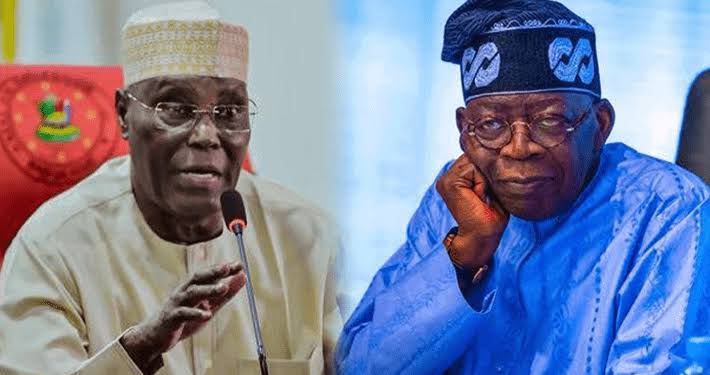
President Bola Tinubu and former Vice President Atiku Abubakar have clashed sharply over the future of petrol pricing, with the subsidy debate emerging as a major fault line ahead of the 2027 presidential election.
Tinubu, speaking on Thursday at the Presidential Villa, Abuja, dismissed Atiku’s proposal to restore petrol subsidy as evidence of what he described as “serious ignorance” of governance and the economy.
The President argued that the subsidy regime had imposed unsustainable financial burdens on the country while leaving many states struggling to meet basic obligations.The President spoke while receiving Osun State Governor Ademola Adeleke, who visited him following his re-election victory in the state.
“I saw one of my opponents now say he will go back to subsidy. I read it. That is a demonstration of a serious ignorance on governance and economy,” Tinubu said.
He recalled that before the removal of the subsidy, 27 states were unable to pay workers’ salaries and pensions, arguing that the reform had increased revenues available to the three tiers of government.
According to him, the additional resources were now supporting salaries, roads, schools, healthcare, housing and other public services.
The Presidency, through the Special Adviser to the President on Information and Strategy, Bayo Onanuga, reinforced the attack, describing Atiku’s proposal as “retrogressive” and fiscally unsustainable.
Onanuga argued that the former vice president had changed his position on subsidy for political reasons, noting that Atiku had previously advocated its removal.
He maintained that the subsidy regime had been wasteful and corruption-prone and that its removal was consistent with reforms introduced under the Petroleum Industry Act.
The Presidency also questioned how a restored subsidy would be financed, noting that if petrol were sold below its economic cost, the government would have to absorb the difference through reduced allocations, increased borrowing, higher public debt or cuts in infrastructure and social spending.
Onanuga further argued that the growth of domestic refining had changed Nigeria’s petroleum landscape, particularly with the emergence of the Dangote Refinery and other local producers.
But Atiku has rejected the characterisation of his proposal as a return to the old subsidy regime.
Unveiling details of his proposed Atiku Economic Recovery Plan 2027, the ADC presidential candidate said he would replace the former import-subsidy system with a targeted, capped, transparently budgeted and independently audited production subsidy.
Under the proposal, qualifying Nigerian refineries would receive crude at a preferential price in exchange for verifiable domestic production and supply. Atiku said the intervention would be tied directly to measurable output, ensuring that public support produces a corresponding benefit for consumers.
“My proposal is not to resurrect the old subsidy regime. We will move subsidy from importation to production, from middlemen to Nigerian refineries, and from unverifiable claims to verifiable barrels,” he said.
Atiku said the programme would operate within an annual fiscal ceiling approved through the national budget. Refiners would have to account for crude allocations, production volumes, inventories and domestic deliveries, while independent auditors would monitor the process.
He also proposed sanctions for operators that divert subsidised crude or products, manipulate production records or fail to pass the benefits to consumers.
“No refinery gets unlimited support. No marketer brings the government a surprise bill,” Atiku said, insisting that the National Assembly and the public would know the maximum fiscal exposure.
The former vice president said his objective was not permanent subsidy but temporary support for the development of domestic refining capacity, with assistance gradually reduced as efficiency, competition and production increase.
Atiku also challenged the Tinubu administration over the financial consequences of subsidy removal, arguing that Nigerians had suffered sharp increases in petrol, transportation and food costs since the policy was announced in May 2023.
He cited figures from NNPCL’s audited accounts showing large “Energy Security Expenses” in 2023 and 2024 and demanded greater clarity on whether such expenditures contained costs economically similar to subsidy.
“Nigerians cannot pay for subsidy removal twice — through punishing pump prices and through unexplained subsidy-like costs against their commonwealth,” he said.
The competing positions have therefore produced two sharply different visions of Nigeria’s petroleum economy.
Tinubu’s administration maintains that subsidy removal is essential to fiscal stability, increased government revenue and the development of a market-driven domestic refining industry. Atiku, meanwhile, says the government can intervene temporarily and transparently to lower energy costs while using domestic crude to strengthen Nigerian refineries.
The dispute is likely to intensify as the 2027 election approaches, with both camps seeking to convince Nigerians that their approach offers the more sustainable path to cheaper energy, economic growth and improved living standards.
For now, the central question remains unresolved: should Nigeria leave petrol prices to market forces, or should the government deploy a tightly controlled subsidy to protect consumers and promote domestic refining?




Grammy-winning Singer, Angelique Kidjo Immortalised on Hollywood Walk of Fame
ShareFive-time Grammy winner, Angelique Kidjo, has become the first African musician to be honoured with a star on the Hollywood...


Singers Wande Coal, Davido Clash over Unreleased Collaboration, ‘Come My Way’
ShareNigerian singers Wande Coal and Davido have clashed on social media over an unreleased collaboration,“Come My Way”. The disagreement was...


Tonto Dikeh to Renovate Churches in Birthday Tribute to Pastor Jerry Eze
ShareActress and humanitarian Tonto Dikeh has announced a church support initiative through The New Wine Prophetic Tabernacle to mark the...


BBNaija S11: Kamsy Reveals Plans after Reality Show Exit
ShareEvicted Big Brother Naija Season 11 housemate, Kamsy Uzoma, has revealed her plans for life after leaving the reality show,...


Bobrisky Slams Nigerians for Dragging Kaycee Luxury over NDLEA Arrest
ShareCrossdresser, Bobrisky, has blasted Nigerians dragging luxury shopper, Kaycee Luxury, online following his arrest by the National Drug Law Enforcement...


2Baba Teases New Album ‘Oldest Young Man’
ShareMusic icon Innocent Idibia, popularly known as 2Baba, has announced plans to release a new album titled ‘Oldest Young Man’....
2027 Elections: IGP Cautions Youths against Political Violence, Misinformation
ShareThe Inspector-General of Police, Olatunji Disu, has cautioned Nigerian youths against being used for political violence, misinformation and digital intimidation...
Council Chairmen Urge Yoruba Heritage Preservation
ShareSome council chairmen in Lagos have urged residents to preserve Yoruba cultural heritage while celebrating the 2026 Isẹ̀ṣe Day. They...
Osun Governorship Election: BON Hails INEC, Calls for Prosecution of Offenders
ShareThe Broadcasting Organisation of Nigeria (BON) has called for immediate prosecution of all those found to have committed electoral crimes...

2027: We Must Unite to Reclaim Oyo, APC National Chairman Tells Aggrieved Aspirants
ShareThe National Chairman of the All Progressives Congress (APC), Prof. Nentawe Yilwatda, has said that the party is handling the...