
COVER
ASUU: Hope Rises as FG Meets VCs, Pro-Chancellors to End Strike

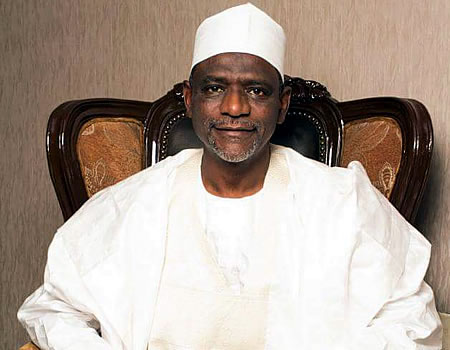
The Federal Government on Tuesday in Abuja met with Vice Chancellors and Pro-Chancellors of federal universities to end the ongoing strike by the Academic Staff Union of Universities (ASUU).
The Minister of Education, Mallam Adamu Adamu, at the meeting, described the indefinite strike by ASUU as an anguish and internal turmoil to him.
Adamu said he wanted the parties to reach an amicable resolution of all the issues contained in the 2009 Agreements because the past two weeks had been a very dark period in the education sector.
“I used to think in a climate of frankness, and with mutual goodwill, an end or solution would have been found to incessant strikes in the education sector.
“This has not been possible or, at least, not as easy and straightforward, as I used to think,” he said.
The minister quoted the President of ASUU, Prof. Emmanuel Osodeke to have said that the union would no longer negotiate with the current administration on the ongoing strike.
He said that that position must be resisted to salvage the country’s educational system.
“Government and ASUU have no option than to continue talking, until our universities are reopened to students who, clearly, are the principal victims of the seemingly unending strike.
“In this circumstances, therefore, all councils and senates of our universities are enjoined to rise up to their responsibilities.
“We must, together, continue to work to restore our public universities to where they are in the 60s and 70s.
“As the most important officers in our university system, Pro Chancellors and Vice-Chancellors, must demonstrate more commitment to ending the ongoing strike,” he said.
He urged the Vice Chancellors and Pro-Chancellors to make it a duty to promote policies and actions that would discourage industrial disputes in our campuses.
He added that the government would continue to support the physical and academic development of its universities as well as enhance the working conditions of all university staff.
At the meeting, Adamu disclosed that the Federal Government was considering an upward review of the salary of tertiary institutions’ lecturers to 23.5 per cent.
The minister said salaries of professors would also be reviewed by 35 per cent.
Adamu disclosed this on Tuesday in Abuja when he presented the position paper of the government during a meeting between the Federal Government, Vice-Chancellors and Pro-Chancellors of Nigerian public universities.
Adamu said that President Muhammadu Buhari had warned against signing agreements which the government would not be able to meet.
“The Federal Government can only afford a 23.5 per cent salary increase for all categories of the workforce in federal universities, except for the professorial cadre which will enjoy a 35 per cent upward review.
“Henceforth, allowances that pertain to ad-hoc duties of the academic and non-academic staff shall be paid as at when due by the Governing Councils of universities to which such services are rendered and to the staff who perform them.
“A sum of N150 billion shall be provided for in the 2023 budget as funds for the revitalisation of federal universities, to be disbursed to the institutions in the first quarter of the year.
“Also a sum of N50 billion shall be provided for in the 2023 Budget for the payment of outstanding areas of earned academic allowances, to be paid in the first quarter of 2023,” he said.
Adamu further disclosed that the four university-based unions, had addressed separate letters to the Chairman of the Government Re-negotiating Team rejecting government’s offer.
He said they described it as inadequate to meet their respective demands.
He also said he met the unions to explain the prevailing economic situation limiting the ability of government to accede to all their demands.
Committee of VCs Appoints Sustainable Peace Negotiation Team
Meanwhile the Committee of Vice Chancellors of Nigerian Universities (CVCNU) has set up a sustainable peace team to resolve the lingering impasse between the Federal Government and the Academic Staff Union of Universities (ASUU).
The former Secretary General of CVCNU, Prof. Michael Faborode, and the Co-coordinator of the team, confirmed this to the News Agency of Nigeria (NAN) in Abuja on Tuesday, through ‘The Sustainable Peace Team Working Paper’.
He said that the desire of the team was not to allow the current deadlock in the ASUU strike negotiations to take hold, as the toll of the strike on all stakeholders and the nation had been colossal.
According to him, to arrive at the final list, no serving vice chancellor or pro-chancellor is included and membership was based on record of service as recorded by the CVCNU.
He said that the team comprised Prof. Jibril Aminu, former Vice Chancellor, University of Maiduguri (UNIMAID); Emeritus Prof. Olufemi Bamiro, former Vice Chancellor, University of Ibadan (UI); Prof. Ekanem Braide, President, Academy of Science; and Dr Nkechi Nwagogu, former Pro-Chancellor, University of Calabar (UNICAL).
Other members of the team are Prof. Joe Ahaneku, former Vice Chancellor, Nnamdi Azikiwe University (UNIZIK); Prof. Fatima Mukhtar, former Vice Chancellor, Federal University, Dutse; and Prof. Akpan Ekpo, former Vice Chancellor of University of Uyo (UNIUYO).
Also in the team are: Prof. Yakubu Ochefu, Secretary General, Committee of Vice Chancellors of Nigerian Universities (CVCNU), and Prof. Michael Faborode, former Secretary General, CVCNU and former Vice Chancellor, OAU.
“We should not fold our hands and watch our ‘house’ collapse on us as elders. So, we should speak or act now.
“We do not have any other industry other than the university system. Whatever can be done to bring all the actors to reason and broker peace using the Prof. Nimi Briggs committee recommendations as the fulcrum, will be worth the effort.
“A lot had been done already and such patriotic efforts should not be wasted nor despised,” he said.
Faborode said that the “Peace Team of Elders” would operate under the auspices of the CVCNU/CPC.
According to him, both the Federal Government and ASUU are being reached to accept the intervention of the independent team of elders.
“The Team will liaise with the Prof. Nimi Briggs committee to understand the basis of the elements of their proposals, and check with both the federal government and ASUU to identify the areas of concern and objection.
“Afterwards the team will brainstorm on how to mitigate the thorny areas and work with all the parties to bring the imbroglio to an amicable end in the interest of all concerned and the nation.
“The meetings and consultations will be mainly online by Zoom and perhaps finally face-to-face to safe costs once we make progress. This is however subject to review as we proceed,” he explained.
Faborode said that the team had itemised some preliminary considerations that could shape parties understanding and way forward.
He said that this was because the deadlock in the crisis seemed to be getting more disturbing with the federal government maintaining a strong stance of “no-work, no-pay” and ordering ASUU to go back to work.
He said this had also made ASUU to firmly prolong the strike to become indefinite as both sides were unwilling to proceed with further negotiation or discussions.
“How do we engage with the Nimi Briggs committee? I am personally in touch with the chairman, and he feels the outstanding issues are not insurmountable.
“These include federal government raising its offer of salary increase from 23% to may be 50% that will ensure a Professor receives up to N800,000 monthly as opposed to the negotiated N1.2 million.
“Also, the review of the decision on salaries during strike to a mid-position, not 0% nor 100% as ASUU wants. How can we further this admonition to both sides?
“Fundamentally, the following facts should be noted: the subsisting condition of Nigerian higher education is unacceptable and inconsistent with the economic development roles envisaged for them.
“Things have been allowed to deteriorate for too long, This, must be halted by all as we embark on an integrated revitalisation agenda in the education sector, in the interest of our economic development,” Faborode said.
He, therefore, called on the National Assembly to play its role in providing a sustainable solution of raising resources/funds for the effective running of the universities. (NAN)


By Laide Akinboade, Abuja
As part of efforts to reposition the newspaper for optimum corporate performance, the management of Asset Newspapers Limited, Publishers of DAILY ASSET, has announced the appointment of David Torough as the Editor of the Abuja-based national daily.
A statement by the management said the appointments were part of the company’s new strategy to further penetrate the various states in the country and raise its readership and patronage.
“DAILY ASSET is widely acceptable across the country and to maintain our leadership position, we need to increase management presence, hence the need to create new Bureau offices in some locations outside Abuja and Lagos,” the statement quoted the Publisher/ Editor-in-Chief, Dr Cletus Akwaya to have said.
In a statement yesterday, Publisher and Editor-in-Chief of the fast-growing daily, Dr. Cletus Akwaya said the appointment was part of the new strategy to properly situate the paper for better productivity.
“DAILY ASSET has a commitment with the Nigerian people. We are determined to weather the storm and give Nigerian readers a Newspaper that satisfies their yearnings and reading pleasure and we can only do that with the right set of professionals,” the statement said.
Akwaya, a former Commissioner of Information from Benue State said the difficult times being faced by Nigerians posed a great challenge to the media as the people deserved credible information with which to make choices.
“We have a bond with the people, to offer credible information at all times in the best tradition of the Nigerian Press and on this scale of objectivity, truth and fairness, we pledge to remain steadfast no matter the challenges,” Akwaya was quoted to have said.
He said the newspaper will maiantin its daily print run and circulation to all states of the federation and urged advertisers to take advantage of the deep penetration of the Daily Asset brand to send their messages.
Torough, the new Editor has had a steady rise in the Newspaper in the last five years.
A graduate of Mass communication of the Benue State University, Makurdi, Torough joined the company in 2022 as Benue State Correspondent. He was spotted for his brilliance and redeployed to Abuja the following year and promoted to Deputy News Editor. He was subswuently named Deputy Editor of the paper, a position he held until the recent appointment.
Torough has attended several journalistic workshops and trainings to properly equip himself for the task ahead.
The statement also said the Management named Eze Okechukwu as Deputy Editor.
Before his elevation as Deputy Editor, Eze has been Deputy Politics Editor and DAILY ASSET Newspaper correspondent covering the Senate, having joined the organization in 2021.
Born on March 10, 1975, Eze holds a Masters Degree in Mass Communication from the Enugu State University of Science and Technology.
Eze began his journalism career with Daily Star, Enugu and later worked with Daily Trust Newspaper, Abuja as sports reporter.
Aside from his journalistic excellence, he has a great deal of passion for sports.

From Ngutor Dekera, Kaduna and Aliyu Askira, Kano
Northern governors and traditional rulers yesterday called for the suspension of mining activities across the region for six months, blaming illegal mining for worsening insecurity in many states.
The resolution was contained in a communiqué issued after a joint meeting of the Northern States Governors’ Forum and the Northern Traditional Rulers’ Council held at the Sir Kashim Ibrahim House, Kaduna. The meeting, chaired by the Gombe State Governor and NSGF Chairman, Muhammadu Yahaya, had in attendance the 19 northern governors and chairmen of the 19 states’ traditional councils.The Forum expressed concern over the escalating violence in parts of the North, including the killings and abductions recently recorded in Kebbi, Kwara, Kogi, Niger, Sokoto, Jigawa and Kano states, as well as renewed Boko Haram attacks in Borno and Yobe.“The Forum extends its deepest condolences and solidarity to the governments and good people of the affected states,” the communiqué said, noting that the attacks on schoolchildren and other citizens had become “unacceptable tragedies” that required urgent collective action.It commended President Bola Tinubu for what it described as the Federal Government’s “firm response” to recent abductions and insurgency threats, especially the rescue of some abducted pupils.The governors also saluted security agencies for their sacrifices on the frontlines.“We resolved to renew our support for every step taken by the President and Commander-in-Chief to take the fight to insurgents’ enclaves in order to end the criminality,” the Forum stated.A major highlight of the meeting was the North’s renewed push for the establishment of state police, with governors and traditional rulers insisting that decentralised policing had become inevitable.“The Forum reaffirms its wholehearted support and commitment to the establishment of state police,” the communiqué added, urging federal and state lawmakers from the region to “expedite action for its actualisation.”On illegal mining, the governors said criminal mining networks were fuelling violence and providing resources for armed groups.As a corrective measure, they asked Tinubu to direct the Minister of Solid Minerals to impose a six-month suspension of mining activities in order to allow for a full audit and revalidation of licences.“The Forum observed that illegal mining has become a major contributory factor to the security crises in Northern Nigeria. “We strongly recommend a suspension of mining exploration for six months to allow proper audit and to arrest the menace of artisanal illegal mining,” it said.To strengthen the fight against insecurity, the governors also announced the creation of a regional Security Trust Fund.Under the proposed arrangement, each state and its local governments will contribute ₦1bn monthly, to be deducted at source under an agreed framework.They said the fund would help provide sustainable financing for joint operations, intelligence-driven interventions and coordinated security responses across the region.At the end of the meeting, the Forum reaffirmed its commitment to unity and collective responsibility.“Only through unity, peer review and cooperation can we overcome the pressing challenges before us,” it declared.The Forum agreed to reconvene on a date to be announced.Meanwhile, Nigeria’s worsening security crisis took a grim turn on Monday as bandits launched fresh attacks in Kano State, abducting 25 villagers, even as the Federal Government raced to secure the release of more than 300 Catholic school children kidnapped in Niger State.In the early hours of Monday, armed bandits invaded Unguwar Tsamiya—popularly called Dabawa—in Shanono Local Government Area of Kano State, whisking away nine men and two women after shooting into the air and assaulting residents. The attackers also rustled two cows.A resident lamented the community’s helplessness: “We cannot do otherwise; most of us cannot leave because we have nowhere to go. This is our place, our land and everything is here.”The assault came less than 24 hours after a similar attack on Yan Kamaye in Tsanyawa LGA, a community along the volatile Katsina border.In Niger State, National Security Adviser Nuhu Ribadu has assured distraught families of St. Mary’s Co-Education School, Kontagora that the more than 300 students and staff abducted on November 21 will return home “soon.” Ribadu, who led a high-level federal delegation to the school on Monday, said the abductees are safe, though he offered no specifics on their location or the status of rescue operations.According to Daniel Atori, spokesman for the Catholic bishop overseeing the school, the NSA reassured officials: “The children are where they are and will come back safely.”The St. Mary’s attack is part of a worrying resurgence of mass kidnappings reminiscent of the 2014 Chibok schoolgirls’ abduction. Security analysts warn that banditry has evolved into a “structured, profit-seeking industry,” with hundreds of Nigerians abducted in November alone.The Kontagora school abduction occurred the same week 25 girls were kidnapped in Kebbi State—victims who authorities say have since been rescued through “non-kinetic” means. About 50 of the St. Mary’s hostages have also managed to escape.Ribadu’s delegation, which included the Minister of Humanitarian Affairs and the Director-General of the Department of State Services (DSS), reaffirmed the government’s commitment to securing the freedom of all abducted citizens.As communities from Kano to Niger continue to bear the brunt of these violent incursions, the escalating spate of kidnappings underscores the urgent national demand for a more decisive and coordinated security response.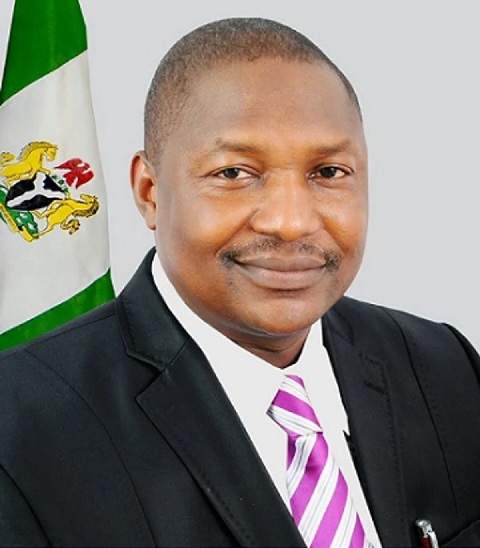
By David Torough, Abuja
The Economic and Financial Crimes Commission (EFCC) said former Attorney‑General of the Federation and Minister of Justice, Abubakar Malami, will face a team of interrogators at its office daily throughout December.
A credible source in the EFCC said on Monday that the daily appearance was part of an ongoing investigation into the whereabouts of an alleged 490 million dollars Abacha loot secured through a Mutual Legal Assistance (MLAT) request. The source said that Malami, who was summoned for interrogation by the EFCC on Saturday, was barred from leaving Nigeria for the next one month.According to the source, one of the conditions for his release on Saturday was that he should report daily to the EFCC Headquarters in Abuja for further interrogation.The source said Malami would have to appear daily at the anti-graft office due to the volume of the investigation and the seriousness of the charges against him.”We seized his passport, it is the normal routine during investigation, but he has to report at the EFCC headquarters in Abuja every day for the next month.”He will be reporting for further investigation throughout December.”He will be reporting every day, starting from Dec. 1st to Dec. 31st.He will appear before the team of investigators for the entire month of December.”He will be reporting to EFCC for investigation for the period because of the volume of the investigation and the seriousness of the charges against him,” the source added.According to the source, a fact sheet on the former minister revealed that Malami had several issues to clarify with the EFCC within the coming weeks.“We have asked him to explain the whereabouts of the $490 million Abacha loot secured through MLAT.“We didn’t say he stole money, but he should account for the loot. This is one of the issues he will clarify to our investigators.”The commission cited the large volume of documents he must review and the need for extensive interviews as reasons for seizing his passport.The source said EFCC would not engage in a war of words but would release its findings after a thorough investigation.Malami, in a statement by his media aide, Mohammed Doka, on Monday in Abuja, however, described the EFCC investigation as a political witch‑hunt.He confirmed he honored an EFCC invitation on Nov. 28, describing the engagement as fruitful and expressing confidence that the probe would vindicate him.Malami described the EFCC’s allegations as baseless, illogical and devoid of substance, insisting they collapse under factual scrutiny.

ATAF Generates $907.8m in Tax Assessments in 2025
ShareBy Tony Obiechina, Abuja The African Tax Administration Forum (ATAF) ATAF-supported audit interventions in member countries generated USD 907.8 million...

Tin-Can Customs Records N1.61tr under Onyeka Leadership
ShareImmediate past Customs Area Controller, Nigeria Customs Service (NCS), Tin-Can Island Port Command, Assistant Comptroller-General Frank Onyeka, has handed over...

Wabara Lauds Otti over Ariaria Int. Mkt Project, Proposed Abia Seaport
ShareThe former Senate President, Adolphus Wabara, has commended Gov. Alex Otti for his transformative agenda, including the ongoing remodeling of...
Efiko Relaunches EPaperVendor Platform with Expanded Knowledge Resources.
ShareBy Raphael Atuu, Abuja Efiko Management Consulting has unveiled a revamped version of its digital newspaper and knowledge platform, EPaperVendor,...


Sallah: Dutse Residents Groan over Soaring Ram Price
ShareSome residents of Dutse in Jigawa have decried the rising price of ram and other sacrificial animals for the Eid-el-Kabir...
Hamzat, Adeniyi, Others Advocate Multi-stakeholder Collaboration on National Security Risks
ShareStakeholders at the maiden Enterprise Security Risk Management Conference in Lagos have called for stronger collaboration, intelligence-driven systems and technology-based...
Zaria Fistula Centre Repairs over 2,000 Cases, Flags Rising Medical Quackery
ShareThe Hajiya Gambo Sawaba General Hospital (HGSGH) Fistula Centre, Zaria, has successfully repaired over 2,000 obstetric fistula cases since its...
Kano Expands Health Insurance to Inmates, HIV, Hypertensive Patients – KSCHMA
ShareThe Kano State Contributory Healthcare Management Agency (KSCHMA) said it has enrolled vulnerable groups, including hypertensive and HIV patients and...

Many Youths Unaware of Drug Abuse Consequences – NDLEA
ShareThe National Drug Law Enforcement Agency (NDLEA) said the dangers of drug use are often underestimated among young people, with...
Foundation Calls for Promotion of Access to Safe Menstrual Health Facilities
ShareFrom Joseph Amedu, Lokoja AIDS Healthcare Foundation Nigeria (AHF Nigeria) has called for the promotion of access to safe, clean...