
BUSINESS
Banks Begin Deduction of Loans from Chronic Debtors’ Accounts

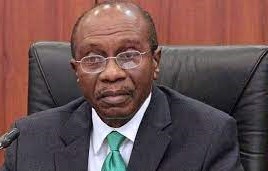
The Deposit Money Banks are recovering debts owed by chronic debtors
from their accounts in other banks to curb the growth of non-performing loans (NPL) in the industry, findings have revealed. Figures obtained from the Central Bank of Nigeria and the National Bureau of Statistics showed that the NPLs in the banks recorded a
slight decline from N1.
This is despite an increase in the gross loans in the industry in the
period. The CBN said the measures it introduced such as the Global Standing Instruction to reduce banking sector risks was helping to reduce the NPLs in the sector.
According to the CBN, the GSI, which commenced on August 1, 2020, allows banks to recover the outstanding principal and interest upon default from any account maintained by the debtor across all financial institutions in Nigeria.
It said the slight improvement reflected the strengthening of risk management practices, the GSI policy and regulatory forbearance that had allowed banks to restructure credits impacted by the COVID-19 pandemic.
Figures obtained from the NBS on banking sector for Q3 2020 showed that while the gross loans in the lending industry stood at N18.9tn, the total non-performing loans stood at N1.2tn. The latest figures from the CBN showed that while the gross loans rose to N22.2tn, the NPLs fell slightly to N1.1tn. The CBN said in the latest Monetary Policy Committee report that it would not raise the lending rates in the sector.“On loosening, the committee felt that this would lower retail interest rates and improve the ability of obligors to repay their obligations, with a complementary reduction in NPLs,” it said.CBN added that for the banking industry, “Recent data also show that stability has been maintained and a smooth functioning of financial intermediation ensured. “CBN staff report indicates that the banking sector’s non-performing loan ratio has fallen from 6.3 per cent in February to 6.0 per cent in March and further to 5.9 per cent in April.”
The MPC noted that the capital adequacy ratio and the liquidity ratio both remained above the prudential limits at 15.2 and 41.7 per cent, respectively at the end of July 2021.
The committee also welcomed the improvement in the NPL ratio at 5.4 per cent in July 2021, compared with 5.7 per cent in June. The committee urged the banks to sustain current efforts to bring the NPLs below the 5.0 per cent prudential benchmark.

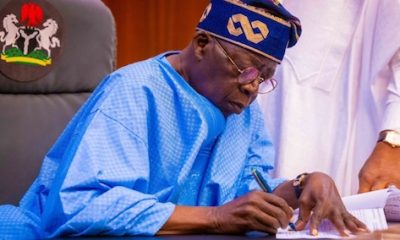





The Debt Management Office (DMO) said that its World Bank-assisted workshop on borrowing guidelines was designed to intimate subnational entities within Northern Nigeria on proper borrowing ethics.
The Director-General of the DMO, Patience Oniha, said this at the workshop on Borrowing Guidelines organised for top policy makers in Abuja on Tuesday.
He said that the workshop was under the aegis of States Action on Business Enabling Reforms (SABER).
He said it was important to align borrowing practices within the states with that of the Federal Government.
Oniha said that borrowing needed several layers of approvals and debt managers needed to understand why those approvals are required.
“Debt is such an important fiscal variable that involves several stakeholders, that is why we have a diverse group here.
“The objective is that after this workshop, your collaboration with your different states will be stronger.
“We need to keep empowering people with knowledge about creating skills so that work goes on smoothly.
“How do we make the process work? How do we make the subnational governments understand the process of borrowing so that they can raise the funds that they need for development?
“If they have not understood the process, they cannot comply and they cannot raise the funds,” she said.
Oniha said that the idea was to equip the states with all the skills and knowledge they needed, so that each time they want to borrow, they are ready and the process is smooth.
“Ultimately, the expectation is that the funds that they raise will be used for development in the state.”
She commended the World Bank for its interest in activities around public debt management in Nigeria.
“Debt is such an important fiscal variable that we cannot stop talking about it. We must get it right to make it sustainable.
“You can see what has happened to countries that have had to restructure their debts, the problems they went through; the downgrading by the international debt rating agencies; and their inability to borrow.
“Because debt is important, there are laws around borrowing. You want the borrowing process to be transparent, so it is not just one person that took the decision.
“The purpose has to be clear; the loan has to be properly documented; it should be monitored, it should be reported so that you can service it.
“When you do not service it, the consequences are not good. So, let us talk about debt sustainability. How will you know what to do? How will you know when to stop?” Oniha queried.
The Acting Head of Service, Federal Capital Territory (FCT), Nancy Nathan, described the workshop as an intersection of opportunity and responsibility.
Nathan said that the workshop was tied to equipping states and the FCT with the knowledge and tools necessary to navigate the complexity of the borrowing process
According to her, in a rapidly evolving economic landscape, access to finance is not just a necessity but a critical enabler for development.
“This workshop is aimed to demystify the borrowing process and clarify documentation requirements.
“It will empower our top policymakers to make informed decisions that will ultimately enhance our capacity to meet the financial needs of our respective states.
“As we embark on this journey of learning and collaboration, let us engage openly, share our insights, and push past limits that will drive our collective success,” Nathan said.
From Francis Sadhere, Delta
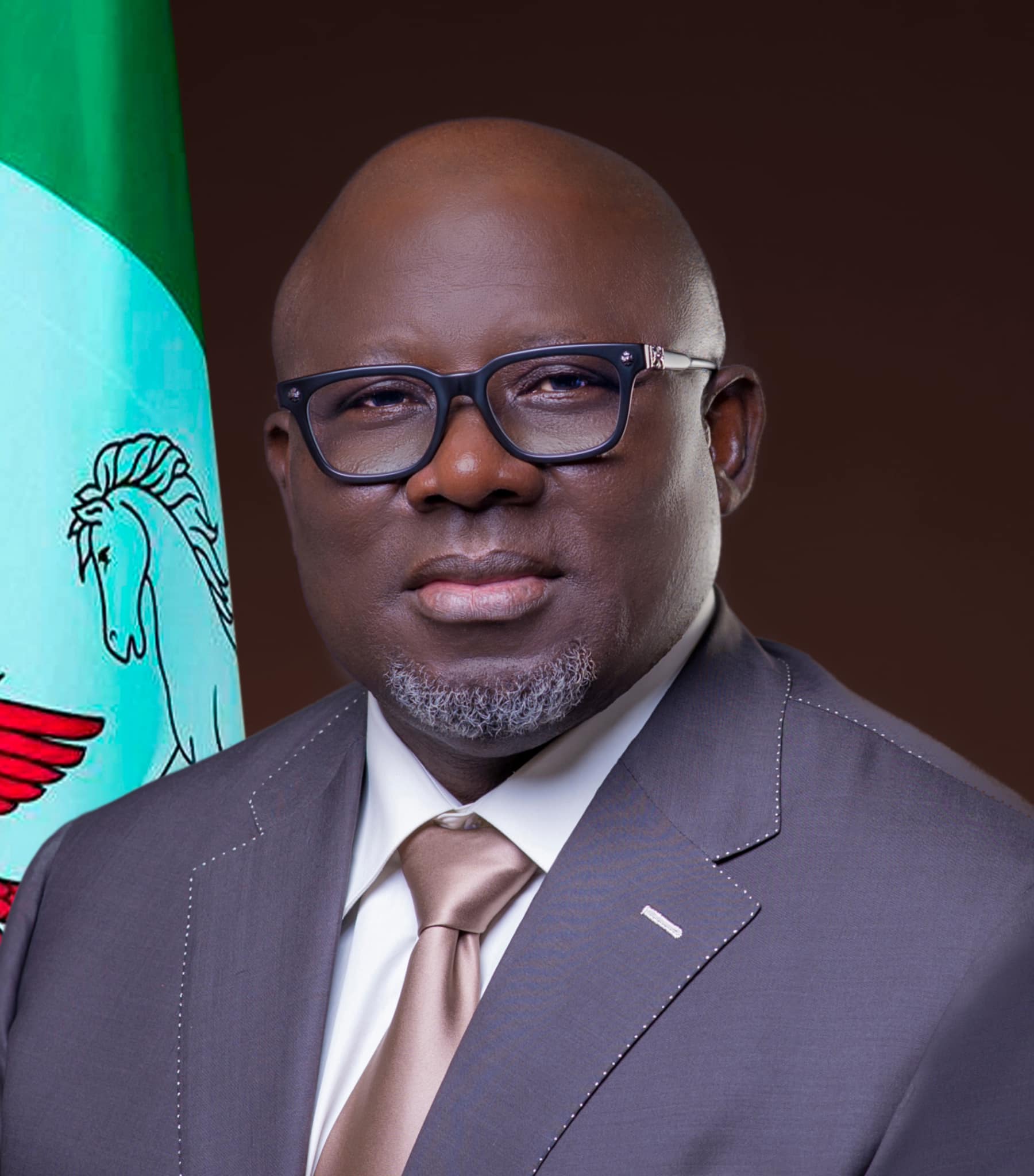
Delta State Governor, Sheriff Oborevwori on Tuesday signed the 2026 Appropriation Bill of N1.729 trillion, tagged “Budget of Accelerating the MORE Agenda,” alongside three other key bills passed by the Delta State House of Assembly into law.
The assent paves the way for accelerated development, improved security and strengthened social welfare across the state.
The three additional laws are the Delta State Social Investment Programme Law, the Delta State Colleges of Education Law, 2025, and the Delta State Anti-Terrorism and Anti-Cultism (Amendment) Law, 2025.
Speaking during the signing ceremony, Governor Oborevwori described the 2026 budget as “not just a budget of figures, but a budget of vision, action and expected deliverables for the next twelve months,” assuring that the state would hit the ground running in 2026 to fast-track development across critical sectors.
The N1,729,881,208,779 budget represents an increase of over 70 per cent compared to the 2025 budget. The Governor said the estimate, though ambitious, was achievable, noting that 70 per cent of the budget is allocated to capital expenditure, while 30 per cent is for recurrent spending. According to him, the spending plan reflects his administration’s commitment to infrastructure-led growth and sustainable development.
Oborevwori said that in 2025, the state intensified investments in infrastructure, security, fiscal discipline and revenue generation, resulting in improved internally generated revenue without placing additional burdens on citizens. He noted that these gains underscore the success of the administration’s reforms and its resolve to further strengthen the state’s economy.
Explaining the significance of the accompanying laws, the Governor said the Social Investment Programme Law provides a legal framework for equitable, grassroots-focused access to resources and services, especially for vulnerable and underserved populations, without discrimination.
He added that the Colleges of Education Law, 2025, standardised the operations of state-owned colleges of education, enabled them to award Nigerian Certificate in Education (NCE) and education degrees concurrently, and expanded their capacity to train more qualified teachers.
On security, Oborevwori said the Anti-Terrorism and Anti-Cultism (Amendment) Law strengthens the legal framework to tackle terrorism, cultism and related crimes, bringing state laws in line with contemporary security realities.
The Governor commended the Speaker, leadership and members of the Delta State House of Assembly, as well as the Clerk and staff of the House, for the timely passage of the budget and other bills, noting the strong synergy between the executive and legislature. He also thanked stakeholders, cabinet members, civil servants and citizens for their contributions, while wishing Deltans a Merry Christmas and a prosperous New Year.
Earlier, Speaker of the Delta State House of Assembly, Rt. Hon. Emomotimi Guwor, said the passage of the four bills followed rigorous legislative engagement, wide consultations and thorough scrutiny in line with the Assembly’s constitutional responsibilities.
Guwor explained that the Social Investment Programme Law institutionalized social intervention initiatives aimed at protecting vulnerable citizens and promoting inclusive growth and social justice. He said the Colleges of Education Law, 2025, establishes a uniform framework to enhance the quality and efficiency of teacher education and reduce disparities among state-owned colleges.
He added that the Anti-Terrorism and Anti-Cultism (Amendment) Law addresses emerging security challenges and corrects gaps in the principal legislation, including the absence of a clear definition of cultism.
On the 2026 Appropriation Law, the Speaker said the House scrutinised the budget sector-by-sector in line with the MORE Agenda before passing the N1.729 trillion estimate.
According to him, the assent to the bills further highlights the cordial and productive relationship between the legislature and the executive, driven by a shared vision for a peaceful, secure and prosperous Delta State, and will significantly advance good governance and socio-economic development in the state.
The Nigerian Content Development and Monitoring Board said its Nigerian Oil and Gas Parks Scheme, established to boost local manufacturing through shared infrastructure and embedded power solutions, would be inaugurated in 2026.
Abdulmalik Halilu, spokesman for NCDMB, disclosed this on Monday in Abuja while presenting an overview of the Board’s mandate and achievements at a capacity-building workshop for the media.
NCDMB established the NOGAPS with the primary aim of domiciling and domesticating oil and gas activities in-country by facilitating local manufacturing.
The scheme is a key part of the NCDMB’s 10-year Strategic Roadmap to increase Nigerian content in the industry to 70 per cent by 2027.
Halilu said eight oil and gas industrial parks, covering Bayelsa, Cross River, Akwa Ibom, Imo, Delta, Ondo, Abia, and Edo, were being established.
“NOGAPS in Bayelsa and Cross River states are at 90 per cent completion and due for commissioning in 2026,’’ he said
Mr Halilu said the parks would provide infrastructure and services plots for manufacturing outfits, adding that its local content policy had evolved into a powerful tool for industrialisation, job creation and sustainable economic growth in the sector.
He said local content was designed to stop capital flight and reposition the oil and gas industry as a catalyst for national development.
According to him, exporting oil and gas services outside Nigeria amounted to exporting jobs, capital and industrialisation opportunities, a situation the Federal Government deliberately moved to reverse through local content policies.
He said the success of early local content initiatives led to the enactment of the Nigerian Oil and Gas Industry Content Development Act, which institutionalised the policy and insulated it from political changes.
“The philosophy of local content is simple: what can be competitively produced in Nigeria should be produced in Nigeria, without compromising standards, pricing or project timelines,” Halilu said.
He explained that the NOGICD Act assigns NCDMB two core responsibilities, namely building indigenous capacity and enforcing compliance with the Act, which contains schedules and nearly 300 performance targets.
Highlighting achievements, he cited the Nigeria LNG Train 7 project as a major success story, with over 93 per cent Nigerian workforce participation, engagement of 1,400 vendors, and significant domiciliation of fabrication, engineering and manufacturing activities.
He said capacities developed for oil and gas projects now serve other sectors such as power and construction, reinforcing the sector’s multiplier effect on the economy.
On financing, he said NCDMB had deployed funds from the Nigerian Content Development Fund through intervention programmes, including single-digit interest loans for indigenous companies, asset-acquisition financing, and working capital support introduced during the COVID-19 pandemic.
Halilu also said that NCDMB had fully automated its processes, eliminating physical visits for certifications and approvals, and placing the Board among Nigeria’s top-performing agencies in ease-of-doing-business rankings.

Thousands of Drivers Wrongly Fined for Speeding Since 2021
ShareThousands of drivers could have speeding fines cancelled after a fault saw some cameras falsely triggered on English A roads...

UK Unemployment Rate Rises to 5.1 Per cent
ShareThe UK unemployment rate in the three months to October has increased to 5.1%, according to official figures. That marked...

French Court Sentences Ex-DR Congo Rebel, Politician to 30 Years in Jail
ShareA French court has sentenced a former rebel leader and politician from the Democratic Republic of Congo to 30 years...


EEDC Explains Recent Decline in Power Supply across South-East
ShareThe Enugu Electricity Distribution Company (EEDC) has attributed the recent decline in power supply across the South-East to low electricity...
DMO Takes Sensitisation on Borrowing Guidelines to Northern States
ShareThe Debt Management Office (DMO) said that its World Bank-assisted workshop on borrowing guidelines was designed to intimate subnational entities...


Oborevwori Signs N1.729trn 2026 Budget, Three Other Bills into Law
ShareFrom Francis Sadhere, Delta Delta State Governor, Sheriff Oborevwori on Tuesday signed the 2026 Appropriation Bill of N1.729 trillion, tagged...
NCDMB Oil, Gas Parks Near Completion, Set for 2026 Inauguration
ShareThe Nigerian Content Development and Monitoring Board said its Nigerian Oil and Gas Parks Scheme, established to boost local manufacturing...
Nigeria Tops W’Africa’s Crude Refining as Other Countries Stages Competition
ShareNigeria is expanding its crude refining footprint in the face of apparent asset acquisition and development by other countries in...

AFCON 2025: Super Eagles Camp Swells to 22 Ahead Egypt Friendly
ShareThe Super Eagles camp in Cairo has grown to 22 players with the arrival of Blackburn Rovers defender Ryan Alebiosu,...

Hamann: Wirtz Made Wrong Choice Joining Liverpool
ShareLiverpool hero Didi Hamann believes Florian Wirtz made the wrong decision joining the Reds this summer. Wirtz, a £100m summer...