
NEWS
Benue not Among Worst-governed States, Says Alia


From Attah Ede, Makurdi
The Benue State government has emphatically thrown out the recent ranking by the UK-based Good Governance Rating Index (GGRI), which listed the state among the three worst-governed in Nigeria alongside Zamfara and Kwara.
In its report, the GGRI cited alleged collapse of rural infrastructure, dilapidated schools and hospitals, rising insecurity, economic stagnation, and pervasive corruption as factors contributing to the low ranking. But governor Hyacinth Alia described the report as “fundamentally flawed and misleading,” insisting that it relied heavily on unofficial data and lacked proper contextual analysis.The governor in a statement on Tuesday by his Technical Adviser on Media and Strategic Communications, Chief Solomon Iorpev, noted that the data on the ground clearly reveals that despite these challenges, the administration has made significant strides in stabilising the state and implementing policies aimed at improving the quality of life for citizens,” Iorpev said.According to him, the issue of security, which was a major metric in the GGRI assessment, is primarily a federal responsibility, limiting the state government’s control over certain indicators cited in the report.He added that there are several initiatives and accomplishments under the Alia administration, including the recruitment of 9,700 teachers, the establishment of a cancer treatment centre at Benue State University Teaching Hospital, and the ongoing construction of approximately 390 kilometres of road network across all 23 local government areas.He noted the revitalisation of the Benue State Teaching Hospital, improvements in primary healthcare facilities, and initiatives to support medical workers and students.”In education, the government has constructed new storey buildings in government-owned primary schools, expanded teacher intake, awarded scholarships to high-achieving students, and promoted girl-child education. Infrastructure investments extend to roads, underpasses, solar-powered lighting, and the renovation of government buildings, including the State Secretariat and House of Assembly.”Agricultural programmes have been intensified, with the introduction of the Smallholder Farmer Outgrower Programme, provision of farm inputs, and youth-focused initiatives designed to stimulate production and create employment.”Efforts are ongoing to revive moribund state-owned enterprises and establish new ones, including bread and water factories, a nails manufacturing company, and a juice factory, aimed at boosting local economic activity.”On security, the administration established Operation Anyam Nyor, a joint task force, and the Benue State Civil Protection Guards, supported with vehicles and motorbikes, to enhance intelligence and maintain peace within the state.“Given these ongoing efforts and tangible achievements, the GGRI report is a misrepresentation of the facts on the ground. We urge the GGRI and the public to consider the full picture, including the state’s consistent investment in infrastructure, education, health, agriculture, and security,” Iorpev said.The statement reaffirmed the Alia administration’s commitment to transparency, accountability, and the welfare of Benue State residents, urging that future assessments take into account the broader socio-economic and developmental context of the state.NEWS
Troops Arrest Two Suspected Terrorist Logistics Suppliers in Yobe, Recover Motorcycle Spare Parts
By David Torough, Abuja
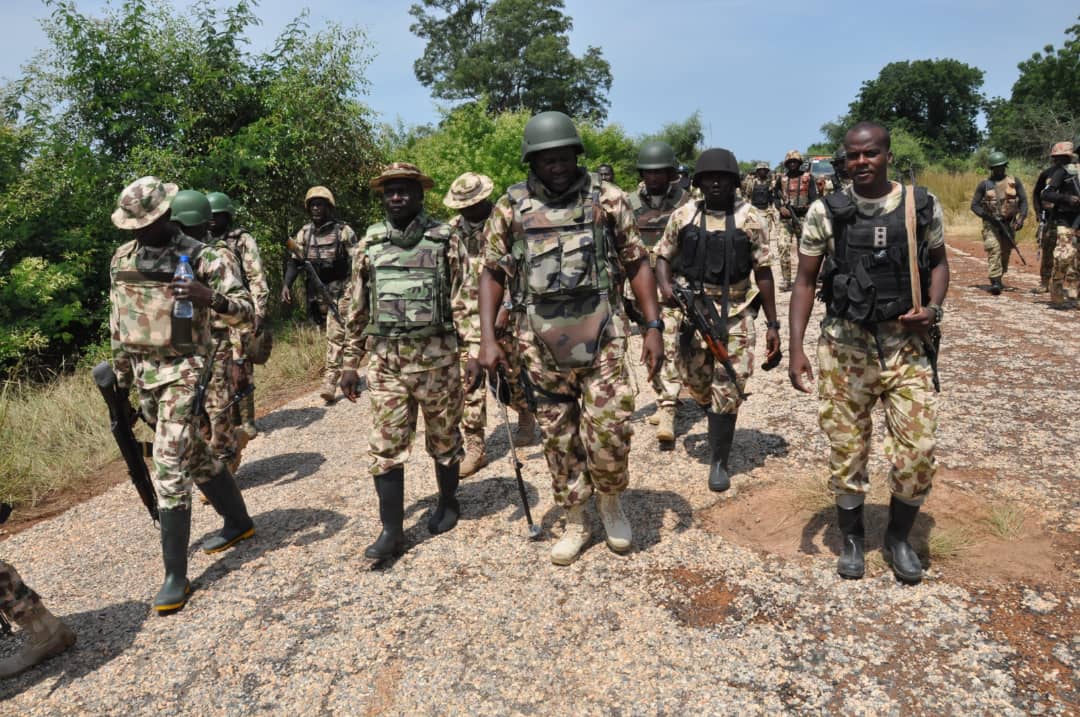
Troops of the Joint Task Force (North East), Operation HADIN KAI (OPHK), have arrested two suspected terrorist logistics suppliers and recovered a large consignment of motorcycle spare parts allegedly destined for Boko Haram and ISWAP fighters operating in the Yunusari-Mobbar axis of Yobe State.
The suspects were arrested on Tuesday, September 8, 2026, following credible intelligence on the movement of logistics supplies believed to be intended for terrorist elements in the area.
According to a statement by the Acting Military Information Officer, Headquarters Joint Task Force (North East), Capt.
Mohammed Goni, troops of 159 Battalion under Sector 2 OPHK, working with other security personnel, mobilised a fighting patrol and intercepted the consignment at Gumsa Bridge in Geidam Local Government Area.The recovered items included large quantities of motorcycle tyres, crankshafts, oil seals, traffic indicators, acceleration and clutch cables, bearings, brake components, gaskets, piston kits, chains and sprockets, speedometers, clutch plates, rocker arms, CDI units, coils, rectifiers and fuel-related components, among other spare parts.
Security forces also recovered 145 pairs of footwear and two Tecno Android phones, among other items.
The suspects and recovered materials have been handed over to the 27 Military Intelligence Regiment for further investigation and necessary action.
The military said the interception was part of ongoing efforts to disrupt terrorist logistics networks and prevent Boko Haram and ISWAP fighters from accessing supplies needed to sustain their operations.
Operation HADIN KAI urged members of the public to continue providing credible and timely information to security agencies to support counter-terrorism operations across the North East.
The Director-General, Nigeria Centre for Disease Control and Prevention (NCDC), Dr. Jide Idris, has urged Nigerians to begin preparations against Lassa fever before infections rise during the approaching dry season.
Idris gave the advice in Abuja on Wednesday at a news conference, emphasising that early action by government, health workers, communities and households was essential to reducing infections and preventing avoidable deaths.
He said Lassa fever occurred throughout the year, but cases tended to increase during the dry season, particularly between November and April, making early preparedness crucial to controlling transmission.
According to him, the period before the seasonal peak provided an important opportunity to strengthen prevention measures, improve preparedness and ensure health facilities can respond effectively.
He said lessons from the 2026 Lassa fever response showed that several challenges needed urgent attention before transmission increased, particularly delays in seeking care and healthcare worker infections.
Idris said persistent environmental and household risks, including poor sanitation, unsafe food storage and exposure to rodents, continued to contribute significantly to Lassa fever transmission.
He also identified limited state ownership, over-reliance on national resources and delays in releasing funds required for preparedness activities as major challenges affecting effective response efforts.
The NCDC boss said there was also a gap between healthcare capacity available on paper and what was actually functional when facilities were needed to manage Lassa fever patients.
According to him, dialysis machines provided to some high-burden states were not always being used for Lassa fever patients, with some facilities deploying them for other medical conditions.
He said the experience reinforced the need to strengthen the entire healthcare pathway, from prevention and early detection through diagnosis, referral and treatment.
Idris said the agency’s accelerated readiness plan would focus on actions required between now and the expected peak of Lassa fever transmission across the country.
He said one priority was to detect cases earlier, ensure suspected infections were reported promptly and address laboratory requirements needed for effective diagnosis and response.
According to him, environmental health officers, agriculture officials and livestock personnel had important roles to play in preventing and controlling Lassa fever transmission.
He urged healthcare providers to recognise suspected Lassa fever cases early, protect themselves from infection, report cases promptly and ensure patients were appropriately referred for further management.
Idris added that healthcare workers should take appropriate precautions from the first point of contact.
Idris urged states to investigate every healthcare worker infection, follow up exposed workers and promptly address gaps identified during investigations to prevent further transmission within health facilities.
He called on healthcare workers to remember the message, “Think Lassa, protect, report and refer,” while maintaining a high index of suspicion when managing patients with compatible symptoms.
According to him, research is also needed to understand changing patterns in Lassa fever transmission, including the possible involvement of rodents other than Mastomys natalensis.
He said genomic sequencing capabilities were being used to better understand the virus and determine whether different strains contributed to observed epidemiological patterns across affected areas.
Idris said the agency would continue supporting research into candidate Lassa fever vaccines and rapid diagnostic tests to improve early detection, treatment and outbreak response.
For households, he urged Nigerians to protect food by storing rice, gari, beans, maize and other food items in properly covered containers inaccessible to rodents at all times.
He advised residents to block openings through which rodents could enter homes, reduce clutter and eliminate conditions that provided rodents with hiding places or attract them.
Idris also urged Nigerians to keep homes, markets and other surroundings clean, dispose of refuse properly and avoid direct contact with rodents, their urine, faeces and body fluids.
He advised people who developed fever or felt unwell, particularly those living in or travelling from areas where Lassa fever occurred, to seek appropriate medical care promptly.
The agency boss warned against prolonged self-treatment for presumed malaria, stressing that persistent symptoms required medical evaluation because not every fever was caused by malaria.
He further called on state and local governments to strengthen environmental sanitation, waste management, surveillance, laboratory referral pathways and treatment facilities before Lassa fever cases increased.
Also speaking, Sanitarian Collins, Assistant Chief Scientific Officer, Ministry of Environment, said the ministry was collaborating with NCDC to prevent Lassa fever through improved sanitation and rodent control.
Collins urged Nigerians to clear surrounding bushes, maintain clean environments and adopt preventive measures before the peak transmission period to reduce conditions that encouraged rodents to thrive.
According to him, prevention was more effective and less costly than waiting until cases increased, emphasising that late presentation often meant patients arrived at treatment centres with serious complications.(NAN)

By Tony Obiechina, Abuja
Following the failure of NICON Insurance Limited’s management to raise the minimum capital requirement for the risk underwriting entity’s licence category, the National Insurance Commission (NAICOM), the insurance industry regulator, has commenced the formal winding-up of the firm.
Consequently, the commission has appointed Chukwuma-Machukwu Ume, as Receiver/Provisional Liquidator to take control of the company’s assets, manage its outstanding obligations and oversee the transfer of its life insurance portfolio to another insurer.
Specifically, the industry regulator had cancelled NICON Insurance’s certificate of registration with effect from 3 August, 2026, after the company failed to comply with the prescribed minimum capital requirement within the period allowed by the regulator.
NAICOM’s decision followed its 3 August communication to the company’s board, in which it cited NICON’s failure to satisfy the minimum capital requirement applicable to its category of insurance licence to justify its decision as provided for in the NIIRA 2025 and other applicable regulatory provisions.
The Receiver/Provisional Liquidator hinted about his appointment in a public notice dated 4 August, confirming that the industry regulatory commission engaged him under the provisions of the Nigerian Insurance Industry Reform Act, 2025, to commence the winding-up process.
Based on the provisions of the law, as Receiver/Provisional Liquidator is mandated to identify, recover, secure, take possession of NICON Insurance’s assets and facilitate the transfer of NICON’s life insurance portfolio to another licensed life insurer, subject to the approval of NAICOM.
In addition, the Receiver/Provisional Liquidator will also undertake the verification and settlement of the company’s legitimate liabilities in accordance with the provisions of the law.
In line with his mandate, Ume has directed individuals, policyholders, businesses and other entities with claims against NICON Insurance to provide documentary evidence and details supporting their claims, adding that the verification exercise will help establish the company’s outstanding obligations and determine legitimate claims for settlement under the applicable liquidation framework.
This is even as he disclosed that steps were being taken to address the interests and entitlements of NICON Insurance employees in line with the relevant laws and procedures governing the liquidation.




Troops Arrest Two Suspected Terrorist Logistics Suppliers in Yobe, Recover Motorcycle Spare Parts
ShareBy David Torough, Abuja Troops of the Joint Task Force (North East), Operation HADIN KAI (OPHK), have arrested two suspected...
NCDC Urges Early Preparedness as Lassa Fever Dry-season Peak Approaches
ShareThe Director-General, Nigeria Centre for Disease Control and Prevention (NCDC), Dr. Jide Idris, has urged Nigerians to begin preparations against...
Why Broadcasters Should Call For Solidarity
ShareBy Isaac Asabor The recent incident involving a media professional and a representative of the Federal Capital Territory administration has...


TikTok Bans Carter Efe’s Account with 5.6 Million Followers
SharePopular Nigerian skit maker and content creator Carter Efe has reportedly lost his official TikTok account with 5.6 million followers...
NAICOM Begins NICON Insurance Liquidation Process, Appoints Receiver
ShareBy Tony Obiechina, Abuja Following the failure of NICON Insurance Limited’s management to raise the minimum capital requirement for the...
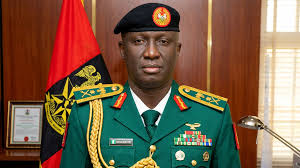

Army Shakes Up Top Command, Names New North-East Theatre Boss
ShareBy David Torough, Abuja The Nigerian Army has announced a major reshuffle of its senior leadership, redeploying generals and brigadier...


FG Deepens Education Support, Eases Tertiary Institution Burden
ShareBy David Torough, Abuja The Federal Government has stepped up efforts to ease financial pressures across Nigeria’s tertiary education system,...


Information Minister Backs NIPSS Plan to Unlock Nigeria’s Orange Economy Potential
ShareBy David Torough, Abuja The Federal Government has pledged its support for the National Institute for Policy and Strategic Studies...


Google Warns against Using AI as Shortcut to Learning
ShareGoogle on Tuesday warned against using Artificial Intelligence (AI) as a shortcut to learning, urging students to harness the technology...


FRSC Records 25 Per Cent Reduction in Road Crashes in Osun
ShareThe Gbongan Unit Command of the Federal Road Safety Corps (FRSC) in Osun recorded a 25 per cent reduction in...