
NEWS
Benue SEMA Distributes First Relief Materials to IDPs Under Alia


From David Torough, Makurdi
Benue state government through the State Emergency Management Agency (SEMA) on Thursday, distributed food and non -food items to the Internally Displaced Persons (IDPs), across the various camps in the state for the first time since governor Hyacinth Alia became governor of the state.
Flagging off the distribution of the materials, governor Alia restated the commitment of his administration in returning the IDPs to their ancestral homes.
The governor who had earlier visited some of the IDPs camps on Thursday when he led the United Nations (UN), delegation to some of the camps in the state described their condition as deplorable.
He his administration was trying to “reset the entire state to be a functional government element of progression and development”. He further stated that his administration took over SEMA from his predecessor with tall profile of activities that was only a mirage and were never reflected by application to those who were supposed to be touched.
The governor who said he was amazed at the huge number of the IDPs who are suffering from hardship conditions caused by Farmers/Herder crisis in the state, also charged SEMA to respond not just to emergency matters but to ensure that all the IDPs are given good care and attention in equity and justice even to the camps who were before now unofficial should be considered official and must be reached to cushion the effect of the hardship on the IDPs.
Governor Alia said he discovered about fourteen thousand (14,000) people in one of the camps which was earlier termed unofficial by the last administration, emphasizing that it was wrong to allow them unattended to charged SEMA to ensure that the items meant for the suffering IDPs are not diverted.
He however said that Benue remains a peaceful place, stating that government can not folds its arms and allow the few selfish individuals to destroy the state, stressing that Benue people are peace loving and stressed the need to make the state a livable place for all.
While thanking donors for their various supports to the IDP camps, also assured them that their contributions would judiciously applied called on the well to do individuals and organizations to support the government to get the IDPs back to their ancestral homes.
He charged people of the state to remain vigilant, be their brother’s keeper and report suspicious activity to the security agencies for proper action and warned them to remain peaceful and never take laws into their hands.
Earlier, Acting Executive Secretary of SEMA, James Iorpuu told the governor that soon after he assumed office, he took a tour of all the IDP camps in the state discovered that their situation was deplorable and that other camps were declared official and others unofficial amongst other challenges of food, water and shelter.
He said that has quickly restructured the agency into various departments of administration, planning, research and statistics, relief and rehabilitation as well as Welfare for effective management
He added that to achieve effective coordination, accurate situation awareness and comprehensive visibility of operational resources as well as enhancing information sharing in disaster response, he has also launched a website of SEMA while 88 Staff were recruited and posted to all Camps in the state.
By David Torough, Abuja
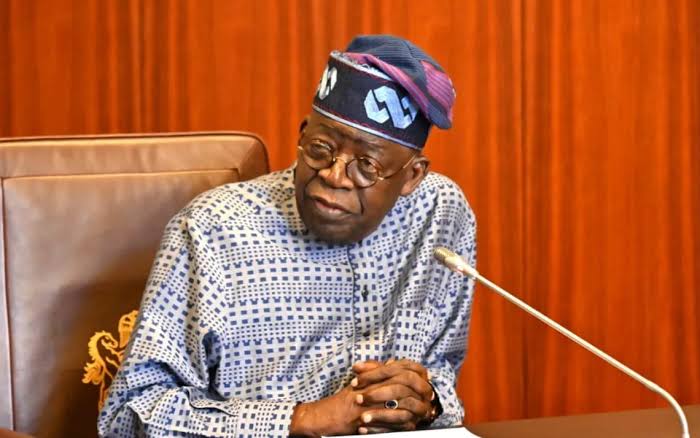
President Bola Tinubu has approved a comprehensive forensic audit of the Federal Government’s personnel, payroll and administrative systems, including the Integrated Personnel and Payroll Information System (IPPIS) and all federal agencies.
The President directed the Minister of Finance and Coordinating Minister of the Economy, Taiwo Oyedele, to oversee and coordinate the exercise.
According to a statement issued on Friday by the President’s Special Adviser on Information and Strategy, Bayo Onanuga, the audit follows a resolution of the Federal Executive Council on August 19, 2026, prompted by findings from the Independent Corrupt Practices and Other Related Offences Commission (ICPC) concerning alleged “fake agencies,” ghost workers and other control failures within government.
The audit is expected to determine the nature and extent of weaknesses in government control systems and establish how such weaknesses may have been exploited.
The exercise will have two major components. The first will focus on government systems, particularly IPPIS and related payroll, personnel, pension and financial-management platforms.
It will examine reported cases of ghost workers and payroll fraud, reconcile figures identified by the ICPC, trace how fictitious or ineligible persons were enrolled, and assess access, identity, biometric and bank-account controls.
The audit will also examine the links between IPPIS and other government platforms, including the Government Integrated Financial Management Information System (GIFMIS), Remita, the Treasury Single Account (TSA) and Sub-TSA.
The review will seek to determine whether identified irregularities resulted from system defects, process failures, inadequate segregation of duties or deliberate circumvention of established controls.
The second component will cover federal ministries, departments, agencies, commissions, councils, parastatals and other government bodies.
It will establish a definitive inventory of such entities and verify their legal basis, while examining how they obtain official recognition, budgetary consideration, correspondence privileges, office facilities and access to government systems.
The exercise will also assess governance, procurement, internal-audit and oversight mechanisms across the Federal Government, with the aim of shutting systemic loopholes that could enable irregular entities or individuals to gain access to public resources.
Tinubu directed that the audit be conducted independently and with the highest standards of professionalism and forensic integrity. The audit team will have access to relevant government systems and records and will work with the ICPC to complement ongoing investigations, prosecutions and recovery efforts.
The President said the exercise should go beyond identifying individual cases of fraud or administrative failure and instead strengthen the architecture of government, improve data verification and reconciliation, reinforce accountability and ensure that only legally constituted entities and eligible personnel have access to government resources.
The Presidency said the initiative reflects Tinubu’s commitment to transparency, accountability, fiscal governance and institutional integrity across the Federal Government.
By Tony Obiechina, Abuja
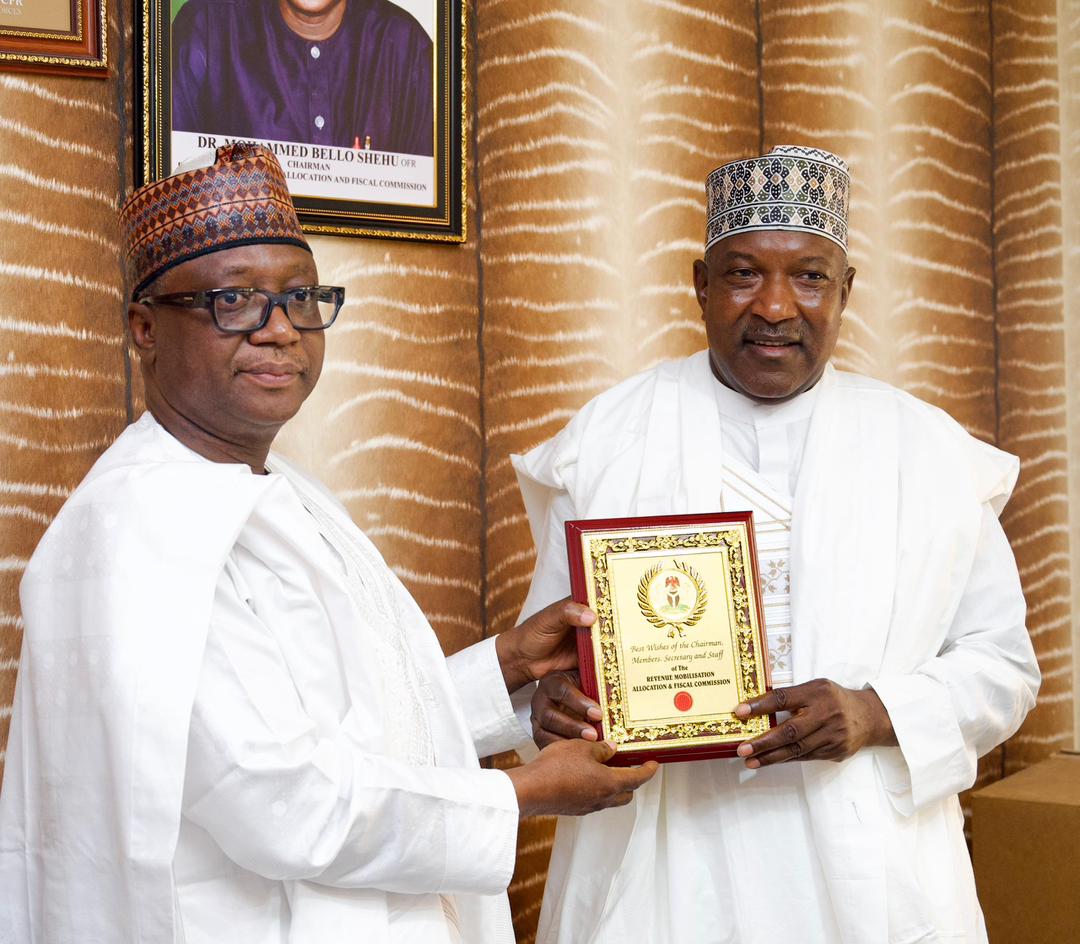
The Chairman of the Revenue Mobilisation, Allocation and Fiscal Commission (RMAFC), Dr. Mohammed Bello Shehu has emphasized the significance of greater collaboration between RMAFC and the Nigeria Extractive Industries Transparency Initiative (NEITI), to promote transparency, accountability and improved revenue mobilisation and generation in Nigeria’s extractive industries.
Dr. Shehu stated this when the NEITI Executive Secretary Hon. Musa Sarki Adar paid him a courtesy visit at the Commission’s headquarters in Abuja on Friday.
He reaffirmed RMAFC’s commitment to deepening its longstanding partnership with NEITI.
“RMAFC is delighted to receive the Executive Secretary and his delegation. Our relationship with NEITI is longstanding, strategic and mutually beneficial. We value NEITI’s work in promoting transparency and accountability in Nigeria’s extractive sector, and we are committed to deepening this partnership,” Shehu said.
The Chairman commended NEITI for providing credible information on the operations and financial flows of the extractive industries, noting that its efforts had improved public understanding of the sector and strengthened accountability in the management of Nigeria’s natural resources.
“NEITI has earned a strong reputation through its consistent efforts to uncover facts, reconcile information and promote openness. That work is important to the country and deserves the support of all stakeholders,” he said.
The Chairman also acknowledged the support of NEITI’s international partners and expressed the hope that stakeholders would continue to strengthen the organisation’s capacity in information gathering, data verification, revenue transparency and accountability.
He assured NEITI of the Commission’s continued support and openness to collaboration in data sharing, research, revenue monitoring and policy engagement.
Shehu congratulated Hon. Musa Adar, on his appointment, describing it as well deserved while expresseing confidence in his ability to provide effective leadership.
“Your appointment is well deserved. You have demonstrated commitment, competence and diligence in your professional career. I am confident that you will bring these qualities to bear in your new role and lead NEITI to even greater achievements.” He said.
In his remarks, the NEITI Executive Secretary described the relationship between both institutions as a long-standing partnership built on a shared commitment to transparency, accountability and improved revenue mobilisation.
“The relationship between NEITI and RMAFC is not new. It is a partnership built over time, and we must now take it to a higher level,” Hon. Sarkin Adar said.
He highlighted RMAFC’s role in monitoring revenues accruing to the Federation Account and advising on measures to improve revenue collection and accountability, particularly in relation to Nigeria’s natural resources.
Sarkin Adar noted that reliable information on revenues generated from oil, gas and mining activities was essential for fiscal management, public accountability and informed decision-making.
He explained that NEITI’s independent reconciliation of financial and physical flows in the extractive industries provides useful data on revenues, payments, production, exports and company activities.
“NEITI’s reports can support RMAFC’s work in revenue monitoring, verification, policy analysis and the development of measures to improve revenue mobilisation,” he said.
He also highlighted Nigeria’s presence at the ongoing 2026 Extractive Industries Transparency Initiative (EITI) implementation under the 2023 EITI Standard, describing it as an opportunity to demonstrate measurable progress in strengthening governance across the extractive industries.
According to him, the standard’s emphasis on data reliability, systematic disclosure, transparency of revenue flows and institutional collaboration aligns closely with RMAFC’s mandate and creates opportunities for deeper cooperation.
Sarkin Adar invited RMAFC to participate in the Global EITI Conference scheduled for October 8–9, 2026, in Brussels, Belgium, where Nigeria is expected to showcase its progress in resource governance.
He called for stronger collaboration among NEITI, RMAFC and other relevant institutions in data sharing, revenue mobilisation, research, capacity building and policy dialogue.
“Our objective should be to build a more coordinated institutional framework for revenue assurance and resource governance. By working together, NEITI and RMAFC can strengthen oversight and support evidence-based policymaking,” he said.
The meeting was attended by the Secretary to the Commission, Comrade Tosin Adeyanju; some Directors and Special Advisers to the Chairman of the Commission.
By Tony Obiechina, Abuja
Nigeria’s capital market has been upgraded from “Unclassified” to “Frontier Market” status by global index provider, FTSE Russell.
This was disclosed in a statement personally issued on Friday by Minister of Finance and Coordinating Minister of the Economy, Prof Taiwo Oyedele.
According to the statement the change of status will tahe effect from the opening of trading on Monday, 21 September 2026.
The Minister described the move as confirmation of the country’s economic reform trajectory, coming nearly three years after Nigeria was dropped from the Frontier Market universe in September 2023 due to persistent problems with capital repatriation and foreign exchange execution that had made the market difficult for international investors to access.
The Minister further noted that the upgrade follows sustained improvements in foreign exchange liquidity, capital repatriation and overall market accessibility, and reflects the cumulative effect of the government’s macroeconomic and structural reform programme.
In the statement, Oyedele called the reclassification an important validation of Nigeria’s reform efforts and a foundation for the next phase of capital market development, describing it as a signal to global investors that the market is open, orderly and improving.
Officials said the achievement reflects years of disciplined work by both government and the private sector to restore confidence in the economy, while stressing that it represents a milestone rather than an endpoint.
The Minister commended the Securities and Exchange Commission, the Central Bank of Nigeria, the Nigerian Exchange Group, the Central Securities Clearing System and other capital market stakeholders for their coordinated work in regulatory reform, market infrastructure modernisation and investor engagement, which it said were central to restoring Nigeria’s standing among global index providers.
Going forward, the government reaffirmed its commitment to working with regulators and market institutions to deepen liquidity, broaden participation and strengthen investor protections, with a medium term goal of positioning Nigeria for progression to Emerging Market status.
Oyedele said the government would continue supporting policies aimed at enhancing the depth, transparency and global competitiveness of Nigeria’s capital market as part of the country’s broader economic transformation agenda.




Troops Rescue 54 Kidnap Victims, Neutralises 22 Terrorists in One Week – DHQ
ShareBy David Torough, Abuja The Armed Forces of Nigeria rescued at least 54 kidnapped victims and neutralised 22 terrorists during...


Tinubu Orders Forensic Audit of IPPIS, Federal Agencies Over Ghost Workers, Payroll Fraud
ShareBy David Torough, Abuja President Bola Tinubu has approved a comprehensive forensic audit of the Federal Government’s personnel, payroll and...

RMAFC, NEITI Collaborate to Boost Transparency in Revenue Generation
ShareBy Tony Obiechina, Abuja The Chairman of the Revenue Mobilisation, Allocation and Fiscal Commission (RMAFC), Dr. Mohammed Bello Shehu has...

Nigeria’s Capital Market Upgraded to Global Frontier Status after Classification
ShareBy Tony Obiechina, Abuja Nigeria’s capital market has been upgraded from “Unclassified” to “Frontier Market” status by global index provider,...
Electricity Distributors’ Association Decries Outstanding Debts by MDAs
ShareThe Association of Nigerian Electricity Distributors (ANED) has raised concerns over outstanding electricity debts owed by government Ministries, Departments and...

Afreximbank Records 30 Per Cent Rise Net Income for First Half 2026
ShareThe African Export-Import Bank (Afreximbank) and its subsidiaries (the Group) recorded a 30 per cent increase in net income to...


CBN Sells N700bn Treasury Bills in Second August Auction
ShareBy Tony Obiechina, Abuja The Central Bank of Nigeria (CBN), on behalf of the Debt Management Office (DMO), has offered...


Niger FRSC Records 234 Crashes, 110 Deaths in Seven Months
ShareFrom Dan Amasingha, Minna Ten people have been killed and several others injured in a fatal road crash involving a...
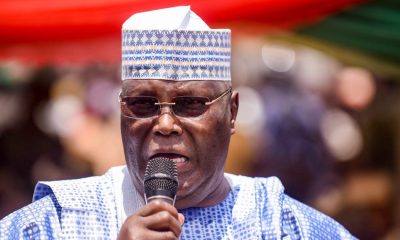

Fuel Subsidy War Deepens as Presidency, Atiku Clash Again over Policy
ShareBy David Torough, Abuja The political battle over Nigeria’s petrol subsidy regime has intensified, with the Presidency and former Vice-President...


The Man Behind ‘The Ultimate Commander’: A Birthday Tribute to Ambassador Osita Offor
ShareBy David Torough, Abuja Ambassador Osita Offor, popularly known as “The Ultimate Commander,” is being celebrated today for his vision,...