
NEWS
Benue to Inaugurate New Juice Factory Oct 1

From Attah Ede, Makurdi
The Benue Investment Property Company (BIPC) on Tuesday said its newly constructed juice factory at the State industrial layout Makurdi will commence full production on October 1.Group Managing Director (GMD), BIPC, Dr.
Raymond Asemakaha disclosed this while speaking with newsmen at the NUJ House in Makurdi. He announced the equipment installation at the juice factory is 100 percent completed, saying that the company will provide jobs for 400 Benue people. ”We will be producing mango and orange juice by taking off the fruits from Benue farmers at the state price and setting prices for those who come from the north to exploit the Benue farmers.”We have installed the juice factory. It is going to start precisely October 1, 2025. The juice factory is just beside Naka road, 65, 000 capacity, 100 percent installed.”We are expecting the manufacturer to come in the month of August to test run so that we would start producing the orange juice and Mango juice.”We want to set a standard and by the time we start we would determine the price of oranges in Nigeria. Benue has the best orange and mango and our people take it to the North and give them at a price that is reasonable. So we want to halt those things and if they want to buy, they can come to Benue at our own price which is one of the things we are doing.”The factory would also employ about 400 staff with direct Jobs and I have gotten partners from the European Union that would come to run these factories as it is highly technical while our team would be part of the management staff.”He noted that with the establishment of water, bread, nails and polythene industries, BIPC has employed 580 direct jobs and 3008 indirect jobs in the state.He further noted that the construction work on the new Benue Brewery is 84 percent completion and would also engage over 1000 jobs.He said the brewery would make use of local materials including cassava rice among others, urging the former to go into massive production of the raw materials.When asked about the sustainability of the companies’ father after his exit from office, Asemakaha dismissed the old insinuation that the government has no business managing businesses citing Akwa Ibom Airlines and some companies in China saying the problem is the character of the business managers.He suggested that the companies should be incorporated into limited liability companies where the state government can own 50 percent of the shares and sell the other 50 percent to the people.He also urged Benue youths to acquire skills in addition to their certificates to enable them to fit into the new economy.By Racheal Abujah
When Nigeria gained independence on Oct. 1, 1960, it held immense promise.
Sixty-six years later, healthcare delivery remains deeply polarised.
Brilliant achievements in medical training and crisis control are consistently undermined by chronic underfunding, broken infrastructure, critical staffing shortages, and severe inequities.
Nigeria eradicated smallpox in 1980, made significant progress against diseases such as river blindness and polio, expanded immunisation and built institutions that became important centres of medical education, research and specialist care.
But progress has not always been sustained. For millions of Nigerians, healthcare remains a financial burden, while many primary healthcare facilities still struggle with electricity, water, equipment, medicines and skilled personnel.
President Bola Tinubu sounded upbeat about the healthcare sector during his address on Nigeria’s 66th Independence Anniversary.
“We will continue to strengthen primary healthcare, basic education, and the essential public services poorer,’’ he said.
Analysts argue that Nigeria’s health story is one of neither failure nor uncomplicated success. It is a story of achievement, interrupted progress, and repeated attempts at reform.
In the early post-independence years, health development focused heavily on tertiary institutions and urban centres.
Experts say University College Hospital, Ibadan, and teaching hospitals in Lagos, Zaria, and Enugu became key centres for medical training and specialist care.
Yet many rural communities remained poorly connected to formal healthcare.
A major shift came under the late Prof. Olikoye Ransome-Kuti, Minister of Health from 1985 to 1993.
Ransome-Kuti championed primary healthcare, prevention, immunisation, maternal and child health and community participation.
Former Health Minister Prof. Eyitayo Lambo, who also served as a Regional Adviser on Health Economics at WHO/Africa Region, later described Ransome-Kuti as a reformer and change agent whose contribution left a lasting mark on Nigeria’s health system.
The philosophy was simple: healthcare should begin in the community, not only when a patient reaches a teaching hospital.
Economic difficulties, the Structural Adjustment Programme and years of military rule, however, placed pressure on public institutions.
The depreciation of the naira increased the cost of medicines and equipment, while health-worker migration became increasingly visible.
The return to democracy in 1999 brought renewed efforts to reform healthcare.
In 2001, African leaders adopted the Abuja Declaration, committing countries to allocate at least 15 per cent of their annual budgets to health.
Nigeria subsequently enacted the National Health Act of 2014, establishing the Basic Health Care Provision Fund (BHCPF), and the National Health Insurance Authority Act of 2022.
The BHCPF was designed as a dedicated financing mechanism for primary healthcare and Universal Health Coverage.
Its current platform reports 8,309 PHC facilities directly funded across the 36 states and the FCT, 1,296 facilities revitalised and more than 20 million Nigerians enrolled in health insurance.
Yet financing remains one of the sector’s biggest challenges. The 2026 Federal Budget allocated N2.48 trillion to health.
Dr Ipalibo Banigo, Chairman of the Senate Committee on Health, Secondary and Tertiary, has called for stronger domestic health financing and supported efforts to increase the statutory BHCPF allocation from one to two per cent of the Consolidated Revenue Fund.
The household burden remains substantial.
WHO reported that household out-of-pocket spending accounted for about 72 per cent of Nigeria’s current health expenditure in 2023, linking the way healthcare is financed to whether people receive care early, delay treatment or miss it altogether.
For a family facing cancer, kidney disease, complicated pregnancy, trauma or prolonged hospitalisation, treatment costs can quickly become an economic crisis.
Nigeria’s health financing system also relies on government revenue, insurance, private spending and external assistance.
The WHO/ African Health Observatory health-system profile notes that donor funding remains part of this financing mix, highlighting the importance of strengthening sustainable domestic financing.
The primary healthcare system remains the foundation of any attempt to achieve Universal Health Coverage.
The Federal Government says more than 3,000 PHCs have been revitalised under the current administration, while the latest N32.9 billion BHCPF disbursement supports more than 8,300 facilities through performance-based financing.
But the real test is what happens inside those facilities.
In August, the current Minister of State for Health and Social Welfare, Dr Iziaq Salako, said between 60 per cent and 70 per cent of Nigeria’s primary and tertiary health facilities experienced frequent power outages or had no electricity, while about 40 per cent of functional PHCs had no electricity access.
The consequences can be particularly serious for women and children.
Salako said more than 70,000 frontline health workers had been retrained towards a target of 120,000, while Nigeria had also been advocating managed migration arrangements that would require destination countries to contribute to training and workforce development in source countries.
Salako said the Presidential Initiative for Unlocking the Healthcare Value Chain and the pharmaceutical sector executive order were intended to reduce dependence on imported health commodities and increase local production.
Nonetheless there are concerns about brain drain and other related issues.
“But training alone cannot resolve the “Japa” challenge. Remuneration, safety, equipment, housing, working conditions and career progression remain important considerations in retaining professionals.
“COVID-19 exposed weaknesses in Nigeria’s laboratory capacity, supply chains and access to essential medical commodities. It also prompted investments in preparedness,’’ a health analyst said.
Dr Simeon Agwale, a renowned virologist and Chief Executive Officer of Innovative Biotech, said the COVID-19 pandemic exposed how vulnerable countries could become when global supply chains were disrupted.
He said for Nigeria, strengthening local manufacturing was therefore becoming increasingly important for health security, economic resilience and pandemic preparedness.
Agwale also noted that climate change was adding another layer to the country’s health challenges.
“Flooding, extreme heat, changing patterns of infectious diseases, food and water insecurity, as well as damage to health infrastructure, can affect communities and put additional pressure on health services.
“WHO describes climate change as a threat to health systems and a factor that can undermine the gains already made in public health?”
He said building climate-resilient healthcare in Nigeria would require ensuring that health facilities could continue to function during floods and heatwaves.
“It would also require stronger surveillance for climate-sensitive diseases and greater protection of water, sanitation and food systems,’’ he said.
Under Coordinating Minister of Health and Social Welfare Prof. Muhammad Pate, the Federal Government introduced the Nigeria Health Sector Renewal Investment Initiative, implemented through a Sector-Wide Approach.
The strategy seeks to reduce fragmentation, strengthen primary healthcare, improve financing and increase accountability.
Pate reported in 2025 that health insurance coverage had risen from about six to seven per cent two years earlier to 12 per cent, driven partly by mandatory insurance and the Vulnerable Groups Fund.
He also called for greater investment by states and Local Governments in health, water, sanitation and nutrition.
Pate said the reform agenda had also produced more than 21 strategic health policies, expanded health infrastructure and strengthened digital health systems.
It is experts’ view that Nigeria is not held back by a lack of health policies, but by the critical gaps in implementing them.
For any future strategy to succeed, experts say funding must move past bureaucracy and directly reach the frontlines where it can tangibly transform a patient’s experience.
By embracing predictable domestic financing, fostering community ownership, and using robust data to target resources where they are needed most, policymakers can build a healthcare system that truly serves its people.
Stakeholders say the path forward does not lie in copying foreign models, but in forging a resilient, sustained framework uniquely tailored to Nigeria’s size and realities.(NAN)

By Gabriel Agbeja
In spite of arriving on time, checking in, and waiting at the boarding gate, many air travelers in Nigeria are increasingly met with sudden announcements of flight delays or cancellations.
Consequently, flight disruptions have become one of the most persistent challenges plaguing Nigeria’s domestic aviation industry.
While delays and cancellations are not peculiar to Nigeria, their frequency has continued to generate concern among passengers, airlines, regulators and other stakeholders.
Capt.
John Ojikutu, Chief Executive Officer of Centurion Security and Safety, said in an interview with the News Agency of Nigeria that domestic market encroachment was a primary cause of frequent flight delays and cancellations.“If the commercial agreement was included in the Bilateral Air Services Agreement (BASA) during the era of Nigeria Airways, why did Nigeria Airways not fly to Gatwick, whereas British Airways (BA) was permitted to include Abuja and Lagos as part of its designated routes under the BASA?
“Why was Arik refused Heathrow but only Gatwick? I don’t know how you can convince me with language of the foreign airlines’ incursion rights into our domestic market with the help of our political office holders.
“Tell me why BA and VK from the UK operate to Lagos and Abuja, why Emirates, Qatar, and Etihad operate to Lagos, Abuja, and Kano, and especially why Ethiopian Airlines operates to all five Nigerian international airports.
“You consider these as a right in the Nigerian commercial agreement with the countries of these foreign airlines.
“How many of our 15 domestic airlines can fly daily to our five international airports if you still have not seen these ‘rights’ as incursions into the domestic airline market?” he queried.
Meanwhile, the Minister of Aviation and Aerospace Development, Mr Festus Keyamo, has placed considerable emphasis on engagement with industry stakeholders as part of efforts to address operational challenges.
In August 2026, Keyamo convened an emergency stakeholders’ meeting involving aviation unions, airline operators and government agencies following industrial tensions that disrupted flight operations.
Among the resolutions was a plan for the Nigeria Civil Aviation Authority (NCAA) and other aviation-agency heads to obtain payment schedules from airlines with outstanding statutory obligations, taking into consideration the airlines’ operating costs and prevailing economic realities.
Keyamo, who had said in many fora that airlines must meet their financial and regulatory obligations, affirmed that excessive financial pressure on operators can also threaten their ability to maintain sustainable operations.
“The Federal Government’s challenge is consequently to create an environment in which airlines can remain financially viable while passengers receive dependable services.
“At the centre of the effort is the NCAA, which is responsible for regulating the industry and protecting the interests of air travelers.
“Such measures are important because effective regulation goes beyond monitoring safety. It must also ensure that airlines provide reliable services and properly manage passengers when disruptions occur, ’’ he said.
Nevertheless, data released by the NCAA recently revealed that it recorded 4765 light delays and 36 cancellations in the month of August.
The regulator, in its summary of domestic airline flight disruption operations in the country for August revealed that 15 carriers operated 7,961 flights during the month, with roughly six in every 10 flights failing to operate on schedule.
“Air Peace recorded the highest number of delayed flights, with 1,330 of its 1,864 flights delayed, representing 71.4 per cent of its operations.
“United Nigeria Airlines recorded the highest delay rate among the carriers, with 943 of its 1,231 flights delayed, representing 76.6 per cent. The airline also recorded eight cancellations, the highest number during the month.
“Enugu Air followed with 582 delays out of 878 flights, representing 66.3 per cent, in addition to four cancellations.’’
It said Value Jet recorded 435 delays from 767 flights, representing 56.7 per cent, while Aero had 246 delays out of 469 flights, or 52.5 per cent.
Also, Green Africa recorded 114 delays from 226 flights, representing 50.4 per cent, while Overland had 139 delays out of 239 flights, or 58.2 per cent.
“Ibom Air recorded 254 delays from 560 flights, representing 45.4 per cent, while Max Air had 204 delays from 336 flights, or 60.7 per cent.
“Rano Air recorded 216 delays from 503 flights, representing 42.9 per cent, while Arik had 188 delays from 301 flights, or 62.5 per cent.
“Xe Jet recorded 40 delays from 127 flights, representing 31.5 per cent, while Binani had 22 delays from 57 flights, or 38.6 per cent.’’
NCAA stated that Umza Air recorded the best performance among the carriers, with 52 delays from 403 flights, representing 12.9 per cent, and no cancellations.
NCAA reported that 2,801 delayed flights were set back by 16 minutes to an hour, and 1,322 flights were delayed for one to two hours.
“Another 407 flights were delayed for between two and three hours, while 235 experienced delays of three hours or more.
“Air Peace accounted for 108 of the 235 longest delays, followed by Enugu Air with 46 and United Nigeria with 41; NG Eagle recorded no operations during the period,’’ it said.
More so, NCAA has issued stern warnings to airlines over spate of flight delays, crew shortages and other consumer-related infractions, urging them to align flight schedules with available aircraft and crew.
The Director General of Civil Aviation (DGCA), Capt. Chris Najomo, gave the admonition during separate interactive sessions with Air Peace and Max Air, held at the NCAA Corporate Headquarters in Abuja recently.
Najomo questioned the effectiveness of the buffer in view of recurring delays and cancellations being experienced, while acknowledging weather, diversions and airport restrictions as possible causes.
He underlined the need for contingency planning and effective passenger communication.
The NCAA Director, Public Affairs and Consumer Protection, Mr Michael Achimugu, said authority monitoring had revealed instances where passengers were left without adequate information or assistance.
He reminded Air Peace of its obligations to provide refreshments after two hours, meals after six hours, and accommodation, refunds and compensation where applicable.
He also raised concerns over flight merging and urged prompt responses to consumer complaints.
Responding, the Chief Operating Officer at Air Peace, Oluwatoyin Olajide, disclosed that the airline had 20 aircraft – five Aircraft on Ground (AOG) and 15 serviceable.
Olaide added that Air Peace deliberately operated 80 to 85 flights daily to maintain a buffer for disruptions.
She attributed disruptions to technical issues, including bird-strike damage, component shortages and a cracked windshield, as well as weather and airport restrictions.
Olaide said that Air Peace provided hotel accommodation and assistance to affected passengers.
At the Max Air session, the General Manager, Ground Operations/Business Development, Mr Raymond Omadiagbe, disclosed that three Boeing 737 aircraft were available for domestic operations.
He said that all serviceable, with only two being operated due to crew limitations, the international fleet comprised two Boeing 747s and one Boeing 777 undergoing checks.
Omadiagbe said Max Air had reduced its schedule to match available resources in addition to discontinuing late-night Kano operations following passenger feedback.
Observers say the recent interventions by the Federal Government, the NCAA, airlines and other stakeholders show that the problem is receiving attention.
Nonetheless, the August disruption figures demonstrate that much more remains to be done.
Experts say the true measure of progress for Nigeria’s aviation industry lies not in how swiftly stakeholders manage flight delays and cancellations, but in their ability to build systems that prevent these disruptions altogether.
For Nigerian travelers, success is defined by a simple, predictable experience: arriving at the airport, boarding on schedule, and reaching their destination safely.(NAN)
By Tambaya Julius, Abuja
The Federal Government’s allotment of domestic bonds rose sharply in the first nine months of 2026, reaching N7.15tn, representing a 106 per cent increase over the N3.
48tn allotted during the same period in 2025.An analysis of monthly auction results released by the Debt Management Office showed that the significant increase reflected the Federal Government’s increased reliance on the domestic capital market to finance its spending and other funding requirements.
The sharp rise was driven largely by substantial increases recorded in January, June, July and August, which more than offset declines in some months.
June recorded the largest year-on-year increase during the period, as the government allotted N1.22tn in Federal Government of Nigeria bonds, compared with N100bn in June 2025.
January also recorded a significant increase, with bond allotments rising to N1.54tn from N601.04bn, representing a 157 per cent increase.
In July, the government allotted N931.82bn, up from N185.93bn a year earlier, representing a 401 per cent increase. August recorded another major jump, with allotments rising to N805.16bn from N136.16bn, an increase of 491 per cent.
September recorded N748.64bn in bond allotments, representing a 29.8 per cent increase compared with the N576.62bn allotted in the corresponding month of 2025.
The increases came despite weaker performances in February and April, when allotments declined by 42.4 per cent and 30.4 per cent, respectively, compared with the same months of the previous year.
Overall, however, the increases recorded in other months pushed cumulative bond allotments to more than twice the level recorded in the corresponding period of 2025.
The increase in government bond allotments occurred amid strong investor demand for Federal Government securities.
According to the DMO data, total subscriptions for FGN bonds between January and September 2026 reached N13.72tn, significantly higher than the N7.15tn eventually allotted by the government.
February recorded the highest subscription during the period at N2.70tn, followed by January with N2.25tn.
July attracted N1.70tn in subscriptions, while March recorded N1.50tn.
Demand remained relatively strong during the middle and latter parts of the year, with investors subscribing to N1.41tn in June, N1.35tn in August and N1.36tn in September.
The difference between total subscriptions and allotments indicates that investors submitted bids substantially above the amount the government ultimately accepted at the respective auctions.
The strong demand also reflects continued participation in the sovereign debt market despite the increase in the supply of government securities.
The surge in bond issuance comes as conventional FGN bonds continue to account for the largest share of the Federal Government’s domestic debt portfolio.
As of June 30, 2026, Nigeria’s total public debt stood at N166.79tn, with domestic debt accounting for N91.59tn, representing 54.91 per cent of the total debt stock.
FGN bonds accounted for N64.84tn of the domestic debt, representing 74.53 per cent of the Federal Government’s domestic debt portfolio.
Other domestic debt instruments included FGN Sukuk, savings bonds, green bonds and promissory notes.
FGN Sukuk stood at N1.19tn, while savings bonds amounted to N122.45bn. Green bonds accounted for N47.36bn, while promissory notes stood at N1.22tn.
The debt composition underscores the dominant role of conventional FGN bonds in the government’s domestic financing programme.
The sharp increase in bond allotments during the first nine months of 2026 therefore highlights the growing role of the domestic capital market in meeting the Federal Government’s financing needs, even as investor demand for government securities remains strong.




11-year-old Girl Found Dead in Suleja Well, Church Guard Arrested
ShareFrom Dan Amasingha, Minna The disappearance of 11-year-old Christabel Albert after she left home for a birthday celebration has ended...

Jonathan Receives Bayelsa East APC Candidates
ShareFrom Mike Tayese, Yenagoa Former President of Nigeria, His Excellency, Dr. Goodluck Ebele Jonathan, has commended the quality, experience and...


2027: Delta APC Inaugurates Support Groups for Tinubu, Oborevwori
ShareFrom Francis Sadhere, Delta The Delta State chapter of the All Progressives Congress (APC) has inaugurated two political support groups...

‘Transformative Agenda to Critical Sectors are My Rescue Mission’ – Dauda
ShareFrom Ifeanyichukwu Nwannah, Gusau. Governor Dauda Lawal of Zamfara State, Dauda Lawal has declared that his administration’s rescue mission is...
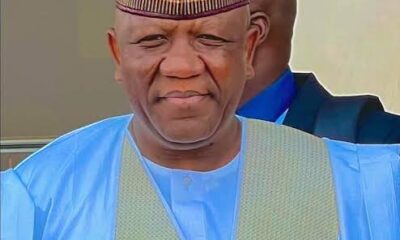

Yari Urges Northerners to Honour Power Rotation, Back Tinubu’s Eight-Years Presidency
ShareFrom Rabiu Sanusi Kano Former Zamfara State Governor and Director-General of the All Progressives Congress (APC) Presidential Campaign Council, Senator...
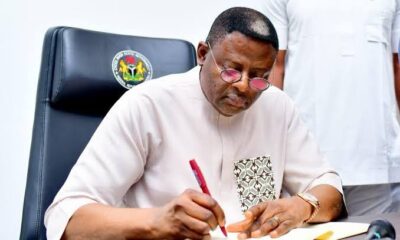

Otu Reinstates 3,000 Sacked LG Workers
ShareFrom Ene Asuquo, Calabar Cross River State Governor, Senator Prince Bassey Edet Otu, has approved the restoration of about 3,000...


First Lady Mobilises Women for Tinubu’s Re-election
ShareNigeria’s First Lady, Sen. Oluremi Tinubu, is set to host more than 20,000 women stakeholders in Abuja today as part...
NAFDAC Seeks International Support to Revive Vaccine Manufacturing in Nigeria
ShareThe National Agency for Food and Drug Administration and Control (NAFDAC) has solicited international partners’ support for establishing vaccine manufacturing...


IOM Empowers IDPs with Skills, Cash in Zamfara
ShareFrom Ifeanyichukwu Nwannah, Gusau Over one hundred residents, persons with disabilities, Internally Displaced Persons (IDPs), and other vulnerable groups in...
Diagnosis at 66: Nigeria’s Healthcare Landscape
ShareBy Racheal Abujah When Nigeria gained independence on Oct. 1, 1960, it held immense promise. Sixty-six years later, healthcare delivery...