
NEWS
BSUTH Moves to Establish Cancer Treatment Centre as Experts Push for Unified Breast Cancer Care in Benue

By David Torough, Abuja
The Benue State University Teaching Hospital (BSUTH), now Moses Orshio Adasu University Makurdi (MOAUM) Teaching Hospital, has unveiled plans to establish a cancer treatment centre aimed at strengthening the fight against the disease in Benue State.
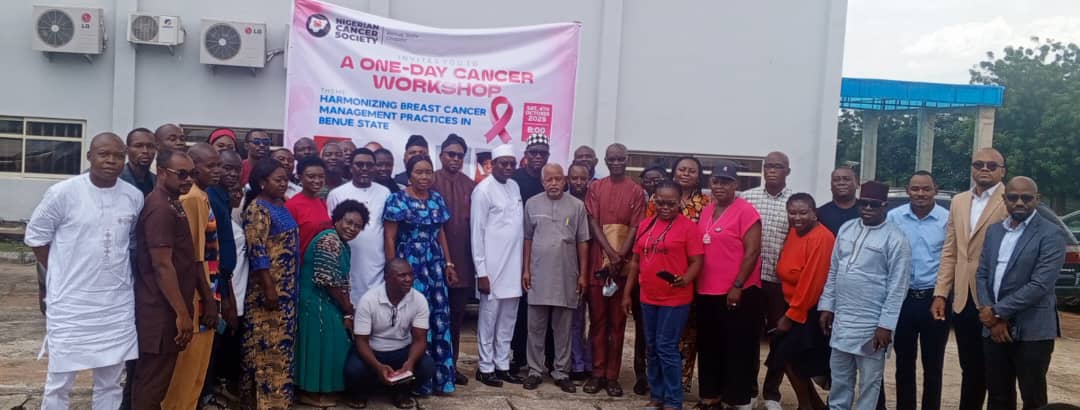
The disclosure was made during a one-day breast cancer workshop organised by the Nigerian Cancer Society (NCS) on Saturday at the Bongos Ikwe Centre, Makurdi. The event, themed “Harmonizing Breast Cancer Management Practices in Benue State,” brought together medical experts, government officials, and stakeholders in cancer care to address challenges and standardize treatment practices across the state.Speaking to journalists after the opening ceremony, the Chairman of the Nigerian Cancer Society (NCS) in Benue State, Dr. Samuel Otene, confirmed the plan to establish a cancer centre at BSUTH, stressing that funding remained the major constraint to regular awareness and capacity-building programmes.“Our limitation will always be funding, but we will continue to seek support. We have many stakeholders in cancer management in Benue State,” Otene said.He added that the workshop was part of a broader national programme by the NCS to build capacity and harmonize cancer care practices across the country.“The workshop is not just for Benue State. As chairman of the national committee on training and capacity building, my office is responsible for similar sessions in every state. We have a clear work plan and intend to reach as far and wide as possible because cancer affects everyone,” he stated.Otene commended the Benue State Government under Governor Hyacinth Alia for prioritizing healthcare and supporting the establishment of a cancer centre.“I’m very grateful to the current administration. The thought of having a cancer centre is a fantastic idea. As chairman of the implementation committee for that project, I can confirm that significant progress has been made. We expect the centre to be fully functional by the first quarter of next year,” he revealed.He explained that the forthcoming facility will provide a full range of services, including immunohistochemistry testing and advanced diagnostic procedures, to ensure comprehensive cancer management.Also speaking, the Secretary of the NCS in Benue State, Dr. Laadi Terlumun Swende, said the workshop aimed to align breast cancer management practices in the state with national standards.“In Benue, we discovered that many procedures were not consistent with national guidelines. This workshop brings together doctors, surgeons, nurses, and oncology experts to ensure that our practices deliver better outcomes,” she said.Dr. Swende noted that the state currently lacks local immunohistochemistry testing facilities—a key diagnostic component—but partnerships are being developed to fill the gap.“The Federal Medical Centre, Makurdi, is collaborating with Roche to process tissue samples for testing in Abuja at reduced costs and with faster turnaround time,” she explained.Representing the Commissioner for Health and Human Services, Dr. Paul Ogwuche, a ministry staff, Esther Menger, praised the initiative, urging women to seek prompt medical help for breast abnormalities and calling for stronger collaboration among healthcare professionals to reduce cancer-related deaths.Former Health Commissioner, Dr. Joseph Ngbea, also commended the organisers, stressing the need for continuous training, especially in proper tissue handling.The Chief Medical Director of the Federal Medical Centre, Makurdi, Prof. Joseph Kortor, represented by Dr. Donatus Dzuachir, described the workshop as timely, noting that cancer management requires integrated efforts and consistent professional development.On his part, the Chief Medical Director of MOAUM Teaching Hospital, Dr. Stephen Hwande, represented by the Deputy Chairman, Medical Advisory Committee (Training and Research), Dr. Terkaa Terlumun Bitto, reaffirmed the hospital’s commitment to quality healthcare and announced that construction work on the cancer centre was already underway.“We remain committed to providing world-class healthcare to all patients,” he stated.The workshop featured technical presentations by cancer specialists, including Dr. Obed Nnamdi, who spoke on “Minimum Requirements for Tissue Handling in Immunohistochemistry Testing,” and Dr. Bamidele Omolabake, among others.

From Attah Ede, Makurdi
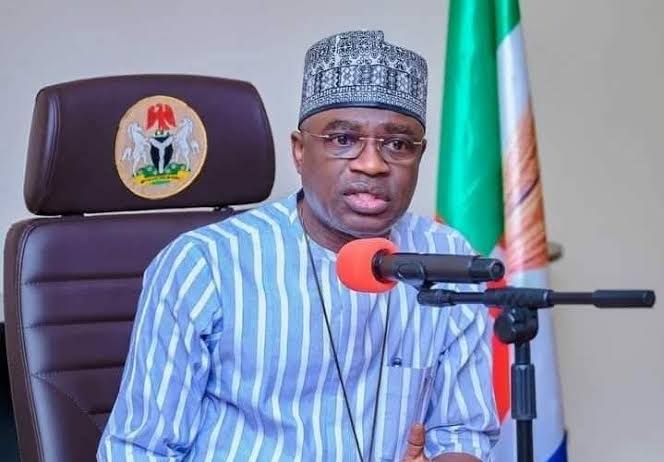
A former Nigerian Ambassador to Namibia, Terhemen Tarzoor, has criticized former Benue State Governor Samuel Ortom over his reported comments about Governor Hyacinth Alia, the Catholic Church and the state’s finances, urging him to exercise restraint in his public engagements ahead of the 2027 general elections.
Tarzoor, a former Speaker of the Benue State House of Assembly, said political disagreements should not be allowed to degenerate into personal attacks against the governor or derogatory remarks about the people of Benue State.
Speaking with journalists in Makurdi on Thursday, the former ambassador described Ortom’s reported remarks during a television programme last week, in which he allegedly referred to Alia as a “419” and a “fake Reverend Father” and described some Benue people as “shenanigans”, as inappropriate and condemnable.
He maintained that political differences did not justify the use of language capable of undermining the office of the governor or diminishing the dignity of the people who elected political leaders into public office.
Tarzoor, who is the Benue State Coordinator of the Renewed Hope Initiative (RHI) campaign for President Bola Tinubu ahead of the 2027 elections, said Ortom should be mindful of the implications of his public comments about the incumbent governor.
“My take is that the former governor is not in the position to call the number one citizen 419. He has no right to call him that,” he said.
While acknowledging Ortom as an elder brother whom he respected, Tarzoor expressed concern that political disagreements were increasingly being expressed in ways he believed could heighten tensions in the state.
He also faulted the former governor’s reported comparison of Alia’s administration with the Catholic Church’s parish system, arguing that the analogy appeared to question the church’s financial accountability mechanisms without sufficient understanding of its administrative structure.
“As a Knight of St. John International, I want to disabuse his mind and the minds of people who listened to that programme that there is a high level of accountability in the Catholic Church,” Tarzoor said.
He explained that the Catholic Church maintained administrative and accountability structures involving priests, church councils, elders and lay faithful, which, according to him, provided oversight and ensured accountability in the management of church affairs.
“There is no Catholic priest that can just earn money and spend at ease in the Catholic Church. I therefore say Ortom does not have the equipage to pontificate on such a subject matter,” he added.
Tarzoor urged political leaders to exercise caution when commenting on religious institutions, warning against statements that could be interpreted as attacks on their administrative practices.
The former lawmaker also challenged what he described as an unfair comparison between Ortom’s eight-year administration and Alia’s government, which he said had been in office for just over three years.
He argued that any meaningful assessment of the two administrations should take into account their respective periods in office, the resources available to them and their development priorities before conclusions were drawn about their performances.
Tarzoor further condemned Ortom’s reported description of some Benue people as “shenanigans”, saying such language was unbecoming of a political leader who had previously benefited from the electorate’s support.
“I see that as repugnant. I see that as unbefitting of a personality who has benefited enormously from the votes of Benue people all his life,” he said.
He urged the former governor to distinguish between disagreements with the incumbent administration and respect for the people of the state, stressing that political criticism should be expressed with decorum.
“If he has issues, he should apply the right language, apply decorum in the manner to address matters. That is the only legacy we can leave for our children, those yet unborn, and not to talk down on someone in the person of the governor because you are bitter,” Tarzoor said.
On Wike’s reported comments concerning federal allocations to Benue State and the need for the state government to disclose its revenue and expenditure, Tarzoor questioned what he described as the minister’s selective focus on the state’s finances.
He asked whether the FCT minister had made similar demands for financial disclosures from other states, including Nasarawa, Rivers and Kano, arguing that calls for transparency should be consistent and not directed at one state alone.
“Has he spoken about the one coming to Nasarawa, or the one going to Rivers State? Has he published the one in Rivers? Has he published the one in Kano?” he asked.
Tarzoor, however, acknowledged that public revenue and expenditure were legitimate matters of public interest, but insisted that demands for financial information should be pursued through appropriate channels and applied consistently across the country.
He maintained that Alia’s administration was open to scrutiny and urged interested members of the public to use established legal mechanisms to obtain relevant government records.
“Governor Hyacinth Alia is open to all criticisms. The law is clear on freedom of information. You test it; the records will be there for you to see,” he said.
The former ambassador cautioned against what he described as uncoordinated demands for financial information, arguing that government officials should be allowed to concentrate on governance while legitimate enquiries were handled through established procedures.
He also urged the media to promote accountability by seeking accurate information from relevant government agencies rather than relying solely on exchanges among political actors.
Tarzoor’s comments come amid heightened political activities ahead of the 2027 general elections, with disagreements over governance, public accountability and political leadership increasingly featuring in the debate in Benue State.
By Uche Joe Uwaleke
The proposed establishment of JPMorgan Merchant Bank Nigeria Limited presents Nigeria with an important opportunity to deepen its financial markets, attract international investment and strengthen its integration into the global economy.
At a time when the country is grappling with inflationary pressures, currency depreciation, high borrowing costs and declining purchasing power, the prospect of a major international financial institution expanding its operations in Nigeria deserves a measured assessment of both its potential benefits and its attendant risks.
JPMorgan Chase is one of the world’s largest banking and financial services groups, with extensive capabilities in investment banking, corporate finance, capital markets and international payments.
Its proposed transition from a representative office to a locally licensed merchant bank would represent a significant expansion of its institutional presence in Nigeria.
Although approval-in-principle is not a final banking licence, the development signals an interest in establishing a more substantial platform in one of Africa’s most important economies.
The timing of this development has understandably attracted attention, given the economic difficulties confronting many Nigerians.
However, the fact that an international financial institution sees opportunities in a challenging economic environment does not, in itself, suggest that those difficulties were deliberately engineered to facilitate foreign exploitation.
Investment decisions are influenced by a combination of market size, financing needs, regulatory reforms, commercial opportunities and expectations about future growth.
Nigeria’s present economic challenges can coexist with substantial long-term investment potential.
It is equally important to distinguish between the commercial interests of international banks, the policies of governments and the decisions of multilateral financial institutions.
Although these interests may occasionally overlap, they are not necessarily identical.
Major financial institutions naturally seek profitable opportunities, but their participation can also mobilize capital, facilitate trade, transfer expertise and support business expansion.
The key question is whether Nigeria possesses the institutions and policy framework necessary to ensure that these commercial interests contribute meaningfully to national development.
One argument frequently advanced against foreign investment is that the depreciation of the naira has made Nigerian assets cheaper for international investors.
While currency depreciation may reduce the dollar-equivalent cost of certain local assets and expenses, it also increases the cost of imported equipment, foreign-currency borrowing and other external obligations.
It can erode local earnings when converted into foreign currency and introduce significant uncertainty into investment decisions.
A weaker currency is therefore neither an unqualified advantage to foreign investors nor a sufficient condition for attracting sustainable investment.
Similarly, the ₦50 billion capital requirement associated with the proposed merchant bank should be considered in its proper context.
Its dollar equivalent fluctuates with the exchange rate, but the required naira capital remains unchanged.
The more important considerations are whether the institution is adequately capitalized, operates within the applicable regulatory framework and deploys its resources in ways that support legitimate economic activity.
The objective should be to ensure that the bank’s presence contributes to the strength of Nigeria’s financial system rather than merely expanding the reach of international finance.
The potential benefits are considerable. Nigerian businesses often face difficulties obtaining appropriately structured, long-term financing for expansion, infrastructure development and industrial investment.
A merchant bank with JPMorgan’s international network and financial expertise could help credible businesses access global capital markets, arrange syndicated financing, issue debt and equity instruments, and undertake complex corporate transactions.
These services could support manufacturing, agriculture, energy, logistics and technology, particularly where viable Nigerian enterprises require capital and expertise to scale their operations.
Its presence could also facilitate international trade and investment.
Nigerian companies seeking to enter foreign markets or attract overseas investors could benefit from improved access to international financial networks, advisory services and trade-finance arrangements.
Properly structured transactions could bring additional foreign capital into productive sectors, strengthen export capacity and help businesses earn foreign exchange.
Such outcomes are not automatic, however; the benefits would depend on the nature of the transactions and whether they generate lasting economic value rather than merely facilitate short-term capital movements.
Employment and professional development constitute another important dimension.
A fully operational local subsidiary could create opportunities in banking, financial analysis, compliance, risk management, technology and related professional services.
Nigerian professionals could gain exposure to international standards, specialized training and sophisticated financial transactions.
The institution could also stimulate competition within the financial services industry, encourage improvements in service quality and create opportunities for collaboration with Nigerian banks and capital-market operators.
There is an African precedent worth considering. JPMorgan has an established presence in South Africa, including operations in Johannesburg and Cape Town.
The firm has also pursued initiatives to support Black-owned businesses in the country, including a US$20 million fund launched in 2021 with targets for supporting early-stage enterprises, creating employment and facilitating financing.
While such programme targets should not be confused with independently verified outcomes, they illustrate the potential for a global financial institution to contribute to business development beyond its conventional corporate banking activities.
Nigeria should explore similar opportunities tailored to its own economic circumstances and development priorities.
None of this requires the assumption that foreign capital is inherently benevolent.
International banks are commercial institutions whose primary responsibility is to generate returns for their shareholders.
Their activities may include financing acquisitions, arranging sovereign debt and facilitating cross-border transactions.
Depending on the circumstances, such activities can promote productivity and investment or contribute to market concentration, excessive external borrowing and the transfer of strategic assets without adequate domestic benefit.
The appropriate response is not to reject foreign participation on principle, but to establish safeguards that distinguish beneficial investment from transactions that undermine national interests.
Corporate acquisitions, for example, should be assessed against competition rules, transparency requirements and their implications for employment, productive capacity and market concentration.
Sovereign borrowing should be guided by a credible debt-management framework, transparent disclosure and a careful assessment of repayment capacity.
International financing must complement domestic economic development rather than encourage unsustainable dependence on external capital.
The responsibility for establishing these safeguards rests principally with Nigeria’s institutions.
The Central Bank of Nigeria must ensure that JPMorgan satisfies all applicable licensing, capital adequacy, governance and risk-management requirements before commencing operations.
Its global reputation should confer no regulatory privileges.
Effective supervision, compliance with tax and reporting obligations, and appropriate oversight of cross-border transactions must remain fundamental requirements.
Beyond regulation, Nigeria should adopt a deliberate strategy for maximizing the institution’s developmental contribution.
Engagement with the bank should encourage financing for productive enterprises, viable infrastructure, export-oriented businesses and other sectors capable of generating employment and sustainable economic returns.
Local recruitment, professional training and collaboration with domestic financial institutions should also be encouraged, while respecting applicable laws and commercial realities.
Equally important is the need to strengthen Nigeria’s domestic financial architecture.
Local banks, pension funds, insurance companies, investment firms and capital-market operators must be equipped to mobilize domestic savings and finance long-term investment.
International participation should complement and strengthen these institutions rather than displace them.
A diversified financial system, supported by credible regulation and deeper domestic capital markets, would give Nigeria greater negotiating power and reduce excessive dependence on any single institution or source of financing.
By and large, the benefits of JPMorgan’s proposed entry will depend on the broader economic environment.
High energy costs, inadequate infrastructure, expensive credit, policy uncertainty and the difficulties confronting domestic manufacturers continue to constrain productive investment.
Addressing these obstacles, maintaining macroeconomic stability and protecting vulnerable households must remain national priorities.
Foreign capital can support these objectives, but it cannot substitute for sound economic management, institutional accountability and policies that promote inclusive growth.
Nigeria should therefore approach this development with neither uncritical enthusiasm nor reflexive suspicion.
The proposed bank’s entry offers an opportunity to mobilize international expertise, deepen financial markets, expand financing options and connect Nigerian businesses with global investment opportunities.
Whether these possibilities translate into tangible benefits will depend on the quality of regulation, the discipline of economic policy and the country’s determination to place national development at the centre of its engagement with international finance.
The essential challenge is to ensure that Nigeria does not become merely a marketplace for global financial transactions, but a country in which those transactions help build productive enterprises, create skilled employment, strengthen domestic institutions and improve living standards.
With the right safeguards and a clear development strategy, JPMorgan’s proposed entry could become a valuable addition to Nigeria’s financial architecture and a meaningful opportunity to advance the country’s long-term economic interests.
Prof Uche Uwaleke is the Director of the Nasarawa State University Institute of Capital Market Studies and the President of the Capital Market Academics of Nigeria.

By David Torough, Abuja
The West African Health Organisation (WAHO) has intensified regional health surveillance following the confirmation of an imported case of Ebola virus disease in Abuja, Nigeria, on October 20, 2026.
In a statement, WAHO said it was closely monitoring the situation in collaboration with the Nigeria Centre for Disease Control and Prevention (NCDC), national health authorities and regional epidemiological surveillance mechanisms to prevent the potential spread of the disease across borders.
According to information provided by Nigerian health authorities, the patient is a woman who recently arrived from Uganda.
She reportedly developed symptoms on October 7 and received treatment at a private health facility in Abuja on October 11 before her diagnosis was confirmed through laboratory testing on October 20.As part of efforts to strengthen regional preparedness and response, WAHO said it remained fully mobilised to support member states of the Economic Community of West African States (ECOWAS) in enhancing disease surveillance and preventing cross-border transmission.
The organisation disclosed that it maintained regular contact with the NCDC and held a briefing on October 21 with directors of National Public Health Institutes (NPHIs) across ECOWAS member states to discuss the situation and reinforce regional coordination.
WAHO stressed that early detection, prompt reporting of suspected cases, effective epidemiological surveillance and coordination among health services were essential to preventing and controlling the spread of epidemic-prone diseases.
It urged the public to observe preventive measures, including frequent handwashing with soap and clean water or the use of alcohol-based hand sanitisers.
The organisation also advised people to avoid direct contact with the blood and other bodily fluids of sick or deceased persons, as well as their clothing, bedding and personal belongings.
It cautioned against handling the bodies of people who died from suspected causes, emphasising that safe and dignified burials should be conducted by trained teams.
On animal-related risks, WAHO advised the public to avoid handling or consuming bushmeat, refrain from touching sick or dead animals, including bats and primates, and ensure that all meat is thoroughly cooked before consumption.
The organisation further urged anyone experiencing symptoms consistent with Ebola, including sudden fever, severe fatigue, body aches, vomiting, diarrhoea or bleeding, to seek immediate assistance from a health facility.
It also recommended avoiding non-essential travel to affected areas and adhering strictly to official health guidance whenever travel is unavoidable.
WAHO called on the public to rely on information from official sources and refrain from spreading rumours or unverified reports that could undermine public health response efforts.
Reaffirming its commitment to regional health security, the organisation said it would continue working with the health ministries of ECOWAS member states, as well as technical and financial partners, to strengthen preparedness and protect populations across West Africa.
Through the ECOWAS Regional Centre for Surveillance and Disease Control (RCSDC), a specialised WAHO agency based in Abuja, the organisation said it would continue monitoring developments and communicate relevant information in coordination with the appropriate health authorities.


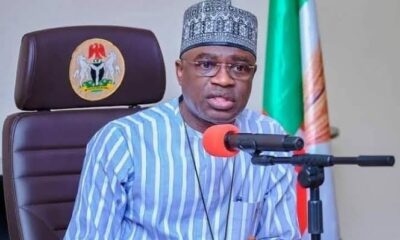

2027: Benue People Are Not ‘Shenanigans’, Alia Owes You No Apology, Ex-Ambassador Tells Ortom
ShareFrom Attah Ede, Makurdi A former Nigerian Ambassador to Namibia, Terhemen Tarzoor, has criticized former Benue State Governor Samuel Ortom...


JPMorgan’s Entry into Nigeria: Turning Global Finance into a National Development Opportunity
ShareBy Uche Joe Uwaleke The proposed establishment of JPMorgan Merchant Bank Nigeria Limited presents Nigeria with an important opportunity to...


WAHO Steps Up Regional Health Surveillance After Ebola Case Confirmed in Abuja
ShareBy David Torough, Abuja The West African Health Organisation (WAHO) has intensified regional health surveillance following the confirmation of an...
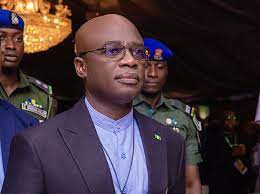

2027: Don’t Call Benue People Shenanigans, Alia not answerable to you- Ex- Amb, Tarzoor Tells Ortom, Wike.
ShareFrom Attah Ede, Makurdi Ex -Nigeria’s Ambassador to Namibia, Terhemen Tarzoor, has warned the immediate past Governor of Benue State...

DBN Signs $61m Credit Deal With AfDB, Unveils Support Initiative Report
ShareBy Tony Obiechina, Abuja The Development Bank of Nigeria Plc (DBN) has launched DAWN: DBN Action for Women in Nigeria,...

NLC Threatens Nationwide Action as Talks With FG Collapse
ShareBy Tambaya Julius, Abuja The Nigeria Labour Congress (NLC) has threatened possible nationwide industrial action following the failure of talks...

Top10 Magazine Names Umaru Kwairanga as Man of the Year 2026
ShareAlh. (Dr) Umaru Kwairanga, Group Chairman, Nigerian Exchange Group (NGX Group), has been named as the Top10 Magazine’s Man of...


UK, Nigeria to Deepen Defence, Security Cooperation
ShareThe United Kingdom has reaffirmed its commitment to deepening defence and security cooperation with Nigeria, with emphasis on military training,...


2027: INEC Steps Up Preparations, Completes Nine Activities
ShareBy Tambaya Julius, Abuja The Independent National Electoral Commission (INEC) has completed nine of the 14 activities on its timetable...
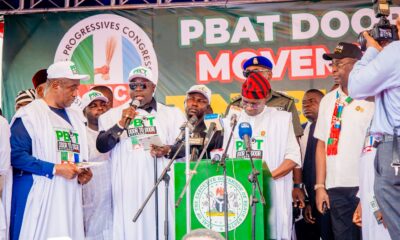

2027: Tinubu Accords Benue Security Top Priority, Tompolo Tells Supporters
ShareLeader of the PBAT Door-to-Door Movement, Government Tompolo, has called on the people of Benue state to come out enmasse...