
Agriculture
Buhari Denies Banning Food Importation

By Mathew Dadiya, Abuja
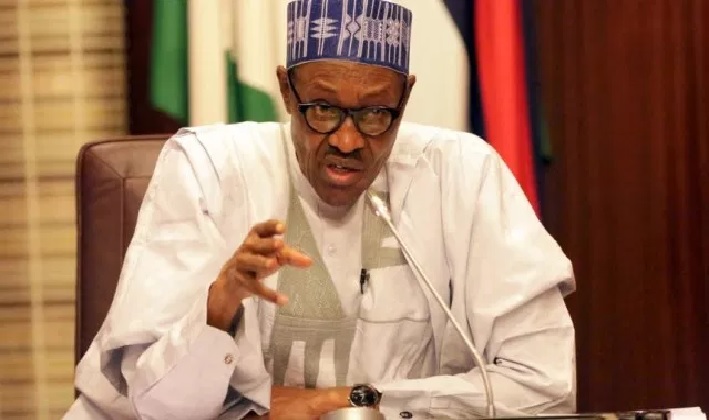
The presidency has refuted news making the rounds that President Muhammadu Buhari has restricted the importation of agricultural products into the country.
Senior Special Assistant to the President on Media and Publicity, Garba Shehu made the rebuttal on Sunday while reacting to a letter to the editor published in the Financial Times titled”Muhammadu Buhari sparks dismay over policy shift on food imports”, 15th August 2019.
Shehu explained that it was not a ban, rather the Central Bank of Nigeria( CBN) will not provide forex for food importers.
He said any food importer was free to source forex from non-government financial institutions and pay customs duty on those imports.
”Your article “Muhammadu Buhari sparks dismay over policy shift on food imports” (15 August) suggests the Nigerian Government is restricting the import of agricultural products into the country. This is simply incorrect. To be absolutely clear, there is no ban – or restriction – on the importation of food items whatsoever.
“President Buhari has consistently worked towards strengthening Nigeria’s own industrial and agricultural base. A recent decision sees the Central Bank maintain its reserves to put to use helping growth of domestic industry in 41 product sectors rather than provide FOREX for the import of those products from overseas.
“Should importers of these items wish to source their FOREX from non-government financial institutions (and pay customs duty on those imports – increasing tax-take, something the FT has berated Nigeria for not achieving on many occasions) they are freely able to do so.
“Diversification of FOREX provision towards the private sector and away from top-heavy government control, a diversification of Nigeria’s industrial base, and an increase in tax receipts – are all policies one might expect the Financial Times to support.
“Yet for reasons not quite clear, the author and this newspaper seem to believe the president’s administration seeks to control everything – and yet do so via policies that relinquish government control.
“We look forward to the next installment of Mr. Munshi’s bizarre and puzzling article series,” the presidential spokesman stated.
Daily Asset calls that President Buhari had last week said that he had directed the CBN governor to stop providing foreign exchange for importation of food into the country, considering the steady improvement in agricultural production, and attainment of full food security.
The President said that the foreign reserve would be conserved and utilized strictly for diversification of the economy, and not for encouraging more dependence on foreign food import bills.




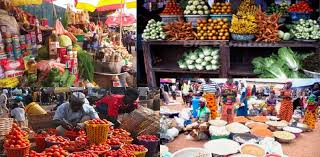


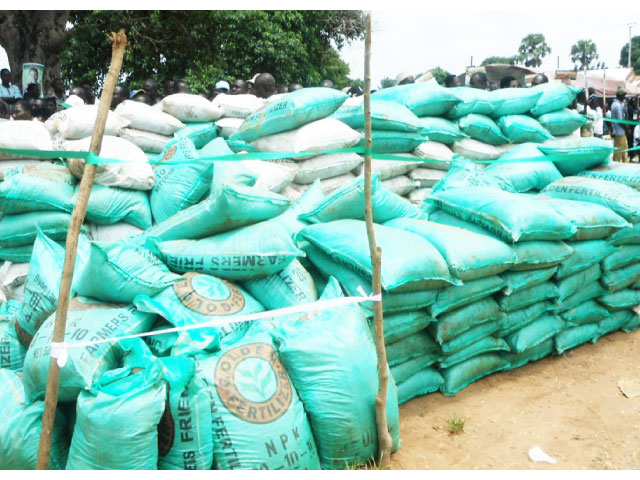
Ms Surah Animashaun, the Chairperson, Epe Local Government, has empowered 200 farmers with cash and other agricultural inputs to boost food production in the area.
Animashaun distributed the agricultural inputs to the beneficiaries at the council secretariat in Epe on Thursday in Lagos.
She said the initiative was aimed at supporting farmers in order to boost food production in the various communities of the council.
Animashaun said the farmers who benefitted from the gesture are expected to be considerate in their price fixing after harvest to ensure the affordability of food for all Nigerians.
“With the economic situation now and the support being giving to you, farmers should be reasonable in fixing prices after harvest to ensure that ordinary Nigerians source food at a more convenient price nationwide.
“We are here to give you support for your farming activities today, we expect that you reciprocate tomorrow by selling at a more affordable price to the people tomorrow,’’ she said.
Animashaun explained that each of the benefiting farmers received N50,000 and essential grains such as maize and sorghum.
She said the council would continue to support the farmers for them to be strong in farming activities.
Animashaun also used the medium to highlight her administration’s ongoing efforts in the extension of palliatives to other sectors of the economy.
She urged the communities in the area to maintain harmony, love, hospitality, and compassion, particularly in the face of the present economic challenges.
Also speaking, Mr Sikiru Owolomoshe, the Vice Chairman of the council, urged the farmers to take advantage of the gesture to improve their activities in order to encourage others.
Mr Olayinka Kazeem, the Secretary of Epe Farmers and a beneficiary, expressed gratitude to the council chairperson and her management.
“This is the first time we are witnessing this kind of programme and it is coming at a critical period when many states are facing food shortage,’’ he said.
He assured that the beneficiaries would do their best to ensure the objective was achieved.
Mr Ahmed Surakat, the Public Relations Officer of Lagos State Fishermen Cooperative Association, and Mrs Kafilat Animashahun beneficiaries, extended their gratitude to the council chairman for her unwavering support to farmers.
Earlier, the President of the Epe Farmers Union, Mrs Aminat Shabi, lauded Animashaun for the comprehensive support to other agricultural value chain such as fish farmers and livestock producers.(NAN)

By Tony Obiechina, Abuja
The Rural Access and Agricultural Marketing Project (RAAMP) has been described as an appropriate and very effective means of realising food sufficiency and security across the country.
The National Coordinator of RAAMP, Engr Aminu Bodinga Mohammed who made the assertion during the 7th Joint World Bank and French Development Agency Implementation Support Mission of RAAMP at the Shehu Musa Yar’Adua Centre, Abuja, pointing out that most urban centers derive their supply of food from farms, which are located at the rural communities.
His words: “the primary objective of RAAMP is to improve rural roads and trading infrastructure through to boost food production.
Therefore the successful implementation of this project could go a long way towards guaranteeing food sufficiency and security across the country”.He solicited for concerted efforts by all stakeholders to ensure an all-round success of the project.
Aminu noted that the mission was to evaluate the current implementation status, milestones as well as challenges faced by the 19 states participating in the project and announced that arrangements had reached an advanced stage for the commencement of civil works on agro-logistics centers (ALCs) latest by September, 2024 with 23 major contracts that would be awarded across the states.
ALCs refer to market hubs that have been prioritised for transformation to ultra-modern standards at various locations across the country , notably in rural communities to empower and enhance the livelihoods of the people.
Also speaking, the Task Team Leader of the World Bank, Mr. Rakeesh Tripathi hinted that a scale-up was being mooted for the project but emphasized that only states which must have established and operationalised the Rural Access Road Agency (RARA) and State Road Fund (SRF), backed up with the required standing on counterpart funds would be eligible to access the scale-up funds.
He therefore advised all states to take advantage of the mission and get the needed support to tackle every challenge facing their State Project Implementation Unit (SPIU), adding that all the 36 states and the Federal Capital Territory would be encouraged to embrace the scale-up project.
Highpoints of the exercise were presentations by the State Project Coordinators of the respective participating states, question and answer sessions, comments and observations, among other inputs by the stakeholders.
The Task Team Leader of the French Development Agency, AFD; Consultants from the World Bank; the Federal Project Management Unit, FPMU as well as State Project Implementation Units, SPIUs of RAAMP also attended the mission.

By Tony Obiechina, Abuja
The National Council on Privatisation (NCP) has given its nod to the recommendations aimed at repositioning the Bank of Agriculture (BOA) to ensure food security for Nigerians.
Chaired by the Vice President, Sen. Kashim Shettima, the NCP approved the recommendations from the committee on BOA during its second meeting of 2024 held on Wednesday, April 24, 2024, at the Presidential Villa Abuja.
In his address at the meeting, the Vice President emphasized the importance of optimizing BOA as part of the administration’s agenda to provide food security for the nation.
He urged the committee to engage professionals with integrity to manage the process effectively.Presenting the committee’s report, the Minister of Finance and Coordinating Minister of the Economy, Mr. Wale Edun, who is also the Vice-chairman of the NCP, highlighted the decision to reposition BOA for efficiency and effectiveness. He expressed confidence that the recommendations would guide the Council in revitalizing the Bank of Agriculture and positioning it globally.
One of the Key recommendations includes upgrading the Bank’s ICT infrastructure to automate processes and ensure accountability.
Recall that in 2023, an 8-member inter-ministerial team was set up by the NCP to review the state of affairs at BOA, given its critical role in agriculture and the administration’s commitment to food security.
Additionally, in 2016, the NCP approved collaboration between the Bureau of Public Enterprises and the Federal Ministry of Agriculture and Rural Development, along with the Federal Ministry of Finance, to restructure and recapitalize BOA.
According to a statement by BPE Head of Public Communications, Amina Tukur Othman on Friday, the BOA, formerly known as Nigeria Agricultural Cooperative and Rural Development Bank, waa established in 1992.
It is owned by the Federal Government of Nigeria (FGN), with the Ministry of Finance Incorporated (MOFI) holding 60% and the Central Bank of Nigeria (CBN) holding 40%. The Bank is supervised by the Federal Ministry of Agriculture and Food Security (FMAFS).

Tinubu Approves Management Unit for Health Sector Renewal Investment Initiative
SharePresident Bola Tinubu has approved the establishment of the Sector-wide Coordinating Office-Programme Management Unit (SCO-PMU) domiciled in the Office of...


FG Denies Slash in Students’ Allowances
Share The Federal Government says it has no plan to slash scholarship students’ allowances as recently projected in the media.The...


Planned Protests: CAN calls for calm and patience
ShareBy Laide Akinboade, Abuja The Christian Association of Nigeria, CAN, on Friday, has urged Nigerians to calm and patient with...


Senate Consultant Scores Benue LG Bureau High on Projects Execution
ShareThe Consultant for Senate Standing Committee on States and Local Government Administration, Engineer Kayode Adegbayo has described the quality of...


Doctor Mark Ogbodo: A Man Destined for Success
ShareBy Paul Ugah Henry Miller once said, “Every man has his own destiny, the only imperative is to follow it,...


Ignore Anti -government Protests, Wike Begs Abuja Residents
ShareBy Laide Akinboade, Abuja Minister of the Federal Capital Territory, Barr. Ezenwo Nyesom Wike has called on residents of the...
Reps Commit to Ensure Legislations for Better Skills Acquisition, Management
ShareBy Ubong Ukpong, Abuja The House of Representatives on Thursday pledged its continuous commitment to ensure legislations that would align...


Economic Sabotage: Senate Summons Petroleum Minister, NNPCl, CBN, NPA, Others for Interrogation
ShareBy Eze Okechukwu, Abuja The Senate is blowing hot over alleged economic sabotage by stakeholders within the petroleum sector, thus...
Dialogue with Organisers of August 1 Protest, AANI Urges FG
ShareBy Johnson Eyiangho, Abuja The Alumni Association of the National Institute (AANI) has advised the Federal Government to dialogue with...


Stigmatization: CSO Urges Kogi Gov to Assent Bill Protecting HIV Patients
ShareFrom Joseph Amedu, Lokoja Civil Society Organisation, Initiative for Grassroot Advancement in Nigeria (INGRA), has called on the Kogi State...