
POLITICS
Buhari’s October 1 Rhetoric, Mailafia and Akunyili’s Murder

By Festus Adedayo
I find a symbolic similarity between the travails of Dr. Chike Akunyili and Reverend Richard Henry Stone, (1837–1915) the latter’s which I picked from his memoir that contained his missionary activities in Nigeria entitled, In Africa’s Forest And Jungles.
Stone was an American missionary who came to Africa during the nineteenth century to represent the Southern Baptist Convention and who spent years among the Yoruba-speaking people of Western Nigeria. He lived in Ijaye, Abeokuta, and Lagos and traveled to “Ibadan, Lahlookpon, Ewo, Ogbomishaw, and Oyo” in his own words.For both Stone and Akunyili, I struggled, with scant success, to reconstruct the horror of the grisly movie in which they starred. Akunyili had been shot and killed at Nkpor, Ideimili Local Government of Anambra State by yet unidentified gunmen. About eight other people were said to have been shot dead or beheaded in that melee. Save for the video circulating on the social media of his huge frame lying on the bare floor, writhing in unimaginable pain, his face a huge mask and gash of ripped flesh and blood, Akunyili didn’t live to recount the gory horror of his waylay by that band of bloodthirsty hounds in the last minutes of his life. Nor could he tell anyone how these messengers of death fired rude, hot leads at his cerebrum. What transpired between Akunyili and those beasts between that moment of his ambush and his eventual gruesome killing? Did he plead with them to spare his life? Did he identify himself? Did they know he was the widower of Dora, that ecumenical spirit, the angelic Amazon who saved many Nigerian lives from drug fakers? Were the killers that impervious to recognizing Angelic spirits that they did not identify one in Chike? Questions. Questions. No answer.
For want of a picture to fill that void, I fled into the experience of Reverend Stone who had been subjected to a scene of similar waylay, over a century ago. Again, while Akunyili was said to have been driven in a car, Stone was riding a war horse, which he named Bucephalus, sold to him by the legendary warrior of Yoruba, Ijaye kingdom, Kurunmi who Stone had the opportunity of meeting with, a man he, in the memoir, called a despot. The Ifa oracle had earlier counseled Kurunmi to dispose of his horse and subsequently ride only white horses. After selling the horse to Stone, Kurunmi then purchased a beautiful Arabian white horse as replacement.
Kurunmi, translated to mean “death has ruined me,” had a legendary fame of a warlord of the empire of Ijaye, which is just 20km distance from present day Mokola in Abeokuta. From the account of respected Yoruba history authority, Samuel Johnson, Kurunmi was the “greatest soldier of his age” who possessed huge mystical powers and was highly dreaded. An ally of the Oyo Prince Atiba who later became Alaafin, Atiba later installed him as the Aare Ona Kakanfo of Yorubaland.
Unsuccessful in my bid to reconstruct the horror of the grisly movie wherein Dr. Akunyili starred in the last minutes of his life, I began to look at the symbolism of Nkpor, where he chose to breathe his last; or where his destiny chose his extinguishing. Descendants of a hunter named Okoli Oti, Oti’s sons, Omaliko, Oji and Dimudeke played ancestral roles to Oji people of Umuoji and Dimudeke. Nkpor people, otherwise named Umudim, were relocated to where they are due to incessant wars with their neighbours. Nkpor people, from time immemorial, are known to be warriors, which got them the moniker obodo dike (land of the brave). They are also known to be peace-loving and accommodating. Why then would a peace-loving Akunyili, on a peace-loving soil, be killed by people whose skewed sense of peace is killing their brightest?
I went into this long history to conjure the comparatively agonizing travails Akunyili went through in the hands of his own killers. Stone, a man of peace, intent on rescuing a fellow man opposed to slavery, escaped being killed but comparatively, Akunyili, who friends and acquaintances in Enugu State told me was a man of peace who lived his life saving others as a medical doctor, was killed by men who stood for everything but peace. While Stone’s crime was riding a war horse associated with Aare Kurunmi, enemy of Bashorun Ogunmola and his slavery-disposed allies, Akunyili’s sin was allegedly being found with accoutrements of the enemies of Biafra – a gleaming car suggestive of “Nigerian beasts” and a police orderly that is the metaphor of the injustice his people suffer.
President Muhammadu Buhari came on national television, a few days after the murder of Akunyili, with his ritualistic homilies which he yearly places at the groove of an almost dead god of One Nigeria. In his October 1 Independence speech, the Hobbesian life that is nasty, brutish and short that Nigerians live under the Buhari presidency merely received an euphemistic treat from him. No remorse from the president on the fact that when Nigerians leave their homes in the morning, there is no guarantee that they will come back in one piece. Even during the Nigerian civil war, life did not regress into this frighteningly Hobbesian cul-de-sac.
Buhari has not been able to answer the question of why and how Nnamdi Kanu and Sunday Adeyemo, a.k.a. Igboho, who terrifyingly shrink the president’s balls today, were disregarded and inconsequential entities in 2015 when he came into power. Who canonized, deified and catapulted them to this level of renown and worth? It was Buhari and his hostility against equity and good governance.
Buhari, in the said speech, in his time-worn characteristic, found the Nigerian media most convenient group to scapegoat. “Our media houses and commentators must move away from just reporting irresponsible remarks to investigating the truth behind all statements and presenting the facts to readers…The seeds of violence are planted in people’s heads through words. Reckless utterances of a few have led to losses of many innocent lives and destruction of properties,” he said.
The president was however dead wrong. What has led us to where we are today is Buhari and nobody or nothing else. All other growths from this are mere offshoots. This platitude of imploring us to “take this opportunity, on this special day that symbolizes the unity and oneness of our great nation… to embrace peace and dialogue, whatever your grievances,” is mere cant and hypocritical. President Buhari has this conquest and ethnically-driven mentality that is unrivalled in the history of Nigerian leadership. He is unforgiving, self-righteous and persuaded in his own understanding, at the expense of others’.
Added to his skewed understanding of justice and equity and administration of Nigeria, the stage was set for implosion of people who seek other loops to equity and fairness, no matter how foul. This is the logic that makes IPOB’s animalism in the Southeast to fester and why characters like the duo, in Buhari’s own narrow admittance, would be funded by a National Assembly member. This government’s disregard for equity has led to the growth of people who carved out allegiance to anything but Nigeria. Buhari is the sole reason why otherwise inconsequential characters like Igboho and Kanu are holding Nigeria to ransom and why Chike Akunyili and so many others have been killed by men who foolishly think killing their kith and kin and burning structures in their locality will remedy this government’s arrogant and inequitable governance.
This administration still harbours a narrow conception of what the media represents. Nigeria is not an Iron Curtain with its barrier. All shades of opinions, including the so-called “irresponsible remarks” that Buhari so much abhors, in the spirit of free speech, must be accommodated and reported to the world. When he, as presidential candidate of the Congress for Progressive Change (CPC), in May 2012, made the generally considered irresponsible remarks that if the alleged rigging of 2011, when he was voted out, happened again in 2015, “by the grace of God, the dog and the baboon would all be soaked in blood,” in the name of free speech, the press gave him a voice, even though the statement was divisive, outlandish and dripping with Osama bin Laden-kind terror temperament.
Buhari seems to perceive a thin divide between his despotic decrees of 1984 and legislations and policies in a democracy. He thus cannot stomach free speech and its appurtenances. Banning Twitter, a major ventilating window of free speech and seeking to formulate, directly or through legislative proxies, stringent regulations, legislations and policies aimed at muzzling the press and controlling the traditional and social media space seem right to him. Rottweilers and Alsatian dogs like the National Broadcasting Commission (NBC) are used to enforce this rout of free speech. In the abhorrent October 1 speech under reference, the president felt compelled to mention an unnamed legislator as the financier of Kanu and Igboho but the administration he leads has been tongue-tied and feels not compelled to reveal the sponsors of banditry in Nigeria. What manner of Janus-faced sense of justice is that? Aghast at this double-faced justice, a motion was moved last week by his northern kinsmen in the National Assembly to get bandits declared as terrorists.
I feel compelled to bring into this argument the last days on earth of Obadiah Mailafia, ex-Deputy Governor of the Central Bank, who died a few weeks ago. Till date, the Buhari government’s unforgiving disposition to contrary opinion and whatever it feels was wrong with Mailafia’s interrogation of the state of the Nigerian state has impeded it from commiserating with the family he left behind. Yes, the government has the freedom to choose who it showers its obsequies on, but the optics of this synchronize with the near-fabulous story of a military Head of State who allegedly divorced and never forgave his first wife till her unfortunate death, her crime being that she sought his freedom from the shackles of his prisoners.
Mailafia’s last days on earth, from accounts published in the media, where he dictated hospitals to be taken to, dreadfully imploring his family against taking him to government hospitals, speak to the apprehension among people opposed to this government that it can speed up the death of those who hold contrary opinions to it. Even Papa and Baby Doc of Haiti were not known by this heinous intolerance.
As we pray for the repose of the souls of Akunyili and Mailafia, it is evident that only Buhari holds the key to Nigeria’s peace and progress. The moment he chooses to administer this country as a national and not Fulani leader; a peace-loving leader and not one who delights in attacking violence with violence, the likes of Akunyili will not die in vain, for, we would have succeeded in steering our beloved nation away from the precipice of hatred, bigotry, divisiveness and despotism.






By David Torough, Abuja
The crisis rocking the African Democratic Congress (ADC) has intensified following the Federal High Court judgment nullifying the David Mark-led leadership of the party, as National Secretary, Rauf Aregbesola, has appealed the ruling, while Minister of Aviation and Aerospace Development, Festus Keyamo, insists that the party will participate in the 2027 general elections, although candidates produced by the affected faction, including former Vice-President Atiku Abubakar, may be excluded from the ballot.
The unfolding political and legal developments have heightened uncertainty over the ADC’s leadership, the validity of its 2027 presidential nomination and its readiness for the forthcoming general elections, with the opposition party also raising concerns over alleged political violence, intimidation and the neutrality of electoral and security institutions.
Keyamo, in a statement posted on his verified X handle on Sunday, dismissed claims that the judgment had effectively barred the ADC from participating in the 2027 elections, arguing that the court’s decision concerned the legitimacy of the Mark-led leadership and not the continued existence or electoral eligibility of the party.
He, however, warned that the candidacies of individuals who emerged through the Mark-led faction, including Atiku Abubakar, could be affected by the outcome of the pending judicial proceedings.
“For the education of the public, those raising false alarm that the court judgment on ADC means the party will not be on the ballot are spreading misinformation.
“The ADC will be on the ballot. It is the David Mark faction of candidates, including Atiku Abubakar, that may not be on the ballot, depending on the final judgment of the Supreme Court,” Keyamo stated.
The minister also questioned the protests surrounding the judgment, arguing that Nigerians who participated in primaries conducted under the party’s original leadership structure should not be treated as less entitled to political participation than candidates produced by the Mark-led faction.
The controversy followed Thursday’s judgment by the Federal High Court in Abuja, presided over by Justice Peter Lifu, which nullified the Mark-led leadership and invalidated decisions taken by the faction, including the presidential primary that produced Atiku as the ADC’s candidate for the 2027 election.
The judgment arose from suit No. FHC/ABJ/CS/1819/2025, instituted by former ADC Deputy National Chairman (North-East), Nafiu Gombe, who challenged the process through which Mark and other members of the caretaker committee assumed control of the party.
Gombe argued that following the resignation of former National Chairman, Ralph Nwosu, he was constitutionally entitled to take over the party’s leadership, insisting that the emergence of the Mark-led leadership violated the ADC constitution and relevant electoral provisions.
The ruling has since generated fresh legal and political battles, with the affected leadership rejecting the decision and promising to challenge it.
In the latest development, Aregbesola has filed an appeal at the Court of Appeal, seeking to overturn the judgment on grounds that the Federal High Court lacked jurisdiction to determine the issues surrounding his emergence as national secretary and the validity of the resolutions of the party’s 99th National Executive Committee meeting.
In the notice of appeal filed on Friday through his counsel, Mohammed Sheriff, SAN, Aregbesola named Gombe, the ADC, Senator David Mark, the Independent National Electoral Commission (INEC) and former National Chairman, Ralph Nwosu, as respondents.
He asked the appellate court to set aside the judgment, strike out the claims against him and invalidate the findings affecting his emergence as national secretary.
Alternatively, he urged the court to dismiss the claims or order a retrial before another judge if it upholds the jurisdiction of the lower court.
Aregbesola’s legal team argued that the trial judge failed to distinguish between an election to fill a vacant party position and an interim appointment authorised by the ADC constitution.
Specifically, the counsel maintained that Article 23(4) of the party’s constitution empowered the appropriate executive organ to appoint an eligible replacement pending an election at the next convention or congress.
He further argued that the trial court wrongly applied Section 82(3) of the Electoral Act 2022 and Section 223(1)(a) of the 1999 Constitution without first determining whether his emergence was an interim appointment rather than an election.
The ADC national secretary has also filed a separate motion at the Federal High Court seeking a stay of execution of the November 5 judgment pending the determination of his appeal.
He argued that the appeal raised substantial legal and factual questions, particularly concerning the jurisdiction of the trial court and the interpretation of the party’s constitution and applicable electoral laws.
Meanwhile, INEC has maintained that it would not take a position on the ADC leadership dispute until it obtains and studies the certified true copy of the judgment.
The commission’s position has added another layer of uncertainty to the party’s preparations, particularly as the legal battle could determine which faction is recognised to conduct valid party activities and nominate candidates for the 2027 elections.
Beyond the leadership dispute, the ADC Presidential Campaign Council (ADC-PCC) has accused the Federal Government and its alleged political allies of creating an atmosphere of intimidation and insecurity capable of undermining the 2027 electoral process.
The council declared that no amount of intimidation, violence or alleged manipulation of democratic institutions would prevent Nigerians from deciding the country’s political future, insisting that President Bola Ahmed Tinubu would lose the 2027 presidential election.
The Director of Media and Publicity of the ADC-PCC, Kola Ologbondiyan, made the position known on Sunday in Abuja, where he raised concerns over alleged attacks on opposition members and supporters in different parts of the country.
Ologbondiyan cited reports of the killing of several members of the Nigeria Democratic Congress (NDC) in Delta State, allegedly following an attack on the party’s campaign venue by suspected political thugs.
He also alleged that opposition parties, particularly the ADC, NDC and Allied Peoples Movement, had faced attacks and intimidation in Kaduna, Kogi, Katsina, Kebbi and Sokoto states.
The council described the incidents as a threat to democratic freedoms, warning that political violence should not be normalised or allowed to become part of the country’s electoral culture.
It also questioned the neutrality and preparedness of INEC, alleging that the commission’s voter register database had been compromised and that individuals sympathetic to the ruling All Progressives Congress had been placed in sensitive positions within the electoral body.
The ADC-PCC further accused security agencies of being deployed to harass, arrest and intimidate opposition members, raising particular concern over the alleged involvement of a serving director of a security agency in the APC Presidential Campaign Council as a co-director of National Security and Intelligence.
Ologbondiyan described the alleged development as a violation of the law establishing the agency, insisting that public institutions must remain politically neutral.
The council warned that alleged manipulation of judicial processes and electoral institutions would not guarantee President Tinubu’s re-election, adding that Nigerians would resist any attempt to impose a president through compromised judicial decisions or electoral fraud.
It consequently called on security agencies to remain loyal to the Constitution and the Nigerian people rather than any political party or individual.
The ADC-PCC also appealed to civil society organisations, the international community, religious leaders and traditional institutions to pay closer attention to the country’s political and security environment ahead of the 2027 elections.
The developments have placed the ADC at a critical crossroads, with the party’s participation in the next general elections appearing distinct from the question of which faction has the legal authority to nominate its candidates.
While Keyamo maintains that the ADC will be on the ballot, the fate of the Mark-led faction and its candidates remains subject to judicial determination.
With Aregbesola’s appeal, the Mark-led faction’s planned legal challenge and the pending determination of the leadership dispute, the Court of Appeal and ultimately the Supreme Court could prove decisive in determining the political future of the opposition party.
For Atiku and other candidates who emerged through the Mark-led structure, the stakes are particularly high, as the final outcome could determine whether their nominations survive the legal contest or are rendered invalid.
As the 2027 general elections approach, the ADC’s internal crisis, allegations of political violence and concerns over the credibility of electoral institutions are shaping an increasingly contentious political atmosphere, with the courts expected to play a defining role in determining the party’s direction.
By David Torough, Abuja
Nigeria’s annual fish supply deficit has exceeded 2.2 million tonnes, forcing the country to spend close to $1bn annually on imports, as the Federal Government moves to ramp up domestic production with a $200m World Bank-backed intervention.
The Minister of Marine and Blue Economy, Dr Adegboyega Oyetola, disclosed this in a statement issued on Sunday by his Special Adviser, Dr Bolaji Akinola, announcing plans to strengthen fisheries and aquaculture development across the country.
According to the minister, Nigeria requires approximately 3.
6 million tonnes of fish annually but produces only 1.4 million tonnes, leaving a substantial gap that local producers are unable to bridge.The figures show that domestic production currently accounts for only about 39 per cent of national demand, while the remaining 61 per cent is largely met through imports, placing additional pressure on the country’s foreign exchange reserves.
Speaking through the Senior Special Assistant to the President on Marine and Blue Economy, Prof. Busayo Fakinlede, at an aquaculture investment training programme in Abuja, Oyetola stressed the need for Nigeria to reduce its dependence on imported fish.
He described fish production as critical to food security, household nutrition and rural livelihoods, insisting that the country must strengthen its capacity to meet domestic consumption needs.
“Fish is a pillar of food security, household nutrition and rural livelihoods. No nation can call itself food secure while it imports most of the fish it eats. Our ambition is to produce more, import less and, in time, become a net exporter. That ambition can be achieved only when every state plays its part,” he said.
Oyetola disclosed that the World Bank Group had committed $200m to support the development of fisheries and aquaculture, with the funding expected to be channelled to state governments through concessional loans.
The intervention is designed to expand production capacity, stimulate private-sector investment, create employment opportunities and improve the country’s food security outlook.
Under the proposed arrangement, participating states are expected to identify priority fisheries value chains, assess investment opportunities and develop bankable projects backed by measurable production targets.
The minister emphasised that closing the fish supply gap would require coordinated efforts involving federal and state governments, private investors and development partners.
He spoke at the Executive Training on Aquaculture Investment Guide, organised by the Ministry of Marine and Blue Economy in collaboration with the World Bank Group.
The programme attracted commissioners from Rivers, Bayelsa, Delta and Cross River states, alongside permanent secretaries and fisheries officials from across the federation.
Participants were trained in investment planning, risk management, environmental safeguards and public-private partnership frameworks to equip states with the capacity to attract and manage investments in the sector.
Oyetola also announced plans to convene a post-training stakeholders’ roundtable to strengthen implementation, improve coordination and secure commitments from state governments.
Highlighting developments in the sector, the minister said national fish production had risen from 1.1 million tonnes to 1.4 million tonnes, representing an increase of approximately 27.3 per cent.
He attributed the improvement to government interventions, including the inauguration of the Technical Committee on Accelerating Fish Production in August 2026 and the digitisation of fish import licensing.
Other initiatives, according to him, include Nigeria’s attainment of United States shrimp-export certification following compliance with Turtle Excluder Device requirements, as well as the development of the Fish City and Fish Terminal investment portfolio.
The government is expected to leverage these initiatives alongside the World Bank-backed financing to strengthen the country’s fisheries value chain and position aquaculture as a major contributor to economic growth.
Oyetola expressed optimism that sustained collaboration and investment would help close the production gap, improve livelihoods and reduce the country’s dependence on imported fish.
“Through strategic collaboration, contributive support and shared commitment, we will close the fish deficit, create jobs, raise household incomes and secure Nigeria’s place as a fish-sufficient nation,” he added.
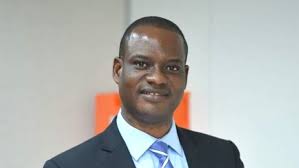
By Tony Obiechina, Abuja
The Federal Government generated N33tn in revenue between January and October 2026, while about 90 per cent of Nigeria’s data is hosted abroad, highlighting the country’s growing revenue capacity and dependence on foreign digital infrastructure.
The Minister of Finance and Coordinating Minister of the Economy, Taiwo Oyedele, disclosed the figures while delivering the convocation lecture at the University of Uyo, Akwa Ibom State.
In a statement issued on Thursday by his Senior Special Assistant on Communications and Press Secretary, Maryann Duke, Oyedele attributed the record revenue performance partly to improvements in digital tax administration and the introduction of electronic invoicing.
He said the increased use of digital systems had strengthened revenue collection, improved tax compliance and enhanced efficiency across government institutions.
Oyedele, however, raised concerns over Nigeria’s dependence on foreign digital infrastructure, citing estimates from the Nigeria Data Protection Commission that as much as 90 per cent of the country’s data is hosted outside its borders.
He also disclosed, citing Nigerian Communications Commission figures, that Nigeria had recorded more than 157 million active internet subscriptions as of May 2026.
According to him, these connections generate enormous volumes of data through financial transactions, healthcare, education and taxation, creating significant economic opportunities for the country.
He warned that hosting most of this data abroad has implications for foreign exchange expenditure, job creation, technological skills development and Nigeria’s control over information generated by its citizens.
The minister compared the situation to Nigeria’s historical dependence on imported refined petroleum products, cautioning against allowing the country’s data to be processed abroad while digital services are subsequently sold back to Nigerians.
He called for increased investment in local data infrastructure, cybersecurity, technical expertise and predictable regulations to enable Nigerian businesses to capture greater value from the digital economy.
Oyedele stressed that digital sovereignty should not mean technological isolation but should position Nigeria to compete more effectively in international markets.
Addressing graduating students, he urged young Nigerians to move beyond consuming foreign technological products and become developers of solutions that address local and global challenges.
He described artificial intelligence as both a disruptive force and an opportunity for innovation, advising graduates to combine digital skills with critical thinking, creativity, sound judgement and integrity.
The minister also warned that irresponsible online conduct could affect employment opportunities, business relationships and professional credibility, as digital footprints increasingly shape public perception.
He urged universities to strengthen partnerships with government and industry to develop practical solutions in agriculture, energy, healthcare, environmental sustainability and digital services.
According to him, the performance of higher institutions should be measured not only by graduation figures and academic publications but also by businesses established, innovations developed and economic problems solved.
Oyedele outlined five priorities for graduates: continuous learning, value creation, integrity, responsible digital citizenship and active participation in national development.
“Your degree is evidence of what you have learned. Your competence will demonstrate what you can do. Your character will reveal who you truly are,” he told the graduating students.
He urged the graduates to combine innovation with ethical conduct and contribute to building an economy driven by local expertise, productive enterprises and technological advancement.



Customs Generates N1.4tn Revenue in Two Months
ShareBy Julius Tambaya, Abuja The Nigeria Customs Service (NCS) generated a total of N1.419 trillion in revenue between September and...

Tegbe Assures Nigerians of Swift Restoration of Power Supply
ShareThe Minister of Power, Joseph Tegbe, has assured Nigerians experiencing reduced electricity supply in parts of the country of a...
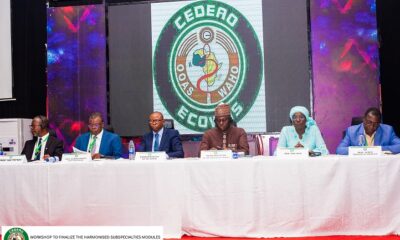

WAHO Leads Drive to Harmonise Subspecialty Training Across ECOWAS
ShareBy David Torough, Abuja Accredited health professional colleges, training institutions and regulatory bodies across the Economic Community of West African...

Bishop Oyedepo Re-affirms strong support for Pastor Ibiyeomie, Pastor Komaiya’s Ministry
ShareBy David Torough, Abuja The Founder and Presiding Bishop of Living Faith Church Worldwide, Bishop David Oyedepo, has reaffirm strong...


West Africa: How WAHO Successfully Harmonized Procedure Manuals for Health Disciplines and Professions
ShareBy David Torough After three days of serious brain-storming sessions in Abuja, the West African Health Organization (WAHO), has successfully...


2027: CAN Seeks Return of Sacked Traditional Rulers in Kaduna
ShareFrom Shabanyan Kantiok, Kaduna The Christian Association of Nigeria in Chikun Local Government Area of Kaduna State has urged Christian...

OPay Opens New Kano Office, Strengthens Commitment to Nigeria’s Financial Inclusion
ShareOPay, Nigeria’s leading digital bank, has opened a new office in Kano State, strengthening its presence in Nigeria and bringing...

Rigging Years Before Elections: Why Tinubu, Parliament Favours Staggered Balloting
Share Silhouette of Donald Andoor e‐mail; doandoor@gmail.com There is a growing need for Nigerians to look beyond the ballot box and...

Akpabio Congratulates Nigeria’s Golden Girls, Flamingos
ShareThe President of the Senate, Godswill Akpabio has sent a hearty congratulations to the Nigerian Under-17 Women’s National Team on...
Customs Generates N1.4tn Revenue in Two Months
ShareBy Julius Tambaya, Abuja The Nigeria Customs Service (NCS) generated a total of N1.419 trillion in revenue between September and...