
OPINION
Can an American Pope Speak to Nigerian Realities?

By Dakuku Peterside
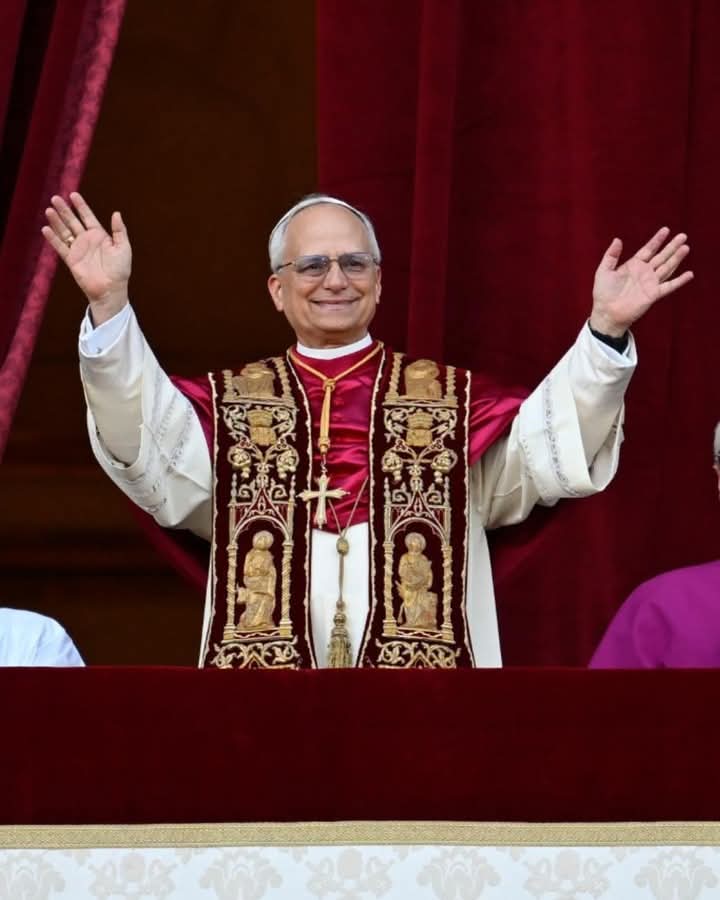
When white smoke curled into the Roman sky and the world learned that the College of Cardinals had elected Robert Francis Cardinal Prevost, Pope Leo XIV — an American — it was met with mixed emotions across Africa.
For many, particularly in Nigeria, it stirred a sense of cautious hope layered with curiosity. However, it also raised questions about whether a pontiff shaped by the wealth, power, and contradictions of the United States could truly understand the depth of Nigeria’s struggles and the weight of its aspirations. Could he effectively address the wounds of a country still healing from centuries of colonisation, exploitation, and spiritual marginalisation?Yet as days passed and the new Pope began to speak—not in abstractions, but in words charged with moral clarity and historical awareness — Nigerian Catholics began to feel a surprising resonance. Nigeria with the second largest Catholic population in Africa is home to significant church influence. From rural churches in Ebonyi to urban dioceses in Lagos and Kano, conversations shifted. What started as distant interest has evolved into an emerging conviction: that Pope Leo XIV might be the global moral voice Africa, and Nigeria in particular, has long yearned for — not because he is perfect, but because he appears willing to listen, learn, and lead with compassion.The emergence of an American Pope now could mean a lot for global Christianity. It is coming at a time of great moral possibilities for a world in active realignment. Can democracy go awry while morality remains intact? Can an American political leader destabilise the world order while an American pope preaches unity and peace? Pope Leo XIV has a heavy moral burden. He can only discharge it by emulating Pope Francis, by drawing closer to the masses to emphasise our common humanity over and above the clashing swords of global big powers and political showmanship.Sister Benedicta Okeke of Onitsha captured this shift in a post-mass conversation: “You can’t imagine how healing it is to hear a pope acknowledge colonialism not as a thing of the past but as a system whose aftershocks still affect our people. When he said, ‘Africa’s poverty is not a divine mystery but a human-made injustice,’ I wept. For once, our pain was not dismissed as charity fodder. It was treated as a matter of justice.” Recalling Leo XIV’s inaugural homily in which he condemned “the old and new empires that bleed the global south,” her words distilled decades of frustration among believers who have watched multinational corporations extract resources. At the same time, local communities remain poor. At that moment, she said, “our wounds were not invisible anymore.”Nigeria is home to a significant proportion of the world’s poorest populations. A pope who places the poor at the centre of his teachings reaffirms the Church’s mission of compassion and solidarity. Pope Leo XIV’s unwavering focus on social equity and economic justice will resonate deeply in Nigeria, where poverty, inequality, and limited access to healthcare and education persist. His leadership could redirect global Catholic aid priorities towards Africa, inspiring international donors and Catholic organisations to intensify their commitments to humanitarian efforts. His voice could also encourage local Catholic communities to build stronger, self-sustaining social ministries that reflect the Church’s preferential care for the marginalised, instilling a sense of inspiration and motivation in believers nationwide.The new Pope’s empathy for migrants struck another chord. His bold defence of migrant rights, a stance that has reverberated among Nigerian migrants worldwide, is a testament to his global perspective. In a modest flat in Milan, Chidozie Umeh shared a message with his local parish group: “The Pope’s bold defence of migrants made me feel visible for the first time in many years. When he said ‘no human being is illegal,’ it wasn’t just a slogan — it was a lifeline.” For thousands of Nigerians enduring racism, statelessness, and institutional neglect in Europe and North Africa, the Pope’s stance is more than symbolic. It is a form of pastoral advocacy that they rarely receive from their home or host governments. For Nigerians navigating uncertain legal status in Europe or the Middle East, Leo XIV’s stark defence of migrant rights is surely a lifeline.But the promise of Leo XIV’s papacy is not confined to words. Its echoes are beginning to shape the ground realities of faith communities across Nigeria. In Enugu, some Catholic faithfuls have begun mobilising funds for mobile health clinics in underserved communities. The Pope’s emphasis on structural justice — not just acts of mercy — has pushed them to reimagine healthcare as a right, not a luxury. Similar ripples are felt in Jos, where some youth leaders recently mobilise agricultural cooperatives: They’re starting a community farm project because the Pope reminds them that the Eucharist must extend beyond the altar, and charity begins in the parish.For these Catholics, papal words are seeds that must germinate in local initiatives.A broader theological implication of this papacy is its impact on representation and hope. For many Nigerians, the election of an American pope signals that the papacy is no longer a preserve of European tradition. If a man from the United States can lead the Church, then perhaps Africa’s turn is not far, and this is no longer a distant dream. It is a possibility. The notion of a future African pope — once whispered in seminaries as wishful thinking — is now discussed with cautious realism.And it’s not only about leadership at the top. This new papacy concerns cultural legitimacy. Our liturgy — our drums, our dance, our call-and-response chants — have always been considered secondary, something to be tolerated. But now, the Pope himself has said African worship is not an imitation of Catholicism; it is Catholicism. Diversity is no longer a concession; it is the soundtrack of Catholic universality. It is a testament to the Church’s recognition of its global congregation’s richness and diversity.The most pressing issues Pope Leo XIV has thrust into the spotlight are Christian institutions’ credibility, accountability and transparency. Nigeria is no stranger to ecclesiastical scandals, financial opacity, and misplaced priorities. But now, voices within the Church are rising with renewed confidence. Leo XIV’s insistence on public diocesan audits should reverberate in Nigeria, where some parishes keep opaque books. The Pope’s zero-tolerance stance emboldens Nigerians to ask hard questions of bishops. In a country where corruption routinely hollows out institutions, a transparent Church could model the good governance the state so often lacks.This sense of empowerment extends into diplomacy and development, where the Pope’s background as an American could prove strategically beneficial. If this Pope speaks directly to US lawmakers about ethical foreign policy, it could change how aid is delivered and how conflicts are addressed. He understands both African suffering and American power. The hope is that he could serve as a moral interpreter between Africa and the West — a bridge with a conscience.Leo XIV’s personal familiarity with Africa deepens these hopes. Nigerians still recall the Pope’s past visits to Jos and other cities. We feel he understands our reality, which means he can interpret our needs to audiences in Washington and Rome alike. That bridge-building potential implies that the pontiff could unlock US philanthropic networks for dialogue programmes across Nigeria’s religious fault lines.That potential is especially resonant in economic and environmental justice circles. If Pope Leo XIV addresses debt injustice or the exploitative structure of global trade, Washington will not ignore him. He’s not just a theologian. He’s an insider with prophetic courage. In the oil-polluted communities of the Niger Delta, some activists assume that when the Pope shines the papal spotlight on our creeks, maybe then the oil giants will remember we are people, not just pipelines. The notion that a spiritual leader could steer profit-driven decisions may seem utopian, yet history is full of encyclicals that nudged governments toward unexpected reforms.However, the Pope’s impact on domestic reform may be most transformative. Inspired by his message, parishioners in Yola’s St Theresa’s Church recently drafted an open letter urging their governor to publish a transparent and people-focused budget. In southern Kaduna, where violence has claimed countless lives, Father John Yakubu confessed: “This Pope challenges us priests to leave our comfort zones. We are called not only to preach, but to walk beside victims — to be visible where pain is present.” When moral authority radiates downward through the ecclesial chain, it can animate laity and clergy alike to confront entrenched dangers.All these voices converge on a single conviction: the Church’s relevance in Africa will depend on how deeply it listens to Africa. An American pope who learned compassion amid his nation’s contradictions may be uniquely positioned to foster that listening. He stands at the confluence of Washington’s power, Rome’s tradition, and Africa’s youthful dynamism. If he can channel those currents into a river of justice, he will do more than make history — he will help heal it.For now, Nigerians keep watch, balancing hope with realism. They know that papal exhortations do not automatically translate into legislative victories, access to education, healthcare or clean water taps. But they also know that culture often shifts on the hinge of imagination, and Leo XIV has already widened that imaginative horizon. As youth leader Blessing Iyorah stood in her cassava field outside Jos, she captured this new spirit best: “Faith isn’t an escape plan. It’s a construction manual. The Pope has given us blueprints. Now we must build the kingdom — right here, right now, with our own hands.” And in that soil, under the sun of central Nigeria — amid prayer, planning, and prophetic courage — the significance of an American pope for Nigeria might be taking root.Dakuku Peterside, a public sector turnaround expert, public policy analyst and leadership coach, is the author of the forthcoming book, “Leading in a Storm”, a book on crisis leadership.
By Uddin Ifeanyi
I am not an accountant, so my opinion on the NNPCL’s recently released 2025 annual financial report is a qualified one. It matters, therefore, that PwC, the audit and assurance firm which signed off on the report, has no doubt that it represents a true and fair view of the corporation’s performance under the country’s reporting standards.
Far more comforting was my former colleague’s response to the report’s release: “Wonderful! While I was working in the bank, as the Corporate Banking Group’s relationship manager for the NNPC, the ‘most recent’ financials we had was about 15 years old”.
That was some 15 years ago. In terms of accountability and public disclosure, then, Nigeria’s most important corporation over the last 49 years is making steady progress.That said, significant parts of the picture of a profitable company undergirded by improving production, which the report tries so convincingly to take, are out of focus. It is a fair argument that the report’s headline profit growth figure appears to overstate the improvement in the corporation’s underlying trading performance. Why this blur? The NNPC Group’s net profit rose by about 33 per cent to ₦7.2 trillion last year, despite a 23 per cent drop in revenue from ₦45.1 trillion in 2024, to ₦34.5 trillion last year.
Gross profit was down by equivalent percentage points to ₦9.4 trillion in the same period. While two different lines, a ₦5 trillion rise in other income, and a ₦1 trillion fall in general and administrative expenses, explain this seeming contradiction, the resulting problem is not that the increase in the corporation’s profit last year did not come from increased sales or gross profits. It is instead included in the answer to the question, “How repeatable will the ‘other income’ performance be in future accounting periods?”
The corporation’s balance sheet is a smorgasbord of paints off a similarly nuanced canvas. With a current ratio of about 0.85, the NNPCL’s short-term assets (₦28.1 trillion) do not quite make up for its short-term liabilities (₦33.2 trillion). With the right timing, depending on the nature of its account payables, and the makeup of its receivables, the corporation ought to be able to easily meet its obligations. This balance sheet structure has one other purpose: it helps make sense of the corporation’s cash pressure.
The group’s cash balance was down from ₦10.3 trillion in 2024 to ₦6.4 trillion by financial year end 2025. This, despite an increase in cash generated from operations to ₦12.9 trillion in 2025 from ₦11.0 trillion the previous year. Trade and other receivables fell from the ₦31.4 trillion at which it printed in 2024, but even at ₦19.7 trillion, last year, it remained substantial.
On the upside, there is plentiful evidence of a production recovery. Still the chorus of “Hallelujahs” are pressed in on two sides by the narrative section of the report’s claim of average crude and condensate production of 1.77 million barrels per day – a five-year high, and the financial highlights’ listing of 565.8 million barrels of crude oil production. On the face of it, annualised, the latter number translates into about 1.55 million barrels per day of production.
My guess is that these two figures address different scopes — i.e. national production as against the NNPCL’s own or equity production. Any which way, the report could have helped make this reconciliation easier. Equal levels of clarity could have been facilitated by tying natural gas production directly to segment revenue, investment returns, and cash generation.
Overall, the NNPCL report indicates considerable operating progress. Operating cash generation is especially impressive. Nonetheless, the dip in revenue and gross profit, the facts that profit growth is almost entirely the result of large other income performance, and that current liabilities swamp current assets, make the headline profit an incomplete gauge of the organisation’s financial strength.
For more than a decade now, the dominant presence in the room when the NNPC’s accounts are discussed is the extent of outgoings on the subsidy for the pump-gate price of petrol. And this is the main reason I paid this much attention to the corporation’s annual report for last year – to see how far the corporation’s numbers corroborate the federal government’s insistence that it has removed the subsidy completely.
How do the numbers stack up? The corporation’s financial statements continue to use categories such as “energy security” and “under-recovery.” These are not exactly identical terms. Energy security expenses may include more than petrol price support.
Interestingly, the NNPCL’s financial statement for 2024 reports ₦8.67 trillion as an “under-recovery” balance. Other coverage in the 2025 statement describes ₦8.67 trillion as a “federation receivable.” Both labels and reporting periods are not interchangeable, but if either means that the corporation continues to cover a gap between petrol’s supply cost and a managed selling price, and records the amount as recoverable from the federation, the economic burden from the fuel subsidy has not disappeared. It has simply been absorbed by the NNPCL or the federation, rather than fully passed on to consumers.
Uddin Ifeanyi, a journalist manqué and retired civil servant, can be reached @IfeanyiUddin.
By Mark Longyen
West Africa’s climate crisis is becoming harder to separate from the region’s familiar struggles with poverty, displacement, food insecurity, resource competition and violent conflict.
That convergence framed the ECOWAS Parliament’s Second 2026 Extraordinary Session and Second Parliamentary Seminar in Accra, Ghana.
It was themed “Climate Change as a Driver of Environmental Degradation, Population Displacement and Growing Insecurity in the ECOWAS Region.
”Beyond the speeches and warnings, the week-long meeting posed a harder question: can ECOWAS convert long standing climate commitments into funded, coordinated and measurable action?
The Parliament’s adopted resolutions offered one answer, urging ECOWAS leaders to consider establishing a regional fund dedicated to climate resilience and human security.
The lawmakers also called for climate resilience to be integrated into national budgets, development plans, land-use policies, conflict-prevention mechanisms and disaster-risk reduction strategies.
They further called for the ECOWAS Commission to develop a five-year implementation roadmap for translating the recommendations into practical measures.
These proposals attempt to move the regional climate conversation from declarations towards institutional mechanisms capable of producing measurable results.
Yet, the Parliament’s own assessment exposed the obstacles.
Speaker Hadja Mémounatou Ibrahima was blunt in her closing address.
“Our region doesn’t lack strategies nor instruments.
“What West Africa lacks are the financing and political will required to implement existing frameworks and transform them into visible and tangible assets for citizens,” she said.
That diagnosis goes to the heart of the region’s climate dilemma, where policies exist, but implementation frequently falls behind ambition.
Earlier, in her opening address, Ibrahima urged lawmakers to view climate disruption through its consequences for ordinary people rather than through statistics alone.
“Climate disruption can no longer be measured only in degrees, statistics or projections,” she said, citing declining land productivity, retreating coastlines, flooded neighbourhoods and displaced families.
For her, the fundamental question was how governments could protect citizens when environmental change was occurring faster than their capacity to adapt.
Ghana’s Vice-President, Prof. Jane Opoku-Agyemang, reinforced that perspective, saying climate change and environmental degradation were compounding pressures on livelihoods and food security.
“Climate change is both a development and a security challenge,” she said, urging ECOWAS states to move from reactive crisis management towards proactive resilience-building.
Her prescription included stronger early-warning systems, resilient agriculture, water management, coastal protection and clean-energy investment.
She also linked climate resilience to youth opportunities, arguing that education, skills and economic empowerment could help prevent environmental pressures from becoming drivers of insecurity.
The financial dimension emerged starkly in a presentation by Dr Derek Sarfo-Yiadom of Ghana’s Environmental Protection Authority.
He disclosed that Ghana would require an estimated 22.6 billion dollars by 2030 to implement its climate actions and strengthen resilience.
“When we put our climate reports together, we found out that we needed 22.6 billion dollars to accomplish our climate actions by the year 2030,” he said.
Sarfo-Yiadom argued that vulnerability assessments must identify not merely climate hazards, but the people exposed, barriers to recovery, responsible institutions, available budgets and measurable outcomes.
He called for stronger early-warning systems, improved drainage, resilient infrastructure and measures supporting rural livelihoods through climate services, crop diversity and better soil-water management.
At the regional level, ECOWAS climate expert Raoul Kouamé highlighted the challenge of translating commitments into implementation, especially where institutional capacities and financing remain uneven.
His argument reinforced a central lesson from the Accra conference; climate governance cannot succeed through isolated national interventions when rivers, ecosystems, migration routes and environmental risks cross borders.
Guinean parliamentarian Bademba Baldé said lawmakers identified effective implementation, financing and national ownership among the principal obstacles confronting regional climate action.
The Parliament consequently connected climate vulnerability with displacement, competition over land and water, pastoral mobility and resource-related conflicts.
That connection is especially important for West Africa, where environmental stress can amplify existing economic, social and security vulnerabilities.
The recommendations therefore went beyond environmental protection, seeking to embed climate resilience within development planning, conflict prevention and disaster-risk management.
For Nigeria and other vulnerable member states, the implications are substantial, given recurring floods, droughts, land degradation, food insecurity and competition over natural resources.
The Accra resolutions also raise an institutional question; how effectively can the ECOWAS Parliament drive implementation when its role remains principally consultative?
Nigerian lawmakers, including Sen. Ali Ndume and Awaji Abiante, argued that strengthening the Parliament’s legislative powers would enhance its ability to scrutinise regional and national responses.
That debate gives the climate question a governance dimension: ambitious recommendations require institutions with sufficient authority to monitor compliance, demand accountability and sustain political attention.
The Parliament itself recognised this when it stressed that its credibility would depend on decisions producing concrete and measurable improvements in citizens’ lives.
Its closing position was both ambitious and cautionary, noting that resolutions must not become another archive of unimplemented regional commitments.
The adoption of the seminar’s outcome document gave the climate agenda an institutional pathway.
The proposed regional resilience fund offers a potential financing mechanism, and the five-year roadmap, if effectively developed and monitored, could provide the continuity often missing from regional climate initiatives.
Stakeholders insist, however, that money alone will not resolve the crisis.
They say political ownership, institutional coordination, national legislation, community participation and credible monitoring will be equally decisive in translating commitments into action.
The Accra deliberations therefore shifted the focus from whether West Africa understands its climate crisis to whether governments and regional institutions are prepared to govern against it.
The real test now lies in whether governments, ECOWAS institutions and national parliaments will finance, implement and monitor the commitments reached.
For West Africa, the climate crisis is no longer waiting for another declaration. It is demanding decisions, resources and action.
Accra has provided the diagnosis and a framework.
The credibility of the ECOWAS Parliament’s climate push will ultimately be measured by what follows after the conference. (NAN)

By Mukhtar Dambatta
In Nigeria, an accusation of theft can turn a calm crowd into a dangerous mob within minutes.
Someone shouts, “Ole!” “Barawo!” “Onyeoshi!” or “Thief!” and people begin to gather.
Before anyone asks what happened or whether the allegation is true, sticks, stones, and other objects may become weapons.By the time the police arrive, the accused person may already be badly injured or dead.
Jungle justice, or mob violence, is an illegal act where a crowd bypasses the legal system to punish a suspect without a fair trial or formal proof of guilt
The practice has continued in spite of the existence of courts, police and other institutions established to investigate crimes and administer justice.
One of the cases that brought the issue sharply into national focus was the killing of the “Aluu Four”.
In October 2012, four students of the University of Port Harcourt, Chiadika Biringa, Ugonna Obuzor, Lloyd Toku and Tekena Elkanah were attacked and killed in Aluu community, Rivers, after they were accused of stealing.
They were beaten and set ablaze by a mob. Images of the incident circulated widely, prompting public outrage and renewed calls for an end to mob justice.
But similar incidents have continued.
In March 2025, 16 travellers were killed by a mob in Uromi, Edo, after being accused of being kidnappers.
Reports identified the victims as hunters travelling from the South to the North.
President Bola Tinubu condemned the killings and directed security agencies to investigate the incident and prosecute those responsible.
The Uromi killings again raised concerns about what can happen when suspicion and fear replace investigation.
On July 26, 25-year-old Ibrahim Mbaya, popularly known as “Ibee”, was allegedly attacked by a mob in Jos, Plateau, after being accused of stealing an iPhone 12.
He was later taken to the Jos University Teaching Hospital, where he was confirmed dead.
The Police Command in Plateau announced the arrest of suspects in connection with the incident.
Recently, the Inspector-General of Police (I-G), Mr Olatunji Disu, gave a directive that jungle justice would be treated as homicide.
A security advocacy group, the Security Situation Room (SSR) backed the group described mob action as an invitation to anarchy.
The President of SSR, Mr Douglas Ogbankwa, said perpetrators of extra-judicial killings must be held accountable for their actions.
He said that the directive was timely, considering the spate of mob attacks and extra-judicial killings in the country.
“Of course, this directive is timely. Allowing people to resort to strong-arm tactics in solving criminal activities is an invitation to anarchy.
“It is like taking the country to the Hobbesian state of nature, where life was nasty, brutish and short.”
Ogbankwa said the existence of government could be traced to the social contract theory, under which citizens surrendered certain liberties to enable constituted authorities to govern and protect them.
He said allowing individuals to take the law into their hands would undermine the purpose of government and the rule of law.
“The reason we have a government is traceable to the social contract theory, where the people agree to have people who will govern, protect them and take care of their welfare.
“So, if individuals are allowed to have the liberty of taking the law into their hands, then that is simply taking us to the Stone Age without laws,” he said.
The convener noted that every society was governed by laws, adding that the 1999 Constitution of the Federal Republic of Nigeria (as amended) provided lawful avenues for resolving grievances.
He said the Police Act 2020 empowered the police to detect and investigate crimes and arrest those suspected of committing offences within their jurisdiction.
Ogbankwa consequently called for strict adherence to the I-G’s directive, adding that individuals must learn to be personally accountable for their actions or inactions.
On a similar note, a security analyst, Ahmed Umar, said the response to suspected crime should begin with reporting and investigation rather than punishment by a crowd.
“Allowing people to take the law into their own hands could result in the killing of innocent people who might later be found not to have committed any offence,’’ he said.
More so, a legal practitioner, Yusuf Aliyu Yusuf, said an accusation was not the same as proof of guilt.He said the responsibility of determining whether a person had committed a crime belonged to the appropriate institutions established by law.
In his submission, Barau Kawu, a community leader, said communities also had a role to play in preventing mob attacks by discouraging rumours and immediately reporting suspected criminal activities to security agencies.
“Community members should avoid taking action based solely on allegations or information received from others,’’ he said.
Getting an accurate national figure for deaths resulting from jungle justice is difficult.
Human rights organisations and other researchers have documented hundreds of cases over the years, but the actual number is difficult to establish.
Many incidents, particularly in communities far from major towns, may never reach the police, courts or mainstream media.
Analysts say a major factor behind the practice is public distrust of law enforcement institutions.
Where citizens believe that suspects may escape justice or that criminal cases will not be handled effectively, some may become tempted to punish accused persons themselves.
The country’s worsening insecurity has also made people more suspicious of strangers and unfamiliar situations.
Kidnapping, banditry and other violent crimes have affected communities across the country. In such an environment, suspicion can spread quickly.
Section 33 of the 1999 Constitution protects the right to life, subject to the exceptions stated in the Constitution.
The law provides for allegations to be investigated and suspects to be tried in court.
That process cannot be replaced by a crowd.
The danger is that the person being attacked may not even be responsible for the alleged offence.
“A stolen phone may have been misplaced; a misunderstanding may have been mistaken for criminal behaviour; a person may have been wrongly identified.
“Once a mob attack begins, however, there is often little opportunity for the truth to emerge; ending jungle justice will require more than condemning each incident after it happens.
“It will require proper investigations, prosecution of those responsible and greater confidences in the justice system.
“Citizens also need to understand that reporting a suspected crime is different from punishing a suspect.
“The police and courts have the responsibility to investigate allegations and determine guilt according to the law,’’ a social commentator said.
For communities, the challenge is to resist acting on rumours and accusations before the facts are known.
Experts agree that criminal accusations must be legally investigated and tried in court. When justice is taken into the streets, a mere accusation can instantly become an irreversible death sentence.(NAN)



ASUSS Opposes NUT Strike in FCT, Urges Teachers to Ignore Stay-at-home Directive
ShareBy Laide Akinboade, Abuja The Academic Staff Union of Secondary Schools (ASUSS), Federal Capital Territory (FCT) Chapter, has dissociated itself...
Edo Varsity Lecturer Dies after Sex Romp in Hotel
ShareA senior lecturer at the Ambrose Alli University, Ekpoma in Edo State, Dr. Matthew Uwuigbe, has died under mysterious circumstances...

Over 84 Per Cent Nigerians willing to Vote During 2027 Elections – Yiaga
ShareYiaga Africa said 84 per cent of Nigerians intend to vote during the 2027 general elections, urging political parties to...

PNC 2026: NCDMB, DMG Affirm Collaboration with Bayelsa, Unveil New Activities
ShareFrom Mike Tayese, Yenagoa As preparations intensify for the 2026 edition of the Practical Nigerian Content (PNC) Forum, slated for...

Tinubu’s $700 Billion Mineral Resources Deal With America at Whose Interest?
ShareBy Hajia Hadiza Mohammed For some time now the hottest issue of debate in the Nigeria media space has been...

Atiku’s Production Subsidy: Has politics overtaken economics?
ShareBy Kayode Oladele Alhaji Atiku Abubakar, former Vice President of Nigeria and presidential candidate of the African Democratic Congress, (ADC),...

2027: Governors’ Backing Boosts Tinubu’s Chances, says Presidency
ShareBy Tambaya Julius, Abuja The Presidency has said the growing number of governors backing President Bola Tinubu has strengthened his...
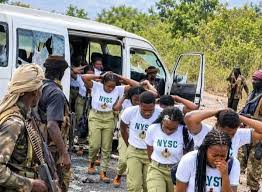

Security Operatives Rescue 20 Abducted NYSC Members in Imo
ShareBy Tambaya Julius, Abuja Security operatives have rescued 20 members of the National Youth Service Corps (NYSC) who were abducted...

Nigeria’s Oil Reforms will Unlock $50bn Deep Offshore Investments – Tinubu
SharePresident Bola Tinubu said recent reforms in Nigeria’s oil and gas sector are designed to unlock up to 50 billion...
Ododo Condoles Families of NAF Personnel, Armed Forces Over Ondo Crash
ShareFrom Joseph Amedu, Lokoja Kogi State Governor, Ahmed Ododo has commiserated with the families of the Nigerian Air Force personnel...