
NEWS
CAPPA Commends Lagos on Adiyan II, Urges Increased Funding of Public Water


From Attah Ede, Makurdi
Corporate Accountability and Public Participation Africa (CAPPA) yesterday commended the Lagos State Government for making significant strides towards funding critical water infrastructure across the state, particularly the Adiyan II Water Treatment Plant.
In a statement over the weekend, it said the steady progress on the project—12 years in the making—demonstrates that state-led and funded solutions remain the best pathway to expanding public water supply and achieving universal access to clean, safe, and affordable water for Lagosians.
According to reports from Governor Babajide Sanwo-Olu’s recent visit to the facility, Adiyan II is now 80% complete and remains on track for its 2027 completion timeline.
In a further show of commitment, the state government has allocated an additional ₦20 billion in its 2025 fiscal budget to settle ‘outstanding liabilities’ for the project.While CAPPA commended the state’s efforts, it urged it not to hand over Lagos’ water sector to private profiteers once these projects are completed.
The statement emphasised that privatising Lagos’ water supply would undermine the massive investments already made by the state.
‘We strongly urge the Lagos State Government to resist any temptation to privatise or concession the Adiyan II project and other water treatment facilities across the state. Water is not a commodity to be sold to the highest bidder. If Adiyan II or any other public water facility is handed over to private corporations, Lagosians will suffer—higher tariffs, restricted access, and corporate exploitation,’ the nongovernmental organisation warned.
CAPPA cited failed privatisation experiments across Africa, where foreign-backed water projects collapsed due to skyrocketing costs, contract failures, and profit-driven policies that left millions without access to clean water.
Furthermore, CAPPA pointed to the recent withdrawal of the United States Agency for International Development (USAID) from Lagos’ water sector as a critical lesson.
“What is happening with USAID is a textbook example of why governments should never outsource critical infrastructure to external financiers with hidden agendas.
“The Lagos State Government must recognise this as a blessing in disguise and take full control of its water sector rather than leaving it vulnerable to shifting donor priorities, where financial commitments are subject to geopolitical agendas, austerity measures, and changing domestic policies in donor countries, all of which can leave both governments and communities stranded,” said Akinbode Oluwafemi, CAPPA’s Executive Director.
The statement which was signed by Media & Communications Officer, CAPPA, Robert Egbe, however said, under the 2021 Memorandum of Understanding (MoU) between Lagos State and USAID, no fewer than five mini waterworks were slated for rehabilitation with private sector involvement as a key component. However, USAID’s abrupt withdrawal of funding, driven by upheavals and funding cutbacks within the U.S. government, has laid bare the dangers of relying on external entities to provide essential public services. Beyond the immediate financial shortfall, this exit creates even deeper risks, leaving policy vacuums, stalling critical projects, and ultimately weakening local decision-making power over vital utilities.
With USAID gone, the Lagos Water Corporation’s Managing Director, Engr. Mukthar Tijjani has confirmed that the state is now seeking funding from other international agencies, including the Japan International Cooperation Agency (JICA) and France’s Agence Française de Développement (AFD), to sustain water infrastructure projects. CAPPA raised the alarm about this development, warning that these financial institutions have a long history of imposing harsh commercial conditions on public utilities.
“JICA and AFD have a track record of attaching dangerous conditions to their loans and grants—cost-recovery tariffs, bulk water purchase agreements, and privatisation clauses and mandates that prioritise corporate profits over public welfare. AFD, in particular, has close ties to Suez, a corporation notorious for its aggressive pro-privatisation stance and the devastation it leaves in its wake. If Lagos aligns itself with these buccaneers, residents will soon be burdened with unaffordable water tariffs while the state loses control over its own infrastructure,” CAPPA cautioned.
CAPPA encouraged Governor Babajide Sanwo-Olu to not be discouraged with the withdrawal of USAID but to rather treat it as a blessing in disguise and make history by keeping Lagos’ water under full public control.
“This is a defining moment. Lagos has the opportunity to lead Africa’s water justice cause by rejecting privatisation and strengthening its public water systems. As Engr. Mukthar rightly acknowledged in an interview on this matter, ‘…we need to rely on the state government more… it is more predictable…’ —unlike funding from external sources.
“The state must invest in the Lagos Water Corporation and the Ministry of Environment and Water Resources, to enhance their operational efficiency, and ensure transparency in the sector rather than handing over control to foreign profiteers. The decisions made today will determine whether water remains a public good accessible to all Lagosians, or whether it becomes a luxury available only to those who can afford it,” the statement concluded.
CAPPA urged Lagosians to remain vigilant and demand that their government prioritise people over profit.

The vision is for Ethiopia’s smart police stations to be unmanned – but giving more people access to police services. Computer tablet screens glow inside a row of partitioned booths at a new-style Ethiopian police station. There is no commotion. There is no front desk, no bench of anxiously waiting civilians, no officer calling out names.
It is a pilot project of what is being called a “smart” – or unmanned – police station in the Bole district of the capital, Addis Ababa, is the latest chapter in Ethiopia’s bid to catch up with the digital revolution.
A large monitor on the wall cycles through welcome messages as well as images of Prime Minister Abiy Ahmed.
But at the moment there are uniformed officers standing by to demonstrate how the system works, which makes it feel more like a tech showroom.
Recently opened, the staff “is here to help people get used to it”, the police’s head of technology expansion department Demissie Yilma said.
Inside a booth, he taps a screen and goes through the steps to make a report.
Demissie selects the type of incident – a crime, a traffic report or a general concern – enters the details and presses a button to submit the comment.
Then, an officer – who is a real person in a remote location rather than a chatbot – pops up on the screen and begins to ask questions and take down information.
“If there is a problem, officers respond immediately and patrol the area mentioned by the reporter,” Demissie says.
In its first week last month, the smart police station (SPS) received just three reports – a lost passport, a financial fraud case and a routine complaint.
But Demissie believes the number of reports will grow as locals become more aware of it.
“The future police service should be near the citizens,” he says.
The use of a computer tablet to communicate with officials may mean less human-to-human contact but the authorities believe that the SPS could increase access to the police in places where there may not be enough personnel to man a fully fledged station.
At the project’s launch on 9 February, the prime minister was quoted in state media as saying that it was aimed at making “law enforcement institutions competent and competitive” and he framed it as part of a wider digital reform drive.
Users of the smart police station enter details on a tablet before a real person appears on the screen
The smart police station is part of a broader move to change how citizens interact with the state.
The national strategy launched last year – known as Digital Ethiopia 2030 – is the government’s blueprint for digitising public services, from identity systems and payments to courts and public administration.
The proportion of Ethiopians who have access to the internet remains quite low, meaning that the country has lagged behind others on the continent in terms of digital transformation.
Also, conflict and political upheavals in recent years have led to internet blackouts.
But as the telecoms sector has opened up, the country is embracing mobile phone digital payments in birr, the local currency.
The government has also introduced a national digital ID system and put several government services online.
Supporters of the moves argue that these changes are long overdue in a country with rapid urban growth and a young population.
Birhan Nega Cheru, a senior software engineer in Addis Ababa, is pleased with the shift.
“When they work well, they reduce paperwork and visits to offices,” he tells the BBC.
But he also recognises security and privacy issues and the dangers that those “who are not digitally literate can easily be scammed”.
“Urban users, younger people, businesses, those with smartphones and skills, benefit most,” the software engineer says.
“Older people, rural communities and low-income groups are at risk of being left out.”
And the numbers support his assertions.
In a report last year, the UN’s educational organisation, Unesco, found that 79% of its citizens were not connected to the internet.
But Zelalem Gizachew, a technology policy analyst, argues that the government’s strategy has been chipping away at the digital divide.
“Digital literacy remains a challenge,” he says. “That is why the Digital Ethiopia 2030 strategy puts emphasis on training and skills, not just technology.”
He points to measurable changes over the past five years.
“Digital payments have boomed with trillions of birr now moving through electronic transactions. Broadband access has expanded sharply, and more than 130 government services have been digitised.
“These are foundational investments,” Zelalem says. “You cannot modernise public services without infrastructure, policy and skills.”
For now, the smart police station remains a pilot.
It is in a controlled environment where officers guide users through a system which is still finding its footing. Traditional stations continue to operate, and most citizens still rely on in-person reporting.
Whether the model expands will depend less on how sleek the technology looks, and more on whether people choose to use it when no-one is there to explain the screens.
In that sense, the quiet room in Bole is not a finished product. It is an experiment, and a small window into how Ethiopia’s broader digital ambitions may play out in everyday life.

The UK government will stop issuing study visas to people from Afghanistan, Cameroon, Myanmar and Sudan from this month, Home Secretary Shabana Mahmood has said, as well as stopping skilled work visas to Afghans.
The Home Office said the action was being taken due to what it said was widespread visa abuse.
According to official figures, people from the four countries were the most likely to make an asylum claim after originally coming to the UK to study.
“The government is clamping down on visa abuse so the UK can maintain its ability and proud tradition of helping those genuinely in need,” a government spokesperson added.
In its release, the government said asylum claims from people who had originally travelled to the UK legally – to do something like studying – had more than tripled between 2021 and 2025.
Home Office figures showed that people claiming asylum off the back of a study visa make up 13% of all claims currently in the system.
Mahmood said she was “taking the unprecedented decision to refuse visas for those nationals seeking to exploit our generosity”.
“I will restore order and control to our borders.”
The Home Office said a higher proportion of people than average from the four specified countries cited destitution as part of their asylum claim, and there were 16,000 people from the four countries currently being supported.
About 95% of Afghans who arrived in the UK on a study visa then applied for asylum since 2021, while applications by students from Myanmar increased 16-fold and claims by students from Cameroon and Sudan more than quadrupled.
In its reasoning for ending work visas for Afghans, the Home Office also cited the large numbers claiming asylum in the UK once their visas expired.
It said that this posed “an unsustainable threat to the UK’s asylum system”.
The security situation is volatile in Afghanistan and recent tensions between the country and Pakistan have resulted in violent clashes in border regions.
There has been a civil war in Sudan since 2023, forcing millions to flee their homes in what the United Nations has called the world’s largest humanitarian crisis.
There is separatist unrest in Cameroon, where militia are fighting for the independence of the country’s two Anglophone regions in what is a mainly French-speaking nation.
In Myanmar, there is a civil war following a military coup in 2021.
Mahmood will introduce new legislation to stop the issuing of visas through an Immigration Rules change on Thursday 5 March.
In November, the home secretary threatened to shut down all UK visas for Angola, Namibia and the Democratic of Congo unless their governments agreed to take deportations, which led to a resumption of return flights with all three countries.
The measures follow the prime minister’s decision to adopt a more hard-edged approach to diplomacy in response to pressure to reduce immigration from those on the political right, including the Conservatives and Reform UK.
Last week, the government announced protection for refugees would be halved to 30 months in an attempt to reduce small boat crossings.
In 2025, a total of 41,472 migrants crossed the Channel in small boats, which was almost 5,000 more than the previous year.
The UK has resettled the sixth largest number of refugees referred by the United Nations High Commissioner for Refugees in the world, which the Home Office said demonstrated the government’s commitment to helping those genuinely in need.
The home secretary will give a speech this week on making the “progressive case” for immigration control.
Last month, about 40 Labour MPs raised concerns about the impact of the proposals to change permanent settlement rights for migrants already living here, describing the retrospective approach as “un-British” and “moving the goalposts”.
They have warned it could worsen the UK’s skills shortage, particularly in the care sector.
Max Wilkinson, Liberal Democrat home affairs spokesman, said it was “right to say student visas are for students and asylum routes are for refugees”.
“The problem is there are still no controlled, safe routes for refugees to reach the UK and no meaningful returns agreements with other countries for those whose claims are rejected,” Wilkinson said.
Ethiopia Experiments Smart Police Stations without Officers
The vision is for Ethiopia’s smart police stations to be unmanned – but giving more people access to police services. Computer tablet screens glow inside a row of partitioned booths at a new-style Ethiopian police station. There is no commotion. There is no front desk, no bench of anxiously waiting civilians, no officer calling out names.
It is a pilot project of what is being called a “smart” – or unmanned – police station in the Bole district of the capital, Addis Ababa, is the latest chapter in Ethiopia’s bid to catch up with the digital revolution.
A large monitor on the wall cycles through welcome messages as well as images of Prime Minister Abiy Ahmed.
But at the moment there are uniformed officers standing by to demonstrate how the system works, which makes it feel more like a tech showroom.
Recently opened, the staff “is here to help people get used to it”, the police’s head of technology expansion department Demissie Yilma said.
Inside a booth, he taps a screen and goes through the steps to make a report.
Demissie selects the type of incident – a crime, a traffic report or a general concern – enters the details and presses a button to submit the comment.
Then, an officer – who is a real person in a remote location rather than a chatbot – pops up on the screen and begins to ask questions and take down information.
“If there is a problem, officers respond immediately and patrol the area mentioned by the reporter,” Demissie says.
In its first week last month, the smart police station (SPS) received just three reports – a lost passport, a financial fraud case and a routine complaint.
But Demissie believes the number of reports will grow as locals become more aware of it.
“The future police service should be near the citizens,” he says.
The use of a computer tablet to communicate with officials may mean less human-to-human contact but the authorities believe that the SPS could increase access to the police in places where there may not be enough personnel to man a fully fledged station.
At the project’s launch on 9 February, the prime minister was quoted in state media as saying that it was aimed at making “law enforcement institutions competent and competitive” and he framed it as part of a wider digital reform drive.
Users of the smart police station enter details on a tablet before a real person appears on the screen
The smart police station is part of a broader move to change how citizens interact with the state.
The national strategy launched last year – known as Digital Ethiopia 2030 – is the government’s blueprint for digitising public services, from identity systems and payments to courts and public administration.
The proportion of Ethiopians who have access to the internet remains quite low, meaning that the country has lagged behind others on the continent in terms of digital transformation.
Also, conflict and political upheavals in recent years have led to internet blackouts.
But as the telecoms sector has opened up, the country is embracing mobile phone digital payments in birr, the local currency.
The government has also introduced a national digital ID system and put several government services online.
Supporters of the moves argue that these changes are long overdue in a country with rapid urban growth and a young population.
Birhan Nega Cheru, a senior software engineer in Addis Ababa, is pleased with the shift.
“When they work well, they reduce paperwork and visits to offices,” he tells the BBC.
But he also recognises security and privacy issues and the dangers that those “who are not digitally literate can easily be scammed”.
“Urban users, younger people, businesses, those with smartphones and skills, benefit most,” the software engineer says.
“Older people, rural communities and low-income groups are at risk of being left out.”
And the numbers support his assertions.
In a report last year, the UN’s educational organisation, Unesco, found that 79% of its citizens were not connected to the internet.
But Zelalem Gizachew, a technology policy analyst, argues that the government’s strategy has been chipping away at the digital divide.
“Digital literacy remains a challenge,” he says. “That is why the Digital Ethiopia 2030 strategy puts emphasis on training and skills, not just technology.”
He points to measurable changes over the past five years.
“Digital payments have boomed with trillions of birr now moving through electronic transactions. Broadband access has expanded sharply, and more than 130 government services have been digitised.
“These are foundational investments,” Zelalem says. “You cannot modernise public services without infrastructure, policy and skills.”
For now, the smart police station remains a pilot.
It is in a controlled environment where officers guide users through a system which is still finding its footing. Traditional stations continue to operate, and most citizens still rely on in-person reporting.
Whether the model expands will depend less on how sleek the technology looks, and more on whether people choose to use it when no-one is there to explain the screens.
In that sense, the quiet room in Bole is not a finished product. It is an experiment, and a small window into how Ethiopia’s broader digital ambitions may play out in everyday life.

By Mike Odiakose, Abuja
Leading engineering construction company, Julius Berger Nigeria PLC has joined forces with the Renewed Hope Climate Change Awareness Tour, a national initiative aimed at promoting climate resilience and sustainable development across Nigeria to further the goals of the project.
The initiative was inaugurated inside the State House Conference Centre, Abuja Tuesday.
Speaking at the event, President Bola Tinubu who was represented by the Minister of Environment, Balarabe Abbas Lawal, urged governors, Organised Private Sector actors and fellow stakeholders to lead Nigeria’s climate transition, transforming awareness into practical action at all levels while calling on governors, private sector leaders, and stakeholders to accelerate Nigeria’s transition to a resilient, low-carbon economy.
Tinubu said climate change was not only a risk but also an opportunity for innovation, growth, and national development.
“Today we inaugurate a movement, the Renewed Hope Climate Change Awareness Tour. It is a national call to action, a call to innovation, opportunity, and sustainable development for all Nigerians,” Tinubu said.
Stressing that Nigeria stood at a defining moment as the global transition to low-carbon development accelerated, the President said, “Capital is shifting, markets are evolving, and technology is transforming industries. Nigeria intends to lead tomorrow.”
He explained that the tour would take climate awareness beyond conference halls into communities, engaging governors, traditional rulers, students, innovators, entrepreneurs, farmers, and financial institutions nationwide.
By doing so, he added that bankable projects will be identified, local solutions unlocked, climate finance capacity strengthened, and partnerships between the public and private sectors mobilised.
To the stakeholders, the President said that nationally determined contributions were commitments to reduce emissions, enhance resilience, and safeguard communities, saying, “Commitments must be matched with action, supported by investment, and this tour bridges that gap.”
He further tasked young Nigerians to take ownership of the climate transition, stressing that their ideas, technology, and entrepreneurship would shape the nation’s future while aligning with the Renewed Hope Agenda.
Said he, “climate resilience is national security. Leadership is not a budget; it is a result we must accept with confidence. Nigeria chooses leadership over hesitation,”
Also, the Director of Forestry in the ministry, Halima Bawa, stressed the urgency of confronting climate change, noting its effects, including desert encroachment, flooding, coastal erosion, and erratic rainfall affecting farmers.
Lawal lauded the Climate Change Act 2021 for establishing a legal framework for coordinated climate governance, carbon budgeting, and a pathway to net-zero emissions by 2060, institutionalising climate action across sectors.
Special Assistant to the President on Climate Change Matters, Yussuf Kelani, said the tour represented a national movement grounded in leadership, collaboration, and commitment to Nigeria’s environmental and economic security.
Kelani, Chairman of the REHCCAT Committee, said the initiative sought to democratise climate knowledge, align federal and state-level action with Nigeria’s NDCs, and mobilise partnerships, green jobs, and climate finance.
Guest Speaker, Prof. Babajide Alo, emphasised that climate resilience required locally led adaptation, community empowerment, and capacity-building to actively manage climate risks and implement sustainable solutions.
“Securing Nigeria’s climate future requires revisiting priorities and lifestyles, embracing responsible consumption, reducing carbon footprints, and embedding sustainable development in every sector,” Alo said, calling for action at all levels.
For Julius Berger Nigeria PLC, the Chief Risk Officer, Shakira Mustapha said the target of well-wishers of Nigeria is a net zero emission.




Ethiopia Experiments Smart Police Stations without Officers
ShareThe vision is for Ethiopia’s smart police stations to be unmanned – but giving more people access to police services. Computer...

UK Cancels Cameroun, South Sudan, Afghanistan, Myanmar Study Visas Due to Abuse
ShareThe UK government will stop issuing study visas to people from Afghanistan, Cameroon, Myanmar and Sudan from this month, Home...


Julius Berger Commits to Renewed Hope Climate Change Awareness Tour
ShareBy Mike Odiakose, Abuja Leading engineering construction company, Julius Berger Nigeria PLC has joined forces with the Renewed Hope Climate...

Over 1000 Athletes Compete for MTN Champs Season 4 in Calabar
ShareFrom Ene Asuquo, Calabar As MTN returns to Calabar for the second time to host the MTN Champs, over one...
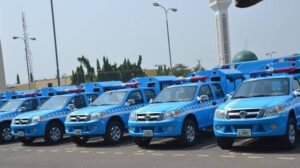

FRSC Core Mandate Remains Lives Saving, Property, Integrity – Corps Marshal
Share From Sylvia Udegbunam, Enugu The Corps Marshal of Federal Road Safety Corps (FRSC), Mallam Shehu Mohammed, said that the core...


World Obesity Day: CAPPA Seeks Tougher Regulation of Junk Food Marketing
ShareFrom Sylvia Udegbunam, Enugu On the occasion of World Obesity Day (WOD) 2026 yesterday, Corporate Accountability and Public Participation Africa...


PalmPay Marks IWD with Tech Training for Women
SharePalmPay, a financial technology company, says it will bridge the gender gap in tech through a three-day digital finance and...
Smart Cash Boosts Digital Banking Access with Zero-transaction-charge Service
ShareSmart Cash Payment Service Bank says it is removing transaction charges and paying competitive interest on savings to address the...

IWD: Ecobank Unveils ‘Ellevate’ to Promote Women Entrepreneurs’ Growth
ShareEcobank Nigeria, has unveiled an enhanced version of its gender financing initiative, ”Ellevate” by Ecobank, as part of activities commemorating...

DMO Offers Two Savings Bonds for Subscription at N1,000 Per Unit
ShareThe Debt Management Office (DMO) has listed two FGN savings bonds for subscription at N1,000 per unit. According to a...