
NEWS
Centenary City: Nigeria’s Bold Leap into a Smarter Future


By David Torough, Abuja
Across history, there are projects that transcend skylines to redefine national destiny. Nigeria’s Centenary City is one of them — ambitious, transformative, and symbolic.
Conceived in 2014 to mark 100 years of nationhood, it was imagined as a futuristic, eco-friendly, cosmopolitan hub to rival Dubai, Monaco, and Singapore.
For a decade, the promise lingered, bright but unrealized, like a symphony awaiting its conductor.Now, driven by renewed federal backing and the decisive push of Honourable Minister of the Federal Capital Territory (FCT), Mr. Nyesom Wike, the orchestra has begun again.
Bulldozers now stride across virgin land southwest of Abuja.
Julius Berger Nigeria Plc is delivering critical infrastructure while Dar Al-Handasah Consultants (DAR) refine the city’s engineering masterplan. Once stalled, Centenary City is now airborne, with vast potential: over 300,000 jobs, billions in foreign direct investment, and a bold rebranding of Abuja — and Nigeria — as a global showcase of urban excellence.Birth of a grand vision
The project was launched under President Goodluck Jonathan in 2014, intended as both a centenary landmark and a springboard for the future. Beyond commemoration, it carried economic and cultural ambition: a smart city that would embody Nigeria’s progress and modernity.
Inspired by global models like Dubai, Songdo in South Korea, and Shenzhen in China, it was designed as a 1,260-hectare mixed-use metropolis near Nnamdi Azikiwe International Airport. The blueprint envisioned a central business district, international commerce centre, luxury residences, iconic landmarks, and thriving cultural districts.
But like many grand African ideas, it was derailed by controversies, bureaucracy, and fading investor patience. For years it lay dormant — yet the dream endured.
Wike’s role: Unblocking the gridlock
Enter Nyesom Wike, FCT Minister, whose political will reignited momentum. Known for decisive governance, he stepped in as mediator, reconciler, and enforcer, ending disputes between Centenary City Plc (CCPLC), the Federal Capital Development Authority (FCDA), and the FCT Administration.
In classic statesman style, he forced rivals to prioritize national vision above factional disputes. That single act restored credibility.
Today, Julius Berger is executing Phase 1 Primary Infrastructure at a cost of ₦750 billion, while DAR returns to safeguard the project’s fidelity. What was once viewed with skepticism now advances with contracts signed, earthworks underway, and investor confidence renewed.
Blueprint of a modern metropolis
Centenary City is more than real estate; it is a complete ecosystem — Nigeria’s first true smart city, built to harmonize nature, technology, and lifestyle.
Highlights of its masterplan include:
Commercial and Cultural Icons: The International Commerce Centre, a global-standard Convention Center, and the Mall of Africa to anchor business and retail.
Luxury and Leisure: Five-star hotels, golf and polo estates, serviced apartments, and safari parks for elite and aspirational residents.
Tourism and Arts: An African Arts Museum, entertainment districts, and a Nigerian Park blending heritage with modern attractions.
Health and Education: Hospitals, schools, and research centres for future-ready human capital.
Industrial Strength: As a Free Trade Zone (FTZ), the city will host industrial hubs for manufacturing, exports, and investments.
Its design balances futuristic skylines with green suburbs — showing that Nigeria too can deliver sustainable, livable, world-class spaces.
Economic promise: A growth engine
No project in recent memory rivals its economic potential. The numbers are striking: 300,000 direct jobs — with indirect jobs multiplying across supply chains and services.
Over $18 billion in FDI — once touted as Nigeria’s single largest foreign investment opportunity.
N2.4 trillion value — a massive stimulus to Nigeria’s economy.
Tourism and real estate boom — diversifying the economy away from oil.
Global branding — positioning Abuja alongside world capitals like Dubai and Johannesburg.
This is not just construction but economic diplomacy, signaling Nigeria’s intent to compete globally.
Abuja redefined
Since inception, Abuja has been seen largely as administrative. Centenary City changes that — reimagining the capital as a cosmopolitan hub. It gives Abuja the global signature it lacked, comparable to Sandton in Johannesburg, Konza in Nairobi, and Kigali’s rising conference hub.
Shadows of the past, lessons for the future
The project’s history is littered with disputes over land, politics, and compensation. But the tide has turned. Resettlement schemes are ongoing, compensation has been paid, and biometric captures ensure accountability.
Centenary City Plc has adopted a socially responsible approach — proving no city of the future can rise on the foundations of injustice.
A national resolve
If completed, Centenary City will stand not only as an architectural marvel but as proof of Nigeria’s resilience — its ability to dream boldly, stumble, and rise again. It will demonstrate that world-class projects can be delivered with private capital, visionary leadership, and public benefit.
All stakeholders — government, investors, civil society, and citizens — must sustain momentum and bury past controversies.
The skyline of tomorrow
As night falls on Abuja and lights flicker across the city, one can already imagine the horizon: gleaming towers, bustling avenues, green golf estates, and vibrant cultural spaces. That is the promise of Centenary City — a dream no longer deferred but rising steadily into view.

By Tony Obiechina, Abuja
The Nigeria Revenue Service (NRS) said it is targeting N40 trillion in tax revenue for the country in 2026.
The Executive Chairman of NRS, Dr. Zacch Adedeji, disclosed this during a national workshop on strengthening tax compliance under the new tax regime and collaborating with sub-nationals for enhanced revenue collection in Abuja on Tuesday.
Adedeji, who was represented by Mohammed Lawal, called for stronger collaboration among all tiers of government to improve tax compliance and revenue collection nationwide.
He said achieving the target requires intensive capacity building, improved transparency, and robust partnerships across federal, state, and local government institutions to address compliance bottlenecks.
Adedeji expressed concern over compliance imbalances among states and government-owned enterprises, describing the trend as harmful to institutional fairness.
To drive motivation, the NRS boss announced plans to reward the most tax-compliant states starting from the end of 2026.
Adedeji expressed confidence that the workshop would deliver a practical roadmap for transparency, administrative excellence, and high performance nationwide.
He noted that the revenue generated by the NRS sustains the Federation Account Allocation Committee (FAAC) and funds critical national development projects.
Nigerian crude rises toward $120 amid US-Iran tensions
Adedeji emphasised that the ultimate goal of the NRS is to promote voluntary compliance instead of relying solely on enforcement measures.
The NRS boss commended President Bola Tinubu for introducing reforms that promote fairness, inclusiveness, and sustainability in Nigeria’s tax system.
He also praised the Minister of Finance and Coordinating Minister of the Economy, Taiwo Oyedele, “for his unwavering support towards ongoing fiscal and tax reforms.”
The minister then affirmed that tax reforms remain central to Nigeria’s economic recovery and fiscal sustainability.
Oyedele, who was represented by his Chief of Staff, Tolu Adegbie, noted that the country is currently balancing major reforms, including the naira flotation, fuel subsidy removal and inflation control, alongside growing socio-economic challenges.
He said the new tax regime is part of broader structural reforms targeting stable, predictable, and equitable revenue generation to fund roads, healthcare, education, and national security.
The minister assured that the reforms would expand the tax net without increasing the tax burden on citizens.
By David Torough, Abuja
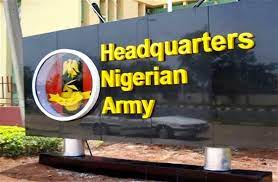
The Defence Headquarters (DHQ) yesterday announced major gains in ongoing counter-terrorism operations, revealing that a joint offensive involving Nigerian troops and the United States Africa Command (AFRICOM) had eliminated 175 ISIS fighters and several top commanders in the North-East.
In a statement issued in Abuja, the Director of Defence Information, Maj.
-Gen. Samaila Uba, said the coordinated air and ground assaults carried out in recent days dealt a heavy blow to the operational strength of the Islamic State West Africa Province (ISWAP) and allied terrorist elements.According to him, the operations destroyed multiple terrorist checkpoints, logistics hubs, weapons caches, military equipment and financial networks sustaining insurgent activities in the region.
Among those killed, Uba disclosed, was Abu-Bilal al-Minuki, described as one of ISIS’ most prominent global operatives involved in terrorist financing, recruitment, logistics and attack coordination against civilians.
Other key figures neutralised included Abd-al Wahhab, an ISWAP leader linked to attacks and propaganda operations; Abu Musa al-Mangawi; and Abu al-Muthanna al-Muhajir, a senior media operative.
The DHQ said the elimination of the commanders had significantly disrupted ISIS command structures and operational networks, stressing that the Armed Forces, in collaboration with international partners, would sustain efforts to dismantle terrorist groups threatening national and regional security.
Meanwhile, the military dismissed reports suggesting the existence of an entrenched terrorist base in the South-West, insisting that current security operations in the region were targeted at rescuing abducted victims and flushing out criminal gangs.
The Director of Defence Media Operations, Maj.-Gen. Michael Onoja, stated that available intelligence did not support claims of any organised insurgent structure in the South-West.
He spoke against the backdrop of the recent abduction of pupils and staff from some schools in Oriire Local Government Area of Oyo State.
Onoja said the Chief of Defence Staff, Gen. Olufemi Oluyede, had commiserated with the Oyo State Government and families of the victims, describing the attack as reprehensible.
He assured that troops had already made contact with the abductors and were sustaining pursuit operations across forest corridors, with support from other security agencies and local vigilantes.
According to him, the military had earlier conducted extensive clearance operations in the Old Oyo National Park, neutralising criminal elements operating within the area.
“The incident in Oyo State remains an isolated criminal act and does not indicate the presence of an entrenched insurgent structure in the region,” Onoja stated.He urged Nigerians to remain calm and continue supporting security agencies with credible intelligence, assuring that the Armed Forces would not relent until all abducted victims were rescued and those responsible brought to justice
By David Torough, Abuja
The Defence Headquarters (DHQ) yesterday announced major gains in ongoing counter-terrorism operations, revealing that a joint offensive involving Nigerian troops and the United States Africa Command (AFRICOM) had eliminated 175 ISIS fighters and several top commanders in the North-East.
In a statement issued in Abuja, the Director of Defence Information, Maj.-Gen. Samaila Uba, said the coordinated air and ground assaults carried out in recent days dealt a heavy blow to the operational strength of the Islamic State West Africa Province (ISWAP) and allied terrorist elements.
According to him, the operations destroyed multiple terrorist checkpoints, logistics hubs, weapons caches, military equipment and financial networks sustaining insurgent activities in the region.
Among those killed, Uba disclosed, was Abu-Bilal al-Minuki, described as one of ISIS’ most prominent global operatives involved in terrorist financing, recruitment, logistics and attack coordination against civilians.
Other key figures neutralised included Abd-al Wahhab, an ISWAP leader linked to attacks and propaganda operations; Abu Musa al-Mangawi; and Abu al-Muthanna al-Muhajir, a senior media operative.
The DHQ said the elimination of the commanders had significantly disrupted ISIS command structures and operational networks, stressing that the Armed Forces, in collaboration with international partners, would sustain efforts to dismantle terrorist groups threatening national and regional security.
Meanwhile, the military dismissed reports suggesting the existence of an entrenched terrorist base in the South-West, insisting that current security operations in the region were targeted at rescuing abducted victims and flushing out criminal gangs.
The Director of Defence Media Operations, Maj.-Gen. Michael Onoja, stated that available intelligence did not support claims of any organised insurgent structure in the South-West.
He spoke against the backdrop of the recent abduction of pupils and staff from some schools in Oriire Local Government Area of Oyo State.
Onoja said the Chief of Defence Staff, Gen. Olufemi Oluyede, had commiserated with the Oyo State Government and families of the victims, describing the attack as reprehensible.
He assured that troops had already made contact with the abductors and were sustaining pursuit operations across forest corridors, with support from other security agencies and local vigilantes.
According to him, the military had earlier conducted extensive clearance operations in the Old Oyo National Park, neutralising criminal elements operating within the area.
“The incident in Oyo State remains an isolated criminal act and does not indicate the presence of an entrenched insurgent structure in the region,” Onoja stated.He urged Nigerians to remain calm and continue supporting security agencies with credible intelligence, assuring that the Armed Forces would not relent until all abducted victims were rescued and those responsible brought to justice
By David Torough, Abuja
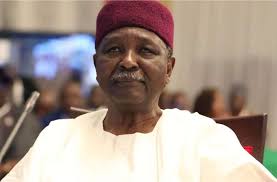
Former Head of State, General Yakubu Gowon, yesterday declared that Nigeria would survive its present political, economic and security challenges, insisting that the country “will not fall” despite growing national anxieties ahead of the 2027 elections.
Gowon spoke in Abuja during the public presentation of his autobiography, “My Life of Duty and Allegiance”, at a gathering that drew the nation’s political, military and traditional elite.
The event quickly transformed from a book launch into a major national reflection on leadership, unity, reconciliation and the future of Nigeria, with several speakers warning against deepening distrust, political desperation and divisive politics.
Former President Goodluck Jonathan, in his remarks, said leadership is truly tested during periods of crisis, noting that difficult moments separate genuine leaders from pretenders.
“Many people can appear to be good leaders when circumstances are favourable. It is during moments of crisis that you truly distinguish the men from the boys,” Jonathan said.
Reflecting on the civil war era, Gowon recalled the burden of preserving national unity and reaffirmed his belief in Nigeria’s survival.
“During my time as Head of State, the country did not fall, and I remain confident that despite all her challenges, Nigeria will still not fall,” he declared.
The former military ruler also warned politicians against desperation and “do-or-die politics” as the nation gradually moves toward the 2027 general elections.
Vice President Kashim Shettima, who represented President Bola Tinubu, lamented worsening suspicion among Nigerians and cautioned against the weaponisation of ethnic and religious identities.
“Countries do not endure by accident,” Shettima said, urging Nigerians to embrace peace, dialogue and national cohesion.
Jonathan praised Gowon’s post-war “No Victor, No Vanquished” policy, describing it as the foundation for reconciliation and reintegration after the civil war.
He also commended the establishment of the National Youth Service Corps and ECOWAS, describing both as enduring legacies of visionary leadership.
Reviewing the autobiography, Bishop Matthew Kukah said history could never be captured from one perspective alone, urging Nigerians to document their own experiences rather than demand a single version of events.
Emir of Kano, Muhammadu Sanusi II, said history ultimately remembers leaders for character and integrity rather than power or infrastructure, while the Sultan of Sokoto praised Gowon’s humility and statesmanship.
Retired Lt.-Gen. Theophilus Danjuma, who launched the book with a donation of N3 billion, described Gowon as one of the defining figures of post-independence Nigeria and hailed his reconciliation efforts after the civil war.
Africa’s richest man, Aliko Dangote, also donated N500 million toward the launch.



Centenary City: Nigeria’s Bold Leap into a Smarter Future
ShareBy David Torough, Abuja Across history, there are projects that transcend skylines to redefine national destiny. Nigeria’s Centenary City is one of them...
Arsenal Champions as Man City Draw at Bournemouth
ShareArsenal’s 22-year wait for the Premier League title is over after rivals Manchester City drew at Bournemouth, in what is expected to be...


Dangote Refinery Reduces Jet Fuel Price to N1,650 Per Litre
ShareDangote Petroleum Refinery has reduced the price of aviation fuel, also known as Jet A1, from N1,750 to N1,650 per litre. The company said the move is aimed at reducing the...


NRS Targets N40trn Revenue in 2026
ShareBy Tony Obiechina, Abuja The Nigeria Revenue Service (NRS) said it is targeting N40 trillion in tax revenue for the country in 2026. The Executive...

Nigerian Troops-US Joint Offensive Decimate ISIS Strongholds, Says DHQ
ShareBy David Torough, Abuja The Defence Headquarters (DHQ) yesterday announced major gains in ongoing counter-terrorism operations, revealing that a joint...

2027: Gowon, Jonathan at Book Launch, Renew Plea for National Unity
ShareBy David Torough, Abuja Former Head of State, General Yakubu Gowon, yesterday declared that Nigeria would survive its present political,...

FCC partners with media outfit on digital platform
ShareBy Laide Akinboade Abuja Federal Character Commission (FCC), said it has concluded arrangement to collaborate with Keep it Different (KID),...
Kogi Traditional Rulers Unite to Tackle Insecurity
ShareFrom Joseph Amedu, Lokoja Traditional rulers from Oworo land in Lokoja Local Government Area of Kogi State, have resolved to work together to tackle insecurity and...
U-17 WWCQ: Flamingos Off To Abidjan Wednesday for Guinea Showdown
ShareNigeria’s Flamingos will leave for Abidjan, Cote d’Ivoire on Wednesday ahead of the first leg of their 2026 FIFA U-17 Women’s World Cup qualifying fixture...

Strike over High Fuel Prices Paralyses Transport in Kenya
ShareThousands of Kenyan commuters have been stranded and businesses paralyzed as public transport operators went on a nationwide strike to protest against recent increases in the cost fuel. Key roads in...