
NEWS
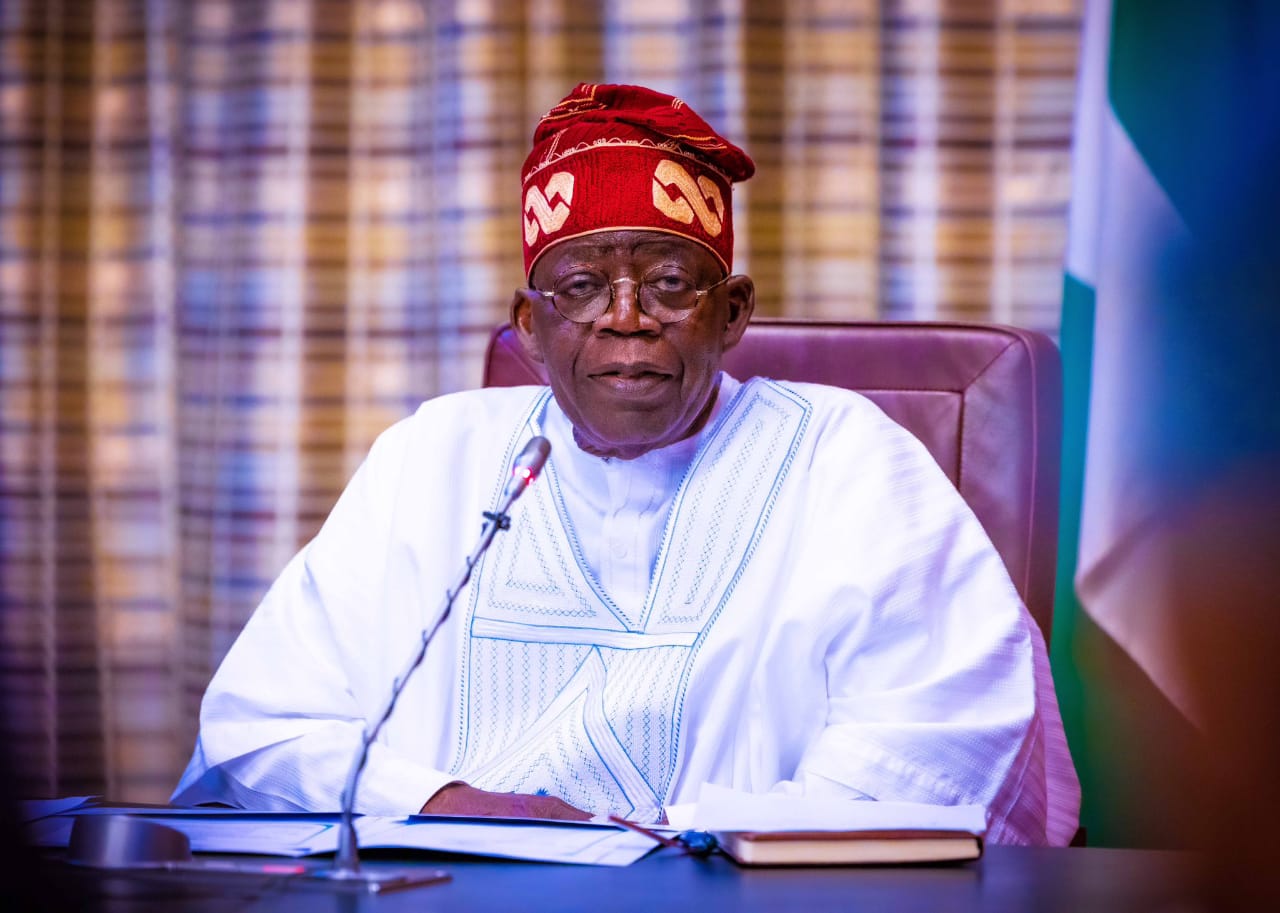
Commissioner Hails Tinubu Over Appointment of Kogi Indigenes into Critical Positions

From Joseph Amedu, Lokoja
Kogi State’s Commissioner of Finance, Budget and Economic Planning, Asiwaju Asiru Idris has expressed sincere gratitude to the President of the Federal Republic of Nigeria, Bola Ahmed Tinubu for his recent appointments of worthy Kogi sons into critical positions within his administration.
The commissioner in a statement made available to Journalists in Lokoja at the weekend, indicates that “The appointment of Professor Joash Ojo Amupitan as INEC Chairman and Lieutenant General Waidi Shaibu as Chief of Army staff was received with great joy and appreciation across the state. ”This is a clear affirmation of your confidence in the capabilities of kogi state indigenes and your commitment to an all-inclusive government that recognizes talent from every corner of the Nation.”Your Excellency, these appointments are a testament of your visionary leadership, detrabilized disposition and your dedication to harnessing the potential of all Nigerians for National development.”I am particularly grateful for the opportunity provided to our kinsmen to contribute their expertise, knowledge and experience to your “Renewed Hope” agenda.”There is no vestige of doubt, that these appointed individuals will serve the nation with utmost dedication, integrity and diligence, thereby justifying the trust you have reposed in them and making Kogi state proud.”Once again, Thank you Your Excellency for your kind gesture and your unwavering commitment to the progress and development of our dear nation, Nigeria.By Elijah Oguche, Abuja
The Mining Marshals have defended the continued closure of Stone Rockers Nigeria Limited’s quarry site in Abuja, insisting that the facility remains a crime scene in an ongoing criminal case before the Federal High Court.
The clarification followed the company’s petition to President Bola Tinubu and other government officials over the 13-month shutdown, which it described as unlawful.The Commander of the Mining Marshals, John Onoja in a publication on official page said the quarry was sealed not as an administrative sanction but because it constitutes the locus criminis in Charge No.
FHC/ABM/VR/338/2026, involving Stone Rockers and its director, Kolawole Olaiya. They are accused of conducting illegal mining activities within a mineral title area belonging to Lord’s Career Ventures Nigeria Limited.He said the case followed extensive investigations into petitions by the complainant, which were referred to the Mining Marshals by the Ministers of Solid Minerals Development and Interior. According to him, investigators arrested the defendants at coordinates which fell within Mining Lease No. 000395 ML belonging to Lord’s Career Ventures, a claim reportedly confirmed by the Mining Cadastre Office in a January 23, 2026 letter.
Onoja also said evidence before the court includes correspondence allegedly written by a member of the defence team during the investigation, which he claimed contained admissions relevant to the allegations. He warned against attempts to secure administrative intervention while related criminal and civil matters remain before the courts.
The Mining Marshals rejected allegations of financial inducement, saying enforcement decisions were based solely on evidence gathered during investigations. The agency also said prosecutors had initially excluded workers from the charge because they acted as employees of a disclosed principal, but their participation in protests over the shutdown has prompted a review of whether some should be relisted.
The Commander maintained that public campaigns and alleged blackmail would not deter the Mining Marshals from enforcing Nigeria’s mining laws. He appealed to the media to strengthen editorial verification and gatekeeping, stressing that the dispute between Stone Rockers and Lord’s Career Ventures is ultimately before the courts for determination.
NEWS
Nigeria Thailand Deepen, Cooperation with New Agreement on Agriculture, Cooperatives, Innovation
By Raphael Atuu Abuja
The Federal Government of Nigeria and the Kingdom of Thailand have deepened bilateral cooperation with the signing of new agreements focused on agriculture, cooperatives and innovation, in a move to drive implementation of the Renewed Hope Cooperative Reform and Revamp Programme, RH-CRRP 2030.
The agreements were signed in Lagos, during a high-level engagement on the theme: Building Sustainable Partnerships: Connecting Youth, Innovation and Business between Thailand and Nigeria.
Speaking during the event, Minister of State for Agriculture and Food Security and Supervising Minister of Cooperative Affairs, Sen.
Dr. Aliyu Sabi Abdullahi, said the signing marks the transition of RH-CRRP 2030 from policy formulation to practical implementation.The agreements include a Record of Discussions involving the Thailand International Cooperation Agency, TICA, Kasetsart University and the Federal Cooperative College, Oji-River, Enugu, as well as a Memorandum of Understanding between Kasetsart University and the Federal Cooperative College, Oji-River.
“Today, we have not merely witnessed the signing of documents; we have witnessed the strengthening of a partnership founded on knowledge, capacity development, innovation, institutional cooperation and shared prosperity,” the Minister said.
Abdullahi added that the partnership directly supports *Pillar 2 of RH-CRRP 2030 institutional Strengthening, Professionalization and Capacity Building.
“At the heart of this pillar is a simple but fundamental principle: we cannot build strong and sustainable cooperatives without strong institutions and well-trained people,” he said.
The Minister noted that the reform places deliberate emphasis on developing the knowledge, professional competence and leadership capacity of cooperative leaders, managers, regulators and members.
He referenced an earlier milestone on 12 August 2026 in Abuja, where the Ministry, the Cooperative Federation of Nigeria, CFN, and Seamfix Limited signed an MoU on the Cooperative Digitalization pillar of the reform.
“This demonstrates that RH-CRRP 2030 is moving beyond policy formulation towards implementation, institutional action and measurable impact,” Sen. Abdullahi said.
Linking the partnership to the Renewed Hope Agenda of President Bola Tinubu, the Minister affirmed that the administration is determined to reposition cooperatives as stronger instruments for agricultural transformation, enterprise development, job and wealth creation, financial inclusion and sustainable livelihoods.
“As we work towards Mr. President’s aspiration of building a one-trillion-dollar Nigerian economy within this decade, strengthening the capacity, professionalism and productivity of our cooperative institutions and the millions of Nigerians they serve will be critical,” he stated.
Abdullahi added that Thailand’s experience in agriculture, cooperative development, research and innovation presents important opportunities for mutual learning, while Nigeria brings enormous agricultural potential, a vibrant youthful population and significant opportunities for investment.
He charged all institutions involved to move “deliberately from agreement to implementation” with practical programmes, clear timelines and measurable deliverables.
“May today’s signing marks not the conclusion of a process, but the beginning of a stronger and more productive chapter in Nigeria–Thailand cooperation,” the Minister added.
In attendance were the Deputy Prime Minister and Minister of Foreign Affairs of the Kingdom of Thailand; Nigeria’s Honourable Minister of Foreign Affairs, Ambassador Bianca OdumegwuOjukwu, the Ambassador of Thailand to Nigeria; the Ambassador of Nigeria to the Kingdom of Thailand; the Director-General of TICA; the Executive Secretary of the Agricultural Research Council of Nigeria, ARCN; the President of Kasetsart University; and the Provost of the Federal Cooperative College, Oji-River.
RH-CRRP 2030 is a seven-pillar reform framework designed to reposition the Nigerian cooperative sector as an instrument for inclusive economic growth and distributed prosperity.

From Sylvia Udegbunam, Enugu
The Enugu State Government has trained over 15,000 civil and public servants on e-governance and digitalisation fostering improved productivity, seamless and smarter discharge of duties.
The Enugu State Head of Service (HoS), Dr Godwin Anigbo, told newsmen on Sunday in Enugu that the over 15,000 target was achieved after the completion of the 5th batch of the “Enugu State Civil Servants Digital Literacy Programme”.
It would be recalled that Anigbo, a seasoned technocrat, who assumed office on July 18, 2025, disclosed this while enumerating his achievements in one year.
The HoS said that Gov. Peter Mbah’s administration had given civil and public servants necessary support and innovative-driven vision to meet the state’s economic growth and expansion targets.
He said that training and activities in the one year under review included: participation in the International Civil Service Conference in Abuja and conduct of confirmation/promotion for Clerical Assistants, Messengers, Store Officers etc from Feb. 23 to March 25, 2025.
“Training of Permanent Secretaries on Strategic Policy Alignment and Disruptive Innovation between Feb.10 and Feb. 13, 2026 and a 3-Day Workshop for Directors and Deputy Directors on Fiscal Stewardship, Strategic Oversight and Institutional Integrity in the Era of Disruptive Innovation between March 23 and March 25, 2026.
“Training of Chief Drivers/Mechanics and Plant Operators transferring to Works Superintendent between April 13th and May 6, 2026 and a 3-Day Training of Permanent Secretaries and Directors on Artificial Intelligence (Al) in collaboration with UNESCO between May 26 and May 28, 2026.
“4-Day Training of Administrative Officers on Optimizing Service Delivery and Productivity in a Digital Age between Oct. 28 and Oct. 31, 2025 and a 2-Day Sensitization Workshop for Nodal and Desk Officers SERVICOM service and wide projects.
“Conducted 2025 Senior Management Promotion; Organized 2025 Civil Service Week; documentation of newly-appointed political appointees and newly-employed officers; and monitoring workers attendance Service-wide-MDAs, General Hospitals and Local Government Areas among others,” he said.
Anigbo said that his initiated Public Service Training institute, being established through re-purposing and upgrading of the Staff Development Centre, would not only serve as training institute but also be a policy research, evaluation and think-tank institute.
The HoS noted that the new Staff Clinic at the State Secretariat Complex, which is being established leveraging partnership and corporate social responsibility through the private sector, is close to completion.
“In the period under review, Enugu State participated actively in the 47th Meeting of the National Council on Establishment, Kano 2025 and 48th Meeting of the National Council on Establishment between July 20 and July 24, 2026 in River State.
“My office, through the Planning, Research and Statistics (PRS), has maintained the State database by collecting, compiling, analyzing and updating Nominal Rolls from all the MDAs in the state.
“This exercise would, at the snap of the finger, show the total number of the state workforce, where they are posted, and their general status,” he said.
He said that his office is currently coordinating the processing of House Renovation Loans which attract a maximum of N1 million loan with a low single-digit interest rate of 6 per cent from the Federal Mortgage Bank of Nigeria.
Anigbo added that the loan, which would be given proportionately based on one’s salary, had no further attachments to it except that the beneficiary must be a civil or public servant.
“To ensure that every worker justified his/her pay, which the governor has graciously paid above the national minimum wage, we set up a monitoring committee unit in a department.
“The unit is saddled with the responsibility of monitoring of staff attendance in all MDAs in the state; while reports are generated from the field, analyzed and queries are issued to erring officers.
“At other times, their salaries are stopped to serve as a deterrent to others,” he added.
According to him, as Enugu State works towards a $30 billion economy by 2031, we are building a civil/public service that can work faster, use data better, reduce paper-based processes and deliver more efficient public services.
“Under the leadership of His Excellency, Dr Peter Ndubuisi Mbah, we are investing not only in infrastructure, but in the people and institutions required to deliver and sustain Enugu State’s transformation and growth.
“We are building a smarter, resilient, more productive and digital-cum-technological enabled government meant to deliver quality, measurable and impactful services to the people,” he added.


Mining Marshals Defend Stone Rockers Shutdown, Say Quarry Remains Crime Scene
ShareBy Elijah Oguche, Abuja The Mining Marshals have defended the continued closure of Stone Rockers Nigeria Limited’s quarry site in...
Nigeria Thailand Deepen, Cooperation with New Agreement on Agriculture, Cooperatives, Innovation
ShareBy Raphael Atuu Abuja The Federal Government of Nigeria and the Kingdom of Thailand have deepened bilateral cooperation with the...

Enugu Trains over 15,000 Civil Servants on E-Governance, Digitalization
ShareFrom Sylvia Udegbunam, Enugu The Enugu State Government has trained over 15,000 civil and public servants on e-governance and digitalisation...
Navy Disrupts Two Illegal Refining Sites in Rivers
ShareThe Nigerian Navy has sustained efforts to disrupt illegal refining activities in Rivers with personnel of Nigerian Navy Ship (NNS)...
Troops Recover Terrorists Planted IED Zamfara Community
ShareFrom Ifeanyichukwu Nwannah, Gusau Troops of Joint Task Force North West Operation Fansan Yamma recorded another operational success in Zamfara...


Army Neutralises Key Terrorist Commander in Katsina, Recover Arms and Motorcycles
ShareBy David Torough, Abuja Troops of Joint Task Force North West, Operation FANSAN YAMMA, have neutralised a key terrorist commander...


Troops Neutralize Suspected Terrorist, Recover Two AK-47 Rifles in Plateau
ShareBy David Torough, Abuja Troops of Operation ENDURING PEACE have neutralized a suspected terrorist and recovered two AK-47 rifles and...


How Newborn Baby Abandoned At Birth Rescued in Benue Forest
ShareFrom Attah Ede, Makurdi An abandoned newborn baby girl has been rescued alive near Ashar forest at Wuese community in...


Capital Market: Adoption of T+1 Moving Smoothly — SEC
ShareBy Tony Obiechina, Abuja The Securities and Exchange Commission (SEC) said the adoption of the T+1 settlement cycle in Nigeria’s...


RMAFC, NEITI Collaborate to Boost Transparency in Revenue Generation
ShareBy Tony Obiechina, Abuja The Chairman of the Revenue Mobilisation, Allocation and Fiscal Commission (RMAFC), Dr. Mohammed Bello Shehu has...