
Uncategorized
CSOs Call for Massive Support for Anti-corruption Agencies in Nigeria

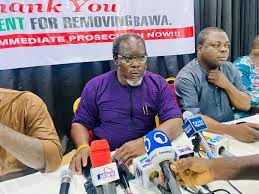
The Civil Society Legislative Advocacy Centre (CISLAC) in collaboration with other Civil Society groups have called for holistic support for anti-corruption agencies in the country to end corruption.
They said this at a news conference to discuss the state of corruption and malicious attacks on Anti Corruption institutions in Nigeria both at the national and sub national levels on Thursday in Abuja.
Mr Anwal Musa, the Executive Director, CISLAC, said there was the need to support the efforts of anti corruption agencies at grassroot and national level so that Nigeria could have peace.
“We have observed with great concern, the malicious attacks and deliberate efforts to blackmail anti-corruption agencies through sponsorship influencers, incentivised opinion publications in some national dailies.
“Online and electronic platforms, all targeted at discouraging anti-corruption efforts and shielding the kleptocrats from thorough investigation.
“The pattern is clear, there is an unfolding plot of surreptitious moves to backpedal on the progress made by anti-corruption progress.
“Procurement of political appointments by some suspected or investigated looters who are serving under the current administration as ministers, legislators, or occupying leadership positions of the ruling party,” he said.
Musa added: “Has exposed anti-corruption work to serious setback and deliberate sabotage that cripple the efficiency of the anti-corruption agencies.
“So the fight against corruption is for all of us, it is for all Nigerians because the consequences has led us to the situation we have found our selves today.”
Prof. Jubril Ibrahim, Senior Partner, Centre for Democracy and Development said corruption in the country had reached an alarming stage.
Ibrahim said that the judiciary that was supposed to checkmate corruption had been bought over by enablers of corruption and increased corruption through bribery of judges.
“There has been consented war by corrupt people to make sure that anti corruption agencies are unable to prosecute corrupt individuals and preventing such institutions from carrying out their mandate.
“We feel if we allow this destruction of the Nigerian state to continue we will not have a country and the risk is that the present tragedy of anarchy will prevail.
“We must stop this level of corruption form continuing to grow if we must survive as a country,” he said.
The Country Director, Accountability Lab Nigeria, Mr Odeh Friday, said there was need to set up ethics and integrity department in every MDA to build public trust.
He also called for the implementation of the Whistle Blowing Act to protect whistle blowers from been attacked by those they expose.
Mr Samson Itodo, Executive Director, Yiaga Africa, said upholding the rule of law was key to fighting corruption.
“Attacks on institutions that have the mandate of defending our democracy should not be encouraged, it is reprehensible, unacceptable .
“When we attack these institutions especially when they act to advance public interest we are undermining trust and the rule of law,” he said.
The Convener, Good Governance (GGT) Team, Mr Tunde Salman said that the fight against corruption should be citizen driven and not government driven.
Salman said there was need to capacitate those agencies of government that have the mandate to investigate corruption, adding that special attention should be given to them and technology should be deployed to reduce human interference.
The CSOs recommended that the National Judicial Council must diligently monitor its members and promptly remove any corrupt judicial officer found to be compromising the judicial system.
“This requires holding politicians accountable for their actions and inactions, strengthening institutions to combat corruption, and ensuring that the allocation of resources is done in a fair and equitable manner.
“We urge the ruling All-Progressive Party (APC) and other political parties to take decisive action in purging its ranks by denouncing and breaking support with their members who are currently being investigated by anti-corruption agencies.
“Adequate resource allocation to the anti-corruption agencies has become imperative to uphold their independence and enhance efficiency in the anti-corruption process.
“We urge I-G to promptly reinstate the police personnel withdrawn from the Kano State Anti-Corruption Commission, to facilitate the effective execution of Commission’s duties,” they said.
The news conference was jointly endorsed by 50 civil society organisations supporting anti corruption and Good Governance in Nigeria.(NAN)






Uncategorized
Adebayo Raises Alarm Over ‘Stifling’ of Opposition Under Tinubu, Warns of Shrinking Democratic Space
By Mike Odiakose, Abuja
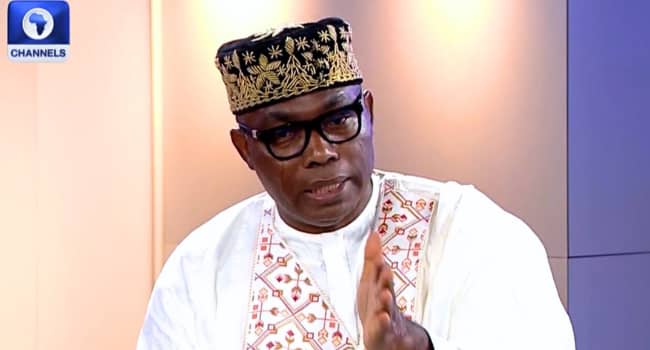
The 2023 presidential candidate of the Social Democratic Party (SDP), Prince Adewole Adebayo, has raised concerns over what he described as a growing perception that opposition parties are being stifled under the administration of Bola Ahmed Tinubu, warning that Nigeria’s democratic space may be narrowing ahead of the 2027 elections.
Speaking in an interview, Adebayo pointed to a combination of voter apathy, internal crises within opposition parties, and what many observers see as a political environment increasingly tilted in favour of the ruling government.
According to him, the weakness and fragmentation currently plaguing opposition parties cannot be separated from a broader system that appears to discourage credible alternatives and limit effective political competition.
“Strategic partners in an election are not necessarily politicians,” he said, stressing that millions of Nigerians have become disillusioned with the political process.
“If you want to have a coalition, you must find where the 80 percent who didn’t show up are and address why they stayed away.”
His remarks come amid rising concerns in political circles that the opposition’s inability to organise effectively is being compounded by a climate that critics say indirectly benefits the ruling party by weakening rival platforms.
Adebayo expressed skepticism about ongoing coalition talks among opposition figures, warning that alliances lacking discipline, credibility, and shared values could further erode public trust and reinforce the dominance of the incumbent administration.
“You cannot be talking about corruption and accountability and then align with people whose actions contradict those values,” he stated.
He also revealed that attempts by the SDP to engage with other parties have often been frustrated by internal disputes, with multiple factions from the same platforms approaching coalition discussions without resolving their differences—an issue he said reflects deeper structural problems within the opposition.
“We told them, don’t bring your internal problems into coalition discussions. Go back and organise your party first,” Adebayo said.
Despite these challenges, the SDP leader insisted that the real threat to Nigeria’s democracy lies in the growing disengagement of citizens, many of whom no longer see the political system as responsive or inclusive.
Analysts say this disengagement, coupled with persistent crises within opposition parties, reinforces perceptions that the political environment under Tinubu is becoming increasingly difficult for alternative voices to thrive.
Adebayo maintained that beyond electoral contests, the focus should be on rebuilding a system that guarantees accountability and genuine political participation.
“Some people are satisfied once the president is removed. For us, that is only the beginning,” he said.
“The real task is to replace the system with one that reflects good governance and accountability.”
His comments highlight mounting concerns within the opposition that unless the current trajectory is reversed, Nigeria risks entering the next election cycle with weakened political competition and diminished public confidence in democratic institutions.

By David Torough, Abuja
The Federal Ministry of Water Resources and Sanitation has reaffirmed its commitment to the successful implementation of the Agro-Climate Resilience in Semi-Arid Landscapes (ACReSAL) project, as stakeholders convened for a mid-term review meeting in Kaduna.
Speaking at the meeting on Thursday, the Minister of Water Resources and Sanitation, Joseph Terlumun Utsev, emphasized the ministry’s continued dedication to advancing the project’s objectives.
Utsev, who also serves as Co-Chairman of the ACReSAL Steering Committee, highlighted the ministry’s role in watershed management, flood forecasting, and the development of sustainable water infrastructure.He noted that agencies under the ministry, including River Basin Development Authorities and Hydrological Services, would remain central to strengthening early warning systems and ensuring water resource sustainability for both present and future generations.
The minister described the mid-term review as a critical milestone, providing stakeholders with an opportunity to evaluate progress, assess the effectiveness of interventions, and identify operational challenges that may be limiting the project’s impact.
He added that the meeting would also help deepen collaboration across sectors and institutions, a key factor in achieving the project’s long-term goals.
Utsev outlined priority areas for the project moving forward, including integrated water and landscape management, improved access to reliable hydrological and climate data, and the sustainability and scalability of ongoing interventions.
Also speaking at the event, the Minister of Environment, Balarabe Abbas Lawal, acknowledged the positive impact of ACReSAL on communities nationwide.
He urged state governments to enact supportive legislation to sustain the project’s gains beyond its lifecycle.
The meeting featured presentations from representatives of the Kaduna State Government, including those representing Uba Sani, as well as the Minister of State for Agriculture and Food Security, Aliyu Sabi Abdullahi, and the World Bank’s ACReSAL Technical Team Leader, Joy Agene.
The ACReSAL project is a multi-sectoral initiative aimed at building climate resilience in Nigeria’s semi-arid regions through sustainable land and water management practices.
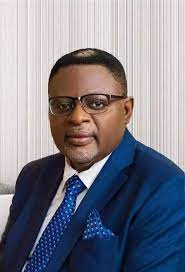
From Ene Asuquo, Calabar
The Governor of Cross River State, Prince Bassey Otu, has been conferred with an honorary doctorate degree (Honoris Causa) in Political Science by the University of Calabar (Unical).
In the same vein, Rear Admiral Garba Sadeeq Abubakar (Rtd) was also conferred with an honorary doctorate degree in Peace and Conflict Resolution.
They received the awards at the Godswill Akpabio International Conference Centre, UNICAL, during the 38th Convocation Ceremony for the award of Postgraduate and Honorary Degrees.
The Chancellor of Unical, His Highness, Sarkin Kano, Alhaji Ado Bayero, described the award as deserving, citing the invaluable contributions of the duo to national development.
He eulogized Governor Otu for his transformative leadership in Cross River State and Rear Admiral Abubakar for his distinguished service in the Nigerian Navy, emphasizing their commitment to public service and nation-building.
The Chancellor noted that the honorary degrees recognize not just their achievements, but their dedication to uplifting communities and promoting peace, making them exemplary role models for the graduating class.
He stated that UNICAL is proud to confer these awards on such outstanding individuals.
Speaking shortly after being robbed in an academic regalia, Otu said he feels honoured to receive the award, describing it as a testament to the character, discipline, and excellence Unical instilled in him as a student.
He pledged to continue partnering with tertiary institutions, especially Unical, to drive development and foster academic excellence.
Governor Otu charged graduands to dream big, stay focused, and get prepared to lead, urging them to make meaningful contributions to the society.



Benue Govt, UNICEF Train Master Trainers on Digital Learning to Boost Classroom Innovation
ShareFrom Attah Ede, Makurdi A four-day capacity-building programme aimed to strengthen digital education in Benue State has commenced in Makurdi,...
Kogi Residents Lament Abandonment of Idah Township Roads Project
ShareFrom Joseph Amedu, Lokoja Residents of Idah, headquarters of Idah local government of Kogi State have called for the intervention of Governor Usman Ododo and his...
Nigeria, Egypt, Madagascar Open with Wins at ITTF Championships
ShareNigeria, Egypt and Madagascar opened their 2026 ITTF World Team Championships campaigns with hard-fought victories at Copper Box Arena in London. Egypt started strongly but had to dig deep to beat...


France Urges Citizens to Leave Mali after Rebel Attacks
ShareFrance has urged its citizens to leave Mali “as soon as possible”, after a weekend of co-ordinated attacks by separatist fighters and Islamist militants. In an update...

JAMB Extends 2026 Direct Entry Registration to May 8
ShareThe Joint Admissions and Matriculation Board (JAMB) has extended the sale of application forms for the 2026 Direct Entry (DE) admission exercise to May 8. The board...


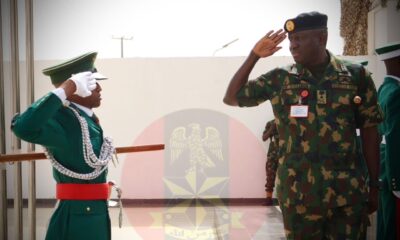
Army Adopts New Framework to Track, Improve Troop Performance
ShareThe Nigerian Army has intensified efforts to enhance operational efficiency and institutional performance through the introduction of a Standardised Evaluation Framework aimed at strengthening accountability and...
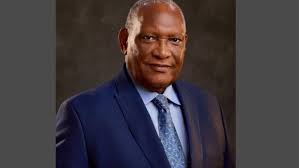

Tinubu Names Umar New NMDPRA CEO
SharePresident Bola Tinubu has approved the removal of Saidu Mohammed as the Authority Chief Executive of the Nigerian Midstream and...


Tinubu Names Bianca Odumegwu-Ojukwu Foreign Affairs Minister
ShareBy Laide Akinboade, Abuja President Bola Tinubu has appointed Ambassador Bianca Odumegwu-Ojukwu as Nigeria’s Minister of Foreign Affairs, following the...


Anxiety Mounts as S’Court Delivers Judgment in ADC, PDP Cases Today
ShareBy Mike Odiakose, Abuja A wave of political anxiety swept across Nigeria on Wednesday as the Supreme Court prepared to...

Plateau PDP Cautions Members Against Obtaining Nomination Forms From Pro-Wike Faction
ShareBy Mike Odiakose, Abuja As Nigerians await the verdict of the Supreme Court on the leadership crisis rocking the Peoples...