
DEFENCE
Cybersecurity Bedrock of NAF’s Operational Readiness – CAS

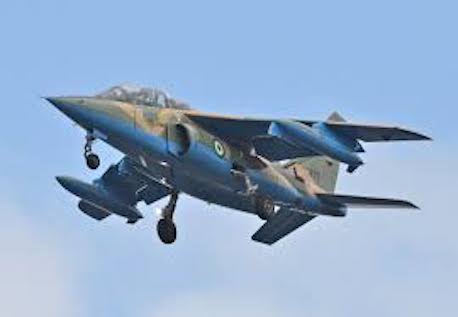
The Chief of the Air Staff (CAS), Air Marshal Hasan Abubakar, says cybersecurity is the bedrock of operational readiness and the key to mission success of the Nigerian Air Force (NAF).
Abubakar said this on Tuesday in Abuja, at the opening of NAF’s Cybersecurity Awareness Training.
He said the training was a vital initiative that would highlight the future of national security in the increasingly interconnected world, where artificial intelligence and advanced technologies play pivotal roles.
According to him, the integration of technology into warfare has ushered in a new era where digital bits and bytes are as formidable as physical bullets and bombs.
“The integrity of our nation’s defence systems, the security of our communications, and the sanctity of our data depend on the strength and resilience of our cybersecurity framework.
“For the NAF, which has distinguished itself as being more technological advanced than other services, cybersecurity is not just an IT concern; it is the bedrock of our operational readiness and the key to mission success.”
The CAS also said that the workshop would serve as a vital part of NAF’s efforts at ensuring that its personnel were equipped to meet the demands of securing the nation’s collective cyber environment.
He added that the recent global events had highlighted the severe consequences of cyberattacks, which could disrupt critical operations and undermine national security.
He disclosed that NAF’s platforms depended on secure digital communications, making them vulnerable to potential hijacking or operational disruptions.
According to him, these vulnerabilities emphasise the urgent need for a proactive and robust approach to cybersecurity within our ranks, which is precisely the focus of our gathering here today.
“Cybersecurity is a continuous journey that demands vigilance, ethical conduct, and a commitment to protecting our nation’s digital infrastructure.
“Let us continue to build a resilient cybersecurity posture that will enable us to stand ready against any threat, known or unknown that may arise in the digital age.”
In his remarks, the Chief of Communications and Information System, NAF, AVM Suleiman Usman, said the training was designed to equipped personnel with the necessary knowledge and tools to protect both physical borders and digital frontiers.
Usman explained that the training had dominated CAS’ strategic intent to develop and sustain optimal operational effectiveness in the NAF.
He said the cybersecurity training was an essential part of their collective mission to secure the integrity of NAF’s information networks.
“Cyber threats are more sophisticated than ever, hence the need for robust and resilient cybersecurity measures against evolving threats becomes ostensible.
“We are not just guarding the airspace but also protecting data, communications and systems that are integral to the success of every mission we undertake,” he said.
In his lecture titled, “Global Trends and Pillars of Cybersecurity for NAF”, Dr Asogbon Godwin, said that NAF must develop comprehensive cyber security policies and laws that addressed various types of cybercrimes.
He said that the cybercrimes include hacking, identity theft, phishing, and malware attacks.
Godwin urged the air force to invest in raising awareness about cybercrime risks and best practices for staying safe online and training investigators and prosecutors on digital forensics and other technical skills needed to investigate cybercrimes.
He also advised NAF to void ‘Bring Your Own Device (BYOD) police and also practice Zero Trust Principle.(NAN)
By David Torough, Abuja
Operations
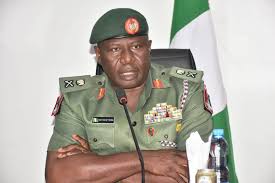
The Armed Forces of Nigeria (AFN) has recorded major operational successes across the country between 8 and 14 May 2026, neutralising terrorists, rescuing kidnapped victims, arresting criminal collaborators, and recovering weapons and stolen petroleum products in coordinated military offensives.
In a press briefing issued on Friday, the Defence Headquarters said troops operating under various joint task forces sustained aggressive land and air operations against Boko Haram, ISWAP insurgents, bandits, kidnappers, oil thieves, and separatist groups across the North East, North West, North Central, South-South, and South-East regions.
In the North East, troops of Operation Hadin Kai intercepted a terrorist logistics convoy crossing from Cameroon into Borno State along the Banki-Kumshe Road, forcing insurgents to abandon supplies including fuel, medications, motorcycle parts, and communication equipment.
Troops also repelled a large-scale attack on a military camp in Buni Gari, Yobe State, killing five terrorists and recovering heavy weapons and ammunition. However, three soldiers were killed during the encounter.
The military further disclosed that 12 abducted women and children from Ngoshe community in Borno State were rescued during clearance and air interdiction operations around the Mandara Mountains and Amuda-Gava corridor. Troops also arrested suspected terrorist collaborators and gunrunners in Yobe and Taraba states.
In the North West, Operation Fansan Yamma recorded several victories against armed groups in Kaduna, Katsina, Zamfara, and Sokoto states.
Troops rescued 32 kidnapped victims, including women and children, during an offensive in Katsina State, while multiple terrorists were neutralised in ambush and clearance operations.
Security forces also confirmed the rescue of additional kidnap victims who escaped captivity following air strikes on terrorist hideouts in Zamfara State.
Troops arrested suspected logistics suppliers and collaborators linked to terrorist networks in Kaduna State, while another patrol in Sokoto State thwarted an attempt by terrorists to destroy Nigerian Immigration Service infrastructure near the Niger Republic border.
In the North Central region, troops under Operations Savannah Shield, Enduring Peace, and Whirl Stroke intensified operations across Niger, Kwara, Nasarawa, Plateau, Benue, and Kogi states.
The Defence Headquarters said troops repelled attacks on military positions in Niger State, recovering weapons, motorcycles, radios, and ammunition from fleeing terrorists.
Security around the Ajaokuta-Kaduna-Kano Gas Pipeline remained “effective and uninterrupted,” according to the military.
Several suspected kidnappers and terrorist collaborators were arrested in Nasarawa, Plateau, and Kwara states during intelligence-led raids and surveillance operations.
In Kogi State, troops ambushed suspected terrorists along the Obajana-Jakura-Tajimi Road, killing one suspect and recovering rifles, ammunition, medical supplies, and cash.
Troops in Benue State also rescued a senior police officer, ASP Usman Ogbobi of PMF 44 Force Headquarters Abuja, alongside another victim abducted along the Ochumekwu-Ugbobi Road.
In the South-South, Operation Delta Safe rescued a kidnap victim in Edo State after suspected abductors fled upon sighting troops responding to a distress call near a hotel. Troops also recovered about 1,500 litres of stolen Automotive Gas Oil traced to Sterling Petrochemical and Fertilizer Limited in Akwa Ibom State.
The military said anti-illegal oil bunkering operations in Rivers State uncovered equipment and stolen crude oil valued at hundreds of millions of naira, including galvanised pipes suspected to be part of a crude oil theft network and nearly 7,800 litres of illegally refined crude oil.
In the South-East, troops of Operation Udo Ka intensified operations against suspected IPOB/ESN elements in Abia and Anambra states.
Security operatives arrested suspects in possession of firearms and recovered weapons during raids and clearance operations.
Troops also arrested a suspected kidnapper linked to the abduction of a resident in Umuahia South Local Government Area of Abia State after pursuing the gang across the Aba-Port Harcourt Expressway.
Authorities recovered N830,000 and a mobile phone from the suspect, while efforts to apprehend other gang members continue.
Beyond combat operations, the Armed Forces also expanded humanitarian and civil-military initiatives.
The Nigerian Air Force conducted a medical outreach programme in Maiduguri, providing free healthcare services, medications, and relief materials to hundreds of residents, including displaced persons and flood victims.
Similarly, the Nigerian Army donated 400 bags of fertiliser to farming communities in Maru Local Government Area of Zamfara State to support food production ahead of the 2026 farming season.
Chief of Defence Staff, General Olufemi Oluyede, commended troops for their professionalism, resilience, and sacrifices in ongoing operations nationwide.
He also paid tribute to personnel who lost their lives in active service and assured Nigerians that the military remains committed to defeating terrorism, kidnapping, separatist violence, and oil theft across the country.
The Defence Headquarters urged citizens to continue supporting security agencies with timely intelligence, stressing that community collaboration remains critical to sustaining operational successes and restoring lasting peace nationwide.
The Police Command in Akwa Ibom said it has arrested two suspected vandals along the Calabar – Itu highway.
The Police Public Relations Officer (PPRO), Timfom John, disclosed this in a statement in Uyo on Monday.
John said the suspected vandals were involved in looting and theft of items from an accidented truck along the Calabar–Itu highway.
She said that on Sunday at about 22; 00hrs, operatives of the command received credible intelligence through a tricycle operator regarding the activities of the criminal elements, who were vandalising a truck.
The PPRO said the police operatives mobilised to the scene and successfully arrested one suspect in possession of four suspected stolen truck tyres.
John said further investigation led to the arrest of the tricycle operator, who was allegedly used to convey the stolen items from the scene.
‘’The suspects are currently in Police custody, while efforts are ongoing to apprehend other fleeing accomplices connected to the criminal act,” she said.
She quoted the state Commissioner of Police, Baba Azare, as warning criminal elements to desist from exploiting accident scenes for acts of vandalism, looting, and theft.
Azare also said that the command would continue to strengthen surveillance and deploy intelligence-driven policing strategies to safeguard lives and property across the state.
”The command appreciates members of the public, who continue to provide timely and credible information to the police.
”We also encourage residents to remain law-abiding and security conscious at all times,” he said.

The Federal Road Safety Corps (FRSC), has advised motorists to adopt stricter safety checks and defensive driving practices as the rainy season sets in across parts of the country.
The corps Public Education Officer (CPEO), Osondu Ohaeri, gave the advice in an interview on Monday in Abuja.
Ohaeri described the rainy season as a period that required heightened caution from all road users, and urged vehicle owners to prioritised routine pre-trip inspections to ensure their vehicles were roadworthy
”Before you leave your house in the morning, carry out what we call a regular morning vehicle check.
Ensure the tyres are in good condition and roadworthy,” he said.The CPEO emphasised that tyres remained a critical safety component, noting that any defect could compromise vehicle stability and endanger passengers.
He urged motorists to also pay attention to other key components such as brakes, headlamps, rear lights and windscreen wipers, especially during night travel and rainfall.
”Beyond tyres, ensure the brakes, headlamps, rear lights and wipers are functional, particularly for night driving in the rain.
“Poor visibility and wet road surfaces significantly increase the risk of crashes during the rainy season, making safety checks and driver alertness essential,” he said.
Ohaeri further advised motorists to maintain strict discipline on the road and apply defensive driving techniques, particularly at bends, junctions and busy corridors.
According to him, safety is a shared responsibility. Drivers must be conscious of other road users and apply defensive driving at all times.
He also urged drivers to maintain full concentration while driving under wet weather conditions, stressing that distractions and negligence often led to avoidable crashes.
”This period, safety consciousness and absolute concentration are very important before you even leave your home.
”Proper vehicle maintenance and responsible driving behaviour remain key to ensuring safe journeys throughout the rainy season and beyond,” he emphasised.




Nigeria’s Inflation Rate Jumps to 15.69 Per Cent in April – NBS
ShareBy Tony Obiechina, Abuja Latest reports from the National Bureau of Statistics(NBS) indicates that Nigeria’s inflation rate for April 2026...

Troops Neutralise Terrorists, Rescue Dozens of Kidnap Victims in Nationwide
ShareBy David Torough, Abuja OperationsThe Armed Forces of Nigeria (AFN) has recorded major operational successes across the country between 8...


Security Expert, Jackson Ojo Lauds Tinubu Over Appointment of Homeland Security Adviser
ShareBy Mike Odiakose, AbujaA security expert and executive protection specialist, Dr Jackson Lekan Ojo, has applauded President Bola Tinubu over...


ARKAN Builders Celebrates Gov. Hyacinth Alia at 60, Hails Visionary Leadership in Benue
ShareBy David Torough, Abuja ARKAN BUILDERS LIMITED has joined dignitaries, stakeholders, and well-wishers across Nigeria in celebrating the Governor of...


Letting Di’ja Go Was Most Difficult Decision of My Career – Don Jazzy
ShareRecord producer and music executive, Michael Collins Ajereh, popularly known as Don Jazzy, has revealed that letting former Mavin artist,...


Can Obi Break Tinubu’s Incumbency, and Can Northern Alliances Unseat Jagaban?
ShareBy Daniel Nduka Okonkwo As Nigeria gradually moves toward the 2027 presidential election, political conversations across the country are increasingly...


Excellence Award and Alia’s Transformational Impact for Greater Benue
ShareBy Bridget Tikyaa Just last week, Accolades Dynamics Limited bestowed an award of excellence for Governor Hyacinth Alia on his...


Alia: 60 Years of Purposeful Life, Leadership
ShareRev. Fr Hyacinth Iormem Alia is marking his 60 years today in this wonderful world. It has been 60 years...


Happy Birthday to a Visionary Leader
ShareYour Excellency, Rev. Fr. Dr. Hyacinth Iormem Alia (Asortar ù Tiv) Today, history pauses; not merely to count years, but...
Gov Alia Believes in High Standards and Capability in Leadership of Benue State – Iorpev
ShareThe Technical Adviser to Benue State Governor on Media, Publicity and Strategic Communication, Chief Solomon Terver Iorpev, spoke with our...