
Agriculture
Desert Locust Invasion can Disrupt Food Security- FAO

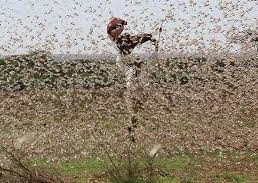
The Food and Agriculture Organisation of the United Nations (FAO) has warned that the desert locust which is the world’s largest mitigatory crop pest is capable of leading millions of people into food insecurity if left unchecked.
It said the menace of diseases and pests in West Africa is clearly evident in the considerable annual losses of up to 25 per cent of animal production and as high as 40 per cent of plant production.
FAO Representative in Nigeria and Economic Community of West African States (ECOWAS), Fred Kafeero, stated this on Wednesday in Abuja.
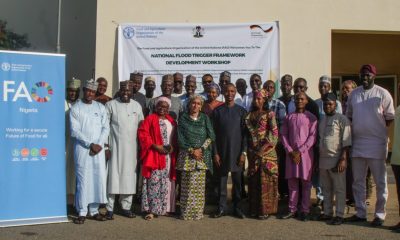
He was speaking at the opening session of the capacity building workshop for competent authorities at National level on the best practices for the anticipation and control of desert locust invasion in West Africa and the Sahel Sub-Region.
Kafeero, who was represented by the Assistant FAO Representative programme, Abubakar Suleiman, said the FAO would ensure implementation of anticipatory and early actions, provide technical assistance to countries and strengthen regional coordination to check the menace of the pest.
According to him, FAO places importance on supporting government efforts at enhancing disaster risk reduction and resilience building in line with its country programing network.
He said FAO would fight against locusts by encouraging ”no regrets” investments to strengthen countries’ preparedness and anticipatory action to safeguard the livelihood of their people.
“This will contribute to saving the livelihoods of the affected populations and increasing their resilience to the desert locust invasion.
“It is in view of implementation of this anticipatory and early actions that a technical cooperation project titled “Capacity building of ECOWAS in prevention, surveillance and control of the desert locust.
“As well that the analysis of its impact on Food security and nutrition in the Sahel during the COVID-19 pandemic’ has been developed to be implemented with the support of FAO in collaboration with the Directorate of Agriculture and Rural Development, ECOWAS Commission.
“The project is to provide technical assistance and build and strengthen the locust surveillance and control capacity of targeted countries including Cameroon, Gambia and Nigeria in the area of preparedness and anticipatory actions to prevent the desert locust invasion,” he said.
In his remarks, Minister of Agriculture and Rural Development, Dr Mohammad Abubakar, said the need for Nigeria and its neighbours within the African continent to join efforts toward the survey and management of such pests was imperative.
Abubakar, who was represented by the Chief Veterinary Officer of Nigeria, Dr Olaniran Alabi, said the training would go a long way in strengthening the capacity of field staff in responding to invasion by any transboundary pests.(NAN)







Some residents in Lagos State have expressed concern over the recent surge in the price of tomatoes, forcing many households to adopt alternatives.
The residents made their views known in separate interviews on Wednesday in Lagos.
A market survey showed that a 50kg basket of tomatoes now sells between N115,000 and N125,000, compared to between N35,000 and N40,000 recorded last month.
Olachi Igwe, a resident of Ago Palace, said the scarcity and high cost of tomatoes had disrupted her household’s meal plans.
“I contacted my usual vendor, but she said tomatoes were scarce and difficult to source.
“A small bowl we used to buy for between N3,500 and N4,000 now sells for as high as N6,000 to N7,000, when available.
“For now, my family will resort to palm nut stew (ofe akwu) until prices stabilise,” she said.
Another resident, Mercy Okeleye of FESTAC, said although her family prefers fresh tomatoes, rising prices have forced her to consider cheaper options.
“I cannot do without fresh tomatoes because of the taste, but I may have to buy broken ones, popularly called ‘esha’, which are relatively cheaper.
“I do not consider tomato paste a suitable substitute because it is not purely made from tomatoes,” she said.
Also speaking, Tope Babalola from Dopemu, said she might adjust her cooking methods if prices remain high.
“I have not bought tomatoes in over a month, but if the price is still high, I will use more onions and peppers.
“I will not resort to artificial additives; I prefer natural ingredients for my meals,” she said.
Joan Ogugua, another resident, said she had already switched to tomato paste to cope with the situation.
“I asked my son to buy tomato paste for our meals. I cannot justify spending excessively on fresh tomatoes when other basic needs must be met,” she said.
Also, Oge Ugwu, a civil servant at Lekki, said she would resort to cucumber stew with the recent price hike.
The Tomatoes Growers and Processors Association of Nigeria (TOPAN) has predicted a steady increase in the price of the produce between May and June 2026.
The Kaduna State Chairman TOPAN, Rabiu Zuntu, disclosed this in an interview recently in Lagos.
Zuntu noted that although there is no particular time for tomatoes planting season up north, seasonal weather variations can affect the production of the produce.
“Although we can plant tomatoes all-year-round, we cannot assure quality harvest all-year-round.
“Some farmers are harvesting now, while others are transplanting, and others are harvesting.
“Tomatoes are still available for sale but the price of the produce is gradually on the increase.
“Come May/June, the prices of tomatoes will be very expensive, so now is a good time to stock up the produce. There’s always a scarcity within that period.
“This is because of the nature of the weather in the north around that period, the weather is usually very hot and tomatoes cannot resist such hot temperature,” he said.
Zuntu said the price of tomatoes have started rising up in the north.
“A 50kg rafia basket of tomatoes sells from N20,000 as against N7,000 to N10,000 that was sold earlier in the year.
“While a crate of tomatoes up north is sold between N10,000 and N15,000 as against N5,000 to N6,500 sold earlier in the year.
“In most part of Kano State, where there is bumper harvest, they are rounding off their harvest. So, tomato is not that available there and most buyers have turned to where they can find it now, mostly within Kaduna State and some parts of Plateau State.
“So, that’s why the supply has decreased and the tomato supply and cost is determined by the law of demand and supply,” he said.
A 50kg basket of tomatoes in Lagos, at the moment, sells between N40,000 and N60,000 depending on the size and quality.
The Smallholder Women Farmers Organisation in Nigeria (SWOFON), Oyo State chapter, has said that the lack of irrigation facilities had become a major obstacle to dry season farming in the state.
The Chairperson of SWOFON in Oyo State, Atinuke Akinbade, said this in an interview in Ibadan on Monday.
Akinbade, who shared the experiences of women farmers in the state during the 2025 dry season, said that inadequate access to water for irrigation significantly affected the performance of many farmers during the period.
“It hindered many older farmers from participating in dry season farming and also prevented younger farmers from doing as much as they could in cultivating large acres of land,” she said.
Akinbade explained that farmers who managed to plant during the season struggled to access sufficient water to irrigate their farms, a situation worsened by the effects of climate change.
“Many farmers who depended on streams and wells to water their crops suffered major setbacks because those sources could not provide enough water for irrigation.
“Some farmers had to resort to buying water from commercial water tankers, which increased the cost of production, while at times it was even difficult to get water from the tankers,” she said.
The SWOFON chairperson warned that failure to address the problem could worsen food insecurity in the coming months.
“Even now, rainy season farming has not fully commenced because of the irregular rainfall pattern.
“This is a double burden, and if nothing is done, it may lead to serious hunger later,” she said.
Akinbade, however, acknowledged that the government had organised training for members of the association on home gardening.
She, however, said that little support was provided to address the challenges of dry season farming.
The chairman said that the home garden support package given to members consisted mainly of seedlings and one sprayer.
“They gave us two packs each of maize and pepper seeds, with six seeds in each pack, as well as one sprayer, so that we can grow food for household consumption,” she said.
Earlier, Oluwatoyin Oyedeji, SWOFON Coordinator in Oyo East, explained the severe hardship members of the organisation experienced in sourcing water for irrigation.
“Many farmers are already counting their losses because water was not available to irrigate their farms.
“Those who depended on streams and brooks were badly affected because many of them dried up, while the few that still had water had so little that farmers had to dig deeper into the ground in search of more,” Oyedeji said.
In the same vein, the Women Leader for farmers in Saki East, Musiliu Ashiru, said the absence of irrigation facilities also hampered dry season farming in her area.
According to her, many farmers still engaged in dry season farming have had to pay for water to keep their crops alive.
“Many of them buy water from the dam here to irrigate their crops. It has not been easy for them this year,” Ashiru said.




Nigeria’s Celebrity Golfer, Leo Edochie Shines at London’s Shire
ShareBy Julius Tambaya, Abuja Chief Leo Edochie, Nigeria’s number one celebrity golfer turned heads with a jaw-dropping appearance at The...


Fadahunsi, Osun and the Price of Political Rhetoric
ShareBy Willie Adegbite A video clip has placed Senator Francis Fadahunsi at the centre of a political firestorm. In it,...

What Investing in Africa Means to Aliko Dangote
ShareBy Ehi Braimah When conversations turn to investment in Africa, one name consistently dominates the discussion: Aliko Dangote. Over the...


It’s not Tinubu’, Femi Kuti Reveals Nigeria’s Real Problem
ShareAfrobeat legend, Femi Kuti has claimed that President Bola Tinubu is not the major problem facing Nigeria. He argued that...


Brain Jotter Cries out after Harassment by Lagos Touts
ShareNigerian content creator, Brain Jotter, has cried out on social media after being harassed by Lagos touts, popularly known as...


Ayra Starr’s Mother Promotes ‘Starr Girl’ Album on Lagos Streets
ShareThe mother of Afrobeats star, Oyinkansola Aderibigbe, popularly known as Ayra Starr, Nene Aderibigbe, has promoted her daughter’s forthcoming ”Starr...


Int’l Youth Day: Alia Lauds Youths for Support, Pledges More Opportunities
ShareFrom Attah Ede, Makurdi Benue State Governor, Rev Fr Hyacinth Alia has commended youths of the State for their tremendous...


Finance Ministry Blames NNPCL for Failure to Answer $3b, $722m NEITI Queries
ShareBy Eze Okechukwu, Abuja The Federal Ministry of Finance has heaped blames on the Nigerian National Petroleum Company Limited (NNPCL)...


Nollywood: Villain Roles My God-given Niche, Says Patience Ozokwor
ShareVeteran Nollywood actress, Patience Ozokwor, popularly known as Mama G, says she believes God gave her a niche to effectively...


Ruger Fumes as TikToker Wishes Him Dead over Song Lyrics
ShareNigerian musician Ruger has reacted to a TikTok user who wished him dead. It all started when the female user...