
NEWS
DSS Rescues Nine Kidnap Victims, Kills Three Gunmen in Kwara Forest

By David Torough, Abuja
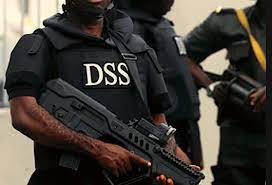
The Department of State Services (DSS) on Wednesday recorded fresh gains in the country’s fight against terrorism and kidnapping as operatives rescued nine abducted persons during a gun battle with suspected bandits in Kwara State, while the Federal Government arraigned five alleged Ansaru terrorist commanders over the abduction of students and teachers in Oyo State.
In Kwara, a joint security operation involving the DSS, the Kwara State Forest Guards, local hunters and vigilantes rescued nine kidnapped victims and neutralised three suspected bandits during an intelligence-led operation in the Obbo Aiyegunle, Ejiu Ora and Osi axis of Ekiti Local Government Area, a forest corridor bordering Ekiti and Niger states.
The rescued victims included farmers abducted from their farmlands and others kidnapped earlier in neighbouring Ekiti State. Security operatives intercepted the kidnappers as they attempted to move the captives through the forest, forcing the criminals into a fierce gun battle before they fled, abandoning their victims.
Chief Press Secretary to the Chairman of Ekiti Local Government, Prince Dada Sunday, said intelligence reports enabled security agencies to track the kidnappers, who had assembled victims abducted from different locations.
He disclosed that one victim sustained severe machete injuries to the head after resisting abduction but is responding to treatment.
According to him, three suspected kidnappers were killed during the exchange of gunfire, while other members of the gang escaped into the forest with gunshot wounds.
One of the rescued victims, Umaru Muazu of Obbo Aiyegunle, recounted how armed men ambushed him and his son, seized a motorcycle and marched them into the bush before security operatives intervened.
A member of the Kwara Forest Guards, Owolabi Adebayo, described the operation as intelligence-driven but appealed for additional operational equipment, including body armour, binoculars, night-vision devices, communication gadgets and ammunition to strengthen the fight against armed criminal groups.
The latest operation comes barely two weeks after another joint DSS and Forest Guards operation reportedly killed two suspected bandits and rescued two abducted siblings in forests spanning Isin and Ifelodun local government areas of the state.
Meanwhile, in Abuja, the Federal Government arraigned five suspected members of the Ansaru terrorist group before the Federal High Court over the kidnapping of students and teachers in Oriire Local Government Area of Oyo State.
The suspects, including two alleged Ansaru commanders and three other operatives arrested by the DSS, were brought before Justice Salim Ibrahim on terrorism and related charges.
The court adjourned the case until September 24 for the commencement of trial and ordered that the defendants remain in the custody of the DSS.
The latest prosecution follows the arrest of senior Ansaru figures during security operations linked to the rescue of the Oriire victims. It also comes days after a Federal High Court sentenced two other Ansaru leaders to life imprisonment after they pleaded guilty to terrorism-related offences.
The twin developments underscore intensified security operations and ongoing judicial efforts aimed at dismantling kidnapping and terrorist networks operating across parts of the country.
By Tambaya Julius, Abuja
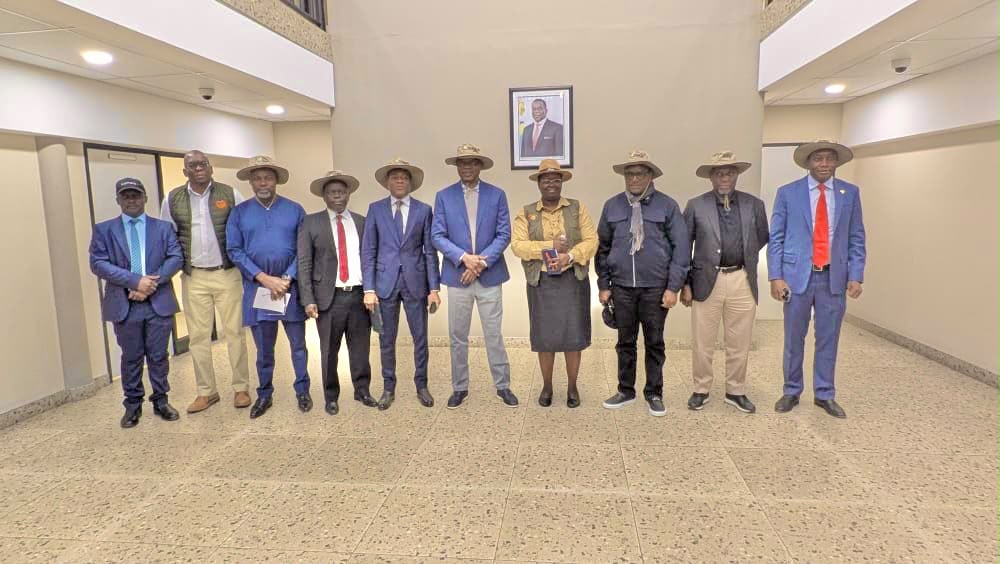
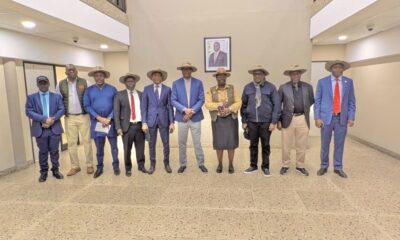
The Nigeria Customs Service (NCS) has reaffirmed its commitment to coordinated border management, trade facilitation and regional economic integration following a high-level benchmarking mission to the Beitbridge Border Post between Zimbabwe and South Africa.
The five-day mission, supported by the African Export-Import Bank (Afreximbank), brought together the Comptroller-General of Customs (CGC), Adewale Adeniyi; the Director-General of Cameroon Customs, Fongod Nuvaga; the Director-General of Benin Customs, Colonel Raouf Malèhossou Aboudou; the Acting Commissioner of Customs and Excise at the Zimbabwe Revenue Authority (ZIMRA), Lonto Ndlovu; and the Chairman of Bergmans Security Consultant and Supplies Limited, Alhaji Saleh Ahmadu.
The exercise forms part of ongoing efforts to strengthen intra-African trade and improve border operations under the African Continental Free Trade Area (AfCFTA).
Speaking during the adoption of the Joint Communiqué on Monday, Adeniyi described the benchmarking mission as a strategic opportunity for African customs administrations to move beyond policy discussions and embrace the practical implementation of modern border management systems.
He said the experiences gained from the Beitbridge and Chirundu Border Posts in Zimbabwe demonstrated that effective border modernisation extends beyond physical infrastructure.
“Beitbridge has demonstrated that border modernisation is not merely about infrastructure development. The most important lesson for us is that sustainable reform depends on coordinated institutions, clear accountability, digital interoperability and professional human capital,” Adeniyi said.
He added that the Nigeria Customs Service would apply the lessons learnt from the mission to strengthen trade facilitation, improve border security and promote economic growth across the region.
The mission featured technical sessions, executive briefings and extensive tours of border facilities, where officials examined the Beitbridge Modernisation and Concession Model, including its financing structure, operational framework, revenue management systems and coordinated border governance architecture.
The benchmarking team, comprising officials from the Nigeria Customs Service, Cameroon Customs Administration, Benin Customs Administration, Bergmans Security Consultant and Supplies Limited, and Bsmart Technologies, also inspected freight terminals, cargo processing facilities, scanning operations, traffic management systems and integrated ICT infrastructure supporting seamless border operations.
Participants said the exercise provided valuable insights into how technology, institutional coordination and performance management have transformed Beitbridge into one of Africa’s busiest and most efficient border crossings.
The Joint Communiqué signed at the end of the mission identified the Sèmè-Kraké corridor linking Nigeria and the Benin Republic, as well as the Mfum-Ekok corridor connecting Nigeria and Cameroon, as priority routes for implementing coordinated border management and One-Stop Border Post arrangements.
The Director-General of the Cameroon Customs Administration, Fongod Nuvaga, stressed the need for stronger collaboration among African customs administrations to eliminate procedural bottlenecks while maintaining effective border controls.
He said enhanced regional cooperation would enable African countries to maximise the opportunities presented by the AfCFTA and accelerate economic integration across the continent.
Similarly, the Director-General of the Benin Customs Administration, Colonel Raouf Malèhossou Aboudou, said the Beitbridge model offers practical lessons for improving border efficiency across West Africa through harmonised procedures, coordinated risk management systems and stronger institutional partnerships.
The Director for Trade Facilitation and Investment Promotion at Afreximbank, Dr Gainmore Zanamwe, said the benchmarking exercise was designed to expose participating administrations to the governance structures, operational models and institutional reforms that underpin the success of modern border posts across Africa.
According to him, while infrastructure remains important, sustainable border performance depends on accountability, coordination, technology and measurable service standards.
The mission concluded with the signing of a Joint Communiqué committing Nigeria, Cameroon and Benin to establish a Trilateral Strategic Steering Committee to drive the implementation of the recommendations arising from the visit.
The three customs administrations also pledged to pursue harmonised border procedures, digital interoperability, coordinated risk management systems and sustained investment in personnel development to promote seamless trade and deepen regional economic integration under the AfCFTA.
By Elijah Oguche, Abuja
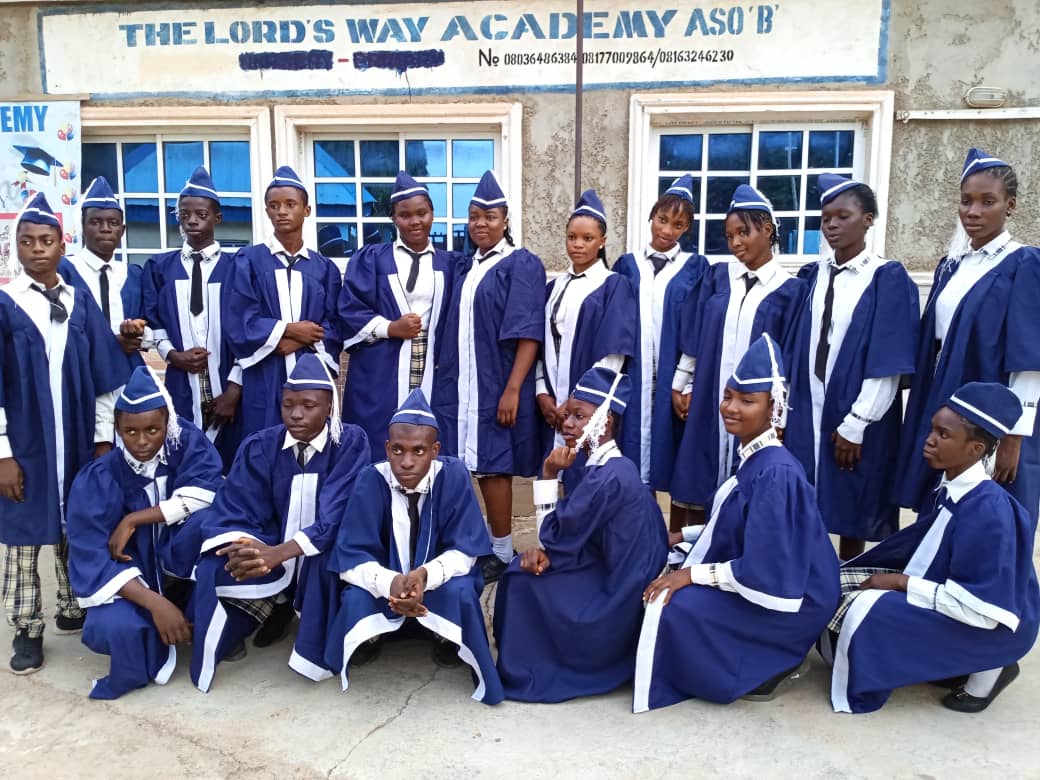
The proprietor and Director of Studies of The Lord’s Way Academy, Aso B, Mararaba, Pastor Elijah Olumuyiwa, has advised outgoing students and pupils to avoid ‘the get-rich-quick syndrome’ that is pervading the society now and to focus on their future by pursuing further academics in the various higher learning institutions of their choice.
Olumuyiwa stated this during the 9th edition of the school graduation ceremony held yesterday at the school premises.
He advised graduating students to remain focused, be academically minded, and persevere as they forge ahead in their chosen career.He said that, “As for the graduating students today, especially the outgoing SS 3 in this noble school, you have all demonstrated the uncommon features of a champion. When we talk of perseverance, obedience to school authority, commitment to your books, and avoidance of temptations and pressures to drop out, as many of your colleagues who started together did, to follow a shortcut that has cut short their knowledge today”.
He said, “I’m warning you specifically not to be deceived by “the get-rich-quick syndrome” that’s pervading society today. There are always many rooms of prosperity for people who have a positive mindset and are hardworking”.
“More importantly, always take your matters to God in prayer. Anywhere you find yourself at any point in time, be a good ambassador of your family, the Lord’s Way Academy and the society at large. We are expecting to celebrate more of your success in life by God’s grace”, he said.
Stating further that, “your determination and diligence have earned you a great honour today, just like the words of the scripture in the book of Proverbs which says, “a man that is diligent in his business shall stand before kings and not before ordinary men”, you’re fulfilled in this regard today”.
He congratulated the parents and teachers as well for helping to tutor the students to a world-class model and urged parents to always do their best in training their students/wards at home and not to leave entirely for the teachers at school.
“I’m using this avenue to thank our parents for their cooperation and understanding all along, may God continue to bless them”.
Advising the parents, he said, “Before we talk of school we will talk of family. Before talking of any religious organization we will talk of family. And that reflects the saying that “Charity begins at home” but looking at what is happening today around us, many parents have failed in their own fundamental responsibilities and yet, shifting blame on schools, religious institutions and government”.
The director concluded that “our labour over them shall not be in vain in Jesus name”.
Among the graduating students are the SS3 students leaving for higher institutions, Basic 5 students going into secondary school classes, nursery 2 pupils going into the primary section.
Highlights of the activities include display of traditional dance, prize-giving for outstanding students, speeches by the chairman of the Parents Teachers Association, outgoing students and parents, as well as exchange of gifts etc.

By Prof Uche Uwaleke
Nigeria’s current fiscal realities demand not only an aggressive drive to increase government revenues but also a deliberate effort to reduce the cost of generating those revenues. In recent months, public discourse has focused largely on expanding the tax base, improving tax compliance, and diversifying government revenue sources.
These are undoubtedly important objectives. However, far less attention has been paid to a fundamental question of public financial management: how much should the government spend to collect its own revenue?This question has become increasingly significant because Nigeria currently operates one of the most generous cost-of-collection regimes among developing and emerging economies.
Three major revenue-generating agencies namely the Nigerian Revenue Service (NRS), formerly the Federal Inland Revenue Service (FIRS); the Nigerian Customs Service (NCS); and the Nigerian Upstream Petroleum Regulatory Commission (NUPRC) are statutorily permitted to retain fixed percentages of the revenues they collect to finance their operations. The NRS retains 4% of non-oil revenues, the NUPRC retains 4% of royalties, rents and other revenues from the oil and gas sector, while the Nigerian Customs Service retains as much as 7% of customs duties and levies.Although this arrangement was originally intended to provide stable funding for critical revenue institutions, it has evolved into a funding model that raises serious concerns regarding efficiency, accountability, and value for money. Unlike most Ministries, Departments and Agencies that receive annual appropriations based on demonstrated operational needs and are subjected to rigorous budget scrutiny by the National Assembly, these agencies enjoy an automatic funding mechanism tied directly to the volume of revenue collected. As collections increase, their operating budgets also increase, regardless of whether their actual expenditure requirements have grown proportionately.
The implications of this funding structure are becoming increasingly difficult to ignore. According to data published by Agora Policy, the three agencies retained a combined N78.30 billion as cost of collection in January 2024 alone. Of this amount, the then Federal Inland Revenue Service accounted for N43.35 billion.
More strikingly, the combined cost of collection for these agencies exceeded the gross Federation Account Allocation Committee (FAAC) allocations received during the same month by four of Nigeria’s six geopolitical zones. The North-East received N56.60 billion, the North-Central N55.58 billion, the North-West N76.09 billion, and the South-East N47.75 billion. When the administrative cost of collecting revenue exceeds the monthly allocations received by entire geopolitical zones, it is evident that the issue deserves serious legislative and public attention.
The concern becomes even more compelling when Nigeria’s experience is compared with international practice. Revenue authorities across the world are expected to collect public revenue efficiently and at the lowest reasonable administrative cost. The United Kingdom’s HM Revenue and Customs operates at a cost-of-collection ratio of 0.51 percent. Across the thirty-eight member countries of the Organisation for Economic Co-operation and Development (OECD), the average cost is about 0.64 percent. Revenue authorities within the Inter-American Center of Tax Administrations (CIAT), which covers much of Latin America, average approximately one percent. Even Kenya, whose economy shares several structural characteristics with Nigeria, generally operates within a statutory range of one to two percent. Across developing and emerging economies, the average cost of collection is estimated at roughly one percent. Nigeria’s current range of four to seven percent therefore stands out as exceptionally high by global standards.
To be clear, the objective should not be to weaken the operational capacity of revenue-generating agencies. On the contrary, Nigeria requires strong, technologically advanced, and professionally managed institutions capable of maximizing revenue collection, combating tax evasion, curbing smuggling, and improving compliance. The issue is whether these objectives require a funding mechanism that automatically allocates between four and seven percent of all revenues collected, irrespective of demonstrated operational needs or measurable efficiency gains.
There is an important distinction between rewarding performance and institutionalizing inefficiency. A funding model based solely on a percentage of collections creates weak incentives for cost control because higher revenue collections automatically translate into larger operating budgets. It does not necessarily encourage expenditure discipline, prudent resource management, or continuous productivity improvements. Rather, it risks normalizing administrative expansion without corresponding gains in efficiency.
This concern is particularly relevant at a time when Nigeria has invested heavily in technology-driven reforms designed precisely to reduce the cost of tax administration and customs operations. Digital tax filing systems, electronic payment platforms, integrated customs management systems, automated risk assessment tools, data analytics, and improved taxpayer databases are intended to make revenue administration more efficient while lowering operational costs over time. If technological modernization is achieving its intended purpose, then the cost of collection should gradually decline rather than remain permanently fixed at comparatively high levels.
Equally important is the opportunity cost of the existing arrangement. Every naira retained by revenue-generating agencies as collection costs is a naira unavailable for distribution through the Federation Account. It represents resources that could otherwise support investments in education, healthcare, security, infrastructure, agriculture, social protection, and other development priorities. At a time when governments at all levels continue to grapple with fiscal constraints and rising debt obligations, improving the efficiency of revenue collection offers one of the few reforms capable of increasing available public resources without imposing additional taxes on citizens or businesses.
The current arrangement also raises broader questions of equity within public financial management. Virtually every government institution is expected to justify its expenditure through the annual budget process. Their funding is determined by assessed needs, available resources, and legislative appropriation. Revenue-collection agencies should not be exempt from the same principles of fiscal discipline merely because they collect rather than spend public resources. Indeed, institutions entrusted with collecting public revenue should exemplify the highest standards of efficiency, transparency, and accountability.
This is where the National Assembly has a particularly important constitutional and institutional responsibility. As the custodian of the country’s power of appropriation and oversight, the legislature is uniquely positioned to review whether the current statutory retention ratios continue to serve the national interest. Legislative oversight is not intended to undermine executive agencies but to ensure that public resources are managed in accordance with the principles of economy, efficiency, effectiveness, and accountability.
The National Assembly should therefore commence a comprehensive review of the statutory funding framework governing the Nigerian Revenue Service, the Nigerian Customs Service, and the Nigerian Upstream Petroleum Regulatory Commission. Such a review should include detailed examination of the actual operational costs of these agencies, their expenditure patterns, personnel costs, capital investments, technological infrastructure, and comparative international benchmarks. Public hearings would provide an opportunity for stakeholders, fiscal policy experts, civil society organizations, and the agencies themselves to present evidence on the appropriate cost of revenue administration in Nigeria.
The outcome of such a review should be legislative reforms that gradually reduce the current retention ratios by about fifty percent. A reduction from 4% to 2% for both the Nigerian Revenue Service and the Nigerian Upstream Petroleum Regulatory Commission, and from 7% to 3.5% for the Nigerian Customs Service, would still leave Nigeria above international averages while releasing substantial additional revenues to the Federation Account. Such reforms would strike a more appropriate balance between ensuring adequate operational funding and protecting public finances.
However, reducing the statutory percentages should not be viewed as an end in itself. It should form part of a broader reform agenda that promotes needs-based budgeting, periodic independent efficiency audits, greater transparency in the utilization of retained revenues, performance-based funding, and regular legislative reviews to ensure that operational costs continue to reflect changing technologies and international best practices. Funding should increasingly reward measurable improvements in efficiency, taxpayer services, customs clearance, compliance, and revenue administration rather than simply the volume of collections.
By and large, the debate is not about denying resources to critical government institutions. It is about ensuring that every naira spent on revenue administration delivers maximum value to the Nigerian people. Fiscal sustainability requires more than collecting higher revenues; it requires collecting those revenues as efficiently as possible. Countries that have successfully strengthened their public finances have done so not merely by raising more taxes but by improving the productivity and efficiency of their revenue institutions.
It goes without saying that Nigeria stands at a critical moment in its fiscal history. The demand for public investment has never been greater, yet available resources remain constrained. Rationalizing the cost of revenue collection represents a practical and achievable reform that can immediately increase funds available for national development without introducing new taxes or placing additional burdens on households and businesses. It is a reform that aligns with international best practices, promotes accountability, strengthens public financial management, and enhances confidence in government institutions.
The National Assembly now has an opportunity to lead this important conversation. By reviewing the statutory cost-of-collection framework and aligning it with the principles of efficiency, transparency, and fiscal responsibility, the legislature would not merely be reducing administrative costs; It would be reaffirming its constitutional duty to safeguard the public purse and ensuring that a greater proportion of Nigeria’s revenues is devoted to improving the lives and livelihoods of the people rather than the machinery of collection itself.
Uwaleke, a financial Economist, is former Commissioner for Finance in Imo State, and currently the Director of the Nasarawa State University Institute of Capital Market Studies.



DSS Rescues Nine Kidnap Victims, Kills Three Gunmen in Kwara Forest
ShareBy David Torough, Abuja The Department of State Services (DSS) on Wednesday recorded fresh gains in the country’s fight against...

Reps Uncover Multiple Fake State House Documents in PFIPC Probe
ShareBy David Torough, Abuja The House of Representatives Ad Hoc Committee investigating the controversial establishment and operations of the Presidential...

NCS, Regional Customs Chiefs Adopt Beitbridge Border Model to Boost Intra-African Trade
ShareBy Tambaya Julius, Abuja The Nigeria Customs Service (NCS) has reaffirmed its commitment to coordinated border management, trade facilitation and...


Avoid Get-rich-quick Syndrome, Proprietor Advises Graduating Students
ShareBy Elijah Oguche, Abuja The proprietor and Director of Studies of The Lord’s Way Academy, Aso B, Mararaba, Pastor Elijah...


NASS and the Imperative of Reforming the Funding of NRS, NCS and NUPRC
ShareBy Prof Uche Uwaleke Nigeria’s current fiscal realities demand not only an aggressive drive to increase government revenues but also...

Nigeria, ECOWAS Intensify Regional Preparedness for Emerging Health Threats
ShareBy David Torough, Abuja The Federal Government and the ECOWAS Regional Centre for Surveillance and Disease Control (RCSDC) have renewed...
Global Debt Crisis Slowing Down Developments In Our community- Residents Cry Out
ShareFrom Attah Ede, Makurdi Residents and other stakeholders have demanded for urgent reform of the global financial system, stating that Africa’s sovereign debt burden...


AIG Patrick Atayero Bows Out at 60
ShareFrom Rabiu Sanusi, Kano The Nigeria Police Academy, Wudil, Kano State, on Monday witnessed an emotional and colourful farewell ceremony...


Court Sentences Man to Death over Murder of Woman
ShareFrom Aliyu Askira, Kano A Kano State High Court, presided over by Justice Farida Dan Baffa, has sentenced one Sha’aibu...
Xenophobia, Tinubu and Ramaphosa
ShareBy Reuben Abati In the midst of the brazen, extra-judicial killings of Nigerians in South Africa, along with other Africans,...