
view point
Echoes of New Beginning

By Dakuku Peterside
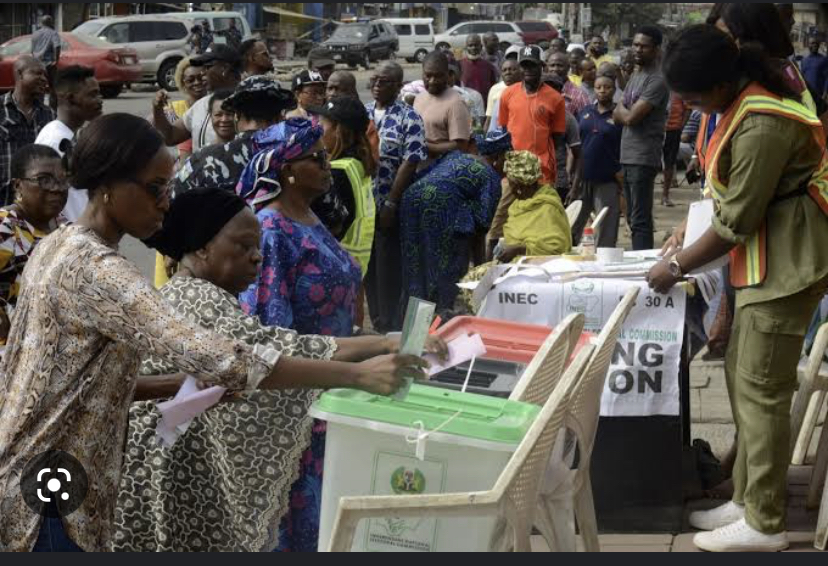
Last Saturday’s presidential election marks a new beginning for Nigeria, if not literally, then clearly symbolically. Nigerian voters defied hunger, Naira crisis and appropriated that moment as a clear point of departure from the past.
They embraced the election as if their lives depended on it. The general high level of enthusiasm lifted voter turnout and reinforced confidence in democracy. Young people saw it as a chance to “get back their country”, plagued by bad leadership and underdevelopment. The fanfare and zest with which Nigerians trooped out in their numbers to perform a ritual that may not have rewarded them in the past but still managed to sustain their hope of a better future was electric. The presidential election revealed a divided, disillusioned, and disaffected Nigeria. Despite whatever will be the election’s outcome, most Nigerians believe the electoral process is a radical improvement on previous exercises, considering the size and complexity of the country. Previous polls have been anticlimactic both in process and outcome.Nigerians hope that this election will usher in a genuine democratic leader that represents the choice and voice of the people. The elections were generally peaceful and orderly, save for pockets of skirmishes in flashpoint states where thugs disrupted the polls, carted away ballot boxes, or tactically disenfranchised voters.
Regrettably, bad habits of thuggery and violent disruptions of the process resurfaced. Blatant violent hooliganism in states like Kogi, Lagos and Rivers overwhelmed security arrangements.
According to media reports and from the account of observers, youths turned out in their numbers to vote. Voters’ turnout from observation, in general, may be better than in the recent past, where voter apathy was prominent, and there was a continuous decline in the number of voters in each subsequent general election. Most persons who observed the polls I have spoken to are cautiously optimistic that it would be a relatively free and fair election, thanks to the recent amendment of electoral act which gave legal backing to Bimodal Voter Identification System ( BVAS) and other technological devices. From snippets of results, old political fiefdoms seem to be crumbling. Nigerians have rejected politics of hate, violence, and intolerance. If this is the case, it will mark a watershed in the political history of Nigeria.
Discerning persons must have observed four different echoes and reverberations with the elections. The first echo is that INEC prepared better this time around when compared with previous elections. The level of the organisation before and during the polls shows an improved INEC operation. INEC carried out voter sensitization, conducted mock exercises and reasonably assured the public of its best intentions . The use of technology was good, as voters can even find their polling units online. The identification method in polling units was remarkable, and we must commend INEC for even using the technology in remote parts of Nigeria. The BVAS technology generally worked, with failure in few places. Overall, the quality of the election conducted has improved. This evidences that Nigerian institutions can work if we are ready to do the work required to improve them.
However, there is also an elixir of mixed feelings about INEC’s preparation for this election. INEC allowed many familiar slip ups in logistics. Backup batteries for BVAS devices were not available in most places. INEC staff turned up late in a number of places. Voting started late or did not even take place in isolated instances. But given the tripartite problem of cash scarcity, fuel scarcity and infrastructural deficiency, one can only imagine the enormous challenge of organising this election in almost one hundred and seventy seven thousand polling units nationwide. Given the recurring logistics challenges in our elections, INEC must develop better ways of solving these problems to improve Nigerians’ voting experience. It is unfair that voters turned out to vote and either did not see INEC officials or the officials came late.
This lead to some voters being disenfranchised completely, or voting spills over to the following day. Besides, INEC officials could not upload the results from the polling units. This is a critical low point of the elections. Electoral fraudsters will probably “doctor” the results to their advantage — the same complaint all over the Federation.
The second echo is the high turnout of youth voters. Traditionally, Nigerian youths are dispassionate with politics and the electoral process. This was a shame, given that they comprise a more significant part of the population. In previous elections, voter apathy among youths was high, and most young people would rather be doing anything else than queue to vote in elections. Previous election post- mortem analyses often lambast youths’ lack of interest in the electoral process. The number of young people engaged in this election is remarkable and marks a departure from the old. The overwhelming youth turnout reinforced the future as the domain of youth.
This is significant in three ways: first, it may be a sign that the youths have suddenly realised that they have a part to play in selecting the country’s leaders. Youths’engagement in social media has made them adept at sharing their political views and championing political ideas. The second is that this large turnout signifies rebellion against orthodoxy. Young people are dissatisfied with the status quo and have decided to influence their future through political mobilisation and participation. Students of political sociology may need to chart the youth’s political consciousness through the various conflicts between the young people and the system (institutions, agencies, government), as seen in the ENDSARS revolt and other pro-youth agitations. These movements have crystallised in youth political advocacy. The third is that the large turnout of youths signifies their willingness to use their strength in number to take back political control from older leaders who have captured power in Nigeria for a generation. We hope that the extension of this considerable youth turnout in the next few years will signpost the young presenting themselves in more significant numbers to be voted for and metaphorically taking back their country.
The third echo is that many Nigerians have started demonstrating faith in the electoral process.
There was also a higher than usual awareness of democratic rights as voters strongly pressed their rights and opposed those out to violate those rights. The level of political awareness is encouraging and remarkable . The mantra in this election has been that “your vote counts”, and with the new voting technology, election rigging is brought to a minimum. This has inspired confidence in many people to vote. This will deepen our democracy and its corollary good governance in Nigeria. It is also significant to note that this is the first election since 1999 where none of the presidential aspirants came from the military. Nigerian democracy is gradually growing away from the control and influence of the former military generals who captured power and have defined our politics for over fifty years. Nigerians in this election have demonstrated their love for democracy and are willing to participate when they believe in the process. I hope that subsequent actions and inactions of the political gladiators and institutions post- election will be democratic. The calling of the election result, the declaration of victors, the litigations and appeal routines, the transition process and forming of the new government are all flashpoints that must be followed with caution and due democratic tenets to sustain the democratic bubble this election has created.
The fourth echo is that Nigerians want a new Nigeria and are full of new expectations from the incoming president. The new leadership faces high expectations from Nigerians who believe we are at the breaking point and things are no longer at ease. Nigerians expect the president-elect to chart a new course for the country towards economic, technological, social, and political regeneration that will improve the living standard of Nigerians. Nigerians are tired of suffering and living in the hope of a better Nigeria which honest leaders can build from our endowments. Whoever emerges as the president has his job cut out and must quickly act before Nigerians lose their patience. Whoever is declared victorious has no option but to embark on radical reforms on all fronts. He must initiate policies and programs that address youth concerns, particularly education, employment creation, insecurity, infrastructure, and good governance.
There is no doubt that Nigerians, both at home and abroad, are expecting a new and better Nigeria going forward. The election has sent echoes reverberating across time and space for a new beginning—a fresh start for more incredible things. Building the Nigeria of our dreams is a task for all and getting the leadership right is the first step towards achieving a greater Nigeria. We must continue with the passion and optimism of the election and put them to better use in productivity and innovation. I hope our youths are awake and in tune with the realities of our time. The future is for them, and they must work hard to build it. Economic and political participation is necessary for such growth. I implore all Nigerians to dare to dream of a better, greater, and prosperous Nigeria.
Dakuku Peterside is a policy and leadership expert.







By Chijioke Okoronkwo
The recurring headline, “Another Nigerian Killed in South Africa”, has become a staple of both local and international news bulletins.
Most of these deaths result from xenophobic attacks, allegations of crime/drug dealing, and excessive use of force by the law enforcement agencies.
There are also reports of Nigerians killing Nigerians owing to criminal, cult and gang rivalries as well as business and personal disputes.
Available data from the Nigerian Union South Africa (NUSA) and the Nigerian Citizens Association South Africa (NICASA) indicates that between 2000 and 2020, more than 127 Nigerians were killed in South Africa.
Latest reports indicate that these killings continued in the subsequent years.
On Nov. 9, 2025, Mr Chikamnene Eddie Mmuonagorom, an indigene of Anambra, was stabbed to death in his home in Floville, Kimberley; On Feb. 8, Emeka Uzor, an indigene of Enugu State, was shot dead while in his vehicle at a Caltex filling station in Windsor East, Randburg, Johannesburg.
Most recently, on Feb. 11, Isaac Satlat, an indigene of Plateau, who was an e-hailing driver, was strangled to death in Pretoria by passengers (a man and a woman) who requested a ride via the Bolt app.
In the aftermath of each incident, statements and condemnations are issued and diplomatic engagements are initiated—oftentimes inconclusively. Then, another incident occurs.
The Nigerians in Diaspora Commission (NIDCOM) has consistently flayed the reoccurring menace.
NIDCOM Chief Executive Officer, Abike Dabiri-Erewa, in a statement by the commission’s Director of Media, Public Relations and Protocols, Abdur-Rahman Balogun, described the incidents as disturbing and urged South African authorities to ensure justice was served.
She also called for improved protection of Nigerians and other non-indigenes residing in the country.
Dabiri-Erewa said that that Nigeria and South Africa shared longstanding ties and expressed concern over recurring violent crimes against Nigerians.
In a similar vein, NUSA described the killings as “senseless acts of violence” and urged the South African Police Service to ensure that those responsible were promptly and fully prosecuted.
On his part, NICASA President, Mr Frank Onyekwelu, said the association condemned the killings in the strongest terms, adding that no individual or group had the right to take the law into their hands or deprive another person of life.
He urged members of the Nigerian community in South Africa to remain calm, peaceful and law-abiding as engagements continued with the Nigerian Consulate, South African authorities and human rights institutions.
While South African authorities often make arrests, the issues of diligent prosecution and conviction are not always clearly addressed.
It is worth noting that three of the accused—Dikeledi Mphela (25), Gotseone Machidi (26), and McClaren Mushwana (30)—are appearing before the Pretoria Magistrate’s Court in connection with the murder of Isaac Satlat.
In retrospect, Nigeria-South Africa relations date back to 1960, with Nigeria positioned in the vanguard of the anti-apartheid and liberation struggles.
In 1960 to 1990s, after the 1960 Sharpeville Massacre, Nigeria championed the anti-apartheid cause, funding liberation movements like the ANC and providing passports to South African activists, according to The Africa Report and Wikipedia.
In 1976, Nigeria established the Southern Africa Relief Fund (SARF) to support the anti-apartheid struggle.
More importantly, the “Mandela Tax”, a compulsory deduction from Nigerian civil servants’ salaries and voluntary donations by citizens in the 1970s, was introduced to support the anti-apartheid struggle in South Africa.
In 1994, formal, diplomatic, and economic ties were established after the end of apartheid and the start of democracy in South Africa in 1994, culminating in a Bi-national Commission (BNC) inaugurated in 1999 to manage relations.
Recall that xenophobic attacks on Nigerians and other African migrants occurred in 2008, 2015, and 2019, leading to injuries and fatalities among Nigerians in South Africa.
While xenophobic attacks seem to be abating, the killings of Nigerians under various guises are cyclical.
The disturbing trend has drawn the attention of perceptive pan-Africanists.
The President, Africa Development Study Centre (ADSC), Victor Oluwafemi, said it had become expedient for the Federal Government to summon South Africa’s High Commissioner to Nigeria over recurrent attacks on Nigerians in the country.
Oluwafemi recommended a formal engagement for clear assurances regarding the safety of Nigerian nationals in South Africa.
According to him, the safety of Nigerian citizens abroad was not a diplomatic courtesy but a sovereign obligation.
Oluwafemi said that incidents involving the killing or violent targeting of Nigerians abroad must trigger visible diplomatic action within 24 hours.
According to him, delayed responses weaken deterrence and embolden repetition.
Julius Malema, South African opposition leader and founder and leader of the Economic Freedom Fighters (EFF), denounced the killings and xenophobic attacks, applauding Nigeria’s contributions to South Africa’s freedom.
He described xenophobia as “a betrayal of African unity”.
Malema spoke recently at the opening of the 2025 Annual General Conference of the Nigerian Bar Association (NBA) held at the International Conference Centre, Enugu.
He said Nigeria was one of the countries that stood firmly by South Africa, during that country’s darkest hour.
He recalled that when South Africa was fettered by apartheid and its people were murdered, imprisoned, and denied basic humanity, Nigeria rose as a giant for justice, placing the country squarely at the centre of its corridors.
He said that Nigeria set up the Southern African Relief Fund and mobilised its citizens to contribute to the liberation struggle.
He added that Nigerian students did not only contribute through Mandela Tax, but also, through protests in opposition to apartheid.
Ultimately, while Nigerians living in South Africa are obligated to engage in legitimate business and shun criminality, pan Africanists say the authorities must fulfill their responsibility to protect foreign nationals. (NAN)
By Bola Ahmed Tinubu
Africa is paying too much to borrow.
How and on what basis the continent’s governments can secure financing should not be based on external discretion.
Calls to end the “Africa premium” — the gap between how Africa is assessed and the reality of its economies — can no longer be ignored.
Fitch, Moody’s and S&P Global Ratings, the three dominant global credit rating agencies, wield outsized influence over Africa’s access to international capital.
Their judgments shape investor behaviour, yet they consistently misjudge African risk.
Just three African countries are rated investment grade, even as the IMF projects the continent to be the world’s fastest-growing region this year.Africa is now establishing its own credit rating agency; it is a necessary corrective.
Detractors claim Africa wants to mark its own homework. The evidence suggests otherwise: a 2023 UN Development Programme report notes that “idiosyncrasies” in credit ratings cost Africa $75bn annually in excess interest and foregone lending.
An African credit rating agency would address the greatest weakness of the “Big Three”: limited on-the-ground presence.
In their models, quantitative data is weighed against subjective judgments on political risk, institutional strength and policy durability. How those judgments are reached — and how much they count — is left to opaque “analyst discretion”.
Conclusions drawn from afar fail to capture local realities. Relying on such judgments means global market cycles trump individual states’ economic fundamentals.
Many countries across the continent have export-led economies based on commodities. When prices fall or markets tighten, African nations are downgraded swiftly and broadly — even when their reserves are strong, fiscal buffers are intact and debt profiles remain manageable.
Downgrades then become self-fulfilling, raising borrowing costs and straining public finances.
But an African credit rating agency will not suffice on its own. The agency must earn the confidence of global capital with assessments anchored in the sort of timely, comprehensive data to which international markets respond.
Better data has been partly responsible for Nigeria’s recent upgrades: improving the timeliness and breadth of economic statistics; bringing previously off-balance-sheet central bank lending on to the official public debt register; rebasing GDP to reflect economic reality more accurately; publishing more budget documents to strengthen fiscal transparency.
The rest reflects hard policy choices, such as the removal of a wasteful fuel subsidy and the liberalisation of the exchange rate.
Non-oil growth has helped diversify the economy as the Naira, for the first time, decouples from global crude prices.
Even so, Nigeria’s ratings still lag behind reforms and market sentiment. Our November dollar-denominated bonds were oversubscribed 5.5 times.
Slow upward adjustments are commonplace across Africa, especially when set against the speed of downgrades. Smaller countries, lacking Nigeria’s scale and analyst coverage, bear the cost of this delay most.
A continent-wide credit rating agency will capture reform momentum in real time.
Delayed upgrades cost money: African countries cannot afford to wait years to access markets after implementing hard reforms.
Nations must stand on their own feet — especially in the wake of aid cuts. But they should be able to do so on a level playing field.
We understand that global capital will still look to the established agencies for validation. However, if an African agency can identify progress earlier, later corroborated by the Big Three, it will gain credibility while serving as an early signal to both markets and those agencies.
It is not a replacement, but a complement.
Affordable access to credit will determine whether Africa becomes the growth engine that its demographic boom promises.
By mid-century, the continent will account for a quarter of the world’s working-age population. Africa’s success is not a regional concern, but a global opportunity.
Tinubu is the President of the Federal Republic of Nigeria.(NAN)
By Ejinkeonye-Christian Phebe
Nigeria produces millions of graduates every year, among whom are hundreds with a First Class Degree. Yet, despite this steady academic output, graduate unemployment remains consistently high.
According to the International Labour Organization (ILO), youth unemployment in Nigeria stood at 6. 5% in 2025 while civil society reports suggest that as many as 80 million Nigerian youths are without decent jobs.This paradox raises a critical question: “why does formal education no longer guarantee employability?” Each year, new companies emerge and both public and private advertise vacancies.
Millions of graduates apply, hopeful that their years of academic training will finally yield results. Yet only a handful are selected, while the majority are left disappointed, frustrated, and uncertain about their future.While students invest years in formal education with the expectation of being prepared for professional roles, many struggle to transition smoothly into the workplace. Employers, on the other hand, frequently complain that graduates are Ill-prepared for the demands of modern work and are compelled to spend additional time and resources retraining new hires. At the centre of this persistent challenge lies a dangerous disconnect between higher institutions and the realities of today’s labour market.
Historically, higher institutions were designed to serve as pipelines into the workforce. Degrees were meant to be evidence of workplace readiness, competence, and value. However, with the global advancement and need to remain competitive in the fast-changing marketplace, the nature of work has changed rapidly. Globalization, technological advancement, automation, and digitalization have fundamentally reshaped how organizations operate. As a result, businesses now require a workforce that is agile, innovative, and technologically competent. Unfortunately, many educational systems have not repositioned themselves appropriately to reflect these changes.
Employers no longer merely look for academic knowledge. They are looking for individuals who can think critically, solve problems, communicate effectively, readily adapt to change, and work with digital tools. Sadly, many academic programmes still prioritize theoretical mastery, cognitive learning, and examination performance over practical application. This leaves graduates fluent in theory but unfamiliar with workplace expectations. While they may understand concepts, they end up struggling to apply them in real-world scenarios. Employers then encounter these graduates who are intelligent and eager to work, yet insufficiently equipped for immediate contribution to the execution of company objectives.
This disconnect is not a neutral gap, but one that carries significant consequences. For graduates, the outcome are often discouraging. Many experience prolonged job searches, underemployment, or complete withdrawal from the labour market. Some are forced into job roles that have little or no relevance to their academic training, while others cycle endlessly through internships, volunteer positions, and short-term engagements without clear career progression. Increasingly, many graduates turn to entrepreneurship – not necessarily by choice, but by necessity. However, without the same labour-market-relevant skills that made them unemployable, they often struggle to build sustainable businesses. The same deficiencies that hinder their employability also limit their entrepreneurial success.
For employers, the costs are both financial and operational. Organizations are compelled to invest heavily in retraining staff, a process that consumes time, resources, and managerial attention, as well as reduces productivity in the short term. Some employers therefore resort to hiring based on referrals or prior experience alone, sidelining fresh graduates entirely.
At the national level, the implications are even more severe. When education fails to translate into employability, economic growth slows, youth unemployment rises, social discontent deepens, and the demographic advantage of a young population becomes a liability rather than a strength.
The problem facing Nigerians is not a lack of intelligence or potential. Rather, it is a lack of structure, exposure, and alignment. Curriculum review and implementation processes are often slow and bureaucratic, making it difficult to respond swiftly to changing industry needs. There is also limited collaboration between institutions and employers. Many universities and polytechnics design curricula in isolation, with little input from the industries that will eventually absorb their graduates. When there is no consistent connection or relationship between institutions and employers, academic programmes become increasingly misaligned with market realities. Students graduate without exposure to real tools, real problems, and real expectations of the workplace.
Compounding this challenge is the persistent poor perception of vocational and technical education. Despite its relevance to employability, skills-based education is often regarded as inferior to traditional academic pathways. This bias, hence, limits investment, innovation, and enrollment in technical fields, further widening the gap.
Contrary to popular belief, employers are not looking for graduates with “head knowledge” alone or impressive CGPAs without substance. What they rather seek are individuals with strong foundations and capacity to build upon them. Today’s employers value problem solvers, tech-savvy professionals, creatives, innovators, and individuals who can enhance the competitiveness of their organizations. They want graduates equipped not only with cognitive skills, but also with technical and soft skills that align with market demands. These competencies cannot be developed through lectures alone. They require experiential learning, mentorship, collaboration, and consistent exposure to real work environments and tools, which remain underemphasized or entirely missing in many higher education programmes.
Fixing this disconnect requires intentional collaboration and systemic reform between organizations and institutions. Curriculum development must become more dynamic and inclusive. Higher institutions should work closely with industry experts to ensure that academic programmes reflect current and emerging skill needs. Industry relevance must be deliberately integrated into learning. Practical skill development should be embedded into teaching methodologies. Project-based learning must be prioritized, and education should not complete where affective and psychomotor learning are absent.
Experiential learning must also take center stage. Internships, apprenticeships, industry projects, and practical laboratories should be structured, supervised, and treated as essential components of academic programmes, not optional add-ons.
Furthermore, vocational and technical education must be repositioned and rebranded. Skills-based learning should be recognized as a powerful and necessary pathway to economic participation. When aligned with modern technology and market demand, technical and vocational education can provide faster, more sustainable routes to employment.
Employers, too, must play a more active role. Rather than lament skills shortages, organizations should engage institutions through mentorship programmes, guest lectures, curriculum advisory boards, and workplace training opportunities.
The future of work will continue to evolve, driven by technology, globalization, and innovation. Education systems that fail to adapt risk becoming increasingly disconnected from workplace realities. Bridging the gap between higher institutions and employers requires recognizing that both theoretical and practical learning are essential components of graduate employability and economic development. The way forward lies in collaboration, flexibility, and a shared commitment to relevance. When institutions and employers begin to speak the same language, graduates will no longer be caught in the middle. Instead, they will become critical drivers of economic growth, innovation, and Nigeria’s relevance in the global economy.
Ejinkeonye-Christian, a certified life coach, and business educator, is the CEO of Phebeon Consulting and Media Solutions Ltd, Nsukka, Enugu State, Nigeria (+234(0)708-048-0510; ceo@phebeon.com.ng).




10 Years. N1.2bn. 40+ Tertiary Institutions by 2026. OPay Is Here to Stay
ShareFor a Nigerian student, a scholarship can mean more than money. It can mean staying in school when a family...


NCS Sets Physical Screening for 2024/2025 Recruitment, Warns Candidates Against Absence
ShareBy Tambaya Julius, Abuja The Nigeria Customs Service (NCS) has fixed physical screening and documentation for successful candidates shortlisted in...
A leadership Lesson for Nigeria from Dolly Parton
ShareBy Dakuku Peterside Dolly Parton has never governed a state, controlled a public budget, or commanded the machinery of government....
NSIA’s Healthcare Journey: From Vision to Measurable Impact
ShareBy Tony Obiechina At the Nigeria Sovereign Investment Authority NSIA), the mandate to deploy patient capital is anchored in a...


Messi Legacy will Live Forever, Says Beckham
ShareDavid Beckham said Lionel Messi’s “legacy will live forever” after the Argentina legend announced his retirement from international football. Messi...


Katsina, UNICEF Inaugurate Campaign against Diphtheria, Malnutrition
ShareThe Katsina State Government, in collaboration with the United Nations Children’s Fund (UNICEF), has intensified sensitisation on diphtheria prevention and...

JAMB, WAEC Clarify N4,000 One-off O’Level Result Verification
ShareThe Joint Admissions and Matriculation Board (JAMB) and the West African Examinations Council (WAEC) have clarified that candidates seeking admission...


NYSC Commends Security Agencies for Rescue of 16 Abducted Corps Members
ShareThe National Youth Service Corps (NYSC) has commended security agencies and other groups for the successful rescue of 16 corps...

NAPTIP Urges CSOs to Expose Criminal Elements
ShareThe Director-General of the National Agency for the Prohibition of Trafficking in Persons (NAPTIP), Hajia Binta Adamu-Bello, has charged the...


NEMA, FRSC, Fire Service Step up Early-warning, Preventive Safety Measures
ShareThe National Emergency Management Agency (NEMA), Federal Road Safety Corps (FRSC) and Federal Fire Service (FFS) have intensified preventive measures...