
Foreign News
ECOWAS Convenes Meeting in Ghana on Withdrawal of Niger, Mali, Burkina Faso

The Economic Community of West African States (ECOWAS) Council of Ministers has convened a meeting in Accra, Ghana, to deliberate on the withdrawal of Niger, Mali, and Burkina Faso from the regional bloc.
The Chairman of the Council, Nigeria’s Minister of Foreign Affairs Amb.
Yusuf Tuggar, made this known in a statement issued by Alkasim Abdulkadir, his Special Assistant on Media and Communications Strategy.“The Extraordinary Session follows directive from the Authority of Heads of State and Government during its 66th Ordinary Session, mandating the Council to adopt modalities and a contingency plan for the disengagement of the three Sahelian nations.
“The ECOWAS Commission is expected to present memoranda addressing the withdrawal process, suspension of programmes in the affected countries, and challenges related to the free movement of people, goods and services.
“Additionally, the Council will examine the potential relocation of ECOWAS institutions and agencies currently based in Burkina Faso, Mali and Niger with an eye toward mitigating any disruptions caused by their exit,” Tuggar said.
He said the session marked a difficult moment in ECOWAS’s history, adding it was never the community’s wish to deliberate on the withdrawal of member states.
“In recognising the sovereignty of these nations under their current military governments, we must now adapt and chat a forward-looking path”.
He urged the ministers to embrace institutional renewal and recommitment to regional integration, emphasising ECOWAS remain the most integrated regional bloc in Africa, underpinned by harmonised policies and shared vision for political, economic and security cooperation.
“As we look ahead, our responsibility is to maintain the ECOWAS legacy and pass it on stronger to the next generation. Our unity has been tested before and we emerged stronger. We will do so again,” he stated.
The chairman of the council stressed the need for the ministers to engage in constructive deliberations and ensure the effective implementation of the countries withdrawal, reaffirming ECOWAS remain the premier platform for tackling West Africa’s collective challenges.
“Membership, as the saying goes, has its privileges,” he added.
He expressed appreciation of member states to the government and people of Ghana for their hospitality in hosting the critical session on sideline of the inauguration of “ECOWAS@50” celebrations.
The minister described the commemorative activities as timely reflection of the bloc’s achievements and aspirations, saying the gathering demonstrated unwavering commitment to advance the sub-regional community and fulfill ECOWAS’s core purpose.
NAN reports that on Jan. 29,Burkina Faso, Mali and Niger formally withdrew from the regional bloc.
The military-led governments in the three West African nations decided to withdraw from the bloc, and formed their own security alliance, the Alliance of Sahel States, in September 2023.
With the withdrawal of the three states, ECOWAS now has 12 members. (NAN)

A 13-year-old boy was killed after part of a fountain collapsed in Salamanca province, northwestern Spain, during the country’s World Cup victory celebrations.
Two other young people were injured, emergency services said, including one child who was taken to hospital with a possible broken bone in his leg.
People were celebrating Spain’s victory inside the Árbol Gordo fountain in Salamanca’s Ciudad Rodrigo, when it partially collapsed around 00:30 local time (23:30 BST).
“What was supposed to be a celebration for the victory in the Spanish National Football Team’s World Cup has turned into a tragedy,” Ciudad Rodrigo’s town hall posted on social media.
Emergency services for Castilla y León said it had received several calls about the collapse of the fountain. Part of the structure gave way after several people climbed on it to celebrate Spain’s win, local media reported.
The emergency service said it had notified the city’s local police, as well as Salamanca’s Civil Guard, its fire brigade and the local emergency medical service – which dispatched a mobile intensive care unit and a basic life support ambulance to the scene.
The emergency medical service later requested the presence of the Civil Guard at the local health centre to investigate the death of the boy who was treated there, the Castilla y León’s regional government’s website said.
It also requested the Civil Guard activate psychological support for the family.
The city’s council said it “hopes for a speedy recovery of the others who have been affected by the incident”.
Spain beat Argentina 1-0 in the World Cup final on Sunday after Ferran Torres scored in extra time.
It is the country’s second ever World Cup win, after their last victory in 2010.
Earlier this month, three people died from suffocation during World Cup celebrations in Mexico City, while a 30-year-old man also died in an epileptic crisis.
Older teenagers in the UK will face an overnight social media curfew, the government has announced – though they will be able to opt out of it by changing their account settings.
It would mean apps such as Instagram, TikTok and YouTube being set to be unavailable by default to 16 and 17-year-olds between midnight and 06:00.
The government also wants “addictive” features such as auto-play and infinite scroll to be set to be disabled, saying – combined with the curfew – the measures will improve teenagers’ focus, sleep quality and family life.
However, campaigners such as Ellen Roome, who believes her 14-year-old son Jools Sweeney died in an online challenge gone wrong in 2022, does not think the plan goes far enough as teenagers can switch the setting off.
The new plans follow the announcement in June that under-16s in the UK would be banned entirely from a range of platforms.
It adds to a complex – and potentially confusing – mix of policies and measures from the government and tech firms intended to keep young people safe online.
They include optional parental controls over children’s devices and child-only versions of popular sites such as YouTube.
Lorna Woods, professor of internet law at Essex University, said she felt the measure was designed to target apprehensions from parents and child safety groups.
“There have been concerns about the way services keep children and young people engaged on their phones for long periods, and that this can impact their sleep, amongst other effects,” she said.
Meta, which owns Facebook, Instagram and WhatsApp, has previously said it wants age verification to be handled by manufacturers of devices themselves, rather than the onus being entirely on platforms.
Apple recently introduced such “device level” age checks, meaning anyone using iPhone and iPads with the latest version of their operating software will be asked to verify their ages.
Baroness Kidron, who has strongly campaigned for safety and age assurance measures to be at a device rather than app level, was critical of the government’s approach.
She said it should not be about “banning children from tech” but “banning tech from putting toxic products in the hands of children”.
Online safety minister Kanishka Narayan defended the action the government had taken, said the combination of the curfew and limiting auto-play features meant that “Britain is already going to be the most robust place in the world when it comes to regulating” tech companies.
In an earlier statement, Technology Secretary Liz Kendall said the measures would be “crucial in helping young people get the sleep they need, focus on school and college, and spend more quality time with family and friends, all of which are fundamental to building a happy, healthy and fulfilling adult life”.
Laura Trott, the Conservative shadow education secretary, described the plans as a “dog’s dinner”.
The government said further measures would be aimed at helping children use AI chatbots safely including by making providers introduce regular breaks for under-18s.
It said it will aim to lay its new proposed measures in front of Parliament by the end of 2026, with the aim that they take effect alongside its social media ban for under-16s next spring.
But some child safety charities and experts have cast doubt on the effectiveness or promise of a midnight curfew for older UK teens.
He added that Prime Minister Sir Keir Starmer “leaves office having announced a social media ban without a plan” with his likely successor Andy Burnham to “inherit a series of missed opportunities”.
Prof Sonia Livingstone, an expert in children’s digital rights at the London School of Economics, said a curfew could harm vulnerable children by limiting their access to social media when they might need it most.
Dame Rachel de Souza, children’s commissioner for England, said: “We have to listen to young people. They don’t want a ban, but they do want to be protected from addictive, infinite scrolling.”
Meanwhile, social media analyst Matt Navarra said the measure was “not a curfew” but a “mildly annoying settings prompt with a government press release attached”.
Previous attempts to restrict what young people can see online – for example Australia’s social media ban – have been hampered by VPNs, which can hide the true location of an internet user.
But the government said it would not be taking any action to restrict them in the UK for now, saying they were useful for whistle-blowers, minority groups and family privacy.
It cued findings from research it commissioned which indicated there was little to show VPNs were being used by many children to get around age checks.
In a report published on Tuesday, the government said it had trialled a selection of different options with 300 teens, and found an overnight curfew showed sleep benefits.
But Pete Etchells, professor of science communication at Bath Spa University, cautioned against the results – saying it was merely “one part of the puzzle” in restricting tech use.

The 2026 UN Global Business Forum on the Sustainable Development Goals (SDGs) has concluded, with participants calling for a greater role for the private sector in achieving the goals.
This year, the forum was held under the theme “Business and the Real Economy: Delivering Sustainable Development in a Changing Global Context”.
Business leaders, government representatives, and international organisations discussed the contribution of the private sector to accelerating progress towards the SDGs.
Participants focused on Goal 9, dedicated to industry, innovation and infrastructure, as well as the implementation of action 55(c) of the Pact for the Future.
The document was adopted by UN Member States at the Summit of the Future in 2024 and outlined directions for modernising global governance and accelerating the implementation of the 2030 Agenda for Sustainable Development.
Action 55(c), in particular, provides for strengthening cooperation with the private sector and increasing business accountability. The business forum programme included two thematic discussions.
The first focused on key trends shaping modern industrial policy, including digitalisation, the development of artificial intelligence, the green transition and the transformation of global supply chains.
During the second session, participants examined practical aspects of implementing action 55(c) at the national level, presenting examples of cooperation between government bodies and businesses, including in the preparation of Voluntary National Reviews (VNRs).
Opening the forum, CEO and Executive Director of the UN Global Compact, Sanda Ojiambo, noted that timely investments in sustainable development can become a driver of global economic growth and energy transformation.
In turn, Chair of the Board of the UN Global Compact Network in Central Asia, Umut Shayakhmetova, highlighted the importance of regional cooperation in achieving the Sustainable Development Goals.
Fatou Haidara, Deputy to the Director-General and Managing Director of the Directorate of Global Partnerships and External Relations (UNIDO), said that private business has already become a major driving force behind modern industrial transformations.
“When we think about the future of industrialisation, we can say that the private sector is already at the centre of ongoing transformations from the green transition to the restructuring of global supply chains.
President and CEO of the African Finance Corporation (AFC), Samaila Zubairu, said that the continent has reached a point where it needs to move from discussing financing needs to creating competitive economies.
The speeches by forum participants were complemented by assessments from representatives of the technology sector, who highlighted the importance of digital solutions in advancing the sustainable development agenda.
Valery Sherman, Technical Director of MEFERI, said the agenda of the SDG Global Business Forum reflects an important trend being increasingly assessed not through declarations but through real changes in the economy.
The outcomes of the forum are expected to be used in preparing subsequent intergovernmental events in 2026, including the Private Sector Forum and the United Nations Water Conference.
The SDG Global Business Forum was held as a special event within the framework of the High-Level Political Forum on Sustainable Development (HLPF).
Its theme in 2026 is “Transformative, Equitable, Innovative and Coordinated Actions for the Implementation of the 2030 Agenda”.
During the HLPF, an in-depth review of five Sustainable Development Goals is being conducted, while 36 countries, including Brazil, Tanzania, Saudi Arabia and Uruguay, will present their Voluntary National Reviews.




Cardi B Breaks Silence on Rumours Linking Her with Okoye
ShareAmerican rapper Cardi B has reacted to growing speculation surrounding her friendship with Super Eagles goalkeeper Maduka Okoye, following recent...
Ghost Workers, IPPIS Fraud, and Lessons from the N941m Forfeiture
Share By Nafisat Bello “Ghosts are supposed to haunt abandoned buildings, not government payrolls. They do not possess bank accounts, collect...


Minister Commends Yusuf on Education Transformation, Others
ShareFrom Rabiu Sanusi Kano The Minister of Education, Dr. Ma’aruf Tunji Alausa, has commended Kano State Governor, Alhaji Abba Kabir...


NDIC Begins Payment to Depositors of 46 Failed MfBs
ShareThe Nigeria Deposit Insurance Corporation (NDIC) has begun paying insured deposits to customers of the 46 recently failed microfinance banks....
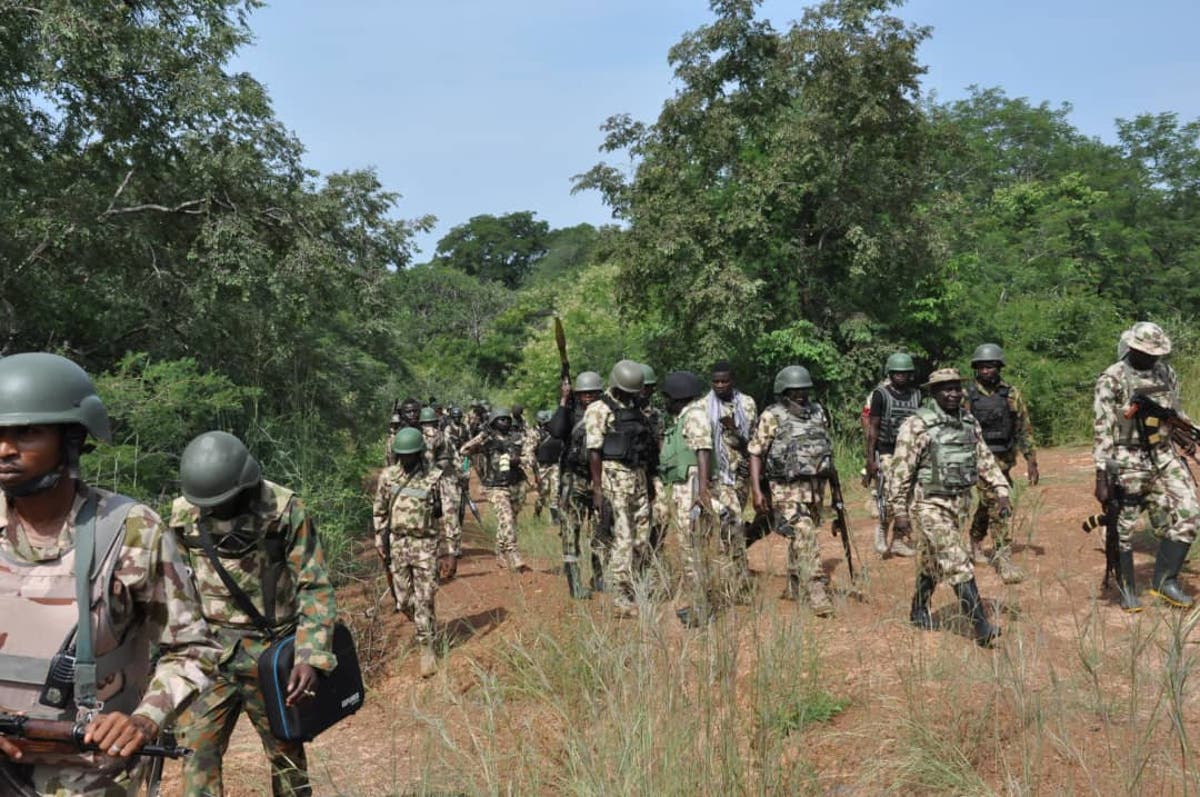
Troops Rescue 16 Kidnap Victims, Nab Terrorist Logistics Suppliers
ShareThe Nigerian Army says its troops have rescued 16 kidnapped victims, apprehended suspected terrorist logistics suppliers and informants, and recovered...
Army Commissions Ten Unit SNCOs Quarters in Gusau
ShareFrom Ifeanyichukwu Nwannah, Gusau. In a continuous effort to improve the welfare and living conditions of Nigerian Army personnel, the...


Zenith Bank Recognised As Africa’s Best Bank & Nigeria’s Best Bank At The Euromoney Awards For Excellence 2026
ShareBy Gemini Zenith Bank Plc has been named “Africa’s Best Bank” and “Nigeria’s Best Bank”, the latter for the second...


OPay Unveils Tech Engine, Eyes One Billion Users
ShareFinancial technology giant, OPay, has pulled back the curtain on the complex engineering infrastructure driving its payment ecosystem, revealing a...

NAICOM Lauds Senate on Passage of National Insurance Regulatory Commission Bill
ShareBy Tony Obiechina, Abuja The National Insurance Commission (NAICOM) has commended the Senate leadership for the successful passage of the...
AU Constitution Must Be Reviewed to Empower Sanctions Against Xenophobia And Other Forms Of Discrimination
ShareBy Isaac Asabor The AU derives its authority from the Constitutive Act of the African Union, which outlines the powers...