
NEWS
EFCC Boss Seeks Stronger Collaboration against Trans-border Crimes

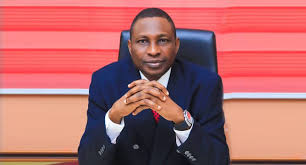
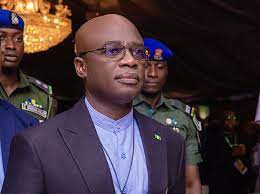
Chairman of the Economic and Financial Crimes Commission (EFCC), Ola Olukoyede, has called for stronger collaboration to curb trans-border crimes and enhance peace, stability, and economic prosperity of the sub region.
Olukoyede, who is also the President of Network of National Anti-Corruption Institutions in West Africa (NACIWA), made the call on Wednesday at the 7th Annual General Assembly of the network in Abuja.
He expressed gratitude to delegates and reaffirmed NACIWA’s role as a unifying platform for regional anti-corruption collaboration.
He urged members to use the Assembly as “a renewal of vision, leadership, and unwavering commitment to combating corruption, which remains a key obstacle to our region’s development and stability.
”He stated that the network had proposed its formal recognition as a Technical Commission under ECOWAS Protocol Article 19, which would institutionalise coordination on investigations, asset recovery, and anti-corruption policies across the subregion.
“We must acknowledge the evolving landscape in which our institutions operate.
“Political transitions, security concerns, and governance challenges across member states underscore that our fight against corruption cannot be divorced from broader considerations of political stability and social justice,” Olukoyede stated
He highlighted the network’s achievements since assuming office in 2022, noting that despite challenges, the current executive committee has repositioned NACIWA into a “more dynamic and credible platform for regional collaboration.”
According to him, the organisation has achieved several key milestones. Among these are enhanced regional visibility and formal recognition by ECOWAS.
“Institutional strengthening has been achieved through the establishment of a permanent secretariat in Nigeria. Additionally, financial operability has been ensured through standardized membership dues and control mechanisms.
“It has also deepened partnerships with key stakeholders, including ECOWAS, UNODC, and the AU Anti-Corruption Board.
“Other highlights include observer status at the GlobE Network and the designation of the EFCC Academy as a Centre of Excellence for capacity development.”
Similarly, Sen. Emmanuel Udende, Chairman, Senate Committee on Anti-Corruption and Financial Crimes, said the event’s theme was timely, given corruption’s role in insecurity and poor governance.
“Its trans-border nature demands we go beyond national efforts to embrace strong regional cooperation, intelligence sharing, and joint asset recovery,” he said
He pledged the legislature’s support in providing the necessary legal framework for international cooperation.
Also speaking, Rep.Ginger Onwusibe, Chairman, House Committee on Anti-Corruption and Financial Crimes, represented by Nnamdi Ezechukwu, emphasised that “corruption does not respect borders.
President of the ECOWAS Commission, Dr Omar Touray, represented by Vice President Damtien Tchintchibidja, praised EFCC’s leadership for strengthening NACIWA’s role in fostering regional synergy.
Other dignitaries include Amb. Gautier Mignot, Head of the EU Delegation to Nigeria and ECOWAS; representatives of UNODC, International IDEA, Code of Conduct Bureau, and civil society organisations.
The event also featured a panel discussion moderated by Yusuf Rafsanjani of CISLAC, with panelists drawn from Liberia, Côte d’Ivoire, Sierra Leone, Guinea, and Nigeria.
The discussion focused on strategies for strengthening collaboration in asset recovery and information exchange.
The Assembly concluded on Wednesday, with a renewed commitment by participants to deepen regional cooperation, harmonize legal frameworks, and advance collective action against corruption and financial crimes in West Africa.
 | ReplyForwardAdd reaction |

By Laide Akinboade, Abuja
The Nigeria Union of Teachers (NUT) FCT Wing, at the weekend said it has concluded an arrangement to commence indefinite strike over non implementation of the N70,000 Minimum Wage and the payment of nine months’ arrears to the Primary School Teachers in the Federal Capital territory (FCT).
This was contained in a communique issued by the State Chairman, Abdullah Shafa, state secretary, Margaret Jethro and State Publicity Secretary, Ibukun Adekeye, after the State Wing Executive Council (SWEC) meeting in Abuja.
They commended the FCT Minister Nyesom Wike for his intervention on 11th March 2026, which expired on 19th March, 2026.
But they lamented that the Minister’s intervention, which facilitated the suspension of the Fourteen-week Strike by the Primary School Teachers on 9th July, 2025, is yet to be addressed.
They acknowledged that the Minister, in order to resolve the issue constituted a committee on the 7th July 2025 with a mandate to, within two weeks, harmonize all outstanding entitlements of Primary School Teachers and make appropriate recommendations that would lead to a permanent solution to the frequent industrial disputes involving FCT Primary School Teachers. Committee concluded its assignment and submitted its report in August 2025, however, the report is yet to be made public.
According to the communique, the FCT teachers lamented that they don’t know the reason for the unexplained delay in the implementation of the committee’s report and the continued silence on the legitimate demands of teachers amid the prevailing harsh economic realities in the country, particularly in the FCT.
It would be recalled that SWEC, at its session on 11th March 2026, issued a seven day ultimatum within which to:
“Release and implement the report of Primary School teachers’ outstanding entitlements, Remove the “Vacancies” precondition for the promotion of classroom teachers and totally review the 2024 promotion exercise conducted by the FCT Civil Service Commission to allow for the unhindered promotion of eligible teachers”.
The teachers are concerned that following the expiration of the Seven-day ultimatum on 19th March 2026, including the additional twenty eight day grace period granted to the authorities to enable them to intensify efforts towards meeting the demands of teachers as requested, there has been no tangible response from the authorities to all the industrial issues raised in our ultimatum.
“After exhaustive deliberations on the industrial issues that necessitated the seven-day ultimatum, and considering that the silence on the legitimate demands of teachers’ welfare and a threat to the stability of education in the territory, the meeting resolved that all Public Primary and Secondary School Teachers in the FCT shall, with effect from Monday, 20th April 2026, proceed on an indefinite Strike until the demands of the Union are met.
“The Union hereby directs all Public Primary and Secondary School Teachers in the FCT to comply with this directive and await further instructions from the Union”, the communique noted.
They therefore advised Parents to keep their children and wards in Primary and Secondary Schools safe at home until further notice.
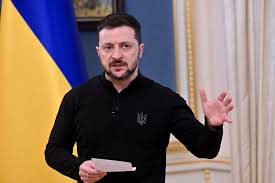
Ukraine’s President Volodymyr Zelensky has condemned a US decision to extend the period during which Russia is allowed to sell oil despite Western sanctions.
The move means countries can purchase Russian oil and petroleum products already loaded on vessels at sea until 16 May.
The US argues that the waiver is meant to ease the energy supply crunch sparked by the US-Israel war with Iran.
But in his remarks on Sunday, Zelensky said “every dollar paid for Russian oil is money for the war” in Ukraine. Widespread sanctions have been in place against Russia since President Vladimir Putin launched his full-scale invasion of its neighbour in February 2022.
The devastating US and Israel attacks against Iran have prompted it to retaliate not only against Israel and US military bases in the Gulf, but also against energy fatalities and other civilian sites across Arab allies of the US in the region.
Additionally, Iran has virtually shut the Strait of Hormuz – the narrow passage where some 20% of the world’s oil and liquefied natural gas (LNG) is usually transported through.
This has led to turmoil in energy markets, with fears that a world recession may ensue if it is not reopened soon.
The US move to ease Russian sanctions on 13 March was widely condemned by Zelensky as well as his European allies.
Extending the waiver on Friday, the US said it wanted “to ensure oil is available to those who need it” as negotiations to end the war “accelerate”.
The Ukrainian leader said Russia had more than 110 tankers from its “shadow fleet” – vessels with obscured ownership designed to help it bypass sanctions – with “over 12 million tons” of oil.
Their sale, he added, would bring $10bn (£7.4bn) to Moscow’s coffers as “a resource that is directly converted into new strikes against Ukraine”.
The Ukrainian leader did not explain what those figures were based on.
But he added that just over the past week, Russia had launched “over 2,360 attack drones, more than 1,320 guided aerial bombs, and nearly 60 missiles of various types at our cities and communities”.
That included the deadliest attack against Ukraine in months on 15 April during which more than 700 drones and missiles were used in multiple waves in one night, killing at least 18 people.
Ukraine has also attacked Russia, particularly focusing on energy facilities.
However, despite ongoing attacks, a stalemate has been reached in the war in Ukraine, with Russia in control of about 20% of Ukrainian territory.
Efforts led by the US to end the war have been put on hold as a result of the war in Iran.

From Francis Sadhere, Delta
The Delta State Government has reaffirmed its commitment to boosting food security through the development of a clear and practical implementation work plan aimed at transforming the state’s food systems.
The Commissioner for Economic Planning, Sonny Ekedayen, made this known during a two-day Implementation Work Plan Development Workshop organised by the State Steering Committee on Food Systems Transformation Pathways (FSTP).
Ekedayen, who was represented by the Acting Permanent Secretary, Martina Amromanoh, highlighted the central role of food systems in driving economic growth, supporting livelihoods, and improving public health.
“Food is central to our daily lives. When the food system works well, people live better lives and economies grow stronger,” he said.
He, however, expressed concern over the growing pressure on food systems, noting that food is becoming increasingly expensive, unsafe, and less nutritious.
He added that hunger and malnutrition are rising, particularly among women and children, with negative impacts on health, education, and overall well-being.
The commissioner revealed that about 40 percent of Nigerians live in poverty, spending less than ₦137,430 per person, while access to nutritious food remains inadequate.
He also pointed to the increasing prevalence of diet-related illnesses such as hypertension and diabetes, stating that roughly one in every sixteen adults is affected by diabetes.
“These challenges show that we are off-track in achieving the Sustainable Development Goals by 2030. It is not just about producing more food, but ensuring it is safe, nutritious, accessible, and sustainably produced,” he added.
Ekedayen disclosed that Delta State has now been fully integrated into the national food systems transformation agenda following the approval of the State Steering Committee by Governor Sheriff Oborevwori.
He noted that the state has strong agricultural potential in areas such as cassava, plantain, oil palm, fisheries, and horticulture, which could significantly enhance food security and economic growth if effectively harnessed.
He urged stakeholders at the workshop to collaborate actively to ensure the successful implementation of the plan.
The Secretary of the Steering Committee, Efe Orherhe, said the initiative is expected to improve food availability, affordability, safety, and nutrition, while also enhancing livelihoods across the state.
He added that Delta now has an approved Food Systems Transformation Work Plan to guide implementation from 2026 to 2030.
In separate presentations, Clementina Okoro of the Federal Ministry of Budget and Economic Planning provided an overview of the national framework, while Julius Alikuna stressed the need for inter-ministerial collaboration to ensure sustainable food production and supply.


FCT Primary School Teachers Commence Indefinite Strike Today
ShareBy Laide Akinboade, Abuja The Nigeria Union of Teachers (NUT) FCT Wing, at the weekend said it has concluded an arrangement to commence indefinite strike over...
U-17 WWCQ: Guinea Thrash Niger to Set up Clash with Flamingos
ShareGuinea will face Nigeria’s Flamingos in the final qualifying round for the 2026 FIFA U-17 Women’s World Cup. The Guineans defeated...

Zelensky Condemns US Extension of Russian Sanctions Waiver
ShareUkraine’s President Volodymyr Zelensky has condemned a US decision to extend the period during which Russia is allowed to sell oil despite Western sanctions. The move means countries can...

Delta Unveils Plan to Tackle Hunger, Boost Food Security by 2030
ShareFrom Francis Sadhere, Delta The Delta State Government has reaffirmed its commitment to boosting food security through the development of a clear and practical implementation work plan aimed...
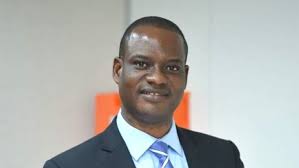

FG Debunks False Allegation on Hidden Agenda, Federal Revenue Diversion
ShareBy Tony Obiechina, Abuja The federal government has refuted media reports to the effect that a significant portion of federation earnings is...

Petrol Consumption Hits 4.93bn Litres in Q1
ShareNigerians consumed about 4.93 billion litres of Premium Motor Spirit (petrol) to fuel various economic activities in the first quarter...

Religious Leaders Decry Rising Killings, Economic Hardship
ShareBy David Torough, Abuja Growing insecurity across Nigeria has drawn fresh concern from religious leaders, even as the military reports...

Abducted UTME Candidates Regain Freedom, Seek Second Chance
ShareFrom Attah Ede, Makurdi A unified picture of relief, controversy and ongoing examination processes emerged on Sunday as authorities confirmed...


Sultan wasn’t invited to Ecumenical Chapel Event – CAN
ShareBy Laide Akinboade, Abuja The Christian Association of Nigeria (CAN) at the weekend, dismissed a misleading opinion and related social...


Joseph Undu Bags National Safety Personality Award in Lagos
ShareBy David Torough, Abuja Award-winning Nigerian journalist and security analyst, Joseph Saater Undu, has been shortlisted for the prestigious Safety...