
NEWS
Eid-el-Fitr: Okowa Calls for prayers to Fight Insecurity

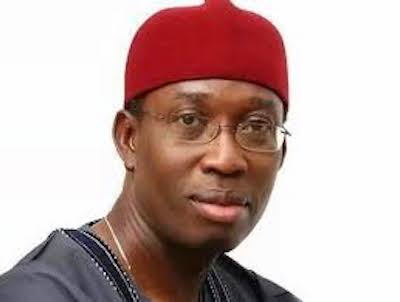
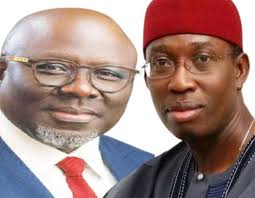
Gov. Ifeanyi Okowa of Delta has urged Nigerians to have full recourse to God for solution to insecurity challenges in the country. The governor made the call in his message to Muslims in Delta and across the country on the occasion of Eid-el-Fitr celebration which was conveyed in a statement by his Chief Press Secretary, Mr Olisa Ifeajika, in Asaba.
He said that Muslims and Christians should intensify prayers to complement Federal and states’ governments efforts at ending insecurity in the country. He said that Nigerians should also pray for the peace of the nation and to avert a possible third wave of COVID-19 pandemic. Okowa urged the Muslim faithful to extend the spiritual benefits of Ramadan: love, peace and justice, to their daily living “as through this, they will be contributing to the development of the nation”. He charged all Muslim faithful and Nigerians to use the celebration for sober reflection and supplication for peace, unity and progress of the nation. According to Okowa, this year’s Eid-el-Fitr celebration is coming at a time when the country is plagued by varying security challenges, which call for fervent prayers.“ On behalf of my family, the government and people of Delta, I extend warmest wishes to Muslims celebrating Eid-el-Fitr in Delta, Nigeria and around the world.“ I congratulate His Eminence, the Sultan of Sokoto and President-General, Nigerian Supreme Council for Islamic Affairs (NSCIA), Muhammad Sa’ad Abubakar, and all our countrymen and women who have successfully undertaken the month-long Ramadan fasting.“ It is my hope and prayer that Ramadan’s spiritual lessons and the Holy Prophet’s teachings of piety, love, justice, fairness, equity, peaceful co-existence, tolerance, honesty and dedication to duty will guide our interactions and daily living.”(NAN).





By Laide Akinboade Abuja
The Christian Association of Nigeria (CAN) on Wednesday, tasked Nigerians leaders to put aside indifference, blame-shifting and narrow interests and focus on the urgent task of restoring public confidence and easing the hardship facing millions of Nigerians.
This was stated in a statement issued by President CAN, Archbishop Daniel Okoh, in Abuja.
Okoh stated this in his message in felicitation to Muslim brothers and sisters across Nigeria and around the world on the occasion of this year’s Eid-el-Kabir celebration.
He added that, Eid-el-Kabir is a solemn reminder of faith, obedience, sacrifice and devotion to God. Beyond the celebration, however, it speaks directly to the condition of our nation at a difficult and defining moment in Nigeria’s history.
The CAN boss lamented, “Today, many Nigerians no longer measure hardship in statistics but in skipped meals, unpaid school fees, shuttered businesses and sleepless nights. Families are struggling to survive rising living costs. Farmers are abandoning their lands out of fear. Small businesses are collapsing under economic pressure. Young people are increasingly uncertain about their future, while insecurity continues to cast a shadow over many communities.
“At a moment like this, the deeper meaning of Eid-el-Kabir becomes even more important. Sacrifice must not remain a burden carried only by ordinary citizens. Leadership must also reflect sacrifice through honesty, restraint, service, compassion and visible commitment to the wellbeing of the people”.
Okoh stressed, “This is a time for leaders across government, politics, business, security institutions and religious organisations to put aside indifference, blame-shifting and narrow interests and focus on the urgent task of restoring public confidence and easing the hardship facing millions of Nigerians.
“Nigerians need hope they can see, not promises they no longer believe. This season must therefore serve as a moral call to conscience for all those entrusted with authority. Public trust cannot be rebuilt through speeches alone. Citizens want to see leadership that listens, leadership that acts and leadership that is willing to share in the sacrifices ordinary people make every day.
“CAN also urges Nigerians not to allow hardship and frustration to deepen religious, ethnic or regional divisions. Hunger does not ask for tribe or religion. Poverty does not discriminate. Insecurity threatens everyone. In times like these, division only deepens the nation’s wounds.”
He further called on religious leaders across all faiths to continue promoting peace, truth, moderation and reconciliation. At a time when anger and frustration are rising in many communities, voices of faith must help calm tensions, restore hope and remind Nigerians that humanity is greater than our differences.
He therefore encouraged the privileged Nigerians, corporate organisations and public-spirited individuals to remember the poor, widows, orphans, displaced persons and struggling families around them.
“The spirit of sacrifice becomes truly meaningful when it helps restore dignity and hope to others.
“Nigeria can still rise above fear, division and hardship if we rediscover the values of sacrifice, justice, compassion and shared humanity that this season represents”, he said.
He also prayed for peace, healing and renewal across our nation.
“We pray for wisdom for our leaders, protection for vulnerable communities, strength for struggling families and renewed hope for millions of young Nigerians seeking a better future”, he noted.
By Tambaya Julius, Abuja
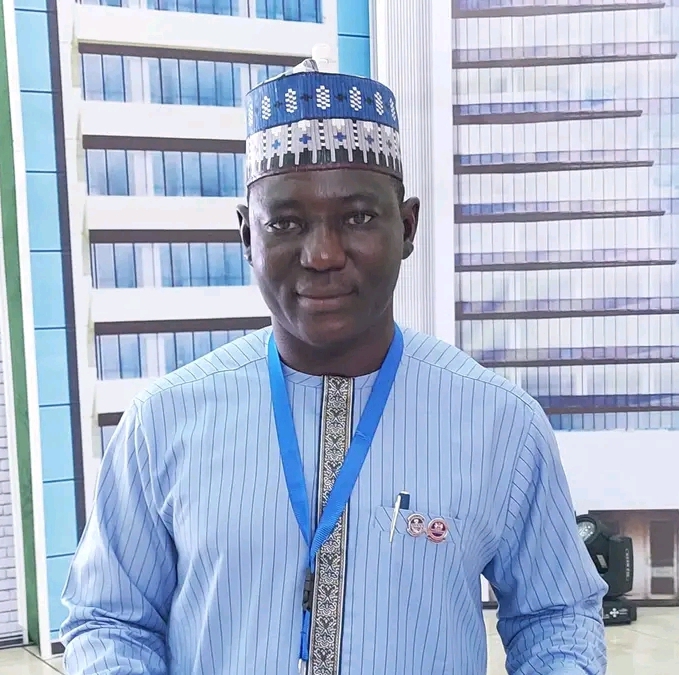
The Senior Special Assistant (SSA) on the Greater Karu Development Control Agency (KAPDA) to Governor Engr. Abdullahi Sule of Nasarawa State, Hon. Bawa Rabo has extended warm felicitations to the Muslim Ummah on the occasion of Eid-El-Kabir celebration.
In his Sallah message, Bawa congratulated Muslim faithful in Karu Local Government Area, Nasarawa State, and across Nigeria for witnessing this year’s Eid-El-Kabir celebration.
He praised Muslims for their steadfastness, spiritual devotion, and commitment to the teachings and pillars of Islam, noting that their dedication continues to promote peace, unity, and societal development.
He urged the Muslim Ummah to uphold the lessons of sacrifice, obedience, tolerance, and compassion associated with Eid-El-Kabir by reflecting them in their daily lives, decision-making, and community relationships.
According to him, “By sustaining these noble virtues beyond the festive season, we can collectively build a more united, peaceful, and prosperous society.” he said.
The Governor’s aide also offered prayers for the continued well-being, protection, and prosperity of Muslims across the country, while seeking Allah’s guidance and abundant blessings upon the muslims faithful.
He further prayed that Almighty Allah grants Muslims brothers and sisters the grace to witness many more Eid-El-Kabir celebrations in good health, peace, and happiness.
Barka Da Sallah!

The US said it launched new strikes on southern Iran on Monday, targeting Iranian missile sites and boats attempting to place mines.
The strikes were in “self-defence” and designed “to protect our troops from threats posed by Iranian forces”, US Central Command (Centcom) said in a statement.
Iran’s Islamic Revolutionary Guard Corps (IRGC) said on Tuesday it had downed a US drone and fired at a fighter jet and another drone that entered Iranian airspace, state media reported.
It did not specify when this happened.It added that Iran had the “legitimate and definite” right to retaliate against any US ceasefire violations.
“US forces conducted self-defence strikes in southern Iran today to protect our troops from threats posed by Iranian forces,” Centcom spokesperson Capt Tim Hawkins said in a statement on Monday.
“US Central Command continues to defend our forces while using restraint during the ongoing ceasefire.”
Capt Hawkins added the US strikes targeted an area near Bandar Abbas, a southern port city and home of an Iranian naval base that sits on the Strait of Hormuz, according to the New York Times.
Iranian state media had earlier reported that local officials in Bandar Abbas were investigating after explosions were heard.
It is unclear what impact the latest US strikes will have on any potential peace agreement between the US and Iran.
Following the US attack, Secretary of State Marco Rubio said a deal was still possible and pointed to talks on Tuesday between Iran’s top negotiator and foreign minister and Qatar’s prime minister.
“We’ll see if we can make progress. I think there’s a lot of back and forth going on about specific language in the initial document, so it’ll take a few days,” Rubio told reporters during an official visit to India.
He said President Donald Trump had “expressed his desire to make it”.
“He’s either going to make a good deal or no deal,” Rubio said.
Asked again later about Monday’s strikes, Rubio said: “The straits have to be open.
“They’re going to be open one way or the other, so they need to be open.
“What’s happening there is unlawful, it’s illegal, it’s unsustainable for the world, it’s unacceptable.”
Meanwhile, Iran’s Supreme Leader Mojtaba Khamenei said the Middle East “will no longer serve as shields for US bases”.
Khamenei, who has not been seen in public since succeeding his late father as supreme leader earlier this year, made the comments on Tuesday in a message marking the annual Hajj pilgrimage.
He added: “In addition to no longer having a safe haven for evil and establishing military bases in the region, America is moving away from its previous status day by day.”
Earlier in May, a clash between Iran and US naval destroyers in the Strait of Hormuz – for which each side blamed the other – led Trump to insist a ceasefire was still in place.
At the weekend, Trump had suggested the sides were close to a deal, but later said he had instructed negotiators “not to rush into” one, while Rubio had said an agreement could possibly be reached on Monday.
But Iranian foreign ministry spokesman Esmail Baqai responded: “It is correct to say that we have reached a conclusion on a large portion of the issues under discussion. But to say that this means the signing of an agreement is imminent – no-one can make such a claim.”
The memorandum of understanding being discussed reportedly involves a 60-day ceasefire extension, the reopening of the Strait of Hormuz and a plan for further negotiations over Iran’s nuclear programme.
Mojtaba Khamenei is thought to have been injured in an Israeli strike that killed his father and predecessor on the first day of the war more than three months ago.
According to US media, the discussions will not immediately lead to a final settlement. Contentious issues will likely be negotiated later, including details of Iranian sanctions relief, the release of frozen Iranian funds, and US demands for Iran to curb its nuclear ambitions.
The International Atomic Energy Agency (IAEA) estimated that at the start of the war, Iran had about 440kg (970 lbs) of uranium enriched up to 60 percent purity.
This is a short process away from being enriched to the weapons-grade 90 percent, which theoretically could allow it to create a nuclear bomb.
On Monday night, Trump said the enriched uranium would either be “immediately” turned over to the US, or “preferably, in conjunction and co-ordination with the Islamic Republic of Iran, destroyed in place”.
US and Iranian forces have observed a ceasefire since 8 April. Iran has maintained controls on Gulf shipping through the Strait of Hormuz and the US Navy has sought to blockade Iran’s ports.
The US and Israel launched wide-ranging strikes on Iran on 28 February, sparking conflict across the Middle East.
Iran responded by attacking Israel and US-allied states in the Gulf, and effectively closed the Strait of Hormuz. The move sent oil prices soaring globally.




Eid-el-Kabir: CAN tasked Nigerian leaders to focus on restoring public confidence
ShareBy Laide Akinboade Abuja The Christian Association of Nigeria (CAN) on Wednesday, tasked Nigerians leaders to put aside indifference, blame-shifting...

Hon. Bawa Felicitates Muslim Ummah on Eid-El-Kabir Celebration
ShareBy Tambaya Julius, Abuja The Senior Special Assistant (SSA) on the Greater Karu Development Control Agency (KAPDA) to Governor Engr....

Eid-el-Kabir: Let’s Embrace Peace – Fintiri
ShareAdamawa State Governor, Rt. Hon. Ahmadu Umaru Fintiri, CON, has called on the people of Adamawa to rededicate themselves to...

Africa Gets 14 Olympic Slots in Boxing
ShareAfrica has been allocated only 14 direct qualification spots for the boxing event at the 2028 Los Angeles Olympics, a reduction from the 18...

US Launches New Strikes on Iran, Targets Missile Sites, Boats
ShareThe US said it launched new strikes on southern Iran on Monday, targeting Iranian missile sites and boats attempting to place mines. The strikes were in “self-defence” and designed “to protect our troops from threats posed...

Army, TETFund Deepen Ties on Local Defence Technology
ShareThe Nigerian Army says it will deepen strategic collaboration with the Tertiary Education Trust Fund (TETFund) to boost local production of military hardware. The Chief of Army Staff...

Borno Shuts School, Relocates Students after Abduction of 42 Children
ShareFrom Muhammad Muhammad Al-amin, Maiduguri The Borno State Government has temporarily closed Government Day Secondary School, Mussa, in Askira/Uba Local Government Area after suspected insurgents abducted 42 children from...

NAICOM Licenses First Insurtech Firm under New Reforms
ShareBy Tony Obiechina, Abuja The National Insurance Commission (NAICOM) has formally granted an operational licence to CBI Partnering Insurtech Ltd,...


Eid-el-Kabir: Hope Lies Ahead Hard Times, says Tinubu
ShareBy David Torough, Abuja President Bola Tinubu yesterday declared that the sacrifices Nigerians have endured under his administration’s economic reforms...

Court Clears Jonathan for 2027, Reaffirms INEC Election Powers
ShareBy David Torough, Abuja Two landmark judgments delivered by the Federal High Court in Abuja on Tuesday have reshaped the...