
view point
Ending Terrorism and Violent Extremism Through Community-based Reintegration

By Sumaila Ogbaje
The concept of Amnesty, Disarmament, Deradicalisation and Reintegration (DDR) are universal tools used in resolving conflicts and violence with remarkable results globally.
However, community-based reintegration is much more critical to sustainable peace in any country coming out of conflict.
Amnesty refers to a decision by government to allow political prisoners to go free. It has fixed period during which people are not punished for committing a particular crime and to hand in illegal weapons.
Disarmament on the other hand is taking away or giving up weapons while deradicalisation is the process of making someone become less extreme in their political, religious or ideological beliefs.
Reintegration on the other hand is an action or process of integrating someone back into society.
In Nigeria, there has been high emphasis on military response to the profound security and political challenges confronting the country.
In spite of that, issues of amnesty and negotiations are not new. Nigeria has at various times drawn on such lenient approaches to mitigate conflict when military actions failed.
The most prominent case was the amnesty programme for militants in Nigeria’s Niger Delta region in 2009.
In the North East’s violent and complex conflicts, some Boko Haram elements had transformed into international terror groups known as Islamic State of West Africa Province (ISWAP).
The complexity of the insurgency and the heterogeneous nature of non-state armed groups in the region demand that the state apply a mix of both military and civil approach to the crisis.
Thus, Operation Safe Corridor (OPSC), established in September 2015, was the first step towards amnesty and application of DDR solutions by Nigerian government towards ending insurgency and violent extremism in the North East.
According to the OPSC Coordinator, Maj.-Gen. Joseph Maina, the programme has successfully processed 1,573 clients, comprising 1,555 Nigerians and 18 foreign nationals from Cameroon, Chad and Niger Republics, since the OPSC commenced its DDR programme in 2016.
Maina also said 613 clients, including five foreigners from Chad and Niger, were transferred to the DRR camp on Sept. 8, 2022 to commence deradicalisation, rehabilitation and reintegration training.
The OPSC Coordinator, however, said 19 of the clients had to be transferred to the University of Maiduguri Teaching Hospital neurological centre for expert psychiatric management.
According to him, the 613 clients are low-risk repentant terrorists who will be rehabilitated and transferred to their various states in Nigeria for reintegration into the society.
This is where the concept of community-based reintegration becomes more imperative.
According to the National Centre for Counter Terrorism in the Office of the National Security Adviser (CTC-ONSA), transforming those who took up arms into normal civilians is crucial to ending violent extremism.
To drive this point, the centre recently held a 4-Day National Technical Workshop on Amnesty Management, Deradicalisation and Community-Based Reintegration in Abuja.
National Security Adviser (NSA), retired Maj.-Gen. Babagana Monguno, said the alarming scale at which youths are joining armed groups, demands greater focus on preventing radicalisation among young people and transforming those who took up arms into normal civilians.
Monguno said the DDR was fundamentally to re-establish state monopoly of violence and control, secure stability and initiate a process leading to sustainable development.
According to him, the concept and practice of amnesty is not new in Nigeria, as Federal Government and several states have repeatedly granted amnesties.
He however said that amnesty could be counter-productive to national security if there are no established policies and legislations, national ownership and coordination mechanism for the amnesty programme.
“Amnesty, Disarmament, Rehabilitation, Deradicalisation, Early Recovery and Reintegration fundamentally contribute to creating a stable and secure environment, so that overall development can begin and be consolidated.
“Significant success has been achieved with the security efforts in the North-East and North-West.
“However, the shifting strategy of violent groups and the inability of troops to hold and stabilise recovered territories create a key challenge.
“Thus, the cooperation of communities is unavoidable in the quest for Government to consolidate on the gains of ongoing Counter-Terrorism Operations while measures to win the hearts and minds of the population is critical, and gradual resettlement and reintegration of affected communities is crucial for success.
“This involves military, political, civil, social, economic and humanitarian interventions, implemented within a multi-stakeholder platform,” the NSA said.
According to Monguno, the scale of atrocities committed against communities have created conditions for hate and reprisals against real or perceived perpetrators, including the victims.
“Justice whether retributive, transitional or transformational are major precursors and should be prioritised by key stakeholders in the field.
“It is worthy of note that the DDR policy field is reconfiguring its tools, policies and practices to address the diversity of armed actors in contemporary conflicts,” he said.
The NSA said the Nigerian government has been complementing kinetic means with soft approaches, stabilisation and peace building measures to secure lasting peace in the country.
He explained that all peace-building processes related to armed conflicts require combatants to surrender their arms through voluntary or non-voluntary way, followed by demilitarisation and reintegration into civilian life.
The NSA said so far, the government, its partners and other stakeholders have been successfully implementing the DDR strategy, which was developed in collaboration with International Organisation for Migration to guide the OPSC programmes.
The Country Director, International Alert Nigeria, Mr Paul-Bemshima Nyulaku, however, said though deradicalisation was part of Operation Safe Corridor, the concept of community-based reintegration has not been too popular in Nigeria.
Nyulaku therefore said there was need to engage and sensitise communities to accept back repentant and deradicalised insurgents.
According to him, community-based reintegration is critical to sustainable peace in Nigeria.
He said as government continues to lead the DDR programme, it is important to properly engage communities to accept the programme.
The European Union (EU) Ambassador to Nigeria, Ms Samuela Isopi, during the ONSA workshop, expressed EU’s commitment to building on the works done to support reconciliation and integration in the North East.
She said the EU has been a long standing partner of Nigeria on both DDR and Preventing and Countering Violent Extremism, including amnesty, deradicalisation and community-based reintegration in the North East region.
According to her, the OPSC has so far been a model for other countries on what could be done to address violent extremism and reintegration of repentant extremists.
The envoy said the wave of mass exit of insurgents since 2021 in the North East was part of the success of the OPSC programme.
Similarly, the British High Commissioner to Nigeria, Catriona Laing, said considerable progress has been made by Nigerian Government and a number of states on non-kinetic approaches to resolving conflicts across the country.
Lang advised that while amnesty and voluntary DDR processes are essential components of successful conflict resolution, it should be done based on internationally acceptable laws.
She said that the processes should be complemented by robust, timely and fair criminal judicial procedures, especially for those who committed grave crimes.
“This is particularly important in the case of former associates of terrorist groups, as UN Security Council Resolution 1373 creates an obligation on all member states to bring terrorists to justice.
“In all cases, approaches must be compliant with international humanitarian and human rights laws.
“Even for those members of armed groups who will not undergo criminal prosecution, some form of justice may be necessary,” the envoy said.
Also, Nicolas Lang, the Swiss Ambassador to Nigeria, said the experiences in North East Nigeria showed that Demobilisation, Disarmament, Deradicalisation, Rehabilitation and Reintegration (DDDRR) were important alternatives to military combat in weakening insurgencies.
He said unlike before when conflicts involving non state armed groups like Boko Haram and ISWAP tend to portray that there could be no easy way out, the DDDRR has now triggered a sense that fighting does not have to be endless.
According to him, fewer armed conflicts around the world ended through military pressure and demobilisation strategies, as such the DDDRR is very significant to ending violent extremism and terrorism.
Lang said as frustrating as it may look, a lasting solution to the conflict in the North East will likely emerge through a political solution based on dialogue and talking, taking into account the different grievances of those affected by the conflict.
Sumaila Ogbaje is of the News Agency of Nigeria (NAN)






By Chijioke Okoronkwo
The recurring headline, “Another Nigerian Killed in South Africa”, has become a staple of both local and international news bulletins.
Most of these deaths result from xenophobic attacks, allegations of crime/drug dealing, and excessive use of force by the law enforcement agencies.
There are also reports of Nigerians killing Nigerians owing to criminal, cult and gang rivalries as well as business and personal disputes.
Available data from the Nigerian Union South Africa (NUSA) and the Nigerian Citizens Association South Africa (NICASA) indicates that between 2000 and 2020, more than 127 Nigerians were killed in South Africa.
Latest reports indicate that these killings continued in the subsequent years.
On Nov. 9, 2025, Mr Chikamnene Eddie Mmuonagorom, an indigene of Anambra, was stabbed to death in his home in Floville, Kimberley; On Feb. 8, Emeka Uzor, an indigene of Enugu State, was shot dead while in his vehicle at a Caltex filling station in Windsor East, Randburg, Johannesburg.
Most recently, on Feb. 11, Isaac Satlat, an indigene of Plateau, who was an e-hailing driver, was strangled to death in Pretoria by passengers (a man and a woman) who requested a ride via the Bolt app.
In the aftermath of each incident, statements and condemnations are issued and diplomatic engagements are initiated—oftentimes inconclusively. Then, another incident occurs.
The Nigerians in Diaspora Commission (NIDCOM) has consistently flayed the reoccurring menace.
NIDCOM Chief Executive Officer, Abike Dabiri-Erewa, in a statement by the commission’s Director of Media, Public Relations and Protocols, Abdur-Rahman Balogun, described the incidents as disturbing and urged South African authorities to ensure justice was served.
She also called for improved protection of Nigerians and other non-indigenes residing in the country.
Dabiri-Erewa said that that Nigeria and South Africa shared longstanding ties and expressed concern over recurring violent crimes against Nigerians.
In a similar vein, NUSA described the killings as “senseless acts of violence” and urged the South African Police Service to ensure that those responsible were promptly and fully prosecuted.
On his part, NICASA President, Mr Frank Onyekwelu, said the association condemned the killings in the strongest terms, adding that no individual or group had the right to take the law into their hands or deprive another person of life.
He urged members of the Nigerian community in South Africa to remain calm, peaceful and law-abiding as engagements continued with the Nigerian Consulate, South African authorities and human rights institutions.
While South African authorities often make arrests, the issues of diligent prosecution and conviction are not always clearly addressed.
It is worth noting that three of the accused—Dikeledi Mphela (25), Gotseone Machidi (26), and McClaren Mushwana (30)—are appearing before the Pretoria Magistrate’s Court in connection with the murder of Isaac Satlat.
In retrospect, Nigeria-South Africa relations date back to 1960, with Nigeria positioned in the vanguard of the anti-apartheid and liberation struggles.
In 1960 to 1990s, after the 1960 Sharpeville Massacre, Nigeria championed the anti-apartheid cause, funding liberation movements like the ANC and providing passports to South African activists, according to The Africa Report and Wikipedia.
In 1976, Nigeria established the Southern Africa Relief Fund (SARF) to support the anti-apartheid struggle.
More importantly, the “Mandela Tax”, a compulsory deduction from Nigerian civil servants’ salaries and voluntary donations by citizens in the 1970s, was introduced to support the anti-apartheid struggle in South Africa.
In 1994, formal, diplomatic, and economic ties were established after the end of apartheid and the start of democracy in South Africa in 1994, culminating in a Bi-national Commission (BNC) inaugurated in 1999 to manage relations.
Recall that xenophobic attacks on Nigerians and other African migrants occurred in 2008, 2015, and 2019, leading to injuries and fatalities among Nigerians in South Africa.
While xenophobic attacks seem to be abating, the killings of Nigerians under various guises are cyclical.
The disturbing trend has drawn the attention of perceptive pan-Africanists.
The President, Africa Development Study Centre (ADSC), Victor Oluwafemi, said it had become expedient for the Federal Government to summon South Africa’s High Commissioner to Nigeria over recurrent attacks on Nigerians in the country.
Oluwafemi recommended a formal engagement for clear assurances regarding the safety of Nigerian nationals in South Africa.
According to him, the safety of Nigerian citizens abroad was not a diplomatic courtesy but a sovereign obligation.
Oluwafemi said that incidents involving the killing or violent targeting of Nigerians abroad must trigger visible diplomatic action within 24 hours.
According to him, delayed responses weaken deterrence and embolden repetition.
Julius Malema, South African opposition leader and founder and leader of the Economic Freedom Fighters (EFF), denounced the killings and xenophobic attacks, applauding Nigeria’s contributions to South Africa’s freedom.
He described xenophobia as “a betrayal of African unity”.
Malema spoke recently at the opening of the 2025 Annual General Conference of the Nigerian Bar Association (NBA) held at the International Conference Centre, Enugu.
He said Nigeria was one of the countries that stood firmly by South Africa, during that country’s darkest hour.
He recalled that when South Africa was fettered by apartheid and its people were murdered, imprisoned, and denied basic humanity, Nigeria rose as a giant for justice, placing the country squarely at the centre of its corridors.
He said that Nigeria set up the Southern African Relief Fund and mobilised its citizens to contribute to the liberation struggle.
He added that Nigerian students did not only contribute through Mandela Tax, but also, through protests in opposition to apartheid.
Ultimately, while Nigerians living in South Africa are obligated to engage in legitimate business and shun criminality, pan Africanists say the authorities must fulfill their responsibility to protect foreign nationals. (NAN)
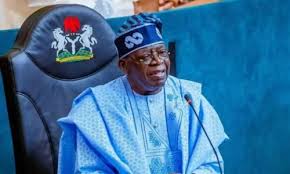
By Bola Ahmed Tinubu
Africa is paying too much to borrow.
How and on what basis the continent’s governments can secure financing should not be based on external discretion.
Calls to end the “Africa premium” — the gap between how Africa is assessed and the reality of its economies — can no longer be ignored.
Fitch, Moody’s and S&P Global Ratings, the three dominant global credit rating agencies, wield outsized influence over Africa’s access to international capital.
Their judgments shape investor behaviour, yet they consistently misjudge African risk. Just three African countries are rated investment grade, even as the IMF projects the continent to be the world’s fastest-growing region this year.
Africa is now establishing its own credit rating agency; it is a necessary corrective.
Detractors claim Africa wants to mark its own homework. The evidence suggests otherwise: a 2023 UN Development Programme report notes that “idiosyncrasies” in credit ratings cost Africa $75bn annually in excess interest and foregone lending.
An African credit rating agency would address the greatest weakness of the “Big Three”: limited on-the-ground presence.
In their models, quantitative data is weighed against subjective judgments on political risk, institutional strength and policy durability. How those judgments are reached — and how much they count — is left to opaque “analyst discretion”.
Conclusions drawn from afar fail to capture local realities. Relying on such judgments means global market cycles trump individual states’ economic fundamentals.
Many countries across the continent have export-led economies based on commodities. When prices fall or markets tighten, African nations are downgraded swiftly and broadly — even when their reserves are strong, fiscal buffers are intact and debt profiles remain manageable.
Downgrades then become self-fulfilling, raising borrowing costs and straining public finances.
But an African credit rating agency will not suffice on its own. The agency must earn the confidence of global capital with assessments anchored in the sort of timely, comprehensive data to which international markets respond.
Better data has been partly responsible for Nigeria’s recent upgrades: improving the timeliness and breadth of economic statistics; bringing previously off-balance-sheet central bank lending on to the official public debt register; rebasing GDP to reflect economic reality more accurately; publishing more budget documents to strengthen fiscal transparency.
The rest reflects hard policy choices, such as the removal of a wasteful fuel subsidy and the liberalisation of the exchange rate.
Non-oil growth has helped diversify the economy as the Naira, for the first time, decouples from global crude prices.
Even so, Nigeria’s ratings still lag behind reforms and market sentiment. Our November dollar-denominated bonds were oversubscribed 5.5 times.
Slow upward adjustments are commonplace across Africa, especially when set against the speed of downgrades. Smaller countries, lacking Nigeria’s scale and analyst coverage, bear the cost of this delay most.
A continent-wide credit rating agency will capture reform momentum in real time.
Delayed upgrades cost money: African countries cannot afford to wait years to access markets after implementing hard reforms.
Nations must stand on their own feet — especially in the wake of aid cuts. But they should be able to do so on a level playing field.
We understand that global capital will still look to the established agencies for validation. However, if an African agency can identify progress earlier, later corroborated by the Big Three, it will gain credibility while serving as an early signal to both markets and those agencies.
It is not a replacement, but a complement.
Affordable access to credit will determine whether Africa becomes the growth engine that its demographic boom promises.
By mid-century, the continent will account for a quarter of the world’s working-age population. Africa’s success is not a regional concern, but a global opportunity.
Tinubu is the President of the Federal Republic of Nigeria.(NAN)
By Ejinkeonye-Christian Phebe
Nigeria produces millions of graduates every year, among whom are hundreds with a First Class Degree. Yet, despite this steady academic output, graduate unemployment remains consistently high. According to the International Labour Organization (ILO), youth unemployment in Nigeria stood at 6.
5% in 2025 while civil society reports suggest that as many as 80 million Nigerian youths are without decent jobs.This paradox raises a critical question: “why does formal education no longer guarantee employability?” Each year, new companies emerge and both public and private advertise vacancies.
Millions of graduates apply, hopeful that their years of academic training will finally yield results. Yet only a handful are selected, while the majority are left disappointed, frustrated, and uncertain about their future.While students invest years in formal education with the expectation of being prepared for professional roles, many struggle to transition smoothly into the workplace. Employers, on the other hand, frequently complain that graduates are Ill-prepared for the demands of modern work and are compelled to spend additional time and resources retraining new hires. At the centre of this persistent challenge lies a dangerous disconnect between higher institutions and the realities of today’s labour market.
Historically, higher institutions were designed to serve as pipelines into the workforce. Degrees were meant to be evidence of workplace readiness, competence, and value. However, with the global advancement and need to remain competitive in the fast-changing marketplace, the nature of work has changed rapidly. Globalization, technological advancement, automation, and digitalization have fundamentally reshaped how organizations operate. As a result, businesses now require a workforce that is agile, innovative, and technologically competent. Unfortunately, many educational systems have not repositioned themselves appropriately to reflect these changes.
Employers no longer merely look for academic knowledge. They are looking for individuals who can think critically, solve problems, communicate effectively, readily adapt to change, and work with digital tools. Sadly, many academic programmes still prioritize theoretical mastery, cognitive learning, and examination performance over practical application. This leaves graduates fluent in theory but unfamiliar with workplace expectations. While they may understand concepts, they end up struggling to apply them in real-world scenarios. Employers then encounter these graduates who are intelligent and eager to work, yet insufficiently equipped for immediate contribution to the execution of company objectives.
This disconnect is not a neutral gap, but one that carries significant consequences. For graduates, the outcome are often discouraging. Many experience prolonged job searches, underemployment, or complete withdrawal from the labour market. Some are forced into job roles that have little or no relevance to their academic training, while others cycle endlessly through internships, volunteer positions, and short-term engagements without clear career progression. Increasingly, many graduates turn to entrepreneurship – not necessarily by choice, but by necessity. However, without the same labour-market-relevant skills that made them unemployable, they often struggle to build sustainable businesses. The same deficiencies that hinder their employability also limit their entrepreneurial success.
For employers, the costs are both financial and operational. Organizations are compelled to invest heavily in retraining staff, a process that consumes time, resources, and managerial attention, as well as reduces productivity in the short term. Some employers therefore resort to hiring based on referrals or prior experience alone, sidelining fresh graduates entirely.
At the national level, the implications are even more severe. When education fails to translate into employability, economic growth slows, youth unemployment rises, social discontent deepens, and the demographic advantage of a young population becomes a liability rather than a strength.
The problem facing Nigerians is not a lack of intelligence or potential. Rather, it is a lack of structure, exposure, and alignment. Curriculum review and implementation processes are often slow and bureaucratic, making it difficult to respond swiftly to changing industry needs. There is also limited collaboration between institutions and employers. Many universities and polytechnics design curricula in isolation, with little input from the industries that will eventually absorb their graduates. When there is no consistent connection or relationship between institutions and employers, academic programmes become increasingly misaligned with market realities. Students graduate without exposure to real tools, real problems, and real expectations of the workplace.
Compounding this challenge is the persistent poor perception of vocational and technical education. Despite its relevance to employability, skills-based education is often regarded as inferior to traditional academic pathways. This bias, hence, limits investment, innovation, and enrollment in technical fields, further widening the gap.
Contrary to popular belief, employers are not looking for graduates with “head knowledge” alone or impressive CGPAs without substance. What they rather seek are individuals with strong foundations and capacity to build upon them. Today’s employers value problem solvers, tech-savvy professionals, creatives, innovators, and individuals who can enhance the competitiveness of their organizations. They want graduates equipped not only with cognitive skills, but also with technical and soft skills that align with market demands. These competencies cannot be developed through lectures alone. They require experiential learning, mentorship, collaboration, and consistent exposure to real work environments and tools, which remain underemphasized or entirely missing in many higher education programmes.
Fixing this disconnect requires intentional collaboration and systemic reform between organizations and institutions. Curriculum development must become more dynamic and inclusive. Higher institutions should work closely with industry experts to ensure that academic programmes reflect current and emerging skill needs. Industry relevance must be deliberately integrated into learning. Practical skill development should be embedded into teaching methodologies. Project-based learning must be prioritized, and education should not complete where affective and psychomotor learning are absent.
Experiential learning must also take center stage. Internships, apprenticeships, industry projects, and practical laboratories should be structured, supervised, and treated as essential components of academic programmes, not optional add-ons.
Furthermore, vocational and technical education must be repositioned and rebranded. Skills-based learning should be recognized as a powerful and necessary pathway to economic participation. When aligned with modern technology and market demand, technical and vocational education can provide faster, more sustainable routes to employment.
Employers, too, must play a more active role. Rather than lament skills shortages, organizations should engage institutions through mentorship programmes, guest lectures, curriculum advisory boards, and workplace training opportunities.
The future of work will continue to evolve, driven by technology, globalization, and innovation. Education systems that fail to adapt risk becoming increasingly disconnected from workplace realities. Bridging the gap between higher institutions and employers requires recognizing that both theoretical and practical learning are essential components of graduate employability and economic development. The way forward lies in collaboration, flexibility, and a shared commitment to relevance. When institutions and employers begin to speak the same language, graduates will no longer be caught in the middle. Instead, they will become critical drivers of economic growth, innovation, and Nigeria’s relevance in the global economy.
Ejinkeonye-Christian, a certified life coach, and business educator, is the CEO of Phebeon Consulting and Media Solutions Ltd, Nsukka, Enugu State, Nigeria (+234(0)708-048-0510; ceo@phebeon.com.ng).




Benue APC Denies Defection Rumours Over Members’ Attendance at Pro-Tinubu Meeting
ShareThe factional chapter of the All Progressives Congress (APC) in Benue State has dismissed speculation that some of its prominent...
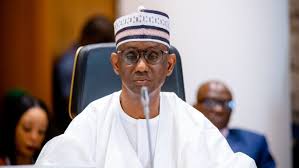

Nuhu Ribadu and the New Security Order:
ShareBy Aaron Mike Odeh Nigeria’s security environment has, for decades, remained one of the most complex governance challenges confronting successive...


Bauchi Attacks: UNICEF, Gombe Support Displaced Women, Children
ShareThe United Nations Children’s Fund (UNICEF), in collaboration with the Gombe State Government, on Friday supported internally displaced women and...


NGO to Enroll 32,000 Vulnerable Kaduna Residents into Health Scheme
ShareA non-governmental organization (NGO), the Gates Foundation, said it will enroll 32,000 vulnerable persons into the Kaduna State Contributory Health...


Experts Link GBV, Stigma to Increase AMR
ShareBy Laide Akinboade, Abuja Experts in the health sector, have raised alarm over increase in link between Gender Based Violence...
Antonelli Wins Chinese GP as McLarens Fail to Start
ShareTeenager Kimi Antonelli took his first Formula 1 victory as he led team-mate George Russell home in a Mercedes one-two...


NPFL Orders Tribute for Late Nwosu
ShareThe chairman of the Nigeria Premier Football League, Gbenga Elegbeleye, has directed that a minute’s silence be observed before kick-off...

Hearn: Joshua Back in Training Camp for Comeback Fight
ShareBritish boxing promoter Eddie Hearn has disclosed that former world heavyweight champion Anthony Joshua is set to resume training camp...


NSC Commends D’Tigress After Philippines Win
ShareThe National Sports Commission (NSC) has praised Nigeria’s D’Tigress for their impressive comeback win against Philippines, at the ongoing FIBA...


Leaders Man City Frustrated by Spirited Aston Villa
ShareManchester City’s march to the Women’s Super League title was slowed as they were held to a goalless draw by...