
NEWS
UPDATED-Court Exonerates 50 Alleged IPOB Members of Terrorism Charge


A Federal High Court in Abuja on Friday, discharged and acquitted no fewer than 50 persons alleged to be members of the proscribed Indigenous People of Biafra (IPOB) of allegations bordering on terrorism.
Justice James Omotosho, in a judgment, held that the Nigerian Police Force failed, in its entirety, to established a prima facie case against the 50 defendants, including four women.
Justice Omotosho, who upheld the no-case submission of the defendants, said that the prosecution failed to adduce any credible evidence, linking the defendants to the allegations with which they were charged.
The Inspector-General (I-G) of Police had, in the charge marked: FHC/ABJ/CR/8/2024, sued the 50 defendants.
They were alleged to have assembled themselves inside 911 truck with Reg No. XA-139 BDN, and engaging themselves in a meeting all about, and in connection with an act of terrorism.
They were alleged to have in their custody 48 Black Caps, 25 Red Caps, 6 Orange Colour Caps, and all were designed in IPOB emblem with various charms, otherwise known as “juju.”
The police further alleged that their “gathering was for the purpose of promoting illegality in other to terrorise the people of Anambra.”
The police said the offence is contrary and punishable under Section 12 of Terrorism (Prevention and Prohibition) Act, 2022, among other counts.
The police called four witnesses to establish their case after which the team of defendants’ lawyers, led by Ifeanyi Ejiofor, opted for a no-submission case.
Delivering the judgment, Justice Omotosho said that Section 303 of the Administration of Criminal Justice Act 2015 makes provision for what the court should look out for in upholding or dismissing a no+case submission.
These, he said, are whether the essential element of the offence has been proved, whether there is evidence linking the defendants with the commission of the offence with which they are charged.
Others he said are whether on the face of the record, the evidence of the prosecution has been so discredited and rendered unreliable by cross examination that it would be unsafe to convict on such evidence,” he said, among others.
According to the judge, at this stage, what the court concerns itself with is whether the prosecution has established a prima facie against the defendant such that the defendant will have to enter his defence.
Ruling on count one, he said: “From the evidence of prosecution witnesses, there is nothing to show that the defendants are even members of IPOB.
“In fact, the only evidence presented by the prosecution witnesses is that the defendants were arrested together in a truck.
“That upon being asked where they were heading to, responded that they were going for a burial but could not name the deceased or the person who invited them.
“This cannot be sufficient reason to suspect the defendants of engaging in terrorist activities.
“The witnesses did not show that the defendants were heading for a meeting of IPOB neither was there evidence of intelligence that the defendants are terrorists.
“The prosecution witnesses even stated that they were engaged in gun duel when they were taking the defendants to the police station but it was not the defendants who shot at them.
“That during the gun battle some of the defendants jumped out of the truck and ran into the bush.
“I think it is reasonable to say that every person caught in a cross fire will likely find a way of escaping due to the need to protect his life.
“The defendants who jumped out of the truck have not committed any offence by jumping out of the truck to save their lives.”
The judge held that the evidence before the court showed that the defendants were peaceful throughout their arrest.
“This court then wonders how a terrorist would be peaceful,” he said, citing Section 46 of the Act.
He said the court observed that the exhibits recovered from the defendants which include calabash, cowries, red cloth and figurine did not conclusively proved that the defendants used them for terrorist activities.
“It is a well-known fact that calabashes are used for trade by barter (during pre-colonial era), to serve food and even as items of traditional worship.
“Also I remember that when I was growing up in Lagos in those days, some parents were fond of wearing cowries on their children’s waist.
“Does this then mean that those parents were members of IPOB or a terrorist organisation?
“The answer is a resounding no. Cowries were once used as means of exchange in pre-colonial Nigeria and this court is aware that it is still being used by some people for traditional worship.
“As far as this court is concerned, cowries are not weapons to cause harm or mass fear or hysteria in the populace which is common to terrorist activities.
“Furthermore, the efficacy of the juju allegedly recovered from the defendants was not demonstrated before the court to show that it was a weapon.
“Prosecution witness also stated that it was fearful, without proving its power if any.
“All these point to the fact that the defendants did not participate in any terrorist activity or promote any terrorist activity.
“None of the recovered exhibits bear the insignia of IPOB, thus, they could not have been accused of promoting the activities of a proscribed group.
“The defendants were not caught engaging in terrorist activity but were only found in a truck.
“The prosecution has failed woefully in linking the defendants to the charge.
“The prosecution has also failed to prove any of the ingredients of the offence against the defendants.
“This is even more so as the statements of the defendants which may have been helpful to the case of the prosecution were rejected by the court.
On count three which bordered on conspiracy, Justice Omotosho held that the prosecution failed to show that the defendants were in the 911 truck on the Dec. 1, 2023 with a common intention to commit an illegal act.
“Neither has the prosecution proved that the illegal act committed was as a result of the meeting of minds of the defendants,” he said.
According to him, this court struggles to see how the defendants conspired to commit a terrorist act.
“The evidence led by the prosecution is woefully short of what is required to establish this count.
“As it stands, there is nothing before the court to warrant the calling on the defendants to put in their defence as no prima facie case has been proved by the prosecution,” he stated.
The judge said the charge before the court “appeared to be a trumped up charge against the defendants, including old men, women, youths and middle aged persons who were unfortunate to be arrested together in a truck at night.”
He said the prosecution had failed in its one duty of making out a prima facie case against the defendants.
“The charge against the defendants are quite serious as they carry very stiff imprisonment terms.
“Yet the prosecution without much substantial ground, presented a paper-thin case which proves almost nothing against the defendants.
“The evidence of shooting, attack against the police in the course of arresting the defendant was shown under cross examination to have been perpetrated by other persons apart from the defendants.
“There is therefore not enough or any semblance of a prima facie case which would make the defendants put in their defence.
“The case presented by the prosecution lacks enough substance and accordingly the defendants cannot be held liable.
“In final analysis, the prosecution has failed to make out a prima facie case against the defendants.
“Consequently, the no-case submissions of the defendants are hereby upheld and they are hereby discharged and acquitted of the three counts charge,” he declared.(NAN)

By David Torough, Abuja
The Federal Government has pledged its support for the National Institute for Policy and Strategic Studies (NIPSS) to harness Nigeria’s Orange Economy as a driver of job creation, entrepreneurship, economic diversification and sustainable development.
The Minister of Information and National Orientation, Mohammed Idris, made the commitment on Tuesday in Abuja when the Director-General of NIPSS, Prof.
Ayo Omotayo, led a delegation from the institute on a courtesy visit.The meeting focused on the research being undertaken by participants of NIPSS Senior Executive Course 48 and plans for a National Summit and Exhibition on the Orange Economy.
Idris commended NIPSS for choosing the creative economy as the focus of its research, describing the sector as a significant opportunity to diversify Nigeria’s economy, create jobs for young people and promote sustainable prosperity.
“I want to commend NIPSS for this initiative of examining the Orange Economy and entrepreneurship for sustainable development,” the minister said.
He assured the delegation that the Ministry and its agencies would support both the research and the proposed summit. According to him, effective communication would be essential to ensuring that Nigerians and the international community understand the opportunities available in the creative economy.
“This Ministry is essentially about taking information to the public and taking it back from the public. It is a two-way thing,” Idris said.
The minister also highlighted the role of the National Orientation Agency (NOA), which has a nationwide presence, in gathering feedback on the views, needs and aspirations of Nigerians at the grassroots.
He said President Bola Tinubu’s administration remained committed to listening to citizens and adjusting policies and programmes where necessary in the national interest.
“The first question the President asks whenever I sit with him is: ‘What are Nigerians saying?’” Idris said.
To strengthen coordination, the minister said the Ministry would designate an official to work with NIPSS as preparations for the proposed summit advance.
Omotayo said NIPSS was seeking the Ministry’s partnership in its research and the planned national summit, which is expected to examine how the Orange Economy can contribute to Nigeria’s economic transformation and the administration’s ambition of building a trillion-dollar economy.
He said participants in Senior Executive Course 48 had conducted research visits across Nigeria and to several countries to examine how creative industries are being developed and leveraged for economic growth.
The proposed summit, he added, would bring together government representatives, creatives, entrepreneurs, investors and other stakeholders to explore opportunities across the sector.
“The Orange Economy is a very huge sector. We have identified about 48 subdivisions, and we believe the summit will bring out the potentials in every sector,” Omotayo said.
According to the NIPSS Director-General, Nigeria’s growing creative and digital industries have considerable potential to tackle youth unemployment while creating new avenues for entrepreneurship, investment and wealth creation.
Idris reaffirmed the Ministry’s commitment to working with NIPSS and other strategic institutions to turn research and policy ideas into practical opportunities for Nigerians, particularly young people, while strengthening the country’s position in the global creative economy.
The meeting was attended by senior government officials and representatives of NIPSS and the private sector, including Permanent Secretary of the Federal Ministry of Information and National Orientation, Dr. Binyerem Ukaire; former Minister of Information and Culture, Alhaji Lai Mohammed; and other officials.

First Bank has renewed its partnership with the Calabar Entertainment Conference and Festival (CECF) as the event’s official banking partner for the second consecutive year.
Hit FM, Cross River’s radio station and organiser of the festival, disclosed this in a statement on Tuesday.
According to the statement, the renewal underscores First Bank’s commitment to supporting Nigeria’s creative economy and platforms that promote innovation, entrepreneurship and sustainable economic growth.
The CECF, now in its 10th edition, brings together stakeholders in the creative and entertainment industries, including policymakers, business leaders, investors, artists, media professionals, content creators and young entrepreneurs.
The platform is designed to explore opportunities and challenges shaping the future of Africa’s creative sector.
The statement said First Bank would participate as a Platinum Sponsor of the two-day event through “First@Arts”, its initiative supporting the arts ecosystem in Africa.
It said the initiative provides funding, visibility and capacity-building support to artists, curators, galleries, festivals and cultural institutions.
According to the statement, First@Arts also seeks to preserve African heritage, promote creative enterprise and position the arts as a driver of economic growth and cultural diplomacy.
Patrick Ugbe, Executive Producer of CECF and Chief Executive Officer of Hit FM, described First Bank’s continued partnership as a vote of confidence in the festival’s vision.
“Having First Bank return as our official banking partner for the second consecutive year is both an honour and a vote of confidence in what we are building.
“Beyond sponsorship, this partnership reflects a shared belief that the creative industry is a powerful driver of economic development, job creation, youth empowerment and national growth,” Ugbe said.
He said the organisers were pleased to continue the partnership with the bank, whose legacy spans more than 132 years.
Olayinka Ijabiyi, Group Head, Marketing and Corporate Communications, First Bank, said the renewed partnership aligned with the bank’s strategic focus on supporting the creative economy.
“At First Bank, we remain committed to enabling success and creating value for our customers and the communities we serve.
“Our continued partnership with the Calabar Entertainment Conference and Festival aligns with our strategic focus on supporting the creative economy by providing platforms that inspire innovation, encourage entrepreneurship and unlock opportunities for sustainable growth,” Ijabiyi said.
He said the bank would continue to support the creative arts ecosystem through First@Arts.
The organisers said the two-day festival would feature keynote addresses, masterclasses, panel discussions and networking sessions aimed at strengthening collaboration across the creative value chain.
They added that the event would further promote Cross River as a destination for creative exchange, cultural tourism and entertainment business in Africa. (NAN)
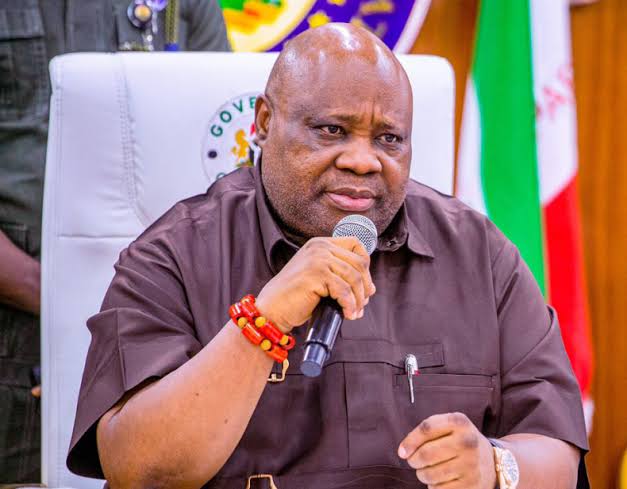
The Osun State Government has urged members of the Osun State University community to refrain from actions capable of creating needless tension in the institution, as the national leadership of the Academic Staff Union of Universities moved against the decision to extend the tenure of the institution’s Vice-Chancellor, Prof.
Clement Adebooye.The government, in a statement signed by the state Commissioner for Information and Public Enlightenment, Kolapo Alimi, obtained in Osogbo on Tuesday, faulted ASUU’s position on the two-year tenure extension recently announced for Adebooye.
ASUU had, in a communiqué issued after an emergency National Executive Council meeting held in Abuja on Saturday, September 5, declared that Adeleke’s extension of Adebooye’s tenure by two years violated the provisions of the university law.
The union subsequently mandated its UNIOSUN branch to mobilise and respond courageously to the alleged “flagrant violation of the Miscellaneous Act as amplified in the 2025 FGN-ASUU Agreement.”
The group also constituted a visitation team to the UNIOSUN branch to interact with the university administration, Governing Council and the Visitor, “in a bid to address the infraction on the two (2) years extension of the tenure of the Vice-Chancellor within two (2) weeks.”
Reacting to ASUU’s move, the government said it respected the right of every recognised staff union of the university to express its views on matters concerning the welfare and administration of the institution.
It, however, stated that the governance of Osun State University was regulated by the law and clearly defined statutory responsibilities of the Visitor, the Governing Council and other organs of the university.
It also said it was necessary to correct the impression that the decision concerning the Vice-Chancellor’s tenure was taken arbitrarily or outside the framework of due process.
“In the first place, the current tenure of the Vice-Chancellor subsists until January 2027, so the government has not taken any retroactive decision with respect to the tenure of the Vice-Chancellor. The decision by His Excellency, Senator Ademola Nurudeen Jackson Adeleke, as Visitor to Osun State University, must be understood within the context of the constitutional and statutory responsibilities of the Visitor and the subsequent legislative intervention by the Osun State House of Assembly.
“Following the Visitor’s decision, the State Legislature commenced the process of amending the Osun State University Establishment Law to provide the necessary statutory framework for the tenure extension. The amendment was subsequently considered and passed by the House of Assembly after legislative consideration of the relevant provisions.
“It is therefore inaccurate to portray the matter as though the Visitor acted in isolation or that the University’s governing framework has been disregarded. The Visitor cannot be said to have acted outside the law where the competent legislative authority has exercised its constitutional legislative function to amend the enabling law,” the statement read.
The government cautioned against attempts to create an unnecessary atmosphere of crisis, illegality or institutional instability around a matter that had been subjected to the appropriate governmental and legislative processes.
“No staff union, including ASUU, has the statutory authority to teach the Visitor or the Governing Council how to exercise powers lawfully vested in them. The University is governed by its enabling law, and not by the unilateral interpretation of any union or pressure group. It is also pertinent to state that the Governing Council remains the appropriate statutory organ for matters within its jurisdiction, just as the Visitor exercises the powers assigned to that office by the enabling framework of the University. Staff unions are important stakeholders, but they are not substitutes for these statutory organs.
“The Governor consequently urges all members of the University community to refrain from actions, statements or mobilisations capable of creating needless tension in an institution that has remained focused on its core mandates of teaching, research, innovation and community service,” the statement further read.




Information Minister Backs NIPSS Plan to Unlock Nigeria’s Orange Economy Potential
ShareBy David Torough, Abuja The Federal Government has pledged its support for the National Institute for Policy and Strategic Studies...


Google Warns against Using AI as Shortcut to Learning
ShareGoogle on Tuesday warned against using Artificial Intelligence (AI) as a shortcut to learning, urging students to harness the technology...


FRSC Records 25 Per Cent Reduction in Road Crashes in Osun
ShareThe Gbongan Unit Command of the Federal Road Safety Corps (FRSC) in Osun recorded a 25 per cent reduction in...

OPEC May Review Members Production Capacity to Arrive At 2027 Output Baseline
ShareThe Organization of Petroleum Exporting Countries (OPEC) may most likely be going to pause its output increases for the fourth...


First Bank Backs 10th Calabar Entertainment Conference, Festival
ShareFirst Bank has renewed its partnership with the Calabar Entertainment Conference and Festival (CECF) as the event’s official banking partner...


FIFA Yet to Decide on NFF Visit to Nigeria
ShareWorld football governing body FIFA said it is yet to reach a decision on the future of the Nigeria Football...


Adeleke, ASUU Differ over Tenure Extension for UNIOSUN VC
ShareThe Osun State Government has urged members of the Osun State University community to refrain from actions capable of creating...


Translate Capital into Productive Investment, Tinubu Urges Banks
SharePresident Bola Tinubu has called on the financial services industry to translate their capital into productive investment and employment opportunities...

Gunmen Launch Attacks on Kaduna Communities, Kill Five, Abduct 27
ShareFrom Agbo Emmanuel, Kaduna Suspected bandits have launched a fresh wave of attacks across parts of Kaduna State, killing at...


Benue Blockade: Obi, Alia Trade Blame over Disrupted Yelewata Visit
ShareFrom Attah Ede, Makurdi A planned visit by the presidential candidate of the Nigeria Democratic Congress (NDC), Peter Obi, to...