
Metro
FCT Set to Tackle Housing Challenge as Oak Homes Berths in Abuja

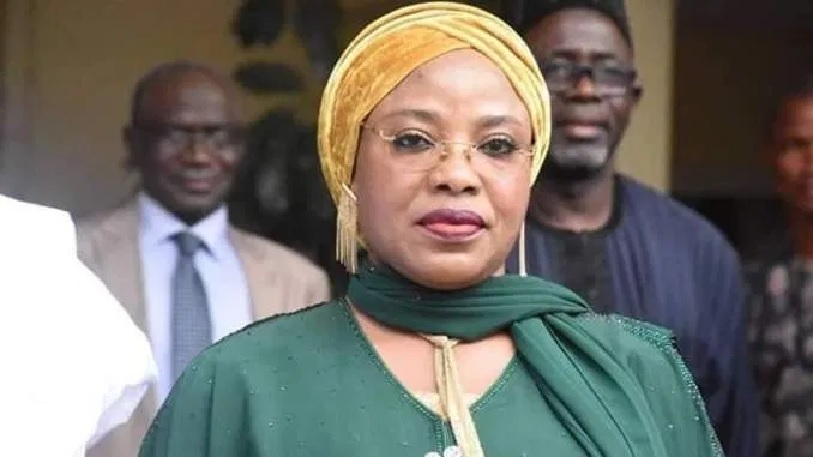
The Federal Capital Territory (FCT) said it is ready to partner with Oak Homes, a Lagos-based housing firm to redefine the concept of luxury living in the city.
FCT Minister of State, Hajiya (Dr.) Ramatu Tijanni, made this pledge at a ground breaking ceremony to herald the company’s entry into the FCT.
The minister, who was represented by her Special Assistant on Technical Matters, Tpl.
Mubdiyu Mustapha, expressed joy over Oak Homes’ in-road into Abuja.She described the development as something unique from a private mortgage developer.
“This is the beginning of better things to come in the area of housing development in Abuja from a private developer.
The government doesn’t have the resources required to build the exquisite homes you develop for individuals as you are set to do,” she said.“In this wise, the administration is willing to engage in a Public-Private Partnership (PPP) that can guarantee accelerated delivery through the provision of land and on-site infrastructure.
“The FCT is keen on partnering with the private sector to fund housing deficit and With development costs borne by Private developers, it is expected that developers such as Oak Homes are able to bring cheap funds to the table for the construction of the houses, thereby guaranteeing unit selling prices that are affordable to the target market segment,” she added.
Consequently, she said the FCT shall continue to work with the private sector and development partners to ensure that continuous progress is made in this direction.
In his introductory remark earlier, Chief Executive Officer (CEO) of Oak Holdings, Mr. Olukayode Olusanya, explained that the project was designed to echo architectural magnificence in luxury buildings and finesse in real estate engineering. He said The Oak Villas would also redefine the concept of luxury living in Abuja.
The Oak Holdings boss described the Oak Villas as a private development of expansive living areas with careful attention to details and ignition of affluence.
“The Oak Villas perfectly embodies the technical ingenuity and extreme inequality of the 21st century. A heady confluence of engineering prowess, architectural phenomenon and an unparalleled concentration of personal wealth,” he said.
He expressed the optimism that Abuja would be receptive to what the company has to offer, promising to change the narrative by building castles that befit a smart modern city.
“The villas will have private cinemas and a swimming pool, fully fitted with the best of furnishings that will appeal to the selected few for whom it is designed,” he explained.
“The development will be totally smart: where technology meets security and will be available to the market from 2023.”
He promised that the project, located in the high-end of Asokoro, will be delivered in the next 14 months.
“People that know us can vouch for what we have done in several parts of upscale Ikoyi in Lagos,” he said, adding that “Our trademark is excellence in home delivery. The Oak Villas is a game changer. Our path in Abuja will define whatever we are doing in this space.”
Also, speaking at the occasion, Prince Mustapha Mona Abubakar, described Oak Homes as a game changer in the housing sector.
“The brain behind this project is a young man with an impeccable track record and I am an advocate of youths in governance. This is why we need young people running the government. We have the ability to unite the country through meaningful development and projects that carry everyone along,” he said.
He added that the Oak Villas is a unique project that the FCT will be proud of. “I’m too happy to be part of the project,” he said.










A REVIEW OF IYORWUESE HARRY HAGHER’S A PORTRAIT OF PARADISE
James Tar Tsaaior
A Portrait of Paradise is a pulsating, telling tale in the tradition of political allegory. It narrates a modern nation-state inextricably entangled in a sticky web of manifold contradictions which gnaws viscerally at its very soul and existence.
The novel is largely set in the fictional West African nation of Sofalia, a metaphor for, and epitome, of unrelieved suffering. In it Iyorwuese Harry Hagher skillfully demonstrates how Sofalia’s political elite manipulate the levers of naked power, and anything and everything in-between, to privilege and sustain their affluent, hedonistic, permissive and self-aggrandising lifestyles to the detriment and mutual exclusivity of the Atsan. This is the mass of the oppressed, impoverished and dispossessed population who exist in the peripheries and lowest rungs of the social pyramid and are at the mercy of life’s vicissitudes.Sofalia is a confirmed, pitiable case of a modern nation-state on the precincts of a yawning precipice. Led by a brood of viperous, treacherous, egocentric, and selfish politicians who have parceled the national patrimony among themselves as fiefdoms or personal estates it is a name which is synonymous with mass poverty, suffering and death. It has, therefore, been plunged into the ever-deepening, abysmal political quagmire as a failed state. Its infrastructure is decrepit, its economy in the doldrums, its social life severely stratified without a middle class and life is ruinously divided like an ever-widening chasm along the extremities of the opulent and the dispossessed.
At the head of its delinquent political elite is President Kila who is on the threshold of ending his second and final term. There is also Senator Kini Mulaake (literally swollen testes) who, through deft political gerrymandering, is expected to succeed Kila. These predatory politicians prey on their citizens particularly young, ambitious women, and truncate their dreams of becoming productive and prosperous citizens. Senator Kini is most notorious in this regard as he wrecks the lives of such women. One victim is the brilliant first class graduate, Aishatu, also known as Queen Aisha, who ends up as a psychiatric case due to crack cocaine abuse. Then there is Queen Akember, the intemperate wife of the brutal terror gang leader Gungun. Gungun himself, a victim of serial political betrayals by Kini, ends up paralysed neck down in a German health facility after surviving a deadly bombing by Sofalia security forces in his isolated Binda Hills cave where he mines precious minerals for Senator Kini and his political cohorts and co-travellers.
In a narrative which eminently qualifies as a political parable, Hagher portrays Senator Kini as a villainous hero whose vaunted ambition to become president of Sofalia miscarries as the combined conspiracy of the West and the two queens, Aisha and Akember, proves fatal and consequential. The senator loses balance in the political quicksand he has plunged himself into and ends up as a guest of the Criminal Court at The Hague for war crimes. The epiphanic moment for him arrives when he confesses in a dramatic monologue his apotheosis as a political pervert who acknowledges the transience of power and the futility of its appurtenances and announces his conversion and redemption.
In this novel, Hagher, a former Nigerian senator, minister, envoy, academic, scholar, and storyteller, masterfully etches on the narrative canvas the motifs of political brigandage, economic sabotage, social savagery, and moral debauchery which animate and mediate politics in an African modern nation-state which bears striking resemblances with his native Nigeria. Hagher, therefore, enjoys the charmed kinship of other African novelists like Chinua Achebe, Ngugi wa Thiong’o, Naguib Mahfouz, Nadine Gordimer, Tayib Saleh, etc. who have ploughed the undulating furrows of social ennui and political corruption ravaging Africa in their creative oeuvre.
The novel’s preoccupation gravitates to the appropriation of the national commonwealth by a parasitic and unproductive political oligarchy, the Ogas (potentates in Nigerian Pidgin English) which institutes social hierarchies that keep the masses perpetually submerged on the margins. The political class illegally mines the rich mineral resources of Sofalia, enriches and ensconces itself in the cocoons of power, funnels the wealth into offshore bank vaults in Western capitals and clandestinely promotes terrorism and banditry to perpetuate the crime and their reign. What should be a true paradise with prodigious endowments is paradoxically and regrettably the very abyss of hell for the citizens. When Sofalia is expecting the high profile state visit of President Barack Obama of the United States of America, the government orders the cleansing or purging of the capital city, Calanana of the pathology of the Atsan class considered the contagion of society. This empty, cosmetic ritual exemplifies the murderous rage against the Atsan, the hoi polloi who are ironically the real creators of wealth but who have been alienated and reduced to crass, crushing poverty. In the end, the state visit is aborted by the contingencies of endemic corruption and egregious human rights abuses by the political elite of Sofalia.
Also on the novel’s narrative agenda is the defining gender calculus which limits and undermines female agency and subjectivity. Patriarchy enacts its visceral energies to dominate, oppress and repress women who also contest phallic power through matriarchal resistance armatures. This gender contestation piths the male political juggernauts led by Senator Kini who represents the patriarchal power integer and the subversive female vanguard under Queens Aisha and Akember. These women are modeled after the archetypal Dahomean Amazons (female warriors who protected the integrity of the empire) and other powerful African/Black women in history. In their attempt to undermine male power and its totalizing assumptions, these two queens combine efforts to counteract patriarchal domination and sexploitation of women in Sofalia through the creative mobilization, conscientization and application of resources of their respective groups, the Atsan and the Gungun Terror Organisation to battle Senator Kini to a virtual standstill. From all indications, it is obvious that the new Sofalia will reckon with the power of women as veritable complementary vectors of positive transformation and indispensable partners in the political and social engineering processes. By privileging female power and ideology, Hagher cultivates the gender inclusivist literary company of female writers like Ama Ata Aidoo, Nawal El Saadawi, Assia Djebar, Chimamanda Adichie, NoViolet Bulawayo, etc.
Like his late compatriot, writer and environmentalist, Ken Saro-Wiwa, Hagher sets his sights on the important issue of nature and the environment and creatively weaves that concern into the novel’s narrative motions. The power of nature over humanity and the imperative for healing and restoration of the delicate balance humanity and threatened ecosystem is foregrounded through the ocean surge which drowns Kepe village on the coast of the Atlantic Ocean. The devastating storm exerts a profound impact on the environment in a time climate change has become a significant issue on the global agenda. It is the storm that throws up Aishatu who is adopted by the mega-billionaire pastor of Paradise Church, Godswill and his delectable wife, Beatrice. The power of religious bigotry and hypocrisy preoccupied with obscene riches and drunk with iniquitous power is underscored through Godswill and Little Jehovah, two of the most consequential religious personages in the novel. Tragedy paradoxically functions as a destructive but also benevolent, redemptive force in the life of Aishatu as she emerges from the storm as a prodigy destined for greatness. This is how Senator Kini meets with Aishatu and this encounter sets up a concatenation of events in the novel’s narrative kinesis which builds up in the climax of frustrating Kini’s presidential bid.
Hagher’s style is a delightful blend of prose and poetry, what can be adjudged as proetry. The language supremely incantatory and evocative, the imagery vivid, the atmosphere tense and the narrative flows gracefully but also powerfully like a river in flood, or an avalanche carrying everything that stands in its path. His lyrical, lightsome style helps to animate or vivify the plot proceedings and deepen the immanent tensions, conflicts, and latent resolutions the novel orchestrates. Even when the language sometimes borders on the academic, it fascinates and propels the narrative motions in a direction that complicates the plot and heightens emotions and expectations leading to the denouement. Hagher’s characters in the novel are authentic, compelling, down-to-earth and true to life. In the context of prebendal politics in a failed postcolonial nation-state like Sofalia, President Kila, Senator Kini, Gungun, Queens Aisha and Akember, among others represent the power bases or centers in conflicted interactions to unearth the corpus of contradictions that bedevil and plague Sofalia and which must be addressed for a more egalitarian and equitable society to emerge where there will be freedom and social justice for all citizens.
In the end, Hagher’s authorial intentionality transcends the empire writes back tradition and insightfully and frontally engages the disquieting pathologies of the modern nation-state in Africa. He accomplishes this narrative project with a transgresssive, progressive vision and subversive temperament casting critical barbs at the corps of egocentric and self-serving political perverts with a grand sense of messianism and triumphalism that has only caused perpetual inertia and arrested development and squelched national dreams. This is a superlatively readable and riveting narrative that playfully teases human emotions but also boldly offers a powerful commentary on the vexed paradoxes of the human existential condition in a modern nation-state.

From Sylvia Udegbunam, Enugu
The National Emergency Management Agency (NEMA) has concluded arrangements for a massive sensitisation in some council areas in Anambra, Ebonyi and Enugu States on the 2026 Flood Predictions.
The Information Officer of NEMA Enugu Operations Office, Ezeani Nnanyelugo, disclosed this to Journalists in Enugu, emphasizing that the Agency, its partners and stakeholders would carry out robust sensitisation in the states.
The flood preparedness sets of actions followed the 2026 Nigerian Meteorological Agency (NiMet) Seasonal Climate Prediction (SCP) and the Nigeria Hydrological Services Agency (NIHSA) Annual Flood Outlook (AFO) released on Feb.
10 and April 15, respectively.Nnanyelugo said that the two agencies in their predictions noted that there would be high rainfall and high risk of flood in the three states under the NEMA Enugu Operations Office namely: Anambra, Ebonyi and Enugu States.
According to him, we have fliers on flood risk reduction activities and actions in both English and indigenous language (Igbo) to distribute to flood prone communities identified in the prediction.
He said, “We have started and would sustain public enlightenment on the prediction through television, radio and online news platforms.
“Recently, the NEMA South-East Zonal Director and Information Officer shared information with the NTA on the NEMA preparedness plan.
“NEMA is also partnering with NiMet and NIHSA officials to ensure that their predictions are discussed among stakeholders in various meetings, training and workshops for the purpose of reducing flood risk in the states.”
The information officer also said that the Agency would be conducting flood sensitization programs including drills/simulation exercises with other stakeholders in major flood prone council areas within the state.
He said that NEMA had started the process of downscaling of flood early warnings to identified hotspot council areas and would soon commence direct writing to the authorities of councils and communities involved.
Nnanyelugo said, “We have started sharing weekly alerts forecast from NiMet/NIHSA to all relevant stakeholders via WhatsApp forum/meetings notwithstanding numerous stakeholders meetings. The public is advised to stay informed.
“The Director-General of NEMA, Zubaida Umar, has reaffirmed the Agency’s commitment to strengthening partnerships with international humanitarian organisations (KSRElief, UNOCHA, WFP, IOM) to enhance service delivery and support vulnerable populations across Nigeria.
“We will partner with SEMAs and Community leaders soon to identify higher grounds and update on existing Internally Displaced People (IDP) camps conditions as well as updating the equipment holdings of stakeholders.”
The information officer noted that part of the soon coming engagement would centre on review of the historical flood occurrence in the states in order to mitigate huge losses associated with flood disaster generally.

The Nigerian Communications Commission (NCC) said telecom operators will compensate subscribers for poor network quality through airtime credits under a strengthened regulatory enforcement framework nationwide.
The measure is part of renewed efforts to improve service delivery, protect consumers, and hold operators accountable for persistent lapses in network performance across the country.
The Executive Vice Chairman, Dr Aminu Maida, disclosed this during a media breakfast meeting on Thursday, outlining the commission’s latest compliance and enforcement strategies.
Maida said the compensation directive followed verified failures by operators to meet established minimum quality of service standards in several locations.
“It is not a refund from the regulator but a compliance obligation placed on service providers,” he said, stressing operators must bear full responsibility.
He explained that the framework relies on detailed monitoring at local government level, enabling the commission to pinpoint exact areas and periods of poor service.
This granular approach, he said, allows regulators to move beyond general complaints and focus on measurable, location-specific service deficiencies affecting subscribers.
According to him, the compensation specifically covers service failures recorded between November 2025 and January 2026 across multiple network providers.
“Eligible subscribers will receive airtime credits with notifications explaining the cause and value of the compensation,” he said.
He added that notifications would improve transparency and help users understand why compensation was applied to their accounts.
Maida noted the commission has significantly strengthened its monitoring systems to capture real-time, location-specific service performance data.
“These systems ensure enforcement reflects actual user experience rather than generalised industry averages,” he said, highlighting improved regulatory precision.
He added that operators are required to implement the compensation directly, while the NCC provides oversight to ensure compliance.
“Independent checks will confirm that affected subscribers are properly credited,” he said, noting sanctions for non-compliance may follow.
Maida said the initiative formed part of broader reforms aimed at improving accountability and service standards within the telecommunications sector.
“Operators failing to meet obligations will face stricter enforcement measures,” he warned, signalling tougher regulatory action ahead.
He stressed that improving service quality required both sustained infrastructure investment and stronger operational discipline by network providers.
“Service providers must maintain performance standards consistently across all regions, including underserved and rural areas,” he said.
Maida reiterated the NCC’s commitment to balancing consumer protection with industry sustainability and long-term sector growth.
“Operators must take responsibility for the quality of experience delivered to subscribers,” he said, urging greater corporate accountability.
He added that the commission remained committed to ensuring Nigerians received value for money spent on telecom services nationwide.
“Persistent poor service quality is no longer acceptable under current regulatory direction,” he said, emphasising zero tolerance for continued lapses.

APC Adopts Charter of Equity in Imo
ShareFrom Marcel Duru, Owerri The former Commissioner in Imo state on Environmental Transformation and General Supervisor and coordinator of All...
Ex-Zamfara Kaura, Declares Intention for Second Turn
ShareFrom Ifeanyichukwu Nwannah, Gusau A former Zamfara Senator, Tijjani Yahaya Kaura has declared his intention to contest for Zamfara North...

Tinubu Assigns Kalu to Lead Abia APC, Yari, Bamidele, Others Senate Return Ticket
ShareBy Eze Okechukwu, Abuja President Bola Tinubu has entrusted Senator Orji Uzor Kalu with the responsibility of coordinating the activities...

Kano Gov Warns over Branded Underwear
ShareFrom Aliyu Askira Kano Kano governor Abba Yusuf yesterday expressed displeasure over the display of branded underwear (pants) by some...
Kaduna Youths Move to Purchase Nomination Form for Dankasuwa Ahead Chikun 2027 Elections
ShareBy Agbo Emmanuel, Kaduna Youth groups and grassroots stakeholders in Chikun Local Government Area of Kaduna State have intensified support...
Ekiti 2026: Tight Security at Oyebanji Campaign Flag-off
ShareThere is tight security at the Ekiti Parapo Pavilion, Ado-Ekiti, venue of the flag-off of re-election campaign of Gov. Biodun...

Kano ADC Candidate Forum Demands INEC Chairman Resignation over Alleged Partisanship
ShareFrom Rabiu Sanusi, Kano The African Democratic Congress (ADC) Candidate Forum in Kano State has called for the immediate resignation...
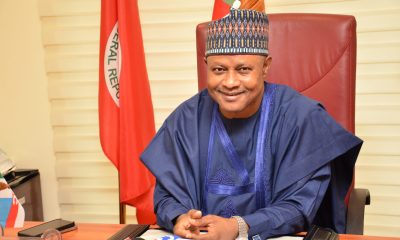

Uba Sani Orders Immediate Completion of Western Bypass
Share From Agbo Emmanuel, Kaduna The Kaduna State Government has issued a firm directive for the immediate acceleration and completion of...

Lagos, Rivers, Kaduna States Emerge Nigeria’s Most Indebted Sub-nationals
ShareBy Tony Obiechina, Abuja Lagos, Rivers and Kaduna states have emerged as Nigeria’s most indebted subnational governments, according to the...

Yusuf Commends Success of Cash Transfer Programme in Kano
ShareFrom Rabiu Sanusi, Kano Kano State Governor, Alhaji Abba Kabir Yusuf has lauded the House Prosperity and Empowerment-Cash Transfer program...