
Agriculture
FG Inaugurates Agribusiness Incubation Centre, Promises Massive Food Production


From Joseph Amedu, Lokoja
The Minister of Agriculture and Food Security, Sen. Abubakar Kyari, on Saturday, inaugurated the newly built Agribusiness Incubation Centre (ABIC) in Federal University Lokoja (FUL), by his Ministry, with an assurance that the Tinubu led-administration will embark on massive food production to end hunger in Nigeria.
The inauguration was part of the activities marking the 6th and 7th Combined Convocation Ceremony of the University which took place on Saturday.
The Minister who was represented by the Permanent Secretary of the Federal Ministry of Agriculture, Dr. Ernest Umahihe while commissioning the centre, said that the focus of the centre include; enhancing production capacity, value addition, quality control and standards, and opening access to local and international markets for our agricultural produce.
The minister explained that “the incubation centre is being established as a Special Centre of Excellence to support and promote food security in Nigeria, and to support youth and women empowerment as well as promote employment generation, wealth creation and poverty reduction.
“This will be through the development of viable agribusiness and entrepreneurship skills in different Agricultural Value Chains across the country.
“The focus of the centre include; enhancing production capacity, value addition, quality control and standards, and opening access to local and international markets for our agricultural produce.
“The project is aimed at facilitating and attracting investments into the agricultural sector, ensuring survival and sustainability of agri-based businesses and increasing domestic food production and exports, ” he said.
Represented by the ministry’s permanent secretary, Dr. Ernest Umakhihe,he said that the centre would serve as practical knowledge hubs where best practical skills, processes and inputs can be acquired on particular commodities.
According to him, these centres will also produce young generation of successor farmers and agricultural entrepreneurs who can adapt new technologies and innovations across the segments of commodities enterprise/value chain of production, processing, storage and marketing.
He added: “The centre is equipped to provide business basics through comprehensive training programmes along commodity Value chains and business start-ups including access to bank loans and other funds and guarantee programmes.”
“The centre will support Market research, linkage to strategic partners, access to investors and the development of business plans and business networking etc.”
The minister expressed satisfaction and appreciation with the support and cooperation of the Vice Chancellor, the academic and management staff of FUL for the successful completion of the centre.
He also expressed the hope that the university would explore the opportunity the centre offers and make the best use of it and prove its support as a formidable institution in the concerted efforts of the government to grow the nation’s economy using the agricultural sector.
In his response, the FUL Vice Chancellor (VC), Prof. Olayemi Akinwumi thanked the federal government for setting up the centre in the institution.
Akinwumi pledged to ensure that the institution make good use of the opportunity offered to it to train the students in to becoming big time agriculturalists that would contribute to the nation’s food production and security.
Our Correspondent reports that the minster also commissioned a six kilometers road the ministry constructed from the university’s Zoo to the main gate.
From Attah Ede, Makurdi
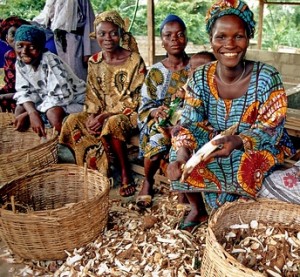
Olam Agri, in partnership with Sustainable Collective Advocacy for Africa Development (SCAAD) Initiative, is to launch the Community Resilience Opportunities for Women and Youth (CROWY) in Benue and Nasarawa States.
A press release by Elizabeth Nnoko Communication Manager, Olam Agri, said the CROWY Project is aimed at creating lasting positive change for women and youth across Nigeria’s North-Central region.
The Project ground-breaking initiative is designed to empower grassroots women and youth farmers, aligning with national development and gender equality objectives.
The project also, aims to strengthen livelihoods during off-farming seasons by equipping beneficiaries with strategic leadership skills, entrepreneurship training, and increased awareness on inclusion, gender equality, and early warning signs and systems related to Gender-Based Violence (GBV).
Delivered in collaboration with Rich-Oak Life Initiative, Sahel International Support Foundation, and Elikizi Foundation for Women and Youth Advancement, the CROWY Project seeks to close critical economic gaps by providing inclusive livelihood opportunities, access to cooperative financing, and leadership support for emerging women and youth-led enterprises.
“We aim to create 10 Village Savings and Loan Associations and support 100 of women and youth entrepreneurs within the first year in the fields of tailoring, baking amongst others.
“This intervention will expand economic opportunities, promote self-employment, and build sustainable and resilient livelihoods across the targeted communities.
“Across Nigeria, women, youth, and persons with disabilities continue to face systemic barriers to education, livelihoods, and leadership pathways. Recent statistics highlight the urgency of this challenge.
“In 2023, women’s labour force participation stood at just over 52%, down from nearly 57% in 2010 (Statista, 2023). Youth unemployment remains critically high, with 53% of Nigerians aged 15–24 unemployed or underemployed (World Bank, 2024).
“According to Nigeria’s Minister of Women Affairs, as of October 2025, approximately 70% of Nigerian women live in extreme poverty, unable to meet basic needs or sustain livelihoods
“These figures paint a stark picture of structural inequalities that continue to undermine national development and social stability”, the statement said.
On the part of SCAAD initiative, a Statement by Frances Okeke, Executive Director, stated that “Every day, we meet women and young people with immense creativity and resilience, yet without the support they need to thrive truly. Nigeria’s overlapping crises have made survival even harder for them, especially in farming communities where off-season periods often deepen economic vulnerability.
Okeke maintained the through the support of Olam Agri, the CROWY Project is stepping into this gap, offering practical skills, livelihood opportunities, and hope to grassroots women and youth.
Said he, “Together, we are equipping individuals not only to earn a living during non-farming seasons but also to lead, innovate, and uplift their communities. When women and young people are given the tools to succeed, entire communities become more resilient and rise with them.”
While Anil Nair, Country Head Olam Agri Nigeria added, “Our partnership with SCAAD Initiative on the CROWY Project reinforces our shared vision of resilient, empowered, and economically active communities. Women and youth are central to the future of agriculture in Nigeria and supporting them through targeted skills development and inclusive financing is essential for long-term national growth.
“Olam Agri will continue to champion initiatives that uplift vulnerable groups and strengthen the fabric of our communities.”
“Olam Agri and SCAAD Initiative invite government agencies, community leaders, NGOs, and development partners to join in supporting inclusive livelihood strategies. Collaboration is vital to building resilient, equitable communities.
“The partnership is committed catalyze efforts to enhance economic opportunities, promote self-employment, and build sustainable livelihoods for women and youth in conflict-affected communities”.

The Federal Government said African countries must shift from reactive, event-driven responses to predictive, risk-based and analytics-driven surveillance to meet the global target of Peste des Petits Ruminants (PPR) disease eradication by 2030.
PPR is a viral disease caused by morbillivirus closely related to rinderpest virus which affects goats, sheep and wild relatives of domesticated small ruminants and camels.
Permanent Secretary, Federal Ministry of Livestock Development, Dr.
Chinyere Akujobi said this in Abuja on Wednesday at the Regional Training on Strengthening Animal Disease Surveillance, Building Capacities for PPR Eradication and Trans-boundary Animal Diseases.The training was under the Framework of Implementation of the Pan-African PPR Eradication and other Sheep and Goat Disease Control Programme in West African Member Countries.
It was organised by the Food and Agriculture Organisation of the United Nations (FAO) in collaboration with the African Union-Interafrican Bureau for Animal Resources (AU-IBAR) with financial support from the European Union.
Akujobi urged every country to build surveillance systems that were smarter, faster and more collaborative.
She further urged strengthening coordination, adoption of modern tools and ensuring information-driven action.
“We must build stronger technical skills in participatory and risk-based surveillance; harmonise epidemiological procedures so that data generated across countries can be compared and acted upon.
“We must adopt modern tools for defining epi-systems, map high-risk zones and integrate these results into continental and global platforms and strengthen regional coordination structures and the Regional Veterinary Committee.
“These priorities speak directly to the core challenges of our region, uneven reporting, weak linkages between laboratories and field surveillance, fragmented information systems and gaps in cross-border coordination,” she said.
She said the presence of participants at the workshop demonstrated the collective commitment of the region in tackling diseases that continued to undermine livestock productivity, livelihoods and regional integration.
Akujobi urged the participants to approach the sessions with an evidence-driven mindset that reflected the complexity of today’s trans-boundary animal disease landscape.
“Our surveillance systems must be guided by real-time information and must incorporate digital tools that enable us to detect risks early and intervene quickly.
“At the same time, our countries must work in harmony, because a disease like PPR does not recognise administrative boundaries.
“It is essential that our systems speak to one another and that information flows seamlessly from community animal health workers to national databases and onward to regional and global systems.
“This gathering is more than a routine training session; it represents a strategic turning point for West Africa,” she said.
According to her, many African countries remain heavily affected by PPR, Foot and Mouth Disease, African Swine Fever, Anthrax, Highly Pathogenic Avien Influenza (HPAI) among other trans-boundary and zoonotic diseases that threaten food security.
“The small ruminant sector, in particular, supports millions of families, including women and youth whose livelihoods depend on healthy animals.
“Every outbreak that sweeps through our communities deepens vulnerability and disrupts social and economic stability,” she said.
She assured that Nigeria remained fully committed to regional solidarity and to the Pan-African PPR Eradication Programme.
Akujobi said the country was focused on strengthening the National Animal Disease Information System to improve reporting from across the federation, enhanced laboratory–field collaboration under the One Health approach.
According to her, Nigeria works closely with ECOWAS, AU-IBAR, FAO and World Organisation for Animal Health to align national actions with continental strategies.
The training targeted veterinarians, laboratory scientists, epidemiologists, wildlife experts, border authorities and pastoralist communities across West Africa.
Its goal was to strengthen national and regional systems to enable them to be better equipped to eradicate PPR.

The Federal Government, through the Kano State Special Agro-Processing Zone (SAPZ) Programme in partnership with IFAD, has empowered 9,870 rice farmers in Kano with climate-resilient inputs and modern rice production technologies.
This was contained in a statement issued by the SAPZ Knowledge Management and Communication Officer, Rabi Mustapha.
The State Project Coordinator, Aminu Iliyasu, disclosed this on Sunday during the Farmers Field Day at Chiromawa Garin Babba Cluster in Garun Malam Local Government Area.
He said the exercise was organised to expose the farmers to Science-based and practical solutions capable of enhancing yields, improving food security, and boosting rural livelihoods.
Iliyasu described the field day as a celebration of knowledge, innovation and the resilience of smallholder farmers.
He explained that the SAPZ initiative in Kano aimed to expand access to improved technologies, strengthen extension services, reduce post-harvest losses and create market opportunities for rural farmers.
“These innovations are not theoretical. They are practical solutions that farmers can adopt immediately to raise productivity and increase income,” he said, while commending the support of local authorities.
Mustapha said the inputs distributed to 9,870 farmers included FARO 44 improved seeds, Urea and NPK fertilizers, and insecticides, targeting beneficiaries in Garun Malam, Gezawa, Bichi and Bagwai LGAs during the 2025 wet season.
She added that experts trained farmers on soil selection, seed dressing, nursery establishment, land preparation, and timely transplanting at proper spacing.
“They also covered fertilizer management, weed control, Integrated Pest Management and water regulation to boost rice yields.
“The training emphasised harvesting at optimal maturity, drying paddy to safe moisture levels, and fumigation using phostoxin to prevent storage losses,” she stated.
A beneficiary, Salamatu Ali, said the intervention had positioned Kano farmers to boost yields, withstand climate pressures and increase household incomes.
Another farmer, Huwaila Ibrahim, said the programme transformed her approach to rice production.
“Before, we planted without checking whether the land was suitable.
“Now, we first assess the soil to ensure it matches the seed variety. This season, we cultivated FARO 44,” she said.
Ibrahim added that her output increased from 20–25 bags per acre to about 40 bags after adopting the improved technologies.



NCAA Mulls Stiffer Penalties for Chronic Flight Delays by Airlines
ShareThe Nigerian Civil Aviation Authority has signalled plans to introduce tougher sanctions against domestic airlines over repeated flight delays and...


Kano NSCDC Institutes Probe into Volunteer’s Death
ShareThe Nigeria Security and Civil Defence Corps (NSCDC), Kano State Command, has constituted a committee to investigate the cause of...


Mbah Flags off APC E-registration, Targets 2m Members in Enugu
ShareEnugu State Governor, Peter Mbah has flagged off APC membership e-registration, pledging to build a two-million-member base across the state....


FAAN Reaffirms Operational Excellence via Improved Integrated Management System
ShareThe Federal Airports Authority of Nigeria (FAAN) said it is committed to implementing Improved Integrated Management System (IMS) to ensure...


Police Neutralises Notorious Bandit in Benue
ShareFrom Attah Ede, Makurdi Operatives of the Benue State Command have neutralised a notorious bandit identified as Terkaa Samuel of...


You Can’t Claim to be Patriotic And Still Be a Member of APC – Adebayo
ShareAdewole Adebayo, leader of the Social Democratic Party (SDP) and its presidential candidate in the 2023 elections in this an...


Maikaya, Marketing Nasarawa State to the World Through Grassroots Development, Promise of Good Governance
ShareFrom Abel Zwanke, Lafia In an era when sub national governments are increasingly competing for global attention, foreign direct investment,...


NCC, CBN Approve Refund Framework for Failed Airtime and Data Transactions
ShareBy David Torough, Abuja In line with the consumer-focused objectives of the Nigerian Communications Commission (NCC) and the Central Bank...

NUPRC, NMDPRA Partner to Boost Sector Efficiency, Attract Investment
ShareThe Nigerian Upstream Petroleum Regulatory Commission and the Nigerian Midstream and Downstream Petroleum Regulatory Authority have renewed efforts to enhance...


Tinubu Jubilant as NGX Market Capitalisation Surpasses N100trn
ShareBy Tony Obiechina, Abuja President Bola Tinubu has praised corporate Nigeria, citizens and capital market stakeholders for surpassing the N100...