
Business News
FG Orders NERC, DisCos to Stop Electricity Tariff Hike

By Mathew Dadiya, Abuja
The Federal Government has stopped the Nigerian Electricity Regulatory Commission (NERC) and its Distributing Companies (DisCos) from electricity tariff hike earlier planned to commence today.
This was sequel to two separate meetings held yesterday by President Muhammadu Buhari and Vice President Yemi Osinbajo with the leadership of the National Assembly (NASS), where it was agreed that the planned increase be deferred indefinitely.
NASS leadership had on Monday kicked against the planned hike in electricity tariff by the Distributing Companies (DisCos) arguing that the timing was wrong amidst the COVID-19 pandemic and it’s impact on citizens’ income.
Senate President, Ahmad Lawan and the Speaker of the House of Representatives, Femi Gbajabiamila, Spoke to State House correspondents shortly after the meetings at the Presidential Villa, Abuja, where they met both Buhari and Osinbajo.
The NASS leaders said the meeting agreed that the timing was not expedient, hence the increment should be deferred till further notice.
Lawan said that the COVID-19 pandemic has impacted negatively, “hence the situation requires that everything possible is done to make life easy for the citizens.
“We have come to visit our Vice President, one of our leaders in connection with the impending electricity tariff in the country.
“The joint leadership of the National Assembly sat yesterday (Monday) with DisCos and Nigerian Electricity Regulatory Commission (NERC). We believe that this is not the right time to increase the tariff in the electricity sector. Nigerians have a lot of challenges today because of the COVID-19 pandemic and the situation requires that we do everything possible to make life easy for our citizens.
“Of course, government is doing a lot in this respect but we believe that DisCos should meet with consumers, find better cost effective tariff. But before then, there must be some steps to ensure that the consumers are properly metered otherwise, you will still go back to guessing what consumers are consuming. That is to say that let the billing be scientifically based, it has to be based on what you actually consumed.
“So “, we had this discussion with Mr. Vice President and we are sure that that announcement in the increase of electricity tariff in Nigeria is untimely. We believe that we need to do more work to ensure that before any increase, there must be some measures, steps, line of actions that must be exhausted including the metering. This is a welcome idea to the Vice President as well,” The Senate President said.
On steady power supply to Nigerians Lawan said all stakeholders must adhere to the share purchase agreement signed by government.
“I believe that the share purchase agreement signed by the government and the DisCos at the point of the privatization must be adhered to. These are businesses and they must do everything possible to provide services. It is when they provide efficient and effective services to consumers that they can make money. But as a government, we too must make sure that we discharge our obligations as provided for in share purchase agreement signed. Once we are able to achieve that, we will have a better situation in the power sector in Nigeria. It is doable, it has happened elsewhere.
“So, we cannot continue to give DISCOS and GENCOS the resources that we can ordinarily deploy to build hospitals. But whatever it’s necessary for us to do as part of our agreement with them we must do those.”
He also spoke on the International Day of Parliamentarism and how well the National Assembly had supported government and discharged its responsibility in the COVID-19 period in terms of emergency laws, monitoring spending.
“ We have been doing our best but it’s for the public to judge what we do. I wouldn’t say we should rate ourselves but I want to assure you that in the prevailing circumstances, the National Assembly has been doing its best. We try to attend to all those issues we believe are contemporaneous, those resources that government need to address COVID-19 situation,” he said.
“Recently, we passed the 2020 budget and of course that included the stimulus package to support the COVID-19 situation. So we have been doing our best and we are always available to undertake those parliamentary interventions that will be required as at when due, ”he stressed.
The Speaker, while responding to a question on the hike of electricity tariff and the complaints by DisCos of operating under heavy financial burden said:
“We saw the President earlier this morning and we have seen the Vice President today. The whole idea is that when there is a major policy decision, it is always good that the legislature and the executive are on the same page so that we don’t sing different tunes.
“I will like to say that we have all agreed on an increase in cost reflective tariff but the issue is that the timing is also important. Sometimes, timing is more important than even the policy decision that you make. There is a saying that ‘the road to hell is often paved with good intentions.’ So the intentions is good but what about the timing? We have all agreed to suspend this for a while, tarry a while and get the buy-in of the people, explain to the people why this has to be done, that it is for the betterment for the electricity to get stable. They are businessmen (DISCOS) and cannot be undercutting themselves. I think so far so good, the President listens attentively, the Vice President listens attentively and I think everybody is on the same page and hopefully, we will get some reprieve between now and whenever, but it’s not going to happen today”.




By Tony Obiechina, Abuja
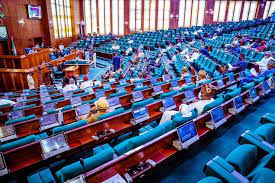
The Budget Office of the Federation has reaffirmed the integrity of Nigeria’s newly enacted Tax Reform Acts, cautioning against what it described as governance by speculation and unverified claims following allegations of post-passage alterations.
In a statement on Wednesday, the Budget Office said it had taken note of concerns raised by the Minority Caucus of the House of Representatives, stressing that the sanctity of the law is central to constitutional democracy and not a mere procedural formality.
According to the Office, any suggestion that a law could be altered after debate, passage, authentication, and presidential assent without due process would strike at the core of the Republic and undermine citizens’ right to be governed by transparent and stable laws.
However, it warned that democratic integrity is also endangered by the careless amplification of unverified claims. “A nation cannot be governed by insinuation or sustained on circulating documents of uncertain origin,” the statement noted, adding that public confidence, once shaken by speculation, is often difficult to restore.
The Budget Office emphasized that both government and citizens share a common interest in truth, clarity, and due process, noting that public finance depends heavily on trust in the legality and clarity of fiscal laws. It welcomed the decision of the National Assembly to investigate the allegations, describing institutional inquiry, not conjecture as the appropriate response to claims of illegality.
On public access to the law, the Office agreed that Nigerians and the business community are entitled to clear and authoritative texts of all laws they are required to obey. It clarified, however, that the authenticity of legislation is determined by certified legislative records and official publication processes, not by informal or viral reproductions.
The statement also underscored the importance of separation of powers, warning that claims suggesting Nigeria is being governed by “fake laws,” if not backed by established facts, risk eroding confidence in democratic institutions.
At the same time, it stressed that legislative scrutiny should not be dismissed by the executive, noting that oversight is a constitutional duty, not an act of hostility.
From a fiscal perspective, the Budget Office said legal certainty is essential for revenue projections, macroeconomic stability, budget credibility, and investor confidence. While it is not the custodian of legislative records, it maintained that uncertainty around operative tax provisions directly affects economic planning.
To restore confidence, the Office proposed a set of measures, including the publication of verified reference texts in a single public repository, orderly access to Certified True Copies for stakeholders, clear public explanations where discrepancies are alleged, and strict alignment of all implementing regulations with authenticated legal texts.
Addressing calls for suspension of the tax reforms, the Budget Office cautioned against allowing prudence to slide into paralysis. It argued that properly implemented tax reform is necessary to reduce dependence on borrowing and inflationary financing, while easing indirect burdens on vulnerable citizens.
“Where clarification is required, it must be provided; where correction is required, it must be effected; where investigation is required, it must proceed,” the statement said, adding that governance and reform should not be stalled by unresolved conjecture.
The Office concluded by describing taxation as a democratic covenant that binds citizens and the state, insisting that compliance depends on transparency and trust. It called on political actors to protect institutions as much as positions, urging citizens and businesses to rely on verified sources and resist the spread of unauthenticated information.
The statement was signed by Tanimu Yakubu, Director-General of the Budget Office of the Federation, who reaffirmed the agency’s commitment to fiscal transparency, institutional integrity, and reforms that advance national prosperity while safeguarding citizens’ rights.
By Jennifer Enuma, Abuja
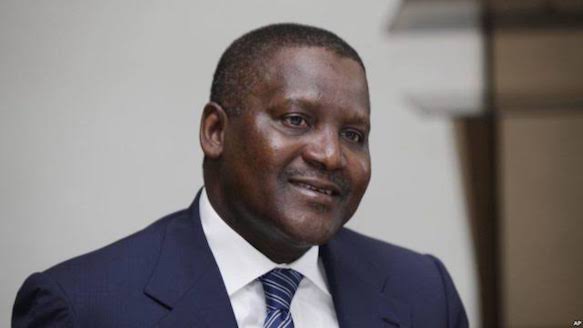
President Bola Tinubu has congratulated Alhaji Aliko Dangote, the President of Dangote Group, on his appointment to the World Bank’s Private Sector Investment Lab, a body tasked with promoting investment and job creation in emerging economies.
In a statement by Special Adviser on Media and Publicity, Bayo Onanauga, the President described the appointment as apt, given Dangote’s rich private sector experience, strategic investments, and many employment opportunities created through his Dangote Group.
The Dangote Group became one of Africa’s leading conglomerates through innovation and continuous investment.
Dangote Group’s business interests span cement, fertiliser, salt, sugar, oil, and gas. However, the $20 billion Dangote Petroleum Refinery and Petrochemicals remains Africa’s most daring project and most significant single private investment.
“President Tinubu urges Dangote to bring to bear on the World Bank appointment his transformative ideas and initiatives to impact the emerging markets across the world fully” the statement said.

The World Bank announced Dangote’s appointment on Wednesday, as part of a broader expansion of its Private Sector Investment Lab. The lab now enters a new phase aimed at scaling up solutions to attract private capital and create jobs in the developing world.
The CEO of Bayer AG, Bill Anderson, the Chair of Bharti Enterprises, Sunil Bharti Mittal, and the President and CEO of Hyatt Hotels Corporation, Mark Hoplamazian, are on the Private Sector Investment Lab with Dangote.
The World Bank said the expanded membership brings together business leaders with proven track records in generating employment in developing economies, supporting the Bank’s focus on job creation as a central pillar of global development.
By Joel Oladele, Abuja
The Nigeria Customs Service (NSC) has generated an impressive N1,751,502,252,298.05 in revenue during the first quarter of 2025.
The Comptroller-General (CG) of the Service, Bashir Adeniyi, disclosed this yesterday, during a press briefing in Abuja.
According to Adeniyi, the achievement not only surpasses the quarterly target but also marks a substantial increase compared to the same period last year, reflecting the effectiveness of recent reforms and the dedication of customs officers across the nation.
“This first quarter of 2025 has seen our officers working tirelessly at borders and ports across the nation.
I’m proud to report we’ve made real progress on multiple fronts—from increasing revenue collections to intercepting dangerous shipments,” Adeniyi stated.He attributed this success to the reforms initiated under President Bola Tinubu’s administration and the guidance of the Honourable Minister of Finance and Coordinating Minister of the Economy, Olawale Edun.
The CG noted that the revenue collection for Q1 2025 exceeded the quarterly benchmark of N1,645,000,000,000.00 by N106.5 billion, achieving 106.47% of the target. This performance represents a remarkable 29.96% increase compared to the N1,347,705,251,658.31 collected in Q1 2024.
Adeniyi highlighted the month-by-month growth, noting that January’s collection of N647,880,245,243.67 surpassed its target by 18.12%, while February and March also showed positive trends.
“I’m pleased to report the Service’s revenue collection for Q1 2025 totaled N1,751,502,252,298.05.
“Against our annual target of N6,580,000,000,000.00, the first quarter’s proportional benchmark stood at N1,645,000,000,000.00. I’m proud to announce we’ve exceeded this target by N106.5 billion, achieving 106.47% of our quarterly projection. This outstanding performance represents a substantial 29.96% increase compared to the same period in 2024, where we collected N1,347,705,251,658.31.
“Our month-by-month analysis reveals even more encouraging details of this growth trajectory,” Adeniyi said.
In addition to revenue collection, Adeniyi said the NCS maintained robust anti-smuggling operations, recording 298 seizures with a total Duty Paid Value (DPV) of ₦7,698,557,347.67.
He stated that rice was the most seized commodity, with 135,474 bags intercepted, followed by petroleum products and narcotics.
“From rice to wildlife, these seizures show our targeted approach,” Adeniyi remarked, noting the NCS’s commitment to combating smuggling and protecting national revenue.
Adeniyi also highlighted key initiatives, including the expansion of the B’Odogwu customs clearance platform and the launch of the Authorized Economic Operators Programme, which aims to streamline processes for compliant businesses. The NCS’s Corporate Social Responsibility Programme, “Customs Cares,” was also launched, focusing on education, health, and environmental sustainability.
Despite these achievements, the CG noted that the NCS faced challenges, including exchange rate volatility and non-compliance issues. Adeniyi acknowledged the need for ongoing adaptation and collaboration with stakeholders to address these challenges effectively.
Looking ahead, the NCS aims to continue its modernization efforts and enhance service delivery, ensuring that it remains a critical institution in Nigeria’s economic and security landscape.
“Results speak louder than plans; faster clearances through B’Odogwu, trusted traders in the AEO program, and measurable food price relief from our exemptions. We’ll keep scaling what works,” he concluded.
 |




BBNaija Season 11: Keivo Becomes Second Housemate to be Disqualified
ShareKeivo has become the second Big Brother Naija housemate to be disqualified from Season 11. This follows his physical altercation...

Mofe-Damijo Envisions Bright Future for Nigeria at 66
ShareVeteran actor and public speaker, Richard Mofe-Damijo, has expressed optimism about Nigeria’s future, describing the country as a work in...


My Wife Paid $20k for Her Surgery Herself, Peller Fires Back at Carter Efe
ShareNigerian content creator and streamer, Peller, has fired back at Carter Efe after the streamer compared their relationships while praising...


I Didn’t Want to be in the Spotlight – Tems
ShareGrammy-winning Nigerian singer Temilade Openiyi, popularly known as Tems, has revealed that despite wanting musical success, she was uncomfortable with...
Nigeria at 66: Which Way Nigeria?
ShareBy Tochukwu Jimo Obi Sixty six years after independence, Nigeria should be asking itself a question that can no longer...

Nigeria at 66: Booming Banks, Struggling Nation, Where Is the Promised Prosperity?
ShareBy Blaise Udunze As Nigeria celebrates 66 years of independence, it must ask whether the country has delivered the prosperity...

Nigeria at 66: Leaders are Human, But Accountability is Non-negotiable
ShareBy Aderonke Ojediran As Nigeria marks its 66th Independence anniversary, the debate over leadership, public trust and accountability remains central...


Oborevwori Orders Julius Berger to Fix Washed-Out East-West Road at Agbarho
ShareFrom Francis Sadhere, Delta Delta State Governor, Rt. Hon. Sheriff Oborevwori, has directed Julius Berger Nigeria Plc to immediately commence...

Independence: Kefas Announces N2.5bn Interventions, Clemency for 24 Inmates
ShareFrom John Lamma, Jalingo Taraba State Governor, Dr. Agbu Kefas, has announced fresh interventions worth ₦2.5 billion to support vulnerable...

Nigeria at 66: Tinubu Sees ‘Promised Land’, Atiku, Obi Differ
ShareBy David Torough, Abuja President Bola Tinubu on Thursday used Nigeria’s 66th Independence Anniversary address to declare that the country...