
NEWS
Focus on LG Development for Sustainable National Growth – Adeshina

The Federal Government has been urged to shift significant attention to empowering the local government system and operations, to ensure sustainable national development goals.
The Director General of the UK-based Diaspora Grassroots for Better Governance in Nigeria, Mr Ade Adeshina, made the call on Sunday in an interview .
He said the primary purpose of the government, after ensuring the safety of life and property, was to guarantee improved conditions of the citizens wherever they live in the country.
According to him, many Local Government Areas (LGAs) have not witnessed the dividends of democracy.
He noted that rural communities had suffered the most due to poor governance.
“Simple road networks cannot be built to required standards.
“Local government council officials lack required scrutiny and, are in most cases, incapable of managing public pulse.
“Given Nigeria’s abundant natural and human resources, the current state of development is a source of concern.
“We must heed the words of former Premier of the defunct Western Region, Chief Obafemi Awolowo, who said that Nigeria should not be a poor nation given its vast resources,” Adeshina said.
Adeshina added that the removal of fuel subsidies and the resulting high inflation rate had exacerbated the challenges faced by ordinary Nigerians.
Similarly, he noted that the exchange rate of one dollar for N1,040 in the parallel market, as at Oct. 12, had also compounded the issue.
To address these challenges and set Nigeria on a path to sustainable growth, Adeshina said the federal government must focus on infrastructure development across the 774 LGAs.
He added that the President Bola Tinubu-led administration must reform the civil service to make every officer accountable for his actions and omissions.
“The transition from a production-oriented economy, as our founders envisioned, to a consumption-based economy in the 1970s has hindered our progress.
“We must return to a production-oriented path, growing and producing what we need locally and embracing our homegrown products.
“This approach will reduce the demand for foreign currencies and make our Naira attractive to foreign investors,” he said.
According to him, central to this transformation is the need for robust infrastructure development.
He called for a standardised road and rail network to open up rural communities for business to enable economic inclusion.
“The deplorable state of infrastructure across the 774 LGAs has hindered progress and economic growth.
“Basic road infrastructure and modern transport systems are essential to alleviate the challenges faced by our densely populated cities and to attract investment to rural areas,” he said.
Adeshina, who is also the Director General of Bola Tinubu Support Organisation, UK branch (BTSO-UK), noted that with improved infrastructure, agricultural products would no longer go to waste due to bad roads.
According to him, this will attract firms to set up production facilities, boost the economy, and provide employment opportunities.
The D-G said the focus on LGAs was pivotal as it was at the grassroots level that the country could begin the restoration of its glory.
“We must empower and hold local governments accountable for creating an enabling environment for investors and fostering development.
“The restructuring of the civil service at all level of governance is equally vital,” he said.
Adeshina explained that civil servants played a pivotal role in policy implementation, and their efficiency was paramount to achieving the goals of the Tinubu’s administration.
“Restoring Nigeria’s glory and rescuing its citizens from hopelessness requires practical steps. It demands more than empty promises.
“It necessitates the eradication of corruption, a commitment to grassroots governance, investment in infrastructure, and civil service reform.
“Nigerians deserve a better future, and it is our collective responsibility to build the Nigeria of our dreams,”Adeshina said.
He called on the Tinubu-led administration to focus on substantial infrastructure development, stressing that it was time for action. (NAN)
By David Torough, Abuja
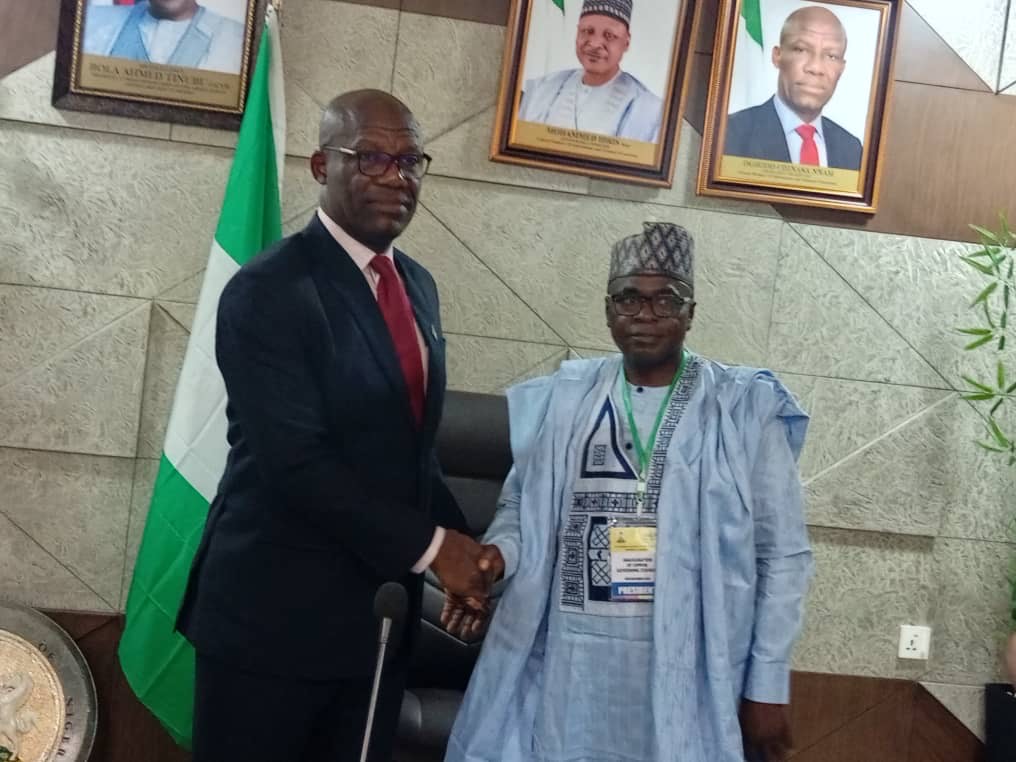
Clement Koko has been inaugurated as the President and Chairman-in-Council of the Chartered Institute of Professional Printers of Nigeria (CIPPON), pledging to reposition the institute as a world-class professional body and drive reforms aimed at strengthening Nigeria’s printing and allied industries.
At the inauguration ceremony of the CIPPON Governing Council, Clement expressed gratitude to the Minister of Information and National Orientation for approving the inauguration after a prolonged legal tussle, describing the move as a demonstration of respect for the judiciary and a boost to the institute’s stability.
He also acknowledged the contributions of past leaders of the institute, particularly the immediate past president, Dr.
Niyi Adesoye, whom he praised for his resilience and steadfast leadership during challenging periods in the institute’s history.Koko said his administration would build on existing foundations while charting a new course for professionalism, innovation and unity within the institute. He outlined key priorities, including advocacy for the creation of the Office of the Printer General of the Federation and similar offices in the 36 states and the Federal Capital Territory, or alternatively a Printers Commission, to provide proper oversight and recognition for the printing industry.
The new CIPPON president also announced plans to push for the inclusion of printing as a recognised creative industry, stressing that printing plays a critical role in economic development and deserves greater government attention. He further disclosed that the institute would work with universities and regulatory agencies to introduce Printing Technology or Printing Management as degree programmes in Nigerian universities to address skills gaps and enhance competitiveness.
As part of efforts to chart a sustainable path for the sector, Koko said CIPPON would convene a national summit within the first quarter of his tenure, bringing together stakeholders, industry players and regulators to discuss the future of the printing industry in Nigeria.
Calling for unity, Clement urged members to put an end to internal litigations, noting that the institute’s enabling law provides for dispute resolution through internal tribunals before recourse to the courts. He appealed to aggrieved members to embrace dialogue, emphasizing that collective unity was essential to moving the institute forward after years of setbacks.
Among other initiatives, he announced plans to expand professional training programmes nationwide, institute annual printing industry awards, publish a comprehensive industry report on challenges and opportunities, and deepen engagement with government and other stakeholders. He also unveiled an annual Alhaji Aderemi Mohammed Lawal Memorial Lecture on continuous printing education to honour the founding president of CIPPON.
The ceremony concluded with a minute of silence in memory of the late founding president, after which Clement formally requested the Honourable Minister to declare him duly inaugurated as President of the Chartered Institute of Professional Printers of Nigeria.

Thousands of drivers could have speeding fines cancelled after a fault saw some cameras falsely triggered on English A roads and motorways.
National Highways said it had found 2,650 wrongful speed camera activations since 2021 due to a delay between cameras and variable speed signs.
Affected drivers will be contacted by police and be reimbursed for any fines while points will be removed from their licences where needed.
Not all camera activations are enforced, so not all of the wrongful activations will have resulted in fines.
National Highways apologised for the error and chief executive Nick Harris said a fix for the issue has been identified.
“Safety is our number one priority.
All drivers should continue observing the posted speed limits as normal. Anyone who has been impacted will be contacted by the relevant police force,” he said.National Highways, which runs England’s motorways, blamed an “anomaly” in how variable speed cameras were interacting with signs on some A roads and motorways.
It meant a delay of around 10 seconds between cameras and relevant variable speed signs, meaning some drivers were incorrectly identified as speeding after the limit had changed.
The body said the 2,650 incidents since 2021 represent fewer than two each day, compared with more than 6 million activations of speed cameras on the affected roads over the same period.
It said the anomaly has impacted 10% of England’s motorways and major A roads.
The fault affects all of the variable speed cameras on smart motorways, and two on the A14 which links the north and the West Midlands to East Anglia.
It is working with police to check activations and promised nobody will now be wrongly prosecuted.
Meanwhile, police forces have stopped issuing fines from variable cameras until they have confidence in their accuracy.
A Department for Transport spokesperson said: “We apologise to anyone who has been affected. Safety was never compromised, and we are working with policing to ensure nobody is incorrectly prosecuted in future.
“Enforcement is still in place, and the public can remain confident that only motorists who break the rules will be penalised.”


A French court has sentenced a former rebel leader and politician from the Democratic Republic of Congo to 30 years in jail after finding him guilty of complicity in crimes against humanity more than two decades ago.
Roger Lumbala headed a rebel movement backed by neighbouring Uganda accused of committing atrocities during a period known as the Second Congo War.
The judge said the 67-year-old was found guilty of ordering or aiding and abetting torture and inhumane crimes, summary executions, rape constituting torture, sexual slavery, forced labour and theft.
Lumbala, who was living in France when he was arrested nearly five years ago, has refused to accept the legitimacy of the court in Paris.
He did not attend the trial, which began last month, though he was in the dock to hear the verdict on Monday.
Lumbala also served as a minister in DR Congo’s transitional government from 2003 to 2005 and later as a member of parliament.
Several years later the Congolese government issued an arrest warrant for him over his alleged support for the M23, a rebel group currently active in the eastern DR Congo, prompting him to flee to France.
The Second Congo War, which raged from 1998-2003, involved nine countries, numerous rebel groups and led to the estimated deaths of between two and five million people.
At the time Lumbala led the Rally of Congolese Democrats and Nationalists (RCD-N), which allegedly carried out atrocities during a campaign between 2002 and 2003 called “Erase the Slate”.
The operation targeted members of the Nande and Bambuti ethnic groups in the north-eastern provinces of Ituri and North Kivu who were accused of supporting a rival militia.
A UN team that investigated in its aftermath said it was characterised by “premeditated operations using looting, rape and summary execution as tools of warfare”.
Lumbala’s case was prosecuted under the principle of “universal jurisdiction”, which allows French courts to seek justice related to crimes against humanity committed abroad.
Five non-governmental organisations, including Trial International and the Clooney Foundation for Justice, pooled their expertise to participate in the trial, helping support survivors to testify and requesting expert analyses.
Trial International, a Geneva-based justice campaign group, said 65 survivors, witnesses and experts testified before the court about the Erase the Slate operation.
After the verdict, it issued a statement from two of the survivors – David Karamay Kasereka and Pisco Sirikivuya Paluku.
“We were scared but came all the way here because the truth matters. For years, no one heard us,” they said
“We would have preferred to face Roger Lumbala, to look him in the eyes. But this verdict marks a first step toward reclaiming pieces of ourselves that were taken from us.”
During the trial Mr Kasereka, 41, described how his father and neighbours were tortured and killed by Lumbala’s men.
Paluku, who is a now 50-year-old nurse, told of how the rebels robbed and injured him, killed his uncle and raped his friend’s wife.
“We hope that this will serve as a lesson to those who continue to bring grief to the people of Congo, and particularly to Ituri,” he told the Reuters news agency.
Lumbala’s legal team, which has 10 days to file an appeal, called the sentence excessive. Prosecutors had sought a life sentence.
Eastern DR Congo, which is rich in minerals, has been wracked by conflict for more than 30 years, since the 1994 Rwandan genocide. Several peace deals going back to the 1990s have collapsed.
Over the years a number of other militia leaders, including Thomas Lubanga, Germain Katanga and Bosco Ntaganda, have been put on trial and convicted by the International Criminal Court (ICC) for abuses committed in the east of DR Congo.
Human rights groups welcomed Monday’s verdict as a milestone for further accountability in the long-running conflict there.
“This verdict is historic. For the first time, a national court has dared to confront the atrocities of the Second Congo War and show that justice can break through even after decades of impunity,” Trial International’s Daniele Perissi said in a statement.


Clement Koko Assumes Office as CIPPON President
ShareBy David Torough, Abuja Clement Koko has been inaugurated as the President and Chairman-in-Council of the Chartered Institute of Professional...
Thousands of Drivers Wrongly Fined for Speeding Since 2021
ShareThousands of drivers could have speeding fines cancelled after a fault saw some cameras falsely triggered on English A roads...


UK Unemployment Rate Rises to 5.1 Per cent
ShareThe UK unemployment rate in the three months to October has increased to 5.1%, according to official figures. That marked...


French Court Sentences Ex-DR Congo Rebel, Politician to 30 Years in Jail
ShareA French court has sentenced a former rebel leader and politician from the Democratic Republic of Congo to 30 years...


EEDC Explains Recent Decline in Power Supply across South-East
ShareThe Enugu Electricity Distribution Company (EEDC) has attributed the recent decline in power supply across the South-East to low electricity...

DMO Takes Sensitisation on Borrowing Guidelines to Northern States
ShareThe Debt Management Office (DMO) said that its World Bank-assisted workshop on borrowing guidelines was designed to intimate subnational entities...


Oborevwori Signs N1.729trn 2026 Budget, Three Other Bills into Law
ShareFrom Francis Sadhere, Delta Delta State Governor, Sheriff Oborevwori on Tuesday signed the 2026 Appropriation Bill of N1.729 trillion, tagged...

NCDMB Oil, Gas Parks Near Completion, Set for 2026 Inauguration
ShareThe Nigerian Content Development and Monitoring Board said its Nigerian Oil and Gas Parks Scheme, established to boost local manufacturing...

Nigeria Tops W’Africa’s Crude Refining as Other Countries Stage Competition
ShareNigeria is expanding its crude refining footprint in the face of apparent asset acquisition and development by other countries in...


AFCON 2025: Super Eagles Camp Swells to 22 Ahead Egypt Friendly
ShareThe Super Eagles camp in Cairo has grown to 22 players with the arrival of Blackburn Rovers defender Ryan Alebiosu,...